Parrotlets may be tiny, but anyone expecting a quiet little bird that simply sits on a perch may be in for a surprise.
These miniature parrots are curious, active, intelligent, and often remarkably confident. A parrotlet can weigh only around an ounce yet behave as though it’s the largest bird in the house.
That personality is part of their appeal. It also means they need more than a small cage, a bowl of seeds, and an occasional toy.
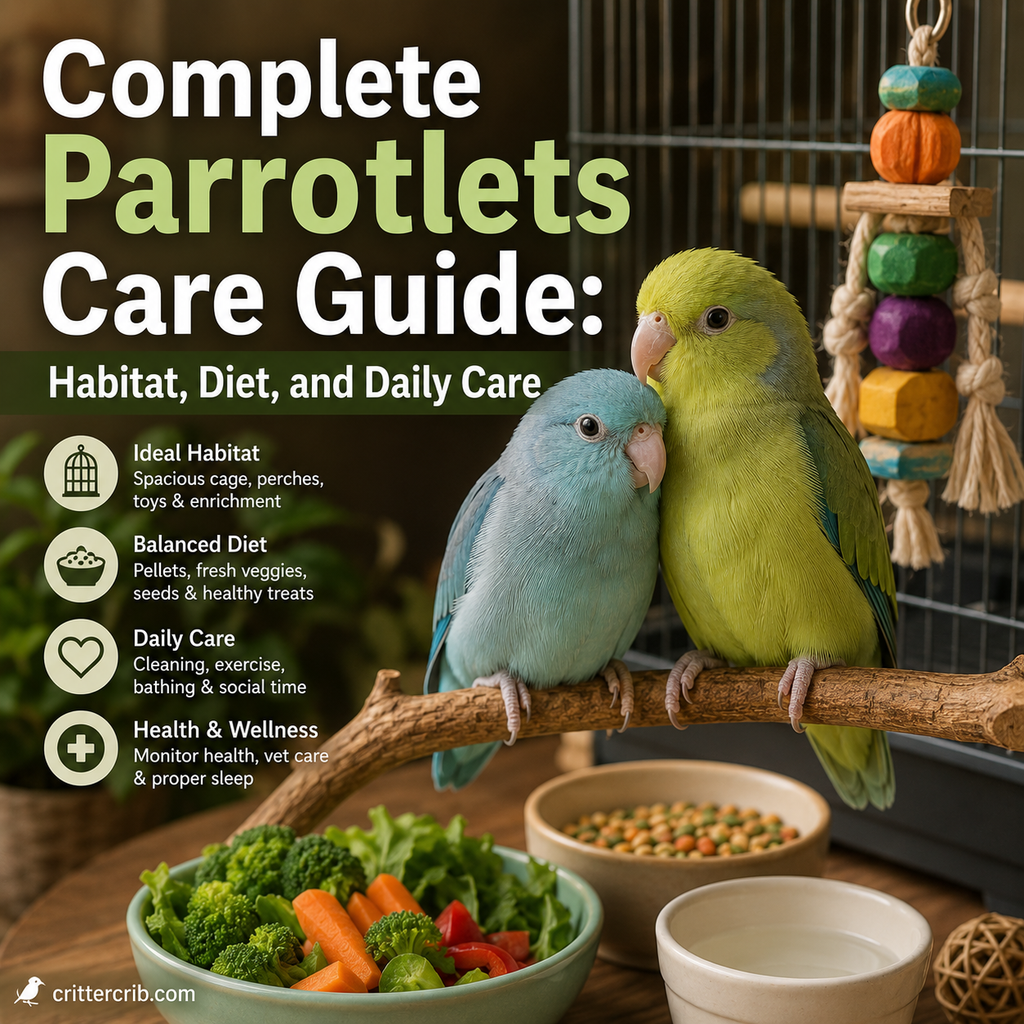
Good parrotlet care involves providing a spacious habitat, balanced nutrition, daily enrichment, opportunities for exercise, consistent sleep, regular cleaning, and plenty of attention to the bird’s behavior and health.
Whether you’re considering getting a parrotlet or have recently brought one home, this guide covers the essentials of creating a safe, healthy everyday routine.
What Is a Parrotlet?
Parrotlets are small parrots native to parts of Central and South America.
Several species exist, although the Pacific parrotlet is one of the most commonly kept as a companion bird.
Despite their small size, parrotlets share many traits associated with larger parrots. They’re intelligent, social, playful, and highly capable of learning routines.
They can also be assertive.
Individual personalities vary, but many parrotlets aren’t shy about communicating exactly what they want.
With proper socialization and care, they can form strong relationships with their caregivers.
How Long Do Parrotlets Live?
A well-cared-for parrotlet may live roughly 15–20 years, with individual lifespan influenced by genetics, diet, veterinary care, environment, exercise, and other factors. Our guide to how long parrotlets live and the factors that affect their lifespan takes a closer look at what can influence longevity.
That’s an important consideration before bringing one home.
A parrotlet isn’t a short-term pet simply because it’s small.
You’re potentially committing to many years of:
- Daily feeding
- Cage maintenance
- Social interaction
- Enrichment
- Veterinary care
- Travel planning
- Household bird safety
Think about how a bird fits into your long-term lifestyle rather than only whether you have space for a cage today.
Are Parrotlets Good Pets for Beginners?
Parrotlets can be wonderful companion birds, but they’re not necessarily effortless beginner pets.
Their small size makes housing and handling more manageable than with many large parrots, but they still have distinctly parrot-like needs.
Parrotlets require:
- Daily interaction
- Mental stimulation
- Training
- A balanced diet
- Regular cleaning
- Safe exercise
- Veterinary care
- Respectful handling
They can also become territorial or nippy, particularly when their boundaries are ignored or hormonal behavior develops.
A beginner who is willing to learn about bird behavior and provide consistent care can certainly succeed with a parrotlet.
Someone looking for a pet that requires minimal daily involvement should probably consider another animal.
Choosing a Cage for a Parrotlet
Don’t let the bird’s tiny body convince you to buy a tiny cage.
Parrotlets are active.
They need room to climb, hop, stretch, flap, and move between different areas of their enclosure.
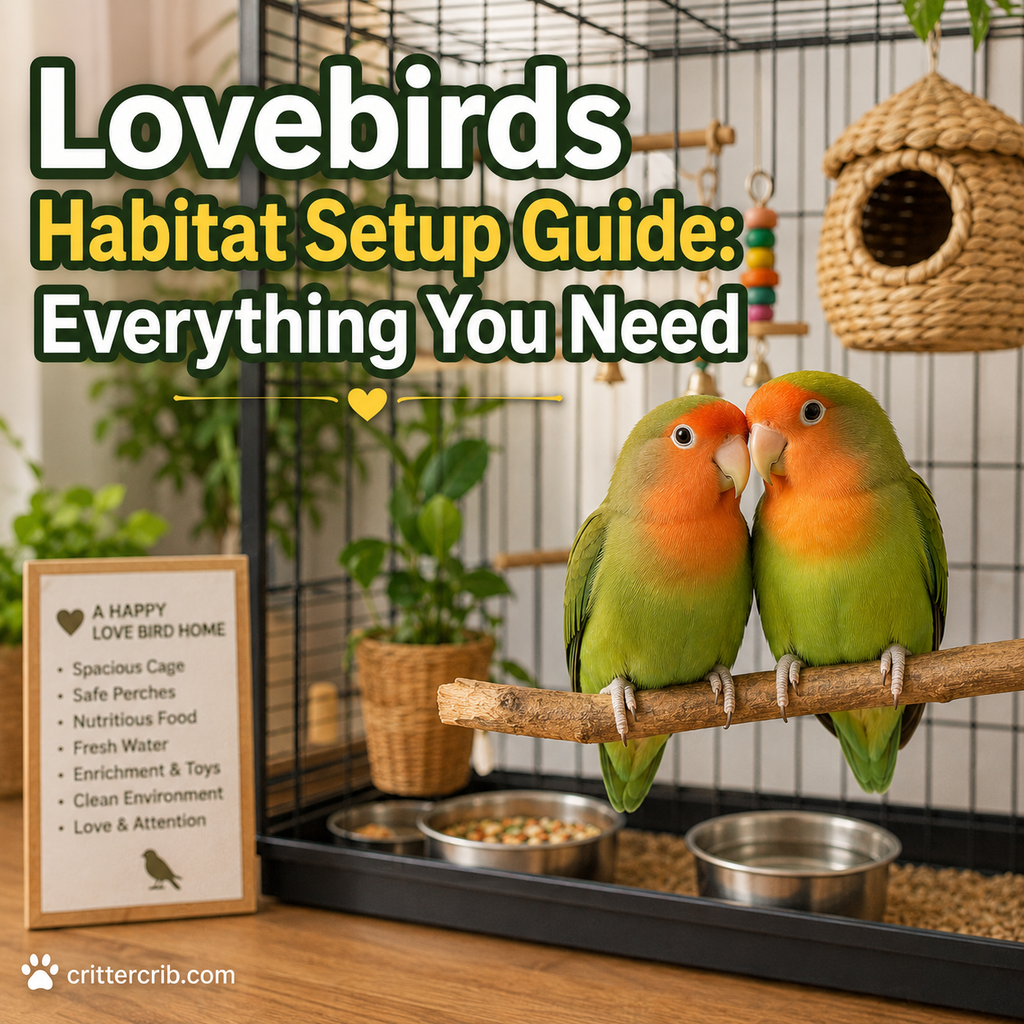
If you’re preparing a new enclosure, our parrotlet habitat setup guide goes deeper into cage size, bar spacing, perches, food and water placement, toys, enrichment, and choosing a safe location in your home.
For one parrotlet, a cage approximately 24 inches wide, 18 inches deep, and 24 inches high is a reasonable minimum starting point. Larger is preferable whenever practical.
Horizontal width is especially useful because it creates more room for movement.
Look for a Rectangular Cage
A rectangular cage generally provides more usable space than a decorative round cage.
It also makes it easier to arrange:
- Perches
- Food bowls
- Water
- Toys
- Open movement areas
Choose function over decoration.
Your parrotlet won’t care whether its cage matches the living room furniture.
Check Bar Spacing Carefully
Because parrotlets are so small, inappropriate bar spacing can create an escape or entrapment hazard.
Around 1/2-inch bar spacing is commonly suitable.
Always inspect the specific cage carefully and make sure the bird can’t fit its head through openings.
Secure doors matter too.
Small parrots are surprisingly good at investigating anything that moves.
Where Should You Put a Parrotlet Cage?
Parrotlets are social birds and generally enjoy being able to observe normal household activity.
That doesn’t mean the busiest or noisiest location is automatically best.
Choose a spot where the bird can participate in family life while still feeling secure.
Avoid placing the cage:
- In strong drafts
- Directly beneath air-conditioning vents
- Next to heaters
- In constant intense sunlight
- Around cigarette or vape smoke
- Near aerosol sprays
- Around strong fragrances
- In the kitchen
- Where another pet can easily reach it
Placing one side of the cage near a wall can give the bird a more protected area.
Why the Kitchen Is a Poor Cage Location
Birds have highly sensitive respiratory systems.
Kitchens can expose them to smoke, aerosolized oils, cleaning fumes, and combustion byproducts.
Overheated cookware and appliances containing certain nonstick fluoropolymer coatings can release fumes that are extremely dangerous to birds.
Keep your parrotlet’s primary living area away from cooking.
How to Set Up a Parrotlet Cage
A good cage isn’t useful if every inch of it is packed with accessories.
Your parrotlet needs enrichment, but it also needs room to move.
Start with the essentials.
Provide Several Perches
Use perches with different safe diameters and textures.
Natural bird-safe branches are useful because their irregular surfaces allow the feet to grip in different positions.
A basic setup might include:
- Natural wood perches
- A comfortable sleeping perch
- An activity perch
- A swing
Avoid relying entirely on identical smooth dowel perches.
Also avoid covering every available area with perches.
Position Perches Thoughtfully
Don’t place a favorite perch directly above:
- Food
- Water
- Bathing dishes
Otherwise, contamination becomes almost inevitable.
Arrange perches so your parrotlet has several ways to move through the cage without having to squeeze past toys everywhere it goes.
Provide Food and Water Dishes
Stainless steel bowls are a practical option because they’re durable and easy to clean.
You may want separate dishes for:
- Pellets
- Fresh vegetables
- Water
Having spare dishes makes cleaning and replacement much easier.
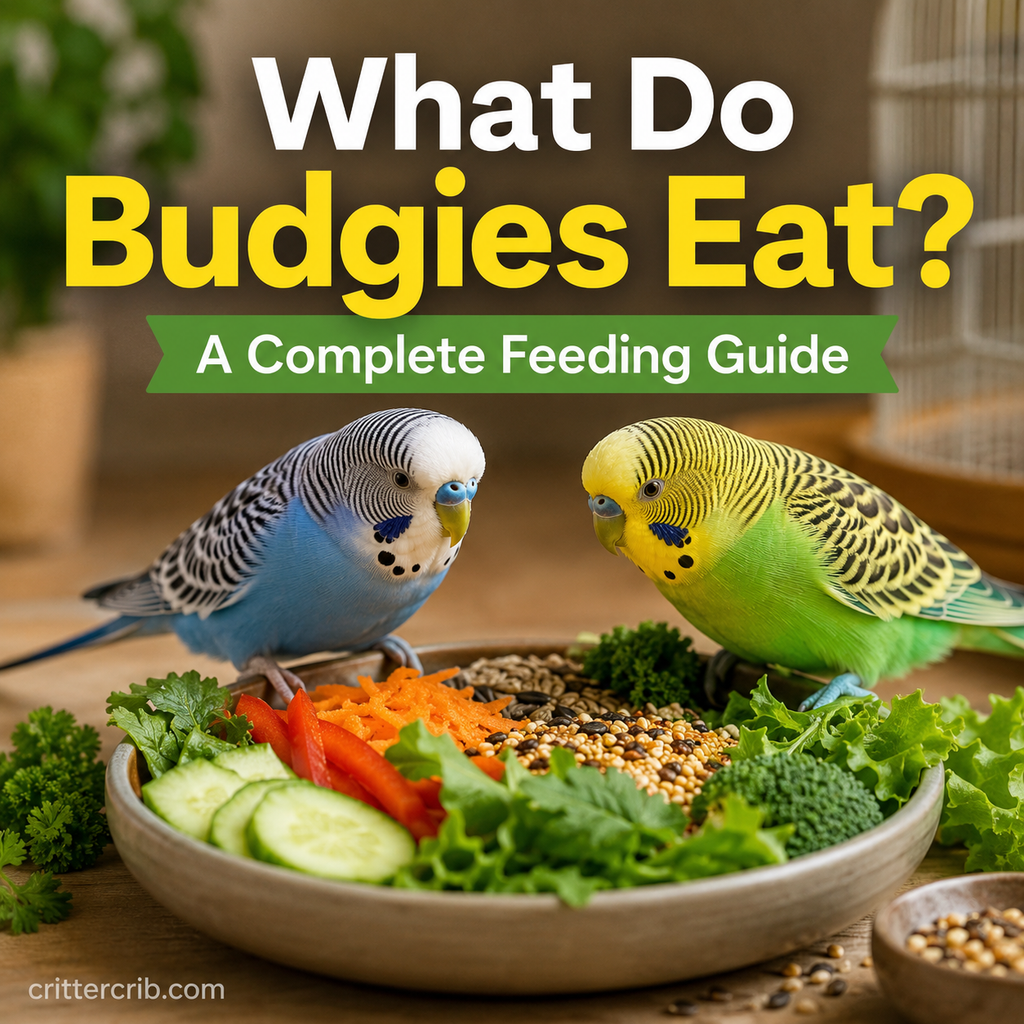
What Do Parrotlets Eat?
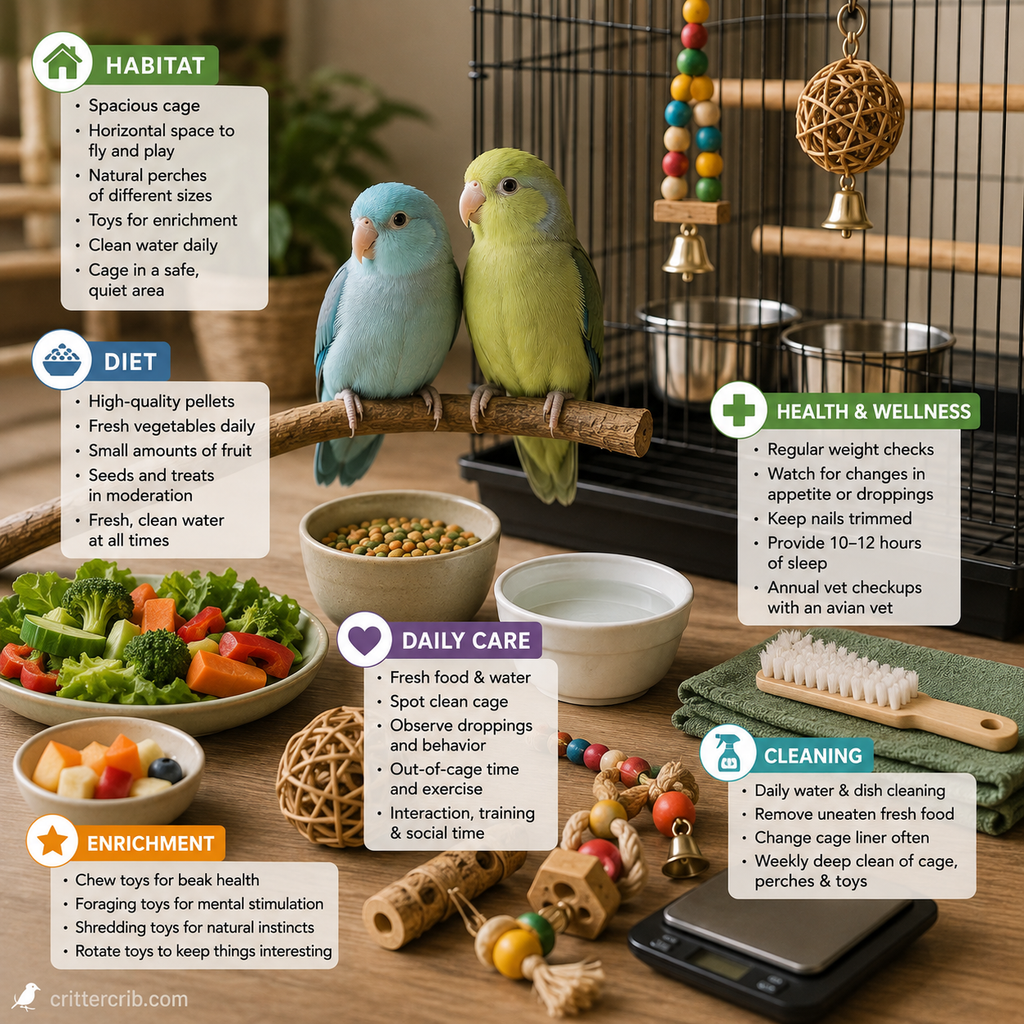
Nutrition is one of the most important parts of long-term parrotlet care.
A seed-only diet isn’t considered an ideal complete diet for companion parrots.
Seeds can be enjoyable and useful in controlled amounts, but relying on them exclusively can create nutritional imbalances.
A balanced parrotlet diet generally includes:
- Quality formulated pellets
- Fresh vegetables
- Smaller amounts of appropriate fruit
- Controlled portions of seeds and other foods
- Fresh drinking water
The exact diet should be adjusted to the individual bird with guidance from an avian veterinarian.
Pellets for Parrotlets
A quality pellet formulated for small parrots can make up a substantial portion of the diet.
Pellets are designed to provide more consistent nutrition than allowing a bird to select only its favorite seeds.
Choose a pellet appropriately sized for a small bird.
If your parrotlet currently eats only seed, don’t suddenly remove all familiar food and assume the bird will recognize pellets as edible.
Diet conversion should be gradual and monitored carefully.
Small birds can’t safely go long periods without eating.
Vegetables for Parrotlets
Fresh vegetables add variety, texture, and valuable nutrients.
Suitable options can include:
- Bell peppers
- Broccoli
- Carrots
- Kale
- Bok choy
- Romaine lettuce
- Squash
- Peas
- Green beans
- Cilantro
Rotate vegetables rather than serving exactly the same thing every day.
Different colors, textures, and preparation methods may encourage a picky bird to experiment.
One parrotlet may enthusiastically attack broccoli on day one. Another may spend a week treating it like an object that has personally offended them.
Patience helps.
Can Parrotlets Eat Fruit?
Yes, appropriate fruit can be offered in moderation.
Options may include small amounts of:
- Berries
- Banana
- Mango
- Melon
- Pear
- Apple with the seeds removed
Fruit naturally contains sugar, so vegetables should generally receive more emphasis.
Wash fresh produce before serving it and remove uneaten portions before they spoil.
Foods Parrotlets Should Not Eat
Some human foods are unsafe for birds.
Do not intentionally feed your parrotlet:
- Avocado
- Chocolate
- Alcohol
- Caffeine
- Apple seeds
- Fruit pits
- Heavily salted foods
- Highly processed foods
- Moldy or spoiled food
Be careful with foods containing unfamiliar ingredients.
When you’re unsure whether something is bird-safe, check before offering it.
Fresh Water Every Day
Your parrotlet should have access to fresh, clean drinking water.
Replace water at least daily and sooner whenever it becomes contaminated.
Birds can quickly drop:
- Food
- Pellets
- Feathers
- Droppings
into an open water dish.
Wash the container rather than simply topping off old water.
Strategic bowl placement can also help keep it cleaner.
How Much Should a Parrotlet Eat?
There’s no single portion that works perfectly for every bird.
Food requirements vary according to:
- Body size
- Age
- Activity
- Diet composition
- Health
- Individual metabolism
Instead of repeatedly filling an enormous bowl, learn approximately how much your bird actually consumes.
Monitoring body weight is also valuable.
A small digital gram scale can help you establish your parrotlet’s normal weight and identify unexplained changes.
Ask your avian veterinarian what weight range and diet are appropriate for your individual bird.
Parrotlet Toys and Enrichment
Parrotlets have busy brains.
Without appropriate things to explore and manipulate, they may direct that energy toward screaming, territorial behavior, repetitive activities, or destroying household items during out-of-cage time.
Provide different types of enrichment.
Chewing Toys
Parrotlets need appropriate things to chew.
Bird-safe materials may include:
- Soft wood
- Palm leaf
- Paper
- Cardboard intended for bird enrichment
- Other safe natural materials
Inspect chew toys frequently because enthusiastic destruction can expose sharp or loose components.
Shredding Toys
Many small parrots enjoy ripping materials apart.
Shreddable toys can provide an appropriate outlet.
However, watch for hormonal nesting behavior.
If your bird starts collecting shredded material, guarding dark areas, or attempting to create a nest, adjust the environment accordingly.
Foraging Toys
Foraging makes food more interesting.
Start with easy activities such as:
- Treats hidden beneath paper
- Simple foraging cups
- Food tucked into bird-safe materials
- Easy puzzle feeders
Let the bird understand how the game works before making it difficult.
A puzzle isn’t enriching if the bird has no chance of solving it.
Rotate Toys Instead of Overcrowding the Cage
You don’t need every toy your parrotlet owns inside the cage simultaneously.
Keep several available and rotate them periodically.
This approach:
- Preserves movement space
- Introduces novelty
- Makes old toys interesting again
- Lets you inspect toys regularly
Some parrotlets are suspicious of unfamiliar objects.
If yours is cautious, introduce new toys outside the cage first rather than suddenly hanging something enormous beside its sleeping perch.
Do Parrotlets Need Time Outside the Cage?
Yes. Safe, supervised out-of-cage time provides exercise, social interaction, exploration, and mental stimulation.
How much time is appropriate depends on your routine and the individual bird, but daily opportunities are valuable.
Before opening the cage, bird-proof the room.
Check:
- Windows
- Exterior doors
- Ceiling fans
- Mirrors
- Large uncovered windows
- Electrical cords
- Toxic plants
- Open toilets
- Containers of water
- Hot surfaces
- Small spaces where the bird could become trapped
Turn ceiling fans completely off.
Keep cats, dogs, and other potential predators physically separated from the bird.
Create a Parrotlet Play Area
A dedicated play area gives your bird somewhere appropriate to spend time outside the cage.
It can be simple.
Useful items include:
- Tabletop perch
- Play stand
- Natural branches
- Climbing toys
- Chewing toys
- Foraging activities
Having an obvious bird-approved location can also make it easier to redirect your parrotlet away from keyboards, picture frames, books, and other objects it has decided belong to it.
Social Needs and Daily Interaction
Parrotlets are social animals.
A single companion bird needs regular interaction with its caregiver.
That doesn’t mean you need to entertain the bird every waking minute.
Healthy independence matters too.
Your parrotlet should be comfortable:
- Playing with toys
- Foraging
- Eating independently
- Exploring its cage
- Resting without constant attention
At the same time, include the bird in your daily routine through training, conversation, play, and supervised time together.
Can Parrotlets Learn to Talk?
Some parrotlets can learn words and short phrases.
Their voices are small and may not be as clear as those of some larger parrots, but individuals can develop surprisingly large vocabularies.
Not every bird will talk.
Don’t choose a parrotlet solely because you want a talking pet.
Whistling, chirping, body language, and other forms of communication are just as much a part of the relationship.
How to Handle a Parrotlet
Trust should be built gradually.
Don’t repeatedly chase your bird around the cage with your hand.
Instead, teach useful behaviors using positive reinforcement.
A good starting point is step-up training.
Teaching Step Up
- Approach calmly.
- Offer your finger or a handheld perch.
- Use a consistent cue such as “step up.”
- Reward the bird when it steps on.
- Keep sessions short.
- End before either of you becomes frustrated.
Tiny treats can make training much easier.
Never punish your bird for being afraid.
Why Do Parrotlets Bite?
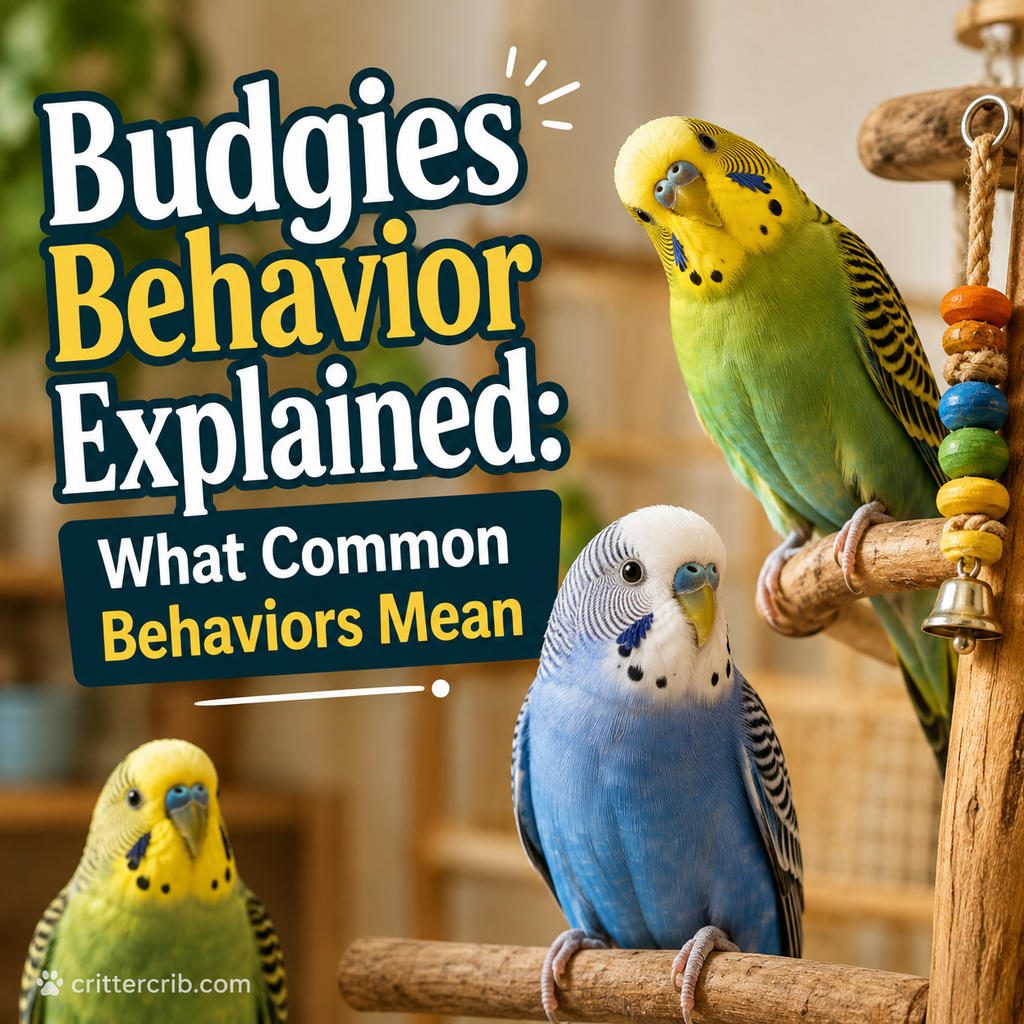
Parrotlets have a reputation for being bold, and some individuals can become nippy. Learning to recognize parrotlet behavior and body language can help you notice the signals that often come before a bite and better understand what your bird is communicating.
Biting may occur because the bird is:
- Frightened
- Territorial
- Overstimulated
- Hormonal
- Protecting its cage
- Guarding an object
- Uncomfortable with handling
- Ignoring an unwanted interaction
- In pain
Pay attention to what happens immediately before the bite.
Your bird may have already communicated discomfort through posture or attempts to move away.
Don’t Punish Biting
Yelling, hitting, flicking the beak, or otherwise punishing a bird can increase fear and damage trust.
Instead, identify the trigger.
Training and respectful handling are much more effective long-term strategies.
Parrotlet Sleep Requirements
Parrotlets need a consistent nighttime routine.
Aim to provide approximately 10–12 hours of quiet, darkness, and uninterrupted sleep each night.
A bird that stays awake late because the television and lights remain on may not be getting enough rest.
You can provide an appropriate sleeping environment by:
- Keeping a consistent bedtime
- Dimming household activity
- Providing darkness
- Reducing nighttime noise
- Keeping the temperature comfortable
A cage cover can be useful in some homes, but it isn’t mandatory if the room already becomes dark and quiet.
If you use one, maintain adequate ventilation.
Do Parrotlets Need a Nest or Sleeping Hut?
A healthy companion parrotlet doesn’t need a nest box to sleep.
Dark, enclosed spaces may encourage reproductive behavior.
Be cautious with:
- Nest boxes
- Fabric huts
- Tents
- Dark containers
- Access beneath furniture
- Cabinets and drawers
Fabric accessories can also become dangerous if chewing creates loose fibers.
A secure perch in a comfortable area of the cage is generally sufficient for sleep.
Hormonal Behavior in Parrotlets
Hormonal periods can change a parrotlet’s behavior.
You may notice:
- Increased territoriality
- Biting
- Nest seeking
- Regurgitation
- Guarding objects
- Courtship behavior
- Increased vocalization
Environmental triggers can contribute.
To help discourage excessive reproductive behavior:
- Provide consistent sleep
- Avoid nest-like spaces
- Limit petting to the head and neck
- Remove nesting opportunities
- Redirect courtship behavior
- Provide exercise and enrichment
Persistent reproductive or egg-laying concerns should be discussed with an avian veterinarian.
Where Should You Pet a Parrotlet?
Head and neck scratches are generally the safest areas for affectionate petting.
Avoid repeatedly stroking:
- The back
- Beneath the wings
- Around the tail
- The lower body
Touching these areas may be interpreted as sexual behavior and can contribute to hormonal problems.
Not every parrotlet enjoys being touched.
Some prefer sitting near their caregiver or participating in training rather than receiving scratches.
Respect the individual bird.
Bathing Your Parrotlet
Provide regular opportunities to bathe.
Different birds have different preferences.
Your parrotlet might enjoy:
- A shallow bathing dish
- A cage-mounted bath
- Wet leafy greens
- A gentle mist
Use clean, plain water.
Don’t use human shampoo, soap, fragrances, or other bathing products on your bird.
Remove contaminated bath water promptly.
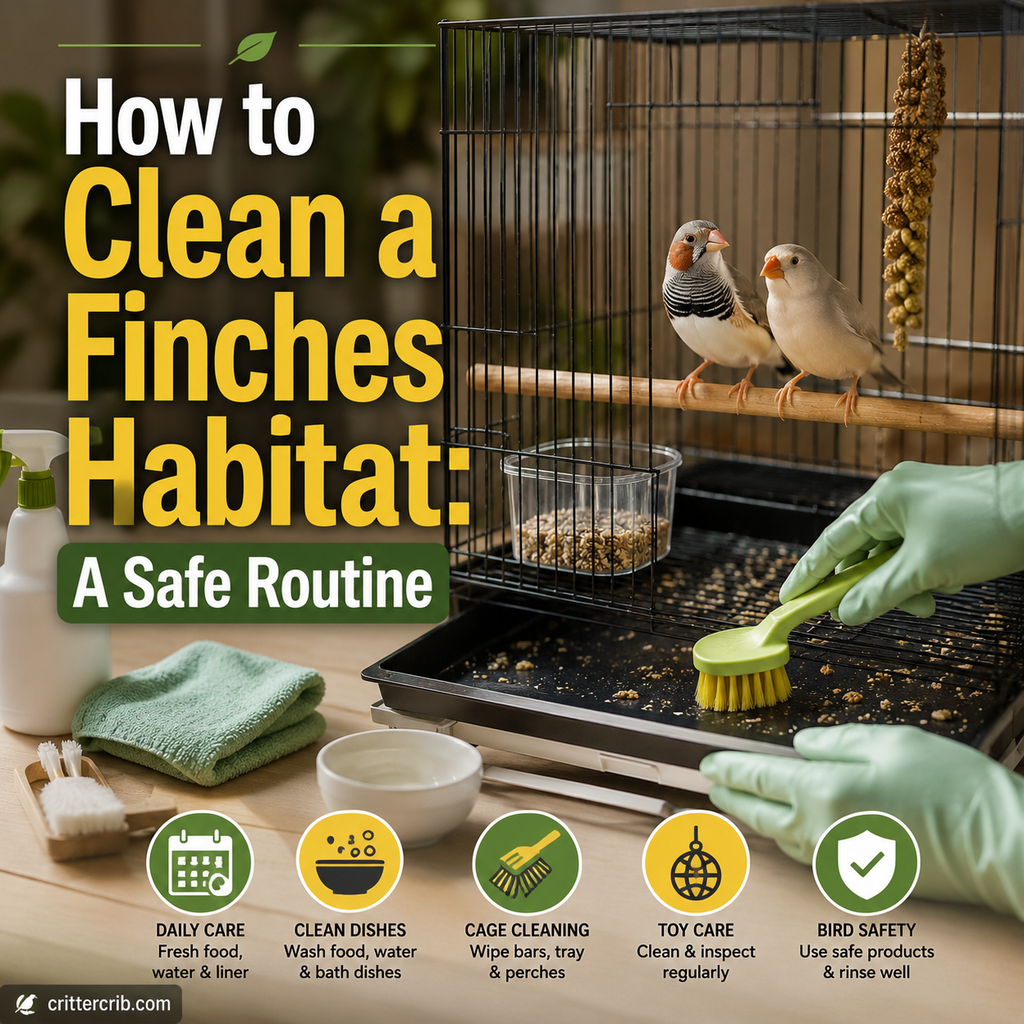
How to Clean a Parrotlet Cage
Daily maintenance makes cage cleaning much easier.
You don’t need to completely scrub the habitat every morning.
Daily Cleaning
Check and clean:
- Drinking water
- Food dishes
- Fresh food
- Cage liner
- Heavily soiled perches
- Bathing dishes
Remove spoiled fresh foods promptly.
Regular Deep Cleaning
On a regular schedule, clean:
- Cage tray
- Bars
- Corners
- Perches
- Toys
- Bowls
- Grates, if used
How often you need a thorough cleaning depends on the cage size, bird, diet, and how quickly waste accumulates.
Use bird-safe cleaning practices and avoid strong fumes.
Never spray aerosol cleaners around your parrotlet.
What Should You Use as Cage Liner?
Simple paper works very well.
You can use:
- Plain paper
- Paper towels
- Appropriate paper cage liners
Paper is easy to replace and allows you to observe droppings.
That makes it useful for both cleaning and basic health monitoring.
Grooming a Parrotlet
Parrotlets handle much of their own feather maintenance through preening and bathing.
However, nails may occasionally require attention.
Don’t attempt complicated grooming procedures without knowing what you’re doing.
Bird nails contain blood vessels, and cutting too far can cause significant bleeding.
An avian veterinarian or experienced bird professional can show you how nail care should be handled.
What About Wing Clipping?
Wing clipping is a more complicated decision than simply preventing a bird from flying away.
Flight provides exercise, confidence, coordination, and behavioral enrichment.
Clipping can also create risks if performed incorrectly.
Discuss your individual situation with an avian veterinarian rather than automatically clipping a bird’s wings.
Even a clipped bird should never be taken outside unsecured. Birds with clipped wings can still become airborne under the right conditions.
How to Monitor a Parrotlet’s Health
Birds can hide signs of illness.
Knowing your parrotlet’s normal behaviors and what they mean makes unusual changes easier to detect.
Pay attention to:
- Appetite
- Drinking
- Droppings
- Activity
- Vocalization
- Body weight
- Breathing
- Feather condition
- Balance
- Sleep habits
Regular weighing with a gram scale can be particularly useful.
Record measurements so you can identify trends rather than relying on memory.
Signs a Parrotlet May Be Sick
Contact an avian veterinarian if you notice concerning changes such as:
- Persistent feather puffing
- Unusual lethargy
- Loss of appetite
- Significant weight change
- Sitting on the cage floor
- Difficulty breathing
- Pronounced tail bobbing while breathing
- Persistent abnormal droppings
- Vomiting
- Loss of balance
- Weakness
- Unusual discharge
- Major changes in normal behavior
Don’t wait for a small bird to look severely ill before seeking help.
If you’re unsure whether a change is significant, contacting an avian veterinary practice is appropriate.
Find an Avian Veterinarian Before You Need One
Don’t wait for an emergency to start searching for someone who treats birds.
Locate an avian veterinarian when your parrotlet is healthy.
Keep the clinic’s:
- Name
- Phone number
- Address
- Hours
- Emergency instructions
Also identify where you can take your bird outside normal business hours.
Not every emergency veterinary hospital treats birds.
Do Parrotlets Need Another Bird?
Parrotlets are social, but the decision to keep one or multiple birds isn’t as simple as assuming every bird needs a cage mate.
A single parrotlet can develop a strong relationship with its human caregivers when given adequate social interaction and enrichment.
Multiple birds may provide companionship, but they introduce additional considerations.
Parrotlets can be territorial.
Never assume two birds will automatically get along.
If introducing birds:
- Use separate cages initially
- Introduce them gradually
- Supervise interactions
- Watch for aggression
- Provide adequate space
- Be prepared to keep them separately
Don’t force incompatible birds to share an enclosure.
Can Parrotlets Live With Other Bird Species?
Housing a parrotlet in the same cage as another bird species is generally not a good idea.
Their small size can be misleading.
Parrotlets can be assertive and territorial, while larger birds can seriously injure them with a single bite.
Different species may also have different:
- Dietary needs
- Social behavior
- Cage requirements
- Communication styles
Separate housing is the safer approach.
Interactions between different birds should be carefully managed.
A Simple Daily Parrotlet Care Routine
Once everything is set up, everyday parrotlet care becomes fairly predictable.
Morning
- Uncover or greet your bird.
- Replace drinking water.
- Provide fresh food.
- Check the cage liner.
- Observe droppings.
- Watch your bird’s behavior and appetite.
During the Day
Provide opportunities for:
- Exercise
- Social interaction
- Training
- Foraging
- Chewing
- Supervised out-of-cage time
Remove fresh foods before they spoil.
Evening
- Check food and water
- Spot-clean obvious messes
- Return the bird securely to its cage
- Reduce household activity
- Follow a consistent bedtime routine
Weekly
Perform a more thorough habitat check.
Clean and inspect:
- Cage
- Tray
- Perches
- Toys
- Bowls
- Play stands
- Carrier when needed
Replace damaged accessories.
Common Parrotlet Care Mistakes
Many problems can be avoided by getting the basics right from the beginning.
Buying Too Small a Cage
Small bird doesn’t mean small housing requirement.
Give your parrotlet room to move.
Feeding Only Seed
Provide a varied, nutritionally appropriate diet rather than relying exclusively on seed.
Overcrowding the Cage
Toys and perches are important, but your bird still needs open movement space.
Ignoring Sleep
Late nights and inconsistent lighting can interfere with rest and may contribute to behavioral problems.
Providing Nest-Like Huts
Dark enclosed spaces can encourage hormonal behavior and some fabric products create additional safety risks.
Forcing Handling
Build trust through training instead of chasing or grabbing your bird unnecessarily.
Punishing Biting
Learn why the bite happened and work on the trigger.
Forgetting About Air Quality
Smoke, aerosols, strong fragrances, and cooking fumes can be dangerous to birds.
Skipping Preventive Veterinary Care
Establish a relationship with an avian veterinarian before an emergency occurs.
Parrotlet Care Checklist
Use this quick checklist to review your setup.
Habitat
- Spacious rectangular cage
- Safe bar spacing
- Natural perches
- Secure doors
- Clean cage liner
- Safe cage location
Nutrition
- Appropriate formulated pellets
- Fresh vegetables
- Limited suitable fruit
- Controlled treats and seeds
- Fresh water
Enrichment
- Chewing toys
- Shredding opportunities
- Foraging activities
- Training
- Play area
- Supervised exercise
Daily Care
- Fresh water
- Clean dishes
- Fresh food
- Spot-cleaning
- Social interaction
- Health observation
- Consistent sleep schedule
Health and Safety
- Avian veterinarian
- Secure carrier
- Gram scale
- Bird-proofed room
- Emergency veterinary plan
- Safe household air quality
Frequently Asked Questions About Parrotlet Care
Are parrotlets hard to take care of?
Their physical needs aren’t unusually complicated, but parrotlets require consistent daily attention.
They need appropriate nutrition, enrichment, exercise, cleaning, training, social interaction, sleep, and veterinary care.
Their bold personalities can also make behavioral training important.
What size cage does a parrotlet need?
For one parrotlet, approximately 24 x 18 x 24 inches is a reasonable minimum starting point, although larger is preferable.
Choose safe bar spacing of roughly 1/2 inch and prioritize usable horizontal space.
What should a parrotlet eat every day?
A balanced diet generally includes quality formulated pellets, fresh vegetables, appropriate fresh foods, and controlled quantities of seeds or treats.
Fresh water should always be available.
Ask an avian veterinarian for recommendations tailored to your bird.
How much attention does a parrotlet need?
A single parrotlet needs daily social interaction, but it should also learn to play and forage independently.
Aim for a healthy balance of interaction, training, exercise, and independent enrichment.
Do parrotlets like to be held?
Some parrotlets enjoy close interaction and head scratches, while others prefer stepping onto a hand or simply staying nearby.
Individual personality and previous socialization make a big difference.
Never force physical affection.
Are parrotlets noisy?
Parrotlets can chirp, chatter, call, and occasionally become quite loud for their size.
They’re generally not capable of producing the same volume as large parrots, but they aren’t silent pets.
Do parrotlets need baths?
Yes, provide regular opportunities for bathing.
Use clean water and let your bird choose among safe methods such as a shallow dish or gentle misting.
How often should a parrotlet cage be cleaned?
Check food, water, cage liner, and heavily soiled areas daily.
Perform more thorough cleaning regularly based on how quickly the enclosure becomes dirty.
Can parrotlets be left alone during the day?
Many companion parrotlets can spend part of the day independently when provided with a safe habitat, food, water, toys, and foraging opportunities.
However, a single bird still needs regular daily interaction.
Long-term social isolation isn’t appropriate.
Are parrotlets good apartment birds?
Their small size and generally lower volume compared with large parrots can make them more practical for some apartments.
However, they still vocalize, scatter food, chew things, and need daily exercise.
Consider neighbors, building rules, and your ability to provide an appropriate environment.
Final Thoughts on Caring for a Parrotlet
Parrotlets pack a remarkable amount of personality into a very small bird.
That makes them entertaining companions, but their size shouldn’t lead you to underestimate their needs.
Give your parrotlet a spacious cage, balanced diet, clean water, varied perches, plenty of enrichment, regular exercise, consistent sleep, and daily opportunities for social interaction.
Just as importantly, pay attention to the individual bird.
Learn its normal weight, appetite, droppings, sounds, activity level, favorite toys, body language, and routines. Those everyday observations help you understand what your parrotlet enjoys and make unusual changes easier to recognize.
You don’t need an elaborate setup or an endless collection of bird accessories to provide good care.
You need a safe environment, a consistent routine, appropriate nutrition, enrichment, veterinary support, and enough time to let a tiny parrot behave like the active, intelligent bird it is.
Get those fundamentals right, and you’ll have a strong foundation for many years with your parrotlet.