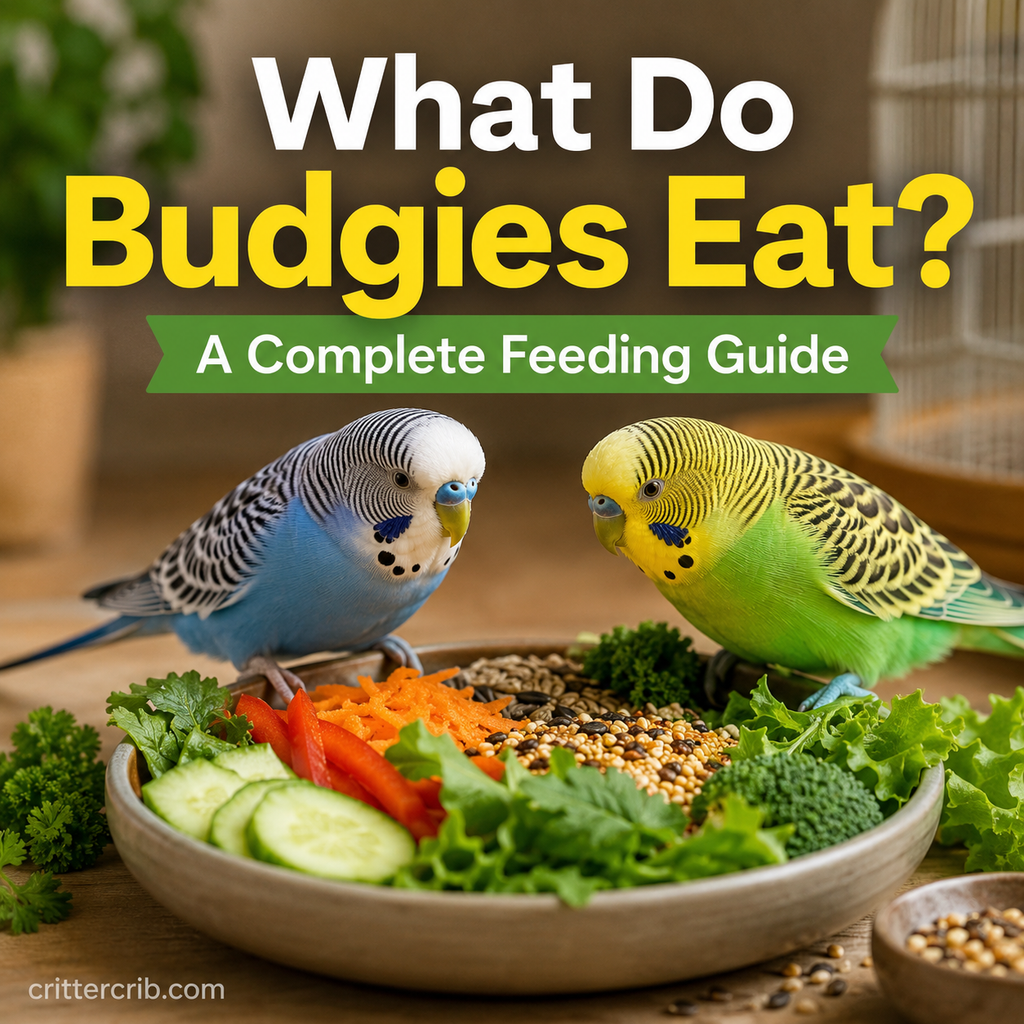
Budgies may be small birds, but their diet has a big impact on their health, energy, feathers, and lifespan. It’s easy to assume that a bowl of birdseed is all a budgie needs. In reality, a healthy diet is much more varied.
Budgies, also called budgerigars or parakeets, naturally eat a mixture of seeds, grasses, plant material, and other foods. Pet budgies benefit from the same general idea: variety, moderation, and nutritionally balanced choices.
A good feeding routine usually includes a quality formulated food, fresh vegetables, limited seeds, and occasional fruit and treats.
This guide explains what budgies can eat, what they should avoid, how much to feed, and how to create a balanced everyday diet.
What Should Budgies Eat Every Day?
A budgie’s daily diet should include several different types of food rather than relying entirely on seeds.
A balanced diet generally consists of:
- High-quality budgie pellets or another nutritionally complete formulated food
- Fresh vegetables and leafy greens
- A smaller amount of seeds
- Occasional fruit
- Fresh drinking water
- Small treats in moderation
The exact proportions can vary depending on the bird, its current diet, veterinarian recommendations, activity level, and whether it has any health conditions.
The important thing is variety.
A budgie eating nothing but sunflower seeds and millet may consume plenty of calories while still missing important vitamins and minerals.
Are Pellets Good for Budgies?
Pellets can be an excellent foundation for a budgie’s diet because they are formulated to provide a more consistent balance of nutrients than a seed-only diet.
With loose seed mixtures, budgies can pick out their favorite seeds and leave the rest behind. This selective eating makes it difficult to know whether they are actually getting a balanced diet.
Pellets help reduce that problem because the nutrients are incorporated into each piece.
Look for a pellet made specifically for small parrots or budgies.
Some budgies immediately accept pellets, while others are suspicious of anything unfamiliar. Birds that have eaten seeds their entire lives may require a slow transition.
Never suddenly remove the food a budgie recognizes and expects to eat.
Instead, gradually introduce pellets while monitoring whether the bird is actually eating them.
Can Budgies Eat Seeds?
Yes. Budgies naturally eat seeds, and seeds can absolutely be part of a healthy diet.
The problem is relying on them exclusively.
Many commercial seed mixes contain ingredients such as:
- Millet
- Canary grass seed
- Oats
- Flaxseed
- Niger seed
- Small amounts of sunflower seed
Seeds can be calorie-dense and relatively high in fat compared with many other foods.
Budgies also tend to have favorites. A bird may dig through an entire bowl looking for millet while ignoring less desirable ingredients.
For that reason, seeds are often better treated as one part of the diet rather than the entire diet.
They can also be useful during training because most budgies consider millet particularly rewarding.
Best Vegetables for Budgies
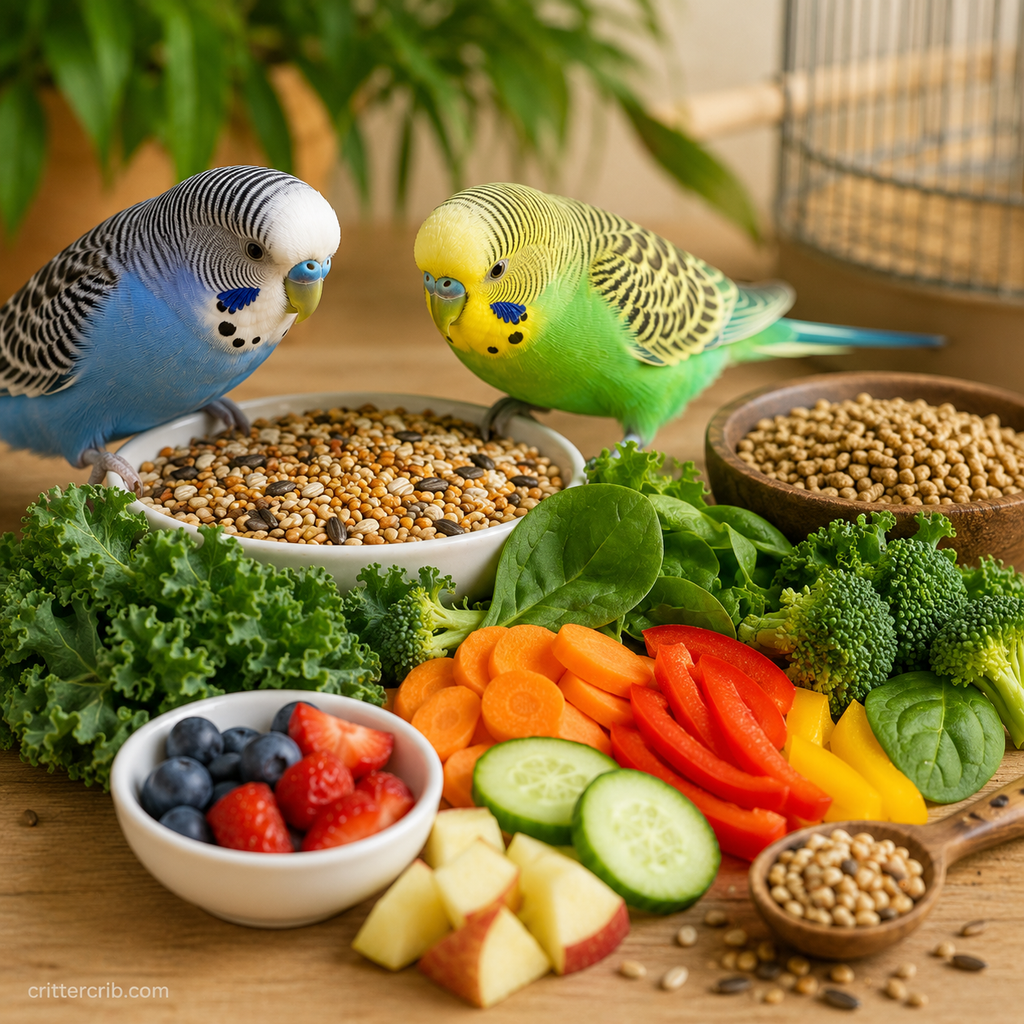
Fresh vegetables are one of the best ways to add variety and nutrients to a budgie’s diet.
Some budgie-friendly vegetables include:
- Broccoli
- Carrots
- Bell peppers
- Peas
- Green beans
- Zucchini
- Cucumber
- Sweet potato
- Pumpkin
- Corn in moderation
- Brussels sprouts
- Cauliflower
Vegetables can be served raw when appropriate or lightly cooked without salt, oil, butter, or seasoning.
Chopping vegetables into very small pieces can make them less intimidating for a bird that isn’t used to eating fresh food.
Another option is clipping larger leafy pieces to the cage so the budgie can investigate and nibble them.
Best Leafy Greens for Budgies
Leafy greens are particularly useful because many birds enjoy tearing them apart as much as they enjoy eating them.
Good choices include:
- Kale
- Romaine lettuce
- Bok choy
- Collard greens
- Mustard greens
- Dandelion greens
- Swiss chard in moderation
- Cilantro
- Parsley in moderation
Dark leafy greens generally provide more nutritional value than very watery lettuces.
Iceberg lettuce isn’t considered toxic, but it offers relatively little nutrition compared with darker greens.
Always wash fresh greens thoroughly before offering them.
Can Budgies Eat Fruit?
Yes, but fruit should generally make up a smaller portion of the diet than vegetables.
Fruit contains beneficial vitamins and plant compounds, but it also contains natural sugar.
Budgie-safe fruits include:
- Apple without seeds
- Banana
- Blueberries
- Strawberries
- Raspberries
- Blackberries
- Mango
- Papaya
- Pineapple
- Kiwi
- Pear without seeds
- Melon
- Peach without the pit
- Plum without the pit
- Grapes in moderation
- Orange in moderation
Cut fruit into small, manageable pieces.
Remove pits and seeds from fruits where appropriate because some contain compounds that should not be eaten by birds.
Fruit also spoils quickly, so leftovers should not remain in the cage for long periods.
Can Budgies Eat Apples?
Yes. Budgies can eat apple flesh.
However, remove the seeds and core before offering apple.
Apple seeds contain compounds that can release cyanide when metabolized, so they should not be given to birds.
A thin slice or a few small pieces of apple is plenty for a budgie.
Can Budgies Eat Bananas?
Yes. Bananas are generally safe for budgies.
They are soft, easy to eat, and many birds enjoy them.
Because banana is relatively sweet, offer small amounts rather than making it an everyday staple.
The texture can also be messy, so remove uneaten pieces before they spoil.
Can Budgies Eat Berries?
Berries are excellent occasional foods for budgies.
Blueberries, strawberries, blackberries, and raspberries can all be offered in small amounts.
Don’t be alarmed if a berry temporarily stains your budgie’s beak or surrounding feathers.
Some colorful foods can also change the appearance of droppings temporarily.
Can Budgies Eat Cooked Foods?
Certain cooked foods can be offered occasionally as long as they are plain and bird-safe.
Examples include:
- Cooked brown rice
- Cooked quinoa
- Cooked oats
- Cooked barley
- Plain whole-grain pasta
- Cooked lentils
- Cooked beans that are safe and fully prepared
- Cooked sweet potato
Do not add butter, salt, sauces, garlic, onion, or heavy seasoning.
Remember that these foods should supplement a balanced diet rather than replace it.
Can Budgies Eat Eggs?
Budgies can eat a small amount of thoroughly cooked egg occasionally.
Egg provides protein and other nutrients, but it isn’t something most pet budgies need in large amounts.
A tiny piece of plain hard-boiled or scrambled egg without oil, salt, butter, or seasoning is sufficient.
Birds with specific nutritional needs should be fed according to an avian veterinarian’s recommendations.
What Do Baby Budgies Eat?
Very young budgies are normally fed by their parents.
Hand-feeding an unweaned baby budgie requires specialized knowledge because incorrect formula temperature, consistency, feeding technique, or hygiene can result in serious injury or death.
If you unexpectedly find yourself responsible for an unweaned budgie, contact an avian veterinarian or an experienced bird breeder rather than improvising a feeding routine.
Once a young budgie is weaning, it gradually begins exploring appropriate solid foods.
How Much Should a Budgie Eat?
There isn’t one perfect measurement that works for every bird.
Budgies are tiny, so their portions should be small. However, simply measuring how much food goes into a dish can be misleading because seed hulls often remain behind and make the bowl look full.
Observe what your bird actually consumes.
A typical daily routine might involve:
- Providing the bird’s primary formulated food.
- Offering fresh vegetables or greens.
- Providing a controlled amount of seed if seeds are part of the diet.
- Using millet or other favorite foods primarily as treats.
- Removing spoiled fresh foods promptly.
- Replacing drinking water daily.
Your veterinarian can help determine appropriate quantities if your budgie is underweight, overweight, breeding, elderly, or dealing with health problems.
How Often Should You Feed a Budgie?
Budgies normally eat repeatedly throughout the day rather than consuming one or two large meals.
Their primary food should therefore be available according to the feeding routine recommended for the bird.
Fresh vegetables can be offered daily.
Fruit and calorie-dense treats can be offered less frequently.
It is also important to check food bowls carefully. A seed bowl may appear full even when it contains mostly empty husks.
Fresh Water Is Essential
A budgie should always have access to clean, fresh drinking water.
Change the water at least once daily and more often if it becomes contaminated with:
- Food
- Seed hulls
- Droppings
- Feathers
- Bath water contamination
Wash water dishes regularly rather than simply topping them off.
Some budgies enjoy bathing in their drinking dish, which makes frequent cleaning even more important.
Foods Budgies Should Never Eat
Certain foods that are harmless to people can be dangerous for birds.
Avoid feeding budgies:
- Avocado
- Chocolate
- Caffeine
- Alcohol
- Onion
- Garlic in concentrated or large amounts
- Apple seeds
- Cherry, peach, plum, and similar fruit pits
- Extremely salty foods
- Foods high in added sugar
- Heavily processed foods
- Moldy or spoiled foods
- Foods containing artificial sweeteners when safety is uncertain
If your budgie eats something potentially toxic, contact an avian veterinarian or animal poison service as soon as possible.
Do not wait for symptoms to appear.
Can Budgies Eat Avocado?
No.
Avocado should not be fed to budgies or other pet birds.
Parts of the avocado plant and fruit contain persin, which can be toxic to birds.
Because sensitivity varies and serious reactions are possible, avocado should simply be kept off the menu.
Can Budgies Eat Chocolate?
No.
Chocolate contains caffeine and theobromine, which can be toxic to birds.
Dark chocolate and baking chocolate are particularly concentrated, but no form of chocolate should be intentionally offered to a budgie.
Can Budgies Drink Milk?
Budgies should not be given milk as a regular drink.
Birds are not designed to digest dairy products the way humans do.
Their everyday beverage should simply be clean water.
There is no nutritional reason to give a healthy budgie milk.
Can Budgies Eat Bread?
A tiny amount of plain bread isn’t usually the most concerning food a budgie could encounter, but bread provides relatively little nutritional value.
It shouldn’t become a regular part of the diet.
If offered at all, choose a small amount of plain whole-grain bread without excessive salt, sugar, butter, or other additions.
Nutritious vegetables, greens, pellets, and appropriate grains are better choices.
Are Millet Sprays Good for Budgies?
Most budgies love millet spray.
That doesn’t mean unlimited millet is a good idea.
Millet works particularly well as:
- A training reward
- A bonding treat
- An incentive for a nervous bird
- An occasional enrichment food
Because budgies often value millet so highly, reserving it for training can make it much more useful.
If a bird has millet constantly available, it may ignore healthier foods in favor of its favorite treat.
Should Budgies Have Cuttlebone?
Many budgie cages contain a cuttlebone or mineral source.
Cuttlebone provides calcium and also gives some birds something safe to chew.
Whether additional calcium supplementation is necessary depends on the overall diet and the individual bird.
Avoid adding vitamin or mineral supplements to food or water without a reason. Too much of certain nutrients can also cause problems.
If your budgie eats a properly formulated diet, an avian veterinarian can tell you whether additional supplementation is necessary.
How to Get a Budgie to Eat Vegetables
Some budgies treat a piece of broccoli as though you’ve placed an alien object inside their cage.
That’s normal.
Budgies are cautious about unfamiliar foods, and a bird raised primarily on seed may not immediately recognize vegetables as food.
Try several approaches.
Offer the Same Food Repeatedly
A budgie may need to see a new vegetable many times before tasting it.
Don’t assume the bird dislikes something simply because it ignored it the first day.
Chop Vegetables Finely
Finely chopped vegetables can resemble the texture of familiar foods.
You can create a simple bird-safe vegetable chop using several vegetables and leafy greens.
Clip Greens to the Cage
Budgies often enjoy shredding things.
Attaching a washed leaf of romaine, kale, or another suitable green to the cage can turn eating into enrichment.
Eat Near Your Budgie
Budgies are social birds.
Seeing another member of their “flock” eating can increase their curiosity about a new food.
Never feed food directly from your mouth because human saliva can contain bacteria that are unsafe for birds.
Use Favorite Foods Strategically
A very small amount of familiar seed can sometimes be mixed with chopped vegetables to encourage investigation.
The goal is eventually for the bird to eat the vegetables themselves, not simply pick the seeds out.
How to Switch a Budgie From Seeds to Pellets
Diet changes should be gradual.
Do not suddenly replace a seed diet with pellets and assume the bird will eat when hungry enough.
A budgie may not recognize pellets as food and can lose weight quickly.
Instead:
- Introduce pellets while continuing to provide familiar food.
- Observe whether the budgie actually eats the pellets.
- Gradually adjust the proportions over time.
- Monitor body weight with an accurate gram scale if possible.
- Contact an avian veterinarian if you’re unsure whether the bird is eating enough.
Transitioning may take days, weeks, or longer.
Patience is safer than forcing a rapid change.
Why Seed-Only Diets Can Be a Problem
Seed-only diets remain common because budgies enthusiastically eat them.
Unfortunately, enthusiasm doesn’t equal nutritional balance.
A bird that selectively eats high-fat seeds may be at greater risk of nutritional deficiencies and excessive calorie intake.
A varied diet helps provide:
- Vitamins
- Minerals
- Amino acids
- Fiber
- Plant nutrients
- Appropriate energy levels
Diet also affects feather condition, body weight, activity, and general health.
A Simple Daily Budgie Feeding Routine
A practical feeding routine doesn’t have to be complicated.
Morning
Replace drinking water and offer the primary balanced food.
Provide a small serving of fresh vegetables or leafy greens.
During the Day
Allow access to the appropriate primary food and monitor what is actually being eaten.
Remove fresh foods before they spoil.
Training or Enrichment
Use a small piece of millet or another favorite food as a reward.
Evening
Check food and water dishes.
Remove spoiled leftovers and clean dishes when necessary.
Consistency makes it easier to notice changes in appetite.
A sudden reduction in eating can be an important warning sign in birds.
Signs Your Budgie’s Diet May Need Attention
Pay attention to changes involving:
- Appetite
- Body weight
- Droppings
- Energy level
- Feather appearance
- Drinking habits
- Food preferences
Birds often hide illness until they are significantly unwell.
A sudden change in eating behavior should therefore be taken seriously.
Regular veterinary examinations with a veterinarian experienced in avian medicine are useful even when a bird appears healthy.
Frequently Asked Questions About Feeding Budgies
What Is a Budgie’s Favorite Food?
Many budgies strongly prefer millet and seeds.
Unfortunately, favorite foods aren’t necessarily the foods they should eat most often.
Millet can be an excellent treat or training reward while healthier foods make up the majority of the diet.
Can Budgies Eat Human Food?
Some plain human foods are safe, including certain vegetables, fruits, grains, and cooked foods.
However, heavily processed meals containing salt, sugar, sauces, fat, caffeine, chocolate, onion, or other potentially harmful ingredients should not be shared.
When in doubt, offer foods specifically known to be safe for birds.
Can Budgies Eat Rice?
Yes, budgies can eat plain cooked rice in small amounts.
Brown rice can provide more nutrients and fiber than highly refined white rice.
Do not add salt, butter, oil, or sauces.
Can Budgies Eat Carrots?
Yes.
Carrots are a nutritious vegetable for budgies and can be served raw, finely grated, chopped, or lightly cooked.
Some birds prefer shredded carrot because the texture is easy to pick apart.
Can Budgies Eat Broccoli?
Yes.
Broccoli is an excellent vegetable to introduce to budgies.
The florets are particularly fun for birds because they can pick through the tiny buds individually.
Can Budgies Eat Cucumber?
Yes.
Budgies can eat cucumber.
Because cucumber contains a lot of water, it shouldn’t replace more nutrient-dense vegetables, but it can be included as part of a varied diet.
Final Thoughts
Budgies need more than a bowl of seeds to thrive.
A healthy feeding plan combines nutritionally balanced food with vegetables, leafy greens, modest amounts of seed, occasional fruit, and clean drinking water.
Variety matters, but changes should happen gradually. A budgie that has eaten seeds for years may need time to recognize pellets or vegetables as food.
Keep portions appropriate for such a small bird, remove fresh food before it spoils, and pay attention to changes in appetite or body weight.
Most importantly, don’t judge a food by how excited your budgie is to eat it. Millet may win the popularity contest every time, but a balanced diet is what supports long-term health.