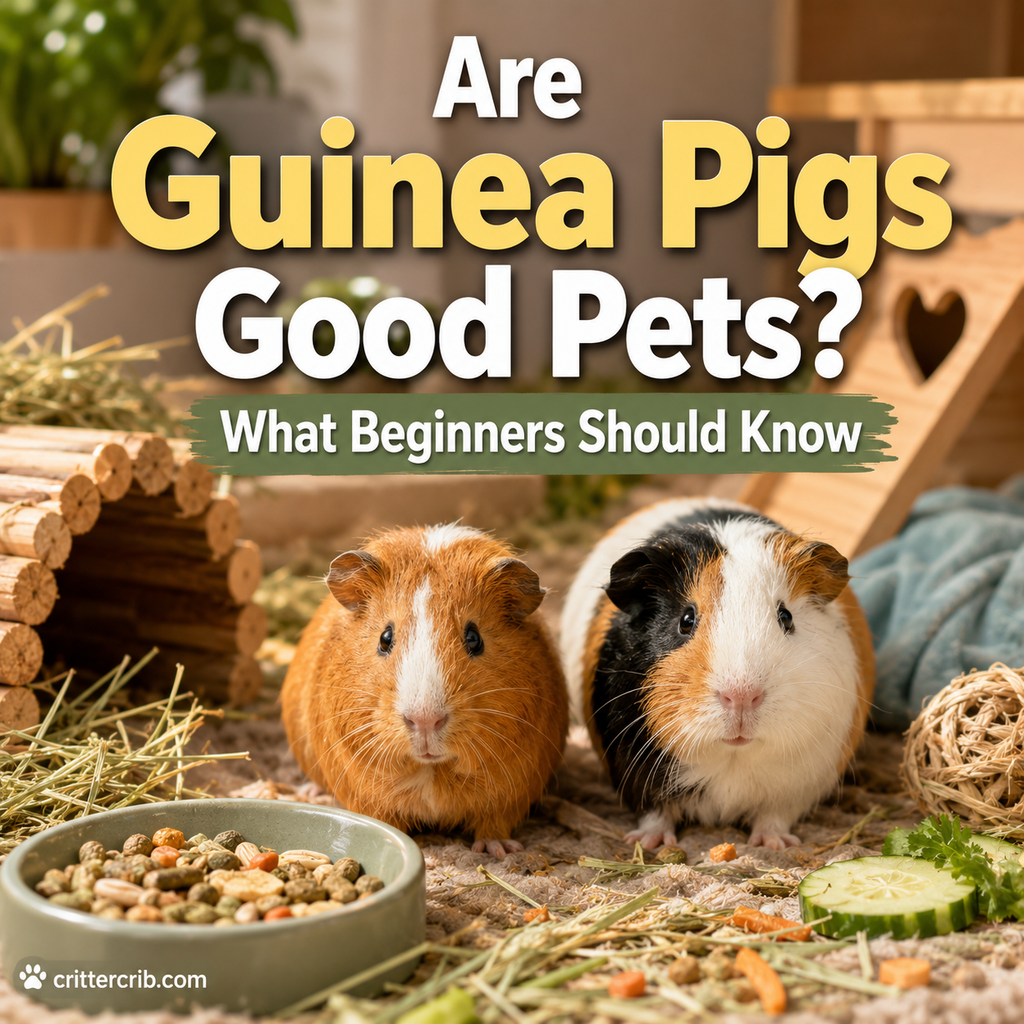
Guinea pigs can be wonderful pets for the right household. They’re social, expressive, entertaining to watch, and often become comfortable interacting with people once they feel safe.
They’re also more work than their small size might suggest.
A guinea pig isn’t a pet you simply place in a small cage, refill a food bowl occasionally, and take out when you want to play. They need plenty of living space, unlimited hay, fresh vegetables, regular cleaning, companionship, enrichment, and access to veterinary care.
If you’re thinking about bringing guinea pigs home, understanding those responsibilities beforehand can make a big difference.
Here’s what beginners should know about guinea pigs, including their personalities, daily care, costs, housing needs, and some of the advantages and disadvantages of keeping them as pets.
Are Guinea Pigs Good Pets for Beginners?
Yes, guinea pigs can be good pets for beginners who are prepared for their care requirements.
They’re generally gentle animals, don’t require outdoor walks, and can become surprisingly interactive with their owners. Their daily routine is also relatively straightforward once you have the habitat and feeding setup established.
However, “beginner-friendly” shouldn’t be confused with low maintenance.
Guinea pigs require attention every day. They need fresh food and water, plenty of hay, routine habitat cleaning, social interaction, and regular health monitoring.
They’re best suited to someone who wants an animal they can actively care for rather than a mostly hands-off pet.
What Are Guinea Pigs Like as Pets?
One of the biggest attractions of guinea pigs is their personality.
Although individual personalities vary, many guinea pigs become curious and enthusiastic around familiar people. Some are adventurous almost immediately, while others may spend considerably more time hiding until they feel comfortable.
Food tends to be an excellent motivator.
Once guinea pigs associate you with vegetables or other favorite foods, they may greet you enthusiastically whenever they hear you approaching.
Guinea Pigs Can Be Surprisingly Vocal
Guinea pigs have an impressive collection of sounds.
One of the most recognizable is the high-pitched “wheek” often associated with excitement, particularly when food might be arriving.
You may also hear:
- Purring or rumbling
- Chirping or squeaking
- Chattering teeth
- Quiet conversational noises
- Excited wheeking
Learning these sounds is part of getting to know your pets. Over time, you’ll start recognizing which noises are associated with excitement, annoyance, communication with another guinea pig, or anticipation of dinner.
And yes, some guinea pigs become remarkably good at recognizing the sound of a refrigerator door or vegetable bag.
Guinea Pigs Are Social Animals
Guinea pigs are naturally social and generally benefit from living with compatible guinea pig companions.
Human attention is valuable, but it doesn’t completely replace interaction with another guinea pig.
A compatible pair can eat, explore, rest, communicate, and interact together throughout the day—even when nobody is home.
If you’re considering guinea pigs, plan your habitat and budget around keeping more than one rather than assuming you’ll only need space and supplies for a single animal.
Can Male Guinea Pigs Live Together?
Compatible males can live together, but personality, introductions, adequate space, and access to resources all matter.
Females can also form compatible groups or pairs.
When housing guinea pigs together, provide enough room and multiple resources so one animal doesn’t have to compete constantly with another.
That can mean providing more than one:
- Hide
- Food area
- Water source
- Comfortable resting area
If you’re adopting, a rescue may already have bonded guinea pigs available. Adopting an established pair can simplify the process for a first-time owner.
Guinea Pigs Need More Space Than You Might Expect
The tiny cages traditionally associated with guinea pigs can create a misleading picture of their housing needs.
Guinea pigs spend much of their lives inside their habitat, so floor space matters.
Unlike animals that make extensive use of vertical climbing structures, guinea pigs primarily benefit from horizontal space where they can walk, run, explore, eat, and interact.
A larger enclosure also gives you more room to create separate areas for sleeping, eating, hiding, and enrichment.
What Should a Guinea Pig Habitat Include?
A good setup should provide:
- Plenty of usable floor space
- Comfortable, absorbent bedding or an appropriate liner system
- Multiple hiding places
- Unlimited access to hay
- Fresh drinking water
- Food dishes when needed
- Safe enrichment
- Space to exercise and explore
The enclosure should be placed somewhere protected from extreme temperatures, drafts, direct sunlight, and excessive noise.
Guinea pigs should also be protected from dogs, cats, and other animals that could frighten or injure them.
Guinea Pigs Need Unlimited Hay
Hay is one of the most important parts of guinea pig care.
Good-quality grass hay should make up the majority of an adult guinea pig’s diet and should generally be available at all times.
Hay supports healthy digestion and provides the chewing activity necessary for teeth that continue growing throughout a guinea pig’s life.
Common grass hays include timothy, orchard grass, and other appropriate varieties.
If you’re considering guinea pigs, it’s worth thinking about hay storage before bringing them home. Two guinea pigs can go through a surprising amount of it.
Guinea Pigs Need Vitamin C
Unlike many animals, guinea pigs cannot produce their own vitamin C. They therefore need an appropriate dietary source.
A balanced guinea pig diet typically includes suitable guinea pig pellets along with fresh vegetables and plenty of grass hay.
Vegetables can provide additional nutrients and variety.
Common options may include appropriate portions of:
- Bell peppers
- Leafy greens
- Cilantro
- Cucumber
- Other guinea pig-safe vegetables
Not every vegetable should be fed in unlimited quantities, and dietary variety should be introduced gradually.
Vitamin C requirements are one reason feeding guinea pigs shouldn’t simply consist of filling a bowl with generic small-animal pellets.
If you’re unsure about your guinea pigs’ nutritional needs, an experienced exotic-animal veterinarian can help you develop an appropriate diet.
Guinea Pigs Need Fresh Water Every Day
Fresh drinking water should always be available.
Many owners use water bottles attached to the enclosure, while appropriately designed bowls may work in some setups.
Whatever method you choose, check it every day.
Bottle mechanisms can occasionally become blocked or leak, and bowls can become contaminated with bedding, hay, or waste.
Cleaning and refilling the water source should become part of your normal daily routine.
Do Guinea Pigs Like Being Held?
Some do. Others would rather keep all four feet firmly on the ground.
Guinea pigs are prey animals, so being picked up can initially feel frightening. A hand suddenly reaching down from above isn’t necessarily interpreted as an invitation to cuddle.
Trust usually develops gradually.
Start by spending time around the enclosure and offering food by hand. Let your guinea pigs become accustomed to your presence before expecting them to enjoy handling.
When you do pick one up, support the body securely and handle it gently.
Over time, some guinea pigs become very comfortable sitting on a person’s lap or relaxing during supervised interaction. Others remain more interested in exploring than cuddling.
Both personalities are normal.
Are Guinea Pigs Good Pets for Children?
Guinea pigs can be enjoyable family pets, but adults should ultimately be responsible for their care.
Their generally gentle nature can make them appealing for families with children. They’re also large enough to interact with more easily than some very small rodents.
However, guinea pigs can be injured if dropped, squeezed, or handled incorrectly.
Young children should always be supervised during handling.
An adult should remain responsible for:
- Feeding
- Providing fresh water
- Habitat cleaning
- Monitoring health
- Purchasing supplies
- Scheduling veterinary care
- Making sure handling is safe
A child’s enthusiasm for a new pet may change. The guinea pigs’ needs won’t.
How Much Daily Work Do Guinea Pigs Require?
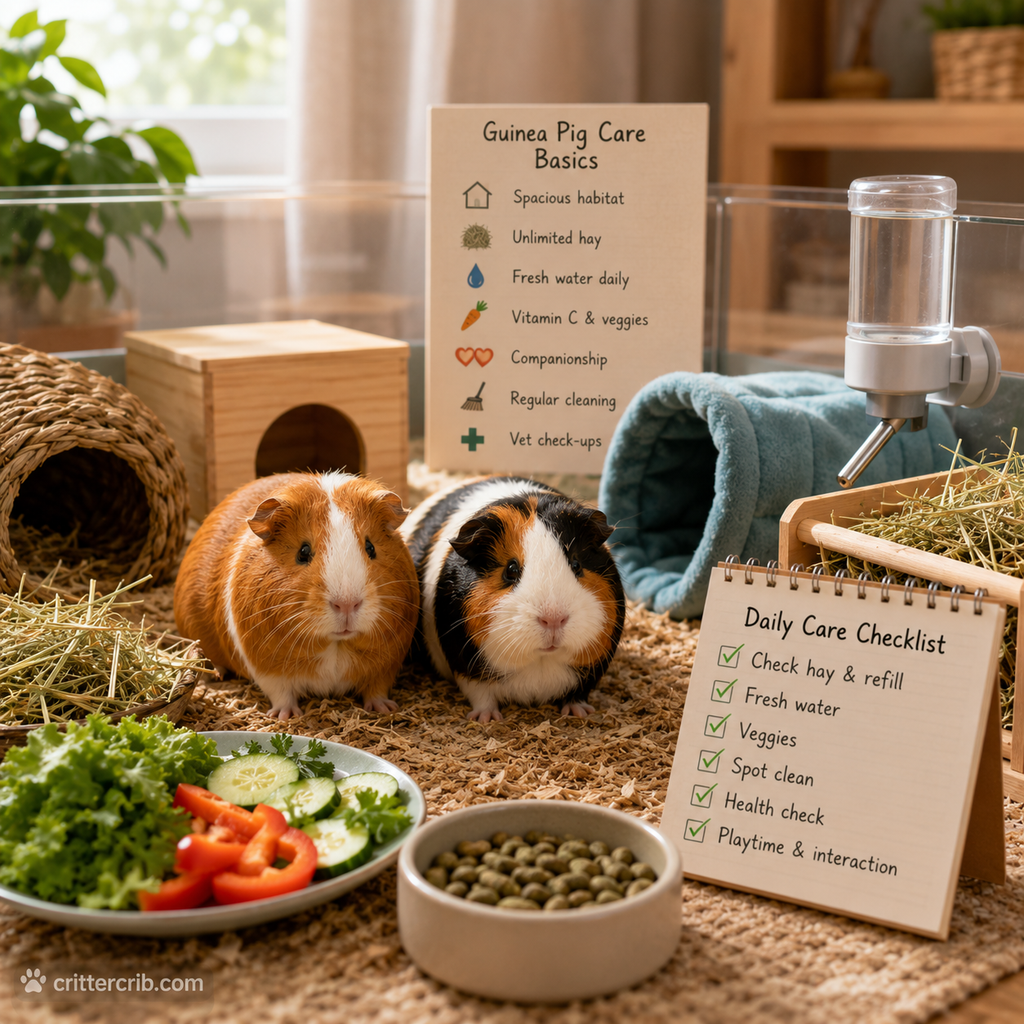
Once you establish a routine, everyday care is manageable for many households.
Expect to spend time each day checking food, water, hay, health, and cleanliness.
A typical routine might include:
- Refill hay as needed.
- Replace or check fresh water.
- Provide the appropriate daily food.
- Remove spoiled fresh vegetables.
- Spot clean dirty areas.
- Check each guinea pig for unusual behavior.
- Spend time interacting with them.
More extensive enclosure cleaning will also be necessary periodically.
The exact cleaning schedule depends on the enclosure size, number of guinea pigs, and bedding system.
Guinea Pig Habitats Require Regular Cleaning
Guinea pigs eat frequently, which means they also produce a considerable amount of waste.
There’s no particularly elegant way around that fact.
Spot cleaning helps keep the enclosure comfortable between larger cleanings. Areas around hay, food, hides, and favorite resting spots may need particularly frequent attention.
Keeping a spacious enclosure can make cleaning easier because waste isn’t concentrated into such a tiny area.
Good ventilation, appropriate bedding, and regular cleaning also help control odors.
A properly maintained guinea pig enclosure shouldn’t require strong fragrances or scented bedding to cover smells.
Guinea Pigs Need Exercise and Enrichment
Guinea pigs may not climb elaborate structures like some other small pets, but they still need things to do.
A large enclosure provides the foundation. You can then add tunnels, hides, cardboard boxes, and other safe objects to encourage exploration.
Guinea pigs may enjoy:
- Tunnels
- Cardboard boxes
- Paper bags prepared safely for exploration
- Multiple hiding areas
- Foraging opportunities
- Safe chewable items
- Rearranged enrichment
- Supervised floor time in a secure area
Even something as simple as placing hay in different locations can encourage movement and exploration.
Guinea Pigs Don’t Need Exercise Wheels
Exercise wheels and balls aren’t appropriate substitutes for floor space for guinea pigs.
Their bodies aren’t built for the same type of wheel running associated with hamsters.
Instead, give them enough horizontal room to move naturally and provide tunnels, hides, and safe areas to explore.
Guinea Pigs Have Continuously Growing Teeth
A guinea pig’s teeth continue growing throughout its life.
This is another reason hay is so important. Constant chewing helps provide natural wear.
Dental problems can become serious if teeth aren’t wearing correctly.
Changes such as difficulty eating, dropping food, excessive drooling, reduced appetite, or unexplained weight loss deserve prompt veterinary attention.
Guinea Pigs Can Hide Illness
As prey animals, guinea pigs may conceal signs of illness until a problem has progressed.
Owners should become familiar with what’s normal for each animal.
Pay attention to changes in:
- Appetite
- Water consumption
- Droppings
- Activity
- Breathing
- Body weight
- Coat condition
- Movement
- Social behavior
A guinea pig suddenly refusing food should never simply be dismissed as being picky.
Regularly weighing your guinea pigs can also help identify changes that aren’t immediately obvious just by looking at them.
Finding a Guinea Pig Veterinarian Is Important
Before bringing guinea pigs home, find out whether you have access to a veterinarian who treats them.
Not every veterinary clinic routinely treats guinea pigs.
They are often categorized as exotic pets in veterinary medicine, so you may need an exotic-animal or small-mammal veterinarian.
This is something worth researching before an emergency occurs.
Veterinary care can also be one of the larger expenses associated with guinea pig ownership, especially if an animal develops dental, digestive, respiratory, or other health problems.
How Much Do Guinea Pigs Cost?
The guinea pigs themselves may be relatively inexpensive compared with the long-term cost of caring for them.
Initial expenses can include:
- A sufficiently large enclosure
- Hides and tunnels
- Bedding or reusable liners
- Hay storage
- Food bowls
- Water bottles or bowls
- Carriers
- Enrichment supplies
Ongoing costs include hay, pellets, fresh vegetables, bedding, replacement accessories, and veterinary care.
Because guinea pigs should generally have compatible companionship, calculate your budget based on caring for at least two animals rather than one.
It’s also sensible to maintain an emergency veterinary fund.
A relatively inexpensive pet can still require expensive medical treatment.
How Long Do Guinea Pigs Live?
Guinea pigs are a meaningful long-term commitment.
They commonly live for several years, and some can live considerably longer with appropriate care.
That’s important to consider when guinea pigs are being purchased for children. The family may still be caring for those animals years after the initial excitement of bringing them home.
Before adopting, ask yourself whether you’re prepared to provide daily care, food, supplies, and veterinary attention throughout their lives.
Do Guinea Pigs Smell?
The animals themselves aren’t typically the biggest odor problem.
An enclosure that isn’t cleaned frequently enough is.
Urine, damp bedding, old vegetables, and accumulated waste can create noticeable odors. Regular spot cleaning and periodic larger cleanings usually keep things manageable.
A spacious, well-maintained enclosure also tends to be easier to keep fresh than a cramped cage.
Avoid trying to solve odor problems with heavily scented products. Cleaning the source of the odor is a better solution.
Are Guinea Pigs Loud?
Guinea pigs aren’t usually loud in the same way as barking dogs or vocal birds, but they certainly aren’t silent.
They communicate throughout the day and may become particularly vocal when they think food is coming.
Some owners find this charming.
Others discover that opening a refrigerator can trigger what sounds like a tiny alarm system from across the room.
Fortunately, their vocalizations are generally brief and aren’t likely to create the same noise concerns associated with some larger pets.
Advantages of Having Guinea Pigs as Pets
There are plenty of reasons guinea pigs have remained popular companion animals.
Some of their biggest advantages include:
- Generally gentle personalities
- Interesting social behavior
- No need for outdoor walks
- Relatively straightforward daily routines
- Lots of personality
- Entertaining vocalizations
- Potential to form strong bonds with familiar people
- Enjoyable to observe even when they aren’t being handled
- Suitable for many homes where larger animals aren’t practical
For people who enjoy creating habitats and watching natural animal behavior, guinea pigs can be especially rewarding.
Disadvantages of Having Guinea Pigs as Pets
It’s equally important to understand the downsides.
Potential challenges include:
- They need more space than many people expect.
- Keeping compatible guinea pigs together increases space and supply requirements.
- They require fresh hay every day.
- Fresh vegetables add an ongoing expense.
- Enclosures require frequent cleaning.
- Veterinary care may require an exotic-animal veterinarian.
- Medical treatment can become expensive.
- They can hide signs of illness.
- They aren’t guaranteed to enjoy being held.
- They require a commitment lasting several years.
None of these automatically make guinea pigs bad pets. They simply make them a poor match for someone expecting an extremely inexpensive, low-maintenance animal.
Guinea Pigs vs. Hamsters for Beginners
Guinea pigs and hamsters are both popular small pets, but their care and behavior are quite different.
Guinea pigs are larger and highly social. They generally need companionship from other guinea pigs and require substantially more habitat space than many new owners expect.
Hamsters are smaller and, depending on the species, are typically kept individually. They’re also often most active during evening and nighttime hours.
Guinea pigs can be particularly appealing if you want animals that are frequently visible, vocal, and socially interactive.
Neither should be chosen simply because it seems easier than owning a dog or cat.
They’re different animals with different needs.
What Should You Buy Before Getting Guinea Pigs?
Setting everything up before your guinea pigs arrive makes the transition much easier.
At minimum, prepare:
- A properly sized enclosure
- Appropriate bedding or liners
- Several hiding places
- Quality grass hay
- Guinea pig pellets
- Guinea pig-safe fresh vegetables
- A water bottle or suitable bowl
- Food dishes if needed
- Tunnels and enrichment
- A secure pet carrier
- Basic cleaning supplies
You should also identify a veterinarian who treats guinea pigs.
Don’t rely entirely on a pet-store starter kit. Some bundled cages and accessories may not provide the space or equipment you’ll ultimately need.
Should You Adopt or Buy Guinea Pigs?
Adoption is worth considering, especially for beginners.
Animal shelters and guinea pig rescues may have bonded pairs already living successfully together. Rescue staff may also be able to tell you about each animal’s personality and handling preferences.
That can remove some of the uncertainty involved in introducing unfamiliar guinea pigs.
Regardless of where your guinea pigs come from, learn as much as possible about their age, sex, health history, diet, and previous living arrangements.
Questions to Ask Yourself Before Getting Guinea Pigs
Before making the commitment, consider your everyday life rather than just whether you think guinea pigs are cute.
Ask yourself:
- Do I have enough room for a spacious enclosure?
- Am I prepared to keep compatible guinea pigs rather than assuming I’ll have one?
- Can I provide hay, fresh vegetables, pellets, and water every day?
- Am I willing to clean the enclosure regularly?
- Is someone available to care for them when I travel?
- Can I afford routine and unexpected veterinary care?
- Is there a veterinarian nearby who treats guinea pigs?
- Am I comfortable committing to several years of care?
- Can I keep other household pets safely separated from them?
- Do I want pets that require daily attention even when I don’t feel like doing chores?
If most of those answers are yes, guinea pigs may be an excellent fit.
Frequently Asked Questions About Guinea Pigs as Pets
Are Guinea Pigs Easy to Take Care Of?
Their basic routine isn’t particularly complicated, but guinea pigs shouldn’t be considered maintenance-free pets. They require daily hay, food, fresh water, cleaning, health checks, enrichment, and social care.
Once you establish a routine, many of these tasks become quick and predictable.
Are Guinea Pigs Friendly?
Many guinea pigs become friendly and comfortable around familiar people, especially when interactions are calm and positive. Personality varies, however, and some guinea pigs remain more cautious than others.
Do Guinea Pigs Bite?
Guinea pigs can bite, but biting isn’t typically their first response to people. A frightened, stressed, uncomfortable, or improperly handled animal may defend itself.
Learning your guinea pig’s body language and handling it gently reduces the chances of negative interactions.
Can You Keep Just One Guinea Pig?
Guinea pigs are social animals and generally benefit from compatible guinea pig companionship. Rather than planning around a solitary guinea pig, prospective owners should consider adopting a compatible or already-bonded pair when possible.
Are Guinea Pigs Messy?
They can be.
Hay gets scattered, bedding moves around, and guinea pigs produce plenty of droppings. Regular spot cleaning keeps the habitat manageable, but someone who wants an exceptionally tidy pet area may find guinea pig ownership challenging.
Are Guinea Pigs Good Apartment Pets?
Guinea pigs can work well in apartments because they don’t require outdoor walks and are relatively quiet.
The bigger consideration is space. Their enclosure can take up a significant amount of floor area, especially when keeping multiple guinea pigs.
Check rental or housing rules regarding pets as well.
Are Guinea Pigs Expensive Pets?
Their initial purchase or adoption cost may be modest, but proper housing, food, hay, vegetables, bedding, and veterinary care create ongoing expenses.
Veterinary treatment is the expense new owners are most likely to underestimate.
So, Are Guinea Pigs Good Pets?
For the right person, absolutely.
Guinea pigs can be affectionate, funny, social companions with much bigger personalities than their size might suggest. Watching a cautious new guinea pig gradually learn your routine, recognize your voice, and enthusiastically greet you at feeding time can be incredibly rewarding.
But they aren’t disposable “starter pets.”
They need substantial living space, appropriate companionship, unlimited hay, fresh food, regular cleaning, enrichment, careful health monitoring, and access to appropriate veterinary care.
If you’re prepared for those responsibilities and want social small pets you can interact with every day, guinea pigs can be a great choice.
The key is knowing what you’re signing up for before bringing them home.