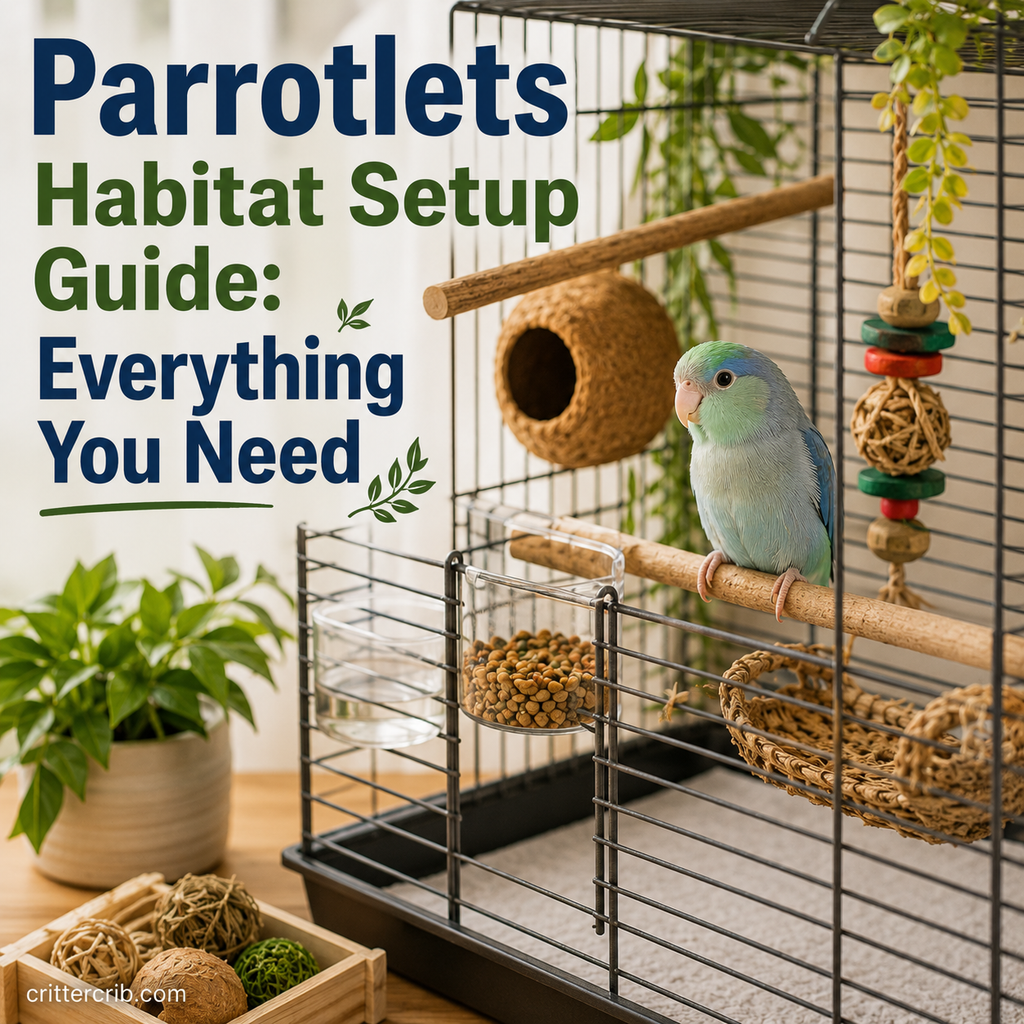
Parrotlets may be tiny, but don’t let their size fool you. These little parrots are active, curious, intelligent, and often remarkably confident. They need a habitat that gives them plenty of opportunities to climb, play, chew, forage, and move around.
A good parrotlet setup starts with a spacious cage, but the cage itself is only part of the picture.
Perches need to be comfortable and varied. Toys should encourage natural behaviors without overcrowding the cage. Food and water need to stay accessible and clean. Your bird also needs a safe location in the home, consistent sleep, and opportunities for exercise outside the cage.
Fortunately, creating a great parrotlet habitat doesn’t have to be complicated.
Here’s everything you need to set up a comfortable, enriching home for your parrotlet.
What Does a Parrotlet Need in Its Habitat?
Think of your parrotlet’s cage as its home base.
It should provide places to eat, drink, sleep, climb, exercise, play, and relax.
A good parrotlet habitat should include:
- A spacious, secure cage
- Appropriate bar spacing
- Several natural or varied perches
- Food and fresh water
- Chewing and shredding toys
- Foraging opportunities
- Climbing activities
- Open space for movement
- A comfortable sleeping area
- A bird-safe cage liner
- A safe location away from household hazards
The goal isn’t to fit as many accessories as possible into the cage.
A simpler arrangement with useful accessories and plenty of open space is usually better than an overcrowded setup.
Choosing the Right Cage for a Parrotlet
The cage is the foundation of your habitat.
Although parrotlets are among the smallest parrots commonly kept as pets, they’re energetic birds that need room to move.
Avoid choosing the smallest cage marketed for “small birds.”
Manufacturers may label cages for finches, budgies, or other small species even when the dimensions aren’t particularly generous.
What Size Cage Does a Parrotlet Need?
For one parrotlet, a cage around 18 inches wide by 18 inches deep by 18 inches tall can be considered a basic starting point, but larger is strongly preferable.
A cage around 24 inches wide or larger gives you considerably more flexibility for arranging perches and toys while preserving open space.
If your bird spends substantial time inside the cage, additional room becomes even more valuable.
When comparing cages, prioritize width.
Parrotlets climb extensively, but they also benefit from horizontal movement and short flights.
A wide rectangular cage is generally more useful than a very tall, narrow one.
What Bar Spacing Is Safe for Parrotlets?
Parrotlets are tiny enough to squeeze into surprisingly small spaces.
Look for bar spacing of approximately 1/2 inch or less.
Bars that are too widely spaced can allow a bird to push its head through and potentially become trapped.
Don’t buy a large parrot cage simply because it provides more room. Always make sure the spacing is appropriate for a small bird.
Horizontal Bars Are Helpful
Parrotlets love to climb.
Cages with horizontal bars on at least some sides give them additional opportunities to move around using their feet and beak.
You don’t necessarily need horizontal bars everywhere, but they’re a useful feature.
Choose a Rectangular Cage
Rectangular cages generally provide the most usable space.
They’re also easier to arrange with perches at different levels while maintaining an open area through the center.
Decorative round cages may look interesting, but they’re usually less practical.
Focus on usable space and safety rather than unusual cage shapes.
Where Should You Put a Parrotlet Cage?
Cage placement has a major influence on your bird’s daily environment.
Parrotlets are social and curious. They generally enjoy being somewhere they can see and hear normal household activity.
A living room, home office, or frequently used family area can work well.
However, avoid putting the cage in the most chaotic location possible.
Your bird needs periods of quiet too.
A Good Cage Location Should Be
- Away from direct drafts
- Away from heating vents
- Away from air-conditioning vents
- Protected from intense direct sunlight
- Away from the kitchen
- Free from cigarette and vape smoke
- Away from aerosols and strong fragrances
- Somewhere with normal household interaction
- Quiet and dark enough at night
Placing one side of the cage near a wall may also help your parrotlet feel more secure.
Why the Kitchen Is a Bad Place for a Parrotlet
Avoid keeping your parrotlet in or immediately beside the kitchen.
Cooking areas expose birds to several potential hazards, including smoke, steam, hot surfaces, boiling water, and airborne fumes.
Of particular concern are fumes released when certain nonstick or PTFE-containing cookware and appliances become overheated.
These fumes can be extremely dangerous to birds.
Because birds have highly efficient respiratory systems, airborne contaminants that barely bother people can potentially be much more serious for them.
Keep your parrotlet well away from cooking areas.
How to Arrange a Parrotlet Cage
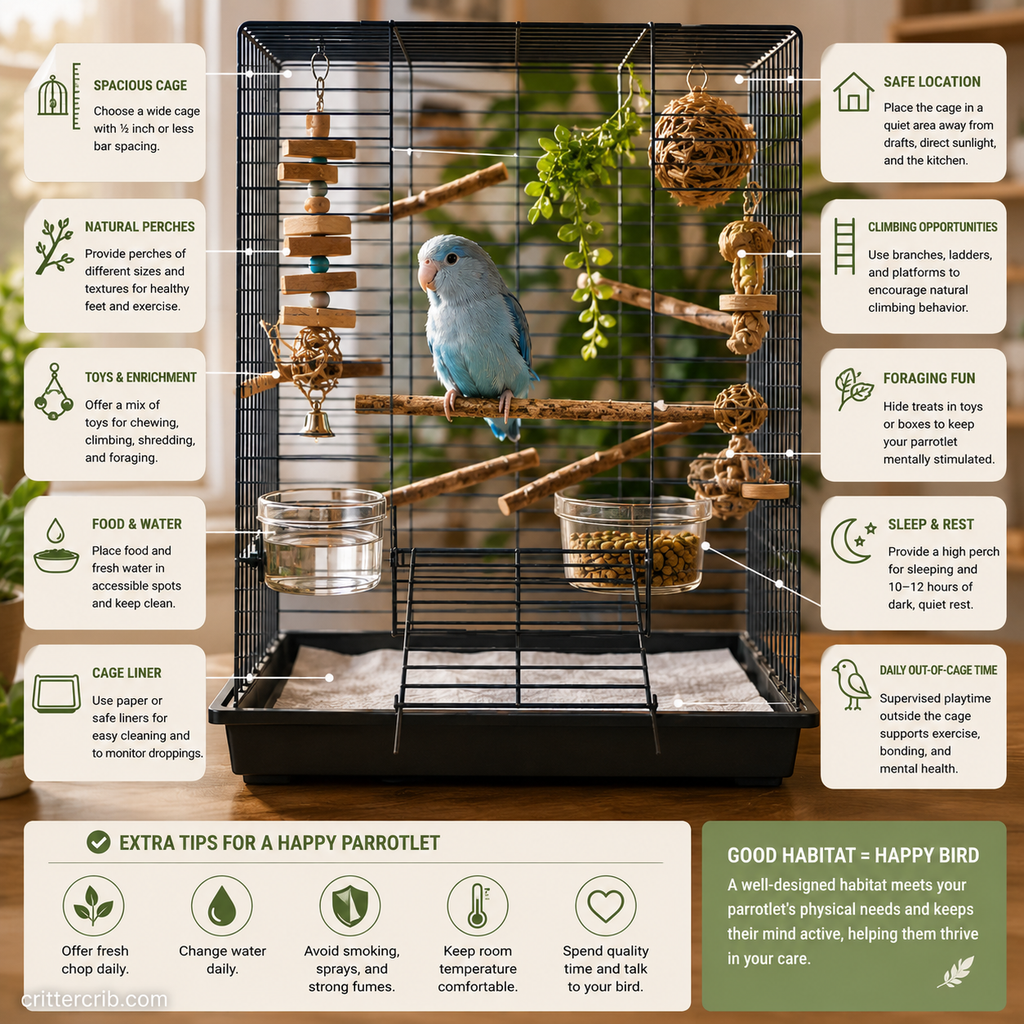
Once you’ve chosen a cage, start with the essentials rather than filling it immediately.
Think in terms of zones.
Your bird needs areas for:
- Feeding
- Drinking
- Sleeping
- Playing
- Climbing
- Moving freely
Arrange perches and toys around these activities while leaving an open pathway through the cage.
Your parrotlet should be able to move from one side to another without squeezing around a wall of toys.
The Best Perches for Parrotlets
Perches are one of the most important cage accessories.
Your parrotlet spends a huge portion of its life standing on them.
Using several sizes and textures allows the feet to grip in different positions.
Natural Wood Perches
Natural bird-safe branches are particularly useful because they aren’t perfectly uniform.
The diameter changes along the branch, creating natural variation for the bird’s feet.
Commercial natural-wood bird perches are a convenient option.
If you’re collecting branches yourself, only use wood from a species you’ve positively identified as bird-safe. The branch should also be free from:
- Pesticides
- Chemical treatments
- Mold
- Roadside contamination
- Wild bird droppings
When you’re unsure about a branch, don’t use it.
Use Different Perch Diameters
Don’t make every perch identical.
Your parrotlet’s toes should be able to grip comfortably without wrapping completely around the perch in exactly the same position all day.
Variation is the goal.
Are Dowel Perches Bad?
The smooth dowel that comes with many cages isn’t automatically dangerous.
The problem is relying on identical dowels for every perch.
A single dowel can be part of the setup, but supplement it with more varied natural perches.
Avoid Sandpaper Perch Covers
Abrasive perch covers are often marketed for nail maintenance.
However, your parrotlet spends long periods standing on its perches, and excessively rough surfaces may irritate the feet.
Comfortable, varied perches are a better everyday choice.
Where Should Perches Go?
Place perches at several heights.
Parrotlets often prefer sleeping on a higher perch because elevated locations can feel secure.
You can also place perches:
- Near feeding areas
- Beside favorite toys
- At opposite ends of the cage
- At different heights to encourage climbing
Don’t arrange every perch directly above another.
Otherwise, droppings from the upper perch will continually soil the lower one.
Also avoid placing a perch directly above food or water dishes.
Food and Water Bowl Placement
Food and water should be easy for your parrotlet to access.
Attach dishes securely so they can’t easily tip over.
Stainless steel bowls are popular because they’re durable and easy to clean, although other bird-safe containers can also work.
Position them away from overhead perches whenever possible.
Keep Water Fresh
Replace your parrotlet’s drinking water at least once a day and whenever it becomes contaminated.
Small parrots have a talent for dropping food, toy pieces, feathers, and other debris into their water.
Don’t simply keep topping off the same bowl.
Wash it regularly.
What Should You Put on the Bottom of the Cage?
Simple is usually best.
Plain paper or another appropriate disposable cage liner makes cleanup easy and allows you to observe your bird’s droppings.
Being able to see droppings can be useful because significant changes may sometimes indicate a health problem.
Replace the liner regularly rather than allowing waste and food debris to accumulate.
Avoid overly complicated cage-floor substrates that create dust or hide droppings.
Essential Toys for Parrotlets
Parrotlets need mental stimulation.
Despite their tiny bodies, they’re parrots—and parrots are intelligent animals that naturally spend time manipulating objects, searching for food, chewing, and exploring.
Provide several types of enrichment.
Good options include:
- Shredding toys
- Chewing toys
- Foraging toys
- Climbing toys
- Swings
- Bird-safe bells
- Manipulation toys
- Simple puzzles
Your bird doesn’t need all of them inside the cage simultaneously.
Don’t Overcrowd the Cage
It’s easy to buy too many toys.
A cage packed from wall to wall may look exciting to us but leave very little usable space for the bird.
Start with a handful of varied toys and observe which ones your parrotlet actually uses.
Rotate them periodically.
This can make familiar toys interesting again while keeping the cage relatively uncluttered.
Inspect Toys Regularly
Parrotlets can be enthusiastic chewers.
A toy that was perfectly safe when you bought it may become damaged over time.
Check regularly for:
- Frayed fibers
- Loose threads
- Exposed wire
- Sharp edges
- Broken plastic
- Loose bells or components
- Openings that could trap a head or foot
- Heavy contamination
Remove damaged toys rather than waiting for them to fall apart completely.
Give Your Parrotlet Things to Chew
Chewing is normal parrot behavior.
If you don’t provide appropriate things to destroy, your parrotlet may choose something else when given the opportunity.
Bird-safe wood, shreddable materials, and chew toys can provide healthy outlets.
Don’t expect toys to remain pristine.
A thoroughly destroyed toy may actually be evidence that your bird enjoyed it.
Add Foraging Opportunities
Wild parrots don’t receive a bowl filled with food every morning.
They spend time searching, manipulating objects, and working to access food.
You can recreate a small part of that experience through foraging.
Start with easy activities.
For example, place a favorite appropriate food where your parrotlet has to move or manipulate something slightly to reach it.
As your bird learns how foraging works, you can introduce more challenging activities.
Never make all food difficult to access while a bird is learning.
Does a Parrotlet Need a Nest or Hut?
A pet parrotlet doesn’t generally need a nest, tent, hut, or enclosed sleeping space.
These accessories may look cozy to humans, but enclosed spaces can encourage nesting and hormonal behavior in some parrots.
Fabric huts can create additional concerns if birds chew them and expose loose fibers.
A comfortable high perch in a secure, quiet cage is usually enough for sleeping.
How Much Sleep Does a Parrotlet Need?
Parrotlets need a consistent nighttime routine.
Around 10 to 12 hours of quiet, darkness, and uninterrupted sleep each night is a useful goal for many pet parrots.
That can be difficult if the cage is in a living room where people watch television late into the night.
If your household stays active late, consider whether you can provide a quieter sleeping location.
Should You Cover the Cage?
A cage cover is optional.
It can help reduce light and visual activity at night, but the cage should remain adequately ventilated.
A cover isn’t a substitute for a quiet sleeping environment.
If the room is already dark and calm, your bird may sleep perfectly well without one.
Temperature and Drafts
Healthy parrotlets generally do well at comfortable indoor household temperatures.
Consistency is more important than maintaining one exact number.
Avoid sudden temperature changes and keep the cage away from:
- Air-conditioning vents
- Heating vents
- Drafty windows
- Exterior doors
- Space heaters
- Intense direct sunlight
If the room feels comfortable under normal indoor conditions, it will often be suitable for a healthy, acclimated parrotlet.
Sick, elderly, or very young birds may have different requirements, so consult an avian veterinarian when necessary.
Natural Light and Sunlight
A bright room with a predictable day-and-night cycle helps establish a normal routine.
However, don’t leave the entire cage in intense direct sunlight.
A cage positioned behind glass can become hot surprisingly quickly.
If sunlight reaches the cage, your parrotlet should always have access to shade.
Monitor the temperature rather than assuming the room thermostat reflects conditions in a sunny cage.
Parrotlets and Household Air Quality
Good air quality is extremely important for birds.
Keep your parrotlet away from:
- Cigarette smoke
- Vape aerosols
- Cooking fumes
- Aerosol sprays
- Paint fumes
- Strong cleaning chemicals
- Incense
- Scented smoke
- Essential oil diffusers
- Other strong airborne contaminants
Something that smells mildly unpleasant to you may be far more irritating to a bird’s respiratory system.
Clean air is the safest option.
Do Parrotlets Need Time Outside the Cage?
A cage should provide plenty of room, but regular supervised exercise outside it can add valuable opportunities for flight, exploration, training, and social interaction.
Before opening the cage, bird-proof the room.
Bird-Proofing Checklist
- Close exterior doors and windows.
- Turn off ceiling fans.
- Keep cats and dogs out.
- Remove access to hot surfaces.
- Cover or otherwise address hazardous glass when necessary.
- Remove open containers of water.
- Secure dangerous cords where possible.
- Remove toxic plants.
- Block unsafe gaps.
- Make sure everyone knows the bird is out.
Parrotlets are tiny and can fit into spaces you might not expect.
Supervision matters.
Creating an Out-of-Cage Play Area
A play stand can give your parrotlet somewhere appropriate to spend time outside the cage.
It doesn’t have to be elaborate.
A useful play area might include:
- Natural perches
- A swing
- Chewing toys
- Shredding materials
- Foraging activities
- A few climbing opportunities
Place it somewhere you can supervise your bird.
Having a designated play location can also help keep your parrotlet interested in bird-safe objects instead of your furniture.
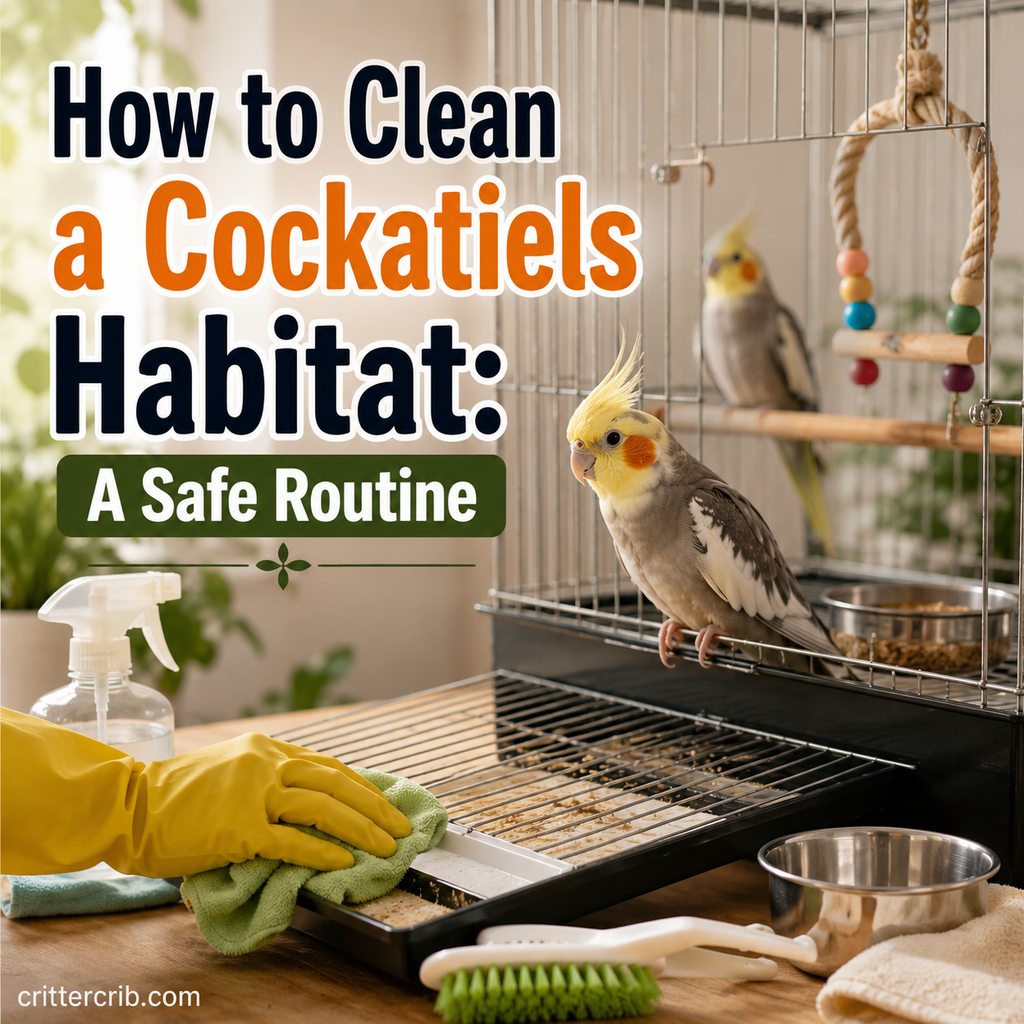
How to Keep a Parrotlet Cage Clean
Regular cleaning is easier than waiting until the cage becomes heavily soiled.
Daily Cleaning
A quick daily routine can include:
- Replace drinking water
- Wash dirty bowls
- Remove spoiled fresh food
- Replace heavily soiled cage paper
- Wipe obvious messes
- Check toys for damage
Regular Thorough Cleaning
Periodically clean:
- Cage bars
- Cage tray
- Grates
- Perches
- Bowls
- Washable toys
- Areas surrounding the cage
Rinse cleaned surfaces thoroughly and avoid leaving strong chemical residues.
Make sure everything is dry before returning accessories.
Setting Up a Cage for Two Parrotlets
Keeping two parrotlets requires additional planning.
Parrotlets can be territorial, and individual compatibility varies.
If you’re housing two birds together, provide considerably more space than you would for one bird.
Also provide multiple resources so one bird can’t easily control everything.
Consider:
- Multiple feeding locations
- Multiple water sources
- Several comfortable high perches
- Plenty of room to move apart
- Multiple toys and activities
Watch interactions carefully.
Persistent chasing, biting, guarding food, or preventing another bird from resting comfortably shouldn’t be ignored.
Never assume two birds will automatically get along because they’re the same species.
Bringing a New Parrotlet Home
Your carefully designed habitat may look wonderful to you, but your new bird may initially find everything unfamiliar.
Give your parrotlet time to adjust.
During the first few days:
- Keep the environment relatively calm.
- Approach the cage slowly.
- Maintain consistent feeding routines.
- Speak gently.
- Avoid repeatedly reaching toward the bird.
- Let your parrotlet observe the household.
- Watch eating and drinking carefully.
Don’t rush handling.
Building trust gradually can create a much better foundation for your relationship.
Signs Your Parrotlet Is Comfortable in Its Habitat
As your bird settles in, you should begin seeing normal everyday behaviors.
A comfortable parrotlet may:
- Explore the cage
- Move between perches
- Play with toys
- Chew and shred
- Eat normally
- Preen
- Vocalize
- Stretch
- Climb
- Forage
- Rest comfortably
Individual personalities vary.
Some parrotlets are fearless little explorers. Others need more time before investigating anything unfamiliar.
Learn what’s normal for your bird.
Common Parrotlet Habitat Setup Mistakes
Many cage problems are easy to prevent.
Watch out for these common mistakes:
- Buying a cage that’s too small
- Choosing unsafe bar spacing
- Prioritizing height over usable width
- Using only smooth dowel perches
- Overcrowding the cage with toys
- Putting food underneath perches
- Using damaged or unsafe accessories
- Providing no chewing opportunities
- Keeping the cage in the kitchen
- Positioning the cage directly under a vent
- Leaving the cage in intense sunlight
- Providing too little sleep
- Using enclosed huts unnecessarily
- Exposing the bird to smoke or fragrances
- Providing too little mental stimulation
- Neglecting regular cleaning
The best habitat isn’t necessarily the most expensive one.
It’s the one that safely supports your bird’s everyday behavior.
Parrotlet Habitat Setup Checklist
Before bringing your parrotlet home, make sure the basics are ready.
Cage and Accessories
- Spacious rectangular cage
- Bar spacing around 1/2 inch or less
- Secure doors and latches
- Multiple varied perches
- Food bowls
- Water bowl
- Bird-safe cage liner
- Chewing toys
- Shredding toys
- Foraging activities
- Climbing opportunities
Environment
- Safe cage location
- No direct drafts
- Protection from intense sunlight
- Away from cooking fumes
- No smoke or aerosols
- Consistent day-and-night schedule
- Quiet sleeping conditions
- Bird-proofed exercise area
Ongoing Care
- Fresh drinking water
- Appropriate balanced diet
- Daily social interaction
- Regular cage cleaning
- Toy inspections
- Toy rotation
- Supervised exercise
- Access to an avian veterinarian
Having these basics ready before your bird arrives makes the transition much easier.
Frequently Asked Questions About Parrotlet Habitats
How Big Should a Parrotlet Cage Be?
A cage around 18 × 18 × 18 inches can be viewed as a basic starting point for one parrotlet, but larger is preferable.
A wider cage gives the bird more usable space for movement, toys, and varied perches.
What Bar Spacing Is Best for a Parrotlet?
Approximately 1/2 inch or less is generally appropriate.
Because parrotlets are very small, avoid cages designed for larger parrots with wide gaps between bars.
How Many Perches Does a Parrotlet Need?
There’s no perfect number.
Provide several perches with different diameters and textures while maintaining enough open space for your bird to move comfortably.
Quality and placement matter more than filling the cage with perches.
How Many Toys Should a Parrotlet Have?
A handful of varied toys is generally better than overcrowding the cage.
Provide opportunities for chewing, shredding, climbing, and foraging, then rotate toys periodically.
Do Parrotlets Need a Bed?
No special bed is normally required.
A comfortable high perch and a quiet, dark nighttime environment are generally sufficient for sleeping.
Enclosed huts can sometimes encourage nesting behavior and may introduce safety concerns if they’re made from chewable fabric.
Where Should a Parrotlet Sleep?
Most parrotlets can sleep in their regular cage.
Make sure the environment becomes quiet and dark enough at night and that your bird has a comfortable perch.
Can I Put a Parrotlet Cage Near a Window?
A bright location can be stimulating, but avoid putting the cage directly against a window where temperatures fluctuate or intense sunlight heats the cage.
A position set back from the window is often better.
Can a Parrotlet Live in a Bedroom?
Yes, provided the bedroom offers appropriate light during the day, quiet conditions at night, clean air, and freedom from strong fragrances, smoke, and other hazards.
Your sleep schedule should also allow the bird sufficient uninterrupted darkness.
Do Parrotlets Need Out-of-Cage Time Every Day?
Regular supervised out-of-cage exercise is highly beneficial when you can provide a properly bird-proofed environment.
It offers additional opportunities for flight, climbing, training, exploration, and social interaction.
Final Thoughts
Setting up a parrotlet habitat is mostly about finding the right balance.
Your bird needs enrichment, but it also needs open space. It needs social interaction, but also somewhere secure to rest. It needs opportunities to chew and destroy things, but those materials must be safe.
Start with the largest practical cage you can provide with appropriately narrow bar spacing. Add varied natural perches, clean food and water stations, several thoughtfully chosen toys, and opportunities for chewing and foraging.
Then pay attention to the environment outside the cage.
Keep your parrotlet away from cooking fumes, smoke, strong fragrances, drafts, and intense sunlight. Provide consistent sleep and a bird-proofed area for supervised exercise.
Finally, watch your bird.
Your parrotlet will quickly show you which perch becomes the favorite sleeping spot, which toy gets destroyed first, and which activities keep it occupied.
A good habitat isn’t something you set up once and never change. It’s an environment you gradually refine as you learn what keeps your tiny parrot safe, active, comfortable, and engaged.