
What Do Fire-Bellied Newts Eat? A Complete Feeding Guide

ire-bellied newt with earthworms, bloodworms, and other suitable foods in a naturalistic habitat
Fire-bellied newts are carnivores that benefit from a varied diet of appropriately sized foods such as earthworms, bloodworms, blackworms, and other nutritious invertebrates.

Fire-bellied newts may be small, but they’re enthusiastic little predators.

In the wild, they eat a variety of tiny aquatic animals and invertebrates. In captivity, the same basic principle applies: fire-bellied newts need an animal-based diet with enough variety to provide balanced nutrition.

So, what do fire-bellied newts eat?

Good options include appropriately sized earthworms, chopped nightcrawlers, bloodworms, blackworms, small crustaceans, and other suitable live or frozen invertebrates. The best diet doesn’t rely too heavily on one food. Instead, it combines nutritious staples with occasional variety.

Feeding also changes with age. Juvenile newts usually need smaller food and more frequent meals, while healthy adults can generally eat less often.

Here’s how to build a practical feeding routine for your fire-bellied newt.

Continue reading “What Do Fire-Bellied Newts Eat? A Complete Feeding Guide”
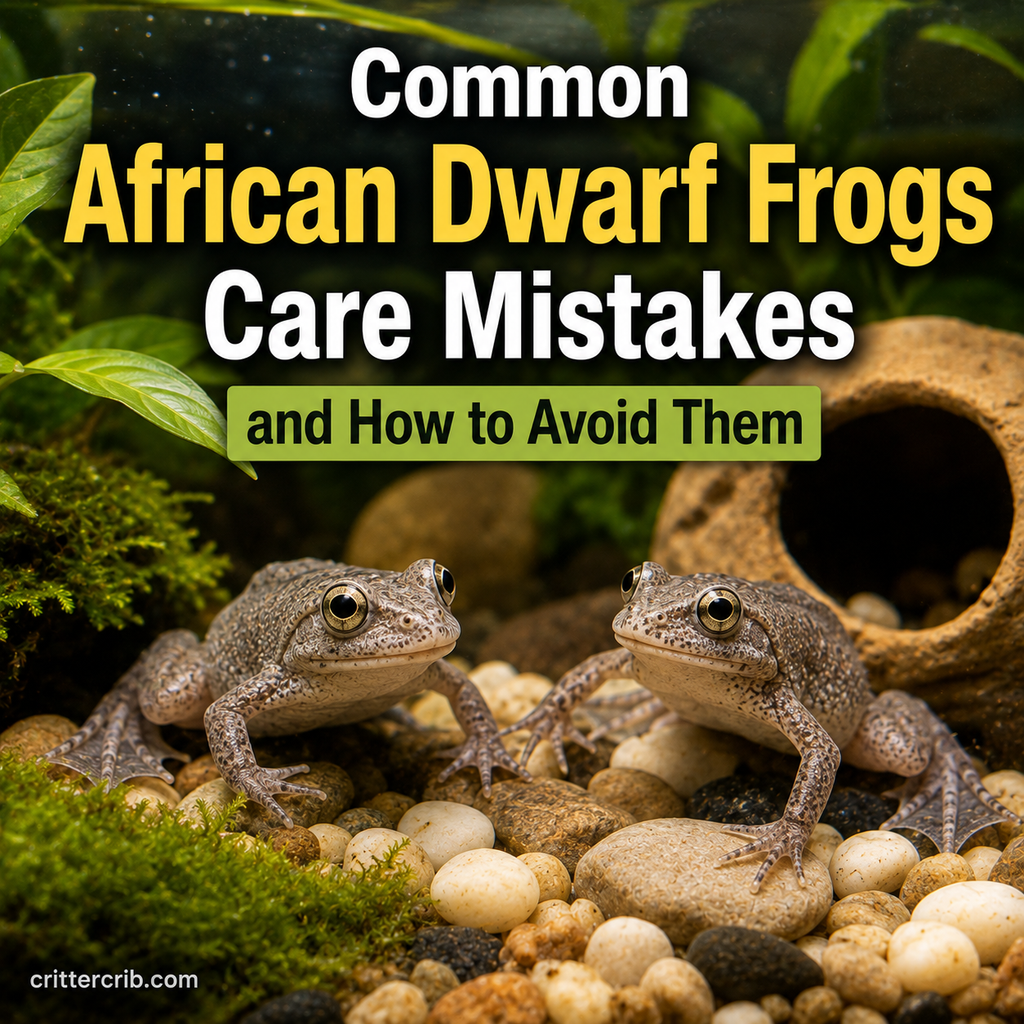

Common African Dwarf Frog Care Mistakes and How to Avoid Them

African dwarf frogs in a planted aquarium illustrating common care mistakes
Avoiding common African dwarf frog care mistakes starts with clean, properly cycled water, gentle filtration, appropriate feeding, safe tank mates, and an aquarium designed around the frogs’ needs.

African dwarf frogs can look like easy pets. They’re small, fully aquatic, and don’t need the elaborate terrestrial habitat that many other amphibians require.

But small doesn’t mean maintenance-free.

Many African dwarf frog care mistakes happen because owners treat them exactly like fish. These frogs have their own needs when it comes to feeding, water flow, tank mates, access to the surface, and aquarium design.

Fortunately, most common problems are preventable.

If you’re new to African dwarf frogs—or you’re trying to figure out why yours doesn’t seem quite right—here are the care mistakes worth watching for and what to do instead.

Continue reading “Common African Dwarf Frog Care Mistakes and How to Avoid Them”

How Much Do White’s Tree Frogs Cost? Setup and Ongoing Expenses

White’s tree frog in a terrarium with a calculator and pet care expense list
The frog itself is only part of the cost of owning a White’s tree frog, with enclosure setup, lighting, food, supplements, replacement supplies, and veterinary care adding to the overall expense.

White’s tree frogs are often considered fairly approachable amphibians for beginners, but the frog itself is only one part of the cost.

The enclosure, lighting, heating, humidity equipment, substrate, food, supplements, and veterinary care can easily cost more than the animal.

So, how much does a White’s tree frog cost?

A White’s tree frog itself may commonly cost around $30–$100 or more, depending on age, coloration, breeder, availability, and where you buy it. A complete initial setup can bring your total starting cost to roughly $250–$600 or more.

After the habitat is established, ongoing care is much less expensive. Many owners may spend approximately $20–$50 per month on food, supplements, substrate, water treatment, and other routine supplies, although costs vary considerably.

Veterinary care is the wildcard. An exotic-animal appointment can quickly add another $100 or more to your expenses.

Before bringing home a White’s tree frog, it’s worth looking at the full cost rather than simply asking how much the frog costs at the pet store.

Continue reading “How Much Do White’s Tree Frogs Cost? Setup and Ongoing Expenses”

Best Enrichment Ideas for Happy, Active Pacman Frogs

Pacman frog in an enriched terrarium with deep substrate, plants, hiding places, and a shallow water dish
Pacman frog enrichment should focus on natural behaviors such as burrowing, hiding, hunting, and choosing between different areas of a safe, well-designed enclosure.

Pacman frogs have a reputation for being one of the least energetic pets around.

They burrow. They sit. They wait for food. Then they may sit some more.

That doesn’t mean their enclosure should be an empty box with a water dish.

Good Pacman frog enrichment isn’t about making your frog run around or perform tricks. It’s about creating an environment that allows natural behaviors such as burrowing, hiding, hunting, choosing different resting spots, and responding to changes in its surroundings.

A well-designed habitat gives your frog options without constantly disturbing it.

If you want to make your Pacman frog’s enclosure more interesting while keeping stress low, here are some of the best enrichment ideas to try.

Continue reading “Best Enrichment Ideas for Happy, Active Pacman Frogs”

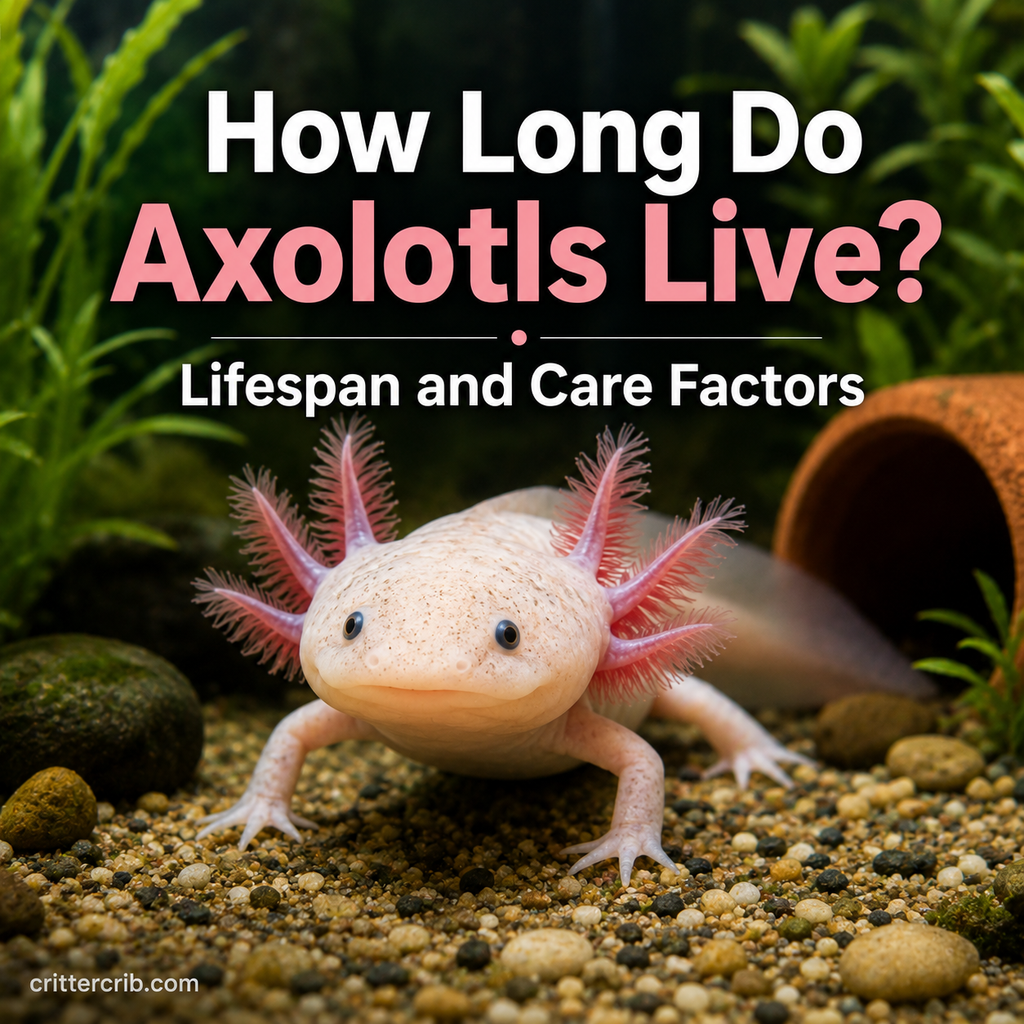
How Long Do Axolotls Live? Lifespan and Care Factors

Axolotl in a planted aquarium representing lifespan and long-term care
Axolotls can commonly live around 10–15 years with proper care, including clean, cool water, good nutrition, and a stable aquarium environment.

Axolotls aren’t short-term pets.

While their small size and permanently youthful appearance can make them seem like simple aquarium animals, bringing one home can mean committing to more than a decade of care.

So, how long do axolotls live?

In captivity, a well-cared-for axolotl will commonly live around 10–15 years, although individual lifespans vary. Some may live for less time because of illness, genetics, or poor husbandry, while exceptionally well-cared-for individuals can potentially live longer.

The biggest difference you can make as an owner isn’t finding some secret longevity trick. It’s getting the basics right consistently.

Clean, cool water, good nutrition, low stress, and an appropriately maintained aquarium all contribute to giving an axolotl the best chance at a long life.

Here’s what affects axolotl lifespan and what you can do to support your pet through the years.

Continue reading “How Long Do Axolotls Live? Lifespan and Care Factors”

Are Tiger Salamanders Good Pets? What Beginners Should Know

Tiger salamander in a natural terrarium with moist soil, moss, plants, and a hiding place
Tiger salamanders can make fascinating pets for beginners who can provide cool temperatures, moist burrowing substrate, appropriate food, and minimal handling.

Tiger salamanders don’t get as much attention as colorful tree frogs or unusual-looking axolotls, but they can be fascinating pets in their own right.

They’re large by salamander standards, spend plenty of time burrowing, and can become surprisingly enthusiastic when food appears. Their care is also relatively straightforward once you have the enclosure set up correctly.

So, are tiger salamanders good pets for beginners?

For the right person, yes. Tiger salamanders can be rewarding pets for someone who wants a quiet amphibian to observe rather than an animal to handle frequently. They don’t require an enormous enclosure or complicated lighting, and their feeding routine is manageable.

There are a few catches, though. They need consistently cool, moist conditions, their skin is delicate, and some individuals spend a lot of time underground. They’re also a long-term commitment.

Before bringing one home, here’s what you should know about keeping a tiger salamander as a pet.

Continue reading “Are Tiger Salamanders Good Pets? What Beginners Should Know”

Fire-Bellied Newts Habitat Setup Guide: Everything You Need

Fire-bellied newts in a planted aquatic habitat with water, rocks, driftwood, and a land area
A well-designed fire-bellied newt habitat provides cool, clean water, gentle filtration, plenty of cover, and an easily accessible area above the water.

Fire-bellied newts are striking little amphibians. Their dark backs may look fairly understated at first, but underneath you’ll find the bright orange or red belly markings that give them their name.

They’re also fascinating to watch in a well-designed aquarium.

Setting up that aquarium correctly takes some planning. Adult fire-bellied newts are largely aquatic, but they aren’t fish. They need clean, cool water, easy access to the surface, places to rest and hide, and opportunities to climb completely out of the water when they choose.

If you’re preparing for your first fire-bellied newt, it’s worth building the habitat before bringing the animal home. A properly established aquarium is much easier to manage than trying to correct water-quality and habitat problems after the newt has already moved in.

Here’s how to create a safe, practical fire-bellied newt habitat from the ground up.

Continue reading “Fire-Bellied Newts Habitat Setup Guide: Everything You Need”

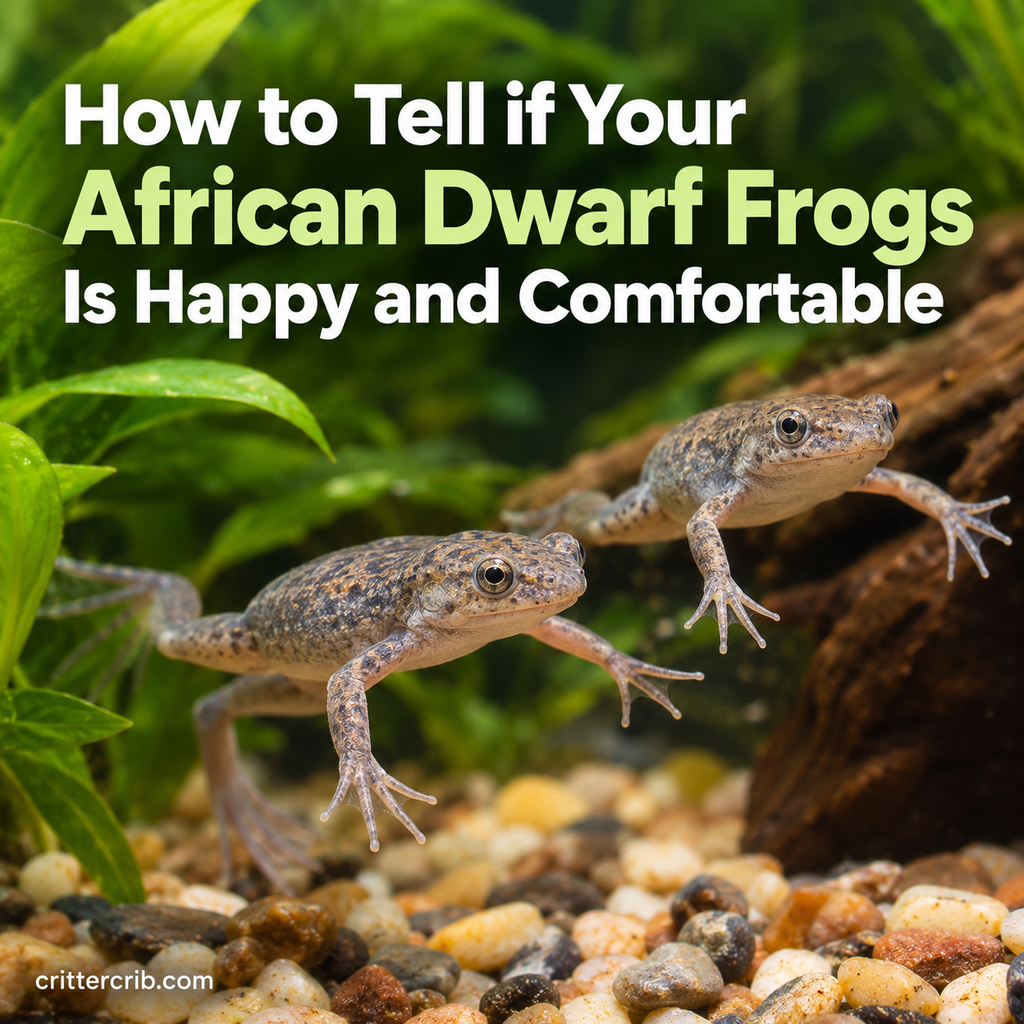
How to Tell if Your African Dwarf Frog Is Happy and Comfortable

African dwarf frogs swimming and exploring in a planted aquarium
Normal swimming, exploring, feeding, and relaxed resting are all positive signs that an African dwarf frog feels comfortable in its aquarium.

African dwarf frogs can be surprisingly entertaining little pets. One minute they’re quietly resting near the bottom of the aquarium, and the next they’re swimming toward the surface, floating with their limbs stretched out, or scrambling after a piece of food.

But how can you tell if your African dwarf frog is actually happy?

Frogs don’t show happiness the way dogs or cats do, so it’s better to think in terms of whether your frog appears comfortable, healthy, and free from obvious stress.

A comfortable African dwarf frog generally eats regularly, maintains a healthy body condition, explores its aquarium, surfaces normally for air, rests in relaxed positions, and shows behavior that’s consistent from day to day.

The key isn’t looking for one specific “happy frog” behavior. It’s learning what’s normal for your frog and noticing when that pattern changes.

Continue reading “How to Tell if Your African Dwarf Frog Is Happy and Comfortable”

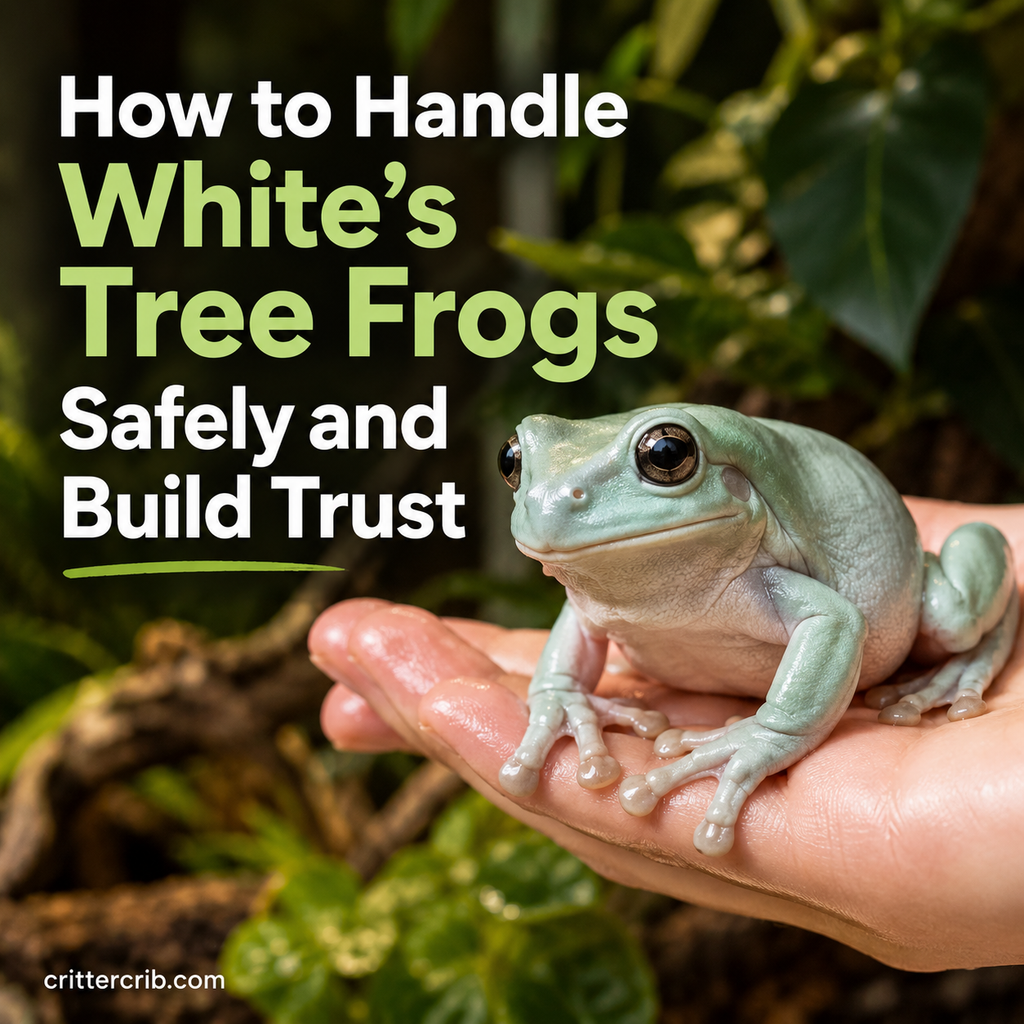
How to Handle White’s Tree Frogs Safely and Build Trust

White's tree frog resting on a person's hand during gentle, careful handling
White’s tree frogs should be handled gently and only when necessary, using clean, damp hands or powder-free gloves to help protect their delicate skin.

White’s tree frogs are known for their calm appearance, expressive faces, and relatively easygoing nature. That can make them seem like the kind of frog you can pick up whenever you want.

They’re still amphibians, though, and handling them requires more care than handling many reptiles or mammals.

A White’s tree frog has delicate, highly permeable skin that can absorb substances from its surroundings. Oils, lotions, soap residue, cleaning products, and other contaminants on your hands can potentially irritate or harm the frog. Frequent handling can also cause unnecessary stress.

That doesn’t mean you can never touch your frog. Occasional handling may be necessary, and some White’s tree frogs become quite accustomed to their keeper’s presence.

The key is learning how to handle them safely while recognizing that “building trust” with a frog looks different from bonding with a dog or cat.

Continue reading “How to Handle White’s Tree Frogs Safely and Build Trust”

Ideal Temperature and Humidity for Pacman Frogs

Pacman frog in a humid terrarium with a thermometer and hygrometer showing ideal temperature and humidity conditions
Pacman frogs thrive in warm, humid enclosures with temperatures around 75–82°F during the day and humidity generally between 60–80%.

Pacman frogs may spend much of their time sitting in one spot, but the environment around them matters a lot. Temperature and humidity affect everything from hydration and appetite to digestion and overall activity.

The good news is that creating the right conditions isn’t particularly complicated once you understand what you’re aiming for.

For most pet Pacman frogs, a good general target is a temperature of about 75–82°F (24–28°C) during the day, with a modest nighttime drop, and humidity around 60–80%.

Those numbers are useful starting points, but there’s more to proper husbandry than keeping a thermometer and hygrometer within a specific range. Substrate moisture, ventilation, heating methods, and where you measure the conditions inside the enclosure all make a difference.

Here’s how to create a comfortable environment for your Pacman frog and avoid some of the most common temperature and humidity mistakes.

Continue reading “Ideal Temperature and Humidity for Pacman Frogs”