Rabbits are sometimes seen as inexpensive starter pets, but their actual cost can surprise new owners. The rabbit itself may cost relatively little compared with a dog or cat, yet providing the right housing, food, veterinary care, and enrichment adds up over time.
So, how much does a rabbit really cost?
A reasonable initial budget can range from a few hundred dollars to well over $1,000 depending on your setup, where you get your rabbit, and whether spaying or neutering has already been done. After that, you’ll have recurring expenses for hay, fresh vegetables, litter, pellets, toys, and veterinary care.
There are also occasional costs that aren’t as predictable, particularly emergency vet bills.
If you’re considering bringing home a rabbit, looking beyond the adoption fee gives you a much better idea of whether the long-term expense fits your budget.
Here’s what you should plan for.
How Much Does a Rabbit Cost to Buy or Adopt?
The price of the rabbit itself varies considerably.
You might spend approximately:
- $20–$100+ to adopt from a rescue or shelter
- $50–$150+ to purchase a rabbit from a breeder
- Potentially several hundred dollars for certain breeds or pedigreed rabbits
Prices vary by location, breed, age, organization, and what’s included.
Don’t automatically assume that the least expensive rabbit will be the least expensive option overall.
An adoption fee from a rescue may include services such as a health evaluation or spaying/neutering. A rabbit with a higher adoption fee but completed veterinary care could actually cost less initially than a cheaper rabbit that still needs those procedures.
Always ask exactly what’s included before comparing prices.
Rabbit Setup Costs
The biggest spending period for many new rabbit owners happens before the rabbit even arrives.
A proper rabbit setup requires more than a small cage, food bowl, and bag of pellets.
You’ll likely need some combination of:
- Exercise pen or enclosure
- Litter box
- Hay
- Hay feeder or storage
- Food and water bowls
- Rabbit-safe flooring
- Carrier
- Hideouts
- Toys
- Grooming supplies
- Cleaning supplies
- Rabbit-proofing materials
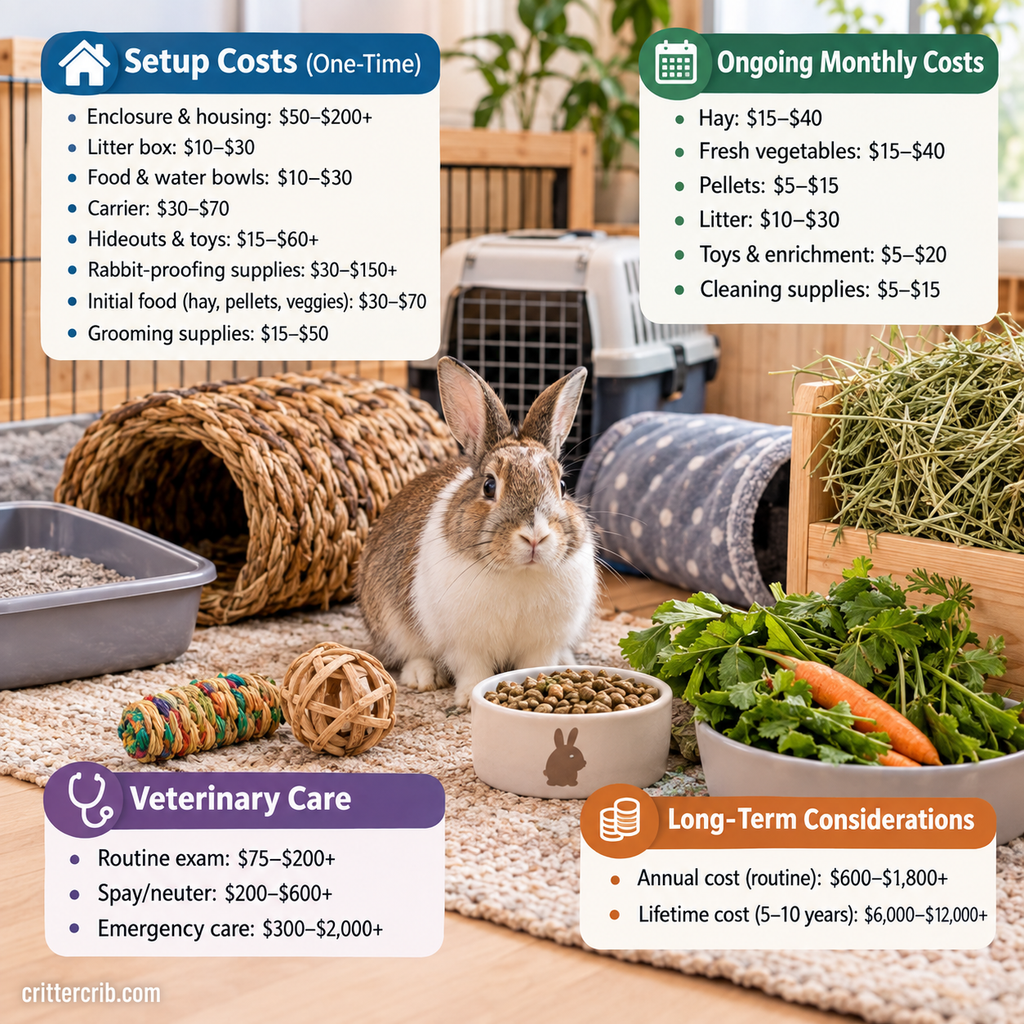
A basic but appropriate setup could cost around $200–$500, while a larger or more elaborate setup can easily reach $500–$1,000 or more.
Fortunately, many of these purchases don’t need to be repeated regularly.
Rabbit Enclosure: $50–$200+
Housing is one area where it’s worth thinking beyond the traditional rabbit cage.
Rabbits need enough room to move, stretch, stand comfortably, explore, and exercise. Many owners use exercise pens or create larger rabbit-safe areas instead of relying on small cages.
An exercise pen might cost roughly $40–$100, depending on its size and construction.
Your total housing expense may be higher once you add flooring, protective barriers, gates, hideouts, and other accessories.
If you’re creating a dedicated rabbit room or allowing supervised free-roaming, you may spend more on rabbit-proofing than on the enclosure itself.
Flooring and Mats: $20–$100+
Your rabbit needs comfortable, secure footing.
Slippery flooring can make it difficult for rabbits to move naturally, so rugs, washable mats, fleece, or other rabbit-appropriate surfaces may be useful depending on your home.
Expect to spend around $20–$100 or more.
Washable flooring can cost more initially but may save money compared with repeatedly replacing disposable materials.
Make sure your rabbit doesn’t chew or ingest unsafe flooring materials.
Litter Box: $10–$30
Many rabbits can learn to use a litter box.
You don’t necessarily need a product marketed specifically for rabbits. A suitably sized cat litter box can work well for many rabbits.
A basic litter box might cost around $10–$30.
Larger rabbits may need a larger box, and some owners keep more than one litter box around the home.
You’ll also need rabbit-safe litter, which becomes an ongoing expense.
Food and Water Bowls: $10–$30
Heavy ceramic bowls are popular because they’re harder for enthusiastic rabbits to tip over.
Expect to spend roughly $10–$30 for basic food and water dishes.
Some owners use a large water bowl rather than a bottle because it allows rabbits to drink in a more natural position.
Whatever you choose, your rabbit should always have access to clean, fresh water.
Rabbit Carrier: $30–$70
A secure carrier is essential.
Even if you don’t plan on traveling with your rabbit, you’ll need a safe way to transport them to veterinary appointments or evacuate during an emergency.
A suitable carrier generally costs around $30–$70, although larger or premium models can cost more.
Choose one that provides adequate ventilation and enough space for your rabbit to sit comfortably.
Hideouts: $15–$60+
Rabbits naturally appreciate sheltered spaces.
Cardboard boxes can provide inexpensive hiding areas, while wooden houses, tunnels, and commercially made rabbit hideouts can cost anywhere from $15 to $60 or more.
You don’t need to spend much here.
A plain cardboard box with safe entrances cut into it may become more popular than the expensive hideout you carefully selected.
Rabbit-Proofing Supplies: $30–$150+
Rabbit-proofing is an expense that’s easy to overlook.
Rabbits chew. Sometimes they chew things you’d strongly prefer they didn’t.
Depending on your home, you may need:
- Cord protectors
- Baby gates
- Exercise-pen panels
- Baseboard protection
- Furniture barriers
- Rug protection
- Storage solutions for unsafe household items
A simple setup might require only $30 or $40 in supplies. Rabbit-proofing a large free-roaming area could cost $100–$150 or considerably more.
Electrical cords deserve particular attention. They should always be kept safely out of reach or appropriately protected.
Initial Hay, Pellets, and Vegetables: $30–$70
You’ll need food ready before bringing your rabbit home.
Your initial food purchase might include:
- Grass hay
- Rabbit pellets
- Fresh leafy greens
Hay should make up a major part of an adult rabbit’s diet and should generally be available at all times.
The exact dietary needs of your rabbit can vary based on age, size, health, and other factors, so discuss appropriate feeding with a rabbit-savvy veterinarian.
Toys and Enrichment: $20–$75
Rabbits need things to do.
Fortunately, enrichment doesn’t have to be expensive.
Commercial toys are available, but rabbits can also enjoy simple items such as:
- Cardboard boxes
- Cardboard tubes
- Paper bags with handles removed
- Digging boxes
- Tunnels
- Rabbit-safe chew toys
- Foraging activities
A starting enrichment budget of around $20–$75 is reasonable.
You’ll eventually need to replace chewed or worn items, but homemade enrichment can keep ongoing costs relatively low.
Grooming Supplies: $15–$50
Basic grooming equipment might include:
- A rabbit-appropriate brush
- Nail clippers
- Grooming comb
- Towels
Short-haired rabbits may have relatively simple grooming needs, while long-haired breeds can require considerably more coat maintenance.
Expect to spend approximately $15–$50 initially.
How Much Does a Rabbit Cost Per Month?
Once you’ve purchased the basic setup, expenses become more predictable.
A rough monthly rabbit budget might fall between $50 and $150 per rabbit, although spending can be higher depending on food prices, litter choices, veterinary needs, and where you live.
The biggest regular expenses usually include hay, vegetables, pellets, and litter.
Hay: About $15–$40 Per Month
Hay is one of the most important recurring rabbit expenses.
Buying small packages from pet stores can become expensive, especially over several years.
Some owners save money by purchasing larger quantities from reputable hay suppliers, feed stores, or farms where appropriate.
Storage matters when buying in bulk. Hay needs to remain clean, dry, and protected from moisture.
A reasonable monthly estimate is around $15–$40, although costs vary considerably by rabbit size, hay source, and location.
Fresh Vegetables: About $15–$40 Per Month
Fresh leafy greens are another regular expense.
The exact cost depends heavily on local grocery prices, what vegetables you purchase, and how much your rabbit needs.
You may spend approximately $15–$40 per month.
Buying appropriate vegetables in larger quantities or taking advantage of seasonal produce can sometimes lower the cost.
Always introduce dietary changes gradually and make sure the foods you provide are rabbit-safe.
Rabbit Pellets: About $5–$15 Per Month
Quality pellets usually aren’t the largest part of the monthly food bill.
Depending on the brand, package size, and your rabbit’s dietary requirements, pellets may cost around $5–$15 per month.
Avoid assuming that more pellets are better.
Adult rabbits generally rely heavily on hay, with pellets forming a smaller portion of the overall diet. Your veterinarian can help determine appropriate quantities for your individual rabbit.
Rabbit Litter: About $10–$30 Per Month
Litter expenses depend on what material you use and how frequently the litter box needs changing.
Rabbit-safe paper-based or wood-based litter products are commonly used.
A reasonable budget might be $10–$30 per month.
Some products marketed as cat litter aren’t appropriate for rabbits, so don’t choose litter based solely on price.
Toys and Replacement Enrichment: $5–$20 Per Month
You probably won’t buy new rabbit toys every month.
However, chew toys, cardboard items, tunnels, and other enrichment materials eventually wear out.
Budgeting an average of $5–$20 per month gives you room to replace things periodically.
You can reduce this expense substantially with safe DIY enrichment.
Cleaning Supplies: $5–$15 Per Month
Cleaning expenses are usually modest but shouldn’t be forgotten.
You may regularly use:
- Paper towels
- Laundry detergent
- Trash bags
- Pet-safe cleaning products
- White vinegar for appropriate cleaning tasks
Depending on your setup, budget around $5–$15 per month.
Rabbit Veterinary Costs
Veterinary care is one of the most important—and potentially expensive—parts of rabbit ownership.
Rabbits should ideally be treated by a veterinarian experienced with rabbits. Depending on where you live, that may mean finding an exotic-animal veterinarian rather than relying on the nearest general dog-and-cat practice.
Prices vary dramatically between clinics and regions.
Routine Rabbit Vet Visits: About $75–$200+
A routine wellness examination may cost approximately $75–$200 or more.
Additional tests, medications, vaccinations where recommended, or other services will increase the bill.
Because rabbits can hide signs of illness, preventive care and knowing your rabbit’s normal behavior are especially important.
Before adopting, locate an appropriate rabbit veterinarian and ask about typical examination costs.
It’s much easier to research clinics before you urgently need one.
Spaying or Neutering: About $200–$600+
If your rabbit hasn’t already been altered, spaying or neutering can become one of your largest initial veterinary expenses.
Costs can range from approximately $200 to $600 or more depending on your location, veterinarian, rabbit, and procedure.
This is another reason rescue adoption fees can be misleading when viewed in isolation.
For example, a rescue rabbit that costs $100 but has already been spayed or neutered may ultimately be less expensive than a $40 rabbit requiring a $400 procedure afterward.
Ask the rescue, shelter, or breeder for veterinary records whenever possible.
Emergency Veterinary Care: $300–$2,000+
This is the expense that can dramatically change the cost of rabbit ownership.
An emergency visit can quickly reach several hundred dollars. Diagnostic testing, hospitalization, medication, surgery, or specialized treatment can push the bill into the thousands.
A serious medical emergency might cost:
- $300–$500 for a relatively straightforward urgent visit and treatment
- $500–$1,000+ when diagnostics or additional treatment are required
- $1,000–$2,000+ for hospitalization, surgery, or complicated cases
These aren’t guaranteed prices. Actual veterinary costs vary enormously.
The important point is that a rabbit can require expensive medical care with little warning.
Should You Have an Emergency Fund for a Rabbit?
Yes.
If possible, maintain a dedicated pet emergency fund.
A starting target of $500–$1,000 is better than having nothing available, but having $1,000–$2,000 or more provides significantly more flexibility when unexpected veterinary treatment is needed.
You can build this gradually.
For example, putting $25–$50 into a separate pet fund each month creates:
- $300–$600 after one year
- $600–$1,200 after two years
- $900–$1,800 after three years
Of course, emergencies don’t politely wait until the account is fully funded. That’s why planning for veterinary expenses before getting a rabbit is important.
Does Pet Insurance Cover Rabbits?
Rabbit insurance availability depends on where you live and which insurers operate in your area.
Where coverage is available, premiums and benefits vary based on the rabbit, policy, deductible, reimbursement percentage, exclusions, and other factors.
Before purchasing a policy, look carefully at:
- Monthly premiums
- Deductibles
- Annual limits
- Reimbursement percentages
- Waiting periods
- Pre-existing condition exclusions
- Covered illnesses
- Emergency coverage
Pet insurance and an emergency savings fund aren’t necessarily interchangeable.
Even with insurance, you may need enough available money or credit to pay a veterinary bill before receiving reimbursement.
How Much Does a Rabbit Cost Per Year?
After the initial setup, a reasonable routine budget for one rabbit could be approximately $600–$1,800 per year.
Here’s a rough example:
| Expense | Estimated Annual Cost |
|---|---|
| Hay | $180–$480 |
| Fresh vegetables | $180–$480 |
| Pellets | $60–$180 |
| Litter | $120–$360 |
| Toys/enrichment | $60–$240 |
| Cleaning supplies | $60–$180 |
| Routine veterinary care | $75–$200+ |
These figures are estimates rather than fixed prices.
They also don’t include major emergency veterinary bills, boarding, pet sitting, replacement housing equipment, or other occasional expenses.
First-Year Rabbit Cost Example
The first year is typically more expensive because you’re purchasing supplies and potentially paying for spaying or neutering.
A simplified first-year budget could look something like this:
| Expense | Estimated Cost |
|---|---|
| Rabbit/adoption | $20–$150+ |
| Enclosure and setup | $200–$500+ |
| Carrier and supplies | $50–$150 |
| Food and litter | $540–$1,500 |
| Routine veterinary care | $75–$200+ |
| Spay/neuter if needed | $200–$600+ |
| Toys and replacements | $60–$240 |
That puts a realistic first-year cost somewhere around $1,000–$3,000 or more depending on your choices and veterinary needs.
A significant emergency could push the total considerably higher.
How Much Do Two Rabbits Cost?
Two rabbits don’t necessarily cost exactly twice as much as one.
Some expenses can be shared.
You probably won’t need two exercise pens, two sets of cleaning supplies, or two separate rabbit-proofed rooms.
Other expenses increase significantly, including:
- Hay
- Vegetables
- Pellets
- Litter
- Veterinary care
- Medication
- Emergency expenses
You’ll also need sufficient space and resources for both rabbits.
If you’re adopting a bonded pair, ask the rescue about their existing diet, housing requirements, veterinary history, and personalities.
A bonded pair may have a higher ongoing budget, but rabbits are social animals, and compatible companionship can be an important part of their well-being.
Hidden Costs of Owning a Rabbit
Some rabbit expenses aren’t obvious until you’ve already brought one home.
Damaged Household Items
A rabbit that discovers an unprotected baseboard or charging cable can create an unexpected shopping trip.
Rabbit-proofing helps, but occasional damage may still happen.
Boarding and Pet Sitting
Going on vacation becomes more complicated when you have a rabbit.
You’ll need someone who understands rabbit care rather than simply leaving extra food and water.
Professional pet sitting or boarding can add significantly to travel expenses.
Replacement Supplies
Carriers, litter boxes, bowls, flooring, pens, and other supplies don’t last forever.
Some will need replacing over the course of your rabbit’s life.
Increased Grocery Costs
Fresh vegetables can become a surprisingly noticeable part of the grocery bill, particularly if you have multiple rabbits.
Emergency Transportation
If your regular veterinarian isn’t available after hours, you may need to travel farther to reach an emergency clinic that treats rabbits.
That’s worth researching ahead of time.
How to Save Money on Rabbit Care Without Cutting Corners
There are plenty of ways to control rabbit expenses without sacrificing good care.
Buy Hay Economically
Larger quantities of quality hay can offer better value than constantly buying tiny bags.
Just make sure you can store it properly.
Use Simple Enrichment
Your rabbit doesn’t care whether a tunnel costs $40 or came from a cardboard shipping box.
Safe cardboard, paper bags, homemade digging areas, and food-foraging games can provide excellent enrichment.
Choose Washable Supplies
Reusable mats and washable bedding can reduce long-term spending on disposable products.
Rabbit-Proof Before There’s a Problem
Spending $20 protecting electrical cords is considerably cheaper than replacing electronics—or dealing with an injured rabbit.
Don’t Skip Preventive Veterinary Care
Avoiding routine care to save money can backfire.
Establishing a relationship with a rabbit-savvy veterinarian and addressing problems early may prevent some issues from becoming more complicated and expensive.
Are Rabbits Cheaper Than Cats or Dogs?
Sometimes, but not nearly as much as people assume.
Rabbits don’t usually have some of the expenses associated with dogs, such as regular walks from a dog walker or certain grooming services.
However, rabbit-specific veterinary care can be expensive, and finding an experienced veterinarian may be more difficult.
Food, litter, fresh vegetables, housing, and enrichment are also ongoing expenses.
A rabbit should therefore be budgeted as a serious companion animal rather than a low-cost alternative to a dog or cat.
What Is the Lifetime Cost of a Rabbit?
Rabbits can live for many years with appropriate care, so even modest monthly expenses add up.
Suppose routine care averages $100 per month.
That’s:
- $1,200 per year
- $6,000 over five years
- $9,600 over eight years
- $12,000 over ten years
And that’s before major emergency veterinary bills or other unusual expenses.
This doesn’t mean every rabbit will cost $12,000. Some owners will spend considerably less, while rabbits with significant medical needs may cost much more.
The point is to think in years rather than weeks.
A Practical Rabbit Budget
Before adopting, consider having enough money for three separate categories.
1. Initial setup
Aim for approximately $300–$700 or more for the enclosure, carrier, litter box, food, rabbit-proofing, and other essentials.
2. Monthly expenses
Plan for approximately $50–$150 per month for routine supplies and food.
3. Veterinary savings
Keep a separate emergency fund and continue contributing to it over time.
This approach makes rabbit ownership much more predictable financially.
Frequently Asked Questions About Rabbit Costs
Are rabbits expensive pets?
Rabbits can be moderately expensive pets. Their food and basic supplies are manageable for many households, but veterinary care can significantly increase the overall cost.
How much should I save before getting a rabbit?
Consider having enough for the complete initial setup plus a veterinary emergency fund. Depending on your situation, having around $1,000–$2,000 available for setup and unexpected expenses can provide a much more comfortable starting point.
How much does rabbit food cost each month?
Hay, fresh vegetables, and pellets combined may cost roughly $35–$95 per month, although prices vary according to your rabbit’s size, diet, location, and where you purchase supplies.
What’s the most expensive part of owning a rabbit?
Unexpected veterinary care has the potential to become the largest expense. Routine food and litter costs accumulate over time, but an emergency can create a bill of hundreds or thousands of dollars at once.
Is adopting a rabbit cheaper than buying one?
It can be.
A rescue’s adoption fee may include veterinary care or spaying/neutering that you’d otherwise need to pay for separately. Compare what’s included rather than looking only at the initial price.
Can you own a rabbit on a budget?
Yes, within reason.
You can save money with simple enrichment, bulk hay purchases, reusable supplies, and careful shopping. Veterinary care, proper nutrition, adequate housing, and other essential needs shouldn’t be skipped simply to reduce costs.
Final Thoughts
The rabbit itself is often one of the least expensive parts of rabbit ownership.
A realistic budget needs to account for the enclosure, rabbit-proofing, hay, vegetables, pellets, litter, enrichment, routine veterinary visits, and the possibility of emergency medical care.
For one rabbit, you might spend several hundred dollars getting everything set up and roughly $50–$150 per month afterward. The first year can easily reach $1,000–$3,000 or more, particularly if spaying or neutering is still needed.
The most important expense to prepare for is the unpredictable one: veterinary care.
If you can comfortably handle the everyday costs while maintaining savings for emergencies, you’ll be in a much better position to provide your rabbit with appropriate care throughout its life.
A little financial planning before adoption can prevent a lot of stress later—and lets you focus more on enjoying life with your rabbit.