
Betta fish are often sold in tiny cups at pet stores, which can give the impression that they are short-lived pets that don’t need much care. In reality, bettas can live for several years when they’re kept in a healthy environment.
So, how long do betta fish live?
Most betta fish live around 2 to 5 years in captivity, although some may live longer with excellent care. Their lifespan depends on several factors, including genetics, water quality, diet, tank conditions, stress, and how old they were when you brought them home.
If you’re thinking about getting a betta—or already have one—understanding these factors can help you give your fish the best chance at a long, healthy life.
What Is the Average Lifespan of a Betta Fish?
A typical pet betta can live approximately 2 to 5 years.
However, there isn’t one exact lifespan that applies to every fish. Some bettas may live only a couple of years despite receiving good care, while others can reach 5 years or more.
One important detail is that the betta you purchase usually isn’t a newborn.
Bettas sold in pet stores are often already several months old by the time they reach their new home. Males in particular are usually mature enough for their colors and fins to be clearly developed.
That means a betta’s total lifespan and the amount of time it lives after you purchase it aren’t necessarily the same thing.
Can Betta Fish Live Longer Than 5 Years?
Yes, it’s possible.
Some well-cared-for bettas reportedly live beyond 5 years, but this should be considered an unusually long lifespan rather than something every owner should expect.
Genetics play a major role.
Even if two bettas receive nearly identical care, one may naturally live longer than the other. Breeding history, inherited health problems, and the fish’s condition before purchase can all influence longevity.
The goal isn’t necessarily to reach a specific number of years. It’s to provide conditions that allow your betta to remain healthy and comfortable for as much of its natural lifespan as possible.
What Factors Affect a Betta Fish’s Lifespan?
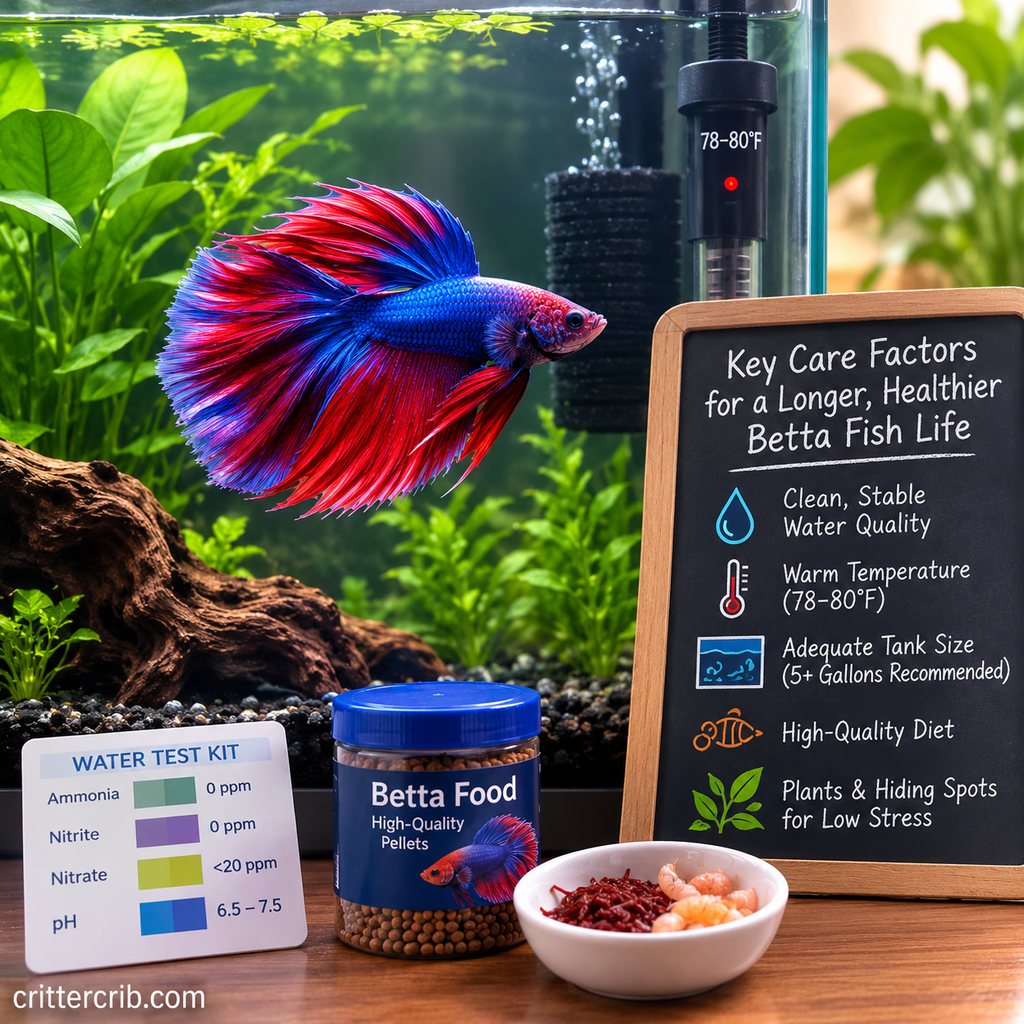
A betta’s environment has a major influence on its overall health.
Several factors are especially important.
Water Quality
Good water quality is one of the foundations of betta care.
Fish constantly interact with the water around them. Waste, uneaten food, and other organic material can eventually produce harmful compounds if the aquarium isn’t properly maintained.
Ammonia and nitrite are particularly dangerous.
A healthy aquarium should have an established biological cycle that allows beneficial bacteria to process waste. Regular partial water changes also help keep the environment stable.
Important water-care habits include:
- Cycling the aquarium before adding a fish when possible
- Testing aquarium water regularly
- Keeping ammonia and nitrite at 0 ppm
- Performing routine partial water changes
- Removing uneaten food and debris
- Using a water conditioner for tap water when needed
- Avoiding sudden changes in water temperature or chemistry
Clean-looking water isn’t always safe water, which is why testing can be useful even when the aquarium appears perfectly clear.
Tank Size
Bettas are sometimes marketed as fish that can live permanently in bowls, jars, or extremely small desktop tanks.
They may survive in small containers for a period of time, but surviving isn’t the same as thriving.
A larger aquarium provides more swimming space and usually makes it easier to maintain stable water conditions.
For many pet bettas, a 5-gallon aquarium is a practical starting point. Larger tanks can work very well too, provided they’re set up appropriately.
More water volume generally means that temperature and water chemistry change more slowly than they would in a tiny container.
Water Temperature
Bettas are tropical fish.
They generally do best with warm, stable water around 78–80°F (approximately 26–27°C).
Water that stays too cold can slow a betta’s metabolism and may contribute to lethargy and stress. Rapid temperature changes can also be difficult for fish to handle.
In many homes, a small adjustable aquarium heater is useful for keeping the temperature consistent.
An aquarium thermometer makes it much easier to monitor conditions rather than guessing based on room temperature.
Diet and Nutrition
A balanced diet can also influence a betta’s long-term health.
Bettas are primarily carnivorous and need foods designed to meet their nutritional requirements.
A good diet may include:
- High-quality betta pellets
- Frozen or live brine shrimp
- Daphnia
- Bloodworms as an occasional food
- Other appropriate insect- or animal-based foods
Variety can be helpful, but portion control matters too.
Bettas have small bodies and can easily be overfed. Excess food may contribute to digestive problems while also polluting the aquarium.
Instead of dropping a large amount of food into the tank at once, feed manageable portions and observe how much your fish actually eats.
Genetics
Not every factor affecting lifespan is under your control.
Genetics can influence:
- Lifespan
- Immune function
- Body shape
- Fin structure
- Tumor risk
- Susceptibility to certain health problems
Selective breeding has produced bettas with spectacular colors, patterns, and fin shapes. Unfortunately, some breeding lines may also carry health issues.
Choosing an active, alert fish from a responsible breeder or reputable store can improve your chances of starting with a healthy betta, but there are never guarantees.
Stress
Chronic stress can negatively affect fish health.
Stress may come from poor water conditions, incompatible tank mates, excessive water movement, frequent disturbances, or an environment without adequate places to rest.
Bettas are naturally territorial fish, especially males.
Two male bettas should not simply be placed together in the same aquarium. Constant exposure to another male—even through a divider in some situations—can also lead to repeated flaring and stress.
A calm, appropriately designed environment allows your betta to explore while still having places to retreat and rest.
Does a Filter Help Betta Fish Live Longer?
A properly sized filter can make maintaining healthy aquarium conditions much easier.
Filters help remove debris while also providing surface area for beneficial bacteria involved in the aquarium’s nitrogen cycle.
However, bettas aren’t strong swimmers compared with many other aquarium fish.
A powerful filter that creates a strong current can push a betta around the aquarium and make swimming unnecessarily difficult, particularly for long-finned varieties.
Look for gentle filtration.
Sponge filters are popular for betta tanks because they provide biological filtration without producing an aggressive current. Adjustable filters can also work well when the flow is kept low.
Do Betta Fish Need a Heater?
In many homes, yes.
A room that feels comfortable to a person may still be cooler than the ideal water temperature for a tropical betta.
Aquarium water can also fluctuate as household temperatures change between day and night.
A heater helps maintain a more consistent temperature.
Choose a heater designed for your aquarium’s water volume, and always monitor the actual temperature with a thermometer rather than assuming the heater is maintaining the correct level.
Can Betta Fish Live in a Bowl?
A betta may survive in a bowl, but a traditional small, unheated, unfiltered bowl isn’t an ideal long-term home.
Small containers present several challenges.
They can:
- Accumulate waste quickly
- Experience rapid temperature fluctuations
- Provide limited swimming space
- Be difficult to filter properly
- Require more frequent maintenance to maintain safe water conditions
A properly equipped aquarium provides much more control over your betta’s environment.
If you’re choosing between a decorative bowl and a 5-gallon filtered, heated aquarium, the aquarium is generally the better long-term option.
Can Tank Mates Affect a Betta’s Lifespan?
They can.
Some bettas tolerate certain tank mates, while others are much more territorial.
Temperament varies considerably between individual fish.
Potential tank mates also need compatible temperature, water, and space requirements. Even peaceful species can become stressful if the aquarium is overcrowded.
Avoid assuming that every betta needs companions.
A betta can live alone perfectly well when provided with an enriching environment.
If you do want a community aquarium, research each species carefully and make sure the tank is large enough to provide appropriate territories and hiding areas.
How Can You Help a Betta Fish Live Longer?
There’s no guaranteed way to make a betta reach a particular age, but good husbandry can reduce many preventable health problems.
Focus on the basics rather than complicated routines.
1. Provide an Appropriately Sized Aquarium
Start with enough space for your betta to swim and explore.
Around 5 gallons is a practical minimum target for many single-betta setups, and a larger aquarium can offer even greater stability.
2. Establish the Nitrogen Cycle
Learn how aquarium cycling works.
Beneficial bacteria help convert toxic ammonia from fish waste into nitrite and eventually into less harmful nitrate.
Understanding this process is one of the most useful things a new fish keeper can learn.
3. Keep the Water Warm and Stable
Aim for approximately 78–80°F and avoid sudden temperature swings.
Use a reliable heater and thermometer when necessary.
4. Perform Regular Water Changes
Even filtered aquariums require maintenance.
Partial water changes help remove accumulated waste and keep water conditions healthier.
How frequently you need to change the water depends on factors such as aquarium size, stocking, filtration, feeding, and water-test results.
5. Feed an Appropriate Diet
Choose food formulated for bettas and supplement it with suitable foods for variety.
Avoid repeatedly feeding more than your fish can comfortably eat.
6. Provide Enrichment and Resting Areas
A completely empty tank isn’t particularly interesting for a betta.
Consider adding:
- Live or soft artificial plants
- Smooth decorations
- Caves or hiding areas
- Broad leaves or resting platforms near the surface
- Open areas for swimming
Check decorations carefully for sharp edges that could damage delicate fins.
7. Watch Your Betta’s Behavior
You see your fish regularly, which means you’re in a good position to notice changes.
Pay attention to appetite, activity level, swimming behavior, coloration, fins, and breathing.
Catching unusual behavior early gives you an opportunity to investigate water quality and other potential problems before they become more serious.
Signs Your Betta May Be Healthy
Every betta has its own personality, but a healthy fish will generally appear alert and responsive.
Positive signs can include:
- Regular interest in food
- Smooth, controlled swimming
- Exploring the aquarium
- Clear eyes
- Normal breathing
- Healthy-looking scales
- Fins that aren’t rapidly deteriorating
Some bettas are naturally more active than others, so it’s useful to learn what is normal for your particular fish.
Signs Something May Be Wrong
Changes in appearance or behavior deserve attention.
Watch for symptoms such as:
- Refusing food repeatedly
- Spending unusual amounts of time at the bottom
- Difficulty swimming
- Gasping or unusually rapid breathing
- Persistent clamped fins
- White spots or unusual patches
- Swelling or bloating
- Rapidly deteriorating fins
- Unusual growths or sores
If your betta suddenly behaves differently, check the aquarium conditions first.
Testing ammonia, nitrite, nitrate, and temperature can help rule out common environmental problems. Persistent or serious symptoms may require guidance from a veterinarian experienced with aquatic animals.
Do Male and Female Bettas Have Different Lifespans?
Male and female bettas have broadly similar potential lifespans.
Individual health, genetics, breeding history, and care conditions generally matter more than sex alone.
Male bettas often have longer fins, particularly ornamental varieties. Those fins can sometimes make swimming more demanding and may be more vulnerable to damage.
Female bettas usually have shorter fins, although appearance varies depending on the variety.
Regardless of sex, both need clean, warm water and appropriate nutrition.
How Old Is a Betta Fish When You Buy It?
It’s difficult to determine a betta’s exact age simply by looking at it.
Pet-store bettas are generally sold after they’ve matured enough to display recognizable adult characteristics. This means your new fish may already be several months old before you bring it home.
This is worth remembering when estimating lifespan.
For example, owning a betta for three years doesn’t necessarily mean the fish lived for only three years total.
Unless you know its hatch date from a breeder, its exact age will usually remain an estimate.
Do Bettas Slow Down as They Get Older?
Older bettas may gradually become less active.
You might notice an aging fish:
- Resting more frequently
- Swimming more slowly
- Spending more time near the surface or bottom
- Showing less enthusiasm for exploring
- Developing faded coloration
- Having more difficulty maintaining large fins
Not every behavioral change should automatically be blamed on old age, however.
Poor water quality, low temperature, illness, or other problems can cause similar symptoms. Check the aquarium conditions whenever you notice a significant change.
For an older betta, making the tank easy to navigate can also help. Resting areas close to the surface may reduce the effort required to reach air.
Frequently Asked Questions About Betta Lifespan
How long do betta fish live as pets?
Most betta fish live approximately 2 to 5 years in captivity. Genetics, water quality, temperature, nutrition, stress, and the fish’s age when purchased can all affect lifespan.
Can a betta fish live for 10 years?
A 10-year lifespan would be exceptionally unusual for a betta and shouldn’t be considered a normal expectation. Most pet bettas have considerably shorter lifespans.
How long do betta fish live in a bowl?
There isn’t a specific lifespan for bettas kept in bowls. However, small unfiltered and unheated bowls can make maintaining stable water quality and temperature much more difficult, potentially increasing the risk of health problems.
Do betta fish live longer in bigger tanks?
Tank size alone doesn’t determine lifespan, but an appropriately sized aquarium can make it easier to provide stable water conditions, filtration, heating, swimming space, and enrichment.
Can betta fish live alone?
Yes. Bettas don’t require another betta for companionship. Male bettas are highly territorial and should generally be housed separately from other males.
What is the most important thing for a betta’s lifespan?
There isn’t one single factor, but consistently good water quality is among the most important. Proper temperature, nutrition, appropriate tank size, low stress, and good genetics also contribute to overall health.
Final Thoughts
So, how long do betta fish live?
A reasonable expectation is around 2 to 5 years, with some individuals living longer under excellent conditions.
While genetics and the fish’s age at purchase are largely outside your control, many other factors aren’t. Providing a properly sized aquarium, gentle filtration, stable tropical temperatures, clean water, nutritious food, and an enriching environment can make a meaningful difference.
Bettas may be small, but they’re not disposable pets. They’re curious, individual fish that can become surprisingly engaging aquarium companions.
Give your betta a well-maintained home and consistent care, and you’ll be giving it the best opportunity to enjoy a healthy life for years to come.