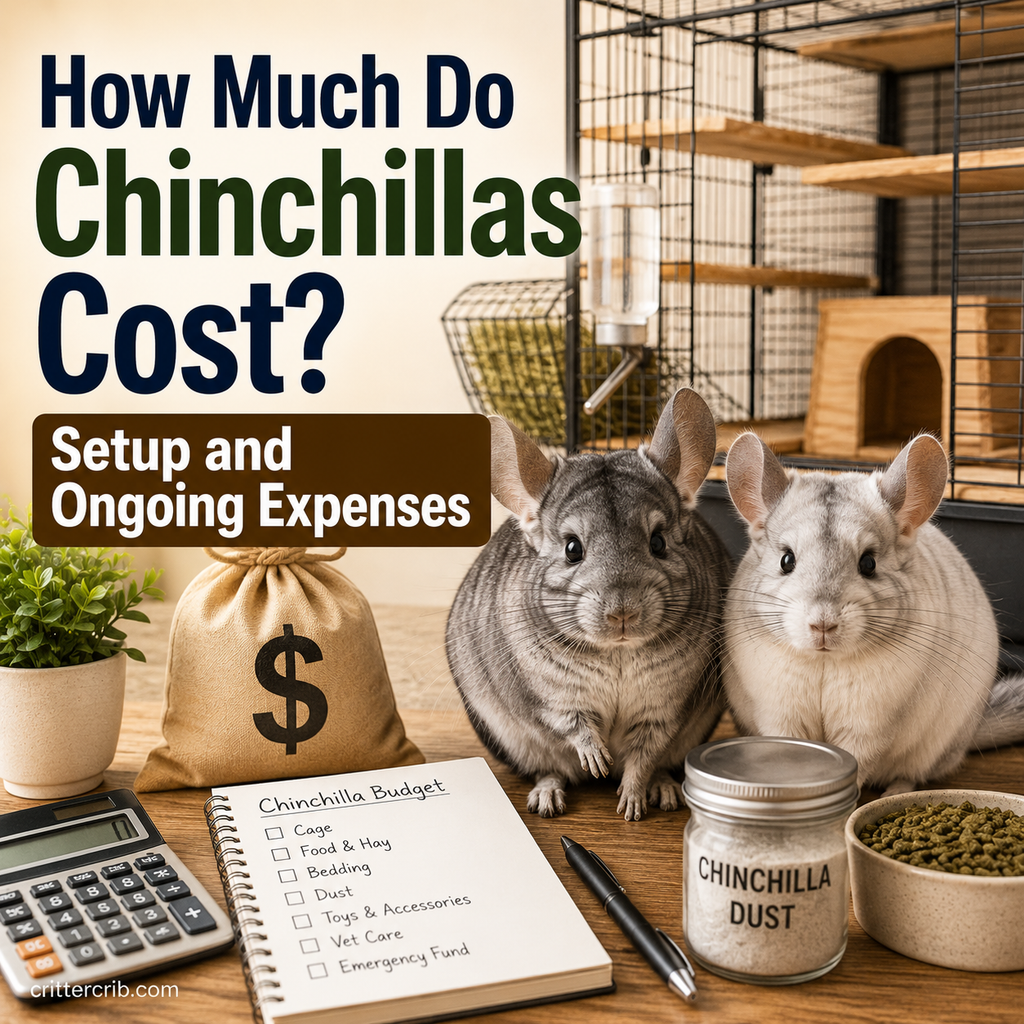
Chinchillas are small pets, but bringing one home can be a surprisingly significant financial commitment.
The chinchilla itself is only part of the cost. A proper cage, cooling equipment, food, hay, dust baths, chew toys, bedding, and veterinary care all need to be considered before deciding whether a chinchilla fits your budget.
So, how much does a chinchilla cost?
The exact amount varies depending on where you live, whether you adopt or buy, the type of enclosure you choose, and the veterinary care available in your area. As a general planning estimate, expect to spend several hundred dollars on the initial setup, with higher-end setups potentially reaching $1,000 or more. After that, you’ll have recurring expenses for food, supplies, enrichment, and veterinary care.
Here’s a closer look at where that money goes.
How Much Does a Chinchilla Cost to Buy?
The price of the animal itself can vary considerably.
A chinchilla may cost roughly $100 to $400 or more, depending on factors such as:
- Adoption versus purchasing
- Age
- Coat color or variety
- Breeder
- Geographic location
- Whether supplies are included
Unusual coat colors or chinchillas from specialized breeders may cost considerably more than common varieties.
However, purchase price shouldn’t be the main factor when choosing a chinchilla.
Health, temperament, previous care, and the reputation of the rescue or breeder are much more important than finding the least expensive animal available.
Adopting a Chinchilla
Adoption can sometimes reduce the upfront cost.
Rabbit and small-animal rescues occasionally have chinchillas available, and some organizations specialize specifically in chinchilla rescue.
Adoption fees vary, but there can be another advantage: an adult chinchilla’s personality may already be better understood by the rescue.
In some cases, an adopted chinchilla may also come with a cage or supplies. Don’t assume everything included is suitable, though. Evaluate the enclosure and accessories carefully before continuing to use them.
Initial Chinchilla Setup Costs
This is where new owners often underestimate the expense.
A chinchilla needs more than a basic cage and food bowl. Creating an appropriate environment can easily cost more than the chinchilla itself.
A realistic starter budget should account for:
- Large cage
- Ledges and platforms
- Hideout
- Food dishes
- Water bottle
- Hay feeder
- Exercise wheel, if used
- Carrier
- Dust bath container
- Chinchilla dust
- Hay
- Pellets
- Bedding or cage liners
- Chew toys
- Cooling equipment when necessary
Depending on the products you choose, a basic setup may cost a few hundred dollars, while a larger premium setup can become substantially more expensive.
Chinchilla Cage Cost
The cage will probably be your largest initial purchase.
Chinchillas are active animals that benefit from a spacious, secure enclosure with room to move between levels.
Quality cages commonly cost around $150 to $400 or more.
Large metal cages designed for chinchillas or similar small animals generally cost more than basic starter cages, but investing in a durable enclosure can make sense when you consider how long it may be used.
Look for features such as:
- Appropriate bar spacing
- Secure doors
- Good ventilation
- Multiple levels
- Enough room for ledges and enrichment
- Easy access for cleaning
- Durable construction
Avoid choosing a cage solely because it is inexpensive.
A cheap cage that is too small, difficult to clean, or unsafe may need to be replaced, turning the “budget” option into a more expensive purchase.
Ledges, Platforms, and Cage Furniture
An empty cage isn’t much of a home.
Chinchillas enjoy moving between different levels, so appropriately designed ledges and platforms can help create a more interesting environment.
Expect to spend roughly $30 to $100 or more outfitting the cage, depending on how elaborate you make it.
Accessories might include:
- Wooden ledges
- Platforms
- Bridges
- Hideouts
- Hammocks made from suitable materials
- Hay holders
- Food dishes
Wooden accessories may eventually need replacement because chewing is completely normal for chinchillas.
How Much Does a Chinchilla Exercise Wheel Cost?
A suitable exercise wheel can be one of the more expensive accessories.
Large, chinchilla-appropriate wheels often cost approximately $50 to $150 or more.
This isn’t an area where simply buying the cheapest small-animal wheel is a good idea. Wheels that are too small or poorly constructed may not be appropriate for chinchillas.
If you decide to provide one, research the proper size and construction before purchasing.
Avoid wire or mesh running surfaces that could create an injury risk.
Chinchilla Hideout Cost
Chinchillas should have somewhere secure to retreat and rest.
A simple hideout might cost around $15 to $50, although larger or more elaborate wooden houses can cost more.
Wooden houses also serve another purpose: many chinchillas will chew them.
That means even a sturdy hideout may eventually become a recurring expense.
Food and Water Supplies
Food bowls and water bottles aren’t particularly expensive individually, but they should still be included in your startup budget.
You might spend approximately $15 to $40 initially on:
- Heavy food dish
- Water bottle
- Hay holder
Choose sturdy products designed for small animals, and regularly inspect bottles for leaks or blockages.
Chinchilla Carrier Cost
A secure carrier is easy to overlook until you suddenly need to visit the veterinarian.
Buy one before an emergency happens.
A suitable small-animal carrier may cost around $20 to $50, depending on the size and construction.
The carrier should provide ventilation while remaining secure enough that your chinchilla cannot escape or chew through it during transportation.
Dust Bath Supplies
Chinchillas don’t take conventional water baths. Their extremely dense fur requires a different approach.
They use special chinchilla bathing dust to help maintain their coat.
You’ll need:
- A dust bath container
- Chinchilla-specific bathing dust
A bath container might cost roughly $10 to $30, while bathing dust becomes an ongoing expense.
Avoid substituting ordinary household powders, sand, or random dust products. Use a product specifically intended for chinchillas and follow appropriate bathing guidance.
Cooling and Temperature Control Costs
This is one of the most important expenses potential chinchilla owners should consider.
Chinchillas have dense fur and are sensitive to excessive heat.
If your home regularly becomes warm, maintaining an appropriate indoor temperature may require air conditioning.
That could mean:
- Running central air conditioning
- Using a suitable room air conditioner
- Paying higher electricity bills during warm months
- Buying thermometers to monitor room conditions
For someone living in a hot climate, cooling can become one of the largest hidden costs of chinchilla ownership.
A cooling stone or similar accessory should never be viewed as a replacement for maintaining a safe room temperature.
Before getting a chinchilla, consider whether you can reliably keep its environment within an appropriate temperature range throughout the year.
How Much Does Chinchilla Food Cost Per Month?
Once your enclosure is established, food becomes one of the more predictable recurring expenses.
A chinchilla’s basic diet generally revolves around appropriate grass hay and chinchilla pellets.
Depending on brands, package sizes, and where you live, you might budget roughly $15 to $40 per month for basic food.
Actual spending can vary.
Buying larger packages can sometimes reduce the cost per serving, but don’t buy so much that food becomes stale or is stored improperly.
Hay Costs
Quality grass hay should make up an important part of a chinchilla’s diet.
Hay prices vary significantly depending on:
- Brand
- Type
- Package size
- Local availability
- Online versus local purchasing
A reasonable monthly hay budget might fall around $10 to $25, although individual costs vary.
Hay should be fresh, dry, and stored appropriately.
Don’t choose poor-quality hay simply because it’s cheaper. Nutrition is not the place to cut corners.
Pellet Costs
Chinchillas should receive an appropriate plain pellet formulated for their nutritional needs.
Pellets might cost approximately $5 to $15 per month, depending on the brand and quantity purchased.
Avoid assuming colorful mixes filled with seeds, dried fruit, or other extras are automatically better because they look more interesting.
A simple, nutritionally appropriate diet is generally preferable to feeding lots of sugary treats and extras.
If you’re unsure what to feed, discuss your chinchilla’s diet with an exotic-animal veterinarian.
Bedding and Cage Liner Costs
Your ongoing cage-maintenance costs will depend heavily on how your enclosure is configured.
Some owners use disposable bedding in appropriate areas, while others use reusable liners designed for their cage setup.
Disposable materials require repeated purchases.
Reusable liners cost more upfront but can reduce the amount of bedding you purchase over time. They also create additional laundry.
You might budget approximately $10 to $30 per month for bedding and cage-maintenance materials, depending on your setup.
Always research whether a particular bedding material is safe before using it around a chinchilla.
Chinchilla Dust Cost
Bathing dust isn’t particularly expensive, but it is another recurring purchase.
You might spend approximately $5 to $15 per month, depending on the product, how frequently it is used, and how much needs replacing.
Keep the dust clean and dry.
The dust bath usually shouldn’t remain permanently inside the cage, since it can quickly become contaminated or used as a bathroom.
Chew Toys and Enrichment
Chinchillas need safe opportunities to chew and explore.
Because their teeth continuously grow, appropriate chewing materials are an important part of their environment.
Expect to regularly replace items such as:
- Chinchilla-safe wooden chews
- Apple sticks or other confirmed safe woods
- Pumice or suitable chewing stones
- Wooden ledges
- Toys
- Foraging items
A reasonable enrichment budget might be around $10 to $30 per month.
You can spend considerably more if you frequently purchase elaborate accessories.
How Much Does Chinchilla Veterinary Care Cost?
Veterinary care is one of the hardest expenses to estimate.
Chinchillas generally require a veterinarian experienced with exotic mammals, and exotic-animal veterinary services may be more expensive or less widely available than routine dog and cat care.
A routine examination could cost approximately $60 to $150 or more, depending on the clinic and location.
Diagnostic testing, dental procedures, medications, hospitalization, or emergency treatment can increase the bill substantially.
An unexpected medical problem can easily cost several hundred dollars and, in more complicated cases, potentially much more.
Find an Exotic Vet Before You Need One
Don’t wait for an emergency to start looking for a veterinarian.
Before bringing your chinchilla home:
- Find veterinarians in your area who actually treat chinchillas.
- Confirm their regular appointment availability.
- Ask where they refer after-hours emergencies.
- Check how far you would need to travel.
- Build veterinary expenses into your budget.
Having this information ready can save valuable time if your chinchilla suddenly becomes ill.
Create an Emergency Vet Fund
Setting aside money specifically for veterinary emergencies is one of the smartest financial preparations you can make.
There is no universal amount that guarantees every medical expense will be covered, but building an emergency fund of at least several hundred dollars gives you a starting point.
A goal of $500 to $1,000 or more can provide a more useful cushion, especially considering the cost of emergency and exotic-animal veterinary treatment.
You can build the fund gradually by setting aside a small amount each month.
For example:
- $20 per month = $240 per year
- $30 per month = $360 per year
- $50 per month = $600 per year
Keep in mind that an emergency can happen before you’ve finished building the fund.
Estimated Monthly Cost of Owning a Chinchilla
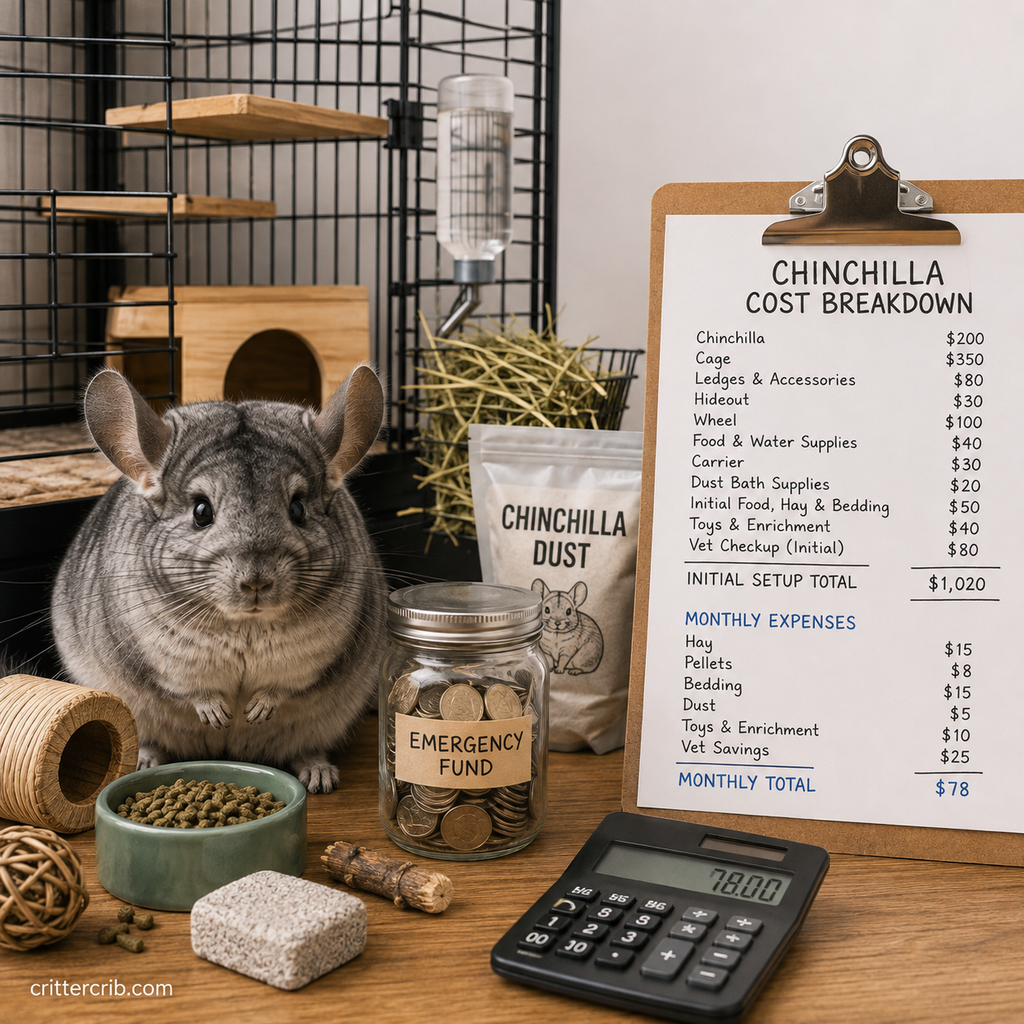
Once you’ve purchased the major equipment, routine monthly costs become more manageable.
A rough monthly budget might look like this:
- Hay: $10–$25
- Pellets: $5–$15
- Bedding or cage supplies: $10–$30
- Dust: $5–$15
- Chews and enrichment: $10–$30
- Veterinary savings: $20–$50+
That puts a basic recurring budget at approximately $60 to $165 or more per month.
This estimate doesn’t include every possible expense.
Electricity for air conditioning, replacement cage accessories, emergency veterinary treatment, pet sitting, and other unexpected expenses can push the real cost higher.
Estimated First-Year Cost of a Chinchilla
The first year is usually the most expensive because you’re purchasing the chinchilla and most of the equipment.
Here’s a rough planning range:
| Expense | Estimated Cost |
|---|---|
| Chinchilla | $100–$400+ |
| Cage | $150–$400+ |
| Ledges and accessories | $30–$100+ |
| Exercise wheel | $50–$150+ |
| Hideout | $15–$50 |
| Carrier | $20–$50 |
| Food/water supplies | $15–$40 |
| Dust bath setup | $15–$40 |
| Initial food and hay | $20–$50 |
| Toys and chews | $20–$50+ |
| Routine veterinary exam | $60–$150+ |
Before recurring monthly expenses, a well-equipped initial setup can therefore easily reach $500 to $1,000 or more.
Add a year of food, supplies, enrichment, cooling costs, and veterinary care, and the total first-year expense can become considerably higher.
These figures should be treated as planning estimates rather than fixed prices.
What About the Cost of Two Chinchillas?
Two chinchillas won’t necessarily cost exactly twice as much as one, but your expenses will increase.
Some equipment can potentially be shared, while other costs increase directly with the number of animals.
Expect additional spending on:
- Food
- Hay
- Chews
- Veterinary care
- Carrier space
- Cage space
- Ledges and accessories
- Emergency savings
Never house unfamiliar chinchillas together simply to save space or money.
Compatibility and introductions need to be handled appropriately, and some chinchillas may ultimately need separate housing.
Hidden Costs of Chinchilla Ownership
The obvious expenses are easy to put on a shopping list. The less obvious ones are what can catch new owners off guard.
Air Conditioning
If you live somewhere with hot summers, cooling expenses can be substantial.
You may need to run air conditioning even when you personally would be comfortable without it.
Replacement Cage Accessories
Wooden ledges, houses, and toys are meant to be chewed.
Eventually, some will need replacement.
Pet Sitting
Going away for several days means finding someone who understands chinchilla care.
A knowledgeable pet sitter may cost more than asking a friend to refill a food bowl.
Emergency Transportation
Your nearest exotic-animal emergency clinic might not be nearby.
That can create additional transportation costs as well as veterinary expenses.
Household Damage
A chinchilla exploring outside the cage may chew something you didn’t expect.
Rabbit-proofing has a chinchilla equivalent.
Electrical cords, furniture, baseboards, and other unsafe items should be protected or kept completely inaccessible.
Where Should You Spend More?
You don’t need to buy the most expensive version of every product.
There are, however, a few areas where prioritizing quality makes sense.
Spend carefully on:
- A safe, spacious cage
- Appropriate food and hay
- Reliable temperature control
- Safe exercise equipment
- Veterinary care
- Secure transportation
- Safe cage materials
Decorative accessories are much less important.
Your chinchilla won’t care whether its cage matches your living room furniture.
Where Can You Save Money?
Chinchilla ownership doesn’t have to involve constantly buying expensive accessories.
You may be able to reduce costs by:
- Buying hay in economical quantities you can properly store
- Comparing reputable suppliers
- Using durable cage accessories
- Choosing reusable products when appropriate
- Rotating toys instead of constantly buying new ones
- Replacing individual worn components instead of entire setups
- Setting aside veterinary money every month
Saving money should never come at the expense of safety, nutrition, appropriate temperature control, or medical care.
Is a Chinchilla an Expensive Pet?
Compared with some other small pets, chinchillas can be relatively expensive to set up properly.
The cage is larger, specialized equipment may be necessary, temperature control can increase household expenses, and veterinary care usually requires an exotic-animal veterinarian.
On the other hand, many of the largest purchases are upfront expenses.
Once you have a quality cage, carrier, feeding supplies, and other durable equipment, routine monthly expenses are more predictable.
Veterinary emergencies remain the biggest financial wildcard.
Consider the Long-Term Cost
The first-year price shouldn’t be the only number you consider.
Chinchillas can be long-lived pets, with well-cared-for animals potentially living well into their teens and sometimes beyond.
That means even modest monthly expenses add up over many years.
For example, spending an average of $75 per month equals:
- $900 per year
- $4,500 over five years
- $9,000 over ten years
- $13,500 over fifteen years
And that’s before major veterinary emergencies or unusually high cooling expenses.
The point isn’t to make chinchilla ownership sound unaffordable. It’s to recognize that you’re making a long-term financial commitment rather than purchasing an inexpensive cage pet.
Questions to Ask Before Getting a Chinchilla
Before bringing one home, ask yourself:
- Can I afford the initial cage and setup?
- Can I consistently purchase quality hay and appropriate food?
- Can I keep the room at a safe temperature year-round?
- Is there a veterinarian near me who treats chinchillas?
- Can I afford routine veterinary care?
- What would I do if I suddenly faced a large veterinary bill?
- Can I continue covering these expenses for many years?
If one of those questions gives you pause, it may be worth waiting and building your budget before adopting.
Final Thoughts: How Much Does a Chinchilla Really Cost?
The chinchilla itself is often one of the smaller expenses involved in chinchilla ownership.
A realistic initial budget is usually several hundred dollars, and a quality setup can easily reach $500 to $1,000 or more before you account for all ongoing expenses.
After the initial setup, you might spend roughly $60 to $165 or more per month on food, hay, bedding, dust, enrichment, and veterinary savings. Cooling costs and unexpected veterinary bills can increase that amount considerably.
Prices vary by location, so use these figures as starting points rather than exact predictions.
Most importantly, budget beyond the day you bring your chinchilla home. A safe cage, proper nutrition, temperature control, enrichment, and access to an experienced veterinarian are all part of the real cost of caring for one.
Planning for those expenses ahead of time makes it much easier to focus on what matters once your chinchilla arrives: giving them a safe, comfortable, and engaging home.