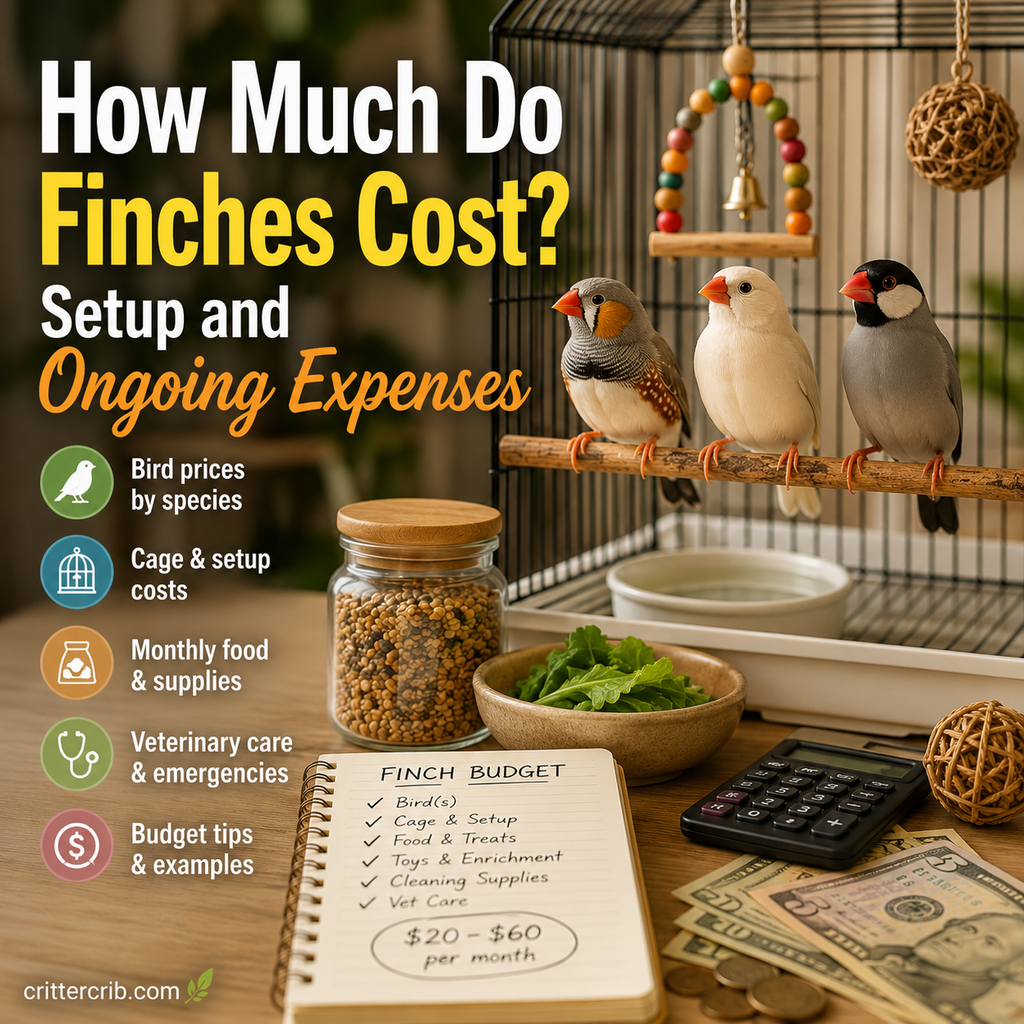

Canaries are relatively small birds, but the cost of owning one goes well beyond the price you pay to bring the bird home.
The canary itself may cost roughly $50 to $200 or more, depending on the variety, age, breeder, location, and other factors. Your initial setup can easily add another $150 to $500 or more once you purchase an appropriate cage, perches, dishes, a carrier, and other essentials.
Then there are ongoing expenses.
Food, cage supplies, replacement accessories, and veterinary care continue throughout your bird’s life. You’ll also want money available for unexpected medical expenses, which can cost considerably more than the bird itself.
If you’re considering a canary, here’s a realistic look at what you may spend initially and what you should budget for ongoing care.
How Much Does a Canary Cost?
A pet canary commonly costs somewhere around $50 to $200, although prices can fall outside that range.
You may encounter inexpensive birds at some pet stores, while canaries from specialized breeders can cost several hundred dollars.
The price depends on factors such as:
- Variety
- Color
- Song quality
- Age
- Sex
- Breeder reputation
- Pedigree
- Availability
- Geographic location
Certain specialized song, color, or type canaries may command significantly higher prices.
If you’re simply looking for a healthy companion bird, don’t assume the most expensive canary is automatically the best choice.
Health and responsible breeding matter more than price alone.
Why Do Some Canaries Cost More Than Others?
Canaries have been selectively bred for different characteristics for generations.
Some are primarily known for singing. Others are bred for distinctive colors, feather characteristics, or body shapes.
That creates considerable variation in price.
Song Canaries
Certain canary varieties are bred specifically for their vocal qualities.
Depending on the bird’s lineage, training, and variety, specialized song canaries may cost more than a typical pet-store canary.
Color Canaries
Canaries aren’t limited to the classic bright yellow most people picture.
They can appear in different shades and color combinations.
Some less common colors may be priced higher.
Type Canaries
Type canaries are bred for physical characteristics such as body shape, feathering, or posture.
Specialized varieties may be more expensive and sometimes have care considerations that a beginner should research before purchasing.
Male vs. Female Canary Prices
Male canaries are often sought after because they’re generally more likely to produce the elaborate songs people associate with canaries.
That demand can sometimes make males more expensive.
Females can vocalize too, but they’re not usually known for the same sustained singing.
If singing is one of your main reasons for getting a canary, make sure the seller can provide reliable information about the bird’s sex.
Keep in mind that even a male isn’t guaranteed to sing constantly.
Age, health, season, molting, environment, and individual personality can all influence singing.
Pet Store vs. Breeder Costs
Where you get your canary can affect the price.
Buying From a Pet Store
A pet store may be convenient, and you’ll be able to purchase many of the supplies you need at the same time.
Before buying, look closely at:
- Cage cleanliness
- Bird activity
- Feather condition
- Breathing
- Eyes and nostrils
- Food and water
- General condition of the birds
Ask where the bird came from and whether any health information is available.
Buying From a Breeder
A responsible breeder may be able to provide more detailed information about:
- Age
- Sex
- Parentage
- Variety
- Diet
- Breeding history
- Early environment
Specialized breeders may charge more, particularly for specific varieties.
Higher price alone doesn’t prove that someone is a responsible breeder, so ask questions and evaluate how the birds are housed and cared for.
Adoption and Rescue Costs
Canaries occasionally become available through bird rescues, animal shelters, or private rehoming situations.
Adoption fees vary.
A rescue may charge less than a breeder, but price shouldn’t be the main reason to adopt.
An adopted bird may have unknown health history, dietary habits, or previous experiences that require additional attention.
Ask what is known about the bird and arrange appropriate veterinary care.
How Much Does a Canary Cage Cost?
Expect to spend approximately $60 to $250 or more on an appropriate cage.
There are inexpensive cages available, but extremely small decorative cages aren’t suitable as permanent homes.
Canaries are active birds that benefit from horizontal space for short flights.
When choosing a cage, prioritize:
- Adequate width
- Safe bar spacing
- Secure doors
- Easy cleaning
- Durable construction
- Safe materials
- Room for multiple perches
- Enough open space for movement
A larger, well-built cage may cost more initially but can be a better long-term investment.
Cage Stand Cost
Some cages include stands.
Others don’t.
If you need a separate stand, budget approximately $30 to $150 or more, depending on the size and design.
You don’t necessarily need a specialized bird-cage stand if you already have a stable, appropriately sized piece of furniture.
Whatever you use should be sturdy and difficult to tip.
How Much Do Canary Perches Cost?
Budget roughly $15 to $50 for an initial selection of perches.
Canaries benefit from several perch sizes and textures.
Natural bird-safe branches are useful because their irregular surfaces allow the feet to rest in different positions.
Avoid setting up the entire cage with identical smooth dowels.
You may need to replace perches over time as they become worn, heavily soiled, or damaged.
Food and Water Dishes
Many cages include basic dishes.
If yours doesn’t—or you’d like better ones—expect to spend around $10 to $30 initially.
Stainless steel or other easy-to-clean bird-safe dishes are practical.
Position dishes where they’re easy to access but not directly underneath favorite perches.
Otherwise, they’ll become dirty very quickly.
Canary Bath Cost
Many canaries enjoy bathing.
A basic bird bath may cost around $5 to $20.
You don’t need anything elaborate.
A safe, appropriately sized shallow bath that can be cleaned easily is enough.
Fresh bathing water should be provided regularly and removed or changed when it becomes dirty.
Toys and Enrichment Costs
Canaries aren’t parrots, so they don’t necessarily need the same collection of heavy-duty chewing toys.
They still benefit from an interesting environment.
Budget around $15 to $50 initially for appropriate enrichment.
Depending on the bird, you might provide:
- Swings
- Bird-safe greenery
- Bathing opportunities
- Simple foraging activities
- Appropriate lightweight toys
- Natural perches
Don’t overcrowd the cage.
Canaries need open space to move and fly more than they need every inch filled with accessories.
Canary Carrier Cost
A small bird carrier may cost approximately $20 to $60.
This is an easy purchase to overlook.
Then one day you need to take your canary to a veterinarian and realize you don’t have a safe way to transport it.
Buy a suitable carrier before you need one.
A carrier is useful for:
- Veterinary visits
- Emergencies
- Moving
- Temporary relocation
Make sure it’s secure and appropriately ventilated.
Initial Veterinary Exam Cost
Veterinary prices vary significantly by location and clinic, but an initial avian examination may cost approximately $75 to $200 or more.
Additional testing costs extra.
A new-bird examination is worth including in your startup budget even if the canary appears perfectly healthy.
Birds can hide signs of illness remarkably well.
An avian veterinarian can examine the bird, discuss nutrition, evaluate body condition, and recommend any appropriate testing or preventive care.
Initial Canary Setup Cost
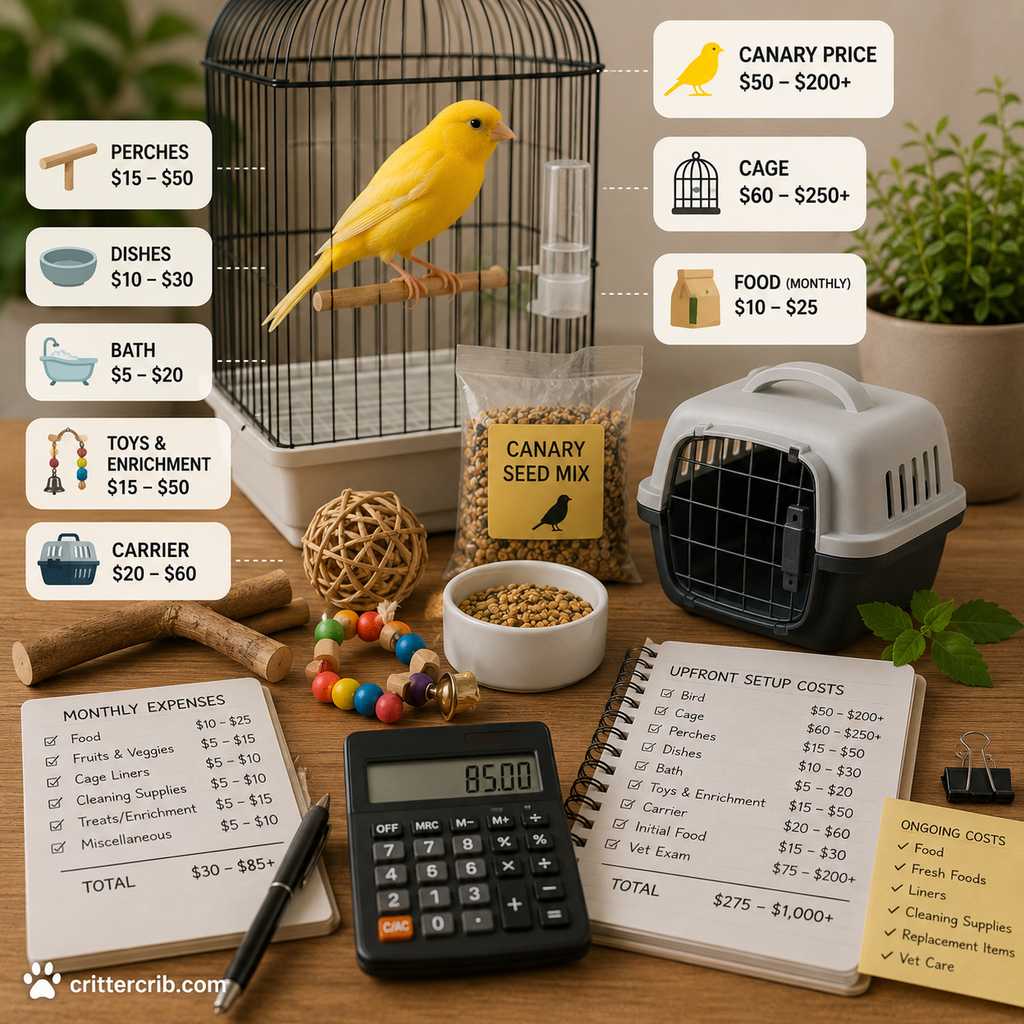
Once everything is added together, the initial cost can be considerably higher than the price of the bird.
Here’s a rough example:
| Expense | Estimated Cost |
|---|---|
| Canary | $50–$200+ |
| Cage | $60–$250+ |
| Cage stand | $0–$150+ |
| Perches | $15–$50 |
| Food and water dishes | $10–$30 |
| Bird bath | $5–$20 |
| Toys/enrichment | $15–$50 |
| Carrier | $20–$60 |
| Initial food | $15–$30 |
| Cage liners/cleaning supplies | $10–$30 |
| Initial veterinary exam | $75–$200+ |
A realistic initial budget is approximately $275 to $1,000 or more, depending on the bird, cage, veterinary costs, and how much equipment you already own.
You don’t have to buy the most expensive version of every accessory.
The places where you shouldn’t cut corners are safety, appropriate cage space, nutrition, and veterinary care.
How Much Does Canary Food Cost?
Food for one canary isn’t usually a major household expense.
You might spend approximately $10 to $25 per month, depending on what you feed, local prices, package sizes, and how much fresh produce you already buy for your household.
A balanced diet may include an appropriate formulated food along with suitable fresh vegetables and other bird-safe foods.
Seeds may also be part of the diet depending on your veterinarian’s recommendations.
Avoid assuming that an inexpensive seed mix is everything your canary needs nutritionally.
Fresh Food Costs
Fresh vegetables don’t necessarily add much to your budget if you’re already buying produce.
Suitable foods can often be shared from ingredients you’re preparing for yourself before they’re seasoned or cooked with unsafe ingredients.
Depending on your shopping habits, you might spend an additional $5 to $15 per month specifically on fresh foods for the bird.
Because canaries eat such small quantities, food waste can become a bigger issue than the amount they actually consume.
Buy and prepare reasonable portions.
Cage Liner and Cleaning Costs
Cage liners can be inexpensive.
Plain paper is often useful because it’s easy to replace and allows you to monitor droppings.
Depending on what you use, basic cleaning and liner expenses might average around $5 to $15 per month.
You don’t need heavily scented specialty products.
In fact, strong fragrances and fumes should generally be avoided around birds.
Simple, bird-safe cleaning methods are preferable.
Replacement Perches and Accessories
Perches, dishes, baths, and cage accessories won’t necessarily need replacement every month.
Still, things wear out.
Budgeting around $25 to $100 per year for replacement accessories is reasonable for many owners, although individual spending varies.
Inspect cage items regularly for:
- Damage
- Rust
- Sharp edges
- Loose components
- Heavy wear
- Areas that can’t be adequately cleaned
Replace anything that becomes unsafe.
How Much Does Veterinary Care Cost for a Canary?
Veterinary care is the most unpredictable expense.
A routine avian examination might cost around $75 to $200 or more, while diagnostic tests, medications, emergency treatment, hospitalization, or specialized procedures can increase the bill substantially.
An illness could result in a veterinary bill of several hundred dollars or more.
That’s why evaluating the affordability of a bird based only on monthly food costs can be misleading.
The canary might eat $15 worth of food in a month and still unexpectedly need a $500 veterinary visit.
Create an Emergency Vet Fund
Consider maintaining a dedicated emergency fund for your bird.
A reasonable starting goal might be $500 to $1,000 or more, depending on veterinary prices where you live.
That doesn’t mean every emergency will cost that much—or that $1,000 will cover every situation.
It simply gives you a financial buffer.
If possible, research avian veterinarians before getting your canary.
Find out:
- Where the nearest avian clinic is
- Whether it accepts emergencies
- Typical examination fees
- Where you would go after hours
Being prepared financially and logistically can make an emergency much easier to manage.
Monthly Cost of Owning a Canary
Ignoring major veterinary expenses, one canary may cost approximately $20 to $50 per month for basic ongoing care.
That could include:
- Formulated food or seed
- Fresh foods
- Cage liners
- Cleaning supplies
- Occasional replacement accessories
- Enrichment
Some months will cost less.
Others will cost considerably more.
Veterinary visits and replacing major equipment can quickly increase the average.
Annual Cost of Owning a Canary
A basic annual budget might fall somewhere around $300 to $800 or more, excluding major emergencies.
That estimate can include:
- Food
- Fresh produce
- Cleaning supplies
- Replacement accessories
- Routine veterinary care
- Enrichment
Where you live makes a substantial difference, particularly for veterinary expenses.
A medical emergency could push the yearly total much higher.
First-Year Canary Cost
The first year is usually the most expensive because you’re buying the cage and equipment.
A rough first-year budget might look like:
- Initial setup and bird: $200–$800+
- Veterinary care: $75–$200+
- Food and fresh produce: $150–$400
- Cleaning supplies: $50–$150
- Replacement accessories/enrichment: $25–$100+
That puts a reasonable first-year estimate around $500 to $1,500 or more.
You can certainly spend outside that range.
The point is that a $75 bird doesn’t necessarily cost $75 to own.
Are Canaries Expensive Pets?
Compared with many larger parrots, canaries can be relatively affordable.
They eat small quantities of food and don’t usually destroy expensive toys at the rate some parrots do.
They also require less equipment than many larger birds.
But “relatively affordable” isn’t the same as cheap.
Veterinary care remains a major consideration.
A $100 canary can require the same specialized avian veterinary expertise as a bird worth several times more.
Where You Shouldn’t Try to Save Money
There are plenty of ways to keep canary ownership affordable without compromising care.
But some areas aren’t good places to cut corners.
Cage Size
Don’t buy a tiny cage simply because it’s inexpensive.
Your bird needs room to move.
Veterinary Care
Don’t avoid an examination because the visit costs more than the bird did.
The bird’s purchase price has nothing to do with the value of its health.
Food Quality
Buying the cheapest possible food isn’t necessarily economical if the diet is nutritionally poor.
Safety
Don’t use questionable cages, rusty accessories, unsafe household materials, or damaged equipment simply to avoid replacing them.
Saving $20 isn’t worth creating a preventable hazard.
Ways to Reduce Canary Costs Safely
You can keep expenses reasonable with smart choices.
Consider:
- Buying a quality cage once instead of repeatedly upgrading
- Using plain paper for cage liners
- Sharing appropriate fresh vegetables from your household groceries
- Choosing durable, washable dishes
- Comparing prices on quality bird food
- Using safe natural perches when properly sourced
- Avoiding unnecessary decorative cage accessories
- Maintaining equipment so it lasts longer
Focus spending on things that improve your bird’s health, safety, and quality of life.
The Hidden Cost: Time
Not every expense appears on a receipt.
Canaries require daily care.
You’ll spend time:
- Providing fresh food and water
- Cleaning dishes
- Changing cage liners
- Cleaning the cage
- Monitoring behavior
- Providing bathing opportunities
- Maintaining the environment
- Purchasing supplies
- Arranging veterinary care
Canaries may require less hands-on interaction than many parrots, but they aren’t maintenance-free decorations.
Their daily needs continue whether you’re busy, tired, traveling, or working long hours.
What About Vacation and Pet-Sitting Costs?
Travel can create another expense.
You’ll need someone reliable to care for your canary while you’re away.
Depending on where you live, this might involve:
- A friend or family member
- A professional pet sitter
- Bird boarding
- Veterinary boarding
Professional care might cost anywhere from roughly $15 to $50 or more per day, depending on the service and location.
If you travel frequently, include pet care in your long-term budget.
How Long Will You Be Paying for Canary Care?
Canaries can live for many years.
A pet canary may live approximately 8 to 12 years, with some living longer under excellent conditions.
That means even modest annual expenses add up.
For example, spending an average of $500 per year over 10 years equals:
$5,000 in lifetime care expenses.
Add the initial setup and unexpected veterinary care, and the total could be considerably higher.
That doesn’t mean canaries are unusually expensive pets.
It simply illustrates why the purchase price isn’t a useful measure of the true cost of ownership.
Canary Cost Checklist for Beginners
Before bringing home a canary, make sure your budget includes:
One-Time or Initial Expenses
- Canary
- Appropriate cage
- Cage stand if needed
- Natural perches
- Food and water dishes
- Bird bath
- Carrier
- Initial enrichment
- Initial food
- Cleaning supplies
- First veterinary examination
Ongoing Expenses
- Bird food
- Fresh vegetables
- Cage liners
- Cleaning supplies
- Replacement perches
- Enrichment
- Routine veterinary care
- Emergency veterinary care
- Pet sitting or boarding when needed
Planning for both categories gives you a much more realistic idea of affordability.
Frequently Asked Questions About Canary Costs
How Much Does a Canary Cost at a Pet Store?
Prices vary considerably, but many pet canaries cost roughly $50 to $200 or more.
Variety, sex, age, location, and availability can all affect the price.
How Much Does a Canary Cost Per Month?
Basic ongoing expenses for one canary may average approximately $20 to $50 per month, excluding significant veterinary expenses.
Some months will cost considerably more than others.
How Much Does a Canary Cage Cost?
A suitable cage might cost around $60 to $250 or more.
Larger, higher-quality cages generally cost more but can provide better usable space and durability.
Are Male Canaries More Expensive?
Male canaries may sometimes cost more because they’re often sought after for their singing.
Pricing depends on the seller, variety, age, and individual bird.
How Much Does Canary Food Cost?
One canary may consume roughly $10 to $25 worth of commercial bird food per month, depending on the diet, brand, and local prices.
Fresh foods may add a small additional expense.
Are Canary Vet Bills Expensive?
They can be.
Birds often require specialized veterinary care, and diagnostic testing or emergency treatment can cost several hundred dollars or more.
The veterinarian may cost significantly more than the original purchase price of the bird.
Is a Canary Cheaper Than a Parrot?
Canaries are generally less expensive to maintain than medium or large parrots because they require less food, smaller equipment, and fewer heavy-duty toys.
Veterinary care can still be expensive.
How Much Money Should I Have Saved Before Getting a Canary?
In addition to paying for the bird and complete setup, having at least several hundred dollars available for unexpected veterinary care is a sensible starting point.
A dedicated emergency fund of approximately $500 to $1,000 or more provides additional protection.
Final Thoughts
So, how much do canaries cost?
The bird itself may cost roughly $50 to $200 or more, but that’s only the beginning.
Once you add a suitable cage, perches, dishes, a bath, carrier, food, cleaning supplies, enrichment, and an initial veterinary examination, your starting expenses can easily reach several hundred dollars.
A reasonable initial budget is around $275 to $1,000 or more, while ongoing basic care might average approximately $20 to $50 per month before significant veterinary expenses.
The first year could realistically cost around $500 to $1,500 or more.
After that, food and routine supplies are usually manageable. Veterinary care is the expense most likely to create an unexpected spike.
That’s why the best approach is to budget beyond the bird’s purchase price.
Buy a good cage from the beginning. Provide appropriate food. Keep the environment clean and safe. Establish care with an avian veterinarian. And maintain an emergency fund for the expenses you can’t predict.
Canaries can be relatively affordable companion birds, especially compared with larger parrots, but they’re still living animals with needs that continue for many years.
Planning for those costs before bringing one home makes it much easier to provide good care throughout your canary’s life.