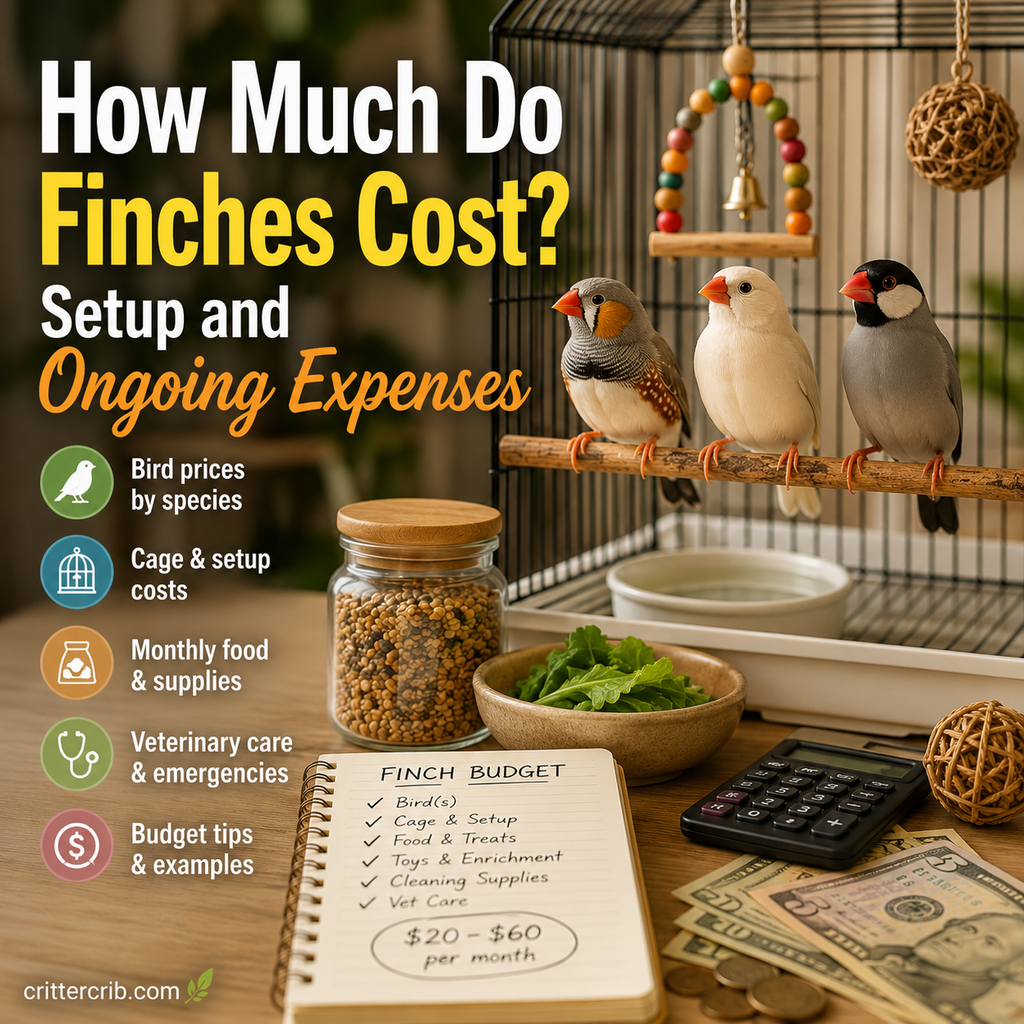
Finches are often considered relatively affordable pet birds, especially compared with larger parrots. The bird itself may not cost very much, and you won’t need giant cages, heavy-duty toys, or huge bags of food.
But the purchase price is only the beginning.
A proper cage, perches, feeding supplies, enrichment, food, cleaning products, and veterinary care all contribute to the real cost of keeping finches. And because many commonly kept finches are social birds that are often kept in pairs or groups, you may be budgeting for more than one bird from the start.
So, how much do finches actually cost?
As a rough estimate, you might spend $150 to $500 or more on the initial setup, including the birds, with ongoing expenses of roughly $20 to $60 per month for a small number of finches. Veterinary care and emergencies can add significantly to those figures.
Prices vary considerably depending on where you live, the species you choose, cage quality, diet, and your birds’ health.
Here’s a closer look at what you should budget before bringing finches home.
How Much Does a Finch Cost?
Many common pet finches cost approximately $20 to $100 per bird, although prices can fall outside this range.
Common species and varieties are generally less expensive than unusual color mutations or harder-to-find species.
The source also matters.
You may find finches through:
- Bird breeders
- Specialty bird stores
- General pet stores
- Bird rescues
- Animal shelters
- Rehoming situations
Don’t choose a bird based solely on the lowest price.
A healthy bird from a responsible source is more important than saving a small amount upfront.
Typical Finch Prices by Species
Finch prices vary considerably, and local availability can make a major difference.
Here are broad estimates for several birds commonly kept as pets.
Zebra Finch Cost
Zebra finches are among the most widely available pet finches.
A zebra finch may cost around $20 to $60, although certain colors or varieties can cost more.
Because zebra finches are social, many owners keep at least two compatible birds.
That means your actual bird budget may be closer to $40 to $120 or more.
Society Finch Cost
Society finches, sometimes called Bengalese finches, are another popular choice.
Individual birds may cost roughly $20 to $60, depending on availability and variety.
They’re known for being social birds and are commonly kept with compatible companions.
Gouldian Finch Cost
Gouldian finches tend to be more expensive.
Depending on coloration, breeder, location, and availability, an individual bird might cost approximately $75 to $200 or more.
Unusual varieties or particularly desirable birds can exceed typical pet prices.
Other Finch Species
Less common species may cost substantially more than zebra or society finches.
Availability can also vary by region.
If you’re interested in a particular species, research not only its purchase price but also its:
- Social requirements
- Diet
- Housing needs
- Temperature requirements
- Compatibility
- Availability of experienced veterinary care
A more expensive bird isn’t necessarily more difficult to keep, but you should understand the species before purchasing it.
Should You Budget for More Than One Finch?
Usually, yes.
Many commonly kept finches are highly social and benefit from living with compatible members of their own kind.
This is an important difference between budgeting for a finch and budgeting for certain other pet birds.
Buying one inexpensive finch and a tiny cage may look affordable on paper, but it may not represent an appropriate long-term setup.
For a pair, you’ll need to account for:
- Two birds
- A larger cage
- More food
- Additional perches
- Multiple feeding locations when necessary
- Higher veterinary costs
- More cleaning supplies
Fortunately, the ongoing cost of a second tiny bird isn’t necessarily double the cost of keeping one.
The cage and many accessories can be shared.
Veterinary care, however, is per bird.
Finch Adoption and Rescue Costs
Adopting can sometimes reduce the initial purchase price.
A rescue or shelter may charge an adoption fee rather than a retail price.
Depending on the organization, the fee might include some level of health assessment or other care provided before adoption.
Rehomed birds may occasionally come with:
- A cage
- Perches
- Food
- Toys
- Feeding dishes
- Other supplies
That can reduce startup costs significantly.
However, don’t assume every included item should continue to be used.
Inspect secondhand cages and accessories carefully for:
- Rust
- Broken bars
- Unsafe spacing
- Sharp edges
- Damaged coatings
- Frayed materials
- Heavy contamination
Replacing unsafe equipment is worth the additional expense.
Initial Finch Setup Costs
The birds themselves may be one of the smaller expenses.
For a basic but appropriate setup, expect to purchase several items before your finches arrive.
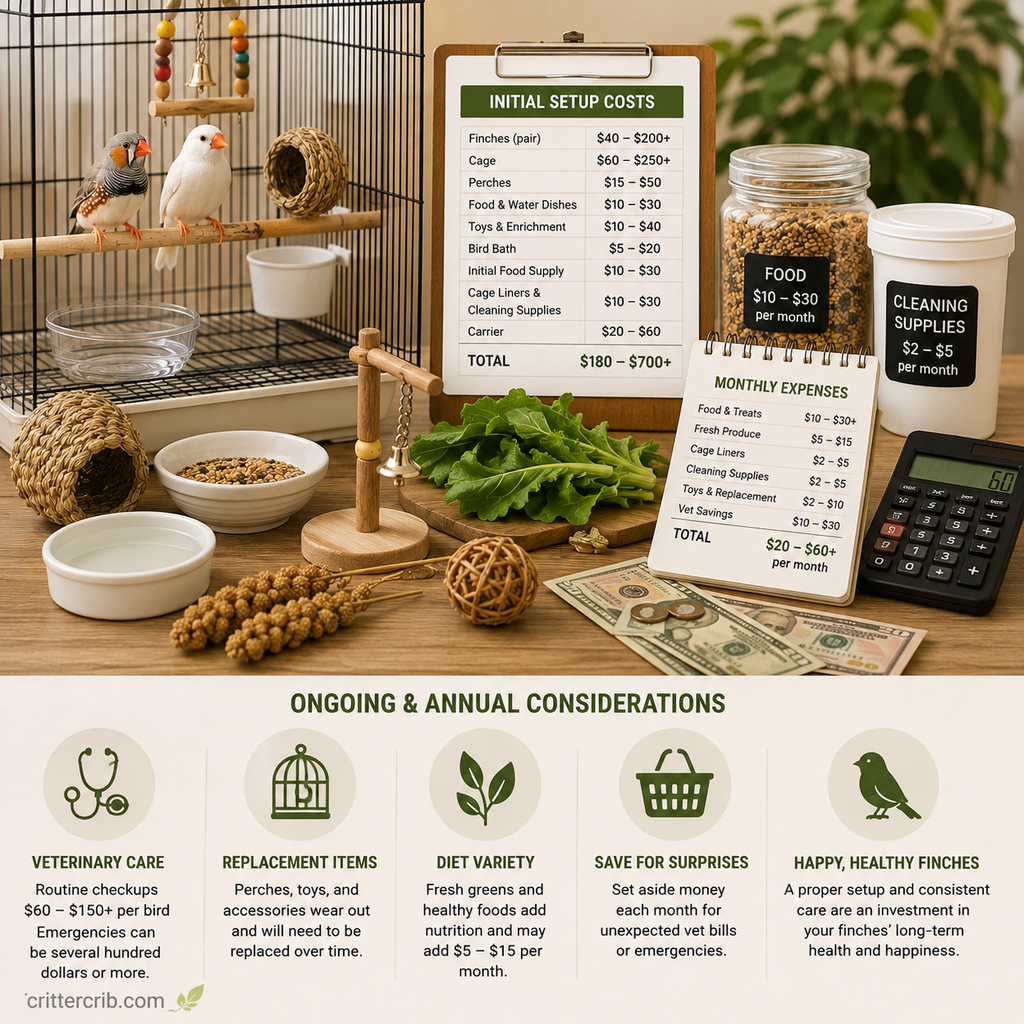
A realistic starter budget might look something like this:
- Finches: $40–$200+
- Cage: $60–$250+
- Perches: $15–$50
- Food and water dishes: $10–$30
- Toys and enrichment: $10–$40
- Bird bath: $5–$20
- Initial food supply: $10–$30
- Cage liners and cleaning supplies: $10–$30
- Carrier: $20–$60
That puts many setups somewhere around $180 to $700 or more, depending on the number and type of birds and the quality of the equipment.
You can certainly spend less or considerably more.
The cage is usually where spending a little extra makes the biggest difference.
How Much Does a Finch Cage Cost?
A suitable finch cage may cost approximately $60 to $250 or more.
Larger flight cages can cost several hundred dollars.
For finches, horizontal room is particularly important because they’re active flying birds.
A wide rectangular cage is generally more useful than a tall, narrow decorative cage.
When shopping, consider:
- Overall dimensions
- Horizontal flight space
- Safe bar spacing
- Door security
- Ease of cleaning
- Construction quality
- Access to food and water
- Space for multiple birds
Don’t automatically buy the cheapest cage labeled “finch cage.”
Marketing labels don’t guarantee that a cage provides enough usable space.
Why a Larger Cage Can Be Worth the Money
A larger cage costs more initially but may be one of the best investments you make.
Finches spend much of their lives inside their enclosure.
Additional horizontal space gives them opportunities to fly between perches instead of simply hopping a few inches.
A well-made cage may also last for years.
If your budget is limited, it can make sense to spend more on the cage and less on decorative accessories.
Your birds will benefit more from flight space than from a cage filled with unnecessary products.
Cost of Finch Perches
Expect to spend approximately $15 to $50 when initially outfitting the cage with perches.
You don’t need dozens.
A few thoughtfully placed perches with different sizes and textures are better than filling every inch of the cage.
Natural wood perches are useful because their irregular surfaces allow the feet to grip in different positions.
Avoid relying exclusively on identical smooth dowels.
Over time, some perches will need replacement due to wear or contamination, but this isn’t usually a major monthly expense.
Food and Water Dish Costs
Basic food and water dishes generally aren’t expensive.
You might spend around $10 to $30 for an initial set.
Stainless steel dishes can cost more than basic plastic options but are durable and relatively easy to clean.
For multiple finches, you may want more than one feeding station, particularly if you notice one bird preventing another from accessing food.
Having spare dishes is also convenient during cleaning.
Finch Toy and Enrichment Costs
Finches don’t typically destroy toys at the same rate as larger parrots, which helps keep enrichment costs manageable.
You might spend $10 to $40 initially on items such as:
- Swings
- Small bird-safe toys
- Foraging opportunities
- Bathing accessories
- Natural perches
Enrichment doesn’t have to come from expensive commercial products.
For finches, one of the best forms of enrichment is having enough room to fly.
Thoughtful perch placement, bathing, safe fresh foods, and environmental variety can provide plenty of stimulation.
Do Finches Need a Bird Bath?
Many finches enjoy bathing enthusiastically.
A simple bird bath may cost around $5 to $20.
Some cages can accommodate an external bath attached to a doorway, while others work better with a shallow bird-safe dish.
You don’t need an expensive setup.
The bath should simply be appropriately sized, easy to clean, and safe for the birds.
Cost of a Bird Carrier
A small secure carrier may cost approximately $20 to $60.
It’s easy to forget about this purchase because you may not use it frequently.
However, you should have a safe way to transport your birds before an emergency occurs.
You’ll need a carrier for:
- Veterinary appointments
- Moving
- Evacuations
- Emergency care
- Other necessary transportation
Don’t wait until your finch is sick to figure out how you’re going to transport it.
How Much Does Finch Food Cost?
Food for a small number of finches is relatively inexpensive.
Depending on the diet you use, number of birds, and local prices, expect to spend roughly $10 to $30 per month.
A balanced finch diet may include a combination of appropriately formulated foods and suitable fresh foods based on your veterinarian’s recommendations.
Costs can include:
- Finch food
- Fresh vegetables and greens
- Occasional appropriate treats
- Supplements if specifically recommended
Don’t choose food based entirely on price.
A poor diet can contribute to health problems that are far more expensive than buying appropriate food.
Fresh Food Costs
If you already buy vegetables for yourself, the additional cost of offering appropriate portions to a few tiny finches may be minimal.
They eat very small quantities.
The bigger challenge is avoiding waste.
Buy or prepare manageable amounts and remove fresh foods before they spoil.
You might spend an additional $5 to $15 per month, although this varies considerably depending on what you already have at home.
Monthly Cage Liner Costs
You don’t need expensive bedding for the bottom of a finch cage.
Plain paper or another appropriate disposable liner makes it easier to clean the cage and observe droppings.
Depending on what you use, the monthly cost may be only a few dollars.
Avoid choosing substrates simply because they look decorative.
A simple liner that’s easy to replace often works best.
Cleaning Supply Costs
Finches are small, but they’re not mess-free.
Seed hulls, feathers, bath water, food debris, and droppings can accumulate around the cage.
Budget a few dollars per month for cleaning supplies.
Many owners can use simple bird-safe cleaning methods rather than purchasing numerous specialized products.
Avoid exposing birds to strong fumes or leaving chemical residue on cage surfaces.
How Much Does a Finch Cost Per Month?
For a pair or small group of common finches, a reasonable ongoing budget might be approximately $20 to $60 per month, excluding veterinary expenses.
A sample monthly budget could include:
- Food: $10–$30
- Fresh produce: $5–$15
- Cage liners: $2–$5
- Cleaning supplies: $2–$5
- Toy and perch replacement: $2–$10
You won’t necessarily spend money in every category every month.
For example, you might buy several perches one month and none for the next six months.
Thinking in terms of an average monthly budget is more useful.
Veterinary Costs for Finches
Veterinary care is the expense new owners are most likely to underestimate.
A routine examination with an avian veterinarian might cost approximately $60 to $150 or more per bird, depending on location and the clinic.
Testing, medication, procedures, and emergency care cost extra.
An illness could quickly result in a bill of several hundred dollars.
More complicated treatment can cost substantially more.
Prices vary widely by region, so consider contacting local avian veterinary practices before adopting finches.
Ask about the approximate price of a routine bird examination.
That gives you a much more realistic local estimate.
Do Finches Need Regular Veterinary Care?
Finches should have access to a veterinarian experienced with birds.
Because they’re tiny prey animals, they may hide signs of illness until a problem has progressed.
Preventive care gives you an opportunity to discuss:
- Diet
- Weight
- Housing
- Feather condition
- Droppings
- Behavior
- Parasite concerns
- Species-specific care
Veterinary recommendations about examination frequency can vary based on the bird’s age, health, and circumstances.
Follow the advice of your avian veterinarian.
Emergency Veterinary Expenses
Emergency care can be one of the biggest unexpected costs of owning any pet.
Possible emergencies include:
- Injuries
- Breathing problems
- Egg-binding
- Sudden weakness
- Accidents
- Toxic exposure
- Severe infections
- Neurological problems
A visit involving examination, diagnostic testing, medication, and supportive treatment can easily cost several hundred dollars.
This is why an inexpensive animal isn’t necessarily an inexpensive responsibility.
The bird may have cost $30.
Its medical care isn’t limited by its purchase price.
Build a Finch Emergency Fund
One practical approach is to set aside money specifically for veterinary care.
Even saving a small amount each month can help.
For example:
- $10 per month becomes $120 after a year.
- $20 per month becomes $240.
- $30 per month becomes $360.
That may not cover every emergency, but it’s much better than starting with nothing.
You could also establish a larger emergency fund before adopting.
First-Year Cost of Owning Finches
The first year is generally the most expensive because you’re buying the cage and other reusable supplies.
For a pair of common finches, a rough first-year budget might be:
- Birds: $40–$200+
- Cage and initial setup: $125–$400+
- Food and routine supplies: $240–$720
- Routine veterinary care: $120–$300+
- Emergency savings: $100–$500+
That produces a broad first-year estimate of roughly $625 to $2,100 or more.
You may spend less.
You may also spend considerably more if your birds require medical treatment or you choose premium equipment.
The point isn’t to predict your bill down to the dollar.
It’s to show that the cost of the birds themselves represents only a small part of the overall commitment.
Annual Finch Costs After the First Year
Once the initial cage and equipment are purchased, expenses usually become more manageable.
A rough annual budget might include:
- Food and fresh produce: $180–$540
- Liners and cleaning supplies: $40–$100
- Replacement perches and enrichment: $30–$120
- Routine veterinary care: $120–$300+
- Emergency fund contributions: $120–$360+
That puts many owners somewhere around $490 to $1,420+ per year for a pair, depending heavily on veterinary expenses and purchasing habits.
Again, these are planning estimates rather than guaranteed prices.
Hidden Costs of Owning Finches
Some expenses aren’t obvious when you’re standing in the pet store looking at a $30 bird.
Replacement Equipment
Cages, dishes, and carriers may last for years, but perches and accessories eventually wear out.
Heating or Cooling
If your home doesn’t normally maintain appropriate indoor conditions, climate control can add to your utility costs.
Boarding or Pet Sitting
Travel can create additional expenses.
You’ll need someone who understands how to feed your birds, replace water, maintain the cage, and recognize potential problems.
Emergency Transportation
An unexpected veterinary visit may involve transportation costs, particularly if the nearest avian veterinarian is far away.
Household Protection
Finches can scatter seed hulls, feathers, and other debris around the cage.
Some owners purchase floor protectors, cage skirts, handheld vacuums, or other cleaning equipment.
None of these is necessarily essential, but they’re worth considering.
How to Save Money on Finch Care Safely
There are plenty of ways to control costs without cutting corners on your birds’ welfare.
Spend More on Things That Last
A sturdy, appropriately sized cage can be better value than buying a cheap cage and replacing it later.
Durable stainless steel dishes are another example.
Keep Enrichment Simple
Finches don’t need an endless supply of expensive toys.
Prioritize:
- Flight space
- Varied perches
- Bathing
- Appropriate foraging
- Safe fresh foods
- Environmental variety
Buy Food in Sensible Quantities
Buying an enormous package isn’t economical if the food becomes stale before your birds can eat it.
Choose quantities appropriate for the number of birds you keep.
Use Simple Cage Liners
You don’t need decorative specialty bedding.
An appropriate plain paper liner can be inexpensive and practical.
Focus on Preventive Care
Good nutrition, a clean habitat, safe housing, and appropriate veterinary care can reduce avoidable problems.
Preventive care isn’t a guarantee against illness, but neglecting basic care to save money can become very expensive later.
Where You Shouldn’t Cut Costs
Some expenses are worth prioritizing.
Don’t save money by compromising on:
- Cage size
- Safe bar spacing
- Appropriate nutrition
- Veterinary care
- Clean food and water
- Safe perches
- Necessary medical treatment
You also shouldn’t buy a sick-looking bird simply because it’s heavily discounted.
Finches are living animals, not bargain products.
Are Finches Cheaper Than Parrots?
Generally, yes.
Finches typically cost less to purchase and feed than medium or large parrots.
Their cages and accessories can also be less expensive.
However, veterinary care doesn’t necessarily scale down with body size.
A finch may need specialized examination, diagnostic testing, medication, or emergency treatment just like a larger bird.
Finches can be affordable pets, but they shouldn’t be considered disposable or “cheap” animals.
Are Finches Expensive to Maintain?
Compared with many pets, routine finch care can be relatively inexpensive.
A small bird doesn’t eat much food, and finches generally don’t destroy expensive toys as rapidly as larger parrots.
The biggest financial variables are:
- Number of birds
- Cage quality
- Species
- Veterinary care
- Emergencies
Once you have a good setup, routine monthly expenses are usually fairly predictable.
Can You Keep Finches on a Budget?
Yes, provided the budget realistically covers their needs.
You don’t need luxury accessories.
A budget-conscious finch setup can focus on:
- A spacious cage
- Safe varied perches
- Simple feeding dishes
- Appropriate food
- A basic bird bath
- Simple enrichment
- Easy-to-replace cage liners
- Regular cleaning
- Veterinary savings
It’s better to have a simple, spacious, clean habitat than a small cage filled with expensive decorative accessories.
Sample Finch Budget
Here’s a simple example for someone planning to keep a pair of common finches.
Initial Expenses
- Two finches: $80
- Flight cage: $150
- Perches: $30
- Food and water dishes: $20
- Bath: $10
- Enrichment: $20
- Carrier: $30
- Initial food and supplies: $30
Estimated startup cost: $370
Typical Monthly Expenses
- Food: $15
- Fresh produce: $8
- Liners and cleaning: $5
- Replacement/enrichment fund: $5
- Veterinary savings: $20
Estimated monthly budget: $53
This is only an example.
Your actual costs could be higher or lower depending on where you live and how you care for your birds.
Finch Cost Checklist
Before adopting finches, make sure your budget can handle:
- Purchase or adoption fees
- A spacious cage
- Safe perches
- Food and water dishes
- Bird bath
- Enrichment
- Carrier
- Quality food
- Fresh foods
- Cage liners
- Cleaning supplies
- Replacement accessories
- Routine veterinary care
- Emergency veterinary care
- Pet sitting when necessary
If the bird’s purchase price is the only expense that comfortably fits your budget, waiting may be the better choice.
Frequently Asked Questions About Finch Costs
How Much Does a Finch Cost at a Pet Store?
Common finches may cost roughly $20 to $100 per bird, although prices vary by species, location, store, and color variety.
Less common species can cost considerably more.
How Much Does a Pair of Finches Cost?
A pair of common zebra or society finches might cost roughly $40 to $120 or more just for the birds.
The cage, supplies, food, and veterinary care are additional expenses.
How Much Does It Cost to Set Up a Finch Cage?
A basic quality setup may cost approximately $150 to $500 or more, depending largely on cage size and equipment.
Larger flight cages and premium accessories increase the total.
How Much Do Finches Cost Per Month?
A small number of finches might cost roughly $20 to $60 per month for routine food and supplies.
Veterinary care isn’t included in that estimate.
How Much Does Finch Food Cost?
Expect to spend around $10 to $30 per month for a small number of birds, depending on their diet, number of finches, food brand, and local prices.
Are Zebra Finches Expensive?
Zebra finches are generally among the more affordable pet birds to purchase and maintain.
However, they still need proper housing, nutrition, companionship, and veterinary care.
Is It Cheaper to Have One Finch?
Keeping one bird may reduce some expenses, but many commonly kept finches have important social needs.
Don’t keep a social species alone simply to save money.
Research the needs of the specific finch species you’re considering.
What’s the Most Expensive Part of Owning Finches?
Initially, the cage is often the biggest predictable expense.
Over the bird’s lifetime, veterinary care has the potential to become much more expensive, especially if emergencies occur.
Do Finches Need Pet Insurance?
Availability and coverage for pet birds vary considerably.
If you’re considering insurance, carefully review what the policy covers, exclusions, deductibles, reimbursement limits, and whether avian veterinary care is included.
An emergency savings fund is another option.
Final Thoughts
Finches can be relatively affordable pets, but their true cost goes well beyond the price attached to the bird.
A common finch might cost only $20 to $60, yet a proper setup can easily push your initial investment into several hundred dollars.
After that, routine expenses are generally manageable.
For a pair or small group, budgeting around $20 to $60 per month for food, fresh produce, cleaning supplies, and occasional replacement accessories is a reasonable starting point.
The expense you shouldn’t overlook is veterinary care.
A $30 finch can still require a $200 veterinary visit. Illness, diagnostic testing, medication, and emergencies can increase lifetime costs considerably.
Before bringing finches home, budget for the entire animal—not just the purchase.
Start with a spacious cage, safe perches, appropriate food, basic enrichment, a secure carrier, and access to an avian veterinarian. Then set aside something for unexpected medical expenses.
Finches don’t need an expensive lifestyle.
They do need a safe, healthy one.