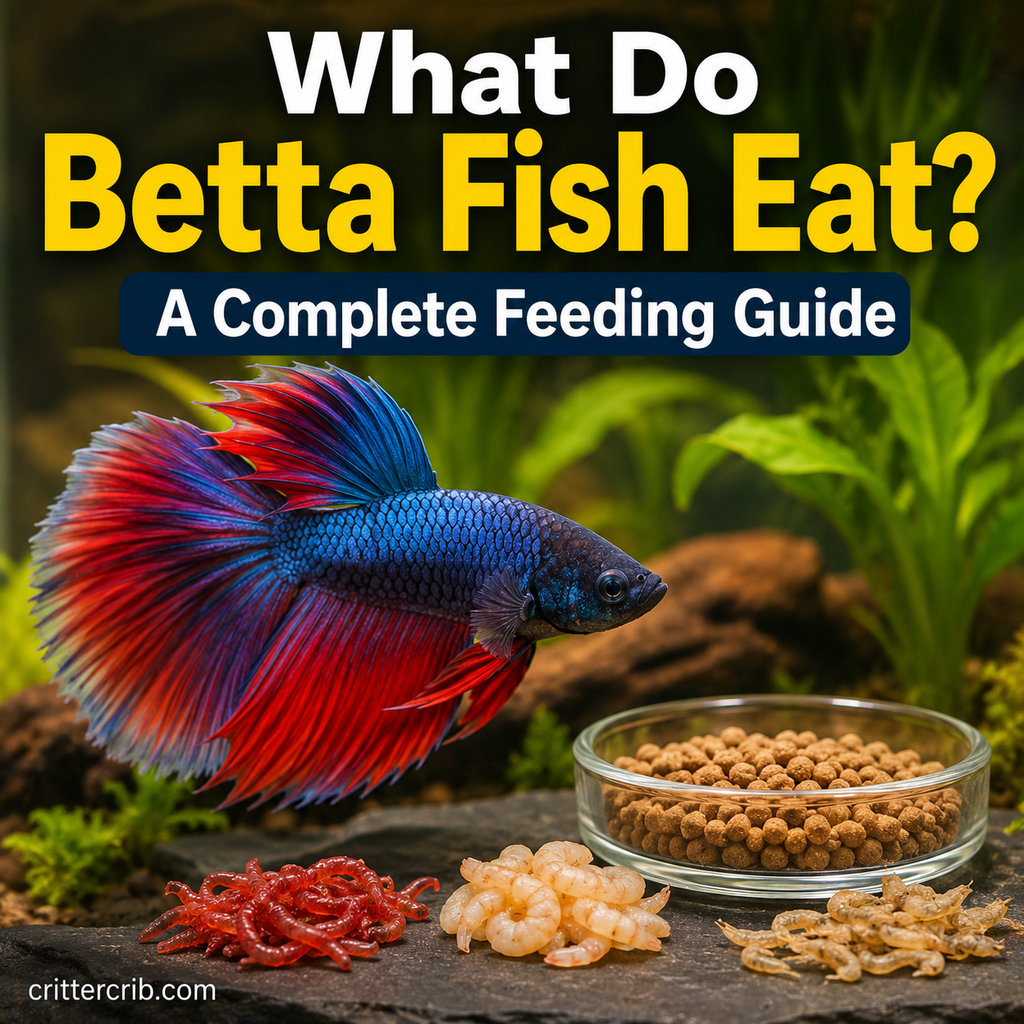
Betta fish may be small, but they have surprisingly specific dietary needs. Feeding a betta isn’t simply a matter of sprinkling any fish flakes into the tank once or twice a day. The type of food, portion size, feeding frequency, and even the way you store the food can affect your betta’s health.
In the wild, bettas eat a protein-rich diet made up largely of insects, insect larvae, and other tiny aquatic animals. Pet bettas need a similar nutritional balance, although you don’t have to keep a supply of live mosquitoes around the house to provide it.
A quality betta pellet can form the foundation of a healthy diet, with frozen or live foods added for variety. The bigger challenge for many owners is actually avoiding overfeeding.
This guide covers what betta fish eat, how much to feed them, which foods make good treats, and which foods are better left out of the aquarium.
What Do Betta Fish Eat in the Wild?
Wild bettas are primarily carnivorous and insect-eating fish. Their natural environment provides them with access to small prey such as:
- Insect larvae
- Small aquatic insects
- Tiny crustaceans
- Zooplankton
- Other small aquatic organisms they can capture
This is important because a betta’s digestive system is adapted to a diet rich in animal protein.
Domestic bettas have been bred in captivity for generations, but their basic nutritional needs haven’t disappeared. They still benefit from foods formulated around high-quality protein rather than plant-heavy ingredients.
You don’t need to perfectly recreate a wild betta’s menu. Instead, the goal is to provide a nutritionally complete staple food while occasionally offering foods that encourage natural feeding behavior.
What Is the Best Food for Betta Fish?
For most pet bettas, a high-quality pellet specifically formulated for betta fish is the easiest staple food.
Betta pellets are convenient, nutritionally balanced, easy to portion, and readily available. Unlike general-purpose tropical fish foods, good betta formulas are designed with carnivorous fish in mind.
When comparing foods, look at the ingredient list rather than choosing solely by the picture on the container.
Ideally, animal-based protein sources should appear prominently among the ingredients. Fish, shrimp, krill, insects, or similar ingredients are preferable to foods dominated by inexpensive plant fillers.
A good betta diet can include:
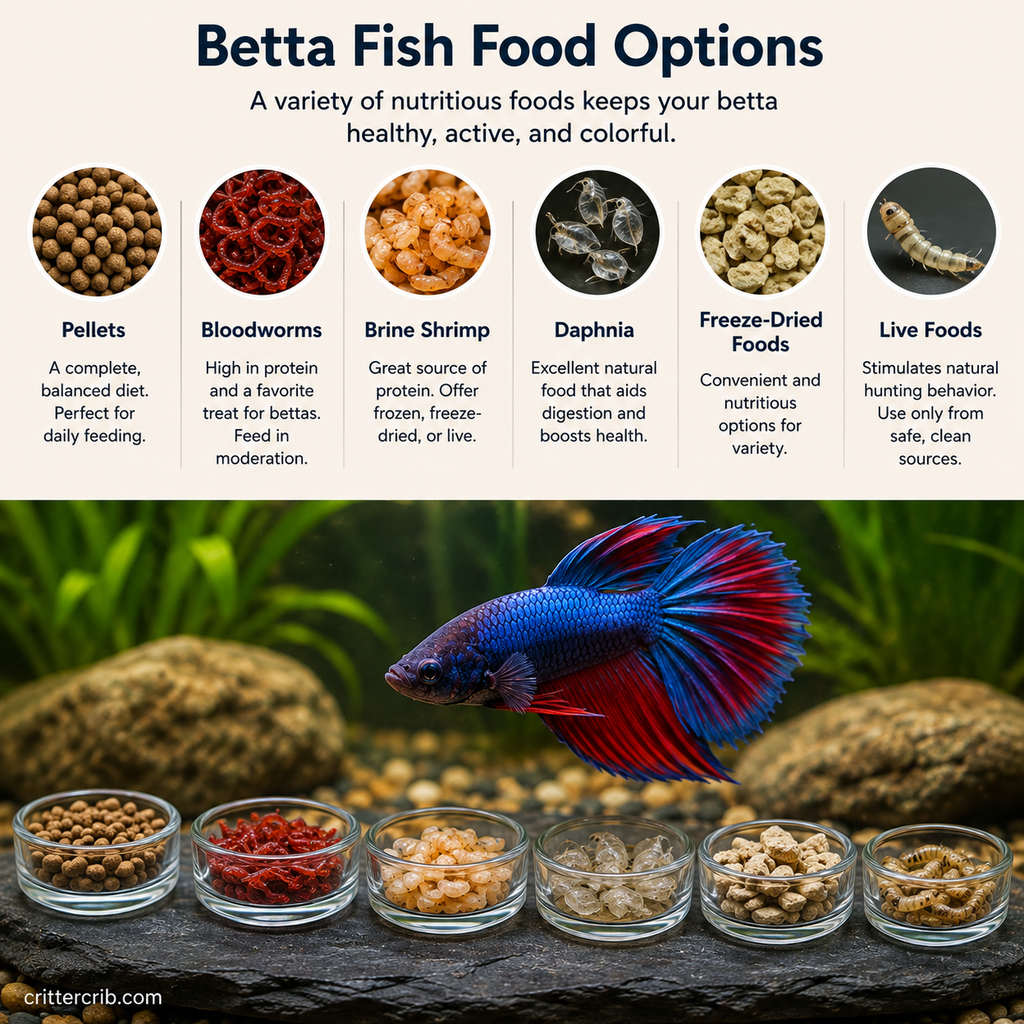
- High-quality betta pellets as the main food
- Frozen foods for variety
- Live foods when appropriate and safely sourced
- Freeze-dried foods occasionally
No single treat needs to be fed constantly. Variety can be useful, but a reliable staple food makes everyday feeding much simpler.
Betta Pellets
Pellets are generally the most practical choice for everyday feeding.
Unlike loose flakes, individual pellets make it easier to see exactly how much food is going into the aquarium. That can be especially helpful because bettas are easy to overfeed.
Choose pellets small enough for your betta to eat comfortably. Some products marketed for larger fish may be too big or difficult for a betta to swallow.
What to Look for in Betta Pellets
When choosing pellets, consider:
- Animal protein high on the ingredient list
- A formula specifically intended for bettas or carnivorous fish
- Appropriately sized pellets
- Clear feeding and storage instructions
- A reputable manufacturer
Don’t assume that the most expensive food is automatically the best. Read the label and consider the actual ingredients.
Can Betta Fish Eat Flakes?
Yes, betta fish can eat flakes, particularly flakes specifically formulated for bettas.
However, flakes can be harder to portion accurately. They also break apart easily, and uneaten pieces can drift around the aquarium or sink into the substrate.
If you prefer flakes, use a small amount and watch your betta eat. Remove obvious leftovers rather than allowing excess food to decompose in the tank.
General tropical fish flakes shouldn’t necessarily be the primary food for a betta. Some contain a substantial amount of plant material and may not provide the protein-focused diet bettas need.
Can Betta Fish Eat Frozen Food?
Frozen foods can be an excellent addition to a betta’s diet.
Common options include:
- Bloodworms
- Brine shrimp
- Daphnia
- Mysis shrimp
These foods add variety and can be especially appealing to bettas.
Frozen foods are also convenient because you can keep them stored for occasional use rather than maintaining cultures of live food.
How to Feed Frozen Food to a Betta
You usually won’t need an entire frozen cube for one betta. A full cube can be far more food than a single fish needs.
Instead:
- Separate a small portion.
- Thaw it in a clean container using aquarium water.
- Feed a small amount to your betta.
- Avoid pouring excessive thawing liquid or uneaten food into the aquarium.
- Follow the product’s storage and handling directions.
Never leave frozen food sitting at room temperature for long periods or repeatedly thaw and refreeze it.
Can Betta Fish Eat Bloodworms?
Yes. Bloodworms are one of the most popular foods offered to bettas.
Despite their name, bloodworms aren’t actually worms. They’re the larvae of non-biting midges.
Many bettas eagerly eat them, but that doesn’t mean bloodworms should become the entire diet. Think of them as a supplemental food rather than the only thing your fish eats.
Frozen bloodworms are particularly convenient because they provide the appeal of an animal-based food without requiring you to maintain live prey.
Freeze-dried bloodworms are another option, although they should generally be offered in moderation.
Can Betta Fish Eat Brine Shrimp?
Brine shrimp are another popular food for bettas.
They can provide variety and encourage an enthusiastic feeding response. Depending on the product, brine shrimp may be available live, frozen, or freeze-dried.
Frozen brine shrimp are generally the easiest option for the average betta owner.
Baby brine shrimp can also be useful when feeding very small fish or betta fry, although raising young bettas has different feeding requirements than caring for a typical adult pet betta.
Can Betta Fish Eat Daphnia?
Yes. Daphnia are tiny aquatic crustaceans that many bettas enjoy eating.
They’re available in live, frozen, and freeze-dried forms and can be used as part of a varied diet.
Daphnia shouldn’t be viewed as a cure-all for digestive problems, but it can be a useful supplemental food when offered appropriately.
As with any food, portion control still matters.
Live Food for Betta Fish
Live foods can stimulate a betta’s natural hunting behavior.
Depending on availability, suitable live foods may include:
- Daphnia
- Brine shrimp
- Mosquito larvae from safe, controlled sources
- Other appropriately sized cultured foods
Watching a betta hunt can also provide enrichment that a stationary pellet doesn’t offer.
There is one important drawback: poorly sourced live food can introduce parasites, pathogens, or unwanted organisms into an aquarium.
For that reason, avoid collecting random insects, larvae, or organisms from outdoor ponds, puddles, or waterways and dropping them into your betta tank.
If you want to use live food, obtain it from a reliable aquarium supplier or maintain a properly managed culture yourself.
Freeze-Dried Foods
Freeze-dried foods offer convenience and have a long shelf life.
Popular options include freeze-dried:
- Bloodworms
- Brine shrimp
- Daphnia
They’re best used as supplemental foods rather than the entire diet.
Follow the manufacturer’s directions when preparing them. Some owners prefer to briefly rehydrate larger freeze-dried foods before feeding.
Most importantly, don’t let the word “treat” turn into an excuse for oversized portions.
How Much Should You Feed a Betta Fish?
There isn’t a perfect pellet count that works for every betta and every brand of food.
Pellets vary considerably in size, density, and nutritional content. A recommendation of “three pellets” can mean very different amounts depending on the product.
Start with the feeding instructions on the food you’re using and adjust cautiously based on:
- Pellet size
- Your betta’s size and age
- Body condition
- Activity level
- Whether other foods are being offered
- How quickly the fish eats
A betta should be able to finish its meal without leaving food scattered throughout the aquarium.
It’s better to start conservatively than to routinely dump excess food into the tank.
How Often Should You Feed a Betta Fish?
Adult bettas are commonly fed once or twice per day.
If you’re feeding twice daily, divide the day’s food into two small meals rather than providing two full-sized portions.
For example, a routine might look like:
- Morning: Small serving of betta pellets
- Evening: Small serving of pellets or an occasional supplemental food
Consistency helps. Feeding at roughly similar times each day can also make it easier to notice changes in appetite.
Juvenile bettas and fish with special nutritional needs may require different feeding routines.
How Long Should a Betta Take to Eat?
A betta will often eat its meal fairly quickly.
Rather than relying on an exact number of seconds, observe what’s happening in the tank.
If food is repeatedly sinking untouched, getting trapped in decorations, or accumulating on the substrate, you’re probably offering more than your betta is eating.
Remove obvious uneaten food whenever practical.
This isn’t just about preventing overeating. Decomposing food can contribute to poor water quality.
Why Overfeeding Betta Fish Is a Problem
Bettas often behave as though they’re starving even when they’ve just eaten.
They may swim toward you, follow your finger, or become excited when you approach the tank. It’s easy to interpret that behavior as hunger.
Unfortunately, continuously responding with more food can lead to problems.
Overfeeding can contribute to:
- Excess waste
- Uneaten food in the aquarium
- Poorer water quality
- Unhealthy weight gain
- Digestive problems
Feeding and aquarium maintenance are closely connected. The more unnecessary food entering the aquarium, the more organic waste the tank has to process.
A begging betta isn’t necessarily a hungry betta.
Signs You May Be Overfeeding Your Betta
Watch for patterns rather than relying on a single symptom.
Possible warning signs include:
- Food regularly left uneaten
- A noticeably enlarged abdomen after meals
- Increasing amounts of waste
- Rapid deterioration in water quality
- Excess food accumulating on the substrate
- A betta becoming noticeably overweight
A slightly rounded belly immediately after eating doesn’t automatically mean something is wrong. Persistent swelling, unusual behavior, or other symptoms deserve closer attention.
Signs Your Betta May Not Be Eating Enough
Underfeeding is possible too.
Potential signs include:
- Visible weight loss
- A thin or sunken-looking body
- Reduced body condition over time
- Persistent searching for food combined with weight loss
Look at your fish’s overall condition rather than trying to judge hunger from begging behavior alone.
If your betta is losing weight despite eating regularly, there could be an underlying health problem.
Why Is My Betta Fish Not Eating?
A betta refusing one meal isn’t always an emergency.
However, a sudden or persistent loss of appetite can indicate that something isn’t right.
Possible causes include:
- Stress after being moved to a new aquarium
- Water that’s too cold
- Poor water quality
- Sudden changes in water conditions
- Illness
- Food that’s too large
- An unfamiliar food
- Overfeeding earlier
- Stress from tank mates or the aquarium environment
Check the aquarium conditions before assuming your betta has simply become picky.
Check Water Conditions First
Temperature and water quality can directly affect a betta’s behavior and appetite.
Bettas are tropical fish and generally do best in warm, stable water. An aquarium heater and thermometer can help maintain an appropriate temperature.
Regularly test important water parameters such as:
- Ammonia
- Nitrite
- Nitrate
- pH
In an established, properly cycled aquarium, ammonia and nitrite should remain at zero.
If your betta suddenly stops eating and also becomes lethargic, develops abnormal coloration, struggles to swim, breathes unusually, or shows other physical symptoms, investigate further rather than simply changing foods.
Can Betta Fish Eat Human Food?
It’s best not to make human food part of your betta’s diet.
Foods prepared for people may contain salt, oils, seasonings, preservatives, carbohydrates, or other ingredients that aren’t appropriate for a small carnivorous fish.
Avoid feeding your betta foods such as:
- Bread
- Crackers
- Cereal
- Cheese
- Processed meat
- Cooked leftovers
- Seasoned seafood
- Sweets
There are plenty of fish-safe foods available, so experimenting with food from your plate isn’t necessary.
Can Bettas Eat Peas?
Feeding peas to constipated fish is a long-standing aquarium tip, but peas aren’t a natural part of a betta’s carnivorous diet.
For bettas, an appropriate animal-based food such as daphnia is generally a more natural dietary option than peas.
More importantly, a swollen betta shouldn’t automatically be diagnosed with constipation.
Abdominal swelling can have several causes. If bloating is severe, persistent, or accompanied by lethargy, abnormal scales, difficulty swimming, or loss of appetite, the fish may need more than a dietary adjustment.
Can Betta Fish Eat Tropical Fish Food?
They can sometimes eat general tropical fish food, but it isn’t necessarily the best everyday choice.
Many tropical community fish are omnivores, so general-purpose foods may contain ingredients intended for species with different nutritional needs.
A betta-specific food makes it easier to provide a protein-focused diet suited to the species.
If you keep several types of fish, don’t assume one container of food is ideal for every animal in the aquarium.
Can Betta Fish Eat Goldfish Food?
Goldfish food isn’t an ideal staple for bettas.
Goldfish and bettas have different dietary needs. Goldfish are omnivorous and consume considerably more plant material than bettas naturally would.
A betta-specific pellet or another appropriately formulated carnivorous fish food is a better choice.
Should Bettas Have a Fasting Day?
You’ll sometimes see recommendations to fast an adult betta for one day each week.
For a healthy adult fish, occasionally missing a meal generally isn’t the same kind of emergency it would be for a mammal. However, a weekly fasting day isn’t a substitute for proper portion control.
You don’t necessarily need to deliberately overfeed six days and then try to compensate by withholding food on the seventh.
A better approach is to consistently provide sensible portions.
Fasting also may not be appropriate for very young, underweight, sick, or recovering fish.
What Should You Feed a Betta While You’re Away?
If you’re going away briefly, resist the temptation to dump extra food into the aquarium before leaving.
Extra food doesn’t become a reserve that your betta can save for later. Much of it may simply rot and reduce water quality.
Automatic fish feeders can work for longer absences, but test the device before relying on it. You want to know exactly how much food it dispenses.
Vacation feeder blocks are another option sold for aquariums, but they can affect water quality and aren’t always ideal for a single betta.
For longer trips, having a reliable person feed your fish is often preferable. Pre-portion each meal into small containers so your fish sitter doesn’t accidentally feed several days’ worth at once.
How to Store Betta Food
Good feeding habits won’t help much if the food itself is poorly stored.
Keep dry betta food:
- Tightly sealed
- In a cool, dry location
- Away from direct sunlight
- Away from aquarium moisture
- Within the manufacturer’s recommended storage period
Avoid touching food with wet fingers and then reaching back into the container. Moisture can encourage the food to deteriorate.
Buying an enormous container isn’t necessarily economical if you only have one betta and the food sits around for a very long time.
A Simple Betta Feeding Routine
Betta feeding doesn’t have to be complicated.
For a typical healthy adult betta, a simple routine could be:
Daily Staple
Feed an appropriately portioned high-quality betta pellet once or twice per day according to the food’s instructions and your fish’s condition.
Occasional Variety
Rotate in small portions of foods such as:
- Frozen bloodworms
- Frozen brine shrimp
- Daphnia
- Appropriately sourced live foods
When using a supplemental food, consider it part of the day’s diet rather than automatically adding it on top of the normal meal.
Monitor Your Fish
Pay attention to:
- Appetite
- Body condition
- Activity
- Waste production
- Uneaten food
- Water quality
Your betta’s condition over time tells you more than a rigid feeding rule.
Common Betta Feeding Mistakes
Even experienced fish keepers can get carried away when a betta enthusiastically begs for food.
Try to avoid these common mistakes:
- Feeding every time your betta begs.
- Using oversized portions because the fish still appears hungry.
- Making treats the main diet.
- Feeding only one type of frozen or live food.
- Leaving uneaten food in the aquarium.
- Using general fish food without checking its ingredients.
- Feeding random insects collected outdoors.
- Assuming every swollen belly is caused by constipation.
- Giving extra food before leaving for vacation.
- Ignoring water quality when a betta stops eating.
Most feeding problems are easier to prevent than fix.
Frequently Asked Questions About Feeding Betta Fish
What is the healthiest food for a betta fish?
A high-quality betta pellet with animal-based protein as a major component is a practical staple for most pet bettas. Frozen or safely sourced live foods can provide additional variety.
How many pellets should I feed my betta?
There isn’t one universal number because pellet sizes vary between brands. Follow the product’s feeding guidance, use appropriately sized pellets, and adjust portions based on your fish’s size and body condition.
Can I feed my betta bloodworms every day?
Bloodworms are better used as part of a varied diet rather than as the sole everyday food. A nutritionally complete betta food should normally provide the foundation of the diet.
Do bettas need live food?
No. Bettas can thrive without live food when they’re given a high-quality, nutritionally complete diet. Live food can provide enrichment and variety, but it isn’t required.
Can betta fish eat mosquito larvae?
Mosquito larvae resemble foods wild bettas naturally encounter, but collecting larvae from random outdoor water sources can introduce contaminants or unwanted organisms. If you want to feed live larvae, use a safe, controlled source.
Can a betta survive without food for a day?
A healthy adult betta can generally tolerate an occasional missed meal. That doesn’t mean routinely withholding food for extended periods is good husbandry.
Why does my betta always act hungry?
Bettas can quickly learn that a person approaching the aquarium means food. Begging behavior doesn’t necessarily indicate that your fish needs another meal.
Final Thoughts
So, what do betta fish eat?
The simplest answer is a protein-rich diet designed for carnivorous fish. For most pet bettas, high-quality betta pellets make an excellent everyday staple, while foods such as bloodworms, brine shrimp, and daphnia can provide variety.
The key is moderation.
A betta doesn’t need a huge meal to stay healthy, and its enthusiastic appetite can make overfeeding surprisingly easy. Feed sensible portions, remove uneaten food, maintain good water quality, and keep an eye on your fish’s body condition and behavior.
Once you find a routine that works, feeding a betta is one of the easiest parts of daily care—and probably one of your fish’s favorite parts of the day.