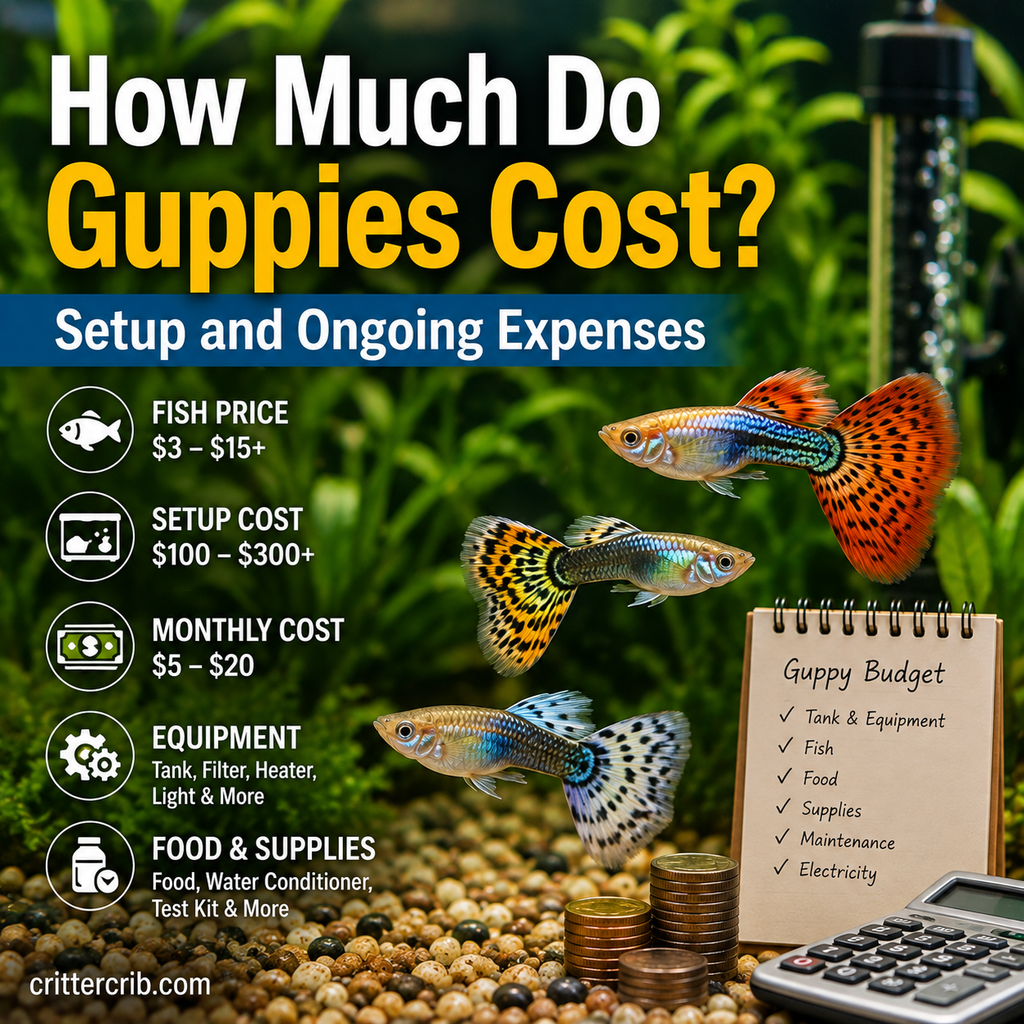
Guppies are often considered inexpensive pets, and compared with many animals, they certainly can be. A single guppy might cost only a few dollars. But the fish itself is usually the smallest part of the overall expense.
A proper aquarium, filter, heater, water conditioner, food, testing supplies, and ongoing maintenance all add to the real cost of keeping guppies.
So, how much do guppies cost?
Individual guppies commonly cost around $3 to $15 each, although specialty strains and show-quality fish can cost considerably more. A basic guppy aquarium may require roughly $100 to $300 or more to set up properly, followed by relatively modest ongoing expenses for food, water treatment, replacement supplies, electricity, and occasional equipment.
You don’t need an extravagant aquarium to keep guppies successfully. You do, however, want to budget for the equipment that keeps their environment stable and healthy.
Here’s what new owners should expect to spend.
How Much Does a Guppy Cost?
For common pet-store guppies, expect to pay approximately $3 to $15 per fish.
Prices vary considerably depending on where you purchase them and the type of guppy you’re buying.
You may find:
- Common guppies for around $3–$8
- Colorful or selectively bred varieties for around $5–$15+
- Specialty strains for $15–$50 or more
- High-end breeding or show-quality guppies for considerably higher prices
These are general ranges rather than fixed prices. Local availability, breeder reputation, coloration, genetics, sex, age, and rarity can all affect what you’ll actually pay.
A beautifully patterned guppy from a specialist breeder may cost several times as much as a standard guppy from a large pet store.
For a beginner, expensive genetics aren’t necessary. Starting with healthy fish from a reliable source is more important than buying the rarest color pattern you can find.
Why Are Some Guppies More Expensive?
“Guppy” covers a surprisingly large range of fish.
Selective breeding has produced guppies with elaborate tails, unusual colors, metallic patterns, and carefully maintained genetic lines.
Price can be influenced by:
- Color and pattern
- Tail shape
- Rarity
- Breeding line
- Genetics
- Sex
- Age
- Breeder reputation
- Local availability
Some strains require generations of selective breeding to maintain specific characteristics.
That’s why two guppies that appear similar to a beginner may have dramatically different prices.
The Fish Is Usually the Cheapest Part
Seeing a $5 guppy at a pet store can make fishkeeping look incredibly inexpensive.
Then you start putting the aquarium together.
The actual fish may represent only a small percentage of your initial budget.
A healthy guppy setup generally requires some combination of:
- Aquarium
- Filter
- Heater
- Thermometer
- Light
- Substrate
- Water conditioner
- Water-testing supplies
- Food
- Plants and decorations
- Maintenance equipment
Fortunately, most of these are upfront purchases rather than monthly expenses.
Once the aquarium is established, keeping a small group of guppies can be relatively affordable.
How Much Does a Guppy Tank Cost?
Aquarium prices vary depending on size, brand, material, and whether you’re buying a bare tank or a complete kit.
A basic aquarium suitable for a small group of guppies might cost anywhere from roughly $20 to well over $100.
Complete aquarium kits generally cost more but may include:
- Filter
- Hood
- Lighting
- Heater
- Thermometer
- Other accessories
Don’t choose an aquarium based only on finding the cheapest possible tank.
More water volume generally provides greater stability, and guppies are active social fish that benefit from swimming space.
A 10-gallon aquarium is often treated as a practical starting point for a small group, although larger tanks offer more room and can be easier to keep stable.
If you expect your guppies to reproduce, extra space becomes especially important.
Filter Cost
A filter is one piece of equipment worth budgeting for from the beginning.
Depending on the aquarium and filtration style, a suitable filter might cost approximately $10 to $50 or more.
Common options include:
- Sponge filters
- Hang-on-back filters
- Internal aquarium filters
Sponge filters can be especially economical.
They provide biological filtration and gentle water movement, although you’ll also need an air pump and airline tubing.
Don’t judge a filter solely by how much debris it collects.
One of its most important functions is providing a place for beneficial bacteria involved in the aquarium’s nitrogen cycle.
Heater Cost
Guppies are tropical fish and generally do best in consistently warm water.
A small aquarium heater might cost around $15 to $40, with larger or higher-end adjustable models costing more.
Adjustable heaters can be particularly useful because they give you greater control over aquarium temperature.
You’ll also want a thermometer.
Basic aquarium thermometers are inexpensive, often costing only a few dollars.
Even if your home usually feels warm, aquarium water can fluctuate throughout the day and across seasons.
Aquarium Lighting Cost
If your aquarium kit doesn’t include a light, you’ll need to decide whether to purchase one separately.
A basic aquarium LED light might cost approximately $15 to $60 or more depending on tank size and features.
Lighting becomes particularly important if you’re growing live plants.
You don’t necessarily need an expensive programmable lighting system for a basic guppy aquarium.
A simple LED fixture on a timer is often enough.
Substrate Cost
Gravel and aquarium sand are common substrate choices.
For a smaller aquarium, expect to spend roughly $10 to $30 depending on the material and how much you need.
Specialized planted-tank substrates can cost considerably more.
If you’re planning to grow plants that feed heavily through their roots, substrate choice may affect your setup.
For a straightforward guppy aquarium, however, there’s usually no need to purchase the most expensive aquascaping soil available.
Plants and Decorations
This is one category where your budget can disappear surprisingly quickly.
A few basic artificial decorations may cost $10–$30.
A heavily planted aquarium with driftwood, rocks, and multiple live plants could easily cost $50–$150 or more.
Fortunately, elaborate decoration isn’t required.
Guppies benefit from having an interesting environment with places to explore and cover, but you can create that without turning the aquarium into an expensive aquascaping project.
Live plants can be particularly useful because they provide:
- Cover
- Areas for fry to hide
- Natural-looking enrichment
- Surfaces for microorganisms
- Additional nutrient uptake
Begin with a few hardy plants and add more later if you enjoy the planted-aquarium side of the hobby.
Water Conditioner Cost
Tap water commonly contains chlorine or chloramine that needs to be treated before being added to an aquarium.
A bottle of aquarium water conditioner might cost around $5 to $15 or more.
Fortunately, a bottle can last quite a while with a smaller tank because only a small amount is typically required per water change.
Follow the manufacturer’s dosing instructions rather than guessing.
Water Test Kit Cost
Water testing is one expense beginners sometimes skip.
It’s also one of the most useful tools you can own.
A liquid freshwater test kit may cost roughly $25 to $50. Test strips are another option and vary in price.
At minimum, it’s useful to monitor important aquarium parameters such as:
- Ammonia
- Nitrite
- Nitrate
- pH
Knowing what’s happening chemically in the aquarium makes troubleshooting much easier.
Clear water isn’t necessarily healthy water.
How Much Does Guppy Food Cost?
Food is one of the smallest ongoing expenses.
A container of quality tropical fish or guppy food might cost approximately $5 to $15 and can last quite a while when feeding a small group.
You may also occasionally supplement the diet with appropriate foods such as:
- Brine shrimp
- Daphnia
- Bloodworms
- Other suitable frozen or live foods
There’s no need to purchase every food available at once.
A quality staple food plus occasional variety is a reasonable starting point.
Other Supplies You May Need
Small aquarium purchases can add up.
Your initial setup may also require:
- Fish net
- Gravel vacuum or siphon
- Bucket used only for aquarium maintenance
- Algae scraper
- Airline tubing
- Air pump
- Check valve
- Feeding tools
- Aquarium timer
Individually, many of these items are inexpensive.
Together, they might add another $20–$60 or more to your initial setup.
Example Guppy Setup Budget
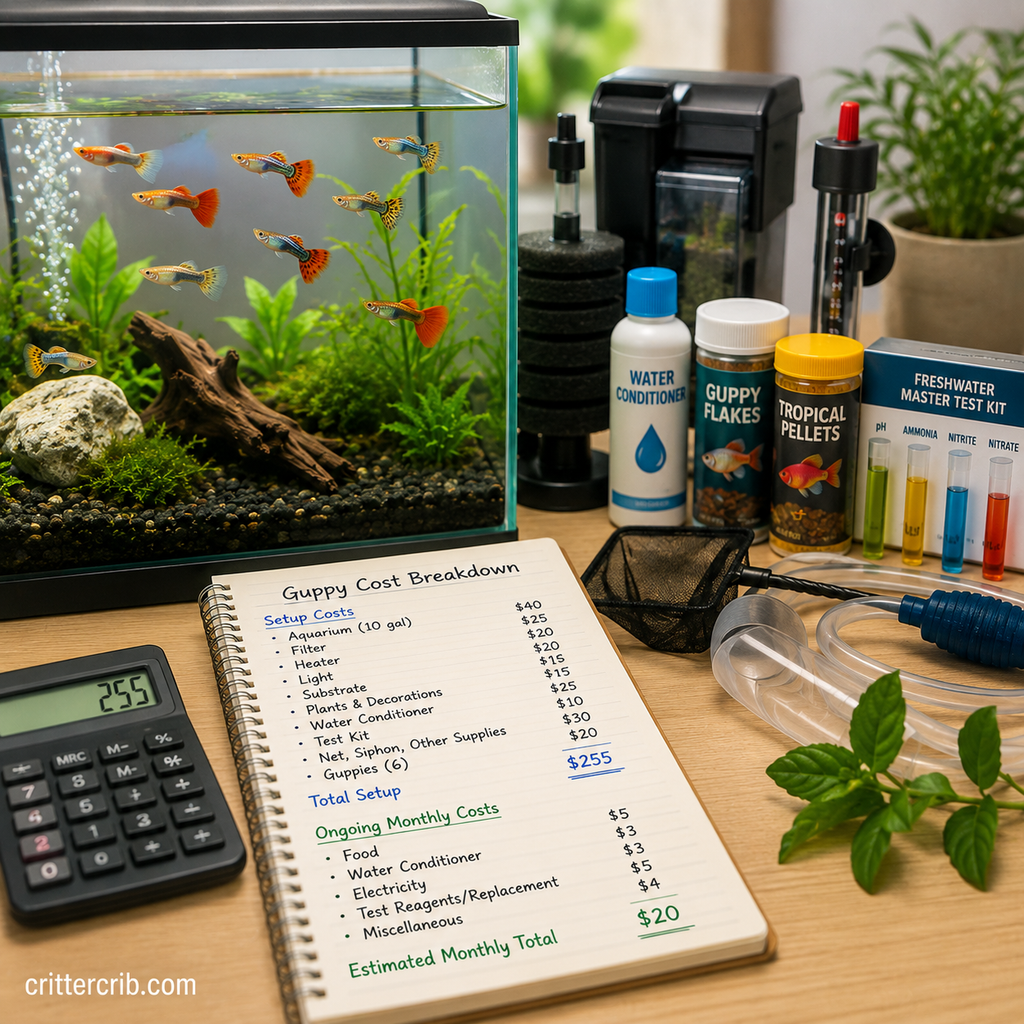
Let’s look at a realistic starter budget.
Prices will vary by store and location, but a simple setup might look something like this:
| Item | Approximate Cost |
|---|---|
| Aquarium | $30–$80 |
| Filter | $15–$40 |
| Heater | $15–$35 |
| Thermometer | $3–$10 |
| Lighting | $0–$40 |
| Substrate | $10–$25 |
| Plants/decorations | $15–$50 |
| Water conditioner | $5–$15 |
| Water test kit | $25–$50 |
| Food | $5–$15 |
| Maintenance supplies | $15–$40 |
| Guppies | $15–$60+ |
A realistic initial total might therefore fall somewhere around $150 to $400, depending on the aquarium, number of fish, and how elaborate you make the setup.
You can certainly spend less by finding sales or buying some equipment secondhand.
You can also spend far more.
Aquariums have a remarkable ability to turn “I’ll just get the basics” into a collection of plants, lights, driftwood, specialty foods, and another tank surprisingly quickly.
How Much Do Guppies Cost Per Month?
Once your aquarium is established, routine expenses are generally much lower.
A small guppy aquarium might cost roughly $5 to $20 per month to maintain under normal circumstances.
That could include:
- Food
- Water conditioner
- Electricity
- Replacement filter supplies when necessary
- Occasional plant supplies
- Water-testing supplies
- Replacement equipment averaged over time
Monthly costs vary significantly between households.
Electricity rates, aquarium size, local water costs, temperature, equipment efficiency, and maintenance routines all affect the total.
Some months may cost almost nothing beyond electricity and food.
Another month might involve replacing a heater or buying more test solution.
How Much Electricity Does a Guppy Tank Use?
The primary electricity users are usually:
- Heater
- Filter
- Aquarium light
- Air pump
A small aquarium doesn’t necessarily consume much electricity, but the heater can make a noticeable difference depending on your room temperature.
A heater doesn’t normally run at full power 24 hours a day. It cycles on and off as necessary to maintain the target temperature.
Your actual electricity cost depends on:
- Heater wattage
- Room temperature
- Aquarium temperature
- Tank size
- Lighting wattage
- Hours of lighting
- Filter type
- Local electricity rates
If you’re trying to estimate the cost precisely, check the wattage of each device and your electricity provider’s current price per kilowatt-hour.
How Much Do Water Changes Cost?
For most small home aquariums, the direct cost of the water itself is relatively minor.
A 10- or 20-gallon aquarium doesn’t require hundreds of gallons every week.
The more noticeable recurring cost is usually water conditioner.
Routine partial water changes are part of maintaining healthy water quality, so don’t try to save a few cents by avoiding necessary maintenance.
The exact water-change schedule should be based on your stocking level, filtration, feeding, aquarium size, and water-test results.
Do Guppies Need to Be Kept in Groups?
Guppies are social fish and are generally better suited to group living than being kept completely alone.
That means you should budget for multiple fish rather than only one.
There’s another consideration: reproduction.
Male and female guppies can reproduce very efficiently.
If you keep both sexes together, you may end up with considerably more fish than you started with.
A common approach for owners who don’t want fry is keeping an all-male group, provided the aquarium has enough space and the fish are monitored for aggression.
If keeping males and females together, you’ll need to plan carefully for population growth.
The Hidden Cost of Guppy Babies
Few things can change a guppy budget faster than discovering dozens of tiny fry swimming around the aquarium.
Guppies are livebearers, meaning females give birth to live young rather than laying eggs.
A female can produce multiple batches of fry, and populations can increase quickly under favorable conditions.
Suddenly, you may need:
- A larger aquarium
- Another aquarium
- Additional filtration
- More food
- More plants
- Additional maintenance supplies
- Homes for excess fish
Female guppies can also store sperm and produce additional broods after mating, so separating males and females doesn’t necessarily stop reproduction immediately.
If you aren’t interested in breeding, plan your stocking strategy before purchasing your fish.
Can You Save Money by Buying Used Aquarium Equipment?
Yes, especially when it comes to tanks and aquarium stands.
Local secondhand markets often have inexpensive aquarium equipment because people leave the hobby or upgrade to larger setups.
Used equipment can save a substantial amount of money, but inspect everything carefully.
For a used aquarium:
- Check the glass for cracks and significant chips.
- Inspect the silicone seams.
- Confirm the tank hasn’t been used for reptiles or with substances unsafe for fish.
- Clean it using aquarium-safe methods.
- Perform a leak test somewhere water damage won’t be a problem.
Be more cautious with used heaters and other equipment where failure could harm the fish.
Sometimes buying a critical component new is worth the additional cost.
Where Should You Spend More?
If you’re working with a limited budget, prioritize the things that directly affect your fish’s environment.
Spend your money first on:
- Adequate aquarium size
- Reliable filtration
- Reliable heater
- Water conditioner
- Water testing
- Quality food
Decorations can wait.
Your guppies don’t care whether their driftwood matches your furniture.
A simple, healthy aquarium is better than an elaborate tank built around unreliable equipment.
Where Can You Save Money?
There are plenty of reasonable ways to keep costs under control.
Consider:
- Buying an aquarium during a sale
- Purchasing a good used tank
- Using inexpensive sponge filtration
- Starting with a few hardy plants
- Propagating plants you already own
- Choosing common guppy varieties
- Buying aquarium supplies in economical sizes
- Using simple decorations rather than elaborate aquascaping materials
Avoid cutting costs by skipping water testing, filtration, heating, or appropriate aquarium size.
Saving money shouldn’t mean compromising basic care.
What About Veterinary Costs?
Fish veterinary care is an expense many new owners don’t consider.
Aquatic veterinarians aren’t available everywhere, and prices vary significantly depending on location and services required.
You probably won’t have a predictable monthly veterinary bill for guppies, but it’s still sensible to recognize that professional care may be needed if serious health problems occur.
More importantly, focus on prevention.
Stable water quality, appropriate stocking, quarantine practices, good nutrition, and careful observation can reduce many common aquarium problems.
Are Guppies Expensive Pets?
Compared with many common pets, guppies can be relatively inexpensive.
There’s no litter to purchase, no grooming appointment, and a small group doesn’t eat much food.
The biggest financial hurdle is the initial aquarium setup.
After that, routine expenses tend to be manageable.
A reasonable way to think about guppy ownership is:
- Fish: inexpensive to moderate
- Initial aquarium setup: moderate
- Monthly maintenance: relatively low
- Unexpected equipment or health expenses: occasional
- Breeding-related costs: potentially significant
This is why looking only at the price tag on the fish can be misleading.
Frequently Asked Questions About Guppy Costs
How much does one guppy cost?
A common pet guppy may cost approximately $3 to $15, while selectively bred or specialty guppies can cost substantially more.
How much does it cost to set up a guppy tank?
A basic but properly equipped guppy aquarium might cost around $150 to $400, depending on tank size, equipment, decorations, plants, and how many fish you purchase.
How much do guppies cost per month?
Routine expenses for a small established aquarium may average roughly $5 to $20 per month, although electricity rates, equipment replacement, food choices, and other factors can change the total.
Do guppies need a heater?
Guppies are tropical fish and generally benefit from stable, appropriately warm water. In many homes, an aquarium heater is the easiest way to maintain a consistent temperature.
Is a 10-gallon tank big enough for guppies?
A 10-gallon aquarium can work as a starting point for a small group when properly filtered and maintained. Larger aquariums provide more swimming space and make it easier to accommodate population changes.
Is keeping guppies cheaper than keeping betta fish?
Not necessarily. Individual guppies can be inexpensive, but they’re generally kept in groups, while a betta is commonly kept alone. The aquarium equipment needed for either species can represent a much larger expense than the fish themselves.
Final Thoughts
So, how much do guppies cost?
The fish themselves are usually inexpensive, with common guppies often costing somewhere around $3 to $15 each. The larger expense comes from creating the aquarium they need.
For a new setup, budgeting roughly $150 to $400 gives you room for a suitable tank, filtration, heating, water testing, food, basic decorations, and a small group of fish. After the aquarium is established, ongoing costs are usually much lower.
You don’t need premium equipment or rare guppy strains to enjoy keeping these colorful little fish.
Put your budget toward the fundamentals first: enough space, reliable equipment, clean water, good food, and healthy fish.
And if you’re buying males and females, leave a little room in that budget for the possibility that three guppies may eventually decide they’d rather be thirty.