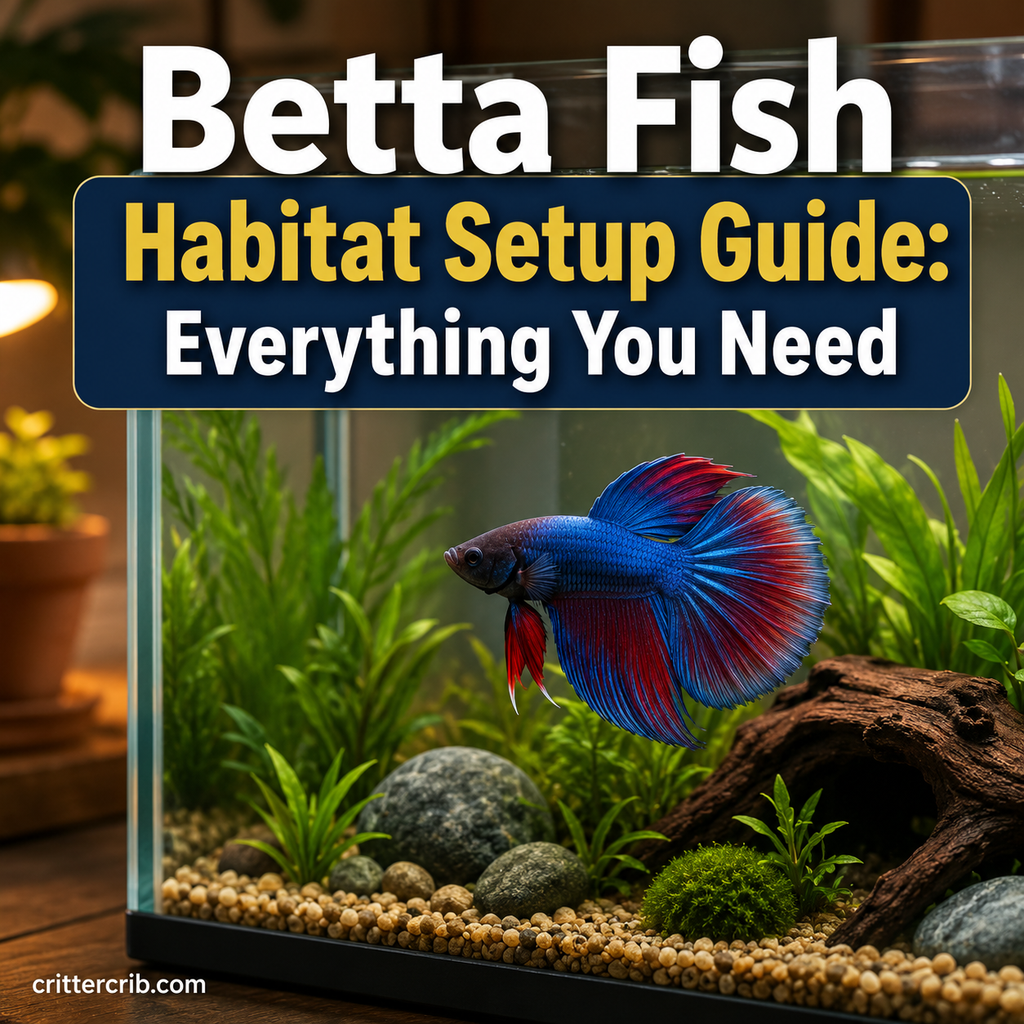
Betta fish are often pictured living in tiny bowls or decorative containers, but a healthy betta habitat requires more thought than simply adding water and dropping in a fish.
A properly set up aquarium gives your betta room to swim, stable water conditions, warm temperatures, places to explore, and somewhere comfortable to rest. It also makes routine care much easier for you.
Fortunately, creating a good betta fish habitat doesn’t have to be complicated or expensive. Once you understand the basics—tank size, filtration, heating, water quality, lighting, substrate, and decorations—you can build an aquarium that looks great while meeting your fish’s needs.
This guide walks through everything you need to set up a comfortable betta fish habitat from the ground up.
What Does a Betta Fish Need in Its Habitat?
A good betta habitat should provide more than enough water to keep the fish alive. It should create a stable environment where your betta can swim, explore, rest, and display normal behaviors.
The basic setup includes:
- An appropriately sized aquarium
- A secure lid
- A gentle aquarium filter
- An adjustable aquarium heater
- A thermometer
- Conditioned tap water
- Substrate
- Plants and hiding places
- Appropriate lighting
- A water-testing kit
- Basic aquarium maintenance supplies
You don’t need to fill the tank with gadgets. In fact, a relatively simple setup can work extremely well when the essentials are chosen carefully.
What Size Tank Does a Betta Fish Need?
Tank size is one of the most important decisions you’ll make.
Although bettas are commonly sold in cups and sometimes kept in small bowls, those containers shouldn’t be considered suitable permanent habitats.
For most betta keepers, a 5-gallon aquarium should be considered a practical minimum, while a 10-gallon tank is often even better.
A larger aquarium provides several advantages.
It gives your betta more swimming and exploration space, but there’s another benefit that’s easy to overlook: water conditions tend to be more stable.
In a very small container, waste can quickly affect water quality. Temperature can also change faster. A larger volume of water gives you more room for error and can actually make aquarium maintenance easier.
Is a 10-Gallon Tank Too Big for a Betta?
Not at all.
A healthy betta can do very well in a 10-gallon aquarium, provided the tank is arranged appropriately and the filter isn’t producing an excessively strong current.
Larger tanks also provide more opportunities for plants, hides, and other enrichment.
You can certainly go larger than 10 gallons, too. Just remember that bettas regularly swim to the surface to breathe, so extremely tall tanks aren’t necessarily better simply because they hold more water.
Choose the Right Location for the Aquarium
Before filling your aquarium, decide where it will stay.
Moving a filled aquarium is difficult and potentially dangerous. Water is surprisingly heavy—a filled aquarium, substrate, equipment, and decorations can quickly add up.
Choose a strong, level surface designed to support the aquarium’s weight.
The location should ideally be:
- Away from direct sunlight
- Away from heating and air-conditioning vents
- Away from doors that cause temperature fluctuations
- Near an electrical outlet
- Somewhere you can easily perform water changes
- In a relatively calm part of the room
Direct sunlight is especially worth avoiding. It can contribute to excessive algae growth and cause unwanted temperature changes.
Bettas don’t need complete silence, but placing the aquarium next to constantly slamming doors or powerful speakers isn’t ideal either.
Does a Betta Fish Tank Need a Lid?
Yes, a lid is highly recommended.
Bettas can jump surprisingly well. Even a fish that has never jumped before can suddenly leap from an uncovered aquarium.
A lid dramatically reduces that risk.
Because bettas possess a labyrinth organ that allows them to breathe atmospheric air, they still need access to the water’s surface. A normal aquarium lid doesn’t prevent this.
Make sure there aren’t large openings around filters, cables, or other equipment that could provide an escape route.
Does a Betta Fish Need a Heater?
In most homes, yes.
Betta fish are tropical freshwater fish and need consistently warm water. A useful target range for most bettas is approximately 76–82°F (24–28°C), with many keepers aiming for around 78–80°F (26–27°C).
Room temperature alone isn’t a reliable way to maintain this.
Even if your home feels warm during the day, aquarium temperatures can drop overnight or fluctuate with seasonal weather.
Choosing a Betta Tank Heater
An adjustable aquarium heater is usually preferable because it allows you to control the temperature more precisely.
Choose a heater appropriate for the size of your aquarium rather than simply buying the most powerful model available.
You’ll also want a separate aquarium thermometer.
Don’t rely entirely on the heater’s temperature setting. A thermometer lets you confirm the actual water temperature and spot unexpected changes.
Place the heater where water circulation can help distribute warmth throughout the aquarium, following the manufacturer’s installation instructions.
Does a Betta Tank Need a Filter?
A filter is strongly recommended for a permanent betta habitat.
Aquarium filters help:
- Circulate water
- Trap debris
- Support beneficial bacteria
- Process harmful waste compounds
- Maintain more stable water conditions
However, there’s an important catch.
Bettas generally don’t appreciate being pushed around by strong currents.
Their large fins—particularly on long-finned varieties—can make swimming against powerful water flow tiring.
What Type of Filter Is Best for Bettas?
Several types can work well.
Sponge filters are popular because they create gentle filtration while providing plenty of surface area for beneficial bacteria.
Small hang-on-back and internal filters can also work, especially when their flow is adjustable.
Whatever type you choose, watch your fish.
If your betta is constantly being pushed across the aquarium, struggling to remain in one place, or avoiding the area around the filter, the current may be too strong.
Depending on the filter, you may be able to reduce the flow or add a suitable baffle.
Understanding the Aquarium Nitrogen Cycle
One of the most important parts of setting up a betta aquarium happens before the fish moves in.
Fish produce waste. Uneaten food and other organic material also break down inside the aquarium.
This can produce ammonia, which is toxic to fish.
Beneficial bacteria eventually establish themselves in the aquarium and convert ammonia into nitrite and then nitrite into nitrate. Ammonia and nitrite are dangerous even at relatively low concentrations, while nitrate is generally managed through water changes and plant growth.
This process is known as the aquarium nitrogen cycle.
Why Cycling Your Betta Tank Matters
A brand-new aquarium doesn’t instantly contain enough beneficial bacteria to process your betta’s waste.
That’s why simply filling a new aquarium with tap water and immediately adding a fish can create problems.
Ideally, establish the biological cycle before introducing your betta using a fishless cycling process.
During cycling, you’ll need a freshwater aquarium test kit capable of measuring:
- Ammonia
- Nitrite
- Nitrate
- pH
A properly cycled aquarium should consistently process ammonia and nitrite so that both test at 0 ppm, while nitrate can be controlled through regular maintenance.
Cycling isn’t something you can reliably judge just by looking at the water. Crystal-clear water can still contain harmful levels of ammonia or nitrite.
Preparing Tap Water for Your Betta
Never assume tap water can go directly into your aquarium.
Municipal water commonly contains chlorine or chloramine to make drinking water safe. These chemicals can harm fish and the beneficial microorganisms in an aquarium.
Use an aquarium water conditioner that treats your water supply appropriately.
Follow the manufacturer’s dosing instructions.
Water conditioner should also be used whenever you add new tap water during future water changes.
Choosing Substrate for a Betta Aquarium
Substrate is the material covering the bottom of the tank.
Common options include:
- Aquarium gravel
- Aquarium sand
- Plant-specific substrates
- Natural-looking fine gravel
Bettas don’t require one particular substrate, so your choice can depend partly on the aquarium you’re trying to create.
If you’re planning a heavily planted aquarium, a substrate designed to support aquatic plants may be useful.
Whatever you choose, avoid materials with extremely sharp edges.
You’ll also want to consider maintenance. Some substrates are easier to vacuum than others, and very deep layers can collect debris if they aren’t managed properly.
Plants for a Betta Fish Habitat
Plants are one of the best additions you can make to a betta aquarium.
They provide cover, break up sightlines, create places to explore, and can make the aquarium feel much more natural.
Bettas may also rest on broad leaves near the surface.
Live Plants
You don’t need to be an aquatic gardening expert to keep live plants.
Beginner-friendly options commonly used in betta aquariums include:
- Anubias
- Java fern
- Java moss
- Cryptocoryne species
- Amazon sword
- Floating plants appropriate for your setup
Plant requirements vary, so check the lighting, substrate, and nutrient needs of any species before adding it.
Anubias and Java fern are particularly useful because their rhizomes shouldn’t be buried deeply in substrate. They can instead be attached to aquarium-safe rocks or wood.
Artificial Plants
Artificial plants can work too.
The important thing is texture.
Avoid stiff plastic plants with sharp or pointed edges that could potentially catch a betta’s delicate fins.
Soft silk-style aquarium plants are usually a safer choice for long-finned bettas.
Run your fingers over decorations and artificial plants before putting them in the tank. If something feels unusually rough or sharp to your skin, reconsider using it.
Hiding Places and Decorations
A completely empty aquarium isn’t very stimulating.
Adding caves, wood, rocks, plants, and other aquarium-safe structures gives your betta opportunities to investigate its surroundings and retreat when it wants privacy.
Good options can include:
- Aquarium caves
- Smooth rocks
- Aquarium-safe driftwood
- Dense plant groupings
- Floating betta logs
- Broad-leaf resting areas
Don’t overcrowd the aquarium.
Your betta should still have plenty of unobstructed swimming space and easy access to the surface.
Avoid Sharp Decorations
Decorations designed primarily for appearance aren’t always ideal for long-finned fish.
Check for:
- Sharp corners
- Rough openings
- Narrow holes
- Jagged plastic
- Exposed wires
- Flaking paint
Caves should have openings large enough that your betta won’t become trapped.
When in doubt, choose smooth, simple decorations specifically intended for aquarium use.
Give Your Betta Access to the Surface
Bettas are unusual because they have both gills and a specialized structure called a labyrinth organ.
This allows them to breathe atmospheric oxygen directly from the surface.
You’ll probably notice your betta swimming upward and taking little gulps of air throughout the day. That’s normal.
Because of this behavior, don’t create a habitat where the surface is completely inaccessible.
Floating plants can be excellent additions, but they shouldn’t become so dense that your betta struggles to reach open water.
Betta Fish Lighting
Your betta doesn’t need extremely bright lighting.
A standard aquarium light that supports a normal day-and-night cycle is usually sufficient.
Keeping the light on continuously isn’t beneficial.
Like other animals, bettas need periods of darkness.
A simple timer can make lighting much easier to manage. Many aquariums do well with roughly 8–10 hours of light per day, although planted tanks may need adjustments depending on plant growth and algae.
If algae becomes excessive, too much light may be contributing to the problem.
Water Parameters for Betta Fish
Temperature gets a lot of attention, but water chemistry matters too.
Rather than chasing one supposedly perfect pH number, consistency is often more important.
As a general starting point, aim for:
- Temperature: approximately 76–82°F
- Ammonia: 0 ppm
- Nitrite: 0 ppm
- Nitrate: kept low through regular maintenance
- pH: generally around 6.5–7.5, although healthy bettas can tolerate some variation when conditions remain stable
Avoid making sudden chemical adjustments simply to force the aquarium toward a specific pH number.
Rapid changes can be more stressful than a slightly different but stable pH.
How to Set Up a Betta Fish Tank Step by Step
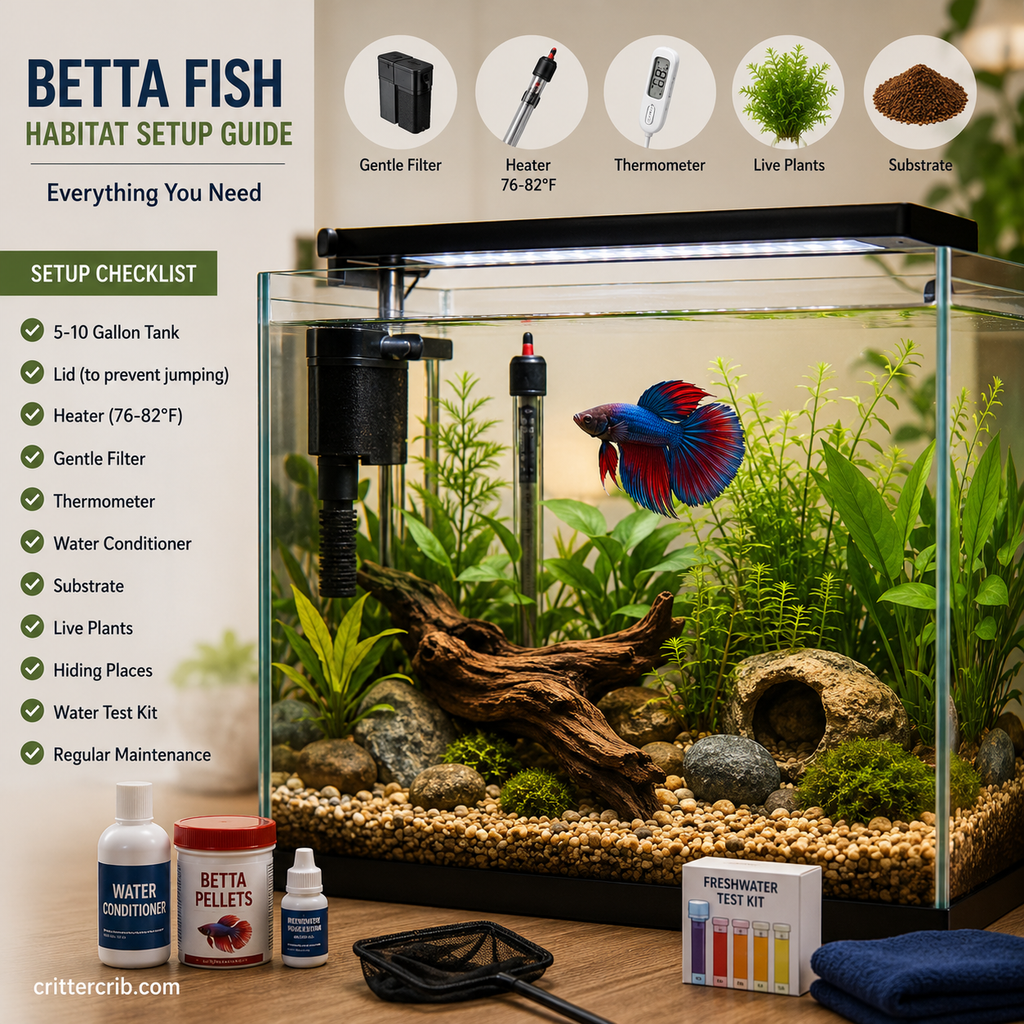
Once you have all your equipment, it’s time to assemble the habitat.
1. Rinse the Aquarium and Equipment
Rinse the tank, substrate, and appropriate decorations with clean water.
Don’t use household soap or cleaning chemicals inside the aquarium.
Residue can be harmful to fish.
2. Add the Substrate
Place your chosen substrate across the bottom.
The exact depth depends partly on whether you’re using live plants and what type of substrate you’ve selected.
3. Position Decorations and Plants
Arrange your hardscape before filling the aquarium completely.
Make sure everything is stable.
You don’t want a rock or decoration shifting later and potentially injuring your fish.
Leave open areas for swimming while creating sheltered areas for resting and exploration.
4. Install the Heater and Filter
Install both according to the manufacturers’ instructions.
Don’t plug equipment in until it’s properly positioned and submerged as required.
5. Fill the Aquarium
Fill the tank with appropriately conditioned water.
Adding water slowly can help prevent substrate from being disturbed.
One simple trick is to pour the water onto a clean plate or shallow dish placed over the substrate.
6. Start the Filter and Heater
Once the aquarium is filled correctly, start the equipment.
Confirm that water is circulating and monitor the thermometer to make sure the heater maintains the expected temperature.
7. Begin the Aquarium Cycle
Establish the nitrogen cycle before introducing your betta whenever possible.
Use your water-testing kit throughout the process rather than relying on a fixed number of days.
Cycling can take several weeks, and every aquarium develops differently.
8. Confirm Water Conditions
Before adding the fish, verify that the tank can maintain:
- Stable temperature
- 0 ppm ammonia
- 0 ppm nitrite
- Manageable nitrate
- Appropriate pH
Check that the filter flow isn’t excessive and that the heater is functioning correctly.
9. Introduce Your Betta Carefully
Don’t simply dump your betta and the water from its transport container into the aquarium.
The fish should be gradually acclimated to differences in temperature and water conditions.
A common approach is to float the closed transport bag or container in the aquarium briefly to help equalize temperature, then gradually introduce small amounts of aquarium water.
Avoid allowing pet-store water into your established aquarium whenever practical.
Once acclimated, gently transfer the betta into its new home.
What Should a Betta Tank Look Like?
There’s no single correct design.
Some people prefer lush planted aquariums filled with wood and natural stone. Others create simple habitats using silk plants and a few carefully selected decorations.
From the fish’s perspective, function matters more than theme.
A well-designed betta tank generally has:
- Open swimming areas
- Vegetation or other cover
- At least one secure hiding place
- Resting areas near the surface
- Gentle water movement
- Easy access to the surface
- No dangerous sharp objects
Try creating different “zones” rather than filling every inch of the tank.
For example, one side might contain dense plants and a cave while the center remains relatively open for swimming.
How Often Should You Clean a Betta Tank?
A healthy aquarium doesn’t need to be completely emptied and scrubbed every week.
In fact, repeatedly sterilizing the aquarium can interfere with the beneficial bacteria that help keep it stable.
Instead, perform routine partial water changes.
For many established betta tanks, changing approximately 20–30% of the water weekly is a reasonable starting schedule. The exact frequency depends on tank size, stocking, feeding, plant growth, filtration, and measured water quality.
Test your water and adjust your routine accordingly.
Basic Weekly Maintenance
A typical routine might include:
- Test the water when necessary.
- Remove approximately 20–30% of the aquarium water.
- Vacuum visible debris from the substrate.
- Remove dead plant material.
- Clean algae from the glass if needed.
- Replace the removed water with conditioned water of a similar temperature.
- Check the filter and heater.
Don’t replace all of the filter media simply because it looks dirty.
Much of your aquarium’s beneficial bacteria lives on filter media and other surfaces.
When reusable filter media needs cleaning, gently rinsing it in removed aquarium water can help clear debris without exposing it to chlorinated tap water.
Common Betta Habitat Setup Mistakes
Even well-intentioned owners can run into trouble when setting up their first aquarium.
Keeping a Betta in a Tiny Bowl
Small containers provide little swimming room and allow temperature and water chemistry to change rapidly.
A proper aquarium with filtration and heating provides a much more stable environment.
Skipping the Heater
A house that feels comfortable to you may still be too cool—or too inconsistent—for a tropical fish.
Use a heater and thermometer rather than guessing.
Using a Filter With Too Much Flow
Filtration is beneficial, but excessive current can exhaust your betta.
Choose gentle filtration or reduce the filter’s flow when necessary.
Adding a Fish Before Cycling the Tank
A newly filled aquarium isn’t automatically ready for fish.
Establishing biological filtration helps prevent dangerous ammonia and nitrite accumulation.
Overdecorating the Aquarium
More decorations don’t automatically create a better habitat.
Too many objects can restrict swimming space and create areas where debris accumulates.
Balance shelter with open water.
Using Sharp Plastic Decorations
Long betta fins can potentially snag on rough or sharp surfaces.
Choose smooth aquarium-safe materials and softer artificial plants.
Overfeeding
Overfeeding doesn’t just affect your fish—it affects the entire habitat.
Uneaten food decomposes and contributes to poor water quality.
Feed appropriate portions and remove obvious leftovers.
Completely Replacing the Water
Routine partial water changes are generally better than repeatedly draining and sterilizing an established aquarium.
Your goal is to maintain a stable ecosystem, not reset it every week.
Betta Fish Habitat Setup Checklist
Before bringing your betta home, make sure you have the essentials ready.
Aquarium Equipment
- 5-gallon or larger aquarium
- Secure aquarium lid
- Adjustable heater
- Aquarium thermometer
- Gentle filter
- Aquarium light
Inside the Aquarium
- Aquarium-safe substrate
- Live or soft artificial plants
- At least one hiding place
- Smooth decorations
- Resting areas near the surface
- Open swimming space
Water Care Supplies
- Water conditioner
- Freshwater test kit
- Gravel vacuum or siphon
- Dedicated aquarium bucket
- Algae-cleaning tool if needed
Before Adding Your Betta
Confirm that:
- The aquarium is cycled.
- Ammonia is 0 ppm.
- Nitrite is 0 ppm.
- Nitrate is under control.
- Temperature is stable.
- The filter current is gentle.
- The heater is functioning properly.
- Your betta can easily reach the surface.
- Decorations don’t have dangerous sharp edges.
Can Betta Fish Live With Other Fish?
Sometimes, but tank mates shouldn’t be treated as a requirement.
A betta can live perfectly well as the only fish in its aquarium.
Male bettas should never be housed together, as territorial aggression can result in serious injury.
Some individual bettas may tolerate compatible fish, snails, or shrimp in appropriately sized aquariums, while others aggressively defend their territory.
Personality matters.
Tank size also becomes increasingly important when adding other animals because you’re increasing both territorial pressure and the aquarium’s biological load.
If your main goal is creating a healthy betta habitat, there’s nothing wrong with keeping things simple and giving your betta the aquarium to itself.
How to Make a Betta Habitat More Enriching
Once you’ve covered the essentials, small additions can make the environment more interesting.
Try providing:
- Different plant heights
- Broad leaves near the surface
- Natural wood or smooth stone
- Floating vegetation
- Caves and sheltered areas
- Open swimming areas
You can also occasionally rearrange a small portion of the aquarium during maintenance.
Bettas are curious fish and often investigate changes in their surroundings.
Just don’t constantly redesign the entire tank. Stability still matters.
Frequently Asked Questions About Betta Fish Habitats
Can a Betta Fish Live in a Bowl?
A bowl isn’t recommended as a permanent betta habitat.
Most bowls are too small to provide adequate swimming space and make it difficult to maintain stable temperature and water quality. A filtered, heated aquarium of at least around 5 gallons is a much better option.
Do Bettas Need an Air Pump?
Not necessarily.
Bettas can breathe atmospheric air using their labyrinth organ, and a properly functioning filter usually provides sufficient water movement and gas exchange.
However, some filtration systems—particularly sponge filters—require an air pump to operate.
Do Bettas Need Live Plants?
No, but live plants can be excellent additions.
They provide natural cover and resting areas while making the aquarium more visually interesting.
Soft artificial plants can also work when live plants aren’t practical.
Can I Use Tap Water for a Betta Fish?
Usually, but it should be treated first.
Use an aquarium water conditioner appropriate for your local water supply to neutralize chlorine, chloramine, and other substances the product is designed to address.
How Long Should a Betta Tank Run Before Adding the Fish?
Don’t judge readiness by the number of days the filter has been running.
A tank running for a week isn’t necessarily cycled.
Instead, use water testing to determine whether biological filtration has developed sufficiently to process ammonia and nitrite.
A fishless cycle commonly takes several weeks.
Do Bettas Like Lots of Decorations?
Bettas generally benefit from cover and places to explore, but they also need swimming space.
Think in terms of creating an interesting environment rather than simply adding as many decorations as possible.
Where Should a Betta Sleep?
Bettas may rest in several places.
You might find yours sleeping on plant leaves, near the substrate, inside a sheltered area, or on a broad leaf close to the surface.
Providing several comfortable resting options lets the fish choose.
Final Thoughts
Setting up a betta fish habitat is less about buying elaborate decorations and more about creating a stable, comfortable environment.
Start with a reasonably sized aquarium—ideally at least 5 gallons—then focus on the fundamentals: warm water, gentle filtration, good water quality, a completed nitrogen cycle, safe decorations, plants or other cover, and easy access to the surface.
A 10-gallon aquarium can be an especially nice option if you have the space. It gives your betta more room to explore while providing a larger volume of water that can be easier to keep stable.
Most importantly, don’t rush the setup.
Getting the aquarium established before your betta arrives can prevent many of the water-quality problems new fish keepers encounter.
Once the habitat is running properly, maintaining it becomes a straightforward routine of feeding, observation, testing when necessary, and regular partial water changes.
Give your betta warm, clean water and an interesting environment to explore, and you’ll have the foundation for a healthy aquarium that both you and your fish can enjoy.