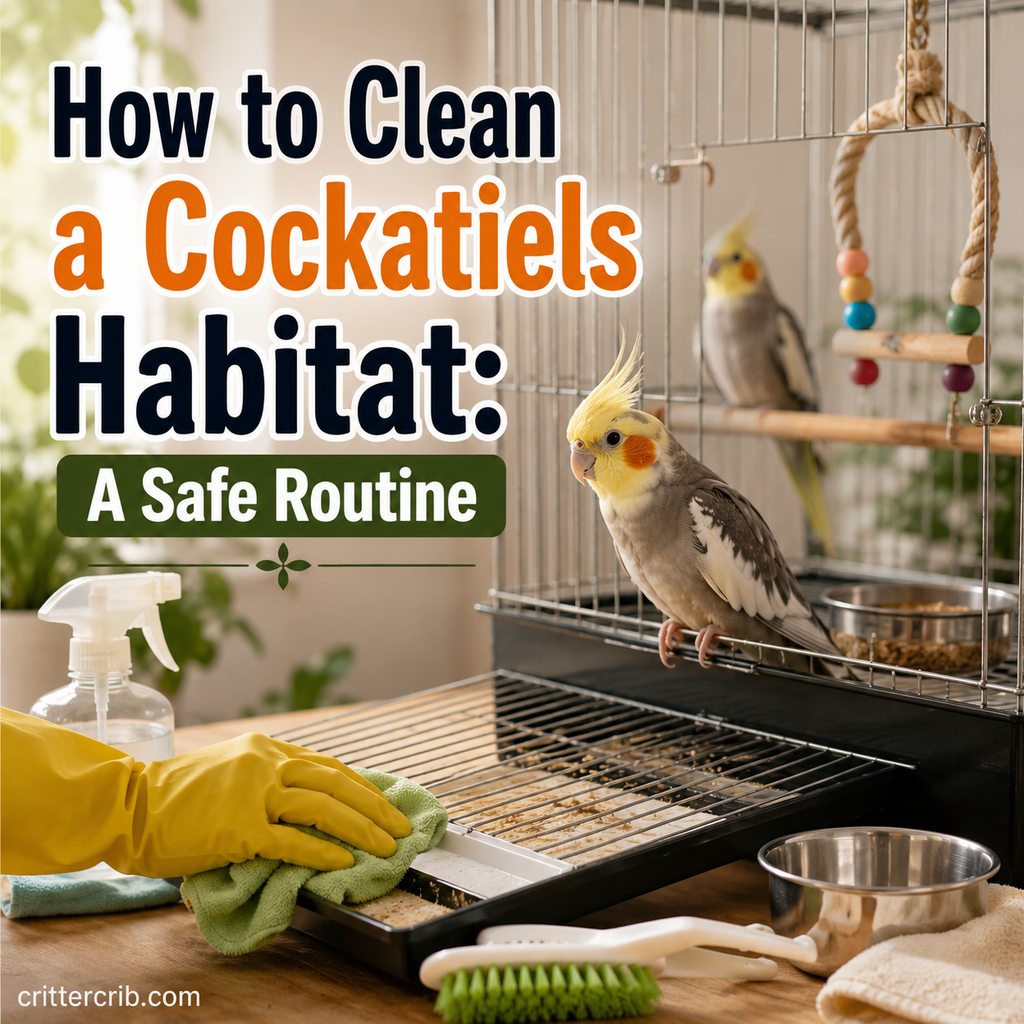
Cockatiels can be surprisingly messy for such small birds. Seed hulls scatter across the floor, feathers collect around the cage, food gets dropped into unexpected places, and droppings quickly build up on liners and perches.
Regular cleaning isn’t just about making the cage look nice. A clean habitat helps keep your cockatiel’s food and water fresh, reduces odors, prevents waste from accumulating, and makes it easier to notice changes in your bird’s droppings or eating habits.
The good news is that maintaining a cockatiel cage doesn’t have to turn into a major project every few days. A simple routine works best: handle the small jobs daily, perform a more thorough cleaning weekly, and periodically inspect everything in the cage for wear or hidden grime.
Here’s how to clean a cockatiel’s habitat safely without making the process more complicated than it needs to be.
Why Cleaning a Cockatiel Cage Is Important
Cockatiels spend a significant amount of time inside and around their cages. That means food, feathers, dust, droppings, and moisture can accumulate surprisingly quickly.
Dirty conditions can also attract insects and encourage unwanted microbial growth, particularly around damp food or water.
Regular cleaning helps remove:
- Droppings
- Discarded food
- Seed hulls
- Feathers and feather dust
- Dirty cage liners
- Food stuck to cage bars
- Debris on perches
- Contaminated water
- Moisture around food and water dishes
Cleaning also gives you an opportunity to inspect the habitat.
While wiping down the cage, you may notice a damaged toy, fraying rope, loose cage hardware, rust, cracked food dish, or another potential problem that might otherwise go unnoticed.
How Often Should You Clean a Cockatiel Cage?
You don’t need to completely dismantle and scrub the cage every day.
Instead, divide cleaning into daily and weekly tasks.
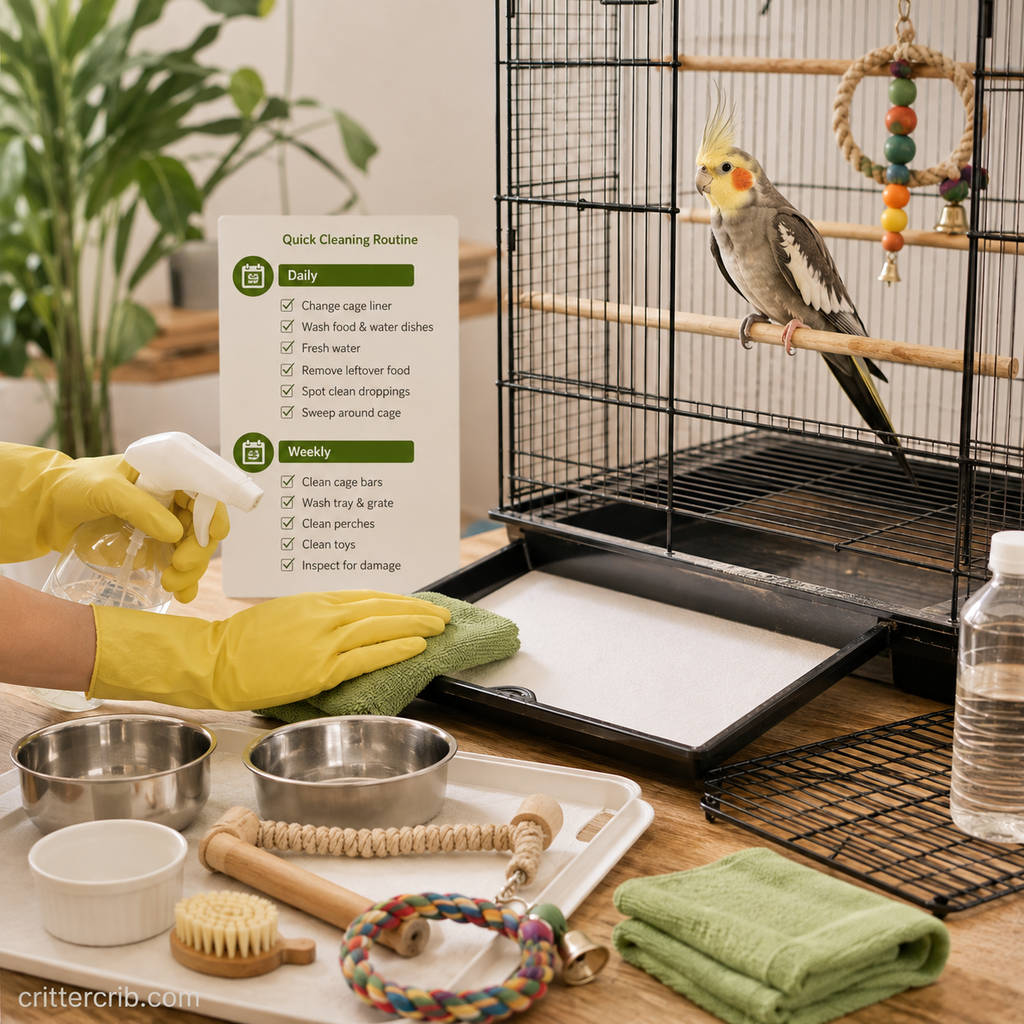
Daily Cockatiel Cage Cleaning
Every day, you should generally:
- Replace the cage liner
- Wash food dishes
- Wash and refill the water dish or bottle
- Remove discarded fresh foods
- Clean obvious droppings from accessible surfaces
- Sweep or vacuum debris around the cage
- Check toys and perches for heavy contamination
These jobs usually don’t take long once they become part of your routine.
Weekly Cockatiel Cage Cleaning
Once a week, give the habitat a more thorough cleaning.
This can include:
- Cleaning the cage bars
- Washing the cage tray
- Scrubbing dirty perches
- Cleaning toys when appropriate
- Washing removable grates
- Cleaning underneath and around the cage
- Checking corners and crevices for accumulated debris
- Inspecting accessories for damage
Some cages will need attention more frequently.
Two cockatiels sharing an enclosure, for example, will generally create more waste than one bird. Your bird’s diet and cage setup can also influence how quickly things become dirty.
Use the schedule as a starting point and clean more often whenever necessary.
What Should You Use to Clean a Cockatiel Cage?
You don’t need an enormous collection of cleaning products.
A basic cage-cleaning kit might include:
- Warm water
- Mild bird-safe cleaning products when needed
- Clean cloths or paper towels
- A dedicated scrub brush
- A small brush for corners
- Disposable cage liners
- A broom, handheld vacuum, or regular vacuum
Keep brushes and cloths used for bird-cage cleaning separate from items you use for dishes, countertops, or bathrooms.
Whatever cleaning product you choose, read the directions carefully and make sure it’s appropriate for use around birds.
Cockatiels have sensitive respiratory systems, so avoiding unnecessary fumes and residues is particularly important.
Cleaning Products to Be Careful With Around Cockatiels
A product smelling “clean” doesn’t necessarily make it appropriate for a bird’s environment.
Birds can be sensitive to airborne chemicals and strong fragrances. Aerosolized products are especially concerning because particles can travel through the air and be inhaled.
Avoid casually using products such as:
- Strongly scented cleaners
- Aerosol sprays
- Air fresheners
- Heavy fragrances
- Harsh chemicals not intended for use around birds
- Products that leave potentially harmful residues
Don’t spray household cleaners directly into an occupied bird cage.
When stronger cleaning or disinfecting is necessary, move your cockatiel to a secure location away from the cleaning area and follow the product manufacturer’s directions for dilution, contact time, rinsing, ventilation, and safe re-entry.
Never assume that a product is bird-safe simply because it’s described as “natural.”
How to Clean a Cockatiel Cage Step by Step
A consistent order makes cage cleaning faster and helps prevent you from cleaning the same area twice.
Here’s a straightforward routine.
1. Move Your Cockatiel to a Safe Location
For a quick liner change, you may be able to clean without removing your cockatiel, depending on the cage design and your bird’s temperament.
For a thorough cleaning, it’s usually easier to place your cockatiel somewhere secure.
You might use:
- A properly secured travel cage
- A second bird cage
- Another safe enclosure
Make sure your bird cannot escape while you’re working.
Keeping the cockatiel away from the cleaning area also reduces its exposure to disturbed dust and any cleaning products you’re using.
2. Remove Food, Water, Toys, and Accessories
Take removable items out of the cage.
This may include:
- Food dishes
- Water dishes
- Toys
- Swings
- Ladders
- Removable perches
- Cuttlebones or mineral accessories
Don’t automatically soak everything together.
Different materials require different cleaning methods. A stainless-steel bowl can tolerate cleaning that might damage a wooden or natural-fiber toy.
3. Remove the Dirty Cage Liner
Take out the liner carefully so loose debris doesn’t scatter everywhere.
Look at your bird’s droppings before throwing the liner away.
Because you’re changing the liner every day, this gives you a convenient opportunity to become familiar with what’s normal for your cockatiel.
A persistent or significant change in droppings, especially when accompanied by other signs of illness, is worth discussing with an avian veterinarian.
4. Remove Loose Debris
Before introducing water, remove loose material from the cage.
Brush, wipe, or vacuum away:
- Feathers
- Seed hulls
- Dried food
- Dust
- Loose droppings
Removing dry debris first makes the actual washing process much easier.
Pay attention to corners and the tracks around removable cage trays. These areas can collect a surprising amount of material.
5. Clean the Cage Bars
Wipe the bars from top to bottom.
Cockatiels frequently climb using their beaks and feet, so cage bars are surfaces they directly interact with.
Food and droppings stuck to the bars may need to be softened with warm water before they’ll come off easily.
Use a small dedicated brush for stubborn areas.
Pay particular attention to:
- Corners
- Door openings
- Feeding stations
- Areas near favorite perches
- Cage-bar intersections
Avoid leaving cleaning residue behind.
6. Clean the Bottom Tray and Grate
The bottom of the cage tends to collect most of the debris.
Remove the tray and grate if your cage design allows it.
Discard the liner, remove loose material, and wash the tray thoroughly.
If dried droppings are difficult to remove, allowing them to soften with warm water can reduce the amount of scrubbing required.
Make sure the tray is clean and dry before replacing the liner.
7. Clean the Perches
Perches deserve special attention because your cockatiel’s feet are in frequent contact with them.
Droppings can accumulate on favorite sleeping and resting perches.
The appropriate cleaning method depends on the material.
Hard, washable perches may be scrubbed according to their care instructions. Natural wood perches require more care because wood can absorb moisture.
After cleaning a wooden perch, allow it to dry completely before returning it to the cage.
Inspect perches for:
- Splintering
- Cracks
- Excessive wear
- Heavy contamination
- Sharp areas
Replace a perch if it can no longer be cleaned effectively or has become unsafe.
8. Clean Food and Water Dishes
Food and water containers should be cleaned every day, not just during the weekly deep clean.
Wash the dishes thoroughly and rinse them well before refilling.
Water dishes deserve particular attention because they can quickly become contaminated with food, feathers, droppings, or other debris.
If your cockatiel has a habit of dropping food into its water, you may need to change the water more than once a day.
Stainless-steel dishes are popular because they’re durable and relatively easy to clean.
Whatever material you use, replace containers that become cracked, heavily scratched, damaged, or difficult to clean properly.
9. Inspect and Clean Toys
Bird toys don’t all need to be scrubbed every week.
Instead, inspect them regularly and clean them when necessary.
Hard plastic or other washable toys can often be cleaned relatively easily according to the manufacturer’s directions.
Natural materials may require different treatment.
Inspect toys for:
- Frayed rope
- Loose threads
- Broken pieces
- Sharp edges
- Loose hardware
- Heavy contamination
- Areas where a bird could become trapped
Cockatiels naturally chew and dismantle things. A toy that was safe when you bought it may eventually become damaged enough to need replacement.
10. Let Everything Dry
Don’t rush to rebuild the habitat while components are still wet.
Moisture trapped in wood, cage corners, toys, or underneath liners can create unwanted damp conditions.
Allow cleaned components to dry thoroughly.
Once everything is dry, you can begin reassembling the habitat.
11. Add a Fresh Cage Liner
Plain paper is a convenient option because it’s inexpensive and makes droppings easy to see.
Depending on your cage setup, suitable liners may include:
- Plain paper
- Paper towels
- Appropriate commercially produced cage liners
Avoid materials that make it difficult to monitor droppings or that your bird can easily access and ingest.
The liner should fit the cage tray without interfering with doors, grates, or other moving parts.
12. Reassemble the Cage
Return clean perches, dishes, and toys to their normal positions.
This is also a good opportunity to make minor adjustments to the layout.
You don’t need to completely redesign the cage every week. Familiarity can be comforting to many birds.
Instead, rotate selected toys periodically while maintaining convenient access to:
- Food
- Water
- Favorite resting areas
- Perches
- Open movement space
Before returning your cockatiel, double-check that every door and accessory is secure.
How to Clean Around a Cockatiel Cage
The mess doesn’t stop at the cage bars.
Cockatiels produce feather dust, and lightweight feathers, seed hulls, and food particles can spread into the surrounding area.
Regularly clean:
- The floor beneath the cage
- Nearby furniture
- Cage stands
- Walls immediately around the enclosure
- Baseboards
- Underneath furniture near the cage
A washable floor mat beneath the cage can make cleanup easier.
If you use a vacuum, consider your bird’s temperament. Some cockatiels barely react to vacuum cleaners, while others may be frightened by the noise.
Introduce noisy cleaning equipment gradually rather than suddenly switching it on directly beside a nervous bird.
How to Reduce Mess Around the Cage
You’ll never completely eliminate cockatiel mess, but you can make it easier to manage.
Try these strategies:
- Use appropriately sized food dishes that reduce unnecessary scattering.
- Place a washable mat beneath the cage.
- Change cage liners daily.
- Vacuum or sweep small messes before they accumulate.
- Position perches so droppings don’t constantly land in food or water.
- Avoid overcrowding the cage with difficult-to-clean accessories.
- Clean fresh-food dishes shortly after feeding.
A few minutes of maintenance each day can prevent a much larger cleanup later.
Should You Rearrange the Cage When Cleaning?
You can make occasional changes, but there’s no need to create an entirely new habitat every time you clean.
Some cockatiels are curious about changes. Others are cautious around unfamiliar objects and arrangements.
If your bird is nervous, make changes gradually.
You might rotate one or two toys rather than replacing everything at once.
Keeping major necessities in predictable locations can also make the cage easier for your cockatiel to navigate.
What About New Toys and Perches?
Cleaning isn’t only about removing visible dirt. It’s also a good time to think about what you’re introducing into your bird’s environment.
Before placing a new item inside the cage:
- Check that it’s intended for birds
- Inspect it for sharp edges
- Look for loose pieces
- Check ropes and fibers
- Examine hardware
- Follow any manufacturer cleaning instructions
Don’t assume an item is safe simply because it’s sold in the pet section.
Choose products specifically appropriate for cockatiels and inspect them regularly as your bird uses them.
Cleaning a Cage When You Have More Than One Cockatiel
Two birds usually mean more frequent cleaning.
You’ll have additional droppings, feathers, food debris, and dust to manage.
Pay particular attention to shared food and water stations.
With multiple birds, you may need to:
- Replace liners more frequently
- Clean bowls more often
- Wipe heavily used perches regularly
- Vacuum around the cage more frequently
- Provide multiple feeding locations
A larger cage can also take longer to clean, but removable trays and accessible doors can make the process considerably easier.
Common Cockatiel Cage Cleaning Mistakes
A few habits can make cleaning less effective or potentially expose your bird to unnecessary risks.
Waiting Until the Cage Looks Dirty
A cage doesn’t need to smell or look filthy before it needs attention.
Daily maintenance prevents waste from accumulating in the first place.
Using Strongly Scented Products
Cockatiels don’t need their cages to smell like citrus, flowers, or perfume.
A clean bird cage should mostly smell like nothing.
Spraying Cleaner Around Your Bird
Avoid creating airborne droplets around your cockatiel.
Move the bird away when you’re doing more intensive cleaning and carefully follow the instructions for any cleaning product you use.
Forgetting Food and Water Bowls
A spotless cage isn’t much help if the water bowl is dirty.
Food and water containers are among the items that deserve daily attention.
Putting Damp Items Back Into the Cage
Allow washed items to dry thoroughly before returning them.
Ignoring Damaged Accessories
Cleaning gives you a perfect opportunity to inspect everything your cockatiel touches.
Replace damaged items rather than repeatedly cleaning something that’s becoming unsafe.
A Simple Cockatiel Cleaning Schedule
Keeping a routine makes habitat maintenance much easier.
Every Day
- Replace the cage liner
- Wash food and water containers
- Provide fresh water
- Remove leftover fresh food
- Spot-clean obvious droppings
- Sweep or vacuum around the cage
- Check for damaged or heavily soiled items
Every Week
- Thoroughly clean cage bars
- Wash the bottom tray and grate
- Clean dirty perches
- Clean toys as necessary
- Clean underneath and around the cage
- Inspect cage hardware and accessories
Periodically
Take a closer look at the entire habitat.
Check for:
- Rust
- Damaged cage bars
- Loose doors or latches
- Cracked dishes
- Worn perches
- Frayed toys
- Difficult-to-clean buildup
- Damaged cage components
Replace anything that can no longer be kept clean or safely used.
Frequently Asked Questions
How Often Should I Change a Cockatiel’s Cage Liner?
Changing the cage liner daily is a good routine. It prevents waste and discarded food from accumulating and lets you observe your cockatiel’s droppings regularly.
If the liner becomes heavily soiled during the day, replace it sooner.
How Often Should I Deep Clean a Cockatiel Cage?
A thorough cleaning about once a week works well for many households, alongside daily spot cleaning.
You may need to clean more frequently depending on the number of birds, cage size, diet, and how messy your cockatiel is.
Can I Clean a Cockatiel Cage With Just Water?
Warm water can handle many everyday cleaning tasks, particularly when debris hasn’t been allowed to accumulate.
When additional cleaning or disinfection is needed, use a product appropriate for bird environments and follow its directions carefully.
Can I Use Vinegar to Clean a Cockatiel Cage?
Diluted vinegar is sometimes used for household bird-cage cleaning, but even familiar household substances should be used thoughtfully around birds.
Keep your cockatiel away while cleaning, avoid creating airborne sprays around the bird, rinse surfaces when appropriate, provide ventilation, and never mix vinegar with other cleaning chemicals.
For situations requiring actual disinfection rather than routine cleaning, use an appropriate product according to its instructions.
Can I Use Bleach to Clean a Cockatiel Cage?
Bleach requires considerable caution around birds because of its fumes and the potential for harmful residue if used incorrectly.
For routine cage maintenance, harsh disinfectants are generally unnecessary.
If circumstances require disinfection, consult an avian veterinarian about an appropriate product and procedure, and follow all dilution, ventilation, rinsing, and re-entry instructions carefully.
Never mix bleach with vinegar, ammonia, or other household cleaners.
Should I Remove My Cockatiel While Cleaning the Cage?
For quick daily tasks, such as replacing a liner, removal may not always be necessary.
For thorough cleaning, moving your cockatiel to a secure enclosure away from the cleaning area is usually safer and more convenient.
What Is the Easiest Cockatiel Cage Liner to Clean?
Plain paper or paper towels are simple options because they’re inexpensive, easy to replace, and allow you to see droppings clearly.
Whichever liner you choose, make sure your bird cannot access potentially unsafe materials underneath the cage grate.
Final Thoughts
Keeping a cockatiel’s habitat clean doesn’t require constantly scrubbing the entire cage.
The easiest approach is a consistent routine.
Handle the basics every day: change the liner, clean food and water dishes, remove old food, and take care of obvious messes. Once a week, spend a little more time cleaning the cage bars, tray, perches, and surrounding area.
While you’re cleaning, inspect toys, perches, dishes, and cage hardware for damage. It’s one of the simplest ways to catch potential problems before they become serious.
Most importantly, remember that birds are sensitive to fumes and airborne chemicals. Avoid strongly scented sprays and unnecessary harsh products, keep your cockatiel away from intensive cleaning, and make sure everything is clean, rinsed as appropriate, and thoroughly dry before your bird returns.
With a few minutes of daily maintenance and a regular deeper clean, your cockatiel can enjoy a fresh, comfortable habitat without cage cleaning becoming an all-day chore.