Cockatiels come from Australia, so it’s easy to assume they naturally prefer a hot, dry environment. In reality, pet cockatiels do best in comfortable, relatively stable indoor conditions—not extreme heat or a chilly room.
For most healthy cockatiels, a typical household temperature is perfectly suitable. The bigger concern is often sudden temperature changes, cold drafts, excessive heat, or air that’s consistently too dry or humid.
Humidity matters too. Cockatiels don’t need a tropical environment, but extremely dry air can be uncomfortable, while excessive moisture can encourage mold and other problems around the cage.
So, what temperature and humidity should you aim for?
Here’s how to create a comfortable indoor environment for your cockatiel throughout the year.
What Is the Ideal Temperature for a Cockatiel?
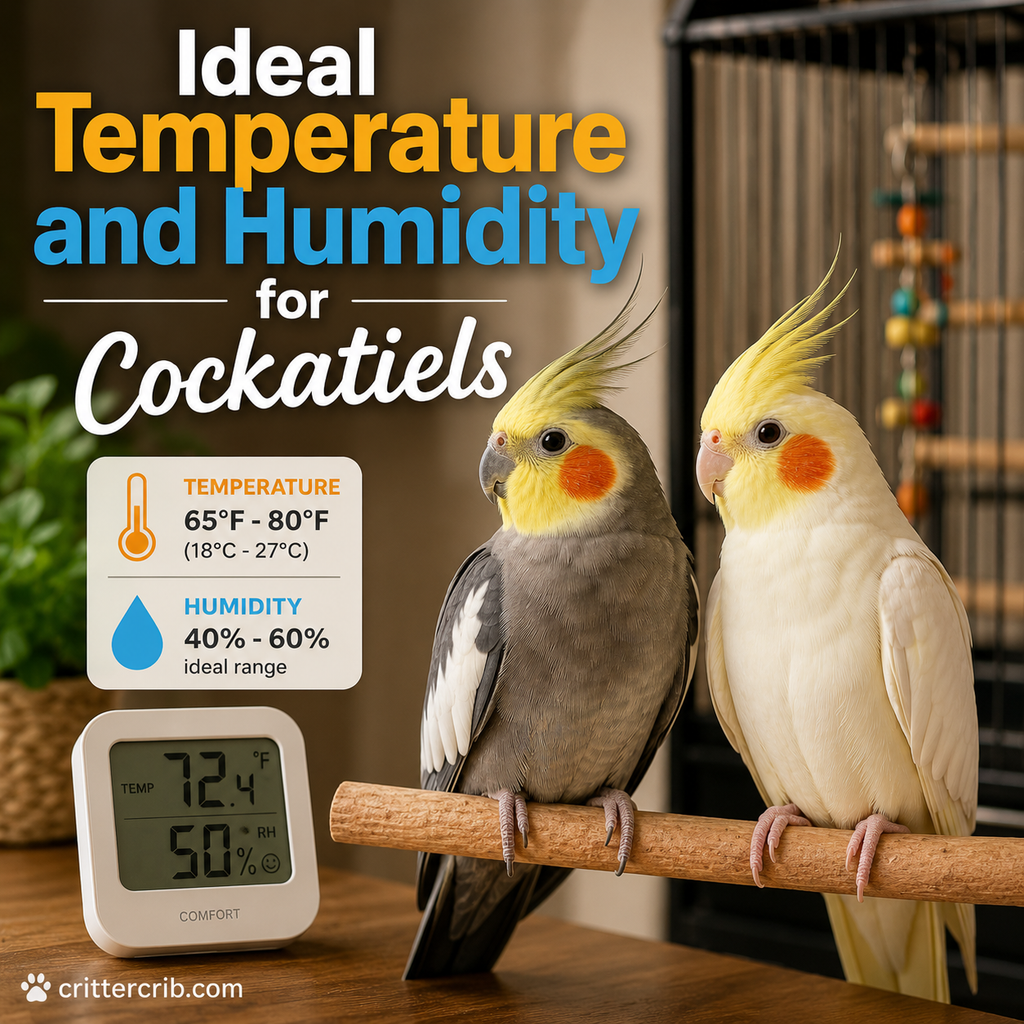
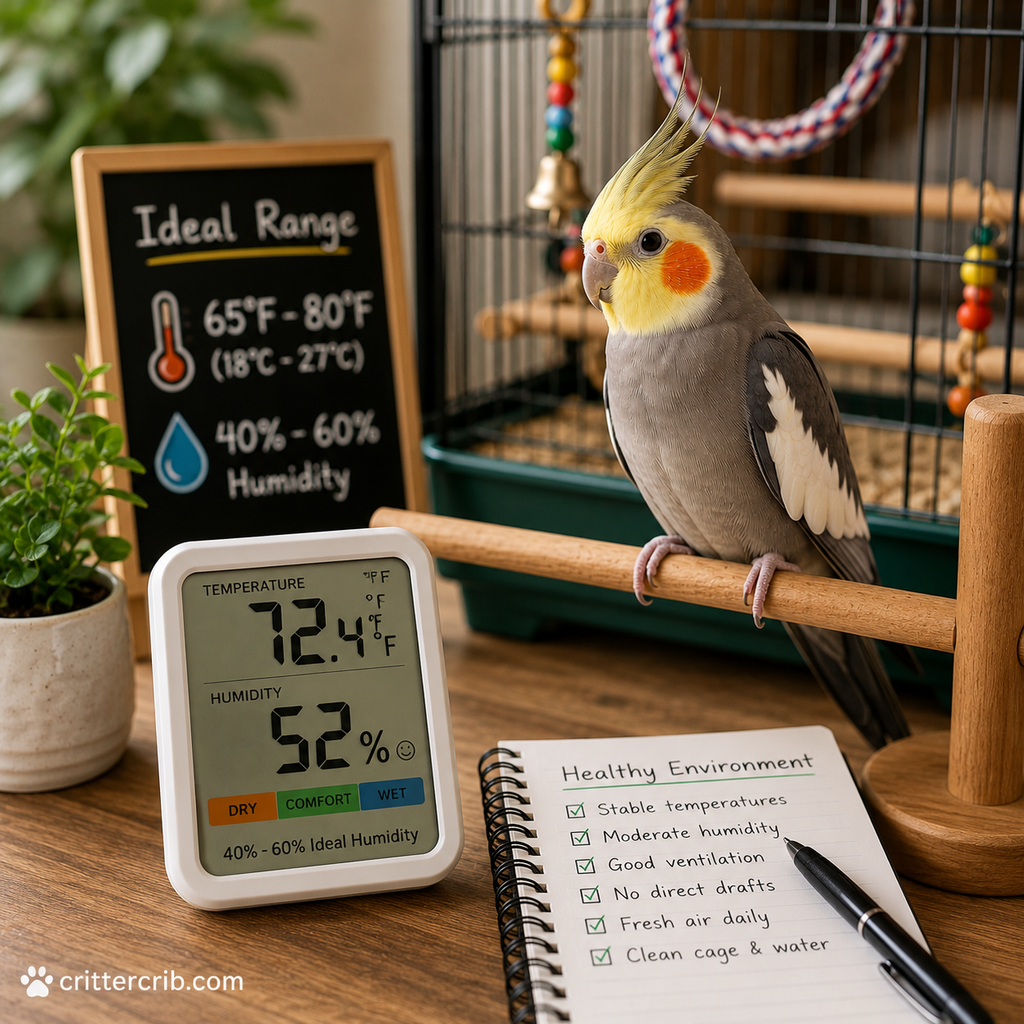
A comfortable temperature range for most healthy pet cockatiels is roughly 65°F to 80°F (18°C to 27°C).
Temperatures somewhere around 70°F to 75°F (21°C to 24°C) are generally comfortable for both cockatiels and the people living with them.
You don’t need to keep the room at one exact temperature all day. Small, gradual fluctuations are normal.
What you want to avoid are dramatic changes.
For example, moving a cockatiel from a warm 75°F room directly into a cold draft can be more stressful than allowing the room temperature to gradually decrease by several degrees overnight.
Can Cockatiels Handle Cold Temperatures?
Healthy cockatiels can tolerate temperatures somewhat cooler than their ideal range, particularly if they’ve had time to adjust gradually.
That doesn’t mean you should intentionally keep them cold.
Temperatures below about 60°F (16°C) deserve more attention, especially if the room is drafty or the bird isn’t accustomed to cooler conditions.
Young, elderly, sick, underweight, or recovering birds may have more difficulty regulating their body temperature and can require warmer conditions.
Signs Your Cockatiel May Be Too Cold
A cockatiel that’s uncomfortable with the temperature may:
- Remain unusually fluffed up
- Tuck its beak into its feathers for extended periods
- Shiver
- Become less active
- Keep its feet tucked against its body
- Seek out warmer areas
- Appear unusually sleepy
Keep in mind that cockatiels naturally fluff their feathers when relaxing or sleeping. Seeing a fluffy bird doesn’t automatically mean the room is too cold.
Persistent fluffing combined with lethargy, appetite changes, or other unusual behavior can also indicate illness and shouldn’t simply be blamed on temperature.
How Hot Is Too Hot for Cockatiels?
Cockatiels are adapted to warm environments, but they can still overheat.
Once indoor temperatures begin climbing into the mid-80s°F (around 29°C and above), pay closer attention to your bird’s behavior and make sure it has access to fresh water, shade, and good air circulation.
Temperatures approaching or exceeding 90°F (32°C) can become dangerous, particularly when combined with high humidity, poor ventilation, direct sunlight, or limited access to water.
Never assume that a cockatiel can tolerate extreme indoor heat simply because the species originated in Australia.
Signs a Cockatiel Is Too Hot
Watch for behaviors such as:
- Holding the wings slightly away from the body
- Panting or open-mouth breathing
- Rapid breathing
- Reduced activity
- Seeking cooler areas
- Drinking more water than usual
- Appearing weak or distressed
A bird showing signs of severe overheating needs prompt attention.
Move the bird to a cooler, well-ventilated environment without creating a dramatic cold shock. If symptoms are severe or don’t improve quickly, contact an avian veterinarian.
What Is the Ideal Humidity for Cockatiels?
For most homes, a relative humidity of approximately 40% to 60% provides a comfortable environment for cockatiels.
You don’t have to maintain an exact percentage.
A room that’s 47% one day and 54% the next isn’t a problem. The goal is to avoid prolonged extremes.
Humidity can vary significantly depending on your climate, season, heating and air-conditioning system, and where the cage is located.
An inexpensive digital hygrometer can make monitoring humidity much easier.
Is Low Humidity Bad for Cockatiels?
Very dry indoor air can become uncomfortable for birds.
This is particularly common during winter when heaters run for long periods. Heating cold outdoor air can dramatically reduce indoor relative humidity.
Extremely dry conditions may contribute to:
- Dry skin
- Increased itchiness
- Dry nasal passages
- Feather and skin discomfort
- More noticeable airborne dust
- Irritation during molting
Cockatiels naturally produce a fine powder called powder down, so you may already notice bird dust around the cage.
Very dry conditions can make the environment feel even dustier.
How to Increase Humidity Safely
If your home regularly falls below roughly 30% to 35% relative humidity, adding some moisture to the air may help.
Options include:
- Using a properly maintained humidifier
- Allowing your cockatiel to bathe regularly
- Offering gentle misting if your bird enjoys it
- Moving the cage away from heating vents
- Monitoring the room with a hygrometer
A humidifier can be useful, but cleanliness is extremely important.
Dirty humidifiers can spread bacteria, mold, and other contaminants into the air. Follow the manufacturer’s cleaning instructions and avoid adding fragrances, essential oils, or other scented products to the water.
Birds have extremely sensitive respiratory systems.
Can Humidity Be Too High for Cockatiels?
Yes.
More humidity isn’t automatically better.
Consistently high humidity can encourage mold and mildew, particularly around windows, walls, cage liners, food, and other damp areas.
High humidity combined with high temperatures can also make it more difficult for a bird to cool itself.
If your indoor humidity regularly rises above 60% to 65%, improving ventilation or using a dehumidifier may be helpful.
Look around the cage area for signs of excess moisture, including:
- Condensation on windows
- Damp cage liners
- Musty smells
- Mold growth
- Moisture around walls or flooring
- Food that spoils unusually quickly
The cage itself should always remain clean and dry.
Why Stable Temperatures Matter
Cockatiels can generally adapt to reasonable seasonal temperature differences.
Sudden changes are more concerning.
Imagine a cage sitting comfortably in a 72°F room. A nearby exterior door opens on a freezing winter morning and sends cold air directly across the cage.
The room’s thermostat may still say 72°F, but the bird is experiencing something completely different.
This is why cage placement matters as much as the number on your thermostat.
Keep Cockatiels Away From Drafts
A draft isn’t simply “fresh air.”
It’s a concentrated flow of air that can make the immediate area around your bird considerably colder or hotter than the rest of the room.
Avoid placing your cockatiel’s cage directly beside:
- Exterior doors
- Frequently opened windows
- Air-conditioning vents
- Heating vents
- Powerful fans
- Drafty windows
You don’t need to eliminate all air movement.
Good ventilation is important. The goal is to avoid having hot or cold air blowing directly onto the bird for extended periods.
Where Should You Put a Cockatiel Cage?
Choose a location where the temperature remains relatively consistent.
A good cage location is usually:
- Away from direct drafts
- Away from heating and cooling vents
- Protected from intense direct sunlight
- Away from kitchens and cooking fumes
- In a room where people regularly spend time
- Free from excessive temperature swings
Placing one side of the cage near a wall can also help the bird feel more secure.
Avoid putting the cage directly against a poorly insulated exterior window, particularly in very hot or cold climates.
Be Careful With Direct Sunlight
Sunlight coming through a window can quickly raise the temperature inside a cage.
A room may feel comfortable while one sunny corner becomes surprisingly hot.
This creates an especially dangerous situation if the entire cage is exposed and the bird can’t move into shade.
If your cockatiel receives natural sunlight through a window, make sure part of the cage remains shaded and monitor how warm the area becomes throughout the day.
Remember that the position of the sun changes by both hour and season.
A cage location that’s shaded in the morning might receive intense afternoon sunlight.
Should You Cover a Cockatiel’s Cage at Night?
A cage cover can help some cockatiels settle down for the night, reduce visual distractions, and establish a consistent sleep routine.
However, a cover shouldn’t be relied upon as a substitute for proper room temperature.
Use a breathable cage cover and maintain adequate ventilation.
If your home becomes unusually cold overnight, address the temperature of the room rather than simply wrapping the cage in heavy blankets.
Cockatiels also need a regular period of darkness and quiet for healthy sleep.
What Temperature Should Cockatiels Have at Night?
You don’t need to keep the room exactly as warm overnight as it is during the day.
A gradual nighttime temperature decrease is generally fine for a healthy cockatiel.
For example, a home that stays around 72°F during the day and gradually drops to 66°F or 68°F overnight usually isn’t concerning for a healthy bird accustomed to those conditions.
The key word is gradual.
Avoid placing the cage somewhere that becomes dramatically colder once the sun goes down.
Keeping Cockatiels Comfortable in Winter
Winter can create two separate challenges: colder temperatures and lower indoor humidity.
Central heating may keep the house warm while making the air extremely dry.
During colder months:
- Check the temperature around the cage rather than relying only on a thermostat in another part of the house.
- Move the cage away from cold windows and exterior doors if necessary.
- Keep the cage away from direct heating vents.
- Monitor indoor humidity.
- Provide regular opportunities for bathing.
- Watch your bird for changes in behavior.
A small digital thermometer and hygrometer near the cage can help you understand the actual conditions your cockatiel experiences.
Are Space Heaters Safe Around Cockatiels?
Be extremely careful with portable heaters around birds.
Some heating appliances and components may contain nonstick coatings or other materials that can release dangerous fumes when heated.
Birds are particularly vulnerable to airborne toxins.
Before using any heater near your cockatiel, verify that the appliance and its heating components are bird-safe. Keep electrical cords inaccessible and never place a heater where it blows hot air directly toward the cage.
Keeping Cockatiels Cool in Summer
Hot weather can be more difficult to manage, especially in homes without air conditioning.
During summer:
- Keep the cage out of intense sunlight
- Maintain good room ventilation
- Provide fresh drinking water
- Replace warm or contaminated water frequently
- Offer bathing opportunities
- Close curtains or blinds during the hottest part of the day if needed
- Use air conditioning safely when temperatures become excessive
- Monitor your bird closely during heat waves
Fans can help circulate air in a room, but don’t direct a powerful fan straight at the cage.
Ceiling fans should always be turned off when your cockatiel is flying outside the cage.
Can Cockatiels Live in Air-Conditioned Rooms?
Yes.
Air conditioning itself isn’t inherently harmful to cockatiels.
The problem occurs when cold air blows directly onto the bird or the room becomes excessively cold.
Keep the cage away from the direct path of an air-conditioning vent and monitor the temperature near the cage.
A comfortable, air-conditioned room can actually be much safer than allowing your cockatiel to remain in extreme summer heat.
Can Cockatiels Live Outside?
Keeping cockatiels outdoors requires considerably more planning than keeping them inside a climate-controlled home.
Outdoor birds may face:
- Extreme heat
- Cold nights
- Rapid temperature changes
- Rain
- Strong winds
- Predators
- Insects
- Wild birds
- Disease exposure
- Toxic plants
- Smoke and air pollution
A properly designed outdoor aviary needs shelter, security, shade, appropriate weather protection, and a climate suitable for the birds.
Simply moving an indoor cage onto a patio isn’t the same as maintaining a safe outdoor aviary.
Indoor pet cockatiels that aren’t acclimated to outdoor conditions shouldn’t suddenly be left outside during temperature extremes.
Should You Use a Thermometer Near the Cage?
A thermometer is one of the easiest ways to monitor your cockatiel’s environment.
A combined digital thermometer and hygrometer is even more useful because it measures both temperature and relative humidity.
Place it reasonably close to the cage without putting it somewhere your cockatiel can chew it.
This can reveal problems you might otherwise miss.
For example, your thermostat may report 72°F from the hallway while the area next to a sunny window reaches 82°F.
You don’t need to obsess over every one-degree change. Think of the device as an early warning system for larger environmental changes.
Temperature Considerations for Sick or Elderly Cockatiels
A sick bird may have difficulty maintaining its normal body temperature.
This is why sick cockatiels are sometimes provided with supplemental warmth under veterinary guidance.
However, don’t automatically increase the temperature dramatically whenever your bird seems unwell.
Different medical conditions require different treatment, and overheating a sick bird can create additional problems.
If your cockatiel is persistently fluffed up, unusually quiet, sitting at the bottom of the cage, not eating normally, breathing differently, or showing other signs of illness, contact an avian veterinarian.
Environmental adjustments aren’t a substitute for veterinary care.
Don’t Forget About Air Quality
Temperature and humidity are only part of creating a healthy indoor environment.
Cockatiels have highly efficient and sensitive respiratory systems. Air contaminants that seem minor to humans can be dangerous to birds.
Keep your cockatiel away from:
- Cigarette and vaping smoke
- Aerosol sprays
- Strong cleaning fumes
- Paint fumes
- Scented candles
- Essential oil diffusers
- Heavy fragrances
- Cooking smoke
- Fumes from overheated nonstick cookware
Good ventilation matters, but ventilation shouldn’t mean exposing your bird to a cold draft.
You want clean, fresh, comfortably moving air.
A Simple Cockatiel Climate Checklist
You don’t need an elaborate climate-control system to keep most indoor cockatiels comfortable.
Focus on the basics:
- Aim for roughly 65°F to 80°F
- Keep typical indoor conditions around 70°F to 75°F when practical
- Maintain approximately 40% to 60% relative humidity
- Avoid sudden temperature changes
- Keep the cage away from direct heating and cooling vents
- Protect the cage from drafts
- Provide shade from intense sunlight
- Monitor conditions during heat waves and cold snaps
- Consider using a digital thermometer and hygrometer
- Keep humidifiers clean
- Maintain good air quality
- Watch your bird’s behavior
Your cockatiel will often tell you through its behavior when something isn’t comfortable.
Frequently Asked Questions About Cockatiel Temperature and Humidity
Is 70°F Too Cold for a Cockatiel?
No. Around 70°F (21°C) is generally a comfortable indoor temperature for a healthy cockatiel.
Individual circumstances matter, particularly for birds that are sick, very young, elderly, or accustomed to significantly warmer conditions.
Is 60°F Too Cold for a Cockatiel?
A healthy cockatiel may tolerate temperatures around 60°F (16°C), especially when the change happens gradually, but this is cooler than ideal for routine indoor housing.
If your home regularly falls below this temperature, consider how you can safely provide a warmer environment.
Is 80°F Too Hot for a Cockatiel?
Around 80°F (27°C) is generally within a comfortable range for healthy cockatiels, provided the bird has fresh water, ventilation, and protection from direct sunlight.
Continue monitoring the bird as temperatures rise beyond this point.
What Humidity Is Best for Cockatiels?
Approximately 40% to 60% relative humidity is a reasonable target for most pet cockatiels.
Occasional fluctuations outside this range aren’t necessarily dangerous. Persistent extremes are more important to address.
Do Cockatiels Need a Humidifier?
Not necessarily.
If your home’s humidity naturally stays within a comfortable range, there’s usually no reason to run one specifically for your cockatiel.
A humidifier may be useful in extremely dry homes, especially during winter, but it must be cleaned and maintained properly.
Do Cockatiels Get Cold at Night?
Cockatiels can become cold if nighttime temperatures drop significantly, but a modest and gradual temperature decrease is generally fine for a healthy bird.
Keep the cage away from cold drafts and poorly insulated windows.
Can I Put My Cockatiel Near an Air Conditioner?
Your cockatiel can live in an air-conditioned room, but don’t place the cage directly beneath or in front of the vent.
Cold air blowing continuously across the cage can make your bird uncomfortable even when the overall room temperature appears normal.
How Can I Tell If My Cockatiel Is Comfortable?
A comfortable cockatiel should generally behave normally—eating, drinking, vocalizing, playing, preening, resting, and interacting according to its usual routine.
Persistent panting, shivering, unusual fluffing, weakness, or major behavioral changes deserve attention.
Final Thoughts
The ideal temperature and humidity for a cockatiel aren’t difficult to maintain in most homes.
Aim for a comfortable indoor temperature of roughly 65°F to 80°F (18°C to 27°C), with 70°F to 75°F (21°C to 24°C) being a particularly comfortable range for many healthy birds. Relative humidity around 40% to 60% is a useful target.
More important than achieving perfect numbers is providing stability.
Protect your cockatiel from sudden temperature swings, direct drafts, intense sunlight, excessive heat, very dry air, and prolonged high humidity. Pay particular attention during winter cold snaps and summer heat waves.
A simple thermometer and hygrometer near the cage can take much of the guesswork out of monitoring conditions.
And remember to watch the bird, not just the numbers. Your cockatiel’s behavior can provide valuable clues about whether its environment is comfortable—and sudden or persistent changes may indicate a health problem that requires an avian veterinarian.