

Canaries may be small, but they’re fairly adaptable birds when kept in a stable indoor environment. You don’t need to turn your home into a tropical greenhouse to keep a canary comfortable.
What matters most is consistency.
Sudden temperature swings, cold drafts, excessive heat, and extremely dry or humid conditions can all make a canary uncomfortable and potentially contribute to health problems. Cage placement matters too. A perfectly comfortable room can still contain hot windows, chilly vents, and drafty doorways.
For most healthy pet canaries, normal indoor household conditions work well. A few simple precautions—and an inexpensive thermometer and humidity gauge—can make maintaining those conditions much easier.
Here’s what you should know about the ideal temperature and humidity for canaries throughout the year.
What Temperature Is Best for Canaries?
A comfortable indoor temperature for a healthy canary is generally around 65°F to 75°F (18°C to 24°C).
There’s no need to maintain one exact temperature around the clock.
A gradual change of a few degrees throughout the day is normal. The bigger concern is exposing your bird to abrupt changes or temperature extremes.
For example, a canary living comfortably at 70°F shouldn’t suddenly be placed beside an open window on a cold winter morning.
Likewise, a cage shouldn’t sit in direct summer sunlight where the temperature can rise dramatically even though the rest of the room feels comfortable.
Can Canaries Tolerate Cold Temperatures?
Canaries can tolerate cooler temperatures better than many people assume, particularly when they’re healthy and have gradually acclimated to those conditions.
That doesn’t mean deliberately keeping a pet canary cold is a good idea.
Indoor birds generally benefit from a stable, comfortable environment. Temperatures consistently below the normal household range can become more challenging, especially for:
- Young birds
- Elderly canaries
- Sick or recovering birds
- Birds accustomed to warmer temperatures
- Birds exposed to drafts
- Birds experiencing sudden temperature changes
The difference between a gradual seasonal change and a sudden blast of cold air is important.
A room slowly cooling several degrees overnight isn’t the same as placing the cage directly in front of an air conditioner.
Can Canaries Get Too Hot?
Yes.
High temperatures can be dangerous, particularly when combined with high humidity, poor ventilation, or direct sunlight.
Canaries don’t sweat the way humans do.
When birds become overheated, they rely on other methods of releasing excess heat. Once temperatures climb too high, this becomes increasingly difficult.
Hot summer days require extra attention, especially in homes without air conditioning.
Keep the cage away from:
- Direct afternoon sunlight
- Hot windows
- Unventilated rooms
- Heating appliances
- Hot kitchens
- Enclosed porches
- Vehicles
Never leave a canary in a parked car, even for a short period.
Temperatures inside vehicles can rise dangerously fast.
Signs a Canary May Be Too Hot
An overheated canary may show noticeable behavioral or physical changes.
Possible signs include:
- Holding the wings away from the body
- Open-mouth breathing
- Panting
- Rapid breathing
- Unusual inactivity
- Appearing weak
- Spending more time near water
- Seeking cooler areas of the cage
Severe overheating is an emergency.
If your canary is struggling to breathe, appears weak, collapses, or shows other serious signs of heat stress, move the bird away from the heat source and contact an avian veterinarian promptly.
Avoid extreme attempts to cool an overheated bird, such as suddenly placing it in ice-cold water. Rapid temperature changes can create additional problems.
Signs a Canary May Be Too Cold
A cold canary may fluff its feathers to trap warm air around its body.
However, feather fluffing alone doesn’t necessarily mean the bird is cold.
Canaries also fluff their feathers while resting or sleeping.
Look at the overall situation and behavior.
Possible signs of being uncomfortably cold can include:
- Remaining heavily fluffed for extended periods
- Shivering
- Unusual inactivity
- Seeking warmer areas
- Tucking the head frequently
- Keeping both feet covered in feathers for long periods
Persistent fluffing and lethargy can also indicate illness.
If the room temperature is comfortable but your canary remains puffed up, sleepy, or unusually inactive, don’t simply assume the bird is cold. Contact an avian veterinarian if you’re concerned.
What Humidity Is Best for Canaries?
A relative humidity of roughly 40% to 60% is a practical target for most indoor canary environments.
Fortunately, this overlaps with humidity levels many people also find comfortable.
Humidity doesn’t need to remain at exactly 50%.
Instead, focus on avoiding prolonged extremes.
Air that’s excessively dry may affect the skin, feathers, and respiratory comfort, while persistently high humidity can encourage mold and other unwanted microbial growth in the environment.
Why Humidity Matters for Canaries
Humidity affects more than how warm or cool a room feels.
Birds have sensitive respiratory systems, and environmental conditions can influence their comfort.
Very dry indoor air may contribute to:
- Dry skin
- Increased feather dryness
- Respiratory irritation
- Discomfort during seasonal heating
Excessive humidity can create a different set of problems.
Damp environments can encourage:
- Mold growth
- Mildew
- Bacterial growth
- Musty cage materials
- Poor indoor air quality
The goal is balance rather than maximizing humidity.
How to Measure Temperature and Humidity
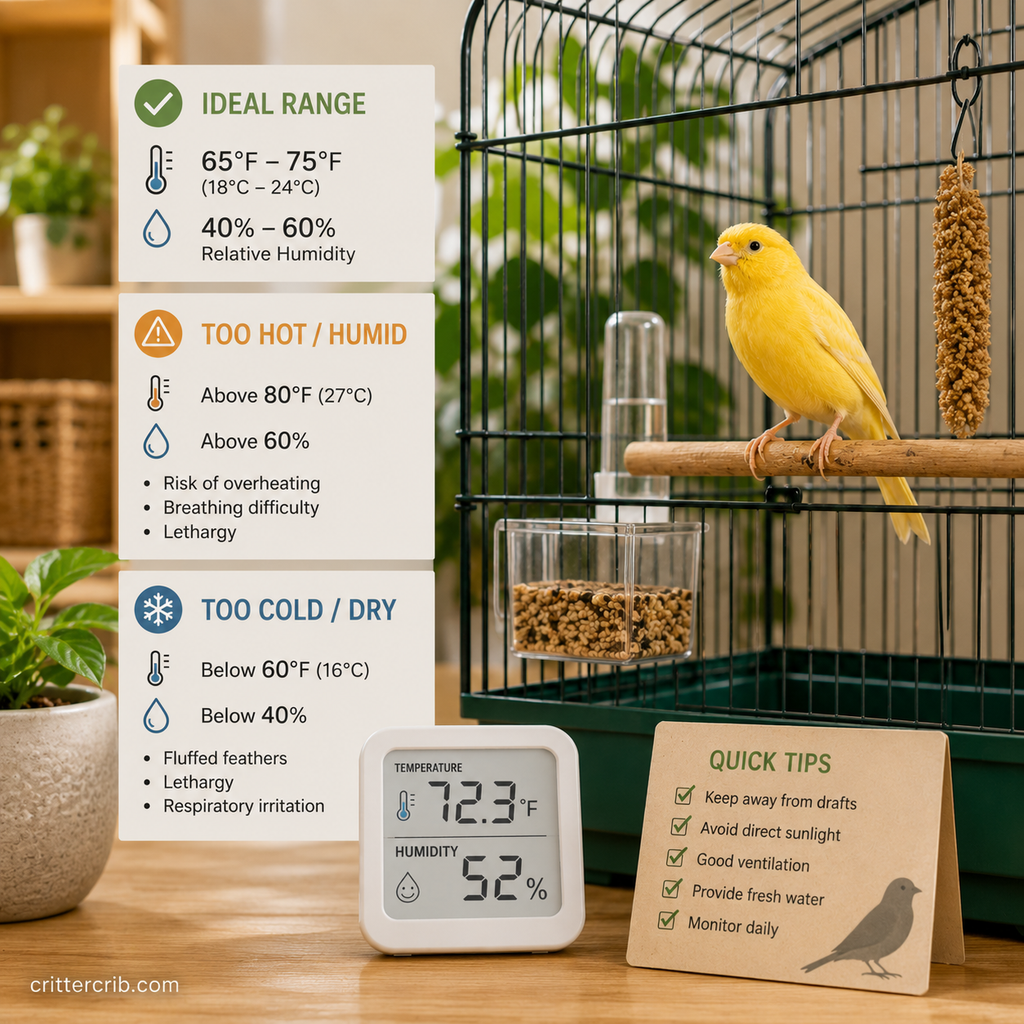
Guessing isn’t necessary.
A small digital thermometer and hygrometer can measure both temperature and relative humidity.
They’re inexpensive and particularly useful if the cage is located near windows, exterior walls, heating systems, or air-conditioning vents.
Place the sensor reasonably close to the cage without putting something unsafe within reach of the bird.
Check it periodically throughout the day.
You may discover that conditions around the cage differ considerably from the thermostat reading elsewhere in your home.
Where Should You Place a Canary Cage?
Cage placement plays a major role in temperature control.
An ideal location should provide natural household activity without exposing the bird to constant disturbance or environmental extremes.
Look for an area that is:
- Bright during the day
- Away from direct drafts
- Protected from intense sunlight
- Away from heating vents
- Away from air-conditioning vents
- Away from exterior doors
- Away from cooking fumes
- Free from smoke and aerosols
- Quiet enough for nighttime sleep
Putting at least one side of the cage near a wall may also help the bird feel more secure.
Keep the Cage Away From Drafts
The phrase “birds can’t tolerate drafts” is sometimes misunderstood.
A healthy canary doesn’t become sick simply because air moves.
The real concern is prolonged exposure to cold or rapidly changing air temperatures.
For example, placing a cage directly beneath an air-conditioning vent can repeatedly expose the bird to cold air even though the average room temperature is comfortable.
Common sources of drafts include:
- Air-conditioning vents
- Open windows
- Exterior doors
- Fans
- Poorly insulated windows
- Heating and cooling systems
Stand beside the cage and see whether you can feel a noticeable stream of air.
If you can, consider repositioning it.
Can a Canary Cage Be Near a Window?
A nearby window can provide natural light and visual stimulation, but placing a cage directly against the glass isn’t always ideal.
Windows can create dramatic temperature changes.
During winter, the area immediately beside a window may become much colder than the rest of the room.
During summer, direct sunlight through glass can quickly heat the cage.
A better option is often placing the cage in a bright part of the room that’s set back from the window.
Your canary can still experience natural daylight without being exposed to temperature extremes.
Should Canaries Be Kept in Direct Sunlight?
Some natural sunlight can be enjoyable for a canary, but the bird should always be able to move into shade.
Never position the entire cage in strong direct sunlight.
A cage can heat quickly, especially behind glass.
If your canary receives direct sunlight, monitor the temperature and make sure part of the cage remains shaded.
Fresh drinking water should always be available.
Keeping Canaries Comfortable During Winter
Winter creates two common indoor problems: cold drafts and dry air.
Heating systems can keep the overall room warm while dramatically lowering relative humidity.
Winter Canary Care Tips
During colder months:
- Keep the cage away from exterior doors and drafty windows.
- Avoid placing it directly beside heaters.
- Monitor room temperature with a thermometer.
- Check humidity periodically.
- Provide consistent nighttime conditions.
- Avoid sudden temperature changes when moving the cage.
- Keep fresh water available.
If you lower your thermostat significantly overnight, check the actual temperature near your bird rather than relying solely on the thermostat setting.
Should You Use a Space Heater Around a Canary?
Be extremely cautious with space heaters around birds.
Some heaters and heating appliances may contain nonstick coatings or other materials that can release harmful fumes when heated.
Bird respiratory systems are particularly sensitive to airborne toxins.
Heating equipment also creates obvious risks involving:
- Burns
- Overheating
- Electrical cords
- Fire
- Extremely dry air
If supplemental heating is necessary, research whether the specific product is considered appropriate for use around birds and keep the bird safely away from the appliance.
Never assume a heater is bird-safe simply because it’s safe for people.
Keeping Canaries Comfortable During Summer
Summer requires a different approach.
Keep the cage away from intense sunlight and monitor rooms that become noticeably warmer during the afternoon.
During hot weather:
- Provide fresh drinking water
- Keep the cage out of direct sun
- Maintain safe air circulation
- Use air conditioning appropriately
- Keep the cage away from direct cold airflow
- Monitor temperature throughout the hottest part of the day
If your home becomes very hot while you’re away, don’t assume the bird will be comfortable simply because the temperature was reasonable when you left in the morning.
Can You Use Air Conditioning Around Canaries?
Yes, canaries can live in air-conditioned homes.
The key is cage placement.
Don’t position the cage directly underneath or in front of an air-conditioning vent.
The room itself can be comfortably cooled while the bird remains outside the direct stream of cold air.
Gradual cooling is preferable to dramatic temperature swings.
Can You Use a Fan Around a Canary?
Fans can help circulate air, but use them carefully.
The biggest danger is during out-of-cage time.
A flying bird can be severely injured by a moving ceiling fan, so ceiling fans should always be turned off before allowing a canary to fly freely in the room.
Avoid directing a strong stream of air continuously at the cage.
Gentle room circulation is different from placing the bird directly in front of a powerful fan.
How to Increase Humidity Safely
If winter heating makes your home extremely dry, a humidifier may help.
But humidifiers require proper maintenance.
Dirty humidifiers can spread bacteria, mold, and other contaminants into the air—the opposite of what you’re trying to accomplish.
If you use one:
- Clean it according to the manufacturer’s instructions
- Change water regularly
- Don’t allow stagnant water to sit for long periods
- Monitor humidity with a hygrometer
- Avoid creating excessive moisture
- Position it so mist isn’t constantly soaking the cage
You want comfortable humidity throughout the room, not a wet area surrounding your bird.
Avoid Scented Humidifiers and Essential Oils
Don’t add fragrances or essential oils to a humidifier used around a canary.
Birds have highly sensitive respiratory systems.
Products marketed as natural aren’t automatically safe for birds.
The same caution applies to:
- Essential oil diffusers
- Aerosol air fresheners
- Scented sprays
- Strong cleaning chemicals
- Smoke
- Incense
- Heavily fragranced products
Clean, well-ventilated air is far more important than making the room smell pleasant.
What If Humidity Is Too High?
High humidity often requires improving ventilation or using air conditioning or a dehumidifier.
First determine why the room is damp.
Possible causes include:
- Poor ventilation
- Wet basements
- Plumbing leaks
- Excessive humidifier use
- Damp cage materials
- Climate conditions
- Indoor drying of wet laundry
Watch for condensation, musty odors, or visible mold.
A consistently damp environment isn’t a healthy place for a bird cage.
If you use a dehumidifier, monitor the hygrometer so you don’t swing too far in the opposite direction.
Temperature and Humidity During Molting
Canaries periodically molt and replace old feathers.
During this time, maintaining stable environmental conditions can help keep your bird comfortable.
Avoid unnecessary temperature extremes and provide opportunities for bathing.
Some canaries enjoy bathing frequently, especially while molting.
Regular access to a shallow bird bath can help with normal feather maintenance.
Remove dirty bath water afterward rather than leaving it sitting in the cage all day.
Do Canaries Need a Cage Cover at Night?
A cage cover isn’t required specifically for temperature control in a normally heated home.
Its primary benefit is usually creating a darker, quieter sleeping environment.
If you use a cover, make sure the cage still has adequate ventilation.
Don’t use heavy coverings as a substitute for maintaining a safe room temperature.
A cover won’t adequately protect a canary from genuinely cold indoor conditions.
Can Canaries Live Outdoors?
Canaries can be housed in appropriately designed outdoor aviaries in suitable climates, but outdoor care is considerably more complicated than keeping a bird in a climate-controlled home.
Outdoor birds need protection from:
- Temperature extremes
- Sudden weather changes
- Wind
- Rain
- Direct intense sunlight
- Predators
- Wild birds
- Insects
- Toxic plants
- Contaminated food and water
An indoor pet canary shouldn’t suddenly be moved outside simply because the day’s temperature falls within an acceptable range.
Outdoor housing requires careful acclimation and a properly designed environment.
What Temperature Should a Sick Canary Be Kept At?
Sick birds often have different environmental needs from healthy birds.
Warmth may sometimes be part of supportive care, but you shouldn’t guess at a specific temperature or attempt aggressive heating without veterinary guidance.
A sick canary may have difficulty regulating body temperature.
If your bird is fluffed up, unusually sleepy, sitting on the cage floor, breathing abnormally, eating poorly, or showing other signs of illness, contact an avian veterinarian promptly.
Temperature adjustments aren’t a substitute for medical care.
Common Temperature and Humidity Mistakes
Maintaining comfortable conditions is fairly simple once you know what to avoid.
Common mistakes include:
- Placing the cage directly beside an air-conditioning vent
- Keeping the cage against a cold window
- Leaving the entire cage in direct sunlight
- Assuming the thermostat reflects the temperature around the cage
- Overheating the bird during winter
- Allowing indoor humidity to become extremely low
- Running a dirty humidifier
- Adding fragrances or essential oils to humidifiers
- Creating excessive humidity
- Using unsafe heating appliances around birds
- Making sudden environmental changes
A thermometer and hygrometer can eliminate much of the guesswork.
Canary Temperature and Humidity Checklist
Use this quick checklist when evaluating your bird’s environment:
- Aim for roughly 65°F to 75°F for typical indoor conditions
- Keep relative humidity around 40% to 60% when practical
- Avoid sudden temperature changes
- Keep the cage away from direct drafts
- Don’t place the cage directly beside heating or cooling vents
- Provide shade from intense sunlight
- Monitor summer heat
- Watch winter humidity
- Use humidifiers only when properly cleaned
- Avoid scented products and airborne irritants
- Maintain good ventilation without blasting the cage with air
- Use a thermometer and hygrometer near the cage
- Pay attention to your bird’s behavior
Remember that these ranges are practical guidelines rather than magic numbers.
A healthy canary doesn’t suddenly become uncomfortable because the temperature moves one degree outside a suggested range.
Stability and the overall environment matter.
Frequently Asked Questions About Canary Temperature and Humidity
Is 70°F a Good Temperature for a Canary?
Yes. Around 70°F falls comfortably within a typical indoor range for a healthy pet canary.
Avoid worrying about maintaining exactly 70°F. Normal gradual fluctuations are generally fine.
Is 60°F Too Cold for a Canary?
A healthy, acclimated canary may tolerate temperatures around 60°F, but indoor pet birds are generally more comfortable in a somewhat warmer environment.
Pay particular attention to drafts and sudden temperature drops.
Young, elderly, sick, or recovering birds may require different conditions.
Is 80°F Too Hot for a Canary?
A healthy canary may tolerate temperatures around 80°F when properly acclimated and provided with shade, water, and good ventilation.
However, monitor the bird carefully as temperatures rise.
Heat becomes more concerning when combined with high humidity, direct sunlight, or poor airflow.
What Humidity Is Best for a Canary?
Around 40% to 60% relative humidity is a useful target for most indoor environments.
Small fluctuations outside this range aren’t necessarily dangerous. Long periods of extremely dry or damp conditions are more concerning.
Do Canaries Need a Humidifier?
Not necessarily.
If your home’s humidity naturally stays within a comfortable range, there’s no reason to add a humidifier.
A humidifier may be useful during very dry winters, but it should be cleaned regularly and monitored with a hygrometer.
Can Canaries Sleep in a Cold Room?
Healthy canaries can tolerate some gradual nighttime cooling, but the room shouldn’t become extremely cold or drafty.
Keep conditions reasonably stable and avoid positioning the cage beside cold windows or vents.
Should I Put a Heater Next to My Canary’s Cage?
Generally, no.
Directly heating the cage can create hot spots, overly dry air, and safety risks. Some heating appliances may also contain materials unsuitable for use around birds.
It’s usually better to maintain a comfortable room temperature.
Can I Mist My Canary When It’s Hot?
Canaries often enjoy bathing, and providing a shallow bird bath can allow your bird to decide when it wants to get wet.
Don’t rely on misting as the primary way to manage dangerous heat.
If the room itself is excessively hot, address the environmental temperature.
Final Thoughts
Creating the right temperature and humidity for a canary doesn’t require complicated climate-control equipment.
For most healthy pet canaries, a normal indoor temperature of roughly 65°F to 75°F and relative humidity around 40% to 60% provide a comfortable starting point.
The bigger priorities are avoiding extremes and sudden changes.
Keep the cage away from cold drafts, heating vents, air-conditioning airflow, and intense direct sunlight. Pay extra attention during very hot summers and dry winters, when indoor conditions can change significantly.
A simple digital thermometer and hygrometer placed near the cage can help you understand what’s actually happening in your bird’s immediate environment rather than relying on guesswork.
Most importantly, watch your canary.
Normal activity, singing, eating, bathing, preening, and comfortable resting can tell you a lot about how your bird is doing. If you notice persistent fluffing, unusual inactivity, breathing changes, weakness, or other concerning symptoms, don’t assume temperature is the only explanation.
When in doubt about your canary’s health or environmental needs, consult an avian veterinarian.