Hedgehogs aren’t exactly known for keeping their bedrooms tidy.
Between scattered food, bedding, droppings, and a running wheel that can become impressively dirty overnight, a hedgehog habitat needs regular attention. The good news is that keeping it clean doesn’t require stripping everything down every day.
A practical routine combines quick daily spot cleaning with more thorough cleaning when the enclosure actually needs it.
The goal is simple: remove waste, keep food and water areas sanitary, prevent moisture and odor buildup, and give your hedgehog a clean, dry place to sleep and explore. At the same time, you don’t want to expose such a small animal to harsh chemicals, strong fragrances, or unnecessary disruption.
This guide explains how to safely clean a hedgehog habitat, including the wheel, bedding, hides, food and water dishes, toys, and other accessories.
Why Regular Hedgehog Habitat Cleaning Matters
A clean enclosure isn’t just about making the room smell better.
Your hedgehog eats, sleeps, explores, and eliminates waste inside the same relatively small environment. Without routine maintenance, droppings, urine, spilled water, old food, and dirty bedding can accumulate.
Regular cleaning helps:
- Remove urine and feces
- Reduce unpleasant odors
- Keep food and water areas sanitary
- Prevent damp bedding from accumulating
- Keep the exercise wheel usable
- Make changes in droppings or urination easier to notice
- Give you an opportunity to inspect the habitat for damage
Cleaning also lets you check equipment that might otherwise be overlooked.
A leaking water bottle, damaged wheel, sharp edge, or wet area underneath a dish is much easier to discover when you’re regularly inspecting the enclosure.
How Often Should You Clean a Hedgehog Habitat?
There’s no perfect schedule that fits every hedgehog.
How quickly an enclosure becomes dirty depends on:
- Habitat size
- Bedding or liner type
- Wheel use
- Where your hedgehog eliminates
- Food and water setup
- Individual habits
A useful approach is to divide cleaning into three levels.
Daily
Perform a quick inspection and spot clean.
This may include:
- Removing visible droppings
- Removing wet or heavily soiled bedding
- Cleaning obvious messes
- Refreshing drinking water
- Washing dirty food dishes
- Removing old fresh food
- Checking the wheel
- Checking the sleeping area
This shouldn’t take long once it becomes part of your routine.
Every Few Days
Some items may need attention more frequently than the entire enclosure.
The wheel is the obvious example.
Many hedgehogs eliminate while running, so the wheel can become dirty surprisingly quickly.
Food dishes, water bowls, litter areas, and heavily used surfaces may also require more frequent washing.
Periodically
Perform a more thorough habitat cleaning when conditions indicate it’s necessary.
This includes replacing soiled substrate, cleaning enclosure surfaces, washing accessories, inspecting equipment, and resetting the habitat.
How frequently this is necessary depends on the individual setup.
Instead of waiting for a specific day regardless of condition, combine a regular schedule with observation.
If the habitat is damp, heavily soiled, or noticeably dirty, clean it.
Don’t Wait for the Habitat to Smell Bad
Odor isn’t the best cleaning schedule.
By the time an enclosure smells strongly unpleasant to you, waste may have been accumulating for some time.
Daily spot cleaning prevents small problems from becoming large ones.
Pay particular attention to:
- Corners
- Under hides
- Around the wheel
- Beneath food dishes
- Water areas
- Favorite bathroom spots
- Sleeping areas
Your hedgehog may make your job easier by consistently using certain locations.
Or it may decide the entire habitat is a bathroom.
Individual results vary.
What You’ll Need to Clean a Hedgehog Habitat
Keeping a dedicated cleaning kit nearby makes the process much easier.
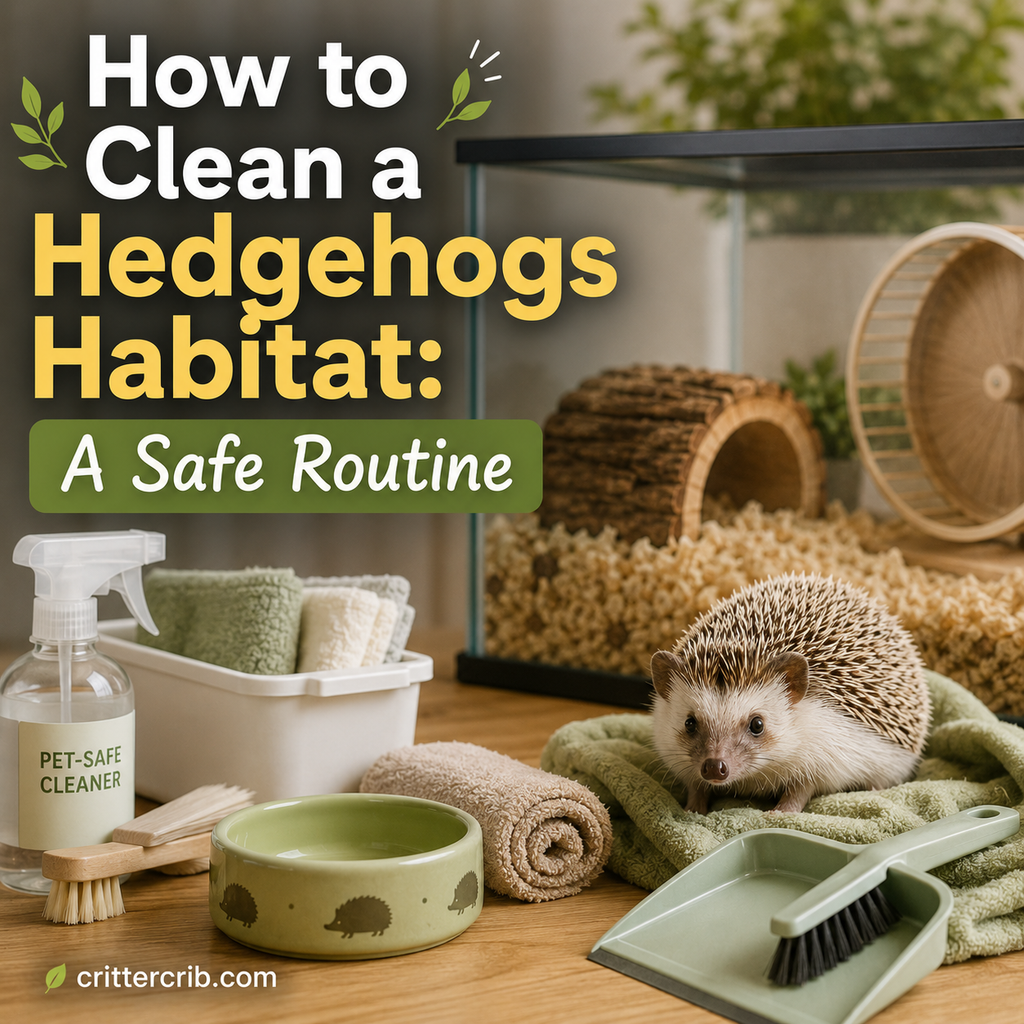
Useful supplies include:
- Paper towels
- Clean reusable cloths
- Small dustpan and brush
- Trash bag
- Replacement bedding or clean liners
- Warm water
- Pet-safe cleaning product
- Small scrub brush
- Bottle brush
- Spare food and water dishes
- Clean towel
- Temporary secure container or carrier
You don’t necessarily need specialized cleaning products for every surface.
The important thing is using products that are appropriate for animal environments and rinsing surfaces thoroughly when required.
Choose Cleaning Products Carefully
Hedgehogs have sensitive respiratory systems and spend considerable time close to enclosure surfaces.
Avoid turning their habitat into a cloud of artificial fragrance.
Strongly scented household cleaners, air fresheners, and aerosols aren’t appropriate ways to manage enclosure odor.
Use a pet-safe cleaner suitable for the material you’re cleaning and follow its directions.
Never Mix Cleaning Chemicals
Don’t combine household cleaners.
Some chemical combinations can release dangerous gases.
If you’re switching products, rinse surfaces appropriately rather than layering one cleaner over another.
Where Should Your Hedgehog Go During Cleaning?
For anything beyond a quick spot clean, move your hedgehog somewhere secure.
A carrier or escape-proof temporary enclosure can work well.
Provide:
- Comfortable bedding
- A hiding place
- Appropriate warmth
- Ventilation
Keep the temporary area somewhere quiet and safe from other pets.
Never place your hedgehog in a cardboard box and assume it will stay there while you’re cleaning.
Hedgehogs can be surprisingly determined explorers.
Step-by-Step Hedgehog Habitat Cleaning Routine
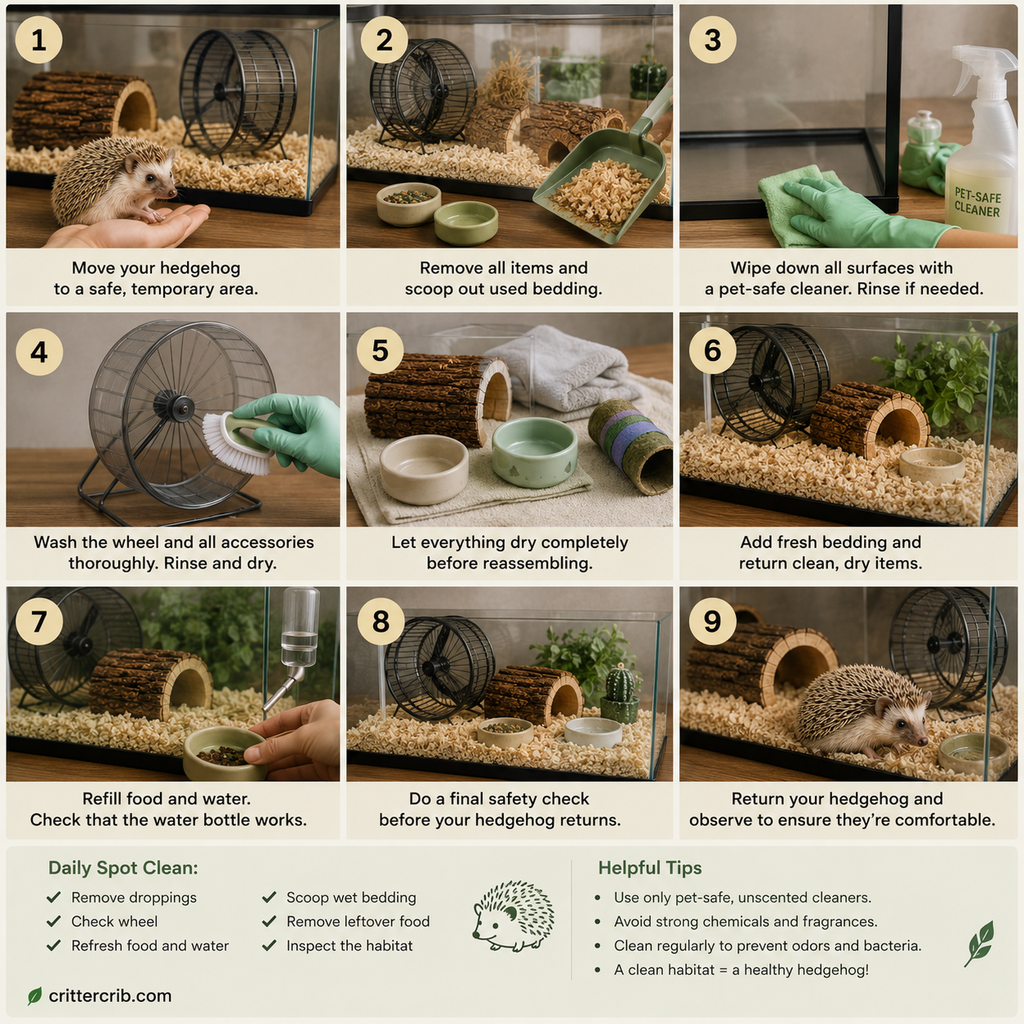
Once your hedgehog is safely relocated, you can clean efficiently without worrying about an animal wandering through wet surfaces.
1. Remove Food and Water
Take out:
- Food dishes
- Water bowls or bottles
- Treat dishes
- Any remaining fresh food
Discard old food that shouldn’t be saved.
Check underneath dishes for trapped food and moisture.
2. Remove the Wheel
If your hedgehog uses its wheel regularly, there’s a good chance this will be one of the dirtiest items.
Set it aside for separate cleaning.
Inspect:
- Running surface
- Base
- Axle
- Stand
- Seams
- Areas underneath the wheel
Waste can accumulate in places that aren’t obvious from above.
3. Remove Hides, Toys, and Accessories
Take out washable accessories.
This might include:
- Hide houses
- Tunnels
- Toys
- Platforms
- Litter trays
- Digging containers
- Blankets
Separate items according to how they need to be cleaned.
A ceramic dish and a fabric sleep sack obviously shouldn’t be treated the same way.
4. Remove Dirty Bedding
Dispose of soiled disposable bedding.
Pay attention to damp areas underneath:
- Water sources
- The wheel
- Hides
- Food dishes
Moisture can become trapped below the surface even when the top looks relatively dry.
5. Clean the Habitat Interior
Remove loose debris first.
Then clean the base and walls using an appropriate pet-safe method for your enclosure material.
Pay particular attention to corners and dried waste.
Don’t forget:
- Door edges
- Latches
- Ventilation areas
- Platforms
- Seams
These areas can collect debris over time.
6. Rinse When Necessary
If the cleaning product requires rinsing, rinse thoroughly.
You don’t want chemical residue remaining on surfaces your hedgehog will walk across or investigate.
Follow the manufacturer’s instructions for the specific product.
7. Let Everything Dry
Drying is important.
Don’t immediately cover wet surfaces with fresh bedding.
Allow the habitat and accessories to dry completely before reassembly.
Trapping moisture underneath bedding creates exactly the environment you’re trying to avoid.
8. Add Fresh Bedding or Clean Liners
Once everything is dry, add the appropriate clean substrate.
If you use fleece or another reusable liner system, replace dirty material with a clean, dry set.
Make sure the flooring remains comfortable and provides good traction.
9. Return Clean Accessories
Put back the:
- Hide
- Wheel
- Food dish
- Water source
- Toys
- Tunnels
- Other enrichment
Check that everything is stable.
10. Add Fresh Food and Water
Refill drinking water and provide the appropriate amount of food.
Verify that the water bottle works if you use one.
11. Perform a Final Safety Check
Before returning your hedgehog, inspect the habitat.
Ask:
- Is everything dry?
- Is the wheel secure?
- Is the water accessible?
- Are there any sharp edges?
- Are all accessories stable?
- Is the habitat securely closed?
- Is the temperature appropriate?
Once everything checks out, return your hedgehog.
How to Clean a Hedgehog Wheel
The exercise wheel often deserves its own cleaning routine.
Hedgehogs may run considerable distances during the night, and some poop while doing it.
The result isn’t subtle.
Daily Wheel Cleaning
Inspect the wheel every morning.
If it’s dirty:
- Remove loose waste.
- Wash the running surface.
- Clean the sides and base.
- Rinse if required.
- Dry thoroughly.
- Return it to the habitat.
Cleaning fresh messes is much easier than trying to remove dried waste several days later.
Don’t Forget the Wheel Stand
It’s easy to focus entirely on the running surface.
Check underneath.
Urine and debris may collect around the stand and the enclosure floor beneath it.
Regularly clean those areas too.
How to Clean Hedgehog Food Bowls
Food dishes should be kept clean just like dishes used for other pets.
Remove leftover wet or fresh foods before they spoil.
Wash dirty dishes with an appropriate cleaning method, rinse thoroughly, and dry them before reuse.
Having a second set can be convenient.
One bowl can dry while the other is in use.
How to Clean Water Bowls and Bottles
Fresh water should be available every day.
Water Bowls
Wash bowls regularly, especially if bedding or food gets into them.
Choose a sturdy bowl that doesn’t tip easily.
Water Bottles
Don’t assume a bottle is clean simply because it contains clear water.
Clean the bottle and drinking tube regularly.
A bottle brush can help reach the interior.
After refilling, verify that water flows correctly from the nozzle.
Also check for leaks.
A slow leak can create a persistently damp area in the bedding.
How to Clean Hedgehog Toys
Cleaning depends on the material.
Plastic or Other Washable Toys
Wash using an appropriate pet-safe method.
Rinse when necessary and allow them to dry completely.
Wooden Items
Wood is porous.
It can absorb moisture and urine, making heavily contaminated wooden accessories difficult to sanitize completely.
Inspect wooden items regularly and replace them when they’re excessively soiled, damaged, or impossible to clean adequately.
Cardboard
Cardboard is generally disposable.
Once it becomes wet, heavily soiled, or dirty, replace it.
There’s little reason to attempt to scrub a urine-soaked cardboard tunnel back into service.
Washing Fabric Bedding and Sleep Sacks
If your hedgehog uses fleece liners, blankets, or fabric sleep areas, wash them regularly.
Shake or brush off loose debris before putting them into the washing machine.
Use an appropriate cleaning routine and make sure items are thoroughly rinsed and completely dry before returning them to the habitat.
Inspect Fabric Every Time
Before putting washed fabric back, check for:
- Loose threads
- Holes
- Frayed edges
- Exposed filling
- Damaged seams
Hedgehog nails can catch on damaged fabric.
Replace items that are no longer safe.
Disposable Bedding vs. Fleece Liners
Both systems require regular maintenance.
Disposable Bedding
Disposable substrate can support digging and foraging behaviors depending on the material and depth provided.
Maintenance generally involves:
- Daily spot cleaning
- Removing wet areas
- Replacing heavily soiled material
- Periodic larger changes
Choose bedding that’s appropriate for hedgehogs and isn’t excessively dusty or strongly scented.
Fleece Liners
Reusable fleece systems can make visible waste easy to find.
However, they need frequent washing and don’t provide the same digging opportunities as deep loose substrate.
If using fleece, provide separate opportunities for natural exploratory behaviors where appropriate.
Neither system eliminates cleaning.
It simply changes how you clean.
Should You Replace All the Bedding Every Time?
Not necessarily during every small cleaning session.
Daily maintenance usually involves removing dirty areas rather than stripping the entire habitat.
A more complete bedding change becomes appropriate when the substrate is broadly soiled, damp, or due for a deeper habitat cleaning.
The objective is sanitation without creating unnecessary work or disruption.
Should You Rearrange the Habitat After Cleaning?
You can make occasional changes for enrichment, but there’s no need to redesign the entire enclosure after every cleaning.
Familiarity can be useful.
Keep essential items such as food, water, hides, and the wheel accessible.
If you’re introducing new enrichment, make changes gradually and observe how your hedgehog responds.
How to Control Hedgehog Odor
If the enclosure smells bad shortly after cleaning, don’t immediately reach for fragrance.
Find the source.
Common odor sources include:
- Dirty wheel
- Urine-soaked bedding
- Litter area
- Dirty fabric
- Hidden food
- Wet bedding
- Soiled wooden accessories
Removing the source works better than masking it.
Avoid Air Fresheners Around the Habitat
Strong fragrances, scented sprays, essential-oil diffusers, and similar products can introduce airborne substances around a small animal with sensitive respiratory tissues.
Keep the air around the habitat clean rather than perfumed.
Can You Use Vinegar to Clean a Hedgehog Cage?
Diluted white vinegar is sometimes used by pet owners for routine cleaning because it can help loosen mineral deposits and some residue.
However, “natural” doesn’t automatically mean something should be left on enclosure surfaces.
If you use vinegar, rinse surfaces appropriately and allow them to dry completely before returning your hedgehog.
For disinfection after illness or a contagious disease concern, follow your veterinarian’s recommendations instead of relying on a general household cleaning routine.
Can You Use Bleach?
Bleach is a powerful disinfectant, but it isn’t something to casually spray around an occupied hedgehog habitat.
If a situation requires disinfection, such as certain infectious disease concerns, ask your veterinarian which product and dilution are appropriate.
Your hedgehog should be removed during cleaning, and surfaces must be handled according to the product directions, including appropriate rinsing, contact time, ventilation, and drying.
Routine daily cleaning generally doesn’t require aggressive disinfection.
Cleaning After Illness or Parasites
Your normal cleaning routine may not be enough when dealing with certain medical conditions.
If your hedgehog has been diagnosed with:
- Mites
- Fungal infection
- Bacterial infection
- Gastrointestinal infection
- Another potentially contagious condition
ask your veterinarian how the environment should be cleaned.
The correct procedure may depend on the specific organism involved.
You may need to:
- Clean more frequently
- Replace porous accessories
- Wash fabric differently
- Use a particular disinfectant
- Follow a specific contact time
- Treat other animals
Don’t improvise a disinfection protocol based solely on general internet advice.
Spot Cleaning Makes Deep Cleaning Easier
Five minutes of maintenance can save a lot of work later.
Each morning, quickly inspect the habitat.
Remove the obvious mess.
If your hedgehog has decorated the wheel overnight, clean it before everything dries onto the surface.
If a corner is wet, replace that bedding.
If a food bowl is dirty, wash it.
These small tasks keep the enclosure manageable.
A Simple Daily Hedgehog Cleaning Routine
Your everyday routine can be very short.
Morning
- Check the wheel.
- Remove visible droppings.
- Remove wet bedding.
- Check food.
- Refresh water.
- Inspect the sleeping area.
Evening
Before your hedgehog becomes active:
- Check water again.
- Provide food as appropriate.
- Remove any remaining messes.
- Confirm the wheel is usable.
- Check the habitat temperature.
- Make sure everything is secure.
Once this becomes habitual, it takes very little time.
A More Thorough Cleaning Routine
When the enclosure needs a deeper clean:
- Move your hedgehog to a secure temporary habitat.
- Remove food and water.
- Remove the wheel.
- Remove hides and toys.
- Remove dirty bedding or liners.
- Remove loose debris.
- Clean habitat surfaces.
- Wash appropriate accessories.
- Rinse as required.
- Allow everything to dry completely.
- Add clean bedding or liners.
- Return accessories.
- Provide fresh food and water.
- Perform a safety check.
- Return your hedgehog.
Having everything prepared before you begin makes the process faster.
Use Cleaning Time as a Health Check
One advantage of regular cleaning is that you become familiar with what’s normal.
You’ll notice:
- How much your hedgehog eats
- How much water disappears
- Where it urinates
- What normal droppings look like
- How frequently it uses the wheel
Changes can sometimes provide useful clues.
For example, suddenly finding very little stool in an enclosure where you normally clean up plenty deserves attention.
Likewise, unusual diarrhea, blood, dramatic changes in urination, or persistent changes in eating shouldn’t simply be cleaned away and forgotten.
Watch Your Hedgehog While You Clean
Handling your hedgehog during the daily routine gives you another opportunity to observe it.
Pay attention to:
- Activity
- Walking
- Appetite
- Breathing
- Skin
- Quills
- Eyes
- Nose
- Feet
- Nails
- Body condition
A digital kitchen scale that measures grams can also be useful for monitoring weight trends.
You don’t need to turn every cleaning session into a medical examination.
Simply become familiar with what’s normal.
When a Dirty Habitat Isn’t the Real Problem
Sometimes an unusual smell or mess isn’t caused by insufficient cleaning.
For example, persistent diarrhea, unusually frequent urination, blood, discharge, or dramatic changes in waste may indicate a health problem.
Cleaning more frequently won’t address the underlying cause.
Contact a veterinarian experienced with hedgehogs if you notice significant changes such as:
- Persistent diarrhea
- Blood in stool or urine
- Difficulty urinating
- Loss of appetite
- Significant weight loss
- Severe lethargy
- Difficulty breathing
- Abnormal discharge
- Changes in walking
- Persistent scratching or skin problems
Hedgehogs can hide illness, so behavioral and environmental clues are worth taking seriously.
Common Hedgehog Habitat Cleaning Mistakes
Most cleaning problems are easy to avoid once you know what to look for.
Waiting Until the Cage Smells
Spot cleaning works better than allowing waste to accumulate.
Ignoring the Wheel
The wheel may become the dirtiest object in the enclosure.
Check it every day.
Using Strong Fragrances
A clean habitat shouldn’t need perfume.
Remove waste instead of masking odor.
Returning Accessories While They’re Wet
Allow washed items and surfaces to dry thoroughly.
Forgetting Underneath Objects
Check beneath the wheel, hides, dishes, and liners.
Moisture and waste often collect in hidden areas.
Leaving Old Fresh Food Behind
Hedgehogs can move food.
Look underneath hides and other accessories for anything that could spoil.
Using Damaged Fabric
Inspect washable liners and sleep sacks after every wash.
Overlooking the Water Bottle
A bottle can look full while malfunctioning.
Check that the nozzle actually dispenses water.
Assuming More Disinfectant Means Cleaner
It doesn’t.
Use cleaning products according to their directions. Excessive chemical exposure isn’t an improvement.
Hedgehog Habitat Cleaning Checklist
Keep this checklist near your supplies if you’re a new hedgehog owner.
Daily
- Remove droppings.
- Remove wet bedding.
- Check the wheel.
- Remove old fresh food.
- Wash dirty dishes.
- Refresh water.
- Inspect sleeping areas.
As Needed
- Wash the wheel.
- Clean heavily used surfaces.
- Replace dirty fabric.
- Replace soiled bedding.
- Clean the litter area.
- Wash toys and hides.
During a Thorough Clean
- Temporarily relocate your hedgehog.
- Remove accessories.
- Replace dirty bedding or liners.
- Clean enclosure surfaces.
- Wash reusable accessories.
- Clean food and water containers.
- Inspect the wheel.
- Check for damaged equipment.
- Allow everything to dry.
- Reassemble the habitat.
- Add fresh food and water.
Frequently Asked Questions About Cleaning a Hedgehog Habitat
How Often Should I Clean My Hedgehog’s Cage?
Spot-clean the habitat daily and clean individual items whenever they’re dirty.
More thorough cleaning frequency depends on the enclosure size, substrate, wheel use, and your hedgehog’s habits.
Don’t wait for strong odors before addressing soiled areas.
How Often Should I Clean a Hedgehog Wheel?
Check it every day.
Many hedgehogs eliminate while running, so frequently used wheels may need cleaning very often, sometimes daily.
What Is Safe to Clean a Hedgehog Cage With?
Use a pet-safe cleaning method appropriate for your enclosure and follow the product directions carefully.
Avoid unnecessarily strong fragrances and chemical residues.
If you need true disinfection because of illness, ask your veterinarian which product and protocol to use.
Can I Clean the Cage While My Hedgehog Is Inside?
Quick spot cleaning can usually be performed without completely relocating the hedgehog if you’re not disturbing it.
For a thorough cleaning involving wet surfaces or cleaning products, move your hedgehog to a secure temporary habitat.
Do Hedgehogs Need Litter Boxes?
Some hedgehogs can develop predictable bathroom habits and may use a litter area, particularly around the wheel.
Others won’t be particularly consistent.
A litter tray can make cleaning easier when an individual hedgehog accepts it, but it doesn’t eliminate the need to clean the rest of the habitat.
Why Is My Hedgehog’s Wheel So Dirty?
Hedgehogs commonly eliminate while running.
Because they may spend substantial time on their wheel at night, waste can accumulate quickly.
Regular wheel cleaning is a normal part of hedgehog ownership.
Should I Bathe My Hedgehog When I Clean the Cage?
No. Habitat cleaning doesn’t mean your hedgehog automatically needs a full bath.
If the feet become dirty from running through waste, they may occasionally need appropriate cleaning, but frequent full bathing can dry the skin.
How Do I Keep a Hedgehog Cage From Smelling?
Focus on removing the source of odor.
Spot-clean urine and feces, wash the wheel regularly, replace dirty bedding, clean fabric items, remove old food, and maintain good ventilation.
Avoid trying to solve odor with perfumes or air fresheners.
Should I Remove My Hedgehog’s Nest When Cleaning?
Remove material that’s wet or heavily soiled.
How much nesting material needs replacement depends on its condition and your bedding system.
There’s no need to destroy a clean sleeping area during every quick spot-cleaning session.
Can I Put My Hedgehog Back in a Damp Cage?
Wait until cleaned surfaces and accessories are dry.
Fresh bedding placed over moisture can quickly become damp.
Make Cleaning Part of the Daily Routine
Cleaning a hedgehog habitat sounds like a big job when it’s treated as one enormous chore.
It’s much easier when most of the work happens in small pieces.
Check the enclosure every day. Pick up droppings. Remove damp bedding. Refresh the water. Wash a dirty dish. And, perhaps most importantly, take a look at that wheel.
The wheel will probably have something to say about your cleaning schedule.
Then perform more thorough cleaning when the habitat needs it. Remove your hedgehog, wash the appropriate surfaces and accessories, replace dirty bedding, let everything dry, and put the enclosure back together safely.
You don’t need to sterilize your hedgehog’s home constantly or make it smell like cleaning products.
You need it clean, dry, comfortable, secure, and well maintained.
Regular cleaning also has another benefit: you become familiar with your hedgehog’s normal routine. You know where it sleeps, how much it eats, what its droppings normally look like, and how much activity happens overnight.
That makes cleaning more than housekeeping.
It’s another simple way to keep track of the little animal living there.