Cleaning a rabbit’s habitat isn’t just about keeping your home smelling fresh. A clean living space helps keep your rabbit comfortable, protects sensitive feet and skin from prolonged contact with waste, and gives you an opportunity to notice changes in eating, drinking, or bathroom habits.
The good news is that rabbit habitat cleaning doesn’t have to mean tearing everything apart every few days.
In fact, a simple routine of daily spot cleaning combined with more thorough cleaning as needed is usually much easier for both you and your rabbit. The goal is to remove waste and keep things sanitary without constantly eliminating every familiar scent from the space.
Here’s how to clean a rabbit habitat safely, what products to use, and how often different areas need attention.
How Often Should You Clean a Rabbit’s Habitat?
There isn’t one cleaning schedule that works for every rabbit.
How often you’ll need to clean depends on several factors, including:
- The size of the enclosure
- Whether your rabbit is litter trained
- The type of litter or bedding used
- How many rabbits share the space
- How much hay gets scattered around
- Whether your rabbit spends time in a larger exercise area
- Your rabbit’s individual bathroom habits
For many households, a good routine looks something like this:
- Daily: Remove obvious waste, wet material, spoiled food, and heavily soiled hay.
- Every few days: Refresh or clean heavily used litter areas as necessary.
- Weekly: Perform a more thorough habitat inspection and cleaning.
- As needed: Wash blankets, mats, toys, bowls, litter boxes, and other accessories.
Don’t become too attached to an exact calendar.
If a litter box is soaked after two days, it shouldn’t wait until “cleaning day.” Likewise, a large, well-maintained habitat may not require every surface to be scrubbed every week.
Let the condition of the habitat guide you.
Why Regular Rabbit Habitat Cleaning Matters
Rabbit urine and feces can accumulate quickly, particularly around litter boxes and favorite resting spots.
When moisture remains in the habitat, it can create an unpleasant environment and expose your rabbit to dirty surfaces.
Regular cleaning helps:
- Keep living areas dry
- Control strong odors
- Remove spoiled food
- Prevent excessive waste buildup
- Keep food and water areas sanitary
- Make pests less likely to be attracted to leftover food
- Maintain comfortable resting areas
Cleaning also gives you a useful look at what’s happening in the habitat.
You become familiar with how much hay disappears, how much water your rabbit drinks, and what normal droppings look like. Changes can then become easier to notice.
What You Need to Clean a Rabbit Habitat
You don’t need an entire cabinet of specialized cleaning products.
A basic cleaning kit might include:
- Small broom and dustpan
- Paper towels or reusable cleaning cloths
- Trash bags
- A dedicated scrub brush
- Warm water
- Rabbit-safe cleaning solution
- White vinegar for appropriate cleaning tasks
- Fresh litter
- Fresh bedding or clean floor coverings
- Clean food and water dishes
Keep cleaning supplies used for the rabbit habitat separate from items used in bathrooms or other potentially contaminated areas.
If you use reusable cloths, wash them thoroughly between uses.
What Cleaning Products Are Safe for Rabbits?
Rabbits have sensitive respiratory systems and spend a lot of time close to the floor. That makes choosing cleaning products particularly important.
You generally don’t need strongly scented household cleaners for routine habitat maintenance.
Warm water and physical scrubbing can handle many everyday messes. Diluted white vinegar is also commonly used for rabbit litter boxes and areas with urine residue.
For situations requiring another cleaner, choose a product specifically appropriate for pet environments and follow its instructions carefully.
Avoid Strong Fragrances
A habitat that smells strongly of perfume isn’t necessarily cleaner.
Avoid leaving your rabbit in an area filled with strong fumes from:
- Air fresheners
- Scented sprays
- Essential oils
- Heavily fragranced cleaners
Your goal should be a clean habitat that smells neutral rather than artificially scented.
Never Mix Cleaning Chemicals
This applies to rabbit care as much as household cleaning in general.
Never combine cleaning products unless the manufacturer specifically states that doing so is safe.
In particular, bleach should never be mixed with vinegar, ammonia, or other household cleaners because dangerous gases can result.
If stronger disinfection is ever necessary because of disease concerns, follow veterinary guidance and the manufacturer’s dilution, contact-time, rinsing, and ventilation instructions.
Should You Remove Your Rabbit While Cleaning?
For a major cleaning, moving your rabbit to a safe temporary area is usually easiest.
This keeps your rabbit away from wet floors, cleaning products, open trash bags, and whatever else you’re moving around.
A temporary space might be:
- A secure exercise pen
- A rabbit-proofed room
- Another safe indoor enclosure
Provide access to hay and water if the cleaning process will take more than a few minutes.
For quick daily spot cleaning, you may not need to relocate your rabbit if it is comfortable with you working nearby.
Some rabbits will supervise every second of the process anyway.
A Daily Rabbit Habitat Cleaning Routine
Daily cleaning should be quick.
You’re not trying to sanitize the entire habitat. You’re simply removing the messes that shouldn’t remain there.
1. Check the Litter Area
Start with the litter box.
Remove heavily soiled litter if needed and check whether urine has accumulated underneath the litter or hay.
Depending on your setup, you may replace the entire litter box contents daily or only when sufficiently soiled.
The important thing is keeping the area reasonably dry and clean.
2. Remove Wet Hay
Rabbits often eat hay while using the litter box, so some hay will inevitably become mixed with waste.
Remove hay that is:
- Wet with urine
- Heavily soiled
- Moldy
- Contaminated by spoiled food
Don’t throw away clean hay simply because it has moved from where you originally placed it.
3. Pick Up Uneaten Fresh Food
Fresh greens and vegetables shouldn’t remain in the enclosure indefinitely.
Remove wilted, dirty, or spoiled pieces.
Dry pellets can also become contaminated if they’re knocked into water or urine.
4. Check the Water
Refresh drinking water and inspect the bowl or bottle.
If your rabbit uses a bowl, remove hay, fur, bedding, or food that has fallen into it.
Water bowls should be washed regularly rather than continually topped off without cleaning.
For bottles, make sure the drinking mechanism is functioning correctly and isn’t clogged.
5. Sweep Loose Debris
Hay gets everywhere.
A quick sweep can remove excess hay, fur, litter, and droppings from areas where you don’t want them accumulating.
Don’t worry about making the enclosure look perfectly arranged. Your rabbit will probably redecorate it shortly after you’re finished.
How to Clean a Rabbit Litter Box
The litter box is usually the area that needs the most frequent attention.
Fortunately, regular cleaning makes the job much easier.
A basic routine is:
- Remove the rabbit from the immediate area if necessary.
- Dispose of dirty litter and contaminated hay.
- Scrape or wipe away loose residue.
- Rinse the box with warm water.
- Use an appropriate cleaner or vinegar for stubborn urine deposits.
- Scrub problem areas.
- Rinse thoroughly when needed.
- Allow the box to dry.
- Add fresh rabbit-safe litter.
- Replace clean hay according to your normal setup.
Removing Rabbit Urine Deposits
Rabbit urine can leave stubborn whitish or chalky mineral residue on litter boxes.
White vinegar can be particularly useful for loosening these deposits.
Apply vinegar to the affected area, allow it some time to work, and then scrub.
For heavy buildup, you may need to repeat the process.
Rinse the litter box afterward and let it dry before returning it to your rabbit.
Don’t Make the Litter Box Too Perfect
If you’re litter training a rabbit, leaving a small amount of familiar scent can sometimes help indicate where the bathroom area belongs.
That doesn’t mean leaving the box dirty.
It simply means you don’t necessarily need to make every cleaning an attempt to eliminate every trace of your rabbit’s scent.
How to Deep Clean a Rabbit Habitat
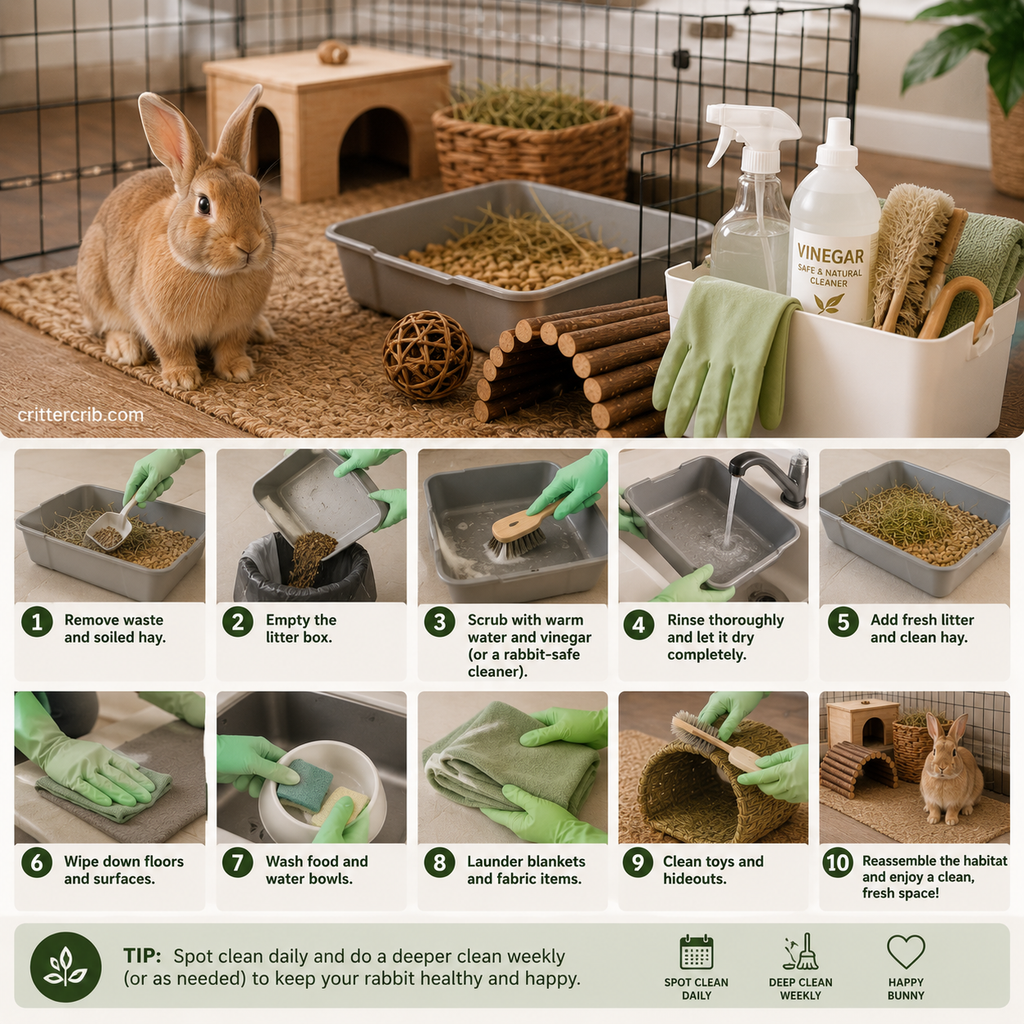
A more thorough cleaning gives you a chance to reach areas that daily spot cleaning misses.
How frequently this is necessary depends on your setup, but many owners incorporate a more detailed cleaning into their weekly routine.
Step 1: Move Your Rabbit Somewhere Safe
Place your rabbit in a secure, rabbit-proofed location with anything it needs during the cleaning period.
Close doors and block escape routes before you start.
Step 2: Remove Food and Water Items
Take out:
- Food bowls
- Water bowls or bottles
- Hay containers
- Treat dishes
Empty and clean them as appropriate.
This is also a good time to inspect bowls for cracks or damaged edges.
Step 3: Remove the Litter Box
Empty and clean the litter box separately.
Check the surrounding floor because urine and litter can sometimes get underneath or behind it.
Step 4: Remove Toys and Hideouts
Take out tunnels, boxes, chew toys, beds, and hideaways.
Inspect everything while it’s out.
Discard or replace items that are:
- Heavily contaminated
- Moldy
- Severely damaged
- Unsafe from excessive chewing
- Difficult to clean properly
Not every chew mark means something needs to be thrown away. Rabbits chew. The question is whether the item remains safe.
Step 5: Remove Dirty Floor Coverings
Depending on your habitat, you may use:
- Fleece
- Washable rugs
- Mats
- Blankets
- Disposable bedding
- Other rabbit-appropriate flooring
Shake loose hay and debris from washable materials before laundering them.
Follow the manufacturer’s washing instructions.
Avoid leaving strong detergent or fragrance residue on materials your rabbit spends a lot of time lying on.
Step 6: Sweep or Vacuum Loose Debris
Remove hay, fur, droppings, and litter from the enclosure floor.
If using a vacuum, it’s usually easier and less stressful to do this while your rabbit is somewhere else.
Pay attention to corners and underneath furniture or enclosure panels where debris collects.
Step 7: Clean the Floor and Surfaces
Wipe the habitat floor and other washable surfaces with an appropriate cleaning method.
Concentrate on visibly dirty areas rather than soaking everything unnecessarily.
For dried urine, allowing the cleaning solution some time to loosen the residue can make scrubbing much easier.
Step 8: Rinse When Necessary
If the cleaner you’re using requires rinsing, follow the directions.
Don’t leave chemical residue on floors, litter boxes, bowls, or other surfaces your rabbit may lick.
Step 9: Let Everything Dry
Make sure surfaces are dry before rebuilding the habitat.
Returning rugs, bedding, or litter to a wet floor can trap moisture underneath.
Step 10: Reassemble the Habitat
Return clean flooring, the litter box, food and water supplies, hides, and enrichment.
You don’t have to completely redesign the habitat every time.
Keeping some familiar arrangement can help the enclosure continue to feel like your rabbit’s territory.
How to Wash Rabbit Blankets and Fleece
Washable fabrics are convenient, but they can collect fur, hay, urine, and odor.
Before putting them into the washing machine, remove as much loose debris as possible.
You can:
- Shake them outdoors
- Sweep them
- Brush off hay
- Use a dedicated pet-hair tool
This helps keep large amounts of hay and fur out of your washing machine.
Wash fabrics according to their care instructions and make sure they’re completely dry before returning them to the habitat.
If a fabric remains strongly soiled or develops a persistent odor despite washing, it may be time to replace it.
How to Clean Rabbit Food and Water Bowls
Food and water dishes deserve their own regular cleaning routine.
Wash them with hot or warm water and an appropriate dish-cleaning method, rinse them thoroughly, and allow them to dry.
Pay particular attention to water bowls.
A bowl can look clean from a distance while developing a slippery film along the interior.
Don’t simply add fresh water on top of old water indefinitely.
Empty, wash, rinse, and refill the bowl regularly.
How to Clean a Rabbit Water Bottle
If you use a water bottle, inspect both the bottle and drinking tube.
The narrow interior can be more difficult to clean than an open bowl.
A bottle brush can help reach inside.
Check for:
- Film inside the bottle
- Algae
- Debris
- Leaks
- Blockages
- Damage around the drinking tube
After refilling it, test the drinking mechanism to make sure water flows properly.
How to Clean Rabbit Toys and Hideouts
Different materials require different cleaning methods.
Plastic Items
Many plastic toys and accessories can be washed with warm water and an appropriate pet-safe cleaner.
Rinse them thoroughly and allow them to dry.
Fabric Toys and Tunnels
Follow the manufacturer’s washing directions.
Check seams for damage, particularly if your rabbit likes to chew fabric.
Wooden Toys and Hideouts
Wood is more difficult to sanitize because it’s porous.
Light surface dirt may be removable, but urine can soak deeply into unfinished wood.
If a wooden item becomes heavily urine-soaked, moldy, or impossible to clean properly, replacement may be the safest option.
Cardboard
Cardboard boxes make inexpensive rabbit hideouts and enrichment.
They’re also disposable.
If cardboard becomes wet with urine, heavily soiled, or moldy, throw it away and provide a clean replacement.
How to Control Rabbit Habitat Odor Safely
A healthy rabbit habitat shouldn’t require perfumes or air fresheners to control normal odor.
Instead, address the source.
Common causes of strong habitat odor include:
- An overdue litter box
- Urine-soaked bedding
- Wet hay
- Dirty fabric
- Spilled water
- Spoiled vegetables
- Urine underneath the enclosure
- Poor ventilation
Finding and cleaning the source works much better than trying to cover the smell.
Avoid Scented Products Around Rabbits
Don’t rely on scented litter, fragrance sprays, essential oil diffusers, or heavily perfumed cleaners to make the rabbit area smell better.
Good habitat maintenance should leave the space smelling clean and neutral.
Should You Completely Replace All Bedding?
It depends on your housing setup.
If you’re using loose bedding throughout the entire enclosure and it has become wet or heavily soiled, replacement is appropriate.
But throwing away large amounts of clean bedding every day isn’t necessary.
Spot cleaning lets you remove problem areas while leaving clean material in place.
If your rabbit uses a litter box consistently, the rest of the habitat may remain relatively clean.
Can You Use Vinegar to Clean a Rabbit Cage?
White vinegar is a useful cleaning tool for many rabbit habitats, particularly for tackling urine mineral deposits.
It can be used on many washable surfaces and litter boxes, although you should always consider the material you’re cleaning.
Vinegar can damage certain natural stone and other surfaces, so don’t assume it’s appropriate for everything in your home.
For stubborn deposits, giving the vinegar time to sit before scrubbing often works better than immediately wiping it away.
Can You Use Bleach to Clean a Rabbit Habitat?
Routine rabbit habitat cleaning generally doesn’t require bleach.
If disinfection is necessary because of infectious disease or another specific concern, consult a veterinarian about an appropriate disinfectant and cleaning procedure.
Products used for disinfection must be diluted and used according to their directions, with appropriate contact time, rinsing when required, and ventilation.
Never allow your rabbit to contact wet disinfectant.
And never mix bleach with vinegar, ammonia, or other household cleaning chemicals.
What About Rabbit Droppings Around the House?
If your rabbit has access to a larger exercise area, you’ll probably encounter the occasional stray dropping.
Normal dry rabbit droppings are relatively easy to sweep or vacuum.
Finding a few outside the litter box isn’t necessarily a major litter-training failure.
Urine accidents require more immediate cleaning.
Blot up fresh urine and clean the area using a method appropriate for the flooring material.
Cleaning accidents promptly also helps prevent staining and lingering odors.
Cleaning a Free-Roam Rabbit Area
Free-roam rabbits don’t have a traditional cage, but they still have a habitat.
It just happens to be part of your home.
Focus cleaning on the areas your rabbit uses most:
- Litter boxes
- Hay stations
- Sleeping areas
- Rugs
- Under furniture
- Food and water areas
- Favorite corners
Check underneath objects regularly.
Hay, fur, and droppings have an impressive ability to migrate into places you didn’t know existed.
How to Make Rabbit Habitat Cleaning Easier
A little planning can dramatically reduce the amount of work involved.
Use a Large Litter Box
A properly sized litter box can contain much of the daily mess.
Your rabbit should be able to use it comfortably rather than balancing inside a tiny tray.
Put Hay Near the Litter Area
Rabbits often like to eat hay while using the litter box.
Placing hay where it can be accessed from the litter area can encourage good litter habits and keep much of the mess concentrated in one location.
Use Washable Floor Coverings
Washable rugs or fleece can simplify cleanup in appropriate setups.
Keep spare sets available so you can replace dirty flooring immediately rather than waiting for laundry to finish.
Keep Cleaning Supplies Nearby
Store a small broom, dustpan, trash bags, and appropriate cleaning supplies somewhere convenient.
A 30-second cleanup is much more likely to happen if you don’t have to search the house for everything first.
Spot Clean Before Messes Build Up
Removing a small urine spot today is much easier than scrubbing a large dried deposit next week.
Frequent small cleanups usually mean fewer major cleaning sessions.
Common Rabbit Habitat Cleaning Mistakes
A clean habitat is important, but it’s possible to overcomplicate the process.
Waiting Until the Habitat Smells
Strong odor shouldn’t be the reminder that cleaning is overdue.
Regularly inspect litter and wet areas instead.
Using Strongly Scented Cleaners
A powerful fragrance doesn’t equal cleanliness and may leave irritating fumes or residue.
Ignoring Areas Underneath the Cage
Urine, hay, and debris can sometimes escape the enclosure.
Periodically move or inspect underneath the habitat.
Leaving Wet Surfaces
Always allow cleaned surfaces to dry before covering them with rugs, bedding, or other materials.
Forgetting Food and Water Containers
Cleaning the floor while ignoring a dirty water bowl isn’t a complete cleaning routine.
Changing Everything at Once Unnecessarily
Rabbits rely heavily on scent and familiarity.
You need to remove waste and maintain sanitary conditions, but routine cleaning doesn’t have to erase every familiar smell or completely rearrange the environment.
A Simple Rabbit Habitat Cleaning Schedule
If you’re trying to establish a routine, start with something manageable.
Every Day
- Refresh water
- Check food dishes
- Remove spoiled fresh food
- Remove obviously wet hay or bedding
- Check the litter box
- Sweep up excessive debris
- Look for urine accidents
Every Few Days
Depending on how quickly things become dirty:
- Change litter
- Clean heavily used litter areas
- Replace dirty floor coverings
- Refresh hay areas
- Wipe visibly soiled surfaces
Weekly
Perform a more thorough inspection:
- Clean the litter box thoroughly
- Wash food and water containers
- Clean enclosure surfaces
- Launder dirty fabrics
- Clean washable toys and accessories
- Inspect wooden and cardboard items
- Sweep underneath and around the habitat
Adjust this schedule based on your rabbits and their environment.
Two rabbits will often create more mess than one. A large litter-trained rabbit in a spacious habitat may require a different routine than a rabbit using bedding throughout a smaller enclosure.
Use Cleaning Time as a Health Check
Cleaning provides an opportunity to notice subtle changes.
While working around the habitat, pay attention to:
- Amount of food eaten
- Hay consumption
- Water consumption
- Quantity and appearance of droppings
- Urine patterns
- Unusual stains or discharge
- Changes in litter habits
You don’t need to analyze every individual dropping.
The goal is simply to become familiar with your rabbit’s normal routine.
A noticeable reduction in eating or droppings, significant changes in stool, or other sudden changes can warrant prompt veterinary attention. Rabbits can become seriously ill quickly, so major changes shouldn’t simply be attributed to a messy habitat.
Frequently Asked Questions About Cleaning a Rabbit Habitat
How often should a rabbit litter box be changed?
There isn’t a universal schedule because litter box size, litter type, number of rabbits, and bathroom habits vary.
Check the box every day and change it whenever it becomes excessively wet or dirty.
Some setups need frequent changes, while larger boxes with appropriate litter may remain usable longer.
Is vinegar safe for cleaning rabbit litter boxes?
White vinegar is commonly used for rabbit litter boxes and is particularly helpful for breaking down mineral deposits left by urine.
Rinse cleaned surfaces as appropriate and allow them to dry before returning them to the habitat.
Why does my rabbit’s cage smell even after cleaning?
Look for hidden sources of urine or moisture.
Check underneath litter boxes, rugs, bedding, hay containers, enclosure liners, and the habitat itself.
Fabric and unfinished wood can also absorb urine and continue producing odor even after surface cleaning.
Can I clean around my rabbit?
Quick spot cleaning can usually be done with your rabbit nearby if it isn’t stressed by the activity.
For larger cleanings involving wet surfaces, vacuuming, moving enclosure components, or cleaning products, placing the rabbit somewhere secure is generally easier and safer.
Do rabbits like a clean cage?
Rabbits benefit from a dry, sanitary living environment, but they also rely heavily on familiar scents.
The goal is to remove waste and contamination while maintaining a comfortable, recognizable habitat.
You don’t need to sterilize everything during every cleaning.
What is the easiest way to keep a rabbit habitat clean?
Good litter habits make the biggest difference.
A large litter box, conveniently placed hay, washable floor coverings, and daily spot cleaning can dramatically reduce how much time you spend on major cleanups.
Final Thoughts on Cleaning Your Rabbit’s Habitat
The best rabbit habitat cleaning routine isn’t necessarily the most aggressive one.
It’s the one you can maintain consistently.
Check the habitat every day, remove wet and spoiled materials promptly, keep food and water areas clean, and give the enclosure a more thorough cleaning regularly.
Pay particular attention to the litter box because that’s where much of the urine and waste will accumulate in a litter-trained rabbit’s environment.
At the same time, don’t feel like you need to scrub away every trace of your rabbit every time you clean. A rabbit’s home should be sanitary, but it should also remain familiar.
Once daily spot cleaning becomes part of your routine, maintaining the habitat gets considerably easier. Instead of facing one enormous mess at the end of the week, you’ll mostly be dealing with small problems as they happen.
That means a cleaner habitat for your rabbit and a lot less work for you.