
Ferrets are curious, playful, clever, and remarkably good at getting themselves into places you were certain they couldn’t reach.
That combination is a big part of their appeal. It’s also why caring for a ferret requires more preparation than simply buying a cage and filling a food bowl.
A good ferret home needs plenty of room to move, comfortable places to sleep, opportunities to explore, and daily time outside the enclosure in a properly ferret-proofed area. Nutrition is equally important because ferrets have very different dietary needs from rabbits, guinea pigs, and other small pets.
Then there’s the everyday routine: feeding, water, litter boxes, cleaning, playtime, grooming, and keeping an eye out for changes in health or behavior.
If you’re considering bringing home a ferret—or already have one and want to improve its setup—this complete ferret care guide covers the essentials of habitat, diet, enrichment, handling, grooming, and daily care.
Understanding Ferrets
Ferrets are domesticated members of the mustelid family, making them relatives of animals such as weasels, otters, and mink.
They’re quite different from rodents.
Ferrets have long, flexible bodies built for squeezing through tight spaces. They’re active predators by nature and have a digestive system adapted to a meat-based diet.
They’re also highly inquisitive.
A ferret doesn’t simply walk into a room and sit down. It investigates.
Under the couch?
Interesting.
Inside that cardboard box?
Absolutely.
Behind the bookshelf?
Worth checking.
This curiosity makes enrichment important, but it also makes ferret-proofing essential.
How Long Do Ferrets Live?
Pet ferrets commonly live around 5 to 10 years, although lifespan varies considerably between individuals.
Genetics, nutrition, preventive veterinary care, living conditions, and disease can all influence longevity.
Getting a ferret therefore represents a significant commitment.
Before bringing one home, consider whether you’re prepared for years of:
- Daily interaction
- Regular cleaning
- Specialized nutrition
- Veterinary care
- Ferret-proofing
- Exercise and enrichment
- Ongoing expenses
They’re small animals, but they’re not short-term or low-effort pets.
Are Ferrets Good Pets?
For the right household, ferrets can be incredibly entertaining companions.
They’re known for being:
- Playful
- Curious
- Social
- Intelligent
- Energetic when awake
- Capable of forming strong bonds with caregivers
They can also be demanding.
Ferrets need substantial interaction and supervised activity outside their main enclosure. They may dig, steal objects, climb into furniture, tip things over, and investigate almost anything accessible.
A ferret is a better match for someone who enjoys an interactive pet than someone looking for an animal that mostly stays quietly inside its habitat.
Do Ferrets Sleep a Lot?
Yes.
For animals capable of creating astonishing amounts of chaos while awake, ferrets spend a surprising amount of time sleeping.
It’s normal for ferrets to sleep for many hours throughout the day.
When awake, however, they can become intensely active.
This pattern makes comfortable sleeping areas just as important as play and exercise spaces.
Don’t assume a sleeping ferret is bored simply because it isn’t active all day.
Instead, focus on providing opportunities for exercise and enrichment when it wakes naturally.
Creating a Proper Ferret Habitat
A ferret’s main enclosure should function as a safe home base.
It needs room for:
- Sleeping
- Eating
- Drinking
- Using the litter box
- Moving between areas
- Playing
- Resting away from waste
However, even a large enclosure shouldn’t be the ferret’s entire world.
Ferrets need regular access to a larger, secure area where they can run, explore, and interact.
If you’re putting together a new enclosure or improving an existing one, our ferret habitat setup guide takes a closer look at housing, sleeping areas, litter boxes, enrichment, exercise space, and ferret-proofing.
Choose a Spacious Enclosure
Look for an enclosure designed with usable floor space and multiple functional areas.
Multi-level habitats can work well for ferrets when ramps and platforms are secure.
The enclosure should allow you to separate:
- Sleeping areas
- Food and water
- Litter areas
- Play areas
Make sure doors close securely.
Ferrets can be surprisingly persistent when they decide an enclosure should be open.
Watch the Bar Spacing
A ferret’s long body can make judging escape routes difficult.
If its head fits through an opening, you may have an escape problem.
Check:
- Cage bars
- Doors
- Latches
- Corners
- Gaps around accessories
- Openings around ramps
Never assume a gap is too small without inspecting it carefully.
Use Solid Flooring
Ferrets should have comfortable solid surfaces to walk and rest on.
Avoid forcing them to spend their time directly on exposed wire flooring.
Suitable floor coverings may include washable liners, blankets, or other safe materials that provide traction and comfort.
Inspect fabric regularly.
Loose threads, holes, or damaged material can create hazards.
Give Ferrets Comfortable Sleeping Areas
Ferrets love cozy sleeping spaces.
Many enjoy burrowing into soft bedding or curling up inside enclosed areas.
You can provide:
- Ferret-safe hammocks
- Sleep sacks
- Blankets
- Fabric tunnels
- Covered beds
- Nesting areas
Having several options allows your ferret to choose where it wants to sleep.
Check Fabric for Damage
Ferrets may scratch, dig, or chew at fabric.
Inspect sleeping materials regularly for:
- Loose threads
- Holes
- Exposed stuffing
- Fraying
- Other damage
Replace anything that could become unsafe.
Where Should You Put a Ferret Cage?
Place the enclosure somewhere your ferret can be part of normal household life without being exposed to constant disturbance.
Avoid areas with:
- Direct sunlight
- Extreme heat
- Strong drafts
- Excessive humidity
- Heavy smoke
- Strong chemical fumes
Temperature deserves particular attention.
Ferrets generally tolerate cool conditions better than excessive heat and can become dangerously overheated.
Keep the habitat in a comfortable, well-ventilated indoor environment.
Ferret-Proofing Your Home
Ferret-proofing is one of the most important parts of ferret ownership.
Imagine preparing your home for an unusually flexible toddler that can fit underneath furniture and thinks every hole deserves investigation.
That’s a reasonable starting point.
Block Small Openings
Check for gaps:
- Behind appliances
- Under cabinets
- Beneath furniture
- Around plumbing
- Behind toilets
- Inside reclining furniture
- Around vents
A ferret can disappear surprisingly quickly.
Be Extremely Careful With Recliners
Reclining chairs and sofas can be dangerous because ferrets may crawl inside the mechanical structure.
Always know where your ferret is before operating reclining furniture or other mechanisms.
Better yet, completely prevent access underneath or inside these items.
Protect Electrical Cords
Keep electrical cords inaccessible.
Don’t rely on teaching your ferret to ignore them.
Use barriers and appropriate cord protection instead.
Secure Cabinets and Drawers
Some ferrets become surprisingly talented at opening cabinets.
Use secure latches where necessary, especially anywhere containing:
- Cleaning products
- Medication
- Food
- Chemicals
- Sharp objects
- Small swallowable items
Check Appliances
Always locate your ferret before using appliances such as:
- Washing machines
- Dryers
- Dishwashers
- Refrigerators
- Ovens
Check laundry piles and baskets too.
Ferrets love dark, enclosed spaces.
Daily Exercise and Playtime
Ferrets need substantial time outside their main enclosure every day.
A large cage doesn’t replace active exploration.
Allow your ferret to exercise in a secure, ferret-proofed area where it can run, investigate, and play.
Depending on your home, this could be:
- A dedicated ferret room
- A securely enclosed play area
- A ferret-proofed section of the house
Supervision is especially important until you know exactly what your ferret tries to climb into, underneath, or through.
Ferret Enrichment
Ferrets are intelligent and curious.
An empty room isn’t necessarily enriching just because it’s large.
Give them things to investigate.
Useful enrichment can include:
- Tunnels
- Cardboard boxes
- Paper bags without handles
- Dig boxes
- Safe toys
- Hideouts
- Balls
- Puzzle feeders
- Rotating play areas
You don’t need to provide everything simultaneously.
Rotating toys can make familiar objects interesting again.
Tunnels Are Especially Popular
Ferrets naturally enjoy exploring enclosed spaces.
Long tunnels give them somewhere to run, hide, chase each other, and play.
You can connect several tunnels or periodically change their arrangement.
Just make sure they’re wide enough that the ferret can’t become trapped.
The Ferret “War Dance”
If your ferret suddenly starts bouncing sideways, twisting around, hopping backward, and generally moving as though it has temporarily forgotten how legs work, you may be witnessing a classic ferret behavior.
It’s commonly called the “weasel war dance.”
Despite the dramatic name, this energetic display is often associated with excitement and play.
The war dance is just one of several behaviors that can look strange to new owners. Our guide to common ferret behaviors and what they mean covers play, digging, biting, stashing, sleeping, body language, stress, and other everyday behaviors.
A playful ferret may:
- Leap sideways
- Arch its back
- Bounce
- Chase
- Retreat
- Return immediately
- Make soft vocalizations
Give it some room.
An excited ferret isn’t always paying attention to where it’s going.
What Do Ferrets Eat?
Ferrets are obligate carnivores.
That means their bodies are adapted to obtain nutrition from animal-based foods.
Their diet should be high in animal protein and fat while being low in inappropriate carbohydrates and fiber.
This is one of the biggest differences between ferrets and many other pets commonly grouped under “small animals.”
A rabbit’s diet, for example, is completely inappropriate for a ferret.
Choosing Ferret Food
Choose a nutritionally complete food formulated specifically for ferrets or another diet recommended by a veterinarian experienced with ferrets.
Read the ingredient and nutritional information rather than relying only on attractive packaging.
The diet should prioritize appropriate animal-based ingredients.
If you’re unsure which food is appropriate, discuss your options with a ferret-experienced veterinarian.
Don’t Make Sudden Diet Changes
Ferrets can become attached to familiar foods.
If you need to change diets, transition gradually unless your veterinarian instructs otherwise.
This is especially useful when raising young ferrets.
Offering exposure to appropriate foods early may make future dietary transitions easier.
How Often Should Ferrets Eat?
Ferrets have relatively short digestive tracts and tend to eat multiple small meals.
Depending on the diet you’re feeding, appropriate food may need to remain readily available throughout the day.
Follow the feeding recommendations for the specific diet and your veterinarian’s advice.
Monitor your ferret’s:
- Appetite
- Body condition
- Weight
- Stool
- Eating habits
A sudden loss of appetite deserves attention.
Can Ferrets Eat Fruits and Vegetables?
Fruits and vegetables shouldn’t form a meaningful part of a ferret’s regular diet.
Remember that ferrets are obligate carnivores.
Foods high in sugar, starch, or fiber aren’t appropriate substitutes for animal-based nutrition.
Avoid turning human snack foods into routine ferret treats simply because your pet appears interested.
Ferrets don’t automatically know what’s good for them.
Curiosity isn’t nutritional expertise.
Choosing Ferret Treats
Treats should complement the normal diet rather than undermine it.
Appropriate options depend on your ferret’s overall feeding plan.
When evaluating treats, avoid products loaded with:
- Sugar
- Syrups
- Fruit
- Excessive carbohydrates
- Unnecessary fillers
Treats are optional.
Your ferret doesn’t need a cupboard full of snacks to have a good life.
Play and interaction can be rewarding too.
Fresh Water Is Essential
Your ferret should always have access to clean drinking water.
Water may be offered in an appropriate bowl, bottle, or both depending on your setup and your ferret’s preferences.
Heavy bowls can be useful because they’re harder to tip.
Although “harder” is not the same as “impossible” when a ferret is involved.
Check the water several times throughout the day if necessary.
Make sure it’s:
- Clean
- Accessible
- Fresh
- Free from bedding and debris
If using a bottle, verify that water actually flows from the nozzle.
Litter Training a Ferret
Ferrets can often learn to use litter boxes reasonably well, although expectations should remain realistic.
They’re not always as precise as cats.
Ferrets commonly prefer eliminating in corners, which gives you a useful clue about litter-box placement.
Choosing a Litter Box
The box should be:
- Large enough for the ferret
- Easy to enter
- Stable
- Positioned in a preferred bathroom corner
Some small triangular litter pans marketed for ferrets may not provide enough room for larger animals.
Watch how your ferret uses the box.
Its entire body should fit comfortably.
Choose Appropriate Litter
Use a safe, low-dust litter suitable for ferrets.
Avoid strongly scented products and litters that create excessive airborne dust.
If you’re uncertain about a particular litter, ask your veterinarian.
How to Litter Train Your Ferret
Start by observing which corner your ferret naturally chooses.
Then:
- Place the litter box in that corner.
- Keep the box accessible.
- Reward appropriate use.
- Clean accidents without punishment.
- Add additional boxes in frequently used areas.
When your ferret is outside the main enclosure, don’t expect it to travel across an entire house to find one litter box.
Provide boxes in multiple convenient locations.
Cleaning a Ferret Habitat
Ferrets have a natural musky scent, but a dirty habitat will make odors considerably stronger.
Routine cleaning is more effective than trying to cover smells with fragrance.
Daily Cleaning
Each day:
- Scoop litter boxes.
- Remove accidents.
- Wash dirty food dishes.
- Refresh water.
- Remove spoiled food.
- Check bedding.
- Wipe obvious messes.
Regular Cleaning
Periodically:
- Wash bedding and hammocks.
- Clean litter boxes thoroughly.
- Wipe enclosure surfaces.
- Clean food and water containers.
- Wash suitable toys.
- Inspect everything for damage.
Avoid heavily scented cleaners and air fresheners around your ferret.
Cleanliness should come from removing the source of odor, not covering it with perfume.
Do Ferrets Smell?
Ferrets naturally have a musky odor.
How noticeable it seems varies by animal, household, cleaning routine, and personal sensitivity.
Regularly cleaning bedding and litter areas can make a substantial difference.
Ironically, repeatedly bathing your ferret isn’t a good solution.
Frequent bathing can strip natural oils from the skin and may actually make odor management more difficult.
If smell is a major concern before adoption, spend time around adult ferrets first.
It’s better to know whether you’re comfortable with their natural scent before bringing one home.
Do Ferrets Need Baths?
Ferrets generally don’t need frequent baths.
Healthy ferrets handle much of their own grooming.
Bathing should be occasional and based on actual need rather than used as a routine odor-control strategy.
If your ferret gets into something dirty or unsafe, ask your veterinarian about appropriate cleaning when necessary.
Nail Care
Ferret nails need regular attention.
Overgrown nails can snag on:
- Fabric
- Bedding
- Carpet
- Hammocks
Check them frequently and trim as needed.
If you’ve never trimmed ferret nails before, ask a veterinarian or experienced veterinary technician to demonstrate the proper technique.
You want to avoid cutting the blood vessel inside the nail.
Ear Care
Check your ferret’s ears regularly.
A small amount of wax can be normal, but excessive debris, strong odor, redness, scratching, or head shaking may indicate a problem.
Don’t insert cotton swabs deeply into the ear canal.
If the ears look abnormal, have them evaluated by a veterinarian rather than repeatedly cleaning without knowing the cause.
Dental Care
Ferrets can develop dental problems.
Periodically look at your ferret’s mouth and teeth if it tolerates the examination safely.
Watch for:
- Broken teeth
- Red gums
- Bad breath
- Difficulty eating
- Drooling
- Pawing at the mouth
- Changes in chewing
Dental problems should be evaluated by a veterinarian.
Handling a Ferret
Ferrets should be supported securely when picked up.
Place one hand around the chest area while supporting the hindquarters with the other.
Don’t allow the back half of the body to simply dangle.
Young ferrets can be particularly energetic and may twist suddenly.
Keep a secure but gentle hold.
Don’t Punish Biting Physically
Young ferrets may use their mouths during play.
If biting becomes excessive, focus on appropriate training and redirection rather than hitting, flicking, or frightening the animal.
Provide suitable toys and reward calmer interaction.
Persistent or sudden biting may also be associated with fear, pain, or another problem that needs to be addressed.
Can Ferrets Live Together?
Ferrets are often social and many enjoy living with compatible ferret companions.
Pairs and small compatible groups may:
- Sleep together
- Wrestle
- Chase each other
- Explore together
- Groom one another
However, introductions should be handled carefully.
Don’t simply place unfamiliar ferrets together in a small enclosure and assume they’ll work everything out.
Monitor interactions and make sure each animal can access food, water, sleeping areas, and litter boxes.
Ferrets and Other Pets
Be cautious when mixing ferrets with other species.
Ferrets are predators.
Small animals such as:
- Hamsters
- Gerbils
- Mice
- Rats
- Guinea pigs
- Rabbits
- Birds
- Reptiles
shouldn’t be treated as potential playmates.
Keep prey animals securely separated.
Interactions with cats and dogs also require careful consideration. Individual personalities vary, and even apparently playful interactions can become dangerous.
The safest approach is controlled management rather than assuming animals will naturally become friends.
Daily Ferret Care Routine
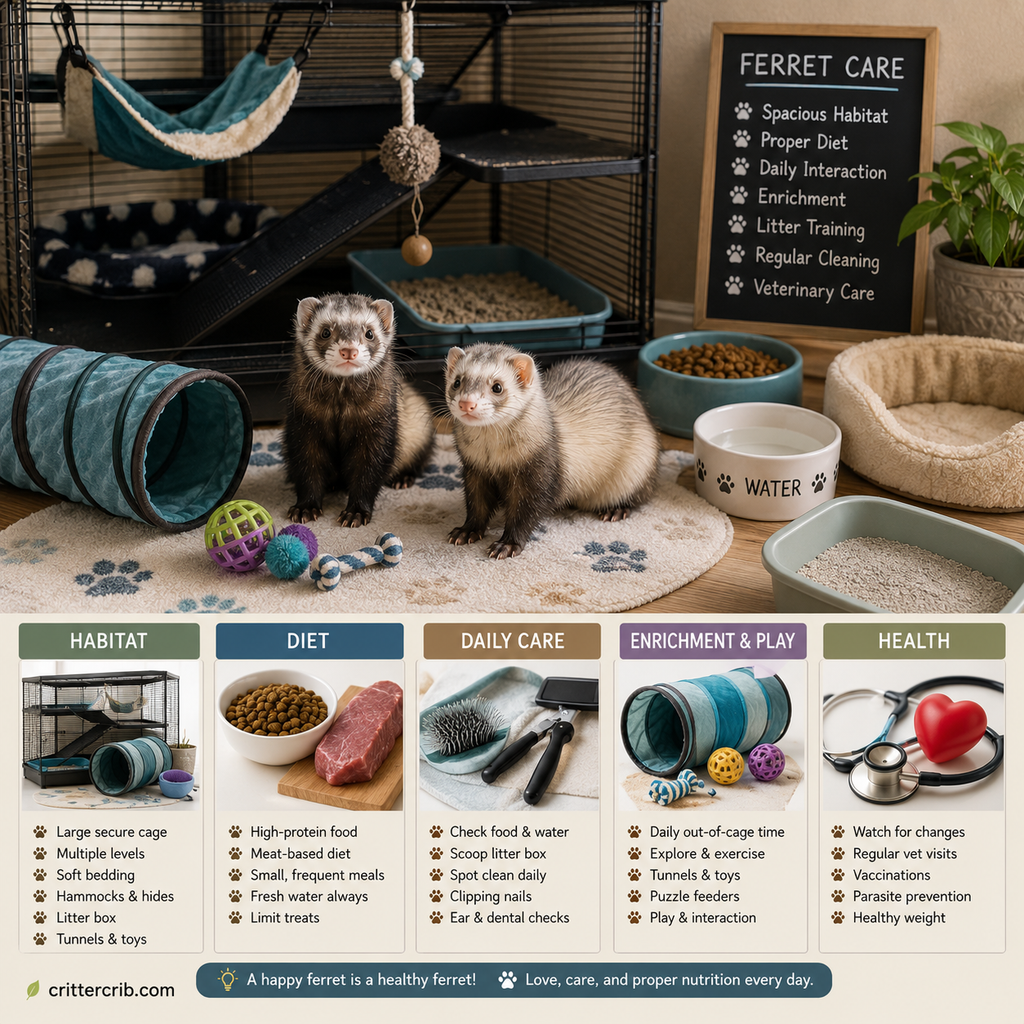
A consistent routine makes ferret care easier.
Every Morning
Check:
- Food
- Water
- Litter boxes
- Bedding
- General behavior
- Enclosure security
Remove obvious messes and confirm that your ferret is eating and drinking normally.
Every Day
Provide substantial supervised time outside the enclosure.
Use this opportunity for:
- Play
- Exploration
- Training
- Social interaction
- Enrichment
Observe how your ferret moves and behaves.
Every Evening
Check food and water again.
Scoop litter boxes as needed and make sure the enclosure is comfortable for resting.
You’ll quickly develop a routine that fits both your household and your ferret’s schedule.
Health Signs to Watch For
Learning what’s normal for your individual ferret makes it easier to recognize changes. Becoming familiar with your ferret’s normal behaviors and body language can also make unusual changes easier to spot.
Pay attention to:
- Appetite
- Water consumption
- Stool
- Urination
- Body weight
- Energy level
- Walking
- Breathing
- Coat condition
- Behavior
Potential warning signs include:
- Refusing food
- Vomiting
- Diarrhea
- Significant lethargy
- Difficulty breathing
- Sudden weakness
- Difficulty urinating
- Persistent coughing
- Unexplained weight loss
- Swollen abdomen
- Excessive scratching
- Hair loss
- Unusual behavior
Contact a veterinarian when you notice significant or persistent changes.
Find a Ferret-Experienced Veterinarian
Do this before there’s an emergency.
Not every veterinary clinic regularly treats ferrets.
Call nearby practices and ask specifically whether they have veterinarians experienced with ferret medicine.
Save information for:
- Regular veterinarian
- Emergency hospital
- After-hours care
Ferrets can develop health conditions that require prompt treatment, and searching for a veterinarian during an emergency wastes valuable time.
Preventive Veterinary Care
Routine veterinary care should be part of your ferret budget from the beginning.
Your veterinarian can advise you about:
- Physical examinations
- Vaccinations
- Parasite prevention
- Dental health
- Nutrition
- Spaying or neutering considerations
- Age-related screening
- Local disease risks
Recommendations can vary by age, health history, geographic location, and lifestyle.
Use veterinary guidance rather than relying on a generic schedule from the internet.
Common Ferret Care Mistakes
Understanding what not to do can prevent many problems.
Keeping a Ferret Caged All Day
Even a good enclosure isn’t a substitute for daily exploration and exercise.
Ferrets need time outside their primary habitat.
Feeding Like a Rodent
Ferrets are obligate carnivores.
Their diet shouldn’t resemble the diet of rabbits, guinea pigs, or other herbivorous small pets.
Underestimating Ferret-Proofing
A room that looks safe to you may contain dozens of opportunities for a curious ferret.
Get down near floor level and inspect everything.
Using a Tiny Litter Box
Your ferret needs enough room to position its entire body comfortably.
Ignoring Heat
Ferrets can struggle in hot conditions.
Keep them away from excessive temperatures and direct sunlight.
Bathing Too Frequently
Frequent bathing isn’t an effective long-term odor-control strategy.
Clean bedding and litter areas instead.
Buying Too Many Toys and Too Little Space
Toys are useful.
Space to run and explore is more important.
Assuming Sleep Means Boredom
Ferrets naturally sleep a lot.
Focus on what your ferret does when awake.
Essential Ferret Supplies
Before bringing a ferret home, prepare the basics.
Habitat
- Spacious secure enclosure
- Solid flooring
- Washable bedding
- Hammocks or sleep sacks
- Litter boxes
- Appropriate litter
Food and Water
- Nutritionally complete ferret food
- Food dishes
- Water bowls or bottles
Enrichment
- Tunnels
- Safe toys
- Cardboard boxes
- Digging opportunities
- Play area
Grooming and Maintenance
- Nail clippers
- Cleaning supplies
- Replacement bedding
- Laundry supplies
- Carrier
Health and Safety
- Secure pet carrier
- Veterinarian contact information
- Emergency veterinary information
- Ferret-proofing supplies
Having these items ready before adoption makes the transition much easier.
Frequently Asked Questions About Ferret Care
Are Ferrets Hard to Take Care Of?
Ferrets require more daily involvement than many people expect from a small pet.
They need specialized nutrition, frequent interaction, exercise, litter maintenance, ferret-proofing, enrichment, and veterinary care.
They’re manageable for a prepared owner, but they aren’t particularly hands-off pets.
How Much Time Should Ferrets Spend Outside Their Cage?
Ferrets should have substantial daily opportunities to exercise and explore outside their primary enclosure.
Rather than treating out-of-cage time as an occasional treat, make it part of the everyday routine.
A safe, ferret-proofed environment allows longer and more useful activity periods.
Do Ferrets Need a Cage?
Even free-roaming ferrets benefit from having a secure home base.
An enclosure can provide somewhere safe to sleep, eat, drink, and stay when unsupervised.
It shouldn’t be the ferret’s entire living environment.
What Is the Best Food for Ferrets?
Ferrets need a nutritionally complete diet appropriate for obligate carnivores, with animal-based protein and fat playing central roles.
Because nutritional needs and commercial formulations can vary, ask a ferret-experienced veterinarian for specific feeding recommendations.
Can Ferrets Eat Cat Food?
Some cat foods have historically been used for ferrets, but not every cat food is nutritionally appropriate.
A properly formulated ferret diet or another diet specifically recommended by your veterinarian is a safer starting point than choosing cat food at random.
Can Ferrets Eat Dog Food?
Dog food isn’t appropriate as a regular ferret diet.
Dogs and ferrets have different nutritional requirements.
Do Ferrets Need Fruits and Vegetables?
Fruits and vegetables aren’t necessary components of a normal ferret diet.
Ferrets are obligate carnivores and should receive nutrition appropriate for that physiology.
Why Does My Ferret Hide Things?
Ferrets are notorious for carrying away interesting objects and storing them.
You may discover collections of toys—or your belongings—under furniture or inside favorite hiding places.
Keep small, dangerous, or valuable objects out of reach.
If something disappears, checking the ferret stash isn’t a bad place to start.
Why Does My Ferret Bite?
Young ferrets may nip during play, while biting can also occur because of fear, overstimulation, insufficient training, or discomfort.
Use positive handling and redirection.
A sudden behavior change in an adult ferret may warrant veterinary attention.
Why Is My Ferret Sleeping So Much?
Ferrets naturally sleep for long periods.
If your ferret wakes normally, eats, drinks, plays, and behaves as expected, plenty of sleep isn’t automatically concerning.
Sudden lethargy or difficulty waking is different and deserves attention.
Can Ferrets Be Litter Trained?
Yes, many ferrets learn to use litter boxes reasonably consistently.
Expect occasional misses and provide several boxes in areas where your ferret spends time.
Do Ferrets Need Another Ferret?
Ferrets can form close social relationships with other compatible ferrets, but successful companionship depends on the individuals.
A single ferret may require more social interaction and enrichment from its owner.
Giving Your Ferret a Good Life
Living with a ferret is rarely boring.
They’re the kind of pets that turn a cardboard box into an adventure, a tunnel into a racetrack, and an unattended sock into personal property.
That curiosity is exactly what makes them so entertaining.
It’s also what good ferret care should support.
Provide a spacious, comfortable home base, but don’t expect your ferret to spend its entire life there. Create a safe area where it can run, explore, play, investigate tunnels, and interact with you every day.
Feed a diet appropriate for an obligate carnivore. Keep fresh water available. Maintain litter areas and bedding. Pay attention to temperature, grooming, dental health, and changes in behavior.
Most importantly, learn your individual ferret.
You’ll discover its favorite sleeping spot, which toys get ignored, which objects mysteriously disappear, when it wants to play, and exactly which corner it has decided should contain a litter box regardless of your interior-design preferences.
That daily familiarity isn’t just enjoyable. It helps you notice when something changes.
Combine that attention with appropriate housing, nutrition, enrichment, safety, and veterinary care, and you’ll have the foundation for giving your ferret a healthy, interesting, and comfortable life.