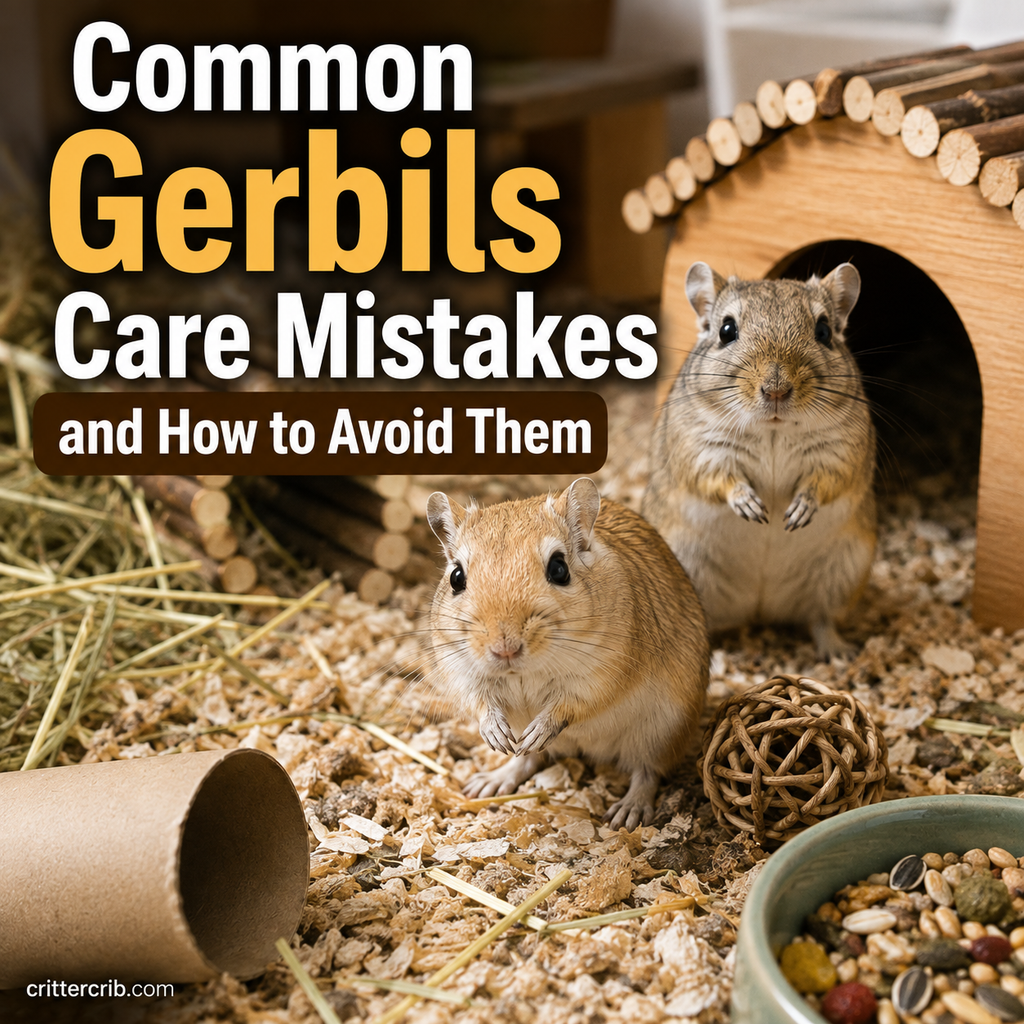
Gerbils have a reputation for being fairly easy pets to care for. They’re small, don’t need walks, and can live comfortably indoors in a relatively compact habitat.
But “easy” doesn’t mean maintenance-free.
Some of the most common gerbil care mistakes happen because their needs are compared with those of hamsters, mice, or other small pets. Gerbils have their own natural behaviors and housing requirements, particularly when it comes to digging, companionship, chewing, and creating burrows.
The good news is that many mistakes are easy to correct once you understand what your gerbils actually need.
Here are some of the most common gerbil care mistakes and practical ways to avoid them.
1. Keeping a Gerbil Alone
One of the biggest mistakes is assuming a gerbil should automatically live alone.
Gerbils are social animals. In appropriate circumstances, they generally benefit from living with a compatible gerbil companion rather than spending their entire lives by themselves.
A compatible same-sex pair is often a practical arrangement.
However, companionship isn’t as simple as putting two unfamiliar gerbils together.
Why You Can’t Just Add Another Gerbil
Gerbils can be territorial.
Introducing an unfamiliar gerbil directly into another gerbil’s established territory can result in serious fighting.
If you already have a solitary gerbil and are considering a companion, research the proper introduction process first. A commonly used approach is the split-cage method, which allows the gerbils to become accustomed to each other’s scent and presence while remaining safely separated.
Don’t rush introductions.
If you’re unsure whether two gerbils can safely live together, seek advice from an experienced exotic-animal veterinarian or reputable gerbil rescue.
2. Choosing a Cage That’s Too Small
Small animal, small cage?
Not necessarily.
Gerbils are active animals that run, dig, chew, explore, and build surprisingly elaborate tunnel systems when given the opportunity.
A cramped enclosure limits those behaviors.
Instead of choosing a habitat based on how little room it takes up in your home, think about how much usable space it provides your gerbils.
A good enclosure should have room for:
- Deep bedding
- A suitable exercise wheel
- Hiding places
- Food and water
- Chew materials
- Enrichment
- Space to move and explore
Bigger can also give you more freedom to create a stimulating environment.
3. Not Providing Enough Bedding for Burrowing
A thin layer of bedding may make cleaning easy, but it doesn’t allow gerbils to do one of the things they are built to do: dig.
Gerbils are enthusiastic burrowers.
Given enough suitable bedding, they’ll create tunnels, chambers, sleeping areas, and pathways beneath the surface.
Watching a pair transform an enclosure overnight is part of the fun of keeping them.
Provide a generous depth of appropriate bedding wherever the enclosure design allows it.
Help Burrows Hold Their Shape
Some loose bedding collapses as soon as a gerbil digs through it.
Mixing suitable bedding materials with hay can sometimes help give tunnels more structure.
You can also partially bury cardboard tubes and hideouts. These provide starting points that gerbils can incorporate into their underground system.
The exact bedding depth and material should be based on current gerbil-care guidance and the design of your enclosure.
4. Using Unsafe Bedding
Not every product labeled for small animals is automatically appropriate for gerbils.
Certain bedding materials can create problems because of excessive dust, fragrances, or the type of wood used.
Avoid simply grabbing the cheapest bag on the shelf without checking what it contains.
Look for bedding that is:
- Appropriate for gerbils
- Low in dust
- Unscented
- Absorbent
- Suitable for burrowing
Paper-based bedding and certain properly processed wood beddings are commonly used, depending on the product.
Avoid strongly scented bedding and materials of uncertain safety.
When trying a new product, monitor your gerbils and the enclosure carefully.
5. Using a Wire-Floor Cage
Gerbils should have solid surfaces where they can comfortably walk and dig.
An enclosure with exposed wire flooring isn’t an appropriate substitute for a solid living area.
Wire surfaces can be uncomfortable and may create a risk of foot or limb injuries.
Solid floors also allow you to provide the deep bedding gerbils need for burrowing.
If part of your enclosure contains wire platforms or ramps, evaluate whether they can be safely covered or replaced with suitable solid surfaces.
6. Buying the Wrong Exercise Wheel
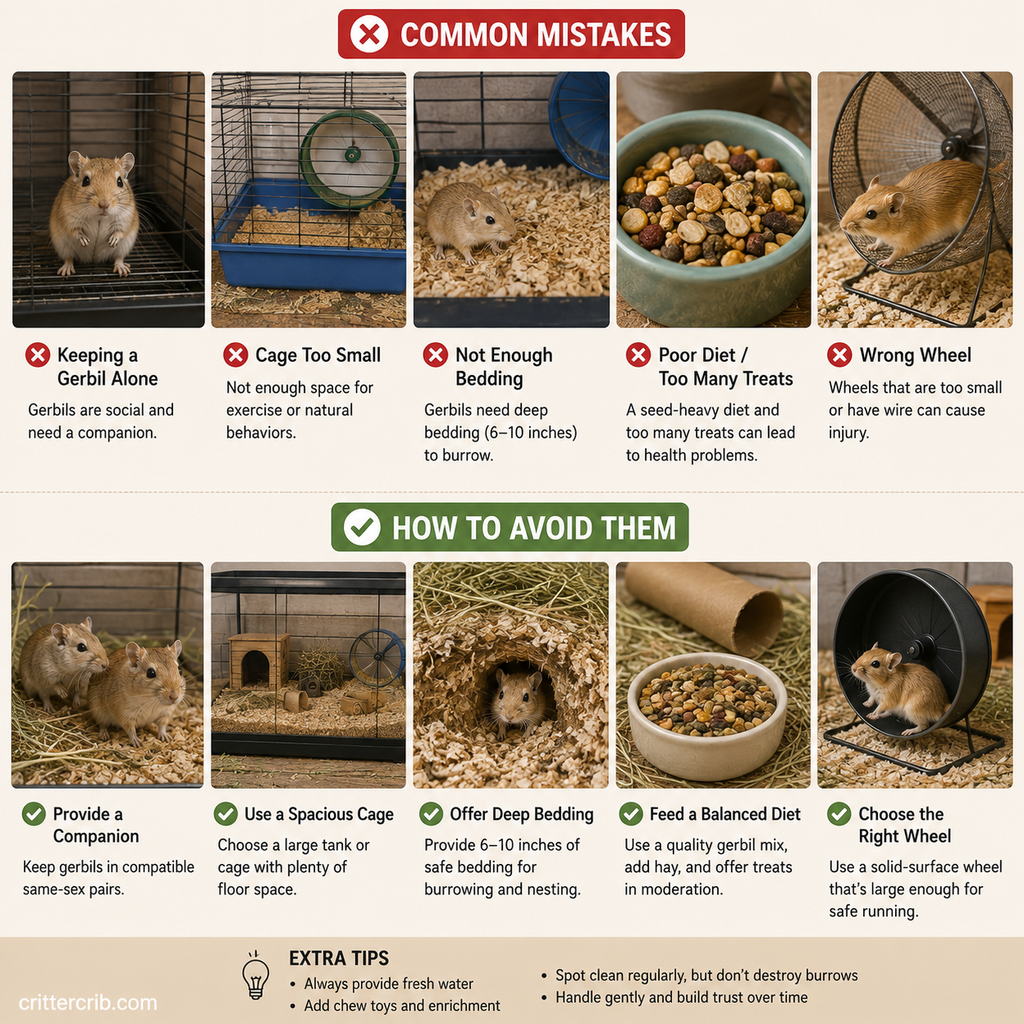
Exercise wheels can provide gerbils with an additional way to stay active, but size and construction matter.
A wheel that’s too small can force the animal into an unnatural running posture.
Choose an appropriately sized wheel that allows your gerbil to run without excessively arching its back.
The running surface should also be solid.
Avoid wheels with open wire or mesh running surfaces where feet or tails could potentially become caught.
And don’t be surprised if your gerbils chew their wheel. They’re gerbils. Chewing is practically a hobby.
Regularly inspect the wheel for damage and replace it when necessary.
7. Not Giving Gerbils Enough to Chew
Gerbil teeth continuously grow, so chewing isn’t destructive behavior that should simply be discouraged.
They need appropriate things to gnaw.
Good enrichment may include suitable:
- Cardboard
- Plain cardboard tubes
- Gerbil-safe wooden chews
- Safe branches
- Hay
- Commercial gerbil chew toys
Always verify that natural woods and branches are safe and haven’t been treated with pesticides or chemicals.
Cardboard is particularly useful because many households have a steady supply of it.
A plain cardboard tube might look like trash to you.
To a gerbil, it can be a construction project, chew toy, tunnel, and afternoon activity all at once.
8. Giving Too Many Treats
It’s easy to overdo treats with small pets.
A tiny piece of food doesn’t look like much to a human, but the portion becomes much more significant when the animal eating it weighs only a fraction of what we do.
Treats should remain treats.
Your gerbils’ regular diet should provide appropriate nutrition without depending on frequent sugary or high-fat extras.
When offering treats, keep portions small and choose foods that are safe for gerbils.
If you’re unsure about a particular food, check before feeding it.
9. Feeding an Unbalanced Diet
A bowl full of seeds may look natural and appealing, but appearances don’t tell you whether a diet is nutritionally balanced.
One potential problem with some food mixtures is selective feeding.
A gerbil may enthusiastically eat favorite pieces while leaving less desirable ones behind. Over time, that can affect the nutritional balance of what the animal actually consumes.
Choose a quality food formulated for gerbils and follow appropriate feeding guidance.
Dietary needs can vary based on age, health, and the particular food you’re using, so an exotic-animal veterinarian can provide more specific advice.
Don’t Constantly Refill a Bowl Without Checking It
Gerbils may move or stash food.
A bowl that appears empty doesn’t necessarily mean every piece has been eaten.
Before automatically adding more food, look around the enclosure and pay attention to your gerbils’ normal habits.
10. Making Sudden Diet Changes
Changing food overnight can upset an animal’s digestive system.
If you’re switching your gerbils to a different appropriate diet, make the transition gradually unless a veterinarian tells you otherwise.
Introduce the new food alongside the old food and slowly adjust the proportions.
A gradual transition also gives you an opportunity to watch for:
- Changes in appetite
- Digestive problems
- Unusual stools
- Food refusal
- Changes in behavior
Contact a veterinarian if you notice concerning symptoms.
11. Providing an Unreliable Water Source
Gerbils may come from dry environments, but pet gerbils still need continuous access to fresh drinking water.
Water bottles should be checked regularly.
A bottle can look full while the drinking mechanism is blocked.
Make it a habit to:
- Check the water level daily.
- Test that water flows from the nozzle.
- Look for leaks.
- Clean the bottle regularly.
- Replace damaged bottles.
If your gerbils bury the bottle nozzle with bedding, adjust the setup so they can easily reach it.
12. Cleaning the Entire Enclosure Too Aggressively
A perfectly sanitized habitat may sound ideal, but completely removing every familiar scent too frequently can be stressful for gerbils.
Their environment contains scent cues that help make it familiar.
Instead of automatically stripping everything from the enclosure whenever you see a little mess, use sensible spot cleaning between more thorough cleanings.
Remove:
- Soiled bedding
- Wet areas
- Spoiled food
- Dirty nesting material when necessary
When a larger cleaning is needed, appropriate care guidance may recommend retaining some clean, familiar bedding so the enclosure doesn’t smell completely foreign afterward.
How often you need to clean depends on enclosure size, bedding depth, number of gerbils, and how quickly particular areas become dirty.
13. Destroying Burrows Too Frequently
You carefully arrange the enclosure.
Your gerbils spend three days completely redesigning it.
Then you clean everything and put it back exactly the way you originally wanted.
From a human perspective, you’ve tidied their home. From a gerbil’s perspective, their underground architecture just disappeared.
Some burrow disruption is unavoidable during cleaning, but you don’t need to constantly flatten tunnels simply because the enclosure looks messy.
A gerbil enclosure isn’t supposed to look like a perfectly staged display.
Let them build.
14. Not Providing Hiding Places
Gerbils need somewhere to retreat.
Hides provide security, sleeping areas, and another structure that can become part of a burrow system.
You can provide appropriately sized:
- Wooden houses
- Ceramic hides
- Cardboard shelters
- Tunnels
Avoid overcrowding the enclosure with decorations.
The goal is to create useful structures while leaving plenty of room for digging and movement.
15. Using Too Much Plastic
Plastic accessories are common in small-pet habitats, but gerbils are persistent chewers.
Once plastic is damaged, sharp edges or small pieces can potentially become a concern.
Durable alternatives may include:
- Glass
- Ceramic
- Appropriate metal
- Gerbil-safe wood
- Plain cardboard
This doesn’t mean every piece of plastic automatically creates an emergency. The important thing is recognizing that anything accessible to a gerbil may eventually be chewed.
Inspect accessories regularly and remove damaged items when they become unsafe.
16. Picking Gerbils Up by the Tail
Never casually lift a gerbil by its tail.
A gerbil’s tail can be seriously injured if handled incorrectly.
Instead, allow the gerbil to approach your hands and gently scoop it up while supporting its body.
A Better Way to Build Trust
Start slowly.
Place your hand inside the enclosure and allow your gerbil to investigate without immediately trying to grab it.
Once your gerbil becomes comfortable around your hand, you can gradually work toward gentle handling.
Keep initial sessions short and close to the ground or another secure surface.
Some gerbils become quite comfortable with handling. Others prefer limited interaction.
Respect the individual animal.
17. Chasing a Gerbil Around the Cage
Imagine a giant hand entering your bedroom and chasing you around until it catches you.
That’s not a particularly good introduction.
Repeatedly chasing a gerbil around its enclosure can make handling more stressful and may teach the animal to run whenever your hand appears.
Instead:
- Move slowly.
- Let the gerbil investigate you.
- Use positive associations.
- Keep interactions calm.
- Avoid grabbing from above whenever possible.
Patience usually works better than force.
18. Allowing Unsafe Free-Roaming
Gerbils are small, fast, curious, and extremely good at finding spaces you didn’t realize existed.
Allowing one to freely explore an unprepared room can lead to trouble quickly.
Potential hazards include:
- Electrical cords
- Furniture gaps
- Open doors
- Reclining furniture
- Toxic plants
- Other pets
- Small objects
- Unsafe foods
- Places where a gerbil can become trapped
If you provide out-of-enclosure exercise, use a secure, gerbil-safe area and supervise closely.
Never assume a room is escape-proof just because you can’t immediately see an escape route.
Your gerbil may disagree.
19. Using an Unsafe Exercise Ball
Traditional plastic exercise balls have historically been marketed for small pets, but they can create concerns involving ventilation, visibility, collisions, and an animal’s ability to leave when it wants to.
A secure playpen or appropriately gerbil-proofed exercise area provides more control over the environment.
It also allows the gerbil to stop, hide, explore, or interact with enrichment instead of being confined inside a rolling ball.
20. Ignoring Signs of Fighting
Playful interaction and serious aggression aren’t the same thing.
Gerbils living together may chase, wrestle, groom, and interact in ways that can look surprisingly energetic.
However, owners should know the warning signs of genuine conflict.
Potential signs of trouble can include:
- Persistent aggressive chasing
- Biting
- Injuries
- One gerbil repeatedly preventing another from accessing resources
- Serious fighting
- Gerbils suddenly sleeping separately after previously sharing a nest
If a serious fight occurs, don’t simply assume they’ll work it out.
Separate them safely when necessary and seek experienced advice before attempting any reintroduction.
21. Assuming Gerbils Never Need a Veterinarian
Gerbils are sometimes treated as disposable pets because they’re inexpensive to purchase.
Their purchase price has nothing to do with their need for medical care.
Gerbils can experience health problems involving their:
- Teeth
- Skin
- Respiratory system
- Digestive system
- Scent gland
- Eyes
- Ears
- Limbs
Finding a veterinarian who treats small exotic mammals before you need one is much easier than searching during an emergency.
22. Waiting Too Long When a Gerbil Seems Sick
Small animals can deteriorate quickly.
Because they’re prey animals, they may also hide signs of illness until a problem becomes more significant.
Pay attention to changes such as:
- Reduced appetite
- Unusual lethargy
- Difficulty breathing
- Significant weight changes
- Diarrhea
- Unusual lumps
- Bleeding
- Discharge from the eyes or nose
- Changes in movement
- Abnormal posture
- Sudden changes in normal behavior
Don’t attempt to diagnose a serious problem solely through internet searches.
Contact a veterinarian experienced with gerbils when you notice concerning symptoms.
Learn Your Gerbil’s Normal Behavior
One of the easiest ways to recognize a potential problem is knowing what normal looks like.
Spend time observing your gerbils when they’re healthy.
You’ll gradually learn:
- When they’re normally active
- How much they eat
- How they interact
- Where they sleep
- How they move
- What their coat normally looks like
Changes become much easier to notice when you know their usual routine.
23. Not Checking Gerbils Regularly
A gerbil that spends a lot of time underground can sometimes be easy to overlook.
Don’t assume everything is fine just because the food is disappearing.
Observe your gerbils every day.
Regularly check their:
- Eyes
- Coat
- Movement
- Appetite
- Behavior
- Teeth and mouth area for obvious abnormalities
- Overall body condition
Some owners also periodically weigh their gerbils using an accurate digital scale. Tracking weight over time can help reveal changes that aren’t immediately obvious visually.
Ask your veterinarian how to perform appropriate health checks at home.
24. Putting the Enclosure in the Wrong Location
Where you place the enclosure matters.
Avoid locations with:
- Direct intense sunlight
- Extreme temperature changes
- Constant drafts
- Excessive noise
- Heavy vibration
- Easy access by other pets
A quiet but socially connected part of the home often works better than an isolated area that receives little attention.
Make sure the enclosure remains well ventilated and within an appropriate temperature range.
25. Assuming Gerbils Are Ideal Pets for Every Child
Gerbils can make fascinating family pets, but they’re small and relatively delicate.
Young children shouldn’t be expected to take full responsibility for their care.
An adult should ultimately be responsible for:
- Feeding
- Fresh water
- Habitat maintenance
- Safe handling
- Veterinary care
- Monitoring health
- Preventing escapes
Children can certainly participate in care when appropriately supervised.
The gerbil’s welfare, however, shouldn’t depend entirely on a child’s attention span.
26. Treating Gerbils Like Tiny Hamsters
This may be the underlying cause of many care mistakes.
Gerbils and hamsters are both small rodents commonly kept as pets, but that doesn’t mean their care is interchangeable.
Gerbils are particularly enthusiastic burrowers, social interaction can be important, and their enclosure should support digging and tunnel construction.
Instead of buying a generic “small animal starter kit,” research gerbil-specific care.
Your setup should be designed around the animal you actually have.
What Does a Good Gerbil Setup Look Like?
A good enclosure doesn’t need to be complicated or Instagram-perfect.
It needs to support normal gerbil behavior.
A well-planned setup generally provides:
- Plenty of usable space
- Deep, suitable bedding
- Opportunities to create burrows
- A compatible companion when appropriate
- Safe hiding places
- A properly sized solid-surface wheel
- Constant access to fresh water
- Appropriate food
- Safe chewing materials
- Enrichment
- Good ventilation
- A safe room temperature
Think less about decorating a cage and more about creating an environment your gerbils can actually use.
A Simple Daily Gerbil Care Routine
Gerbil care becomes much easier when you establish a routine.
Each day, take a few minutes to:
- Check that both gerbils are present and behaving normally.
- Make sure the water bottle works.
- Provide food according to your feeding routine.
- Look for spoiled or wet food.
- Spot-clean obvious messes when necessary.
- Check the enclosure for damaged accessories.
- Provide cardboard or another safe chewing activity.
- Watch how your gerbils interact.
These quick checks can help you catch small problems before they become larger ones.
Final Thoughts on Avoiding Gerbil Care Mistakes
Most gerbil care mistakes don’t happen because someone doesn’t care about their pets. They happen because small animals are often assumed to have simpler needs than they actually do.
Gerbils need opportunities to dig, burrow, chew, exercise, explore, and interact socially in appropriate circumstances.
Give them enough bedding to build real tunnels. Provide safe things to destroy. Choose an appropriate enclosure instead of the smallest cage available. Learn how to handle them gently, pay attention to changes in behavior, and find an exotic-animal veterinarian before an emergency occurs.
Most importantly, let your gerbils be gerbils.
A habitat filled with tunnels, shredded cardboard, rearranged bedding, and half-destroyed chew toys may look messy to us. To a pair of active gerbils, it can be exactly what makes their environment interesting.