Cleaning a ball python’s enclosure isn’t the most exciting part of snake ownership, but it’s one of the easiest ways to prevent small husbandry problems from turning into bigger ones.
The good news is that you shouldn’t need to completely tear apart the habitat every few days.
A well-maintained ball python enclosure is usually managed through regular spot cleaning, fresh water, occasional substrate replacement, and deeper cleaning when necessary. The goal isn’t to create a sterile environment. It’s to prevent waste, spoiled substrate, mold, and excessive bacterial buildup while keeping the enclosure stable and comfortable for your snake.
Here’s a practical cleaning routine that keeps things manageable without unnecessarily disrupting your ball python.
How Often Should You Clean a Ball Python Enclosure?
There isn’t one cleaning schedule that works for every enclosure.
How often you need to clean depends on factors such as:
- Enclosure size
- Substrate type
- Humidity
- Ventilation
- Whether the enclosure is bioactive
- How frequently your snake produces waste
- Whether food or water has been spilled
- The snake’s health
Rather than relying entirely on a calendar, inspect the enclosure regularly.
As a general routine, you’ll want to check for waste every day, clean the water bowl frequently, remove soiled substrate promptly, and perform more extensive maintenance as conditions require.
Daily Ball Python Habitat Cleaning
Daily maintenance should only take a few minutes.
You don’t need to remove your snake and dismantle everything.
Take a quick look through the enclosure and check for:
- Feces
- Urates
- Wet or heavily soiled substrate
- Shed skin
- Spilled water
- Mold
- Uneaten prey
- Unusual odors
Remove anything that shouldn’t be there.
This simple habit prevents waste from sitting in warm, humid conditions for extended periods.
Check the Water Bowl
Ball pythons should have access to clean, fresh water.
Inspect the bowl every day.
Replace the water if you see:
- Substrate
- Feces
- Urates
- Shed skin
- Other debris
Even when the water looks clean, regularly replacing it and washing the bowl helps prevent buildup on its surfaces.
Some ball pythons seem to have a special talent for defecating directly in their water dish. If yours does, remove the bowl immediately, clean and disinfect it appropriately, rinse it thoroughly, and refill it with fresh water.
Spot Cleaning a Ball Python Enclosure
Spot cleaning is the backbone of routine enclosure maintenance.
Instead of replacing all of the substrate whenever your snake produces waste, remove the contaminated portion and some of the surrounding material.
How to Spot Clean
A simple process is:
- Locate the feces, urates, or wet substrate.
- Remove the waste with disposable gloves, paper towels, or a dedicated scoop.
- Remove the surrounding substrate that has been contaminated.
- Inspect the enclosure surface beneath it if accessible.
- Clean the affected surface when necessary.
- Allow cleaned areas to dry as required.
- Replace the removed material with fresh substrate.
Don’t simply scoop out the visible feces and leave obviously contaminated substrate behind.
Liquid can spread beyond what you initially see.
What Supplies Do You Need to Clean a Ball Python Habitat?
Keeping a small collection of dedicated reptile-cleaning supplies makes maintenance much easier.
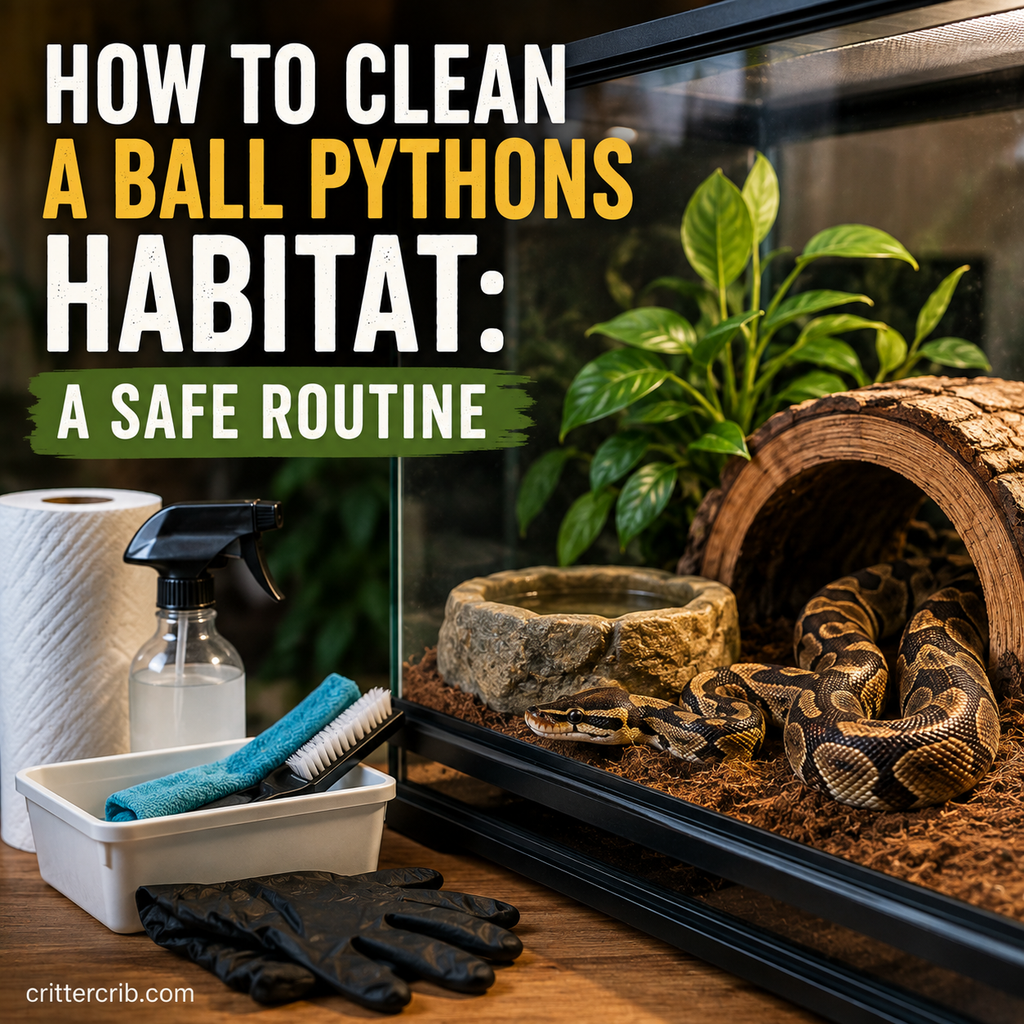
Useful items include:
- Disposable gloves
- Paper towels
- Dedicated cleaning cloths
- Small waste scoop
- Bucket or container
- Reptile-appropriate disinfectant
- Spare substrate
- Scrub brush
- Extra water bowl if desired
- Trash bags
Keep reptile cleaning equipment separate from items used in your kitchen or bathroom.
A brush used on a snake’s water bowl shouldn’t later be used to wash your dinner dishes.
Where Should Your Ball Python Go During a Deep Cleaning?
For quick spot cleaning, your snake can often remain safely in another part of the enclosure while you work, provided you aren’t disturbing it excessively.
For a full cleaning, move the ball python to a secure temporary container.
The temporary enclosure should be:
- Escape-proof
- Properly ventilated
- Safe from other pets
- Kept at an appropriate temperature
- Located somewhere quiet
A secure plastic reptile tub or similar temporary container can work well for a short cleaning session.
Never leave a ball python unattended loose in the room while cleaning its enclosure.
Ball pythons are much better at finding inaccessible hiding places than most owners expect.
How to Deep Clean a Ball Python Enclosure
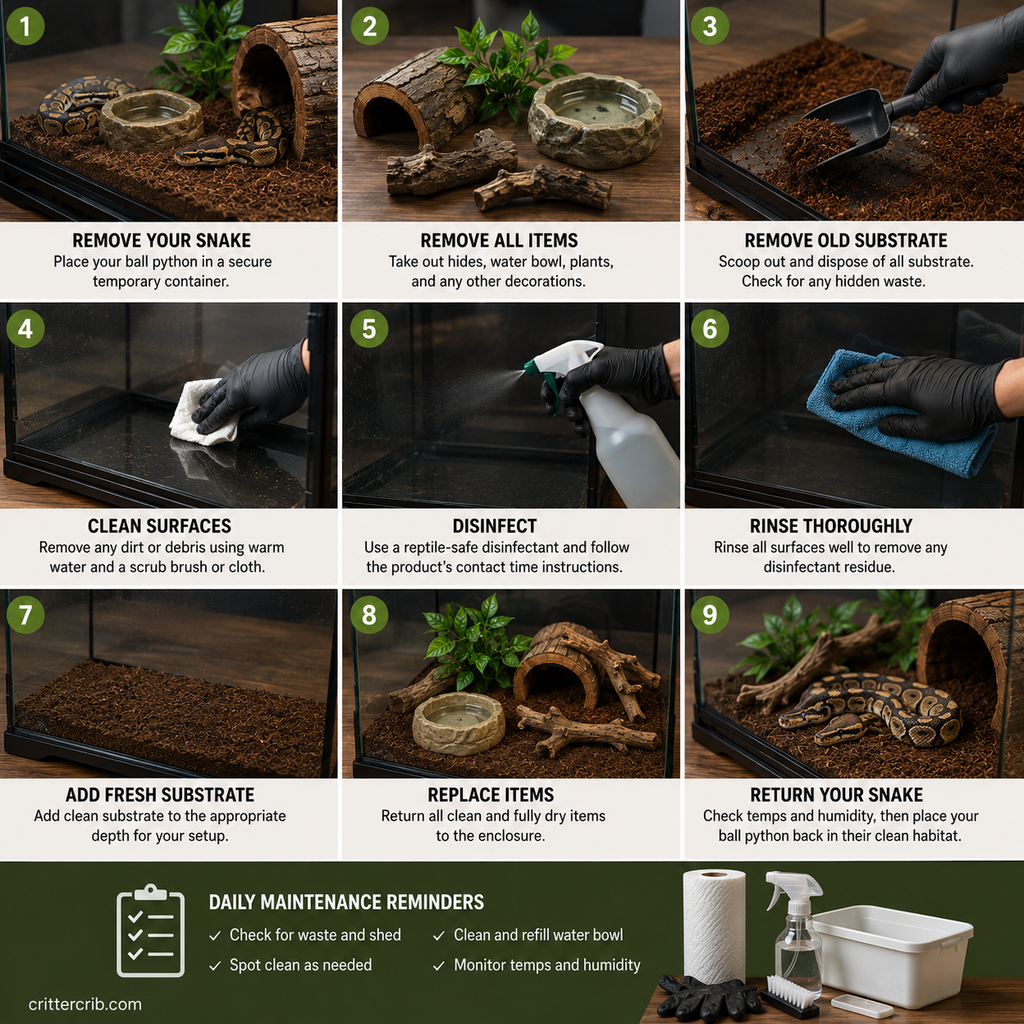
A deeper cleaning involves removing substrate and cleaning the enclosure surfaces and furnishings.
It doesn’t necessarily need to happen on an arbitrary weekly schedule.
Instead, deep clean when the habitat needs it.
Step 1: Move Your Ball Python
Place your snake in its secure temporary container before beginning.
This keeps it away from cleaning products and makes it much easier to work throughout the enclosure.
Step 2: Remove the Furnishings
Take out removable items such as:
- Hides
- Water bowls
- Artificial plants
- Branches
- Climbing structures
- Rocks
- Other décor
Inspect everything as you remove it.
Look for waste, mold, damaged surfaces, sharp edges, or other problems you may not notice during everyday cleaning.
Step 3: Remove the Old Substrate
Dispose of substrate that needs replacement.
Pay particular attention to damp or contaminated material.
Once the substrate is removed, inspect the bottom and corners of the enclosure.
Waste and moisture can sometimes collect underneath decorations or along edges where they’re easy to miss.
Step 4: Remove Visible Debris
Before disinfecting anything, remove dirt and organic material.
This step matters because disinfectants generally work best on surfaces that have already been physically cleaned.
Use an appropriate cleaner and disposable towels or a dedicated cleaning cloth to remove visible residue.
Step 5: Disinfect Appropriate Surfaces
Apply a reptile-appropriate disinfectant according to the manufacturer’s directions.
Pay attention to:
- Dilution instructions
- Required contact time
- Whether rinsing is necessary
- Surface compatibility
- Safety precautions
Don’t assume that spraying something onto a surface and immediately wiping it away provides effective disinfection.
Many products need to remain wet for a specified contact time.
Step 6: Rinse When Required
If the disinfectant instructions call for rinsing, rinse the surfaces thoroughly.
You don’t want your snake exposed to inappropriate chemical residue.
Step 7: Let Everything Dry
Allow enclosure surfaces and decorations to dry as appropriate before rebuilding the habitat.
This is particularly important when you’ve used cleaning or disinfecting products.
Step 8: Add Fresh Substrate
Once the enclosure is ready, add clean substrate.
Spread it evenly and provide an appropriate depth for the type you’re using.
Step 9: Return the Furnishings
Replace the hides, water bowl, and décor.
Before returning your snake, make sure everything is stable.
Heavy hides, rocks, and branches shouldn’t be positioned where they can shift and injure the snake.
Step 10: Check the Environment
After reassembling the enclosure, confirm:
- Warm-side conditions
- Cool-side conditions
- Humidity
- Heating equipment
- Thermostat operation
- Digital thermometer and hygrometer readings
- Water availability
Don’t assume everything returned to its previous conditions automatically.
Moving decorations or substrate can affect airflow and heating.
Once the enclosure is stable and free of unsafe cleaning residue, return your ball python.
What Should You Use to Clean a Ball Python Enclosure?
Use cleaning and disinfecting products appropriate for reptile habitats and follow their directions exactly.
Products designed for veterinary or reptile applications can be useful because they provide specific dilution and contact-time instructions.
The distinction between cleaning and disinfecting is important.
Cleaning physically removes waste, dirt, and organic material.
Disinfecting reduces microorganisms on an already-clean surface.
Doing both properly is more effective than simply spraying disinfectant over visible waste.
Can You Use Vinegar to Clean a Ball Python Enclosure?
Diluted vinegar is commonly used for removing mineral deposits and light residue from glass and other suitable surfaces.
It can be useful for routine cleaning tasks.
However, vinegar shouldn’t automatically be treated as a substitute for an appropriate disinfectant when actual disinfection is necessary.
If you’re dealing with illness, parasites, or significant contamination, use a product and protocol appropriate to the situation.
Whatever you use, make sure surfaces are properly rinsed when necessary and safe before the snake is returned.
Can You Use Bleach?
Diluted household bleach can be an effective disinfectant when used correctly, but it needs to be handled carefully.
Never use bleach casually around an occupied reptile enclosure.
If bleach is being used:
- Remove the snake first
- Follow an appropriate dilution protocol
- Provide good ventilation
- Never mix bleach with ammonia, vinegar, or other cleaning products
- Observe the necessary contact time
- Rinse thoroughly when required
- Allow the enclosure and furnishings to dry and air out completely
Mixing bleach with certain other household chemicals can produce dangerous gases.
For routine maintenance, many owners find a purpose-made reptile or veterinary disinfectant more convenient.
Cleaning a Ball Python’s Water Bowl
The water bowl deserves more attention than simply dumping out the old water and refilling it.
Over time, a slippery biofilm can develop on surfaces.
Regularly wash the bowl using a dedicated brush or sponge.
When disinfecting:
- Empty the bowl.
- Remove visible debris.
- Wash the surfaces thoroughly.
- Apply an appropriate disinfectant if needed.
- Follow the required contact time.
- Rinse thoroughly when required.
- Refill with fresh water.
Inspect the bowl for cracks or damaged areas that have become difficult to clean.
Replace damaged bowls when necessary.
How to Clean Hides and Decorations
Different materials need different cleaning approaches.
Smooth plastic hides are generally easy to wash and disinfect.
Porous materials such as untreated wood and cork can be more difficult because liquids and organic material may penetrate the surface.
Plastic and Resin Decorations
These can often be:
- Washed
- Scrubbed
- Disinfected
- Rinsed
- Dried
Always check that the material is compatible with the product you’re using.
Wood and Cork
Natural materials can be harder to disinfect completely.
Minor surface contamination may sometimes be cleaned, but heavily contaminated porous material may be better replaced.
Don’t saturate wood with random household chemicals and then return it to the enclosure without knowing whether it can be safely cleaned and dried.
How Often Should You Replace Ball Python Substrate?
The answer depends on what you’re using and how well you’re maintaining it.
Common substrates for ball pythons include:
- Coconut husk or chips
- Coconut fiber
- Cypress mulch
- Appropriate reptile soil mixtures
- Paper-based substrate
- Paper towels in temporary or quarantine setups
Spot cleaning extends the useful life of many loose substrates.
However, substrate should be replaced when it becomes heavily contaminated, develops an odor, grows mold, or can no longer be kept appropriately clean.
Don’t keep adding fresh substrate on top of dirty material indefinitely.
Managing Humidity While Keeping the Habitat Clean
Ball pythons require appropriate humidity, which means their enclosure often retains more moisture than a dry reptile habitat.
Humidity and cleanliness need to work together.
The goal is not a permanently wet enclosure.
Constantly saturated substrate can encourage:
- Mold
- Bacterial growth
- Unpleasant odors
- Poor surface conditions
Provide appropriate humidity while allowing the habitat to remain sanitary.
If you’re constantly fighting mold or standing water, review ventilation, substrate, misting or watering practices, and the enclosure setup rather than simply cleaning more often.
Cleaning During a Shed
A ball python preparing to shed doesn’t require a special full enclosure cleaning simply because its skin looks dull.
In fact, unnecessary handling and major habitat disruption can add stress during this period.
Continue normal spot cleaning and maintain appropriate humidity.
After the snake sheds, remove the discarded skin.
Ideally, the shed should come off largely in one piece.
If your snake repeatedly experiences retained shed, review humidity and overall husbandry rather than trying to solve the problem with frequent bathing or excessive handling.
What If Your Ball Python Regurgitates?
Regurgitation requires more attention than an ordinary bowel movement.
Remove the material and contaminated substrate promptly.
Clean and appropriately disinfect affected surfaces.
More importantly, determine why the regurgitation happened.
Possible contributing factors can include inappropriate temperatures, excessive handling after feeding, prey size, illness, or other husbandry and health problems.
Repeated regurgitation can be serious.
If it happens more than once or your snake appears unwell, contact a veterinarian experienced with reptiles.
What If You Find Mites?
Snake mites require a different approach from routine enclosure cleaning.
If you suspect mites, don’t simply perform a normal deep cleaning and assume the problem is solved.
Mites can hide in:
- Enclosure seams
- Decorations
- Substrate
- Small cracks
- Equipment
The snake and environment may both require a coordinated treatment plan.
Move toward a simple quarantine-style setup and consult a reptile veterinarian for an appropriate treatment protocol.
Avoid experimenting with pesticides or household insecticides around your snake.
Cleaning a Bioactive Ball Python Enclosure
A bioactive enclosure works differently from a conventional habitat.
You don’t normally remove and replace all of the substrate during routine cleaning because the substrate is part of the living system.
Bioactive setups may include:
- Live plants
- Springtails
- Isopods
- Leaf litter
- Natural substrate
- Beneficial microorganisms
However, bioactive doesn’t mean you never clean.
You should still:
- Remove large amounts of waste when appropriate
- Clean the water bowl
- Remove uneaten food
- Inspect for mold or pests
- Maintain plants
- Monitor the cleanup crew
- Clean enclosure surfaces when necessary
A cleanup crew helps process organic material, but it doesn’t eliminate your responsibility to monitor sanitation.
Wash Your Hands Before and After Handling
Reptiles can carry Salmonella and other microorganisms even when they appear perfectly healthy.
Good hygiene protects both you and your snake.
Wash your hands thoroughly with soap and water after:
- Handling your ball python
- Cleaning the enclosure
- Touching substrate
- Handling waste
- Washing reptile dishes or equipment
Avoid cleaning reptile equipment in areas where food is prepared whenever possible.
Children, older adults, pregnant people, and people with weakened immune systems may require additional precautions around reptiles and their habitats.
Common Ball Python Cleaning Mistakes
Keeping an enclosure sanitary doesn’t require aggressive cleaning.
Avoid these common mistakes:
- Waiting until the enclosure smells bad before removing waste
- Replacing water without washing a dirty bowl
- Spraying disinfectant directly around the snake
- Using cleaning products without reading dilution instructions
- Ignoring required disinfectant contact times
- Mixing household cleaning chemicals
- Leaving chemical residue on enclosure surfaces
- Returning the snake before the enclosure is ready
- Keeping substrate constantly wet in an attempt to increase humidity
- Ignoring mold
- Trying to treat mites with routine cleaning alone
- Using the same cleaning tools for reptile equipment and human food dishes
Overcleaning can also be unnecessarily disruptive.
You don’t need to strip and disinfect the entire habitat every time you find one urate.
A Simple Ball Python Cleaning Schedule
If you want an easy routine to remember, think in terms of inspection rather than rigid deadlines.
Every Day
- Check for feces and urates
- Remove wet or contaminated substrate
- Check the water
- Remove shed skin and debris
- Look for mold
- Observe your snake
Regularly
- Wash the water bowl thoroughly
- Wipe dirty enclosure surfaces
- Inspect hides and decorations
- Add or replace substrate as necessary
- Check hard-to-see corners
As Needed
Perform a deeper cleaning when substrate or enclosure surfaces have become sufficiently dirty, contaminated, or difficult to maintain through spot cleaning.
Deep cleaning should also be considered when dealing with unusual contamination, regurgitation, certain illnesses, or parasites, although those situations may require specific veterinary protocols.
Final Thoughts on Cleaning a Ball Python Habitat
Keeping a ball python enclosure clean is mostly about consistency.
Remove waste when you see it. Keep the water fresh. Replace contaminated substrate. Wash the water bowl instead of simply refilling it. Periodically inspect areas underneath hides and decorations where moisture and debris can accumulate.
When deeper cleaning is necessary, move your snake to a secure temporary container, physically clean the enclosure first, disinfect appropriate surfaces correctly, rinse when required, and give everything enough time to dry before rebuilding the habitat.
You don’t need to make your ball python’s home sterile.
You need to keep it sanitary while maintaining the temperature, humidity, hiding places, and environmental stability the snake depends on.
A few minutes of routine maintenance can prevent a much larger cleaning job later — and give your ball python a healthier place to live.