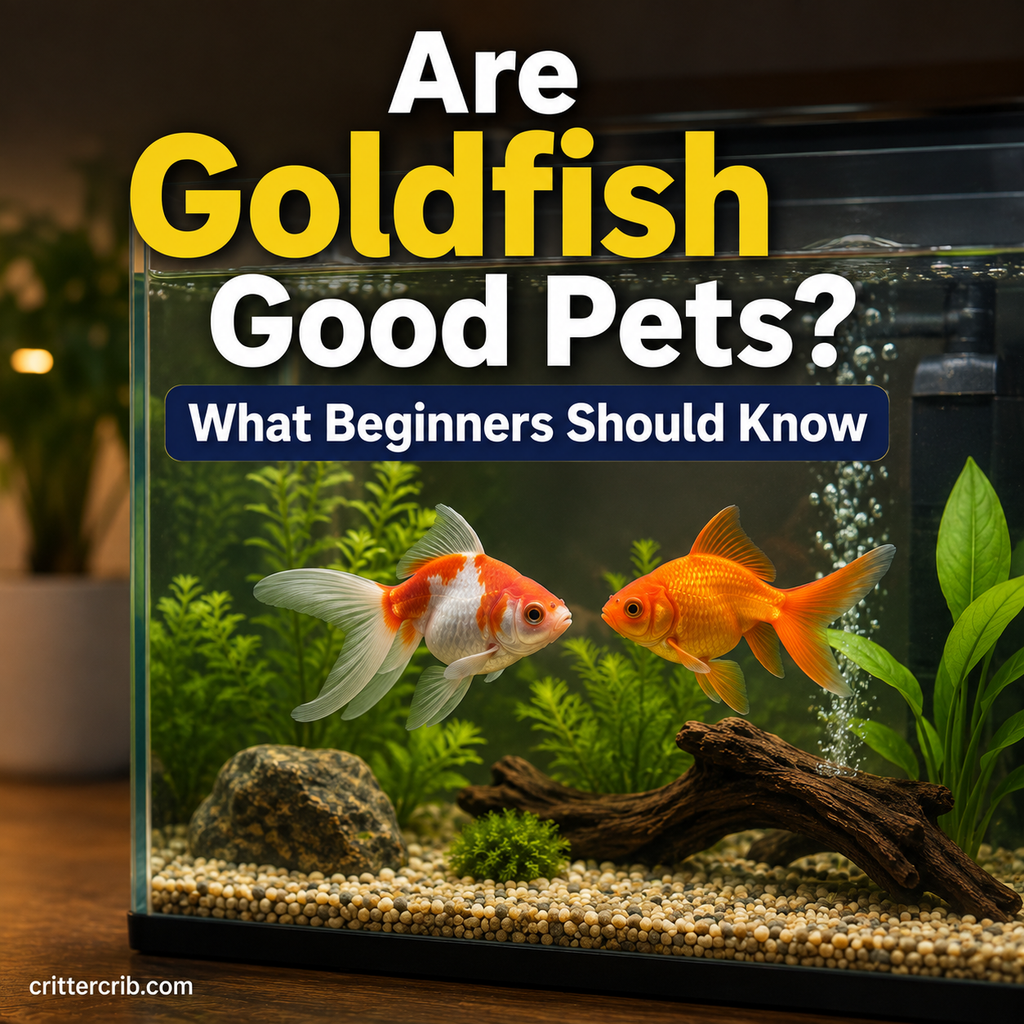
Goldfish are one of the most recognizable pet fish in the world. They’re colorful, widely available, relatively affordable to buy, and often recommended as a first pet.
But are goldfish actually good pets for beginners?
They can be. Goldfish are fascinating, active fish that can live for many years and become surprisingly interactive with their owners. However, they’re also frequently misunderstood. Despite the familiar image of a goldfish swimming around a small glass bowl, these fish need considerably more space and care than many people expect.
A properly cared-for goldfish isn’t a temporary decoration. It’s a long-term pet that needs a spacious aquarium, good filtration, regular maintenance, and consistently healthy water.
If you’re thinking about bringing one home, here’s what you should know before deciding whether a goldfish is the right pet for you.
Are Goldfish Good Pets for Beginners?
Goldfish can be good beginner pets, but they aren’t necessarily the easiest fish for a first-time aquarium owner.
Their basic care isn’t particularly complicated once you understand it. The challenge is that goldfish produce a substantial amount of waste and can grow much larger than the small fish you typically see at pet stores.
That means you’ll need to provide enough space and maintain good water quality.
Goldfish may be a good choice if you:
- Want an active freshwater fish
- Have room for an appropriately sized aquarium
- Don’t mind regular aquarium maintenance
- Are willing to learn about water quality
- Want a pet that could live for many years
- Enjoy watching and interacting with fish
They may not be ideal if you’re looking for an extremely small, nearly maintenance-free pet.
There’s no such thing as a maintenance-free aquarium, and goldfish are a particularly poor choice for someone who wants to fill a bowl with water and occasionally sprinkle in food.
Goldfish Are More Interesting Than Many People Realize
One reason goldfish make enjoyable pets is their behavior.
They’re active during much of the day and spend plenty of time exploring their surroundings, searching through substrate, investigating decorations, and interacting with other goldfish.
They can also become accustomed to the people who care for them.
Walk toward an established goldfish aquarium around feeding time and you may quickly find several fish swimming toward the front glass.
Over time, you’ll start noticing individual differences as well. One fish may be particularly curious, while another is more interested in food or follows its tank mates around.
You aren’t going to interact with a goldfish in the same way you would with a dog or cat, of course. But they’re far from the unresponsive pets they’re sometimes assumed to be.
Goldfish Need More Space Than a Bowl
This is probably the biggest surprise for new goldfish owners.
A traditional goldfish bowl is not an appropriate long-term habitat.
Goldfish need enough water volume for swimming, growth, oxygen exchange, filtration, and dilution of waste. Small bowls make maintaining stable water conditions extremely difficult.
Tank requirements also depend heavily on the type of goldfish you keep.
Fancy Goldfish
Fancy goldfish include varieties such as:
- Fantails
- Orandas
- Ryukins
- Ranchus
- Black moors
These fish typically have rounded bodies and paired tails.
For a pair of fancy goldfish, an aquarium in the neighborhood of 40 gallons or larger is a much more realistic starting point than a small desktop tank. Larger aquariums are even better, particularly when keeping additional fish.
Exact stocking recommendations vary, so think of tank size as a starting point rather than a rule that allows you to squeeze a specific number of fish into an aquarium.
Common and Comet Goldfish
Common and comet goldfish are a different story.
These are the classic long-bodied goldfish frequently sold inexpensively in pet stores.
They can grow surprisingly large and are strong, active swimmers.
Adults often need very large aquariums, indoor stock tanks, or appropriately designed outdoor ponds. A small home aquarium that looks spacious when the fish are juveniles can quickly become inadequate as they grow.
Before buying a goldfish, find out which type you’re getting.
That inexpensive inch-long fish could eventually require substantially more space than you expect.
How Big Do Goldfish Get?
Goldfish don’t simply remain tiny because they’re kept in a small aquarium.
Their adult size depends on variety, genetics, nutrition, water quality, and overall care.
Fancy goldfish commonly reach several inches in length, while long-bodied common and comet goldfish can become considerably larger.
Some can eventually approach or exceed a foot in length under favorable conditions.
That’s dramatically different from the tiny juvenile fish you see lined up in pet-store tanks.
This is why choosing an aquarium based only on your goldfish’s current size can lead to problems later.
Plan for the adult fish, not the fish you’re bringing home today.
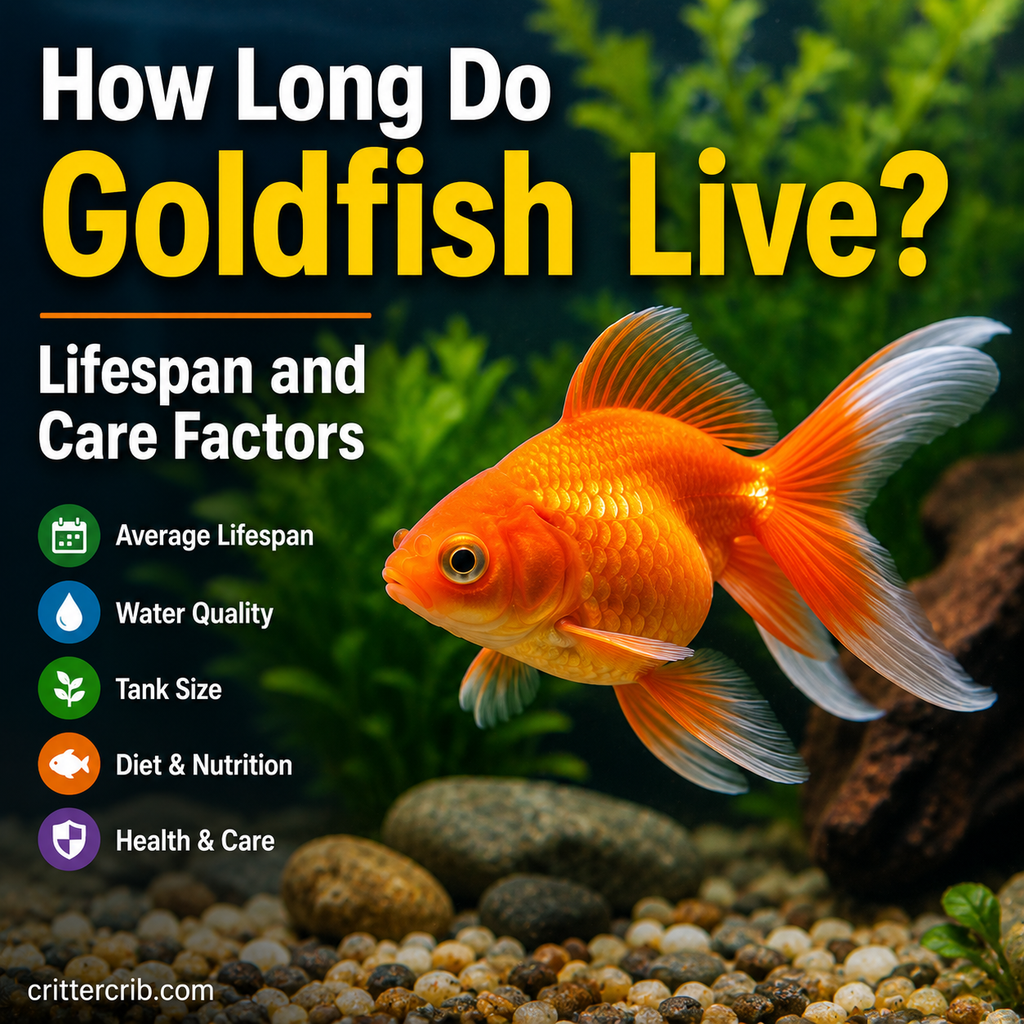
How Long Do Goldfish Live?
Another common misconception is that goldfish naturally live for only a few years.
Healthy goldfish can live much longer.
With proper housing, nutrition, and water quality, a goldfish can potentially live for 10–20 years or more.
That makes getting a goldfish a genuine long-term commitment.
Unfortunately, the short lifespans many people associate with goldfish are often connected to inadequate housing, poor water quality, overfeeding, and other preventable husbandry problems.
Before getting one, consider whether you’re comfortable caring for the fish for potentially well over a decade.
Goldfish Produce a Lot of Waste
Goldfish have a reputation among aquarium keepers for being messy.
It’s deserved.
They eat enthusiastically and produce plenty of waste. That waste eventually contributes to ammonia and other compounds that can affect water quality.
A good filtration system is therefore extremely important.
Your filter helps:
- Remove suspended debris
- Circulate aquarium water
- Support beneficial bacteria
- Process harmful nitrogen waste
- Improve overall water quality
You’ll generally want robust filtration appropriate for the aquarium’s volume and biological load.
However, filtration doesn’t eliminate the need for water changes.
A filter and regular aquarium maintenance work together.
You Need to Understand the Nitrogen Cycle
If goldfish will be your first aquarium fish, spend some time learning about the aquarium nitrogen cycle before bringing them home.
It sounds technical, but the basic idea is straightforward.
Fish produce waste, which contributes to ammonia in the aquarium. Ammonia is toxic to fish.
Beneficial bacteria establish themselves on filter media, substrate, decorations, and other aquarium surfaces. These microorganisms help convert ammonia into nitrite and eventually nitrate.
Both ammonia and nitrite are dangerous to fish.
Nitrate is generally less immediately toxic at typical aquarium concentrations and is managed through water changes, plants, and good maintenance.
In a properly cycled aquarium:
- Ammonia should be 0 ppm
- Nitrite should be 0 ppm
- Nitrate should be kept under control
A freshwater aquarium test kit allows you to monitor these parameters.
Cycle the Aquarium Before Getting Goldfish
Whenever possible, establish the aquarium’s nitrogen cycle before adding fish.
This is commonly called fishless cycling.
Simply setting up a tank, turning on the filter, and letting it run for a few days doesn’t necessarily mean the aquarium is cycled.
Beneficial bacteria need time and an ammonia source to establish a functional biological filter.
The process often takes several weeks.
Testing the water tells you what’s actually happening instead of relying on a predetermined number of days.
Goldfish Need Regular Water Changes
Even with an excellent filter, you’ll need to change part of the aquarium water regularly.
For many goldfish aquariums, a weekly partial water change is a good starting routine.
The exact amount and frequency depend on factors such as:
- Aquarium size
- Number and size of fish
- Filter capacity
- Feeding
- Nitrate levels
- Plant growth
- Overall water quality
A 25–50% weekly water change is common in goldfish aquariums, but your water tests should help determine the appropriate schedule for your particular setup.
During a typical water change, you can also vacuum debris from the substrate.
Don’t completely drain and scrub the aquarium every week.
The goal is maintaining a healthy, stable biological environment—not repeatedly sterilizing it.
Do Goldfish Need a Filter?
Yes. A proper goldfish aquarium should have filtration.
Because goldfish produce so much waste, trying to maintain good water quality without a filter makes an already demanding task significantly harder.
Choose a filter rated appropriately for your aquarium and stocking level.
Many goldfish keepers use:
- Canister filters
- Hang-on-back filters
- Internal filters
- Sponge filters
- Combinations of multiple filters
There’s no single filter that’s perfect for every setup.
What’s important is providing adequate biological and mechanical filtration while maintaining appropriate water movement.
Do Goldfish Need a Heater?
Usually, goldfish don’t need the same warm tropical conditions required by fish such as bettas.
Most commonly kept goldfish prefer cooler water and can often live comfortably at normal indoor aquarium temperatures.
That doesn’t mean temperature is irrelevant.
Sudden fluctuations can be stressful, and extremely warm water can create problems because warmer water holds less dissolved oxygen.
Fancy goldfish may also benefit from somewhat warmer and more stable conditions than hardy common or comet goldfish.
Whether you need a heater depends partly on the temperature and stability of the room where the aquarium is located.
A thermometer is useful even when you don’t use a heater because it lets you monitor the actual water temperature.
What Water Do Goldfish Need?
Tap water is commonly used for goldfish aquariums, but it usually needs to be treated first.
Municipal tap water may contain chlorine or chloramine. These disinfectants make water safe for people but can harm fish and beneficial aquarium bacteria.
Use an aquarium water conditioner designed for your water supply whenever adding fresh tap water.
You’ll also want to monitor basic water parameters with a freshwater test kit.
At minimum, you should be able to test:
- Ammonia
- Nitrite
- Nitrate
- pH
Avoid constantly adding chemicals to chase a supposedly perfect pH.
Stable water conditions are generally more important than repeatedly forcing the aquarium toward an exact number.
What Do Goldfish Eat?
Goldfish are omnivores.
A quality food formulated specifically for goldfish can form the foundation of their diet.
Depending on the fish and setup, their diet can also include appropriate vegetables and supplemental foods.
The biggest feeding mistake beginners make is often giving too much food.
Goldfish usually act hungry.
They may swim toward you, gather at the surface, and behave as though they haven’t eaten in weeks—even shortly after being fed.
Don’t let their enthusiasm convince you to continually add more food.
Overfeeding can contribute to:
- Poor water quality
- Excess waste
- Uneaten food in the aquarium
- Digestive problems
- Unnecessary weight gain
Feed appropriate portions and remove obvious uneaten food.
Goldfish Benefit From an Interesting Habitat
Goldfish may not need elaborate decorations, but an empty glass box isn’t particularly interesting either.
You can create a more natural and engaging environment with:
- Smooth rocks
- Aquarium-safe wood
- Hardy live plants
- Appropriate substrate
- Open swimming areas
- Other smooth aquarium-safe decorations
Goldfish frequently investigate their surroundings and forage around the bottom of the aquarium.
Just remember that they’re notorious for rearranging things.
They may dig through substrate, move small objects, or uproot delicate plants.
Be Careful With Small Gravel
Goldfish regularly search through substrate for food.
Small pieces of gravel can potentially become lodged in a goldfish’s mouth.
Many keepers prefer sand, appropriately sized smooth substrate, or even bare-bottom setups for easier cleaning.
Whatever you choose, consider both safety and maintenance.
Can Goldfish Live Alone?
Goldfish are social fish and often do well with other compatible goldfish.
Watching a pair or group interact can be one of the most enjoyable parts of keeping them.
However, adding more goldfish also means:
- More waste
- More food
- More required swimming space
- Greater filtration needs
- More aquarium maintenance
Don’t add additional fish simply because you have an empty-looking section of the tank.
Your aquarium needs enough capacity for the adult size and waste production of every fish living in it.
Can Goldfish Live With Other Fish?
Potentially, but choosing goldfish tank mates isn’t as simple as picking another peaceful-looking fish.
You have to consider:
- Water temperature
- Adult size
- Swimming speed
- Temperament
- Feeding behavior
- Fin-nipping
- Whether one fish could eat another
Goldfish will sometimes attempt to eat animals small enough to fit in their mouths.
Fancy goldfish create additional complications because their unusual body shapes and fins can make them slower swimmers than common goldfish and many other fish species.
For beginners, keeping compatible goldfish varieties together is often simpler than trying to build a mixed-species community aquarium.
Are Goldfish Expensive to Keep?
The fish itself may be inexpensive.
The habitat usually isn’t.
A basic goldfish might cost only a few dollars, but responsible setup expenses can include:
- A large aquarium
- Aquarium stand
- Filter
- Filter media
- Lighting
- Water conditioner
- Water test kit
- Substrate
- Decorations or plants
- Food
- Gravel vacuum
- Buckets and maintenance equipment
There are also ongoing costs such as food, replacement supplies, electricity, and potentially veterinary care.
Common and comet goldfish can become particularly expensive if their eventual size requires a very large aquarium or pond.
This doesn’t mean goldfish are prohibitively expensive pets.
It simply means the purchase price of the fish doesn’t accurately represent the cost of keeping it properly.
How Much Work Is a Goldfish?
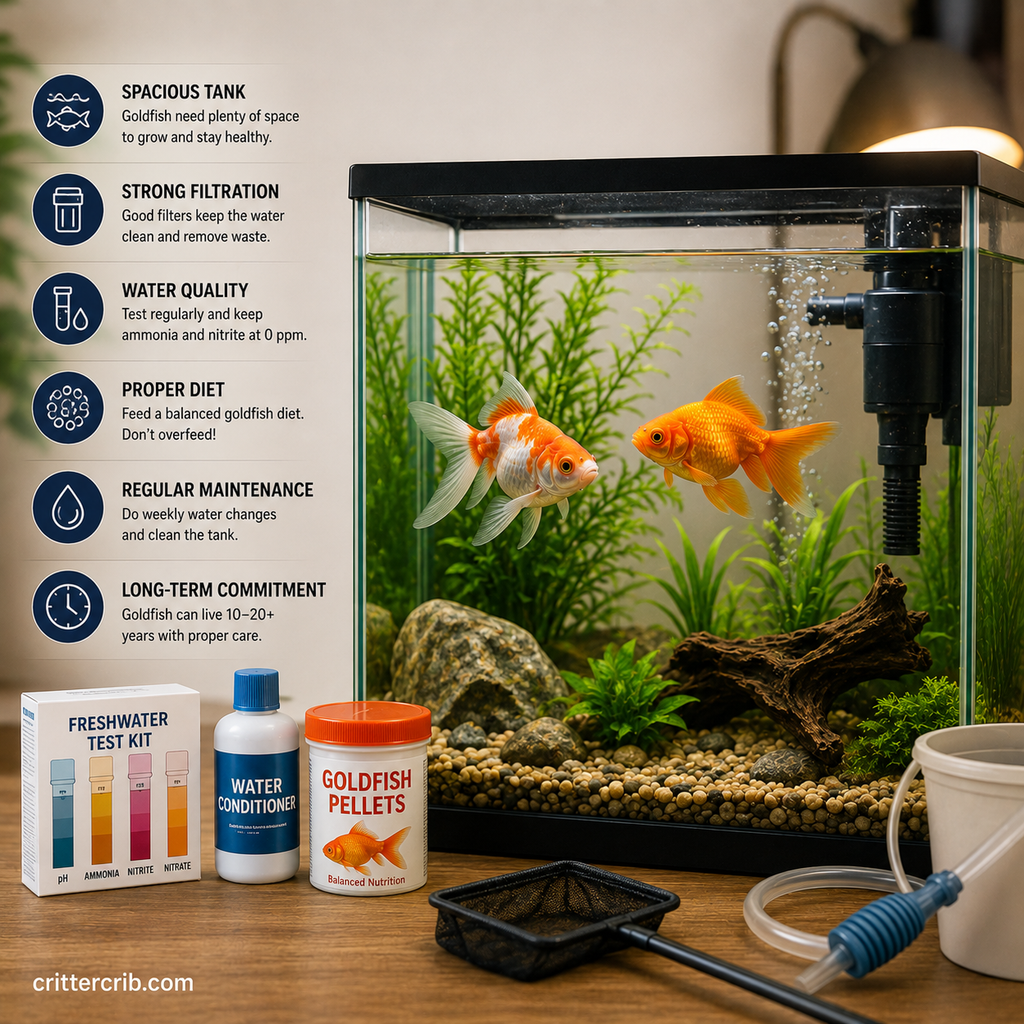
Once you have an established aquarium, everyday goldfish care is fairly simple.
Most days involve feeding and checking that everything looks normal.
Weekly maintenance requires more effort.
A typical routine might include:
- Check the fish for unusual behavior or physical changes.
- Test water parameters as needed.
- Remove a portion of the aquarium water.
- Vacuum waste from the substrate.
- Clean algae from the glass if necessary.
- Add appropriately conditioned replacement water.
- Inspect the filter.
- Check other aquarium equipment.
You may occasionally need to rinse reusable filter media, trim plants, or perform other maintenance.
The work isn’t overwhelming for most people, but it’s definitely more involved than occasionally topping up a bowl.
Are Goldfish Good Pets for Kids?
Goldfish can be excellent pets for children who are interested in animals and aquariums.
Watching them eat, swim, and explore can help children develop an appreciation for aquatic animals.
However, adults should expect to take responsibility for the aquarium.
A child can certainly help with:
- Feeding
- Observing the fish
- Simple cleaning tasks
- Water testing with supervision
- Learning about aquarium biology
But maintaining a large aquarium, handling water changes, monitoring water chemistry, and recognizing health problems shouldn’t fall entirely on a young child.
Goldfish should be considered family pets rather than disposable starter pets.
Pros and Cons of Keeping Goldfish
If you’re still deciding, looking at the advantages and disadvantages side by side can help.
Advantages of Goldfish
Goldfish can be:
- Beautiful and colorful
- Active during the day
- Interesting to watch
- Relatively easy to feed
- Interactive with their owners
- Available in many varieties
- Long-lived with proper care
- Suitable for freshwater aquariums
- Kept without tropical water temperatures in many homes
A well-designed goldfish aquarium can also become an impressive centerpiece.
Disadvantages of Goldfish
Goldfish also:
- Require much larger tanks than many beginners expect
- Produce substantial amounts of waste
- Need regular water changes
- Require good filtration
- Can live for well over a decade
- May grow surprisingly large
- Can damage or uproot plants
- Aren’t suitable for small bowls
- Can require expensive equipment
Common and comet goldfish are especially challenging for people with limited space because of their potential adult size.
Common Beginner Goldfish Mistakes
Most problems with goldfish aren’t caused by the fish being unusually difficult.
They’re caused by outdated assumptions about their care.
Keeping Goldfish in a Bowl
The classic goldfish bowl may be iconic, but it doesn’t provide enough space or water volume for long-term goldfish care.
Use an appropriately sized filtered aquarium instead.
Buying Too Many Goldfish
Small juvenile goldfish can make a large aquarium look empty.
Resist the temptation to fill that space immediately.
Remember how large the fish may become and how much waste they’ll eventually produce.
Skipping the Nitrogen Cycle
A brand-new aquarium isn’t automatically safe simply because the water looks clear.
Cycle the aquarium and monitor ammonia, nitrite, and nitrate.
Overfeeding
Goldfish are convincing beggars.
Feeding every time they act hungry can quickly lead to excessive food and poor water quality.
Choosing a Tank Based on the Fish’s Current Size
That two-inch goldfish may not stay two inches long.
Plan your habitat around adult size.
Assuming the Filter Does Everything
A powerful filter helps tremendously, but it doesn’t replace water changes.
Regular maintenance remains essential.
Replacing All Filter Media at Once
Beneficial bacteria colonize your filter media.
Replacing everything at the same time can remove a large portion of your biological filtration.
Clean and replace filter components appropriately rather than automatically throwing everything away whenever it looks dirty.
What Do You Need Before Getting a Goldfish?
It’s much easier to establish the aquarium before bringing the fish home.
A beginner goldfish setup will generally require:
- Appropriately sized aquarium
- Strong aquarium stand
- Suitable filter
- Filter media
- Aquarium thermometer
- Water conditioner
- Freshwater test kit
- Substrate if desired
- Aquarium-safe decorations
- Appropriate goldfish food
- Gravel vacuum or siphon
- Dedicated aquarium bucket
- Algae-cleaning supplies
Depending on your setup, you may also want an air pump, air stone, live plants, and additional filtration.
Most importantly, give yourself enough time to establish the aquarium’s nitrogen cycle before adding fish.
Are Goldfish Low-Maintenance Pets?
Goldfish are relatively straightforward to care for once their aquarium is properly established, but calling them low-maintenance can be misleading.
They need regular feeding, observation, water changes, filtration, and occasional equipment maintenance.
The good news is that most of this becomes routine.
A well-planned aquarium is also significantly easier to maintain than an undersized one.
Trying to save time and money with a tiny tank often creates more work because water quality can deteriorate much faster.
Starting with adequate space and filtration makes goldfish ownership easier, not harder.
Who Should Get a Goldfish?
Goldfish are a good fit for someone who enjoys aquariums and wants an active, long-lived freshwater pet.
They’re particularly appealing if you:
- Have room for a larger aquarium
- Enjoy watching fish behavior
- Don’t mind weekly maintenance
- Want a pet that doesn’t require walks or outdoor exercise
- Are interested in learning basic aquarium care
- Are prepared for a long-term commitment
They can also be a great introduction to fishkeeping because caring for them teaches you about water chemistry, filtration, aquarium biology, nutrition, and animal behavior.
Who Shouldn’t Get a Goldfish?
You may want to consider another pet if you:
- Only have room for a tiny bowl or desktop aquarium
- Don’t want to perform water changes
- Want a pet requiring almost no maintenance
- Aren’t prepared to purchase proper filtration
- Frequently move and can’t transport a large aquarium
- Don’t want a potentially 10–20-year commitment
If space is the primary issue, there are smaller freshwater species better suited to compact aquariums.
Goldfish shouldn’t be forced into a small habitat simply because they’re inexpensive and easy to find.
Frequently Asked Questions About Goldfish as Pets
Are Goldfish Easy to Take Care Of?
Goldfish care is fairly straightforward once you have a properly sized, cycled, and filtered aquarium.
The biggest challenge is maintaining good water quality because goldfish produce substantial waste.
Can Goldfish Live in a Bowl?
A small bowl isn’t suitable as a permanent goldfish habitat.
Goldfish need much more swimming space, water volume, oxygen exchange, and filtration than a typical bowl provides.
Do Goldfish Recognize Their Owners?
Goldfish can learn to associate people with food and routine.
Many become noticeably responsive when their regular caretaker approaches the aquarium.
How Long Can a Pet Goldfish Live?
With proper care, goldfish can potentially live 10–20 years or longer.
They’re much longer-lived pets than their reputation suggests.
Do Goldfish Need a Friend?
Goldfish are social animals and can benefit from living with compatible goldfish when enough space and filtration are available.
Adding another goldfish, however, significantly increases the aquarium’s biological load, so adequate tank capacity is essential.
Do Goldfish Need a Light?
Goldfish benefit from a regular day-and-night cycle.
An aquarium light can provide consistent daytime illumination and support live plants if you have them. The light should be turned off at night rather than left on continuously.
Are Goldfish Good First Pets?
They can be, especially for someone genuinely interested in learning aquarium care.
However, they’re not ideal if you’re looking for a tiny or maintenance-free pet. Their space and filtration requirements make them more involved than their reputation suggests.
So, Are Goldfish Good Pets?
Yes—goldfish can be excellent pets for the right person.
They’re colorful, active, interesting to watch, and capable of living for many years. With time, you may even begin recognizing individual personalities and behaviors.
But the common idea of a goldfish as an inexpensive fish that spends its life in a small bowl doesn’t reflect what these animals actually need.
Goldfish require space. They need filtration, clean water, appropriate food, regular maintenance, and an aquarium designed around their adult size rather than how small they are at the pet store.
For someone prepared to provide those things, goldfish can be rewarding pets and a great introduction to the aquarium hobby.
Just approach the decision the same way you would with any other animal: learn what the pet will need as an adult, set up its habitat properly before bringing it home, and be prepared for the commitment ahead.