
Complete Corydoras Care Guide: Habitat, Diet, and Daily Care

Group of Corydoras catfish foraging on sand in a planted freshwater aquarium
Corydoras thrive in social groups with smooth substrate, clean water, appropriate sinking foods, and plenty of bottom space for natural foraging.

Corydoras catfish—usually called corys or cory cats—are some of the most likable little fish you can add to a freshwater aquarium. They’re peaceful, social, constantly investigating the bottom of the tank, and often look like they’re busy with some very important underwater project.

They’re also commonly described as “cleanup fish.”

That’s only partly true.

Corydoras will search the substrate for edible bits, but they aren’t aquarium vacuum cleaners and shouldn’t be expected to survive on leftovers. They need their own food, suitable water conditions, compatible tank mates, and—most importantly—the company of other Corydoras.

For most commonly kept species, good Corydoras care means keeping a group of at least six of the same species when possible, providing smooth sand or fine rounded substrate, maintaining clean and stable water, and feeding a varied diet of quality sinking foods.

This complete Corydoras care guide covers everything you need to know before bringing these entertaining bottom dwellers home.

Continue reading “Complete Corydoras Care Guide: Habitat, Diet, and Daily Care”
Essential Supplies for Guppies: Beginner Checklist

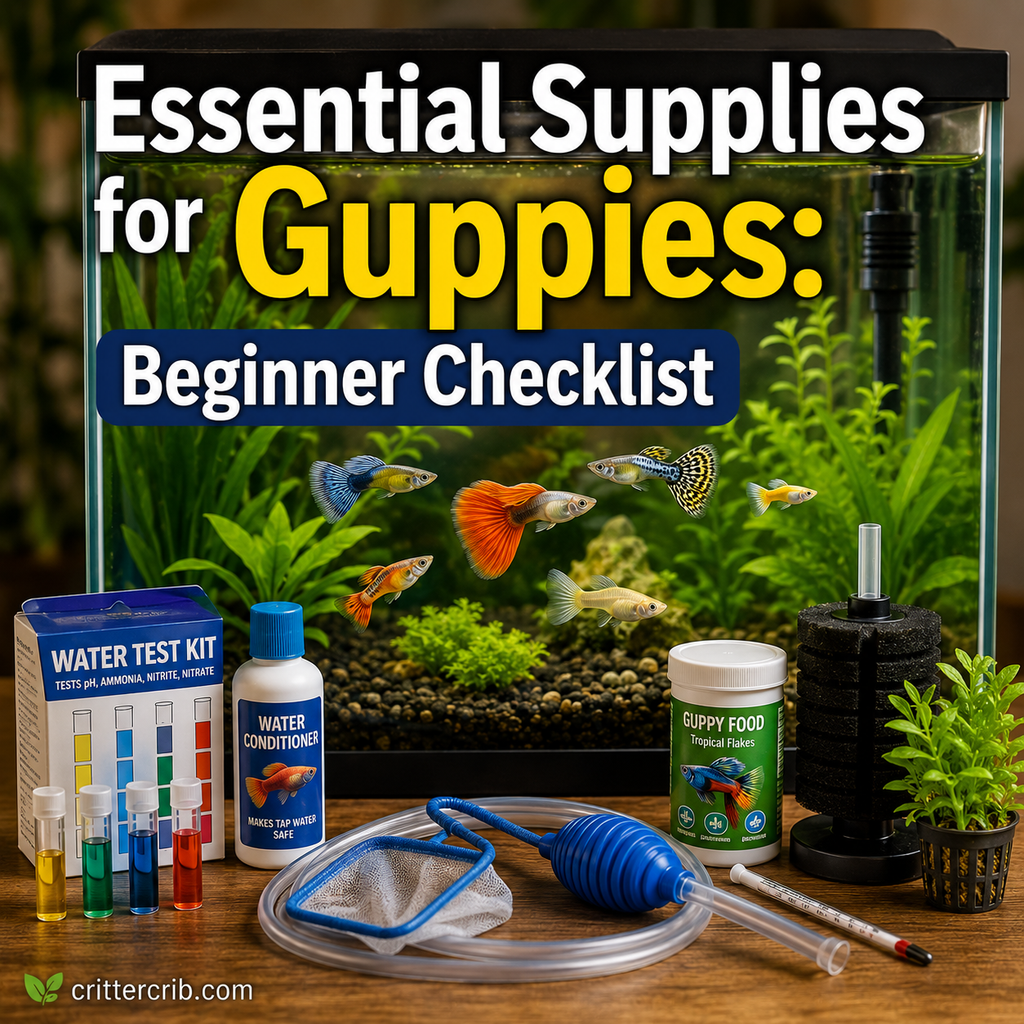
Guppy aquarium with essential beginner supplies including filter, food, water conditioner, test kit, net, and siphon
A healthy guppy setup starts with the right aquarium, filtration, heater, water-testing supplies, quality food, plants, and basic maintenance equipment.

Guppies are colorful, active, and relatively approachable fish for someone setting up their first aquarium. The fish themselves don’t require a room full of specialized equipment, but they do need more than a tank, some water, and a container of flakes.

A good guppy setup starts with the basics: an appropriately sized aquarium, reliable filtration, stable temperature, conditioned water, testing supplies, nutritious food, and an environment that gives the fish room to swim and explore.

Buying the right supplies before bringing your guppies home also makes those first few weeks much easier. Instead of discovering at 9 p.m. that you need a water conditioner or thermometer, you’ll already have everything ready.

This beginner guppy checklist covers the essentials, the useful extras, and a few things you probably don’t need.

Continue reading “Essential Supplies for Guppies: Beginner Checklist”

How to Clean a Goldfish Habitat: A Safe Routine

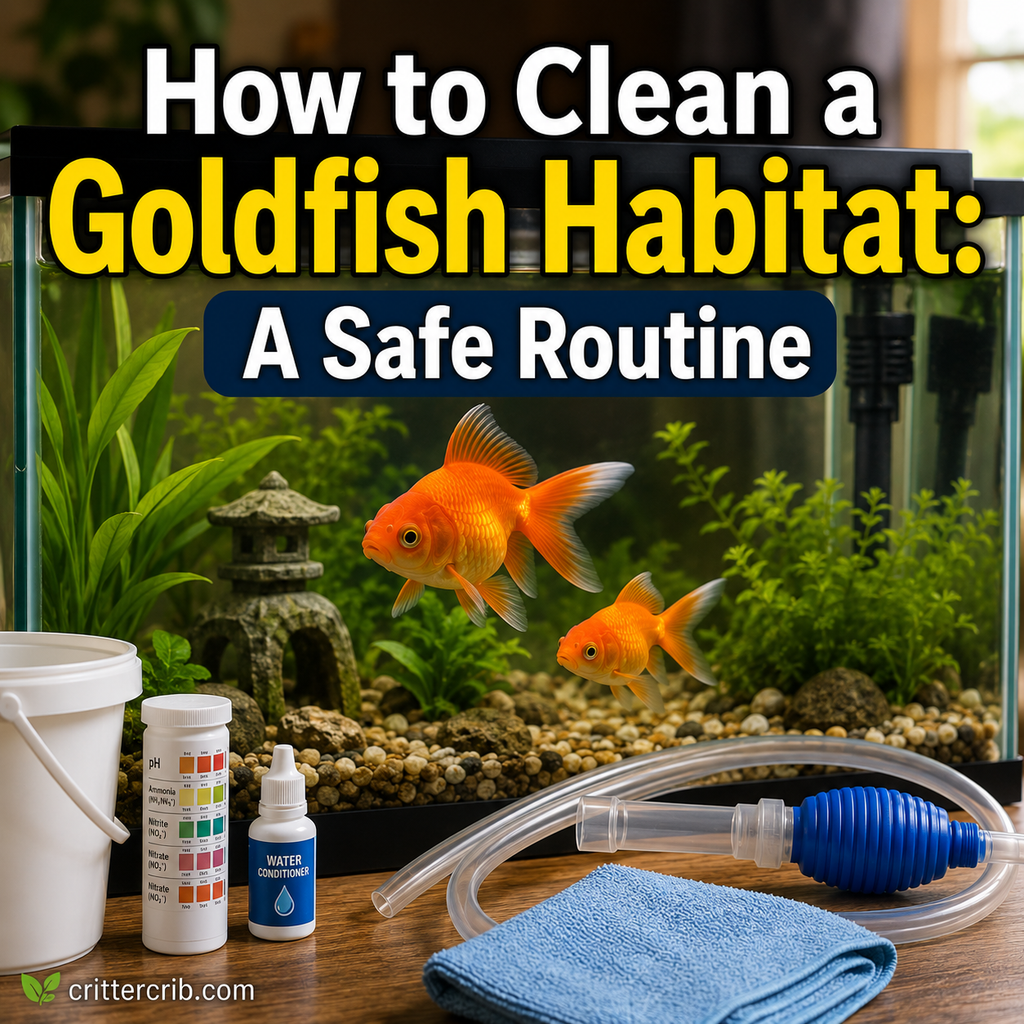
Goldfish aquarium with gravel vacuum, water conditioner, test kit, and cleaning supplies for safe tank maintenance
Regular partial water changes, substrate vacuuming, water testing, and careful filter maintenance help keep a goldfish habitat clean without disrupting its biological balance.

Goldfish have a reputation for being messy fish, and there’s some truth to it. They eat enthusiastically, produce a fair amount of waste, and can grow much larger than many new owners expect.

That makes regular aquarium maintenance especially important.

But cleaning a goldfish habitat doesn’t mean emptying the tank, scrubbing everything spotless, replacing all the water, and starting over. In fact, overly aggressive cleaning can disrupt the beneficial bacteria that help keep an aquarium stable.

A safer approach is regular partial water changes, targeted substrate cleaning, proper filter maintenance, algae removal when needed, and routine water testing.

Once you have a system, maintaining a goldfish tank becomes much easier.

Here’s a simple cleaning routine you can adapt to your aquarium.

Continue reading “How to Clean a Goldfish Habitat: A Safe Routine”

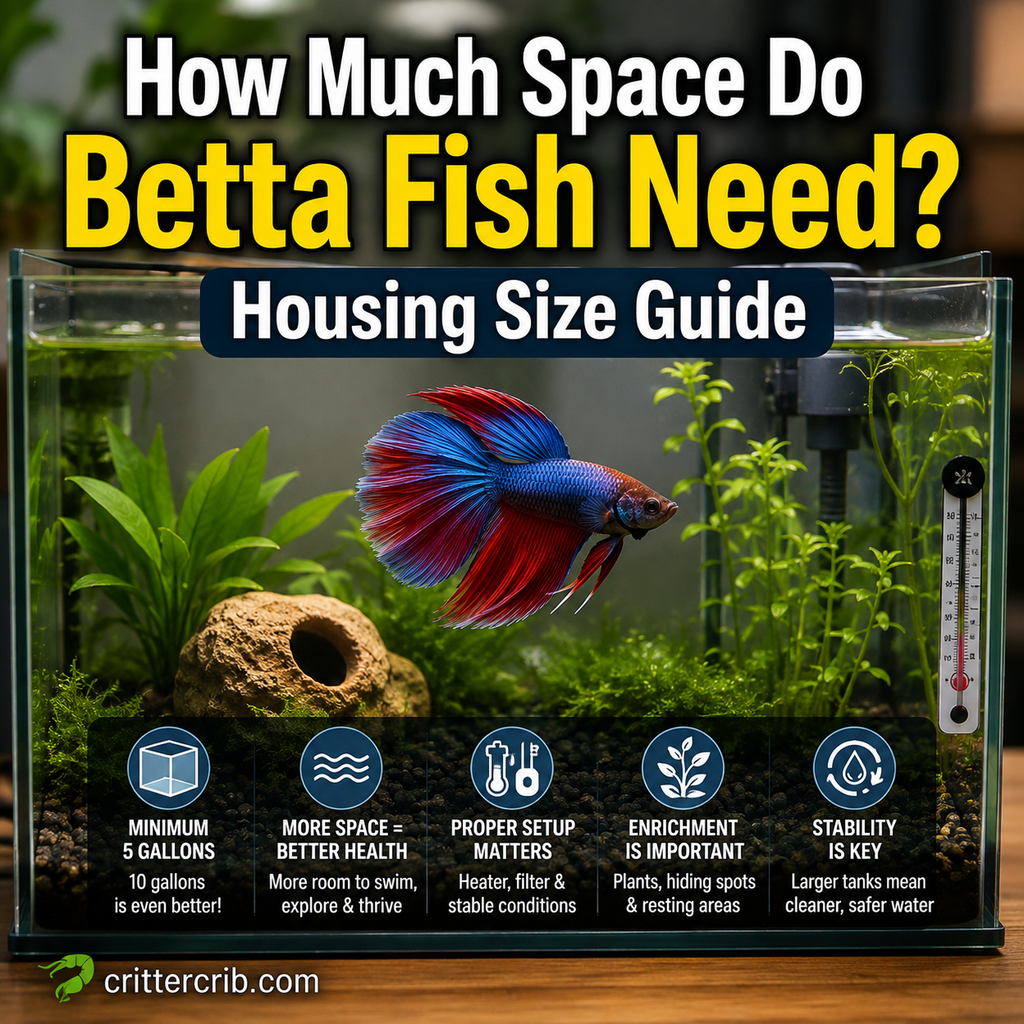
How Much Space Do Betta Fish Need? Housing Size Guide

Betta fish swimming in a spacious planted aquarium illustrating proper betta tank size and housing
A 5-gallon aquarium is a good practical minimum for a single betta, while larger tanks provide additional swimming room and greater water stability.

Betta fish are small, which is probably why they’ve spent decades being displayed in bowls, jars, tiny cubes, and other containers that wouldn’t provide much swimming room for any fish.

But being able to survive in a small amount of water doesn’t mean a betta should permanently live that way.

So, how much space do betta fish actually need?

For a single adult betta, a 5-gallon aquarium is a good practical minimum for long-term housing, while a 10-gallon tank can provide even more swimming room and greater water stability. Larger tanks can work very well too, provided they’re properly heated, filtered, and designed so the betta can easily reach the surface.

Tank size isn’t just about giving your fish more room to swim. Water volume affects temperature stability, waste concentration, filtration, enrichment, and how forgiving the aquarium is when something changes.

Here’s how to choose an appropriate home for your betta.

Continue reading “How Much Space Do Betta Fish Need? Housing Size Guide”

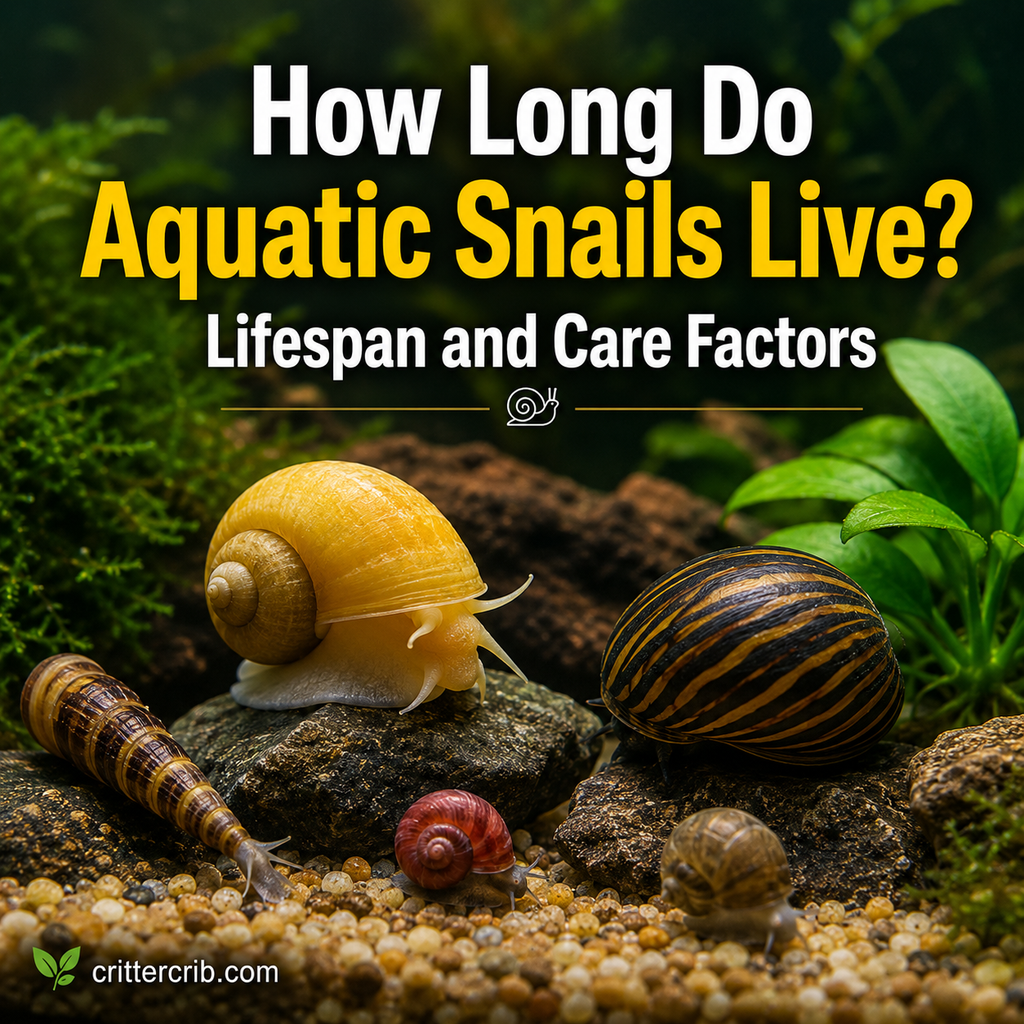
How Long Do Aquatic Snails Live? Lifespan and Care Factors

Aquatic snails in a planted freshwater aquarium illustrating their lifespan and care needs
Aquatic snail lifespans vary by species, with water quality, diet, temperature, minerals, and tank conditions all influencing long-term health.

Aquatic snails aren’t always the first animals people think about when choosing aquarium pets, but they’re surprisingly interesting once you start watching them. They explore plants, climb the glass, search constantly for food, and occasionally appear in places that make you wonder how a snail got there so quickly.

If you’re thinking about keeping one, you may be wondering how long aquatic snails actually live.

Most commonly kept freshwater aquarium snails live around 1 to 3 years, although lifespan varies considerably by species. Some may live for only about a year, while certain larger species can survive several years with good care.

Water quality, temperature, diet, calcium availability, genetics, tank mates, and even how old the snail was when you purchased it can all influence how long it lives.

Here’s what to expect from popular aquarium snails and how you can give yours the best chance at a long, healthy life.

Continue reading “How Long Do Aquatic Snails Live? Lifespan and Care Factors”

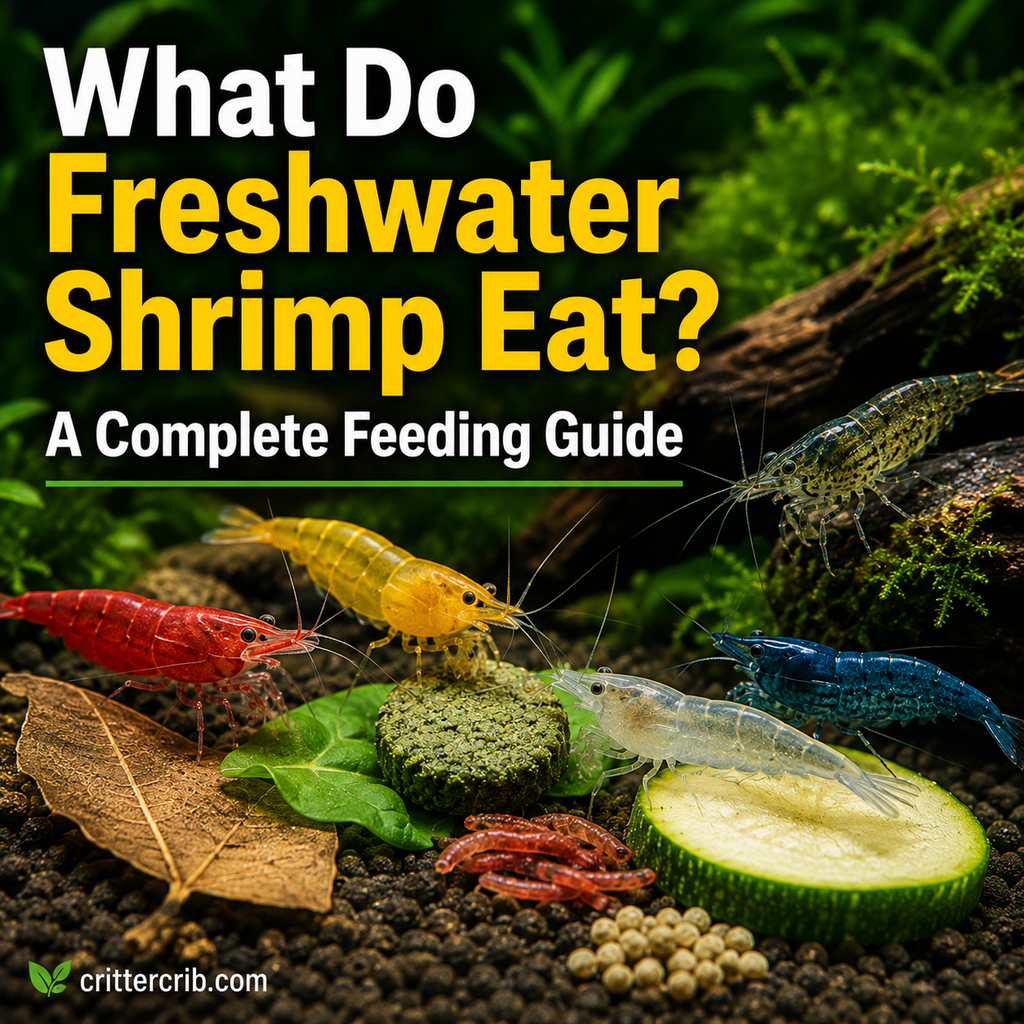
What Do Freshwater Shrimp Eat? A Complete Feeding Guide

Freshwater shrimp eating algae wafers, vegetables, and natural foods in a planted aquarium
Freshwater shrimp naturally graze on biofilm and algae while also benefiting from appropriate shrimp foods, vegetables, and occasional protein-rich foods.

Freshwater shrimp always seem to be eating something.

Watch a healthy shrimp tank for a few minutes and you’ll see them picking at plants, scraping surfaces, exploring driftwood, and combing through substrate with their tiny legs. It can look as though they’re finding invisible snacks everywhere—and, in a mature aquarium, they often are.

So, what do freshwater shrimp eat?

Most commonly kept freshwater aquarium shrimp are omnivorous scavengers that eat biofilm, algae, decaying plant material, microorganisms, and small bits of organic matter. In an aquarium, they can also be fed quality shrimp foods, algae-based foods, appropriate vegetables, and occasional protein-rich foods.

The tricky part isn’t convincing shrimp to eat. It’s figuring out how much additional food they actually need.

Because shrimp are small and constantly forage, overfeeding can cause more problems than underfeeding in an established aquarium.

Here’s how to build a balanced feeding routine.

Continue reading “What Do Freshwater Shrimp Eat? A Complete Feeding Guide”

Common Corydoras Care Mistakes and How to Avoid Them

Group of Corydoras catfish in a planted aquarium illustrating common Corydoras care mistakes
Corydoras thrive when kept in groups with clean water, smooth substrate, proper nutrition, peaceful tank mates, and enough bottom space to explore.

Corydoras catfish have a reputation for being hardy, peaceful, beginner-friendly aquarium fish. That’s mostly deserved. Give them clean water, suitable tank mates, good food, and a comfortable environment, and these little bottom-dwellers can be wonderful additions to a community aquarium.

The problem is that their easygoing nature sometimes leads people to underestimate their needs.

Corydoras aren’t simply aquarium cleanup crews. They need proper nutrition, companionship, suitable substrate, stable water conditions, and enough room to behave naturally.

Some common Corydoras care mistakes aren’t obvious either. A tank may look perfectly fine while the fish are dealing with rough substrate, poor water quality near the bottom, inadequate feeding, or the stress of being kept alone.

Here are the most common mistakes new Cory keepers make—and what to do instead.

Continue reading “Common Corydoras Care Mistakes and How to Avoid Them”

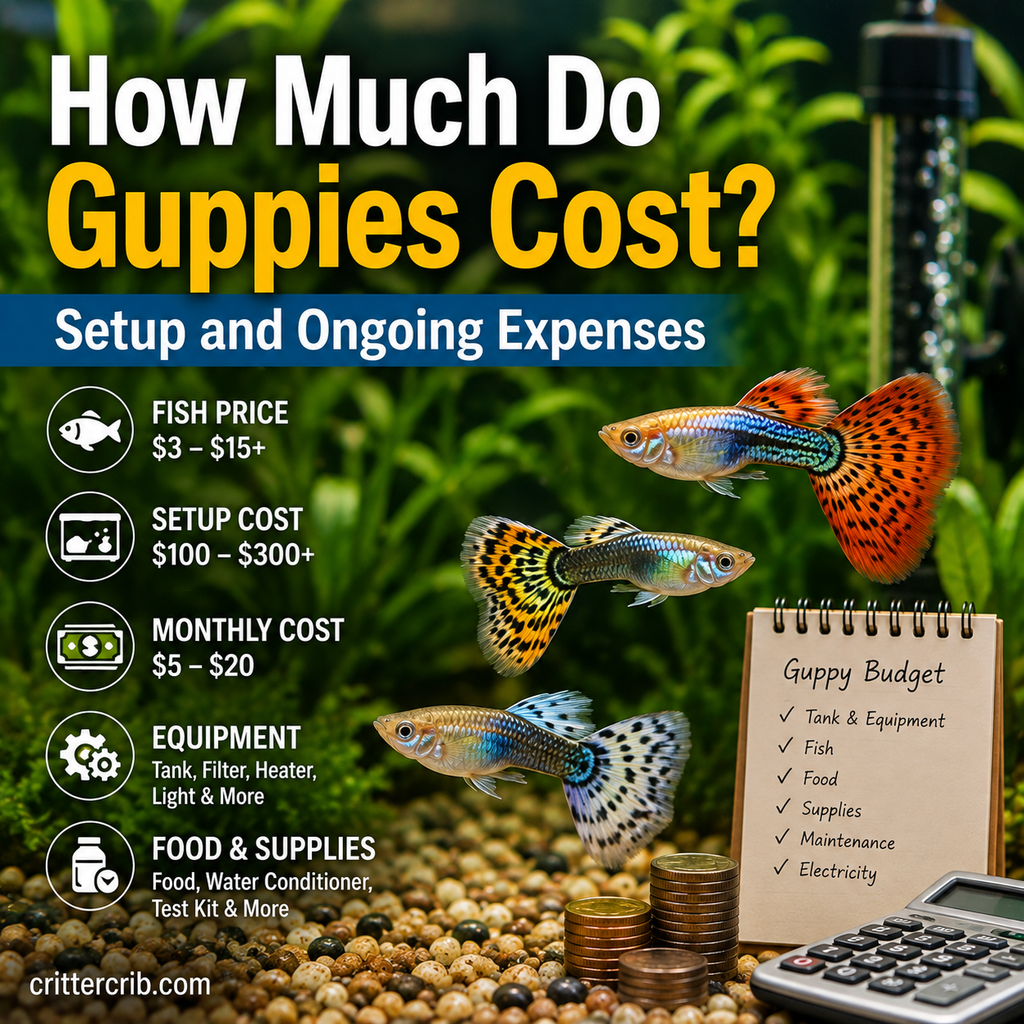
How Much Do Guppies Cost? Setup and Ongoing Expenses

Colorful guppies in an aquarium illustrating guppy setup and ongoing costs
The cost of keeping guppies includes more than the fish themselves, with aquarium equipment, food, water care, and maintenance making up most expenses.

Guppies are often considered inexpensive pets, and compared with many animals, they certainly can be. A single guppy might cost only a few dollars. But the fish itself is usually the smallest part of the overall expense.

A proper aquarium, filter, heater, water conditioner, food, testing supplies, and ongoing maintenance all add to the real cost of keeping guppies.

So, how much do guppies cost?

Individual guppies commonly cost around $3 to $15 each, although specialty strains and show-quality fish can cost considerably more. A basic guppy aquarium may require roughly $100 to $300 or more to set up properly, followed by relatively modest ongoing expenses for food, water treatment, replacement supplies, electricity, and occasional equipment.

You don’t need an extravagant aquarium to keep guppies successfully. You do, however, want to budget for the equipment that keeps their environment stable and healthy.

Here’s what new owners should expect to spend.

Continue reading “How Much Do Guppies Cost? Setup and Ongoing Expenses”

Best Enrichment Ideas for Happy, Active Goldfish

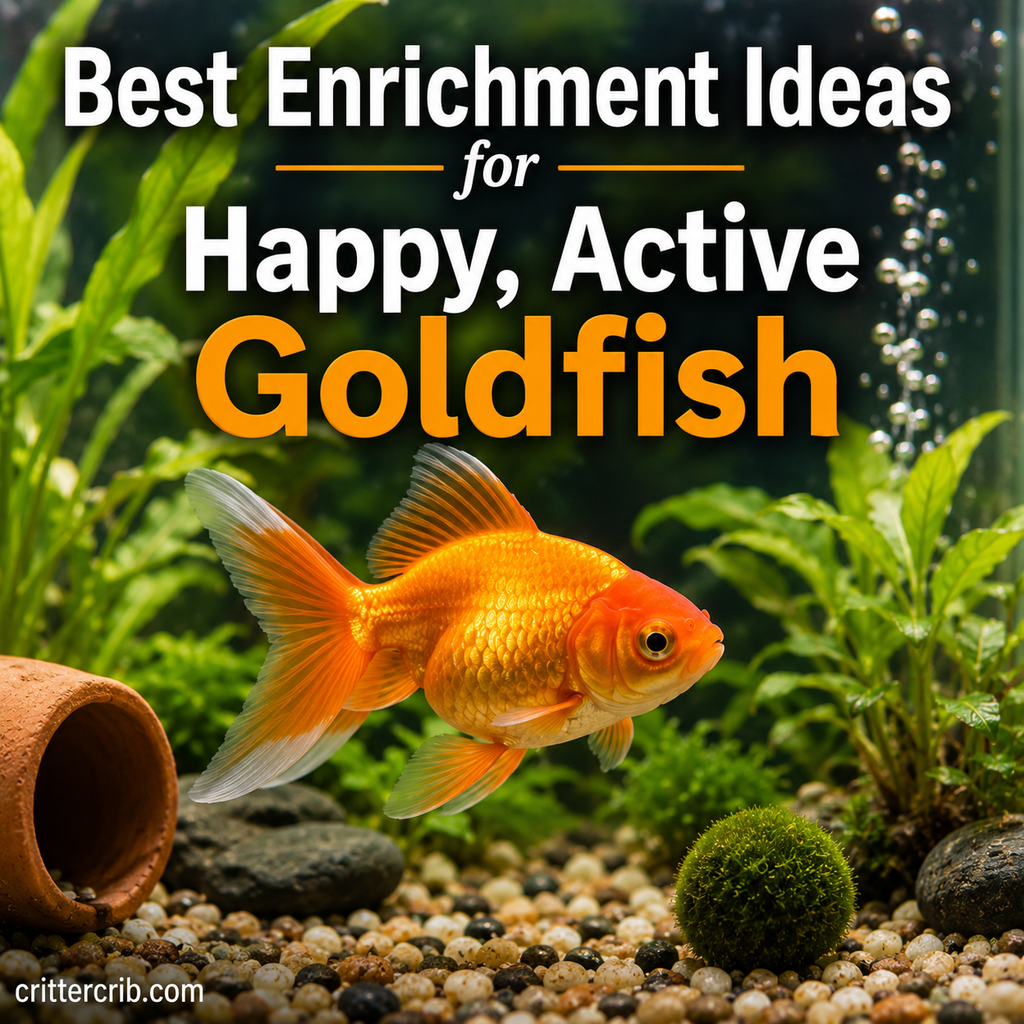
Happy active goldfish swimming in an enriched aquarium with plants, hiding places, and natural features
A well-designed aquarium with plants, open swimming space, foraging opportunities, and safe places to explore can provide valuable enrichment for goldfish.

Goldfish have a reputation for being simple pets that spend their days swimming around a bowl waiting for food. Anyone who has kept them in a well-designed aquarium, though, knows there’s a lot more going on.

Goldfish explore. They investigate new objects. They search through substrate for food, interact with their surroundings, and quickly learn routines. Some even seem to recognize the person who feeds them.

Providing enrichment gives your goldfish opportunities to express these natural behaviors instead of swimming through the same empty environment every day.

The good news is that goldfish enrichment doesn’t need to be complicated or expensive. A spacious aquarium, interesting places to explore, safe plants, varied foods, and occasional changes to their environment can make their daily lives much more engaging.

Here are some of the best enrichment ideas for keeping goldfish active and giving them plenty to do.

Continue reading “Best Enrichment Ideas for Happy, Active Goldfish”

How Long Do Betta Fish Live? Lifespan and Care Factors

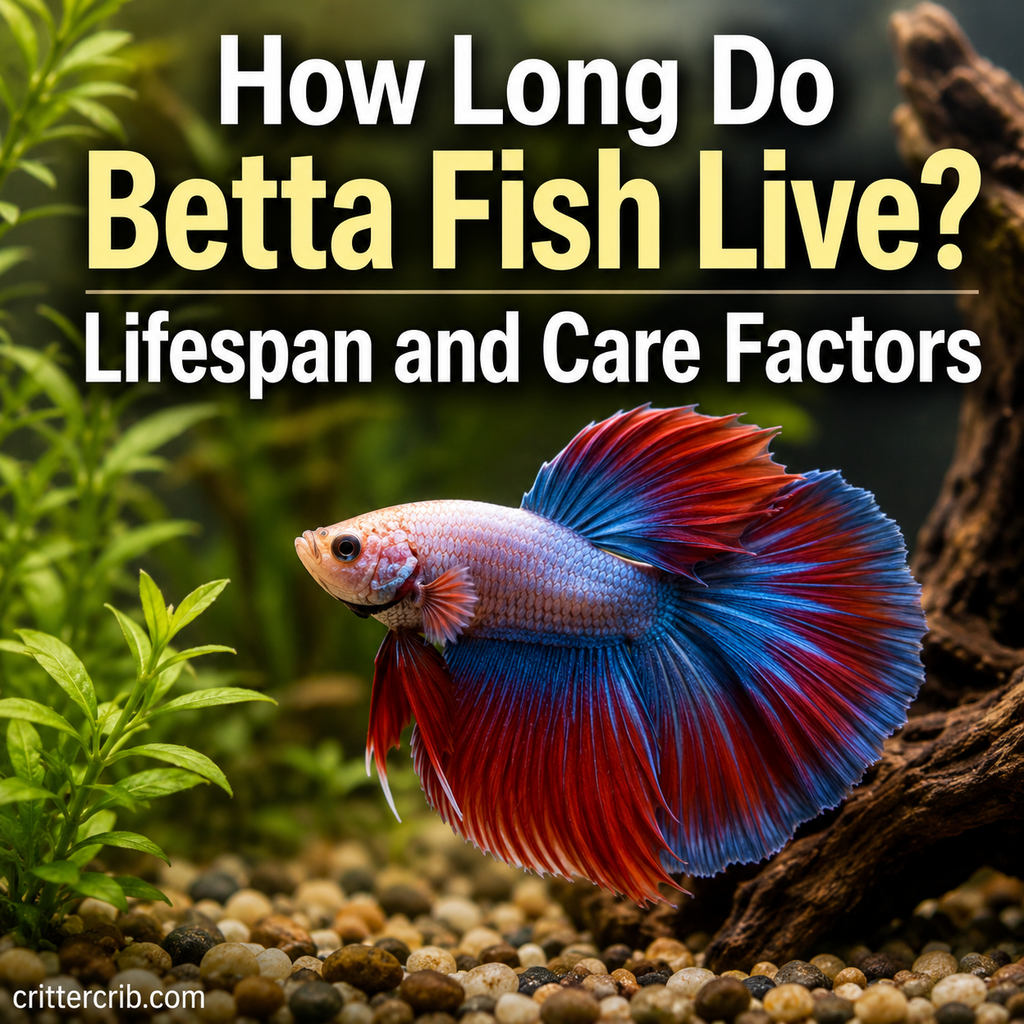
Betta fish in a planted aquarium illustrating betta fish lifespan and care factors
A healthy betta fish can live for several years with proper water quality, temperature, nutrition, and aquarium care.

Betta fish are often sold in tiny cups at pet stores, which can give the impression that they are short-lived pets that don’t need much care. In reality, bettas can live for several years when they’re kept in a healthy environment.

So, how long do betta fish live?

Most betta fish live around 2 to 5 years in captivity, although some may live longer with excellent care. Their lifespan depends on several factors, including genetics, water quality, diet, tank conditions, stress, and how old they were when you brought them home.

If you’re thinking about getting a betta—or already have one—understanding these factors can help you give your fish the best chance at a long, healthy life.

Continue reading “How Long Do Betta Fish Live? Lifespan and Care Factors”