How to Handle African Dwarf Frogs Safely and Build Trust

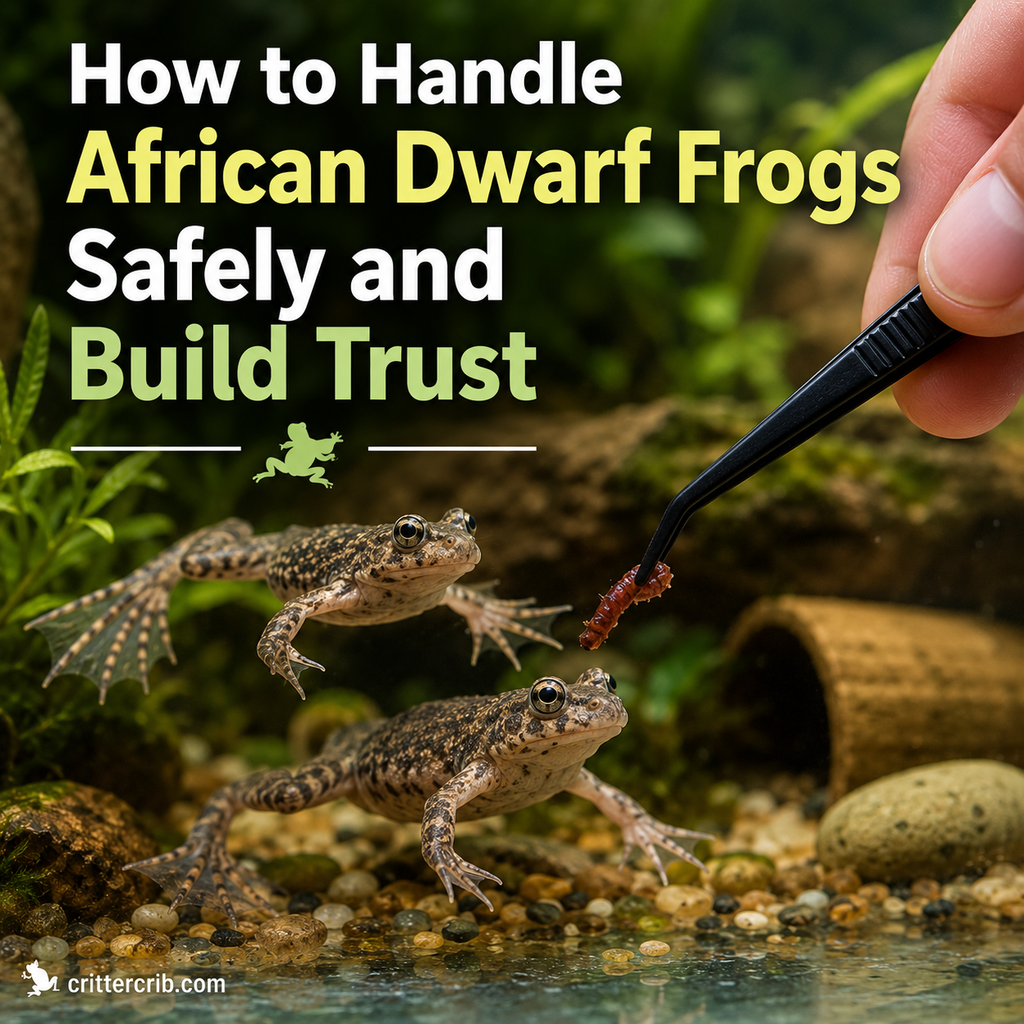
African dwarf frogs approaching feeding tongs underwater as part of a safe trust-building routine
African dwarf frogs are best treated as hands-off pets. Trust can be encouraged through calm interaction and predictable target-feeding routines rather than regular handling.

African dwarf frogs are curious little animals, and once they become comfortable in an aquarium, they may swim toward the front when you approach or eagerly investigate feeding tongs.

That can make them seem like pets that might enjoy being picked up.

They don’t.

African dwarf frogs are fully aquatic amphibians, and routine handling should be avoided. Their delicate, permeable skin can be irritated by oils, soap residue, lotions, sanitizer, and other substances on human hands. Taking them out of the water also creates unnecessary stress and exposes them to an environment they aren’t built to spend time in.

So how do you handle an African dwarf frog safely when you actually need to?

And can you build trust without touching it?

Absolutely.

The safest relationship with an African dwarf frog is mostly hands-off. Instead of handling, trust develops through predictable feeding, gentle aquarium maintenance, and allowing the frog to become comfortable with your presence.

Here’s how to do it.

Continue reading “How to Handle African Dwarf Frogs Safely and Build Trust”
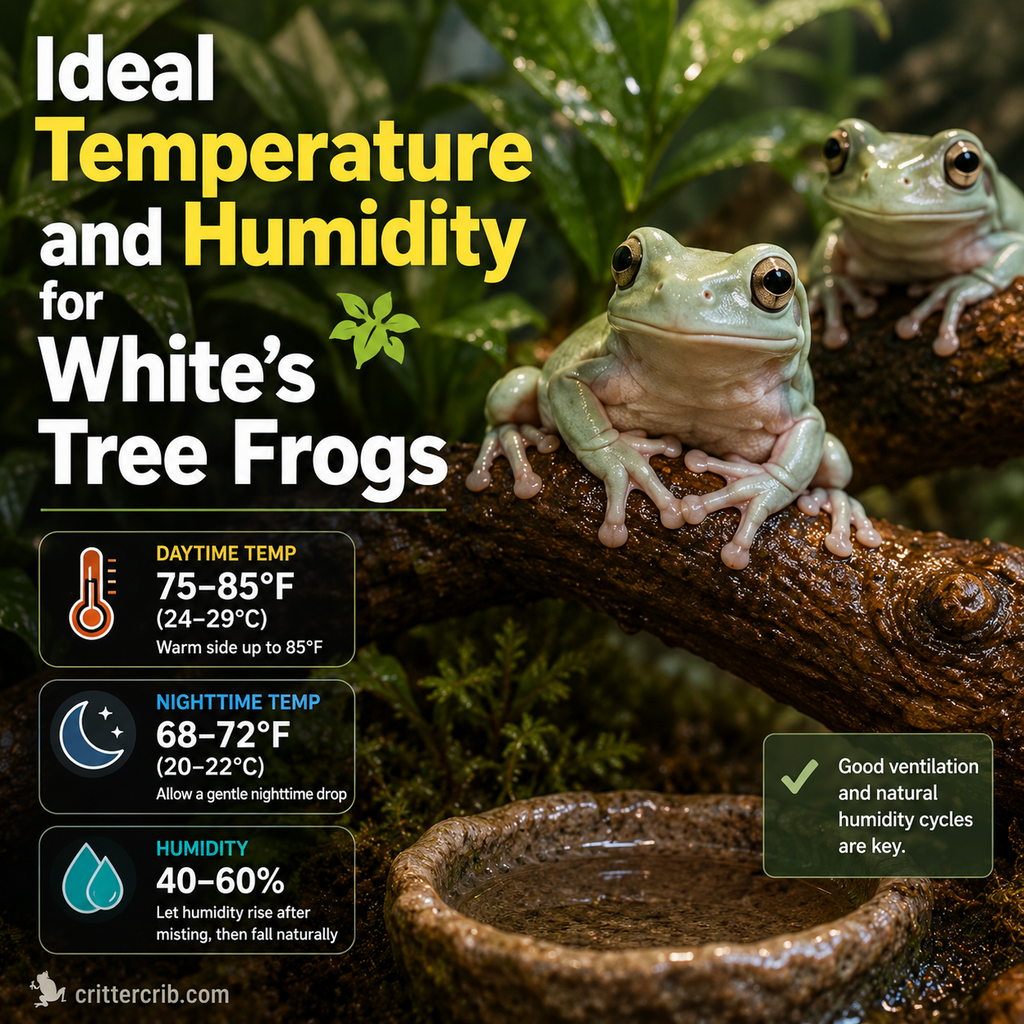
Ideal Temperature and Humidity for White’s Tree Frogs

White's tree frogs in a terrarium illustrating ideal temperature and humidity conditions
White’s tree frogs benefit from a daytime temperature gradient around 75–85°F, a gentle nighttime drop, moderate humidity, and good enclosure ventilation.

White’s tree frogs are known for being fairly hardy amphibians, but that doesn’t mean temperature and humidity can be left to chance.

Their enclosure should be warm enough to support normal activity and digestion while still giving the frogs cooler places to retreat. Humidity is a little different. Rather than keeping the terrarium constantly wet, the goal is usually a moderate environment that experiences natural fluctuations throughout the day.

Getting that balance right isn’t difficult once you understand what you’re trying to create.

For most White’s tree frog enclosures, aim for a daytime temperature gradient of roughly 75–85°F (24–29°C), with the warmest area toward the upper portion of the habitat. Nighttime temperatures can drop into the upper 60s to low 70s°F (around 20–23°C).

Humidity can generally fluctuate around 40–60%, with temporary increases after misting. Good ventilation and opportunities for the enclosure to dry somewhat between misting sessions are important.

These are general husbandry ranges rather than numbers that need to remain perfectly fixed every minute of the day.

Here’s how to create and maintain those conditions safely.

Continue reading “Ideal Temperature and Humidity for White’s Tree Frogs”

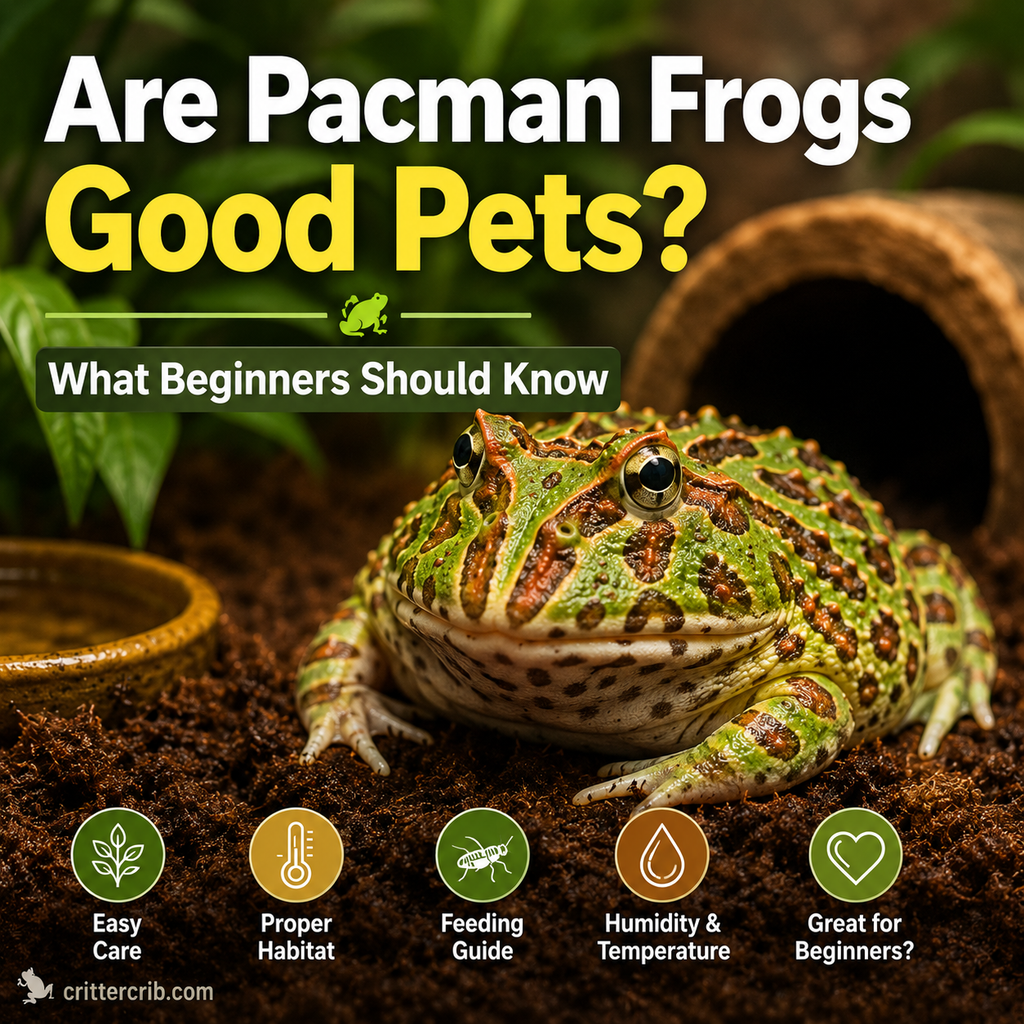
Are Pacman Frogs Good Pets? What Beginners Should Know

Pacman frog in a natural terrarium for a beginner guide to keeping Pacman frogs as pets
Pacman frogs can make fascinating pets for beginners who are comfortable with live feeders, limited handling, and maintaining the right habitat conditions.

Pacman frogs have a lot going for them as pets. They’re colorful, don’t require a huge enclosure, and have relatively straightforward care once their habitat is set up correctly.

They’re also frogs that spend an impressive amount of time doing absolutely nothing.

For the right person, that’s part of their charm.

Pacman frogs are ambush predators. Rather than climbing around or constantly exploring, they often bury themselves in the substrate and wait for food to come within striking distance. A healthy frog may remain in essentially the same place for long stretches.

So, are Pacman frogs good pets?

Yes, Pacman frogs can be good pets for beginners who want an interesting amphibian to observe and are willing to maintain proper temperature, humidity, substrate, and feeding. They aren’t a good choice if you’re looking for a pet you can frequently handle, play with, or watch moving around all day.

Before bringing one home, here’s what you should know.

Continue reading “Are Pacman Frogs Good Pets? What Beginners Should Know”

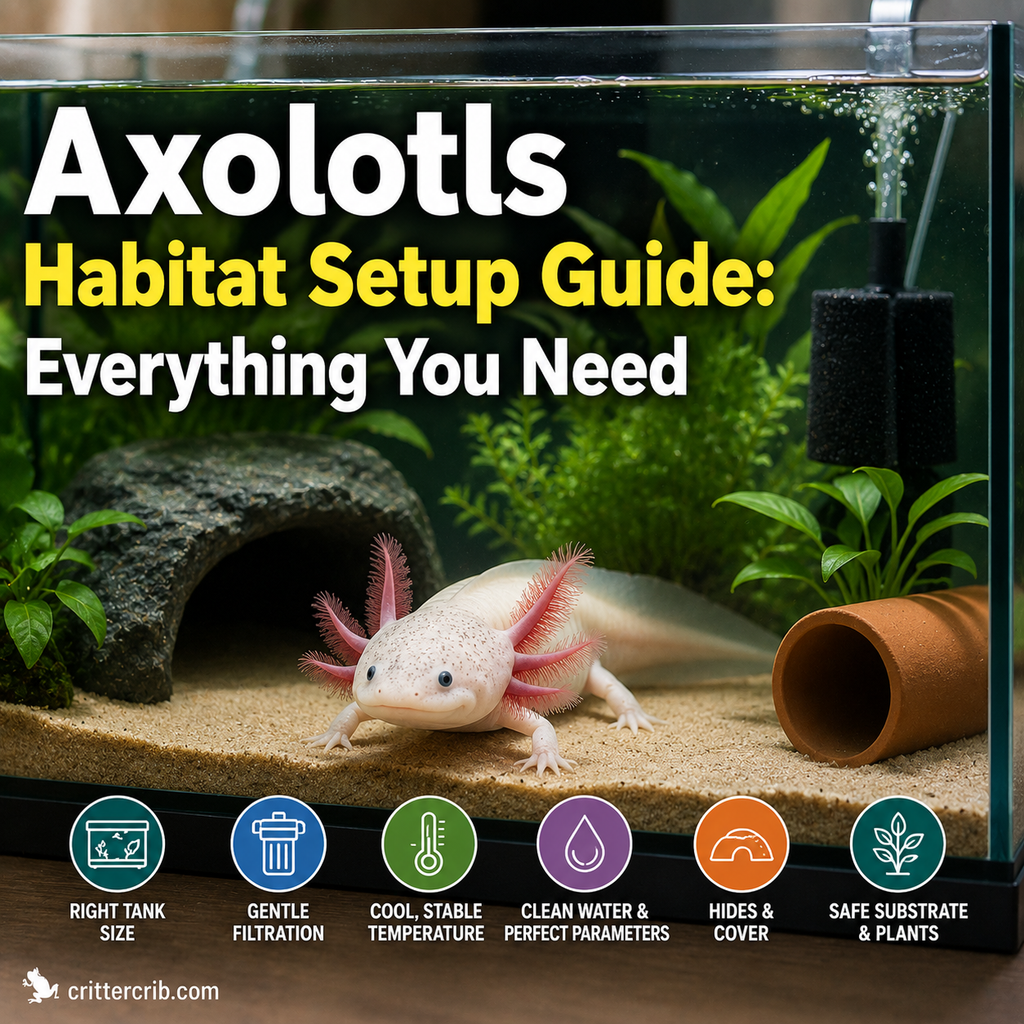
Axolotl Habitat Setup Guide: Everything You Need

Axolotl habitat setup with gentle filtration, cool water, safe substrate, plants, and hiding places
A proper axolotl habitat combines a spacious aquarium with gentle filtration, cool stable water, safe substrate, hiding places, and clean water conditions.

Setting up an axolotl habitat isn’t quite the same as setting up a typical tropical fish aquarium.

Axolotls need cool water, gentle flow, plenty of floor space, safe substrate, secure hiding areas, and—most importantly—a fully cycled aquarium. They’re also messy animals, so filtration and water quality need to be taken seriously from the beginning.

The biggest mistake is buying an axolotl and then trying to figure out the aquarium afterward.

A better approach is to build the habitat first, cycle it completely, confirm that the temperature and water parameters are stable, and only then bring the axolotl home.

This guide walks through the process from an empty aquarium to a finished axolotl habitat.

Continue reading “Axolotl Habitat Setup Guide: Everything You Need”

Complete Tiger Salamander Care Guide: Habitat, Diet, and Daily Care

Tiger salamanders in a natural terrarium with moist substrate, hides, water, and food
Tiger salamanders need a terrestrial habitat with deep moist substrate, secure hides, moderate temperatures, clean water, and a nutritious carnivorous diet.

Tiger salamanders aren’t flashy pets that spend all day climbing, swimming, or exploring their enclosure. In fact, you may spend a surprising amount of time looking at what appears to be an empty habitat.

That’s usually because your salamander is underground.

Tiger salamanders are stocky, terrestrial amphibians that naturally spend much of their time burrowing beneath soil, leaf litter, logs, and other cover. When they do emerge—often around feeding time—their large heads, rounded bodies, and surprisingly enthusiastic appetites give them plenty of personality.

They’re also potentially long-lived pets, so bringing one home shouldn’t be an impulse decision.

Successful tiger salamander care starts with a secure terrestrial enclosure, deep moisture-retaining substrate, moderate temperatures, clean water, appropriate humidity, and a varied carnivorous diet.

This guide covers the essentials from initial habitat setup through everyday maintenance.

Continue reading “Complete Tiger Salamander Care Guide: Habitat, Diet, and Daily Care”

Essential Supplies for Fire-Bellied Newts: Beginner Checklist

Fire-bellied newts with essential tank supplies including filtration, water testing, food, hides, and cleaning equipment
Essential fire-bellied newt supplies include a spacious aquarium, gentle filtration, water-care equipment, plants and hides, nutritious food, and basic maintenance tools.

Bringing home a fire-bellied newt isn’t quite as simple as buying an aquarium, filling it with water, and adding the newt.

These small amphibians spend much of their lives in water, but they also benefit from access to land or easy resting areas near the surface. They need clean, cool water, gentle filtration, secure hiding places, and an enclosure they can’t escape from.

Getting those basics right is much easier when you gather everything before the newt comes home.

This beginner checklist covers the essential supplies for a fire-bellied newt habitat, what each item is for, and which products you probably don’t need.

Continue reading “Essential Supplies for Fire-Bellied Newts: Beginner Checklist”

How to Clean an African Dwarf Frog Habitat: A Safe Routine

Cleaning an African dwarf frog aquarium with a siphon, algae cleaner, and water conditioner
Regular partial water changes, waste removal, substrate cleaning, and careful filter maintenance help keep an African dwarf frog aquarium clean and stable.

African dwarf frogs live entirely in water, which means keeping their habitat clean isn’t just about making the aquarium look nice. Water quality directly affects the environment they breathe, eat, swim, and rest in every day.

The good news is that cleaning an African dwarf frog tank doesn’t require tearing everything apart.

In fact, you generally don’t want to completely empty and scrub an established aquarium. A healthy tank depends on beneficial bacteria that help process waste. Overcleaning can disrupt that biological balance and potentially cause more problems than it solves.

A better approach is simple: remove waste, perform regular partial water changes, clean the substrate as needed, and maintain the filter without sterilizing it.

Here’s how to do it safely.

Continue reading “How to Clean an African Dwarf Frog Habitat: A Safe Routine”

How Much Space Do White’s Tree Frogs Need? Housing Size Guide

White's tree frogs in a tall terrarium showing proper enclosure size and climbing space
White’s tree frogs benefit from tall enclosures with plenty of sturdy branches, elevated resting areas, foliage, and room to climb.

White’s tree frogs aren’t particularly small frogs. Adults have chunky bodies, strong legs, and a natural tendency to spend much of their time above the ground.

That makes choosing the right enclosure about more than simply looking at the number of gallons on the box.

A White’s tree frog needs enough room to climb, move between perches, rest comfortably, and choose different areas of its habitat. If you’re keeping more than one frog, space becomes even more important.

So, how much space do White’s tree frogs actually need?

For a single adult, an enclosure around 18 × 18 × 24 inches is a practical minimum starting point, with larger vertical enclosures offering even more usable space. Multiple adults require additional room, climbing structures, and resting areas.

Here’s how to choose the right setup.

Continue reading “How Much Space Do White’s Tree Frogs Need? Housing Size Guide”

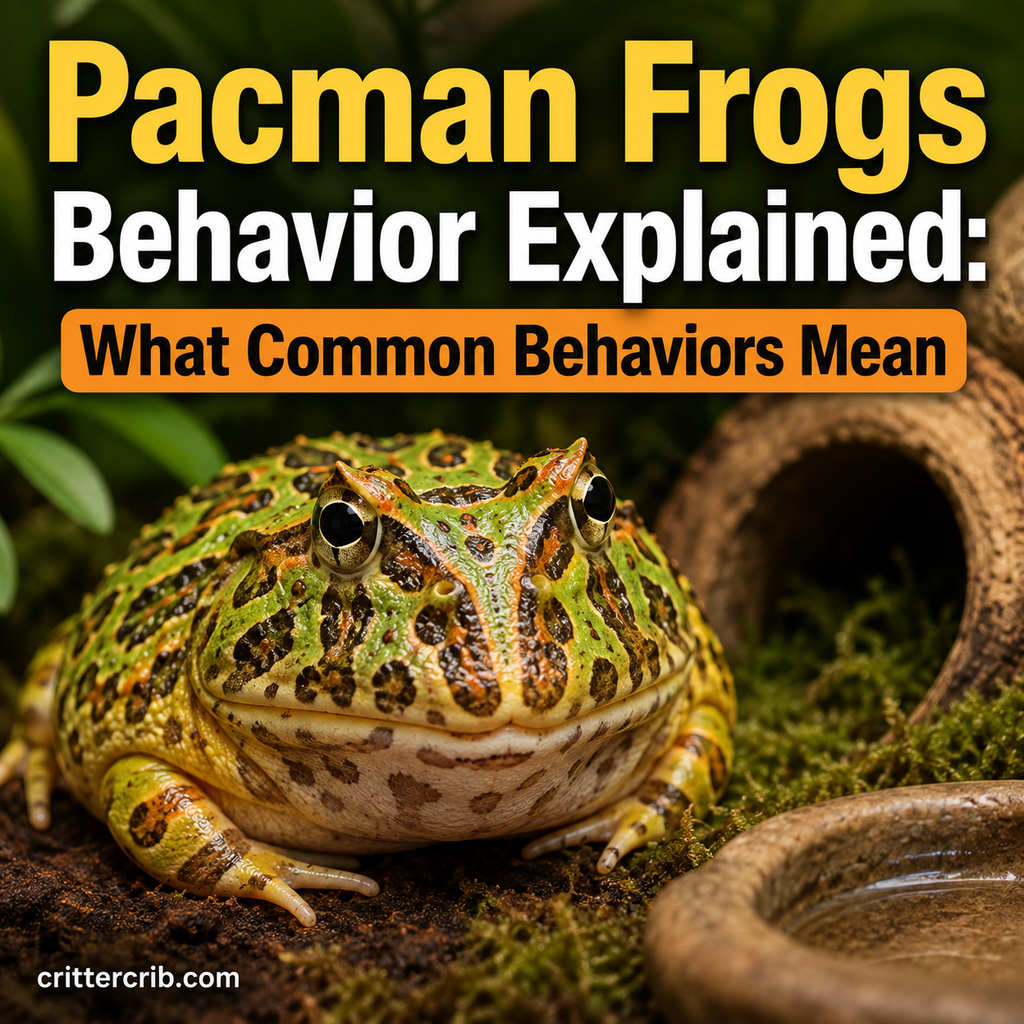
Pacman Frog Behavior Explained: What Common Behaviors Mean

Pacman frog in a terrarium illustrating common Pacman frog behaviors
Burrowing, sitting still, soaking, and suddenly lunging at food are among the many normal behaviors Pacman frog owners may observe.

Pacman frogs aren’t exactly known for being energetic pets. You might set up a beautiful enclosure, provide the perfect hiding spots, and then watch your frog sit in essentially the same place for days.

For a Pacman frog, that’s often completely normal.

These round, heavily built frogs are ambush predators. Instead of actively hunting across large areas, they spend much of their time partially buried and waiting for prey to come within striking distance. Their naturally sedentary lifestyle can make it difficult for new owners to tell the difference between normal Pacman frog behavior and a potential problem.

Why is your Pacman frog buried? Why does it suddenly lunge at feeding tongs? Is sitting in the water dish normal? What about refusing food or staying hidden for days?

Understanding what these behaviors mean can make caring for a Pacman frog much easier.

Continue reading “Pacman Frog Behavior Explained: What Common Behaviors Mean”

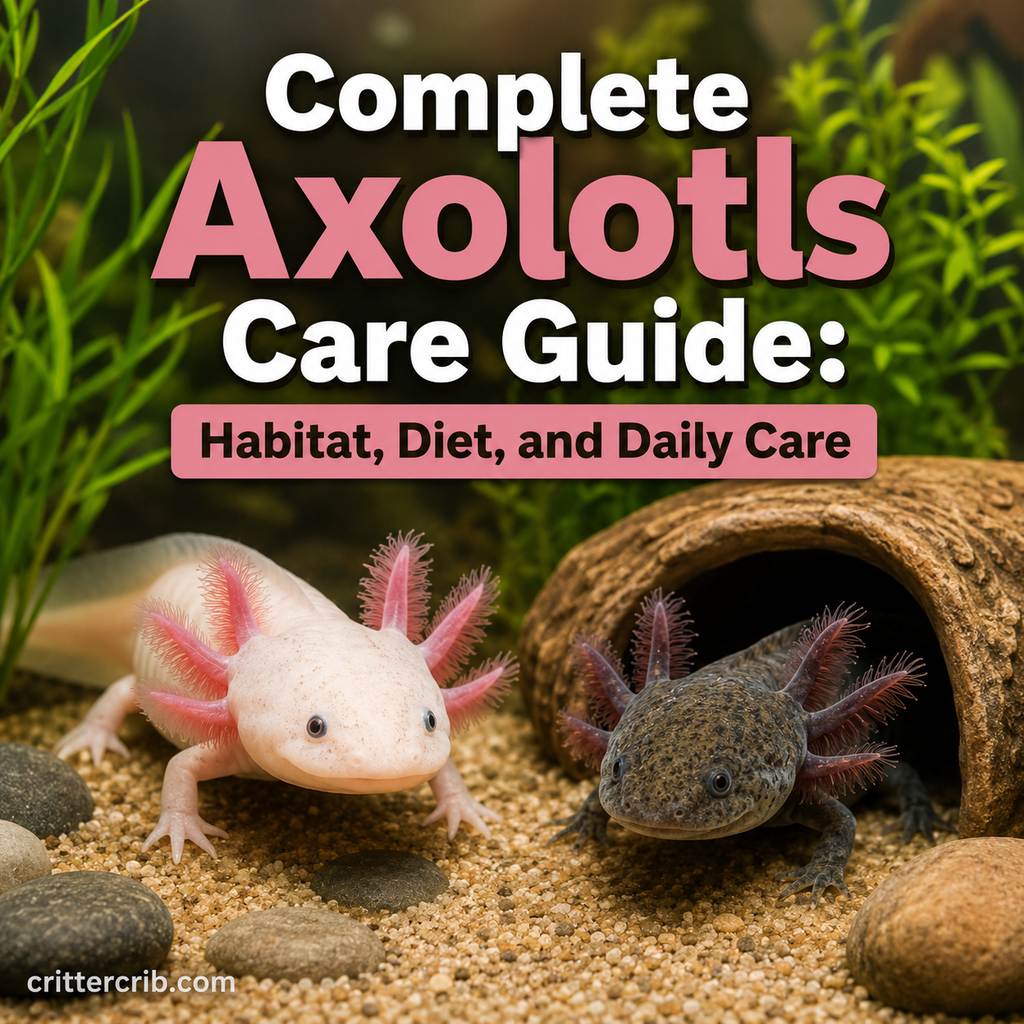
Complete Axolotl Care Guide: Habitat, Diet, and Daily Care

Axolotls in an aquarium for a complete axolotl care guide
Proper axolotl care starts with a cool, clean aquarium, suitable diet, and consistent water maintenance.

Axolotls are unlike almost any other amphibian you can keep at home. With their feathery external gills, wide mouths, and permanently aquatic lifestyle, they almost look like something from another planet.

But their unusual appearance can also give people the wrong impression about their care. Axolotls aren’t especially difficult once their aquarium is established correctly, but they do have specific requirements. Cool water, excellent water quality, appropriate food, and a carefully designed tank are all essential.

This complete axolotl care guide covers the basics of setting up a healthy habitat, choosing the right foods, maintaining the aquarium, and handling everyday care.

Continue reading “Complete Axolotl Care Guide: Habitat, Diet, and Daily Care”