Cockatiels can be surprisingly long-lived companions. Although they’re much smaller than parrots such as macaws and cockatoos, a well-cared-for cockatiel can potentially share your home for well over a decade—and sometimes considerably longer.
So, how long do cockatiels live?
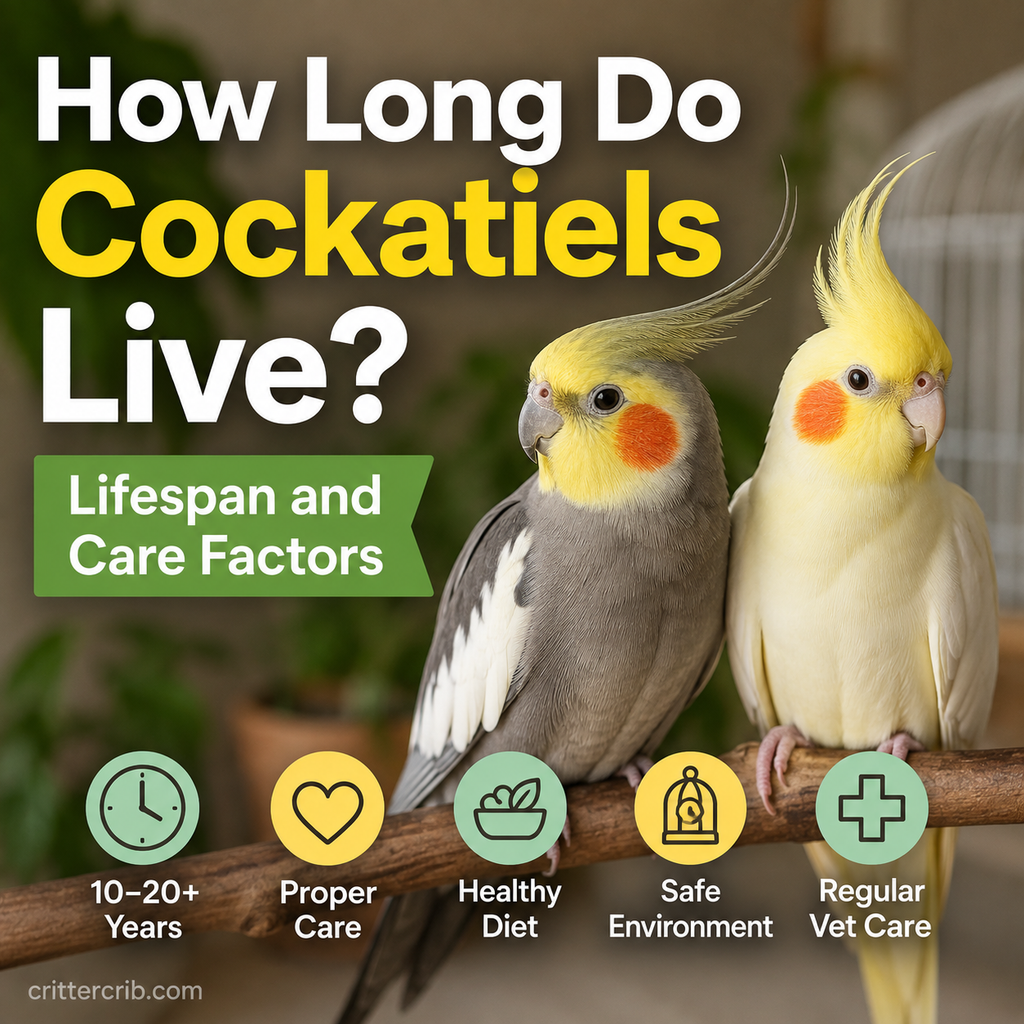
Pet cockatiels commonly live around 10 to 20 years, although some individuals can reach their 20s with excellent care. Genetics certainly play a role, but everyday factors such as diet, exercise, housing, veterinary care, and accident prevention can also influence longevity.
If you’re considering bringing home a cockatiel, their potential lifespan is important to understand. These aren’t short-term pets. Caring for one can be a commitment lasting many years.
Here’s what affects a cockatiel’s lifespan and what you can do to help your bird stay healthy throughout each stage of life.
What Is the Average Cockatiel Lifespan?
A pet cockatiel can often live for approximately 10 to 20 years.
There is considerable variation between individual birds. Some cockatiels have shorter lives because of illness, genetics, accidents, poor nutrition, or inadequate care. Others remain healthy well into their late teens or 20s.
Rather than viewing a particular age as an expiration date, it’s better to think of cockatiel lifespan as a range.
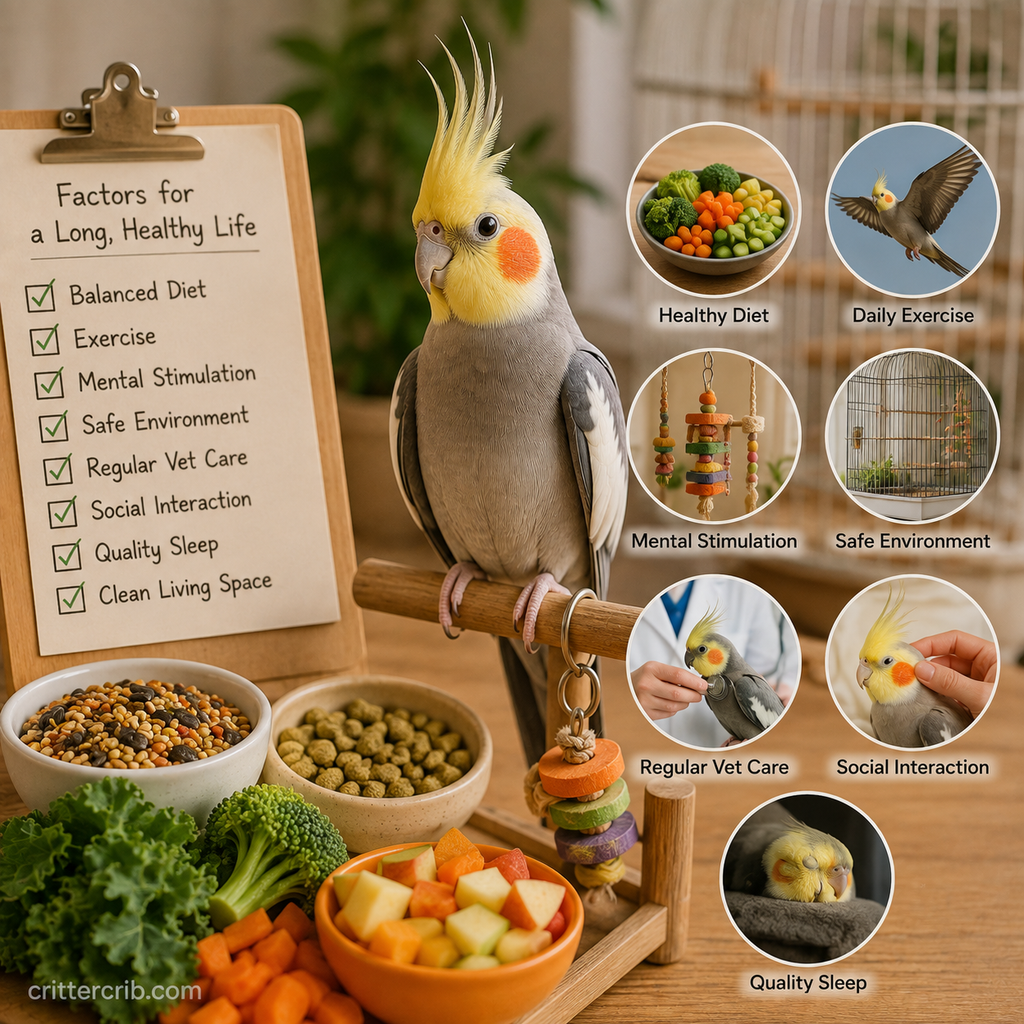
A bird’s longevity can be influenced by:
- Genetics
- Nutrition
- Exercise
- Mental stimulation
- Veterinary care
- Housing conditions
- Sleep
- Exposure to household hazards
- Stress
- Disease prevention
Because cockatiels can live for so many years, adopting one should be approached as a long-term commitment.
How Long Do Cockatiels Live in Captivity?
Pet cockatiels living in safe, well-managed homes have the potential to live longer than birds facing the challenges of life in the wild.
A companion cockatiel generally doesn’t need to search for food or water, escape predators, survive extreme weather, or compete for resources.
Pet birds can also receive veterinary treatment when they become sick or injured.
However, captivity doesn’t automatically guarantee a long life.
Indoor cockatiels face their own risks, including poor diets, obesity, household toxins, accidents, lack of exercise, chronic stress, and illnesses that aren’t recognized early enough.
A safe home combined with appropriate nutrition and preventive veterinary care gives a cockatiel a much better opportunity to reach its natural lifespan.
How Long Do Cockatiels Live in the Wild?
Cockatiels are native to Australia, where wild populations live across large areas of the continent.
Life in the wild presents challenges that pet birds rarely encounter.
Wild cockatiels must deal with:
- Predators
- Weather extremes
- Food shortages
- Drought
- Disease
- Competition
- Injuries
- Long-distance travel
Because of these pressures, determining a simple average lifespan for wild cockatiels isn’t easy.
Individual survival can vary greatly depending on environmental conditions and other factors.
It’s also important not to directly compare the lifespan of a wild cockatiel with a pet cockatiel. Their lifestyles, risks, diets, activity levels, and access to medical care are completely different.
Can Cockatiels Live for 20 Years?
Yes.
A cockatiel reaching 20 years old isn’t impossible, particularly when the bird has received good lifelong care.
Some cockatiels may even live beyond 20.
That doesn’t mean every bird will reach that age. Genetics and circumstances outside an owner’s control can affect longevity even when a bird receives excellent care.
Still, reaching the late teens or early 20s is a realistic possibility that prospective owners should consider.
If you adopt a young cockatiel today, you could potentially still be caring for that same bird two decades from now.
What Affects a Cockatiel’s Lifespan?
There isn’t one secret to making a cockatiel live longer.
Longevity is usually influenced by many small things that happen consistently over the bird’s lifetime.
Providing excellent food while ignoring exercise isn’t enough. Neither is buying a huge cage while overlooking household safety.
The following factors are among the most important.
1. A Balanced Diet
Nutrition is one of the biggest factors you can control.
Cockatiels are often associated with birdseed, but feeding nothing except seeds isn’t generally considered an ideal long-term diet.
Seeds can be high in fat, and birds can selectively eat their favorites while ignoring other ingredients.
A balanced cockatiel diet may include:
- Quality formulated pellets
- Fresh vegetables
- Leafy greens
- Appropriate amounts of seeds
- Occasional bird-safe fruit
- Fresh water
Foods should be appropriate for the individual bird, and dietary changes should be made gradually.
Avoid Overfeeding High-Fat Seeds
Sunflower seeds and other high-fat favorites can be useful as treats, but they shouldn’t necessarily dominate the diet.
Cockatiels are very good at picking out exactly what they like.
If given unlimited access to their favorite seeds, some birds will happily ignore healthier options.
Introduce Fresh Foods
Vegetables can add valuable variety to a cockatiel’s diet.
Bird-safe options can include foods such as:
- Carrots
- Broccoli
- Bell peppers
- Squash
- Sweet potato
- Kale
- Romaine lettuce
- Bok choy
- Peas
Introduce unfamiliar foods gradually and don’t become discouraged if your cockatiel ignores them at first.
Birds can be suspicious of new foods and may need repeated exposure before deciding to take a bite.
2. Regular Veterinary Care
Cockatiels are prey animals, which means they can be remarkably good at hiding signs of illness.
By the time an obviously sick bird attracts attention, the underlying problem may already be advanced.
Regular examinations with an avian veterinarian can help identify potential problems earlier.
A veterinarian may evaluate:
- Body weight
- Body condition
- Beak and nails
- Feather condition
- Heart and respiratory health
- Diet
- Droppings
- Behavior
- Signs of underlying disease
Don’t wait for an annual appointment if your bird suddenly behaves differently.
Changes in appetite, droppings, breathing, activity, posture, or weight deserve attention.
3. A Safe and Appropriate Cage
A cockatiel spends a significant amount of time in or around its cage, so the enclosure has an important role in long-term health.
The cage should provide enough room for the bird to move comfortably, stretch its wings, climb, and interact with toys and perches.
Inside the cage, provide:
- Multiple appropriately sized perches
- Food and water dishes
- Safe toys
- Opportunities to climb
- Space to move between areas
Avoid overcrowding the enclosure with so many toys that the bird can barely move.
Choose Appropriate Perches
Using several perch sizes and textures helps prevent the bird’s feet from constantly resting in exactly the same position.
Natural wood perches can provide useful variation.
Avoid relying entirely on identical smooth dowel perches.
Regularly inspect perches and toys for loose fibers, sharp pieces, broken components, or other hazards.
4. Daily Exercise
Cockatiels weren’t designed to sit on one perch all day.
Movement helps support healthy body weight, muscle condition, cardiovascular health, coordination, and mental well-being.
When it can be done safely, supervised time outside the cage gives a cockatiel opportunities to:
- Fly
- Climb
- Explore
- Play
- Interact with people
- Exercise different muscle groups
Before allowing a bird out, make the room bird-safe.
Close doors and windows, turn off ceiling fans, secure other pets, and remove dangerous objects.
5. Mental Stimulation
A cockatiel’s brain needs exercise too.
These are curious, social birds that benefit from having things to investigate and do.
Enrichment can include:
- Foraging toys
- Shreddable toys
- Climbing opportunities
- Training sessions
- Safe chewable materials
- Rotating toys
- Social interaction
- Exploring bird-safe areas
You don’t necessarily need to buy new toys constantly.
Rotating existing toys can make familiar objects interesting again.
Simple training exercises can also provide excellent stimulation while strengthening communication between you and your bird.
6. Social Interaction
Cockatiels are naturally social.
A pet cockatiel living alone shouldn’t simply be left in a cage with food and water while receiving little interaction.
Depending on the individual bird, social activity may include:
- Talking to your cockatiel
- Training
- Whistling
- Playing
- Supervised out-of-cage time
- Sitting near family activity
Some cockatiels are extremely affectionate, while others prefer a little more personal space.
Pay attention to your bird’s body language rather than forcing interaction.
7. Consistent, Quality Sleep
Sleep is easy to overlook when thinking about bird health.
Cockatiels benefit from a predictable light-and-dark schedule and a quiet environment where they can rest without constant interruption.
Late-night television, bright lights, noise, or frequent disturbances can interfere with sleep.
Place the cage somewhere that allows the bird to participate in household life during the day while still having an appropriate environment for nighttime rest.
8. Household Safety
Some of the greatest threats to a pet cockatiel have nothing to do with disease.
Ordinary homes contain many hazards for birds.
Common risks include:
- Open windows
- Ceiling fans
- Hot stovetops
- Boiling water
- Open toilets
- Electrical cords
- Toxic plants
- Other pets
- Small objects that can be swallowed
- Unsafe metals
- Household chemicals
Supervision is particularly important when a cockatiel is outside its cage.
Be Careful With Fumes
Birds have highly efficient and sensitive respiratory systems.
Smoke and airborne chemicals that seem minor to people can be dangerous to birds.
Keep cockatiels away from:
- Cigarette and vape smoke
- Aerosol sprays
- Strong cleaning fumes
- Paint fumes
- Scented smoke
- Other potentially irritating airborne chemicals
Overheated nonstick cookware and certain products containing PTFE or related fluoropolymers can produce fumes that are extremely dangerous to birds.
Keeping birds away from kitchens and carefully evaluating cookware and heated household products can reduce this risk.
9. Healthy Body Weight
Both excessive weight and unintended weight loss can signal problems.
Because feathers hide the body, visual inspection alone isn’t always enough to recognize weight changes.
A small digital gram scale can be useful for monitoring a cockatiel’s weight at home.
Record measurements consistently so you can recognize trends.
A sudden or unexplained change should be discussed with an avian veterinarian.
10. Stress Management
Some stress is unavoidable, but chronic stress can negatively affect a bird’s quality of life.
Potential stressors include:
- Constant loud noise
- Lack of sleep
- Frequent cage relocation
- Boredom
- Aggressive pets
- Forced handling
- Lack of social interaction
- Overcrowding
- Sudden routine changes
Cockatiels generally benefit from predictable routines.
That doesn’t mean every day must be identical, but regular feeding, interaction, sleep, and activity schedules can help a bird feel secure.
Common Health Problems That Can Affect Cockatiel Lifespan
Cockatiels can develop many different health problems throughout their lives.
Some concerns seen in companion birds can involve:
- Nutritional deficiencies
- Obesity
- Liver problems
- Respiratory illness
- Reproductive problems
- Egg binding
- Feather disorders
- Infections
- Injuries
- Tumors
- Age-related conditions
This isn’t a list you should use to diagnose your bird.
Many illnesses produce similar symptoms, and birds often require examination and diagnostic testing to determine what’s actually wrong.
Signs a Cockatiel May Be Sick
Knowing your bird’s normal behavior makes abnormal behavior easier to recognize.
Possible warning signs include:
- Reduced appetite
- Sudden weight loss
- Unusual droppings
- Sitting fluffed up for long periods
- Spending unusual amounts of time on the cage floor
- Weakness
- Reduced activity
- Difficulty breathing
- Tail bobbing while breathing
- Discharge around the eyes or nostrils
- Vomiting
- Loss of balance
- Sudden behavioral changes
A bird showing serious symptoms should be evaluated promptly by an avian veterinarian.
Waiting to see whether a visibly ill bird improves on its own can be risky.
How Can You Help a Cockatiel Live Longer?
You can’t control everything about your cockatiel’s lifespan, but you can control much of its environment and daily care.
Focus on the fundamentals:
- Feed a varied, nutritionally appropriate diet.
- Provide fresh water every day.
- Maintain a spacious, clean cage.
- Encourage daily exercise.
- Provide toys and mental enrichment.
- Give the bird regular social interaction.
- Establish a consistent sleep routine.
- Keep the home environment bird-safe.
- Monitor body weight and behavior.
- Establish care with an avian veterinarian.
None of these steps is particularly glamorous.
That’s actually the point.
Good long-term care usually comes from doing simple things consistently rather than searching for one special food, supplement, or trick that promises longevity.
How Does a Cockatiel Change With Age?
Aging doesn’t happen at exactly the same rate in every cockatiel.
An older bird may gradually become less active, sleep more, or become less interested in strenuous play. Some birds remain surprisingly energetic well into old age.
Senior cockatiels may benefit from adjustments such as:
- Easier access to food and water
- Lower or more accessible perches
- Comfortable perch options
- More frequent health monitoring
- Regular weight checks
- Easier climbing routes
- Reduced risk of falls
Don’t automatically assume every change is simply because the bird is getting old.
Changes in activity, appetite, balance, weight, or behavior can also indicate illness and should be discussed with a veterinarian.
Male vs. Female Cockatiel Lifespan
There isn’t a simple rule that guarantees one sex will live longer than the other.
Both male and female cockatiels have the potential to live long lives with appropriate care.
Females do have reproductive health considerations that males don’t, particularly those associated with chronic egg laying.
Repeated egg production can place significant nutritional and physical demands on a female.
If a female cockatiel lays eggs frequently, consult an avian veterinarian about appropriate management rather than attempting to stop the behavior using unverified home remedies.
Does Cage Size Affect Cockatiel Lifespan?
Cage size doesn’t determine an exact number of years a cockatiel will live, but an appropriate environment contributes to overall health and quality of life.
A cage that allows comfortable movement makes it easier for the bird to climb, play, stretch, and interact with enrichment.
A larger cage doesn’t replace out-of-cage exercise, social interaction, or good nutrition.
Think of the cage as one component of the bird’s overall environment.
Do Cockatiels Live Longer Than Budgies?
Both species can be relatively long-lived companion birds.
Cockatiels generally have the potential for a long lifespan, frequently reaching their teens and sometimes their 20s. Budgies can also live for many years when properly cared for.
Individual longevity varies considerably in both species.
If you’re choosing between them, lifespan shouldn’t be the only consideration. Personality, noise level, cage requirements, veterinary expenses, interaction needs, and daily care are equally important.
Is a Cockatiel a Long-Term Commitment?
Absolutely.
This is one of the most important things prospective owners should understand.
A young cockatiel could potentially still be part of your family 15 or 20 years from now.
Before adopting one, consider future changes involving:
- Housing
- Relationships
- Work schedules
- Travel
- Finances
- Other pets
- Veterinary expenses
Nobody can predict exactly what life will look like two decades from now. Still, recognizing the potential commitment before getting a bird helps prevent impulsive decisions.
Frequently Asked Questions About Cockatiel Lifespan
What Is the Longest a Cockatiel Can Live?
Some cockatiels can live beyond 20 years, although this shouldn’t be considered guaranteed.
Genetics, nutrition, veterinary care, environment, exercise, and chance all influence how long an individual bird lives.
Is 10 Years Old for a Cockatiel?
A 10-year-old cockatiel has reached a mature stage of life, but it isn’t necessarily extremely old.
A healthy bird may still have many years ahead.
Rather than focusing entirely on chronological age, monitor body condition, activity, behavior, appetite, and veterinary health.
Is 15 Old for a Cockatiel?
A 15-year-old cockatiel would generally be considered an older bird.
At this age, paying closer attention to subtle changes in weight, mobility, appetite, and behavior becomes increasingly important.
Regular veterinary care is particularly valuable as birds age.
Can a Cockatiel Live 25 Years?
It is possible for an exceptionally long-lived cockatiel to reach its 20s.
However, owners shouldn’t assume every cockatiel will reach 25.
A better goal is to provide excellent lifelong care rather than aiming for a particular number.
Do Indoor Cockatiels Live Longer?
Living indoors protects pet cockatiels from predators and many environmental hazards, but indoor life introduces different risks.
Diet-related disease, household toxins, lack of exercise, accidents, and inadequate enrichment can all affect captive birds.
Indoor living is safest when the environment has been specifically adapted for a bird.
How Do I Know If My Cockatiel Is Getting Old?
An aging cockatiel may gradually become less active or require easier access to perches and resources.
However, never automatically attribute significant behavioral or physical changes to aging.
A veterinarian should evaluate unexplained changes because illness can look like normal aging.
Final Thoughts
So, how long do cockatiels live?
A pet cockatiel commonly lives around 10 to 20 years, and some individuals can reach their 20s. Exactly how long any particular bird will live can’t be predicted.
What owners can influence is the quality of those years.
A balanced diet, exercise, mental stimulation, appropriate housing, quality sleep, social interaction, household safety, and regular avian veterinary care all contribute to a healthier life.
Cockatiels may be small, but adopting one can be a surprisingly long commitment. With thoughtful daily care, that commitment can also mean many years of whistles, personality, companionship, and the occasional insistence that whatever you’re doing is far less interesting than paying attention to your bird.