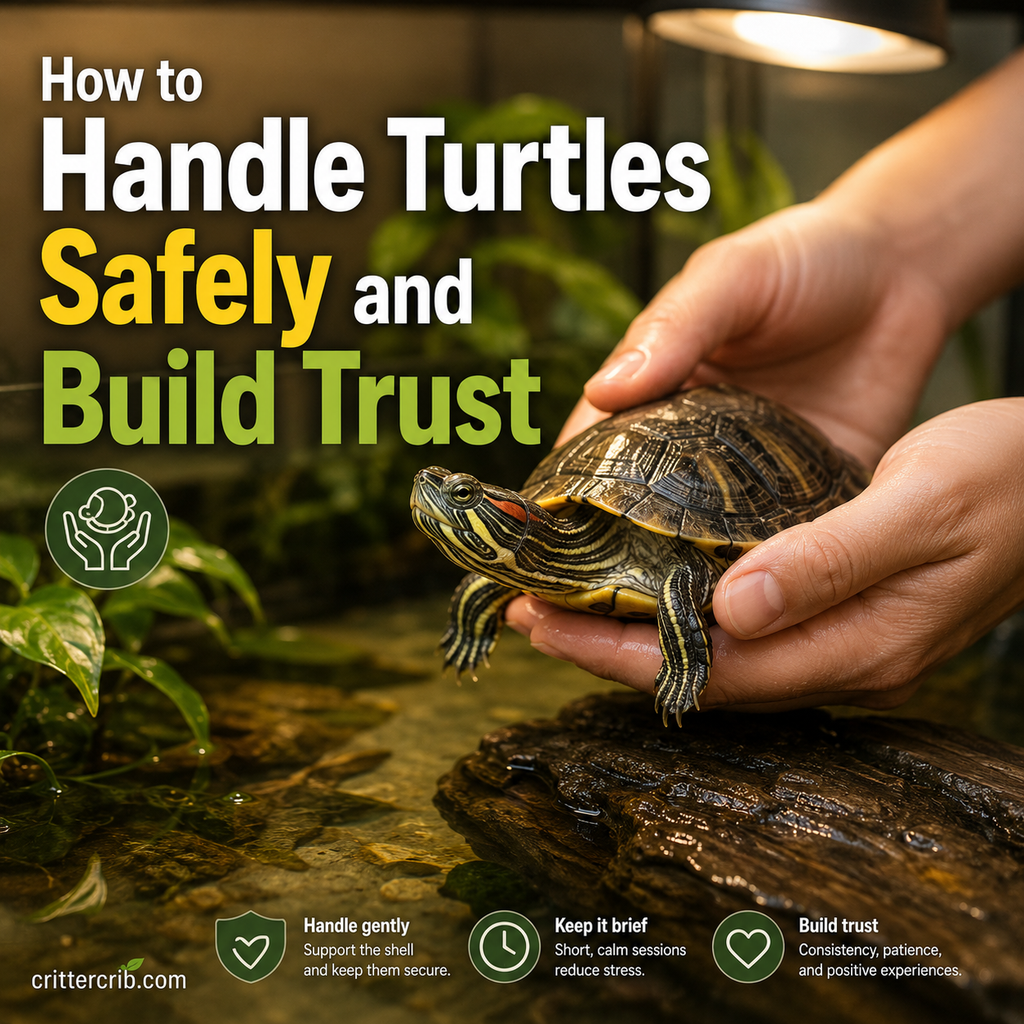
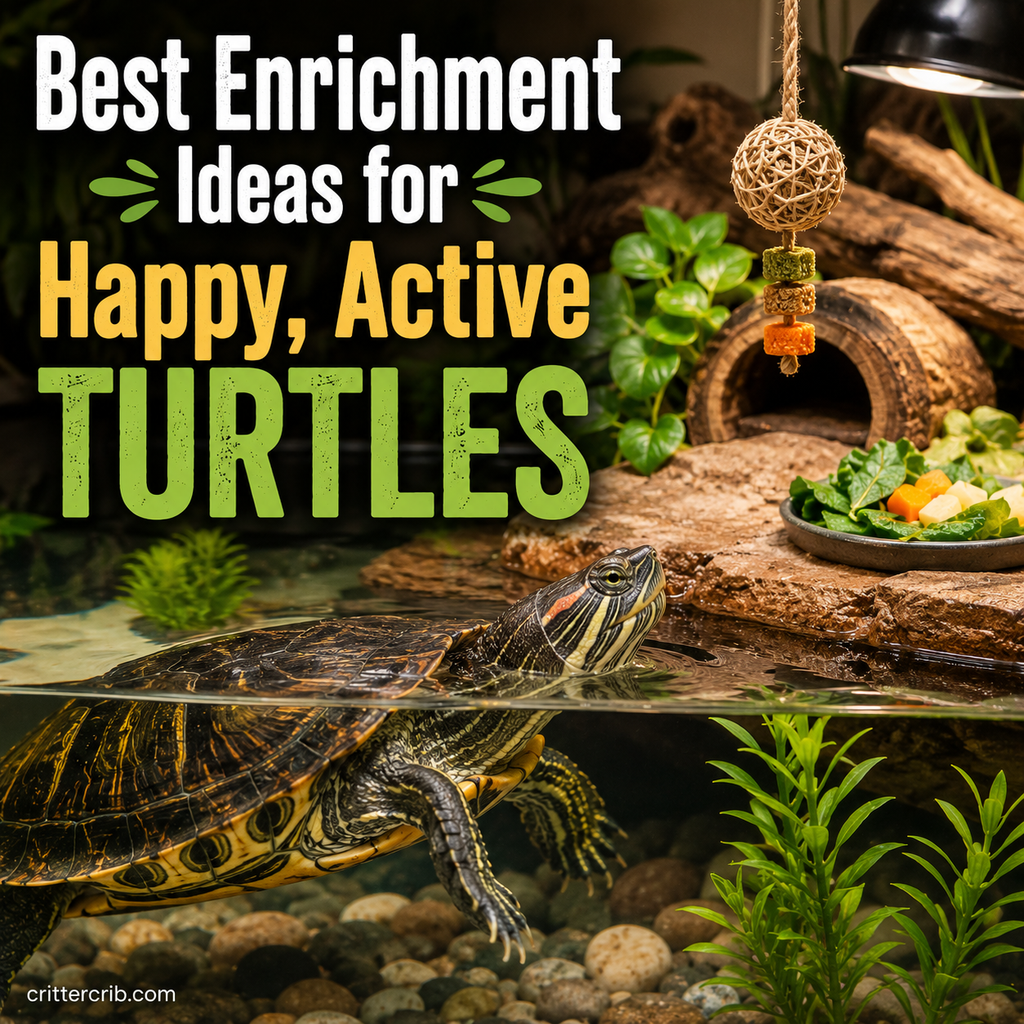
A turtle may not chase a ball or beg for a walk, but that doesn’t mean it wants to spend every day doing exactly the same thing.
Turtles explore, forage, climb, dig, investigate unfamiliar objects, search for food, and interact with different parts of their environment. A bare enclosure might provide the basics needed for survival, but a thoughtfully designed habitat gives a turtle more opportunities to behave naturally.
That’s where enrichment comes in.
Turtle enrichment doesn’t need to involve expensive toys or complicated activities. Often, the best enrichment comes from improving the habitat, changing how food is presented, and giving your turtle safe opportunities to investigate its surroundings.
Here are some of the best enrichment ideas for keeping pet turtles active and engaged.
What Is Turtle Enrichment?
Enrichment means providing safe opportunities for an animal to perform natural behaviors and interact with its environment.
For a turtle, that might include:
- Swimming
- Foraging
- Digging
- Climbing
- Exploring
- Basking
- Investigating different textures
- Searching for food
- Moving around obstacles
The right enrichment depends heavily on the species.
An aquatic turtle has very different needs from a box turtle. Even among aquatic species, swimming ability, diet, size, and natural habitat can vary.
Before adding enrichment, understand what your particular turtle naturally does.
The goal isn’t to make the enclosure look entertaining to a human. It’s to make the turtle’s environment more useful and interesting to the turtle.
1. Create a More Interesting Swimming Area
For aquatic and semi-aquatic turtles, the water itself is one of the biggest opportunities for enrichment.
A completely empty tank allows swimming, but adding safe environmental features gives the turtle more places to investigate.
Depending on the species and enclosure size, consider adding:
- Smooth rocks
- Driftwood
- Submerged structures
- Aquatic plants
- Different water depths
- Resting areas near the surface
Arrange everything so the turtle can move around easily without becoming trapped.
Turtles are surprisingly strong, so heavy decorations should be stable enough that they can’t shift or fall.
Don’t Sacrifice Swimming Space for Decorations
It’s easy to add so many decorations that the enclosure becomes crowded.
Your turtle still needs open water.
Think of decorations as features within a swimming environment rather than trying to fill every empty space.
A good setup provides both open areas for movement and structured areas for exploration.
2. Add Safe Aquatic Plants
Plants can make an aquatic turtle enclosure much more interesting.
They provide texture, cover, visual barriers, and opportunities for investigation. Some turtle species may also nibble on appropriate edible plants.
The challenge is that turtles aren’t always gentle gardeners.
They may:
- Dig plants up
- Tear leaves
- Push pots over
- Eat the plants
- Rearrange everything overnight
That’s normal.
If you use live plants, make sure the species is non-toxic and appropriate for your turtle. Also avoid plants that may have been treated with pesticides or other chemicals.
Artificial plants can sometimes provide cover as well, but they should be sturdy and free of sharp edges, loose pieces, or small components that could be swallowed.
3. Turn Feeding Time Into Foraging Time
Food is one of the easiest ways to introduce enrichment.
Instead of placing every meal in exactly the same location, occasionally make your turtle search for appropriate foods.
You might:
- Place food in different areas
- Scatter suitable foods around the habitat
- Position edible greens in multiple locations
- Float appropriate foods for aquatic turtles
- Hide food behind safe enclosure features
- Offer food at different depths when appropriate
Keep the difficulty reasonable.
Enrichment should encourage natural behavior, not prevent the turtle from getting enough food.
4. Offer Variety in How Food Is Presented
Even when the diet stays nutritionally consistent, presentation can change.
A leafy green floating on the surface creates a different experience from the same food clipped to the side of the enclosure.
Try rotating between appropriate methods such as:
- Floating foods
- Feeding dishes
- Vegetable clips
- Scattered food
- Food positioned near safe obstacles
The exact method should match the turtle’s natural feeding behavior.
Don’t introduce inappropriate foods simply for entertainment. Enrichment should work within a healthy diet.
5. Use Floating Objects Carefully
Some aquatic turtles will investigate objects floating on the water.
A large, lightweight object that can’t be swallowed may occasionally attract interest.
However, turtle “toys” need to be selected carefully.
Avoid anything with:
- Small detachable parts
- Sharp edges
- Paint that can peel
- Fragile plastic
- Strings
- Small holes that could trap a leg or head
- Materials that deteriorate in water
If your turtle repeatedly bites an object, remove it unless you’re certain the material is safe.
Not every turtle needs conventional toys. Habitat-based enrichment is usually more valuable.
6. Rearrange the Habitat Occasionally
You don’t need to rebuild the entire enclosure every week.
Small changes can be enough to create something new to investigate.
You might move:
- A piece of driftwood
- A rock
- A hide
- A plant
- A feeding location
Afterward, you may notice your turtle exploring the changed area.
Avoid constantly disrupting the enclosure, though. Familiarity and secure resting areas are important too.
The goal is occasional novelty, not continuous upheaval.
7. Provide an Excellent Basking Area
Basking isn’t simply a place where a turtle sits around doing nothing.
For many aquatic turtles, it’s an essential natural behavior.
A good basking platform should allow the turtle to climb completely out of the water and dry off where appropriate for the species.
It should also provide suitable heat and UVB exposure.
Make sure the basking area is:
- Easy for the turtle to access
- Large enough for its entire body
- Stable
- Non-slip
- Positioned at a safe distance from heating equipment
- Properly heated
- Exposed to appropriate UVB
A poorly designed platform that the turtle struggles to climb isn’t enrichment. It’s an obstacle.
8. Create Different Textures
Turtles experience their environment physically as they walk, climb, dig, and swim.
Providing safe texture variation can make an enclosure more interesting.
Depending on the turtle and habitat type, textures might include:
- Smooth stones
- Natural wood
- Soil
- Leaf litter
- Sand where appropriate
- Cork bark
- Safe vegetation
Substrate selection requires care.
Some materials can cause impaction if swallowed, trap excessive waste, or otherwise be inappropriate for certain species and setups.
Choose substrate based on husbandry needs first and enrichment second.
9. Give Terrestrial Turtles Places to Dig
For box turtles and other terrestrial or semi-terrestrial species that naturally dig, suitable substrate can provide valuable enrichment.
Digging allows the turtle to:
- Search for food
- Create hiding spots
- Regulate temperature
- Find humid microclimates
- Retreat when it feels threatened
A thin layer of decorative material isn’t enough for meaningful digging.
Provide sufficient depth and use a substrate appropriate for the species.
Humidity matters too. The substrate shouldn’t be kept uniformly soaking wet or excessively dry unless those conditions are appropriate for the animal.
10. Add Hides and Visual Barriers
An enriched enclosure shouldn’t force a turtle to remain visible all the time.
Hiding is a natural behavior.
Depending on the habitat, hides might include:
- Cork bark
- Hollow logs
- Commercial reptile hides
- Dense plants
- Rock-like structures
- Leaf litter
Visual barriers can also divide a large habitat into smaller areas.
This creates a more complex environment than one open rectangle where the turtle can see everything from every position.
Make sure hides are large enough that your turtle can’t become wedged inside.
11. Provide Safe Climbing Opportunities
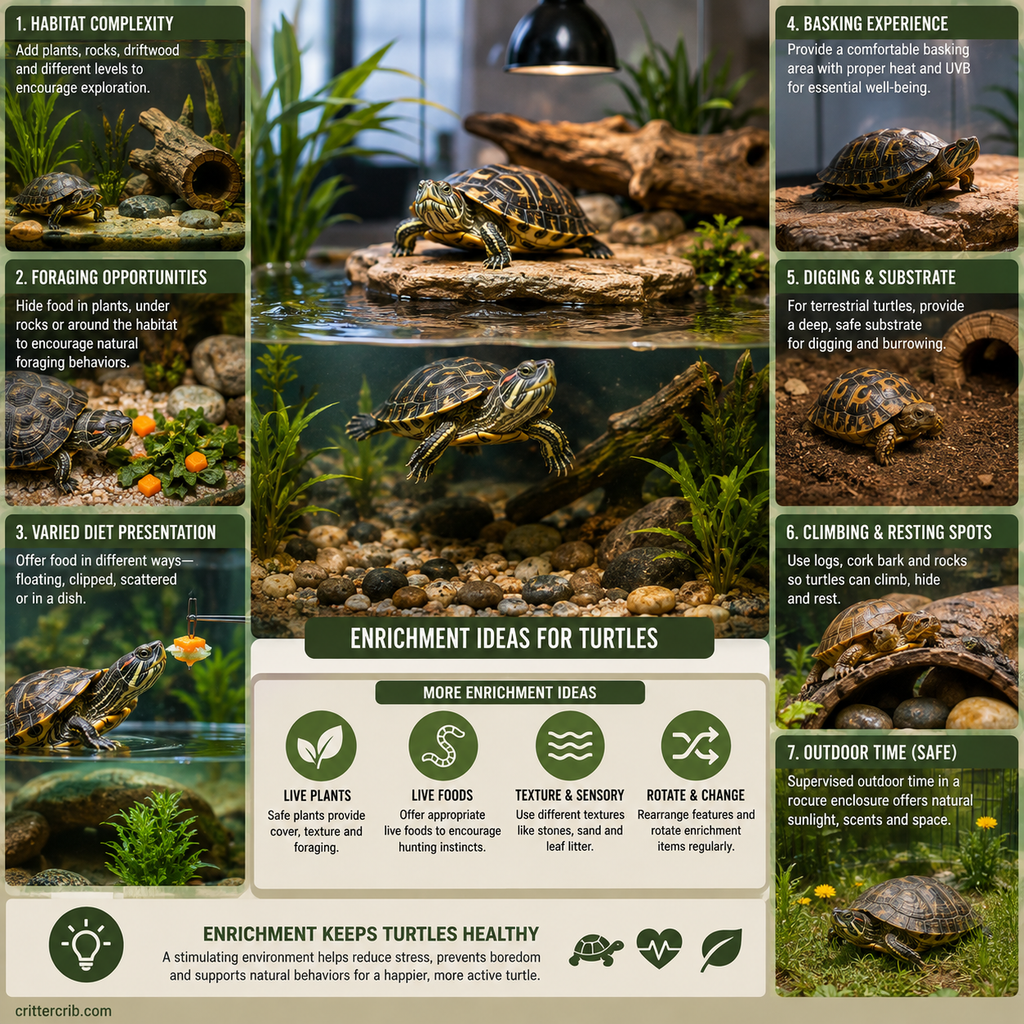
Turtles can be surprisingly determined climbers.
Some terrestrial species will scramble over logs, rocks, slopes, and other objects when given the opportunity.
You can create safe climbing opportunities with:
- Low logs
- Cork bark
- Gentle slopes
- Stable rocks
- Uneven terrain
Keep everything relatively low.
Turtles aren’t particularly graceful when they lose their footing, and a tall climbing structure can turn enrichment into an injury risk.
Also check that your turtle can’t use a decoration as a ladder to escape.
12. Build Different Levels Into the Habitat
A completely flat enclosure limits the ways a terrestrial turtle can move through its environment.
Creating gentle elevation changes can encourage exploration.
For example, you might create:
- A low mound
- A shallow depression
- A gradual slope
- A raised basking area
- A planted section
- A deeper digging area
This makes the enclosure feel more like a habitat and less like an empty floor.
Again, stability matters. Avoid steep drops or structures that can collapse.
13. Let Your Turtle Hunt Appropriate Live Foods
For omnivorous and carnivorous species, hunting can provide both physical and mental stimulation.
Depending on your turtle’s natural diet, appropriate live foods might include certain:
- Earthworms
- Crickets
- Roaches
- Other captive-raised invertebrates
Only offer prey that’s nutritionally appropriate for your species.
Avoid collecting insects from outdoors because they may carry pesticides, parasites, or other contaminants.
Live feeder fish deserve particular caution. They can introduce parasites or disease, and some commonly sold feeder species aren’t ideal nutritionally when used regularly.
If live foods are part of the diet, source them carefully.
14. Create a Safe Outdoor Enclosure
When climate, weather, and species requirements allow it, supervised or secure outdoor time can provide excellent enrichment.
Natural sunlight, fresh air, plants, soil, changing smells, and a larger environment create experiences that are difficult to reproduce indoors.
But outdoor time needs to be controlled.
Potential dangers include:
- Dogs
- Cats
- Raccoons
- Birds of prey
- Extreme temperatures
- Toxic plants
- Pesticides
- Escape
- Pools and ponds
- Lawn equipment
A turtle should never simply be placed in the yard and forgotten.
A secure outdoor habitat should prevent both escape and access by predators.
15. Grow Safe Edible Plants
For turtles that naturally consume plant material, growing appropriate edible vegetation can combine nutrition and enrichment.
Instead of receiving every piece of food in a bowl, the turtle gets to browse and forage.
Depending on the species, suitable plants may include certain grasses, leafy plants, or other edible vegetation.
Research every plant before adding it.
Never assume something is safe because it grows naturally in your yard.
Avoid plants treated with:
- Herbicides
- Pesticides
- Chemical fertilizers
- Other potentially harmful products
A planted enclosure may not stay beautiful for long.
That’s okay. If your turtle tramples, digs up, or eats the plants, the enrichment is doing its job.
16. Introduce New Scents Naturally
Turtles use more than vision to investigate their surroundings.
Changing safe natural materials can introduce new smells and textures.
For example, replacing leaf litter, introducing an appropriate edible plant, or adding a new piece of natural wood can create a novel sensory experience.
Avoid artificial fragrances.
Never spray perfume, essential oils, air fresheners, or scented cleaning products around the enclosure for enrichment.
The safest sensory changes come from natural, species-appropriate habitat materials.
17. Provide Choices
One of the most useful principles of animal enrichment is simple: give the animal options.
Instead of one place to sit, create several usable areas.
A well-designed turtle habitat might provide choices between:
- Warm and cool areas
- Open and sheltered areas
- Shallow and deeper water
- Sun or UVB exposure and shade
- Different hiding locations
- Multiple textures
- Different foraging opportunities
This allows the turtle to decide where it wants to be.
Choice is often more valuable than adding a brightly colored object marketed as a “turtle toy.”
18. Try Simple Food Puzzles
Food puzzles don’t need to look like the elaborate puzzle feeders sold for dogs.
For turtles, something as simple as placing appropriate food around a safe obstacle can increase the effort required to reach it.
You might place food:
- On opposite sides of the enclosure.
- Behind a safe piece of wood.
- Among edible vegetation.
- At different water depths for suitable aquatic species.
- In several small feeding locations instead of one large pile.
Always make sure the turtle can successfully access the food.
The point is to encourage searching and movement, not create frustration.
19. Rotate Enrichment Instead of Adding Everything at Once
An enclosure doesn’t need every enrichment idea simultaneously.
In fact, rotation can make individual changes more interesting.
You might use one week to introduce a different feeding method, then later rearrange a habitat feature or add a safe plant.
This approach also prevents overcrowding.
Keep essential resources—such as basking areas, hides, water, temperature gradients, and UVB—consistent while changing optional enrichment features.
20. Watch What Your Turtle Actually Uses
Not every turtle will respond to enrichment the same way.
One turtle may immediately investigate a new plant. Another may ignore it completely.
That’s useful information.
Observe whether your turtle:
- Approaches the enrichment
- Avoids it
- Climbs on it
- Forages around it
- Bites it
- Hides underneath it
- Moves it
- Appears stressed by it
Keep what works and remove what doesn’t.
Enrichment should be based on the animal’s response rather than what looks impressive in the enclosure.
Signs Your Turtle May Benefit From More Enrichment
Turtle behavior varies by species and individual, so there isn’t a single behavior that proves a turtle is “bored.”
However, repetitive activity can sometimes indicate that the environment deserves another look.
You might notice:
- Persistent pacing
- Repeatedly swimming against the glass
- Constant attempts to climb enclosure walls
- Frequent escape attempts
- Limited opportunities for natural behaviors
Don’t automatically assume boredom.
Repetitive behavior can also result from incorrect temperatures, inadequate enclosure size, poor water conditions, seasonal or reproductive behavior, stress, or other husbandry problems.
Check the basics before trying to solve everything with enrichment.
Turtle Enrichment Safety Tips
Almost any new object can become a hazard if it’s the wrong size, material, or shape.
Before adding something to your turtle’s enclosure, ask:
- Can the turtle swallow any part of it?
- Can a leg, claw, or head become trapped?
- Does it have sharp edges?
- Could it fall onto the turtle?
- Can the turtle use it to escape?
- Is the material non-toxic?
- Can it be cleaned?
- Will it affect water quality?
- Is it appropriate for this species?
Observe your turtle closely after introducing anything new.
Remove an enrichment item if the turtle is damaging or swallowing it, repeatedly becoming trapped, or showing signs of stress.
Enrichment Doesn’t Replace Proper Husbandry
This is one of the most important things to remember.
A floating ball won’t compensate for a tank that’s too small.
A food puzzle won’t fix incorrect temperatures.
A new decoration won’t replace proper UVB lighting.
Before worrying about enrichment, make sure the turtle already has the essentials:
- An appropriately sized habitat
- Clean water where applicable
- Correct temperature gradients
- Proper basking conditions
- Appropriate UVB exposure
- A balanced species-specific diet
- Suitable humidity
- Safe substrate
- Places to hide
- Veterinary care when necessary
Think of enrichment as an additional layer of good husbandry—not a substitute for it.
Frequently Asked Questions About Turtle Enrichment
Do turtles need toys?
Turtles don’t necessarily need conventional toys in the way dogs or cats do.
Habitat complexity, foraging opportunities, plants, hiding places, climbing structures, and varied food presentation are often more meaningful forms of enrichment.
Some turtles may investigate safe objects, but an enriched environment is more important than filling the enclosure with manufactured toys.
Do turtles get bored?
We can’t know exactly how a turtle experiences boredom in the same way humans do.
However, turtles are capable of learning and exploring their surroundings, and providing opportunities for natural behavior is beneficial.
Rather than trying to determine whether your turtle feels “bored,” focus on providing an environment that allows it to forage, explore, hide, bask, swim, dig, or climb as appropriate for its species.
Can I let my turtle walk around my house?
Allowing a turtle to roam freely around the house isn’t usually the best enrichment strategy.
Indoor floors can expose turtles to inappropriate temperatures, other pets, falling objects, electrical cords, chemicals, small objects, and places where they can become trapped.
The turtle also loses access to its carefully controlled heat and UVB environment.
A properly designed enclosure or secure outdoor habitat is generally safer.
Can turtles play with balls?
Some turtles may push or investigate a ball or similar object.
If you try one, it should be much too large to swallow, made from a safe material, and free from small parts or openings that could trap the turtle.
Remove it if the turtle begins damaging or ingesting the material.
How often should I change my turtle’s enrichment?
There’s no required schedule.
Small, occasional changes are usually enough.
You might change how food is presented one day, add a safe natural material another time, or rearrange a non-essential enclosure feature occasionally.
Avoid constantly redesigning the entire habitat. Your turtle should still have familiar, secure places for basking, hiding, and resting.
What is the best enrichment for turtles?
The best enrichment is usually the kind that encourages species-appropriate natural behavior.
For an aquatic turtle, that may mean a varied swimming environment and opportunities to forage.
For a terrestrial turtle, deep substrate, hides, vegetation, different terrain, and safe foraging opportunities may be more useful.
Start with the behaviors your particular species would naturally perform and design enrichment around them.
Final Thoughts
Turtle enrichment doesn’t need to be complicated.
You don’t have to buy a collection of turtle toys or redesign the enclosure every weekend. Some of the best enrichment comes from simple changes: hiding food in different locations, providing plants and natural textures, creating areas to explore, or giving a terrestrial turtle enough substrate to dig.
The key is thinking about what your turtle naturally wants to do.
A good habitat provides more than food, water, heat, and UVB. It gives the turtle opportunities to make choices—to swim, forage, hide, climb, dig, explore, bask, and rest.
Start with proper husbandry, then add enrichment gradually.
Watch how your turtle responds. You’ll quickly learn which activities and habitat features encourage it to explore and which ones it couldn’t care less about.
And that’s really the point. The best turtle enrichment isn’t what looks fun to us. It’s what gives the turtle more opportunities to behave like a turtle.