

Hedgehogs are small pets, but their size can be misleading when it comes to cost.
The price of the hedgehog itself is only the beginning. Before bringing one home, you’ll also need to budget for an appropriate enclosure, heating equipment, bedding, food, an exercise wheel, hiding places, enrichment, and veterinary care.
So, how much does a hedgehog cost?
As a general planning estimate, a pet hedgehog may cost around $100 to $350 or more, while a proper initial setup can add several hundred dollars. After that, expect recurring expenses for food, bedding, heating, enrichment, and veterinary care.
Actual prices vary considerably depending on where you live, where you get your hedgehog, the products you choose, and local veterinary costs.
Here’s a closer look at what you should budget for before bringing a hedgehog home.
How Much Does a Hedgehog Cost to Buy?
The purchase price of a hedgehog commonly falls somewhere around $100 to $350 or more.
Several factors can influence the price, including:
- Breeder
- Age
- Color or appearance
- Geographic location
- Availability
- Whether supplies are included
Some breeders may charge more for particular colors or characteristics.
However, appearance shouldn’t be the main consideration when choosing an animal.
Health, temperament, breeding practices, and how the hedgehogs are cared for should matter much more than finding a particular color.
How Much Does It Cost to Adopt a Hedgehog?
Adoption is another option.
Hedgehogs occasionally become available through exotic-pet rescues, small-animal rescues, or owners who can no longer care for them.
Adoption fees vary significantly.
In some cases, an adopted hedgehog may come with an enclosure or supplies, potentially reducing your initial expenses.
Don’t automatically assume that included equipment is appropriate, though.
Evaluate the enclosure, wheel, heating setup, and other accessories before using them long term.
Check Whether Hedgehogs Are Legal Where You Live
Before spending money on anything, check local laws.
Hedgehog ownership is restricted or prohibited in some locations, and regulations can change.
Depending on where you live, you may encounter:
- State restrictions
- Local ordinances
- Permit requirements
- Import restrictions
Verify the current rules with the appropriate government authority rather than relying solely on an old article or social media post.
This simple step can prevent a very expensive mistake.
Initial Hedgehog Setup Costs
The initial setup is often more expensive than the animal itself.
A new hedgehog owner may need:
- Enclosure
- Heating equipment
- Thermostat
- Thermometer
- Exercise wheel
- Hideout
- Bedding or liners
- Food dish
- Water dish or bottle
- Carrier
- Toys and enrichment
- Initial food supply
- Cleaning supplies
Depending on your choices, expect to spend roughly $250 to $600 or more on a well-equipped initial habitat.
Premium enclosures and heating systems can push the total higher.
Hedgehog Enclosure Cost
A suitable enclosure may cost approximately $50 to $200 or more.
Price varies depending on size, material, and design.
Whatever style you choose, the habitat should provide enough usable floor space for your hedgehog to move comfortably while accommodating an appropriately sized exercise wheel, hide, food, water, and enrichment.
Look for an enclosure that is:
- Secure
- Well ventilated
- Easy to clean
- Large enough for normal activity
- Compatible with safe heating equipment
- Free from dangerous gaps
Don’t choose a habitat simply because the packaging shows a hedgehog.
Evaluate whether the enclosure actually meets the animal’s needs.
Heating Equipment Costs
Heating is one of the most important expenses that separates hedgehog ownership from caring for many other small pets.
Pet African pygmy hedgehogs require a reliably warm environment.
If the temperature becomes too low, a hedgehog may attempt to enter a dangerous torpor-like state.
You may need equipment such as:
- Ceramic heat emitter
- Heat lamp fixture
- Thermostat
- Digital thermometer
A basic heating setup might cost approximately $40 to $100 or more, depending on the equipment.
Don’t Skip the Thermostat
A heat source should be properly controlled.
Simply plugging in a powerful heater without regulating the temperature can create another problem: overheating.
A thermostat allows compatible heating equipment to turn on and off or adjust output based on temperature.
You should also independently monitor the enclosure temperature with a reliable thermometer.
Heating is a safety expense, not an optional accessory.
Electricity Costs for Heating
The heating equipment itself isn’t the only expense.
You’ll also pay to run it.
Electricity costs depend on:
- Heater wattage
- How often it operates
- Room temperature
- Season
- Local electricity rates
- Enclosure setup
The monthly increase may be relatively small in some homes and more noticeable in others.
If your home becomes cold during winter, heating costs may rise.
Include this expense when estimating the true monthly cost of keeping a hedgehog.
Hedgehog Exercise Wheel Cost
Hedgehogs can cover a surprising amount of distance during the night.
A suitable exercise wheel is therefore an important piece of equipment.
Expect to spend roughly $20 to $50 or more for an appropriately sized wheel.
Choose a wheel with:
- A solid running surface
- Enough diameter for comfortable running
- Stable construction
- Easy-to-clean materials
Avoid open wire or mesh running surfaces where feet could potentially become caught.
Cleaning matters too.
Hedgehogs have a reputation for doing more than exercising on their wheels, so expect frequent wheel washing.
Hedgehog Hideout Cost
Every hedgehog needs a secure place to sleep and retreat.
A basic hide might cost approximately $10 to $30.
Options can include suitable:
- Plastic hides
- Wooden houses
- Fabric sleeping sacks
- Commercial small-animal shelters
Whatever you choose should be large enough for the hedgehog to rest comfortably and easy to inspect and clean.
If you use fabric items, check them regularly for loose threads or damage.
Bedding and Cage Liner Costs
You’ll need some form of appropriate enclosure flooring.
Some owners use disposable bedding, while others choose reusable fabric liners.
Each has different costs.
Disposable Bedding
Disposable bedding creates a recurring expense.
Depending on the product and enclosure size, you might spend around $10 to $30 per month.
Choose a low-dust, unscented material considered appropriate for hedgehogs.
Reusable Liners
Reusable liners cost more initially but can reduce ongoing bedding purchases.
You’ll need enough liners to rotate them while others are being washed.
Remember that “reusable” doesn’t mean free.
You’ll still use:
- Water
- Laundry detergent
- Electricity
- Washing machine time
Eventually, worn liners will need replacement.
Food and Water Supplies
Food and water dishes are inexpensive compared with the enclosure and heating system.
Budget approximately $10 to $30 initially for sturdy dishes or an appropriate drinking setup.
Heavy ceramic bowls are popular because they’re difficult to tip.
Whatever you use, clean food and water containers regularly and provide fresh water every day.
How Much Does Hedgehog Food Cost?
Food is one of the more predictable monthly expenses.
You might spend roughly $10 to $25 per month on an appropriate primary diet, although actual costs vary by brand, package size, feeding amount, and availability.
Choosing a diet for a hedgehog can be confusing because nutritional recommendations aren’t as straightforward as simply buying any bag with a hedgehog on it.
Discuss your hedgehog’s diet with an exotic-animal veterinarian and choose food appropriate for its age, body condition, and health.
Insects and Treats
Some owners offer appropriate insects as part of enrichment or as occasional food.
Depending on what you purchase, you might spend another $5 to $20 per month.
Possible feeder insects used in hedgehog care can include appropriately sourced insects such as:
- Mealworms
- Crickets
- Dubia roaches
- Other suitable feeder insects
Don’t collect random insects from outdoors.
Wild insects may have been exposed to pesticides, parasites, or other hazards.
Treats should remain a small part of the overall diet.
Toys and Enrichment Costs
Hedgehogs benefit from an environment that gives them opportunities to explore and investigate.
Enrichment doesn’t have to be expensive.
You might provide:
- Tunnels
- Digging activities
- Foraging opportunities
- Safe toys
- Hides
- Supervised exploration
A reasonable budget might be around $5 to $20 per month, although you can spend considerably more if you enjoy buying new accessories.
Many enrichment items last for months.
Rotating what you already own can make the environment interesting without constantly buying something new.
Carrier Cost
You’ll need a secure carrier for veterinary visits and transportation.
A suitable small-animal carrier may cost approximately $20 to $50.
Buy it before you need it.
Trying to improvise transportation while dealing with a sick hedgehog isn’t ideal.
The carrier should be:
- Secure
- Well ventilated
- Easy to clean
- Appropriate for maintaining a safe temperature during travel
Cold weather may require additional planning to keep your hedgehog comfortably warm while transporting it.
Cleaning Supply Costs
Cleaning supplies don’t add much individually, but they become part of the long-term budget.
You may need:
- Paper towels
- Laundry supplies
- Cage-safe cleaning products
- Replacement brushes or cleaning tools
- Trash bags
The wheel may require especially frequent cleaning.
Budgeting a few dollars per month for cleaning supplies is reasonable, although you may already have some suitable products at home.
Hedgehog Veterinary Costs
Veterinary care is one of the most important expenses to consider before getting a hedgehog.
Hedgehogs are exotic pets, and not every veterinarian treats them.
An examination might cost roughly $60 to $150 or more, depending on your location and clinic.
Additional services can increase the bill quickly.
These might include:
- Diagnostic testing
- Imaging
- Medications
- Dental treatment
- Surgery
- Hospitalization
- Emergency care
A significant medical problem can cost hundreds or potentially thousands of dollars.
Find an Exotic Vet Before Bringing Your Hedgehog Home
Don’t wait until something goes wrong.
Before adopting or buying a hedgehog:
- Find local veterinarians who treat hedgehogs.
- Confirm they’re accepting new patients.
- Ask about routine examination costs.
- Find out where after-hours emergencies are handled.
- Determine how far away the emergency clinic is.
Knowing where to go is just as important as having money set aside.
Build a Hedgehog Emergency Fund
An emergency fund gives you some financial breathing room when unexpected veterinary care is needed.
Consider working toward at least $500 to $1,000 or more specifically for veterinary expenses.
That amount won’t necessarily cover every emergency, but it’s much better than starting from zero.
You can build the fund gradually.
For example:
- $20 per month = $240 per year
- $30 per month = $360 per year
- $50 per month = $600 per year
Keep veterinary savings separate from the money you normally spend on food and supplies.
Estimated Monthly Cost of Owning a Hedgehog
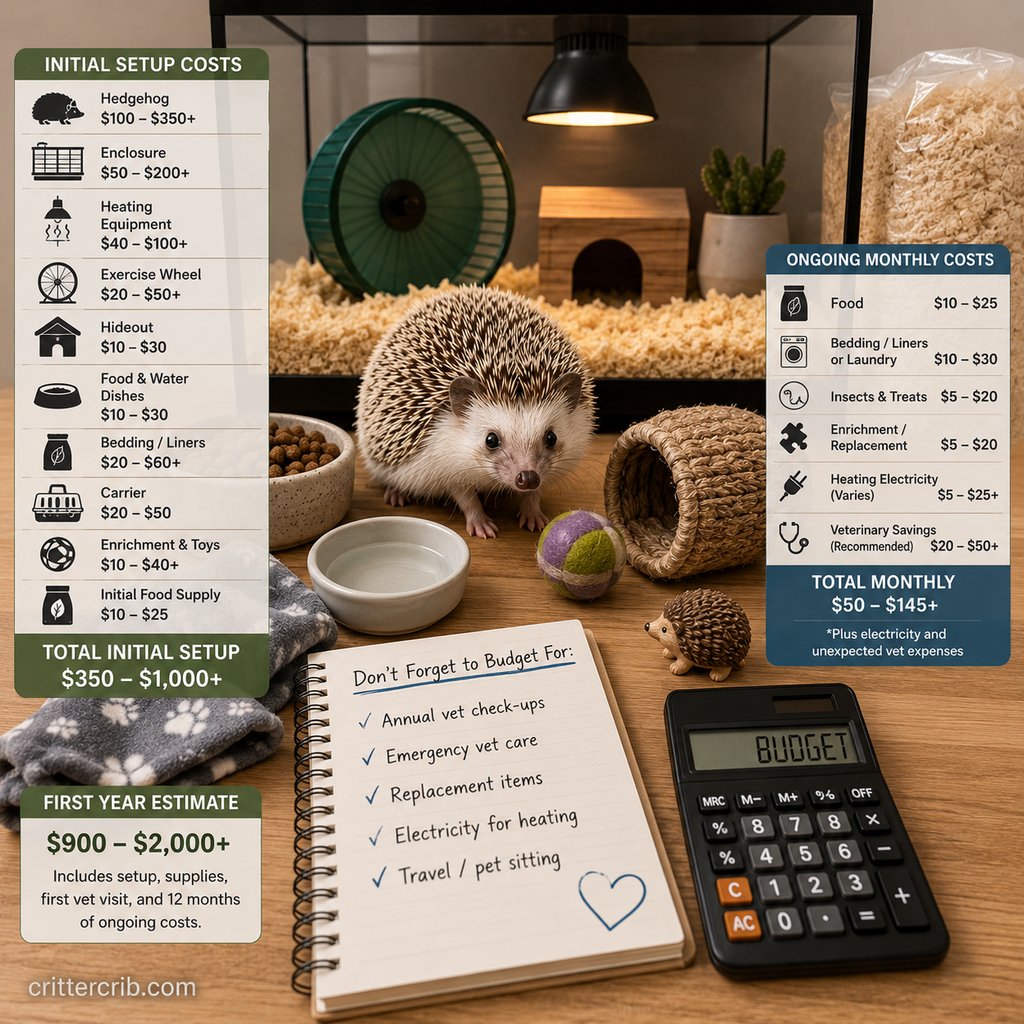
Once the initial setup is complete, routine expenses become more predictable.
A rough monthly budget might include:
| Expense | Estimated Monthly Cost |
|---|---|
| Food | $10–$25 |
| Bedding or liner maintenance | $10–$30 |
| Insects and treats | $5–$20 |
| Enrichment/replacements | $5–$20 |
| Veterinary savings | $20–$50+ |
| Heating electricity | Varies |
That gives a general recurring estimate of approximately $50 to $145 or more per month, plus electricity and unexpected expenses.
You may spend less during some months and considerably more during others.
Veterinary care is the biggest variable.
Estimated First-Year Cost of a Hedgehog
The first year is usually the most expensive because you’re buying the animal and building the habitat from scratch.
A rough first-year startup budget might look like this:
| Expense | Estimated Cost |
|---|---|
| Hedgehog | $100–$350+ |
| Enclosure | $50–$200+ |
| Heating equipment | $40–$100+ |
| Exercise wheel | $20–$50+ |
| Hideout | $10–$30 |
| Food/water supplies | $10–$30 |
| Carrier | $20–$50 |
| Initial bedding/liners | $20–$60+ |
| Initial food | $10–$25 |
| Toys and enrichment | $10–$40+ |
| Initial veterinary exam | $60–$150+ |
Your initial purchases can therefore easily reach $350 to $1,000 or more, depending on your choices and the cost of the hedgehog.
Add 12 months of food, bedding, heating, enrichment, and veterinary savings, and the total first-year cost can become substantially higher.
Hidden Costs of Hedgehog Ownership
Some expenses aren’t obvious when you’re standing in the pet-supply aisle.
Replacement Heating Equipment
Heat emitters, thermostats, thermometers, and fixtures don’t last forever.
It’s wise to have a plan for what you’ll do if essential heating equipment suddenly fails.
Keeping a spare heat source may be worthwhile.
Higher Utility Bills
Maintaining the correct enclosure temperature can increase electricity use, especially in colder homes.
Pet Sitting
If you travel, you’ll need someone who understands the hedgehog’s feeding and heating requirements.
A knowledgeable pet sitter may cost more than asking someone to simply refill a food bowl.
Laundry
Owners using reusable liners and sleeping sacks may run additional laundry loads.
The cost per wash is small, but it accumulates over time.
Emergency Veterinary Travel
Your nearest exotic-animal emergency veterinarian may be significantly farther away than your normal dog-and-cat clinic.
Transportation becomes another potential expense.
How Much Does a Hedgehog Cost Per Year?
Once you’ve paid for the initial setup, annual routine costs might fall somewhere around $600 to $1,700 or more, based on a monthly budget of roughly $50 to $145.
Heating electricity and major veterinary expenses can push the total higher.
This is why the purchase price alone isn’t a useful measure of whether you can afford a hedgehog.
A $150 animal can easily require thousands of dollars in care over its lifetime.
How Long Do Hedgehogs Live?
Pet African pygmy hedgehogs commonly live for several years, with individual lifespan influenced by genetics, health, environment, and veterinary care.
That means you’re making a multi-year financial commitment.
If your hedgehog lives five years and you average $75 per month in routine expenses, that’s:
- $900 per year
- $2,250 over 2.5 years
- $4,500 over 5 years
And that doesn’t include the original setup or major medical emergencies.
Lifetime cost matters more than the price on adoption day.
Where Should You Spend More?
Not every accessory needs to be premium.
There are, however, areas where quality and reliability are especially important.
Prioritize:
- Safe housing
- Reliable heating
- A quality thermostat
- Accurate temperature monitoring
- An appropriate exercise wheel
- Proper nutrition
- Veterinary care
- A secure carrier
A decorative cage accessory matters much less than keeping your hedgehog at a safe temperature.
Where Can You Save Money?
You can control costs without cutting corners on essential care.
Consider:
- Comparing prices from reputable suppliers
- Buying bedding in economical quantities
- Using reusable cage accessories
- Rotating toys rather than constantly buying new ones
- Choosing durable food and water dishes
- Setting aside a fixed amount for veterinary care every month
- Buying replacement supplies before you run out
Avoid saving money by using inappropriate heating equipment, undersized housing, unsafe wheels, poor-quality food, or skipping veterinary care.
Cheap isn’t a bargain if you have to replace it immediately.
Are Hedgehogs Expensive Pets?
Hedgehogs fall somewhere in the middle of the small-pet cost spectrum.
Their food requirements aren’t particularly expensive, and they don’t require the enormous enclosures associated with some animals.
However, several factors can make them more expensive than new owners expect:
- Specialized heating
- Exotic veterinary care
- Large exercise wheels
- Recurring bedding
- Insects and enrichment
- Emergency medical expenses
The initial setup is usually the biggest predictable expense.
Veterinary care is the biggest unpredictable one.
Questions to Ask Before Getting a Hedgehog
Before bringing one home, ask yourself:
- Can I afford several hundred dollars for a proper setup?
- Can I maintain a reliably warm enclosure year-round?
- Can I afford the electricity required for heating?
- Is hedgehog ownership legal where I live?
- Is there an exotic veterinarian nearby who treats hedgehogs?
- Can I afford an unexpected veterinary bill?
- Can I consistently pay for food, bedding, and supplies?
- Can I continue doing this for several years?
If your budget is already stretched just purchasing the animal, waiting may be the better choice.
The hedgehog is only the beginning of the expense.
Sample Hedgehog Budget
For someone starting completely from scratch, a practical budget might look something like this:
Before Bringing the Hedgehog Home
Set aside money for:
- Hedgehog
- Enclosure
- Heating system
- Thermostat
- Thermometer
- Wheel
- Hide
- Carrier
- Bedding
- Food
- Bowls
- Enrichment
Every Month
Budget for:
- Food
- Bedding or laundry
- Insects or treats
- Electricity
- Replacement enrichment
- Veterinary savings
Keep Separately
Maintain an emergency veterinary fund that you don’t use for ordinary supplies.
This approach makes the real financial commitment much easier to see.
Final Thoughts: How Much Does a Hedgehog Really Cost?
A pet hedgehog may cost roughly $100 to $350 or more, but that’s only a fraction of what you’ll spend providing proper care.
A complete initial setup can bring your starting cost to approximately $350 to $1,000 or more, particularly once you include housing, heating, a thermostat, an exercise wheel, food, bedding, enrichment, and an initial veterinary examination.
After that, routine expenses may run around $50 to $145 or more per month, with heating electricity and veterinary emergencies adding to the total.
Prices vary by location and change over time, so treat these numbers as planning estimates rather than fixed costs.
The most important thing is to budget beyond the purchase price.
Before bringing a hedgehog home, make sure you can provide reliable heating, appropriate food, a safe habitat, exercise and enrichment, and access to an experienced exotic-animal veterinarian.
A hedgehog may fit comfortably in your hands.
Its care still needs to fit comfortably in your budget.