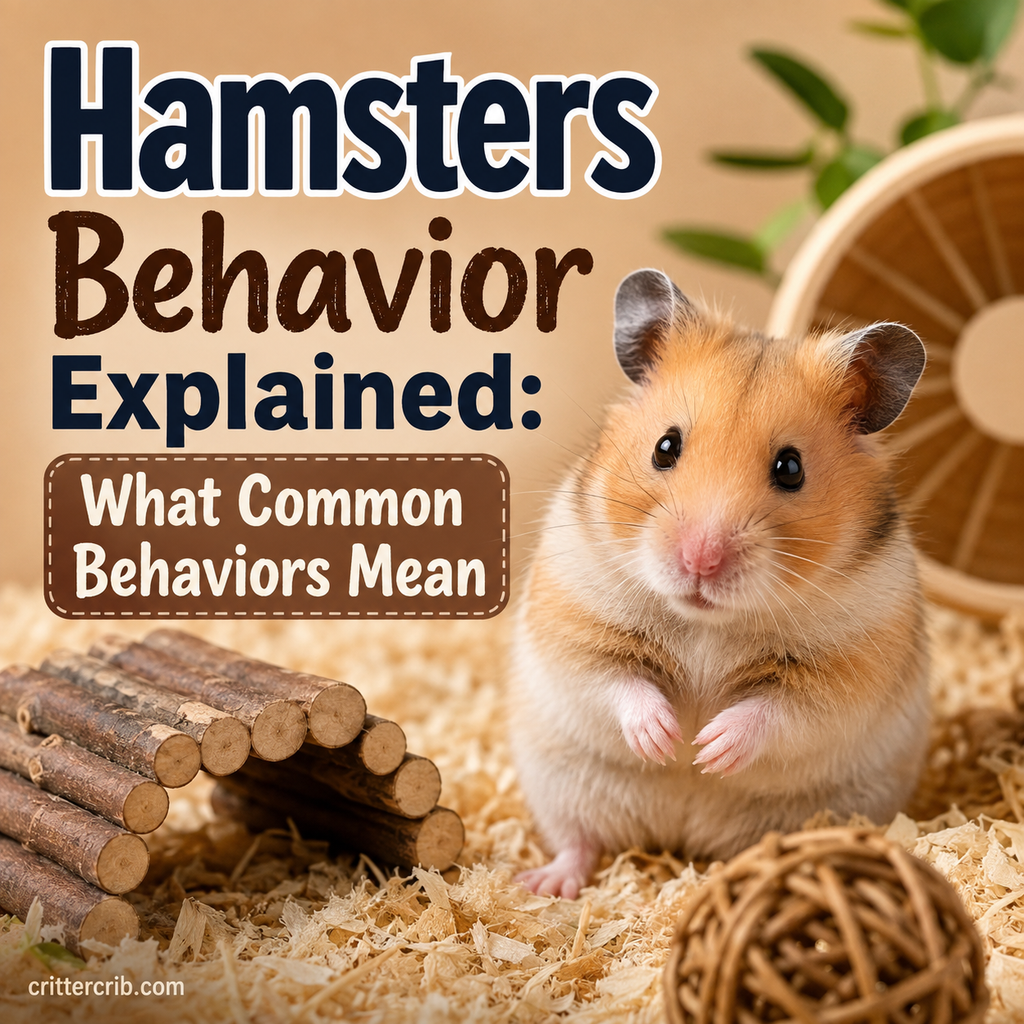
Hamsters may be small, but they have a surprisingly large range of behaviors. One minute your hamster is calmly stuffing food into its cheeks, and the next it’s racing around the cage, digging furiously in the bedding, or standing completely still on its hind legs.
For a new hamster owner, some of these behaviors can look strange or even concerning. In most cases, though, your hamster is simply doing what comes naturally.
Learning how to read hamster behavior can help you understand when your pet is comfortable, curious, stressed, frightened, or simply ready to be left alone. It can also make it easier to notice when something genuinely isn’t right.
Below, we’ll break down some of the most common hamster behaviors and what they usually mean.
Understanding Normal Hamster Behavior
Before looking at individual behaviors, it helps to remember that hamsters aren’t tiny versions of cats or dogs.
In the wild, hamsters spend much of their time alone. They dig burrows, search for food, hide from predators, store supplies, and explore their surroundings. Many of the behaviors you see in a pet hamster come from these same instincts.
Hamsters are also primarily active during the evening and nighttime hours. Your hamster may therefore spend much of the day sleeping and suddenly become very busy once your household starts winding down.
Individual personalities matter too. Some hamsters are adventurous and seem interested in everything happening around them. Others are cautious and prefer interacting on their own terms.
Understanding your hamster means looking at its overall behavior rather than judging a single action in isolation.
Why Do Hamsters Stuff Their Cheeks?
Few hamster behaviors are as recognizable as filling their cheek pouches with food.
Hamsters have expandable cheek pouches that allow them to carry surprisingly large amounts of food. In nature, this lets them gather food and transport it back to a safe storage location.
Your pet hamster may do exactly the same thing.
You might see your hamster:
- Fill both cheeks with food
- Carry food into a hideout
- Empty its cheeks into a food stash
- Move bedding or nesting material using its cheek pouches
This is generally completely normal.
Why Hamsters Hoard Food
Food hoarding is another natural survival behavior.
Instead of eating everything immediately, hamsters often create hidden food stores around their enclosure. A favorite location is usually somewhere inside or near the nest.
Finding a pile of food underneath the bedding doesn’t necessarily mean you’re feeding too much. Your hamster may simply feel more comfortable having a supply nearby.
However, fresh foods can spoil when hidden. Remove old pieces of vegetables or other perishable foods before they begin to rot, while avoiding unnecessary disruption of the hamster’s nest.
Why Do Hamsters Dig and Burrow?
Digging is one of the most important natural hamster behaviors.
Wild hamsters create underground burrow systems where they can sleep, store food, hide, and escape from predators and extreme temperatures.
Pet hamsters retain that strong digging instinct.
A hamster that disappears underneath the bedding, creates tunnels, or spends long periods rearranging its substrate is usually displaying healthy natural behavior.
Give Your Hamster Enough Bedding
Deep bedding allows a hamster to create more stable tunnels and burrows.
If the bedding layer is too shallow, you may see your hamster repeatedly trying to dig into cage corners or scratching at the bottom of the enclosure.
Providing a generous amount of safe bedding gives your hamster more control over its environment and allows natural burrowing behavior.
Try not to destroy established tunnels unnecessarily when cleaning. Spot cleaning can often keep the enclosure fresh while leaving much of the hamster’s familiar environment intact.
Why Does My Hamster Run on Its Wheel So Much?
Hamsters can travel considerable distances while searching for food and exploring in nature. Running on a wheel gives a captive hamster an outlet for some of that natural activity.
It’s common for a hamster to spend significant portions of the night running.
Frequent wheel use doesn’t automatically mean your hamster is bored or trying to escape. It can simply be exercise.
The wheel should be large enough for the hamster to run comfortably without having to sharply arch its back.
A solid running surface is also preferable to wheels with potentially hazardous gaps or widely spaced bars.
Is Constant Wheel Running Normal?
Heavy nighttime wheel use can be normal, especially for a young and active hamster.
But look at the bigger picture.
If your hamster spends nearly all of its waking hours performing repetitive activities while also climbing cage walls, chewing bars, or constantly attempting to escape, the enclosure may need more enrichment or usable space.
Why Is My Hamster Chewing the Cage Bars?
Occasional investigation of enclosure surfaces isn’t unusual. Persistent bar chewing, however, deserves attention.
A hamster may repeatedly chew cage bars because of:
- Boredom
- Stress
- Insufficient space
- Limited opportunities to dig
- Lack of appropriate chewing materials
- Attempts to explore beyond the enclosure
Bar chewing can potentially damage teeth or the area around the mouth if it becomes excessive.
Rather than simply trying to stop the behavior, consider why your hamster is doing it.
Adding deeper bedding, tunnels, hides, chewable materials, enrichment activities, and opportunities to forage can make the enclosure more engaging.
Why Does My Hamster Climb the Cage?
Hamsters are curious animals, and occasional climbing can simply be exploration.
Repeatedly climbing cage walls or scrambling along the bars can sometimes indicate something different.
Watch for a pattern that includes:
- Constant bar climbing
- Repeated attempts to reach the lid
- Bar chewing
- Pacing along the same route
- Frequent escape attempts
When several of these behaviors occur together, review your hamster’s enclosure and daily enrichment.
Hamsters benefit from an environment where they can dig, hide, forage, chew, explore, and exercise.
Why Does My Hamster Keep Trying to Escape?
Hamsters are surprisingly talented escape artists.
Even a hamster with a well-designed enclosure may investigate openings simply because there’s something interesting on the other side.
Occasional escape attempts aren’t necessarily evidence that your hamster is unhappy.
Constant attempts, however, may suggest that the environment isn’t providing enough opportunities for natural behavior.
Check whether your hamster has access to:
- Deep bedding
- Multiple hiding places
- A properly sized wheel
- Safe chew materials
- Tunnels
- Foraging opportunities
- Different textures and areas to investigate
And, of course, make sure the enclosure itself is secure. Hamsters can squeeze through surprisingly small openings.
Why Does My Hamster Freeze?
You’re watching your hamster explore when suddenly it stops moving completely.
This behavior can look alarming, but freezing is often an instinctive response.
As prey animals, hamsters are naturally alert to possible threats. Staying motionless may help them assess an unfamiliar sound, smell, movement, or vibration.
A hamster may freeze after:
- Hearing an unexpected noise
- Noticing sudden movement
- Smelling something unfamiliar
- Being surprised while exploring
- Detecting vibrations
Give your hamster a moment to evaluate what’s happening rather than immediately reaching toward it.
If the hamster quickly returns to normal activity, the behavior was likely temporary alertness.
Persistent immobility accompanied by weakness, abnormal breathing, difficulty moving, or other physical symptoms is different and should be taken seriously.
Why Does My Hamster Stand on Its Hind Legs?
A hamster standing upright with its ears raised often looks like it’s posing for a picture.
Usually, it’s gathering information.
Standing taller allows the hamster to better investigate its surroundings. It may be listening for a sound or sniffing the air.
You’ll often see this behavior when:
- Someone enters the room
- Food is nearby
- The hamster hears something unusual
- The enclosure has recently changed
- The hamster is exploring outside its enclosure
A relaxed hamster may stand upright briefly and then continue whatever it was doing.
Why Does My Hamster Groom So Much?
Hamsters are naturally clean animals and spend a significant amount of time grooming themselves.
Normal grooming may include:
- Licking the paws
- Washing the face
- Cleaning the fur
- Scratching occasionally
- Grooming after being handled
You may notice especially enthusiastic grooming after holding your hamster. This doesn’t necessarily mean you’ve offended it. Your hamster may simply be restoring its familiar scent or cleaning its coat.
When Grooming Becomes Concerning
Excessive scratching or grooming can sometimes indicate a problem.
Watch for additional signs such as:
- Bald patches
- Red or irritated skin
- Scabs
- Visible parasites
- Persistent scratching
- Significant changes in coat condition
Those symptoms warrant closer attention and potentially veterinary evaluation.
Why Does My Hamster Lick Me?
A hamster licking your hand can have several explanations.
Your skin may smell interesting, particularly if you’ve recently handled food. Hamsters investigate much of their environment through scent and taste.
Occasional licking can also happen when a hamster is comfortable interacting with you.
Avoid automatically interpreting licking as affection in exactly the same way you might with a dog. Hamster communication is different, and context matters.
Always wash your hands before handling your hamster, especially if you’ve recently touched food or another animal.
Why Does My Hamster Nibble or Bite Me?
Not every hamster bite is aggression.
Hamsters may bite because they’re:
- Frightened
- Startled
- Defending their territory
- Uncomfortable being handled
- Mistaking fingers for food
- Feeling cornered
A new hamster may be especially defensive while adjusting to unfamiliar surroundings.
How to Reduce Hamster Biting
Building trust gradually usually works better than forcing interaction.
Try the following:
- Give a newly arrived hamster time to settle into its enclosure.
- Spend time nearby so it becomes familiar with your voice and scent.
- Offer treats without immediately attempting to pick it up.
- Let the hamster approach your hand voluntarily.
- Begin handling gradually once the hamster appears comfortable.
Never punish a hamster for biting. It won’t understand the punishment and may become even more fearful of your hands.
Why Does My Hamster Squeak?
Hamsters aren’t usually extremely vocal, so squeaking tends to get an owner’s attention.
A hamster may squeak when it is:
- Startled
- Frightened
- Annoyed
- Excited
- Uncomfortable
- Communicating during an interaction
A brief squeak in an obvious situation may not be concerning.
Repeated or unusual vocalization, particularly when combined with breathing difficulty, lethargy, pain, or other physical changes, should be investigated.
Why Does My Hamster Make Hissing or Clicking Sounds?
Hissing is generally a clearer warning than a small squeak.
A frightened or defensive hamster may hiss when it feels threatened. It may also raise its body, show its teeth, or adopt a defensive posture.
If this happens, give the hamster space.
Clicking sounds require more context. Some noises can occur during normal activity, while repeated clicking associated with breathing can potentially indicate a respiratory problem.
Pay attention to whether the sound seems connected to breathing and whether there are additional symptoms.
Why Does My Hamster Yawn and Stretch?
A hamster emerging from its nest may yawn, stretch, and groom before starting its activities.
This is generally a relaxed, normal behavior.
You might notice your hamster:
- Stretch its front legs forward
- Extend its body
- Yawn widely
- Groom immediately afterward
It’s particularly common after waking.
A hamster that comfortably stretches or grooms in the open may also be showing that it feels reasonably secure in its surroundings.
Why Does My Hamster Suddenly Run Around Like Crazy?
Some hamsters occasionally have bursts of extremely energetic activity.
They may sprint around the enclosure, rush through tunnels, dig rapidly, or jump between activities.
In many cases, this is simply excitement or pent-up energy, particularly around the time the hamster normally wakes up.
However, repetitive frantic behavior is different from an occasional burst of activity.
If your hamster seems unable to settle and repeatedly follows the same route or behavior for long periods, examine the enclosure and look for possible sources of stress.
Why Does My Hamster Pace Back and Forth?
Repeated pacing along the same path can be a sign that something about the environment needs attention.
Potential contributors include:
- Insufficient usable space
- Lack of enrichment
- Stress
- Limited digging opportunities
- An environment that offers little variety
One lap around the enclosure doesn’t mean there’s a problem. Hamsters naturally patrol and investigate their surroundings.
The concern is persistent repetition with little variation.
Try introducing enrichment that encourages natural behaviors rather than simply adding random objects.
Foraging, digging, tunneling, chewing, and exploring are especially valuable.
Why Does My Hamster Hide All the Time?
Hiding is completely natural for hamsters.
Remember that hamsters are prey animals. A secure hiding place is an important part of their environment, not something they should be encouraged to stop using.
Your hamster may spend much of the daytime inside its nest and emerge later in the evening.
A newly adopted hamster may hide even more while becoming familiar with its surroundings.
Try not to repeatedly lift the hideout or dig into the nest just to check on your hamster. Constantly exposing its safe space can make it feel less secure.
When Hiding May Signal a Problem
A sudden change is more important than the hiding itself.
If a hamster that normally explores every evening suddenly remains hidden and also shows changes in eating, drinking, movement, breathing, or appearance, investigate further.
Changes from an individual’s normal routine can sometimes provide an early clue that something is wrong.
Why Does My Hamster Sleep All Day?
Because hamsters are most active later in the day and at night, daytime sleeping is expected.
Your hamster may be settling down just as you’re getting started in the morning.
Avoid repeatedly waking a sleeping hamster for play or handling. Being suddenly disturbed inside the nest can cause stress and may increase the likelihood of defensive biting.
Instead, interact when your hamster naturally wakes up.
This is usually easier for both you and the hamster.
Why Is My Hamster Awake During the Day?
Occasionally seeing your hamster awake during daylight hours isn’t automatically a problem.
A hamster might briefly wake to:
- Drink
- Eat
- Move food
- Rearrange its nest
- Use the bathroom
- Investigate a disturbance
It may then return to sleep.
More significant changes in the sleep-wake pattern should be considered alongside other behaviors and physical symptoms.
Why Does My Hamster Dig in the Corners?
Corner digging is extremely common.
Sometimes the hamster is simply attempting to extend a burrow. Other times, repetitive corner digging may occur because the bedding isn’t deep enough to satisfy the digging instinct.
If your hamster constantly scratches at the same corner, consider whether you can provide a deeper area of substrate.
You can also offer different safe digging materials in designated areas to make exploration more interesting.
Why Does My Hamster Move Its Bedding Around?
Don’t be surprised if your carefully arranged hamster enclosure looks completely different the next morning.
Hamsters have their own ideas about interior design.
They may carry bedding into a hide, block an entrance, build a large nest, uncover areas you thought should stay covered, or create new tunnels.
This rearranging behavior allows the hamster to customize its environment.
Unless the hamster has created an unsafe situation, you generally don’t need to continually put everything back the way you arranged it.
Why Does My Hamster Bury Its Food Bowl?
Hamsters don’t understand that a food bowl is supposed to remain neatly displayed.
They may cover it with bedding, dig underneath it, or move food somewhere else entirely.
Again, this relates to natural food-storage and burrowing instincts.
Some owners encourage additional natural behavior by scatter-feeding appropriate dry food throughout the enclosure. This gives the hamster an opportunity to search and forage rather than simply walking to a bowl.
Why Does My Hamster Pee in One Spot?
Many hamsters naturally choose a particular area of the enclosure as a toilet.
This can actually make spot cleaning easier.
You may find urine concentrated:
- In one corner
- Inside a sand area
- Near the nest
- In a specific section of the enclosure
Removing soiled material from these areas regularly can help control odor without requiring frequent complete bedding changes.
Interestingly, some hamsters also use their wheel as a bathroom. It’s not particularly glamorous, but it isn’t unusual.
Why Does My Hamster Roll Around in Sand?
If you provide an appropriate hamster-safe sand bath, you may see your hamster roll, dig, kick, or wriggle through the sand.
This helps maintain the coat and provides another opportunity for natural activity.
A sand bath can also become a favorite digging or toilet area.
Avoid using dusty products that can irritate a hamster’s respiratory system. Products marketed for other small animals aren’t automatically appropriate for hamsters, so check the material carefully.
What Does a Relaxed Hamster Look Like?
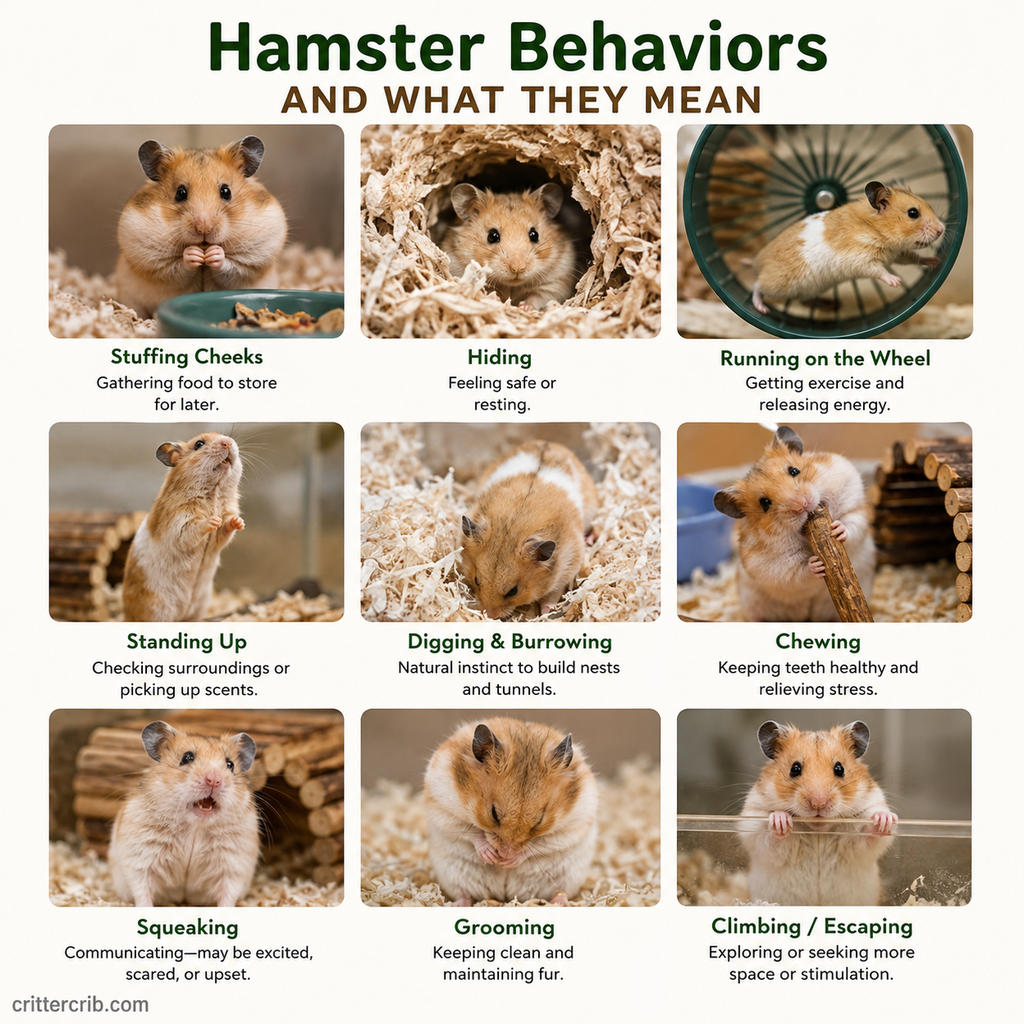
A comfortable hamster generally shows a combination of normal behaviors rather than one universal “happy hamster” signal.
Signs that your hamster appears comfortable may include:
- Eating normally
- Grooming regularly
- Building nests
- Burrowing
- Exploring confidently
- Foraging
- Using its wheel
- Stretching after waking
- Accepting treats
- Approaching familiar people without immediately panicking
A hamster doesn’t have to constantly interact with you to be content.
Independent behavior is normal.
What Does a Stressed Hamster Look Like?
Stress can appear differently from one hamster to another.
Possible signs include:
- Persistent bar chewing
- Repetitive climbing
- Constant pacing
- Frantic escape attempts
- Excessive hiding compared with normal behavior
- Defensive biting
- Frequent startled behavior
- Sudden behavioral changes
One behavior alone doesn’t necessarily confirm stress.
Look for patterns.
For example, an active hamster occasionally climbing a cage wall isn’t the same as a hamster repeatedly climbing, falling, pacing, and chewing bars every night.
How to Make Your Hamster Feel More Secure
A good enclosure allows a hamster to make choices.
Your hamster should be able to decide whether it wants to hide, dig, forage, exercise, or explore.
Helpful features include:
- Deep, suitable bedding for burrowing
- Secure hiding places
- A properly sized exercise wheel
- Safe chewing materials
- Tunnels and covered areas
- A suitable sand bath
- Foraging opportunities
- Nesting material
- A predictable day-night environment
Enrichment doesn’t need to mean constantly changing everything.
In fact, completely rearranging the enclosure too frequently can remove familiar scents and established pathways. Adding occasional new opportunities while maintaining familiar areas often provides a better balance.
Learn Your Hamster’s Individual Routine
One of the best ways to understand hamster behavior is simply to observe.
Pay attention to when your hamster wakes up, where it stores food, where it sleeps, how much it uses the wheel, and how it reacts when you approach.
Over time, you’ll establish a baseline for what’s normal for your particular hamster.
That makes unusual behavior easier to recognize.
For example, a hamster that has always been cautious and spent plenty of time hiding isn’t necessarily experiencing a problem. But if a hamster that normally rushes out every evening suddenly stays inside its nest for an entire night, that change deserves attention.
When a Change in Hamster Behavior May Need Veterinary Attention
Behavioral changes sometimes have medical causes.
Contact a veterinarian experienced with hamsters or exotic/small mammals if unusual behavior occurs alongside symptoms such as:
- Difficulty breathing
- Severe lethargy
- Loss of appetite
- Significant weight loss
- Diarrhea
- Discharge from the eyes or nose
- Difficulty walking
- Persistent abnormal posture
- Swelling
- Bleeding
- Obvious injury
- Significant hair loss or skin irritation
Hamsters can sometimes hide signs of illness, so noticeable changes shouldn’t automatically be dismissed as a personality quirk.
If something about your hamster’s behavior seems dramatically different from normal, particularly when accompanied by physical symptoms, getting professional advice is the safest approach.
Frequently Asked Questions About Hamster Behavior
How can you tell if a hamster likes you?
Rather than looking for one specific sign of affection, watch whether your hamster appears comfortable around you.
A hamster that voluntarily approaches your hand, accepts treats, explores while you’re nearby, and allows gentle handling without showing obvious fear is likely becoming comfortable with your presence.
Trust can take time, particularly with a new hamster.
Why does my hamster stare at me?
Your hamster may simply be investigating you.
Hamsters use hearing and smell extensively to understand their surroundings. What looks like staring may actually involve listening, sniffing, and deciding whether something nearby is interesting or potentially threatening.
Why does my hamster suddenly bite after being friendly?
Consider what happened immediately before the bite.
The hamster may have been startled, woken suddenly, handled for too long, cornered, or attracted by the smell of food on your fingers.
A sudden increase in defensive behavior can also occur when an animal is uncomfortable or in pain, so repeated unexplained behavioral changes deserve attention.
Do hamsters recognize their owners?
Hamsters can become familiar with a person’s scent, voice, and routine.
With regular, gentle interaction, your hamster may learn that your presence predicts food, enrichment, or safe handling.
That doesn’t necessarily mean hamster-human relationships work exactly like relationships with dogs or cats, but familiarity and trust can certainly develop.
Why does my hamster take food and immediately run away?
Taking food somewhere secure is normal hamster behavior.
Your hamster may carry the food into its nest or another hidden area before eating or storing it. This reflects the natural instinct to protect valuable resources.
It doesn’t necessarily mean your hamster is afraid of you.
Is it normal for hamsters to be very active at night?
Yes. Evening and nighttime activity is normal for hamsters.
Running, digging, eating, foraging, rearranging bedding, and exploring may all happen while you’re trying to sleep.
This is one reason a hamster enclosure may not be ideal directly beside the bed if you’re a light sleeper.
Final Thoughts on Understanding Hamster Behavior
Hamster behavior becomes much easier to understand once you look at the world from a hamster’s perspective.
Digging isn’t making a mess. It’s building a burrow.
Stuffing enormous amounts of food into the cheeks isn’t greed. It’s transportation.
Hiding isn’t necessarily antisocial. It’s a basic survival instinct.
Even the behaviors that seem odd to us often make perfect sense for an animal designed to spend its nights digging, exploring, gathering food, and avoiding predators.
The most useful thing you can do is learn what’s normal for your individual hamster. Provide plenty of opportunities for natural behaviors, interact on your hamster’s terms, and pay attention to sudden changes.
Once you understand the reasons behind those little quirks, hamster behavior stops looking quite so mysterious.