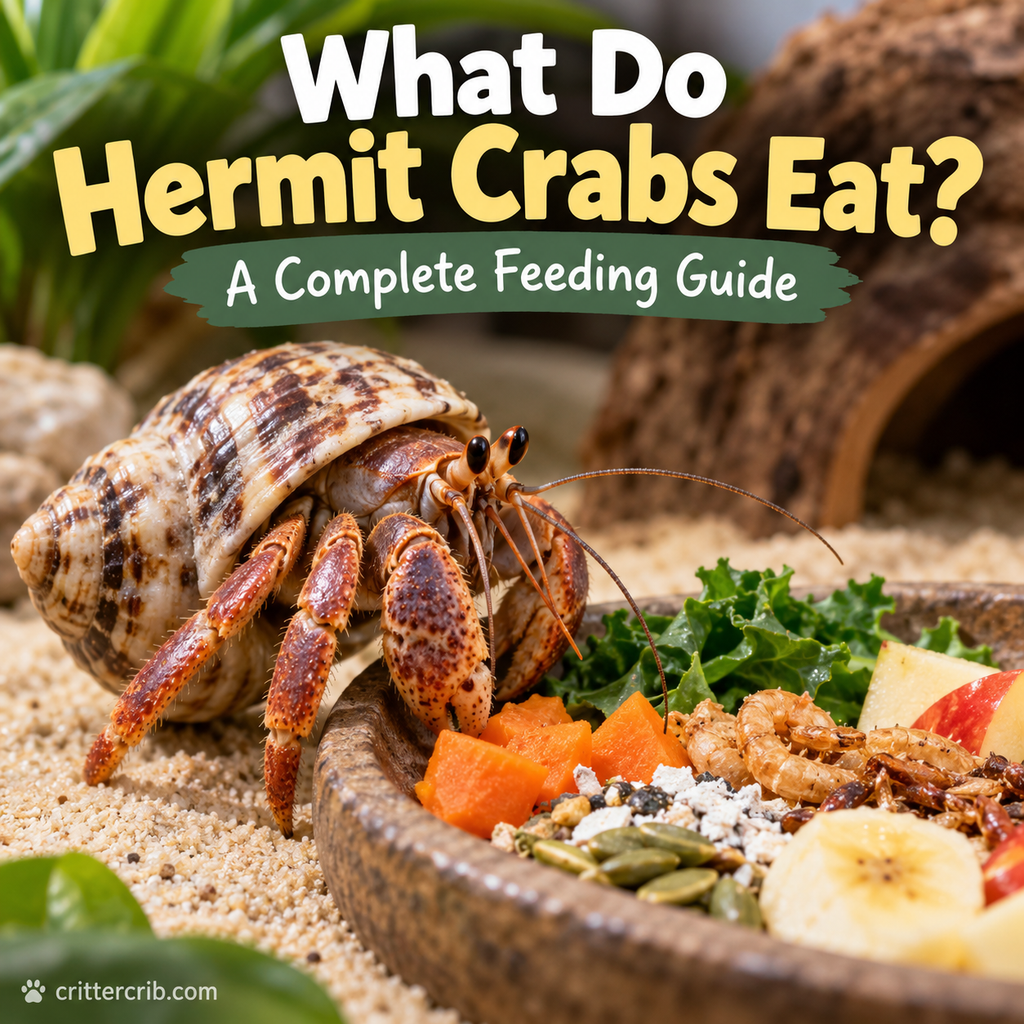
Hermit crabs may be tiny, but feeding them well involves more than dropping a few pellets into their enclosure. In the wild, these curious scavengers eat an incredibly varied diet, picking through plant material, fallen fruit, animal matter, and just about anything nutritious they encounter.
Pet hermit crabs benefit from that same kind of variety.
A good hermit crab diet combines protein, plant foods, healthy fats, calcium, and other nutrient-rich ingredients. You don’t need to prepare elaborate meals every night, but understanding what hermit crabs actually need can make it much easier to keep them healthy.
This guide covers what hermit crabs eat, which foods you can safely offer, what to avoid, how often to feed them, and a simple way to create balanced meals.
What Do Hermit Crabs Eat in the Wild?
Land hermit crabs are opportunistic omnivores and scavengers. Rather than relying on one particular food source, they eat whatever suitable foods they can find.
Depending on their habitat, wild hermit crabs may eat:
- Fallen fruit
- Leaves and other plant material
- Seeds and nuts
- Decaying wood
- Insects
- Carrion
- Dead marine animals
- Algae
- Seaweed
- Organic debris
It isn’t exactly a glamorous menu, but scavenging is part of what makes hermit crabs so adaptable.
Their natural diet also explains why feeding only one commercial food isn’t ideal. Hermit crabs evolved to consume many different foods, so variety should be a major part of their diet in captivity.
What Should Pet Hermit Crabs Eat?
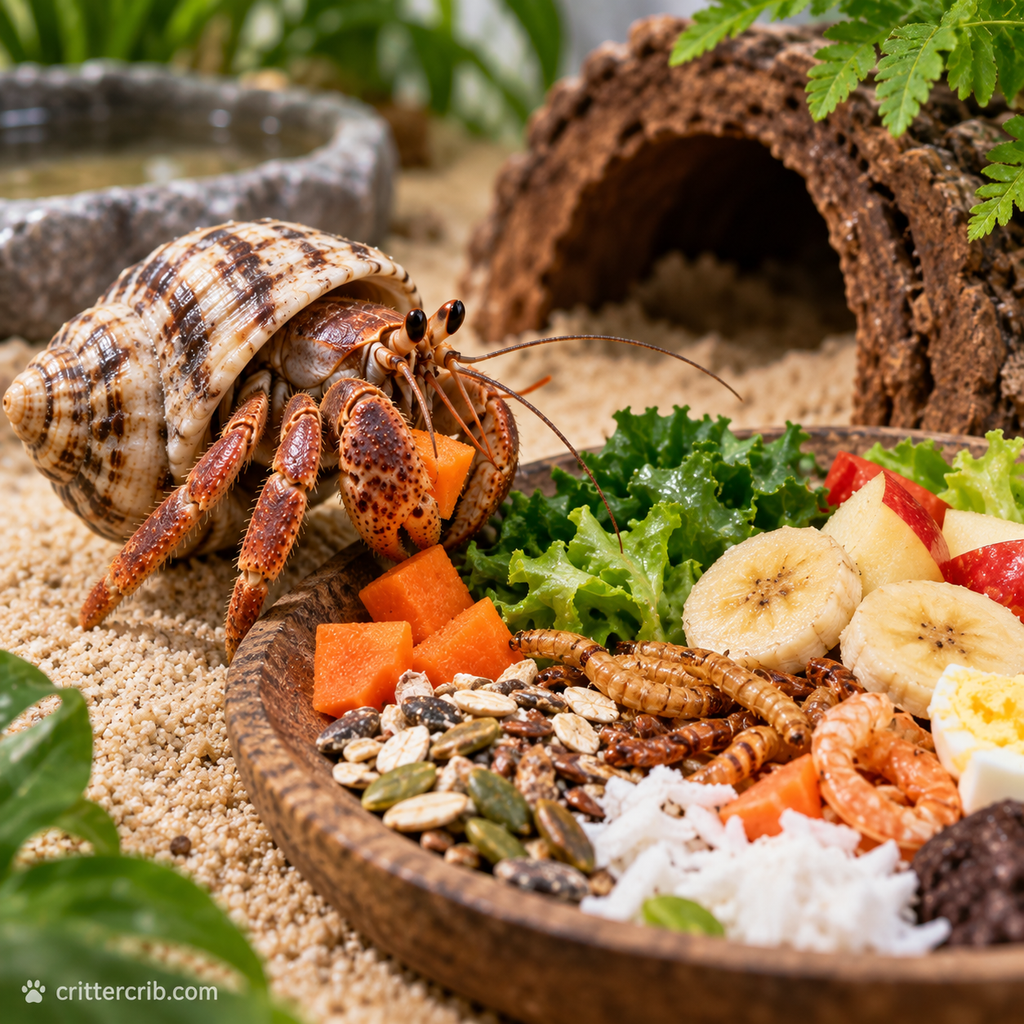
A pet hermit crab’s diet should include foods from several nutritional categories rather than depending entirely on pellets or flakes.
A balanced feeding routine generally includes:
- Protein
- Vegetables
- Fruits
- Grains and seeds
- Healthy fats
- Calcium-rich foods
You can rotate foods instead of trying to include every category in every single meal.
One evening might include shrimp, carrot, oats, and crushed eggshell. Another could include chicken, apple, pumpkin seeds, and leafy greens.
Changing the menu regularly provides nutritional variety while also giving your crabs opportunities to investigate new smells and textures.
Protein for Hermit Crabs
Protein is an important part of a hermit crab’s diet, especially during growth and around molting.
Suitable protein sources can include:
- Plain cooked egg
- Unseasoned cooked chicken
- Unseasoned cooked turkey
- Plain fish
- Shrimp
- Krill
- Mealworms
- Crickets
- Bloodworms
- Freeze-dried insects
Avoid meat prepared with sauces, butter, heavy seasoning, or large amounts of salt.
You don’t need to give your hermit crab a large piece of meat. A small amount is usually plenty, especially when you’re feeding several other foods alongside it.
Can Hermit Crabs Eat Fish and Seafood?
Yes. Fish and seafood can be excellent additions to a varied hermit crab diet.
Plain shrimp, fish, krill, and similar foods provide animal protein that resembles foods hermit crabs might encounter while scavenging naturally.
Choose plain products whenever possible. Seafood prepared for people may contain salt, spices, preservatives, sauces, or other unnecessary ingredients.
Freeze-dried shrimp and krill can also be convenient foods to keep on hand.
Vegetables Hermit Crabs Can Eat
Vegetables add vitamins, minerals, fiber, and variety to the diet.
Good options include:
- Carrots
- Sweet potato
- Pumpkin
- Zucchini
- Broccoli
- Peas
- Green beans
- Bell peppers
- Spinach
- Kale
- Romaine lettuce
You can experiment with different vegetables and see which ones your crabs prefer.
Some can be offered raw, while harder vegetables may be lightly cooked or softened. If you cook them, keep them plain.
Don’t worry if a crab ignores a particular vegetable. Hermit crabs can have surprisingly individual food preferences.
Fruits Hermit Crabs Can Eat
Fruit can be another useful part of the diet, although it shouldn’t be the only plant food you provide.
Hermit crabs may enjoy:
- Apples
- Bananas
- Blueberries
- Strawberries
- Mango
- Papaya
- Pears
- Grapes
- Melon
- Coconut
Remove pits, large seeds, and anything that could be difficult for the crab to eat safely.
Because fruit contains natural sugars and can spoil quickly in a warm, humid enclosure, offer relatively small portions and remove leftovers before they become moldy.
Do Hermit Crabs Like Sweet Foods?
Many hermit crabs readily investigate fruit and other naturally sweet foods.
That doesn’t mean sugary human snacks belong in their diet.
Fruit provides sweetness along with useful nutrients. Candy, pastries, sweetened cereal, and similar processed foods add unnecessary sugar and other ingredients.
Think fruit rather than dessert.
Grains, Seeds, and Nuts
Small amounts of grains, seeds, and nuts can contribute carbohydrates, fats, protein, and micronutrients.
Options include:
- Plain oats
- Brown rice
- Quinoa
- Chia seeds
- Flaxseed
- Sunflower seeds
- Pumpkin seeds
- Unsalted walnuts
- Unsalted almonds
Choose plain, unsalted products without sugary coatings or seasoning.
Nuts and larger seeds can be chopped or crushed into smaller pieces.
Healthy Fats for Hermit Crabs
Fat is sometimes overlooked when people build a hermit crab diet.
Small amounts of naturally fatty foods can contribute useful nutrients and calories.
Possible choices include:
- Coconut
- Chia seeds
- Flaxseed
- Unsalted nuts
- Pumpkin seeds
- Sunflower seeds
These foods are calorie-dense, so you only need small amounts.
Variety remains more important than feeding large portions of any single ingredient.
Why Hermit Crabs Need Calcium
Calcium is particularly important for hermit crabs because they rely on a strong exoskeleton.
Molting is a demanding process. During a molt, a crab sheds its old exoskeleton and develops a new one. Providing access to calcium-rich foods helps support normal exoskeleton development.
Useful calcium sources include:
- Cuttlebone
- Crushed eggshell
- Oyster shell
- Crushed coral
- Calcium-rich greens
Cuttlebone sold for birds is commonly used as a calcium source for hermit crabs. Pieces can be placed in the enclosure or crushed and mixed with other foods.
If you’re using eggshell, clean and prepare it appropriately before crushing it.
A calcium source can be kept available regularly rather than treated as an occasional snack.
Can Hermit Crabs Eat Commercial Hermit Crab Food?
Commercial hermit crab food can be convenient, but it shouldn’t automatically be assumed to provide everything your crabs need.
Quality varies considerably between products.
Check ingredient lists and look for foods containing recognizable sources of protein and plant ingredients rather than relying heavily on fillers.
Even when you use a good commercial food, you can supplement it with fresh and dried foods.
For example, a feeding dish might contain a small portion of commercial food alongside:
- Freeze-dried shrimp
- Chopped vegetables
- Fruit
- Seeds
- Calcium
Commercial food can be part of the menu without becoming the entire menu.
Foods Hermit Crabs Should Avoid
Hermit crabs are scavengers, but that doesn’t mean every food in your kitchen belongs in their enclosure.
It’s best to avoid heavily processed foods and anything containing questionable additives.
Foods to avoid include:
- Candy
- Chocolate
- Chips
- Fast food
- Heavily salted foods
- Foods covered in sauces
- Heavily seasoned meat
- Sugary desserts
- Moldy or spoiled food
- Foods containing ingredients known to be unsafe for your particular hermit crab species
Also be cautious with processed meats such as bacon, sausage, deli meat, and seasoned jerky. These can contain large amounts of sodium, preservatives, smoke flavoring, spices, or other additives.
When you’re unsure about a packaged product, read the ingredient list.
A simple rule works surprisingly well: plain, minimally processed foods are generally better choices than highly processed human snacks.
How Often Should You Feed Hermit Crabs?
Hermit crabs can be offered food daily.
Because they’re often most active at night, many owners put fresh food into the enclosure in the evening.
A simple routine is:
- Check the feeding dish each day.
- Remove food that is beginning to spoil.
- Add small portions of several foods.
- Rotate ingredients regularly.
- Clean feeding dishes as necessary.
You don’t need to fill a large bowl.
Hermit crabs are small animals, and providing enormous portions mostly creates more leftover food to clean up.
Start with small amounts and adjust based on how many crabs you have and how much they actually consume.
Should You Feed Hermit Crabs at Night?
Evening is a convenient time to feed because land hermit crabs tend to be more active after dark.
You may put food into the enclosure and see little activity, only to discover that pieces have moved or disappeared by morning.
Don’t assume your crab isn’t eating simply because you don’t see it happen.
Hermit crabs can be surprisingly secretive about their nighttime activities.
Do Hermit Crabs Need Separate Food Bowls?
You don’t necessarily need a separate bowl for every ingredient.
A shallow feeding dish can hold several foods at once. Some keepers prefer multiple small dishes because it makes cleanup easier and prevents wet foods from mixing with dry ingredients.
Whatever you use should be:
- Shallow enough for easy access
- Stable
- Easy to clean
- Made from an enclosure-safe material
Hermit crabs are enthusiastic climbers, diggers, and rearrangers, so don’t expect the feeding area to stay perfectly organized.
How Much Food Does a Hermit Crab Need?
There isn’t one perfect serving size because intake varies with the crab’s size, activity, number of animals in the enclosure, and the foods being offered.
Fortunately, you don’t need to measure every meal precisely.
Offer small portions of several foods and observe what disappears.
If you’re constantly throwing away large amounts of untouched food, reduce the portions. If everything regularly disappears, you can offer a little more.
This trial-and-observation approach also helps you discover your crabs’ preferences.
Remove Fresh Food Before It Spoils
Warmth and humidity are important parts of a suitable land hermit crab environment, but those same conditions can make fresh food spoil quickly.
Fruit and other moist foods deserve particular attention.
Check food dishes daily and remove anything that is:
- Moldy
- Slimy
- Fermenting
- Foul smelling
- Covered with unwanted pests
Dry foods may last longer, but they should still be inspected regularly.
Good feeding practices aren’t just about nutrition. They’re also part of keeping the enclosure clean.
Do Hermit Crabs Need Water With Their Food?
Yes. Proper access to water is essential and should be treated separately from feeding.
Land hermit crabs are generally provided with access to both appropriately prepared fresh water and marine-strength saltwater suitable for their species.
The pools should allow the crabs to get in and out safely. Avoid untreated chlorinated tap water, and use products and salt mixes appropriate for the animals you’re keeping.
Food can’t compensate for inadequate water access.
What About a Hermit Crab That Isn’t Eating?
Not seeing your hermit crab eat doesn’t necessarily mean something is wrong.
Hermit crabs may eat very small amounts, and much of their activity happens when you’re asleep.
Appetite and activity can also change around molting.
A crab preparing to molt may:
- Become less active
- Eat differently
- Spend more time digging
- Disappear beneath the substrate
A crab that has buried itself should generally be left undisturbed. Digging up a molting hermit crab can interrupt a vulnerable biological process.
If a crab remains above ground and repeatedly refuses food while showing unusual weakness, odor, injury, or other concerning changes, investigate the enclosure conditions and seek advice from a veterinarian experienced with exotic invertebrates when appropriate.
Should You Feed a Molting Hermit Crab?
A hermit crab that has buried itself to molt doesn’t need you to dig it up and deliver food.
Leave it alone.
During the molting process, hermit crabs may consume their shed exoskeleton. This helps them recover nutrients, including calcium, that went into the old shell.
Don’t remove a shed exoskeleton from a molting crab simply because it looks like waste.
Meanwhile, continue maintaining food and water for any other crabs living above the substrate.
Can Hermit Crabs Eat the Same Food Every Day?
They might eat it, but repeating the same meal every day isn’t the best approach.
Variety has two major advantages.
First, different foods contain different nutrients. Rotating foods helps create a broader nutritional profile.
Second, food variety encourages natural foraging behavior. New smells and textures give hermit crabs something to investigate.
Instead of thinking about finding the single “best hermit crab food,” think about building a varied menu.
A Simple Hermit Crab Feeding Schedule
You don’t need a complicated meal plan.
Here’s an example of how you might rotate foods throughout the week:
Day 1
- Freeze-dried shrimp
- Carrot
- Apple
- Crushed eggshell
Day 2
- Plain cooked egg
- Kale
- Oats
- Pumpkin seeds
Day 3
- Plain fish
- Sweet potato
- Blueberries
- Chia seeds
Day 4
- Mealworms
- Bell pepper
- Banana
- Cuttlebone
Day 5
- Plain chicken
- Broccoli
- Coconut
- Flaxseed
Day 6
- Krill
- Pumpkin
- Pear
- Unsalted nuts
Day 7
Offer a different combination of foods your crabs have responded well to.
This is only an example. You don’t need to follow an exact seven-day schedule.
In fact, rotating ingredients based on what you already have available can make feeding easier and more affordable.
Tips for Feeding Picky Hermit Crabs
Hermit crabs don’t always agree on what’s delicious.
One crab may immediately grab a piece of banana while another walks right past it.
If your crabs seem picky:
- Offer very small portions of new foods.
- Try different textures.
- Rotate foods rather than abandoning one after a single attempt.
- Offer food in the evening.
- Try fresh and dried versions of appropriate foods.
- Keep notes on which foods disappear most often.
Avoid responding to picky behavior by feeding only one favorite food.
A varied diet is still the goal.
Can You Feed Hermit Crabs Food From Your Kitchen?
Absolutely—provided you choose appropriate ingredients.
Many foods you already buy can become part of your hermit crab’s diet before they’re seasoned or prepared for your own meal.
For example, you might set aside a tiny amount of:
- Plain chicken
- Egg
- Carrot
- Sweet potato
- Apple
- Oats
- Seeds
Do this before adding salt, sauces, oil blends, or seasoning.
This can make feeding hermit crabs inexpensive while still providing plenty of variety.
Frequently Asked Questions About Feeding Hermit Crabs
What is a hermit crab’s favorite food?
There isn’t one universal favorite. Individual hermit crabs can have different preferences. Fruits, seafood, insects, coconut, and other aromatic foods may attract their attention, but a varied diet is more important than identifying one favorite.
Can hermit crabs eat bananas?
Yes. Banana can be offered as part of a varied diet. Give a small portion and remove leftovers before they spoil.
Can hermit crabs eat apples?
Yes. Small pieces of apple can be offered. Remove the seeds and provide the fruit in manageable pieces.
Can hermit crabs eat carrots?
Yes. Carrots are a useful vegetable to include in a varied diet. They can be offered in small pieces or shredded.
Can hermit crabs eat eggs?
Yes. Plain cooked egg can provide protein and other nutrients. Avoid adding salt, butter, or seasoning.
Can hermit crabs eat meat?
Hermit crabs are omnivorous scavengers and can eat animal protein. Plain chicken, turkey, fish, shrimp, insects, and similar foods can be offered in small amounts.
Can hermit crabs eat dog or cat food?
Some keepers occasionally use certain pet foods, but they’re unnecessary when you can provide more straightforward ingredients. Formulas vary and may contain additives or nutrient levels designed for dogs or cats rather than hermit crabs. If you use packaged foods of any kind, carefully check the ingredients.
How long can hermit crab food stay in the tank?
It depends on the food and enclosure conditions. Moist fresh foods can spoil quickly in warm, humid environments and should be checked daily. Remove anything showing mold, fermentation, unpleasant odors, or deterioration.
Final Thoughts
So, what do hermit crabs eat?
Quite a lot.
Hermit crabs are natural scavengers that thrive on dietary variety. Rather than searching for one perfect food, focus on providing a rotating selection of protein, vegetables, fruit, grains, seeds, healthy fats, and calcium-rich foods.
Keep portions small, remove fresh leftovers before they spoil, and avoid heavily processed or seasoned human foods.
Once you get into the habit, feeding hermit crabs is surprisingly simple. A tiny piece of egg here, some vegetables there, a little shrimp and calcium—and tomorrow’s menu can be completely different.
That variety is part of what makes feeding these tiny scavengers so interesting.