
Millipedes can be surprisingly affordable pets. They don’t need huge enclosures, expensive lighting systems, or a freezer full of feeder insects. Once their habitat is established, ongoing costs are usually modest.
But the millipede itself is only part of the price.
You’ll also need an appropriate enclosure, deep substrate, leaf litter, decaying wood, a moisture source, calcium, and a few basic supplies. Depending on the species and how elaborate you want the habitat to be, your initial setup can cost more than the animal.
So, how much do millipedes cost?
Common pet millipedes may cost roughly $10 to $50 each, while larger, less common, or more desirable species can cost considerably more. A basic enclosure might add another $50 to $150 or more to your startup expenses.
Here’s a closer look at what you can expect to spend when keeping millipedes.
How Much Does a Pet Millipede Cost?
Pet millipede prices vary considerably.
You may find common species for around $10 to $30 each, while larger or more unusual millipedes might sell for $30 to $100 or more.
Several factors influence the price:
- Species
- Size
- Age
- Availability
- Captive-bred versus imported origin
- Seller
- Geographic location
- Shipping requirements
Some millipedes are widely available within the invertebrate hobby, while others appear only occasionally.
That difference in availability can have a major effect on price.
Typical Millipede Prices by Type
Exact prices change over time and vary between sellers, but some general ranges can help you build a budget.
American Giant Millipedes
American giant millipedes, commonly associated with Narceus species, are popular among keepers in the United States.
They are relatively large, attractive, and generally straightforward to keep when their environmental requirements are met.
Individual animals may sometimes cost around $10 to $30, although prices vary.
For someone interested in their first millipede, they can be one of the more affordable options when available.
African Giant Millipedes
African giant millipedes are among the most recognizable millipedes in the pet hobby.
Their impressive size makes them appealing display animals, but availability and legal restrictions can vary depending on location and species.
When legally available, larger exotic millipedes may cost significantly more than common domestic species. Prices can range from several dozen dollars to well over $100 in some cases.
Always confirm that a species can legally be purchased and kept where you live before ordering it.
Colorful and Uncommon Species
Brightly colored, unusual, or less frequently available millipedes often command higher prices.
Depending on the species, seller, and availability, you may pay $30 to $100 or more per animal.
Don’t choose a species based on appearance alone.
Different millipedes can have different requirements for:
- Temperature
- Moisture
- Substrate depth
- Ventilation
- Diet
- Adult size
A $20 millipede that thrives in your existing conditions may ultimately be a better choice than an expensive species requiring a completely different setup.
Captive-Bred vs. Wild-Caught Millipedes
When possible, it’s worth asking where a millipede came from.
Captive-bred animals may sometimes cost more, particularly for species that reproduce slowly or aren’t widely established in the hobby.
However, captive breeding has several potential advantages.
Captive-bred millipedes may be:
- Better adapted to captive conditions
- Easier to obtain information about
- Less likely to have experienced stressful international transport
- A more sustainable option for some species
Wild-caught or imported animals may arrive with an uncertain age and history.
Price shouldn’t be the only factor when selecting an animal. Seller reputation, legality, species identification, and animal condition matter too.
How Much Does a Millipede Setup Cost?
For many new keepers, the habitat costs more than the millipede.
A basic setup may cost approximately $50 to $150, although you can spend less by using simple containers and responsibly sourced materials.
A more elaborate display enclosure can easily exceed $150.
Here’s where that money typically goes.
Enclosure: About $15–$100+
Millipedes don’t necessarily need expensive glass terrariums.
A properly ventilated plastic enclosure can work well and may cost only $15 to $40 depending on size.
Glass or acrylic display enclosures tend to cost more, often ranging from $40 to $100 or higher.
The enclosure should provide enough room for:
- Deep substrate
- Surface exploration
- Leaf litter
- Hides
- Moisture management
- Adequate ventilation
For millipedes, substrate depth is particularly important.
Don’t spend your entire budget on a beautiful enclosure only to leave too little room for substrate.
Substrate: About $10–$30
Substrate isn’t simply flooring for a millipede.
It’s part of the animal’s habitat and, for many species, an important part of its diet.
A suitable millipede substrate may contain:
- Organic topsoil
- Decomposed hardwood
- Leaf compost
- Decaying leaves
- Other appropriate organic material
Avoid soil containing pesticides, chemical fertilizers, perlite, or other potentially inappropriate additives.
You may spend roughly $10 to $30 initially, depending on enclosure size and whether you’re buying a premixed millipede substrate or assembling your own.
Specialty premixed substrates can cost more but may be convenient for beginners.
Leaf Litter: About $0–$20
Leaf litter is essential for many commonly kept millipedes.
Fortunately, it can also be inexpensive.
If you have access to a safe collection area, appropriate hardwood leaves may cost you nothing.
Commonly used leaves include:
- Oak
- Maple
- Beech
- Magnolia
Never collect leaves from areas that may have been exposed to pesticides, herbicides, roadside contamination, or other chemicals.
If you don’t have a trustworthy collection location, prepared leaf litter can be purchased from reptile and invertebrate suppliers.
A bag may cost roughly $5 to $20 depending on quantity and type.
Decaying Hardwood: About $0–$20
Decaying hardwood is another important component of many millipede diets and habitats.
Soft, decomposed hardwood can be mixed into the substrate and offered throughout the enclosure.
Like leaf litter, it may be free if you have a safe, legal collection source.
Prepared rotten wood and specialty substrate additives are also available commercially, typically for a modest price.
Avoid:
- Treated lumber
- Painted wood
- Pressure-treated wood
- Plywood
- Unknown construction scraps
- Wood exposed to pesticides
The wood should be appropriate decomposing hardwood, not simply any piece of wood you find.
Hides and Natural Decor: About $5–$30
Millipedes appreciate dark, protected places.
Fortunately, hides don’t need to be fancy.
Common choices include:
- Cork bark
- Decaying wood
- Leaf piles
- Pieces of natural bark
A few pieces of cork bark might cost around $5 to $20.
If you’re building a naturalistic display, additional plants, moss, wood, and decorative materials can push the cost higher.
From the millipede’s perspective, though, expensive landscaping isn’t necessary.
A safe piece of bark that creates a dark retreat can be more useful than a decorative ornament.
Moss: About $5–$15
Sphagnum moss is commonly used to help maintain a moist area within invertebrate enclosures.
A bag may cost around $5 to $15 and can last through multiple refreshes depending on the enclosure size.
Moss can help create a humid microclimate without requiring the entire habitat to remain saturated.
Remember that millipedes need moisture, but waterlogged substrate can create its own problems.
Species-specific care requirements should determine how moist the enclosure remains.
Calcium: About $3–$10
Calcium is one of the least expensive supplies you’ll likely purchase.
Common calcium sources include:
- Cuttlebone
- Crushed eggshell
- Calcium carbonate
- Other keeper-approved calcium sources
A cuttlebone may cost only a few dollars and can last quite a while in a small enclosure.
Calcium supports the exoskeleton and is worth including as part of a balanced setup.
Food: About $2–$10 per Month
Millipedes are inexpensive to feed compared with many exotic pets.
Their primary diet should generally revolve around decomposing organic material such as leaves and rotten wood rather than piles of fresh vegetables.
Supplemental foods may include small amounts of:
- Squash
- Cucumber
- Carrot
- Sweet potato
- Mushroom
- Other suitable vegetables
Because millipedes eat such small quantities, you may already have suitable foods in your kitchen.
Monthly food costs can therefore be almost negligible.
Fresh foods should be offered in moderation and removed if they begin to spoil.
Water and Moisture Supplies: Minimal Cost
Millipedes rely on moist environmental conditions appropriate for their species.
A spray bottle or mister might cost around $5 to $15 if you don’t already have one.
You’ll also need suitable water.
If your tap water contains chlorine or chloramine, you may choose an appropriate water conditioner or another safe water source.
Once you have the basic supplies, hydration costs are usually minimal.
Thermometer and Hygrometer: About $10–$30
Environmental monitoring equipment isn’t always expensive, but it can be useful.
A digital thermometer and hygrometer can help you monitor:
- Temperature
- Relative humidity
- Environmental changes
Basic units may cost around $10 to $30.
Humidity readings shouldn’t replace observing the actual substrate and understanding your species’ moisture requirements, but they can provide useful additional information.
Do Millipedes Need Heating?
Many millipedes can be kept at normal indoor temperatures when those temperatures fall within the appropriate range for the species.
That means you may not need supplemental heating at all.
If your room becomes too cold for your particular species, additional heating may be necessary.
This could add approximately $15 to $40 or more for equipment, plus a small amount to your electricity bill.
Avoid placing a millipede enclosure directly on an uncontrolled heat source.
If supplemental heating is necessary, use equipment safely and monitor temperatures carefully.
More heat isn’t automatically better.
Do Millipedes Need Special Lighting?
Millipedes generally don’t require expensive specialized lighting simply for their own benefit.
If you’re keeping live plants in a display enclosure, however, you may want an appropriate plant light.
That could add another $20 to $60 or more to the setup.
For a simple millipede enclosure without live plants, special lighting may be unnecessary.
Avoid placing the enclosure in direct sunlight.
A glass or plastic container can heat rapidly in sunlight, creating dangerously high temperatures.
How Much Does a Basic Millipede Setup Cost in Total?
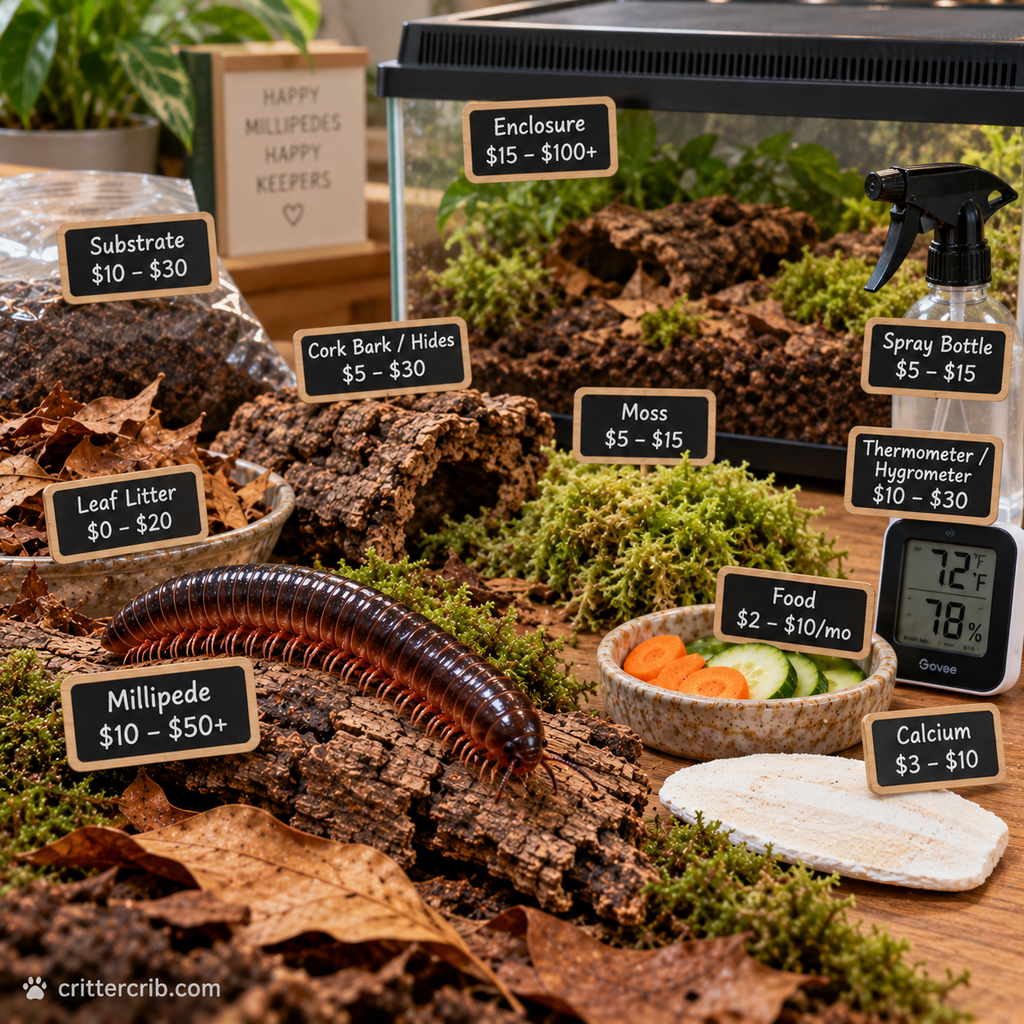
Let’s put everything together.
A basic setup might look something like this:
| Item | Estimated Cost |
|---|---|
| Millipede | $10–$50+ |
| Enclosure | $15–$50 |
| Substrate | $10–$30 |
| Leaf litter | $0–$20 |
| Decaying wood | $0–$20 |
| Cork bark/hide | $5–$20 |
| Sphagnum moss | $5–$15 |
| Calcium | $3–$10 |
| Spray bottle | $5–$15 |
| Thermometer/hygrometer | $10–$30 |
| Initial supplemental food | $2–$10 |
A practical beginner setup could therefore cost somewhere around $65 to $200, including the animal.
If you already have supplies or can safely source leaves and decaying hardwood, the total may be lower.
If you choose an expensive species and a polished display terrarium, the total can easily exceed $200.
Budget vs. Premium Millipede Setup
There is a big difference between what a millipede needs and what you might want aesthetically.
Budget Setup
A budget-friendly setup might use:
- Ventilated plastic container
- Homemade substrate mixture
- Responsibly collected leaves
- Responsibly collected decaying hardwood
- Simple cork bark hide
- Sphagnum moss
- Cuttlebone
Estimated total, including a common millipede: roughly $60–$120.
Display Setup
A more decorative setup might include:
- Glass or acrylic terrarium
- Premium premixed substrate
- Purchased leaf litter
- Decorative cork bark
- Live plants
- Moss
- Digital environmental monitors
- Plant lighting
- Specialty decor
Depending on the millipede species, a setup like this might cost $150–$300 or more.
The millipede doesn’t care whether its enclosure looks expensive.
Prioritize substrate quality, depth, nutrition, moisture, ventilation, and safety before aesthetics.
How Much Do Millipedes Cost Per Month?
Once the enclosure is established, monthly expenses are usually low.
You might spend approximately $5 to $20 per month, and some months may cost almost nothing.
Ongoing expenses can include:
- Supplemental food
- Leaf litter
- Decaying wood
- Substrate replacement or replenishment
- Moss
- Calcium
- Water conditioner
- Electricity if heating or lighting is used
Many of these aren’t monthly purchases.
A bag of leaves, substrate, moss, or calcium may last for months depending on the size of your enclosure and number of animals.
How Often Do You Need to Replace Millipede Substrate?
You generally shouldn’t treat a millipede enclosure like a hamster cage that needs to be completely emptied every week.
The substrate is part of the animal’s living environment and food system.
Instead, maintenance often involves:
- Removing spoiled supplemental food
- Replenishing leaf litter
- Adding decomposed wood
- Maintaining moisture
- Spot-cleaning when needed
- Replacing or refreshing substrate when it becomes depleted
Exactly how often major substrate maintenance is needed depends on enclosure size, colony size, species, and substrate composition.
Remember that the millipedes are gradually consuming the organic material.
If the substrate becomes depleted, simply looking clean doesn’t mean it’s still nutritionally useful.
Are There Veterinary Costs for Millipedes?
Veterinary care for millipedes is unusual compared with traditional pets.
Finding a veterinarian experienced with terrestrial invertebrates can also be difficult.
That doesn’t mean medical problems are impossible.
Potential concerns can include:
- Injuries
- Molting complications
- Dehydration
- Environmental problems
- Parasites or pests
- Exposure to harmful chemicals
There may not be a predictable annual veterinary expense, but exotic veterinary consultation—if available—could cost considerably more than the millipede itself.
This is one reason proper husbandry is so important.
Preventing avoidable problems is particularly valuable with animals for which specialized veterinary treatment may be limited.
Shipping Can Significantly Increase the Price
If you’re buying a millipede online, don’t forget shipping.
Live-animal shipping is different from ordinary package delivery.
Depending on the seller, weather, shipping method, and location, shipping could add $30 to $60 or more to your purchase.
That means a $20 millipede could potentially cost $60 or $70 by the time it reaches your door.
Some sellers also require:
- Overnight shipping
- Temperature-safe delivery windows
- Heat or cold packs
- Specific delivery arrangements
Always read the seller’s live-arrival policy before ordering.
Buying More Than One Millipede
Many millipede species can be kept with others of their own kind when enough space and resources are provided.
Buying several animals increases the purchase price, but it doesn’t necessarily multiply every setup expense.
Two millipedes can often share:
- An enclosure
- Substrate
- Leaf litter
- Cork bark
- Moss
- Calcium
- Environmental equipment
You’ll still need to make sure the enclosure is appropriately sized and provides enough food and usable habitat.
If you keep males and females together, be prepared for the possibility of offspring.
A small millipede collection has a way of becoming a larger one.
Hidden Costs New Millipede Owners Sometimes Miss
The millipede itself may be cheap enough to feel like an impulse purchase.
The hidden costs are usually associated with setting up the enclosure correctly.
Before buying the animal, budget for:
- Enough substrate depth.
- Nutritious decomposing material.
- A secure enclosure.
- Appropriate moisture management.
- Safe hides.
- Environmental monitoring if needed.
- Shipping if purchasing online.
- Replacement substrate and leaves over time.
It’s better to spend $25 on good substrate and leaves than $25 on decorations that provide little practical benefit.
How to Save Money on Millipede Care
Millipedes can be kept affordably without cutting corners on their welfare.
A few sensible ways to reduce costs include:
- Use a properly ventilated plastic enclosure instead of an expensive terrarium.
- Buy substrate ingredients in larger quantities when practical.
- Collect safe leaves and decaying hardwood where legal and appropriate.
- Use simple cork bark instead of decorative hides.
- Share suitable vegetables from your own groceries.
- Buy supplies from invertebrate or reptile suppliers in larger quantities.
- Avoid unnecessary gadgets.
Don’t save money by using questionable soil, chemically treated wood, contaminated leaves, or an enclosure that’s too small.
Cheap and unsafe aren’t the same thing as budget-friendly.
Are Millipedes Expensive Pets?
Compared with many traditional and exotic pets, millipedes are relatively inexpensive.
They don’t normally require:
- Frequent purchases of live feeder insects
- Large aquariums
- Expensive UVB lighting
- Complex filtration systems
- Large quantities of food
- Grooming
- Toys
- Regular vaccinations
Most of the expense comes at the beginning.
Once you have a suitable enclosure and establish a healthy substrate, the recurring costs are relatively small.
That’s one reason millipedes can be appealing to people interested in keeping invertebrates without committing to an expensive setup.
Frequently Asked Questions About Millipede Costs
How much is a pet millipede?
Common pet millipedes may cost around $10 to $50 each, although prices vary significantly by species, size, availability, and seller. Rare or particularly desirable species may cost $100 or more.
How much does a millipede enclosure cost?
A simple enclosure may cost around $15 to $50, while glass or acrylic display terrariums can cost $50 to $100 or more. Substrate, leaves, wood, moss, and other supplies need to be added to that price.
How much does it cost to set up a millipede enclosure?
A complete beginner setup, including a common millipede, may cost approximately $65 to $200. Premium setups and expensive species can push the total considerably higher.
How much does millipede care cost per month?
Ongoing expenses are generally modest, often around $5 to $20 per month or less. Many supplies are purchased only occasionally rather than monthly.
Are millipedes cheaper than reptiles?
They often are. Millipedes generally require less food and equipment than many reptiles and usually don’t need specialized UVB lighting. However, costs depend on the species and setup.
Do millipedes need expensive food?
No. Much of their diet consists of decomposing leaves and wood. Small amounts of vegetables and other appropriate supplemental foods are inexpensive.
Can I collect leaves and wood instead of buying them?
Potentially. Only collect where doing so is legal and from locations free of pesticides, herbicides, roadside pollution, and other contaminants. Make sure you’re collecting appropriate materials for the species you’re keeping.
Is an expensive terrarium necessary?
No. A secure, appropriately sized and ventilated plastic enclosure can work well. Substrate depth, moisture, nutrition, and ventilation are more important than how expensive the enclosure looks.
Final Thoughts
So, how much do millipedes cost?
For a common species, the millipede itself may cost only $10 to $50. Once you include an enclosure, substrate, leaf litter, decaying wood, moss, calcium, and other basic supplies, a realistic starting budget is closer to $65 to $200.
After that, expenses tend to drop considerably.
A well-established millipede enclosure doesn’t need a constant stream of expensive supplies. Much of what these animals need comes from relatively inexpensive natural materials, and supplemental food costs very little.
Spend your money where it matters most: a secure enclosure, deep nutritious substrate, appropriate moisture, plenty of decomposing leaves and wood, and the correct conditions for your particular species.
Millipedes may be inexpensive pets, but a thoughtful setup makes a much bigger difference than simply choosing the cheapest animal you can find.