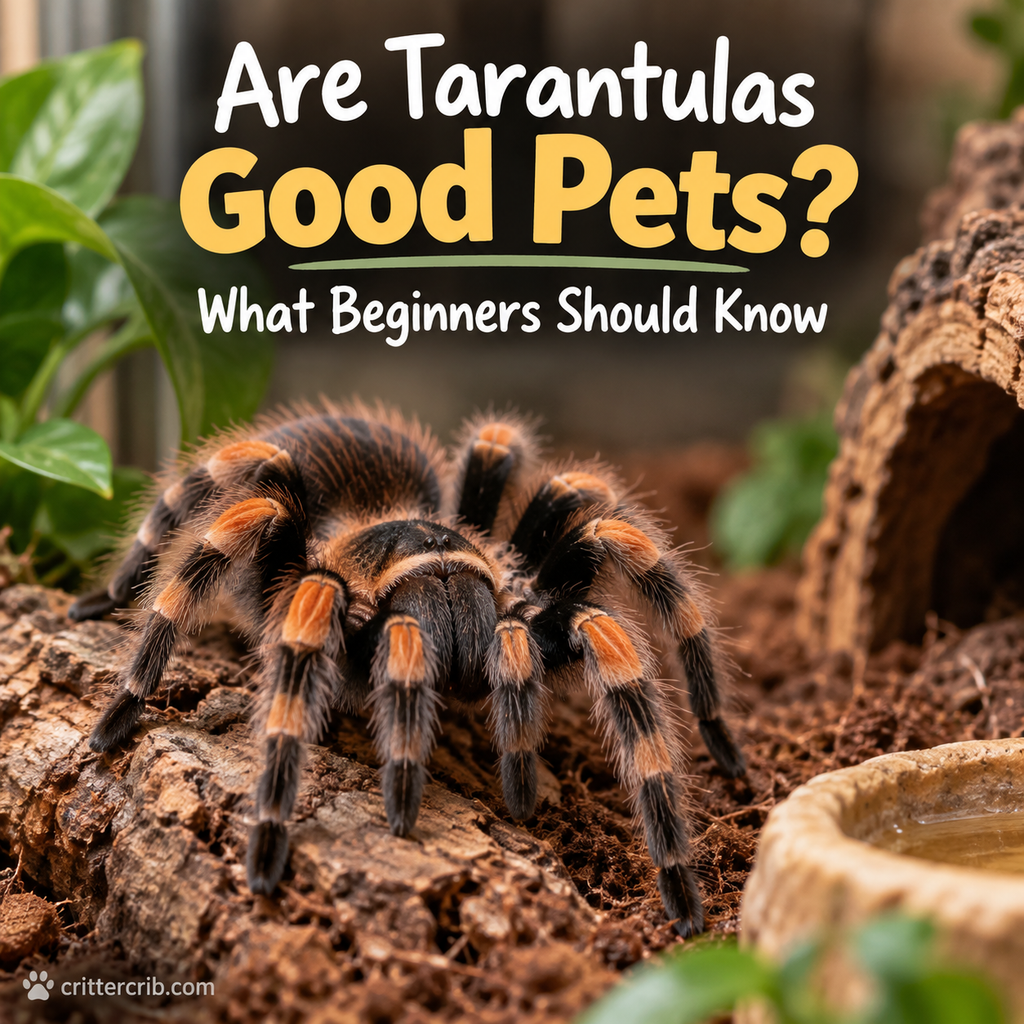
Tarantulas have a reputation for being intimidating, but as pets, they’re often much calmer and easier to care for than people expect. They don’t need daily walks, they don’t make noise, and they require far less space than most traditional pets.
That doesn’t automatically mean a tarantula is the right pet for everyone.
These large spiders have very specific needs, and the experience of keeping one is quite different from owning a hamster, reptile, or other small pet. Tarantulas are primarily animals to observe rather than handle, and even a seemingly calm spider needs to be treated with care.
If you’re thinking about getting your first tarantula, here’s what you should know before bringing one home.
Are Tarantulas Good Pets for Beginners?
Yes, certain tarantula species can make good pets for beginners.
They are relatively low-maintenance, quiet, inexpensive to feed, and fascinating to watch. Once their enclosure is properly set up, routine care usually involves feeding, providing water, removing uneaten prey, and keeping an eye on environmental conditions.
However, beginner-friendly does not mean completely effortless.
A tarantula keeper needs to understand basic husbandry, recognize normal behaviors such as molting, and resist the temptation to handle the spider unnecessarily.
The species you choose also matters tremendously. Some tarantulas are much calmer and slower-moving than others.
What Is It Like to Own a Tarantula?
Keeping a tarantula is closer to maintaining a small living ecosystem than having an interactive companion.
You may see your spider rearranging substrate, digging a burrow, constructing webbing, hunting insects, or simply sitting in the same spot for surprisingly long periods.
Some species spend a lot of time out in the open. Others may disappear into a burrow for days or even weeks.
That can be part of the appeal.
Instead of expecting affection or interaction, tarantula owners get to observe behaviors that most people rarely see up close.
If you enjoy unusual animals and don’t mind a mostly hands-off pet, a tarantula can be incredibly interesting.
Pros of Keeping a Tarantula as a Pet
There are several reasons tarantulas appeal to first-time exotic pet owners.
They Don’t Need Much Space
Most tarantulas can live comfortably in relatively compact enclosures when those enclosures are appropriately sized for the species.
You don’t need an enormous aquarium or a dedicated room.
In fact, putting a tarantula in an excessively large enclosure isn’t necessarily better. A properly sized habitat makes it easier for the spider to locate prey and reduces unnecessary climbing risks for terrestrial species.
They’re Quiet
Tarantulas won’t bark, chirp throughout the night, or wake your neighbors.
For apartments and other small living spaces, that can be a major advantage.
Feeding Is Relatively Simple
Most pet tarantulas eat live invertebrate prey such as:
- Crickets
- Dubia roaches
- Mealworms
- Superworms
- Other appropriately sized feeder insects
Adult tarantulas generally don’t need to eat every day. Feeding frequency depends on the spider’s species, size, age, and body condition.
They Don’t Require Constant Attention
Tarantulas aren’t social animals that become lonely when you leave for work.
They don’t need daily playtime or affection. As long as their basic needs are met, they generally do well with minimal disturbance.
This makes them appealing to people who enjoy keeping animals but don’t necessarily want a pet requiring hours of attention each day.
They’re Fascinating to Observe
One of the best parts of tarantula keeping is watching natural behaviors.
Depending on the species, you might observe burrowing, web construction, ambush hunting, grooming, and molting.
Even feeding can be interesting to watch.
Downsides of Keeping a Tarantula
Tarantulas aren’t ideal for everyone, and it’s important to understand the drawbacks before getting one.
They’re Not Cuddly Pets
If you’re looking for an animal you can regularly hold and interact with, a tarantula probably isn’t the right choice.
Even docile tarantulas don’t benefit from handling in the way a domesticated animal might enjoy human interaction.
Handling can also be dangerous for the spider.
A fall from even a relatively short height can seriously injure a terrestrial tarantula.
Some Species Are Defensive
Not every tarantula behaves the same way.
Some species are relatively calm, while others can be fast, defensive, or more likely to bite when threatened.
Many New World tarantulas also have urticating hairs that can be kicked from the abdomen as a defense. These tiny hairs can irritate skin, eyes, and airways.
This is one reason choosing an appropriate beginner species is so important.
Live Insects Are Usually Part of the Deal
A tarantula may be easy to feed, but you still need to be comfortable keeping or purchasing feeder insects.
For some prospective owners, the crickets and roaches are more difficult to accept than the spider itself.
They Can Hide for Long Periods
Your new tarantula may not spend its days posing at the front of the enclosure.
Burrowing species can disappear underground. Tarantulas may also refuse food and become inactive before molting.
These behaviors can worry new keepers who aren’t familiar with them.
Are Pet Tarantulas Dangerous?
Tarantulas deserve respect, but their frightening reputation often exaggerates the danger they present to responsible keepers.
They do possess venom and can bite.
The effects of a bite can vary depending on the species and individual circumstances, and any bite should be taken seriously. Allergic reactions or other complications are possible.
The best approach is simple: don’t put yourself in a position where the spider feels forced to defend itself.
Use appropriate tools when maintaining the enclosure, move slowly, and learn the behavior of your particular species.
Can You Handle a Pet Tarantula?
Technically, some tarantulas can be handled. That doesn’t mean routine handling is a good idea.
The biggest concern isn’t necessarily the tarantula hurting you. It’s you accidentally hurting the tarantula.
Terrestrial tarantulas have relatively fragile abdomens. A fall onto a hard surface can cause severe or fatal injuries.
Handling can also stress the spider or expose you to urticating hairs.
For those reasons, it’s generally better to enjoy your tarantula through observation.
When the spider must be moved, such as during an enclosure change, careful transfer techniques using catch cups and other appropriate tools are safer than casually picking it up.
What Kind of Enclosure Does a Tarantula Need?
The ideal enclosure depends on whether the species is terrestrial, fossorial, or arboreal.
This distinction is extremely important.
Terrestrial Tarantulas
Terrestrial species spend most of their time at or near ground level.
Their enclosure should generally prioritize floor space and provide plenty of substrate. Excessive vertical space should be avoided because falls can be dangerous.
A hide should also be provided so the spider has somewhere secure to retreat.
Fossorial Tarantulas
Fossorial species are enthusiastic burrowers.
They need deeper substrate that allows them to create tunnels and retreats. You may not see these spiders as often, but watching them construct and maintain a burrow can be part of the experience.
Arboreal Tarantulas
Arboreal species live above the ground and have different enclosure requirements.
They generally need more vertical space, appropriate climbing structures, secure anchor points, and good ventilation.
Research the exact species before setting up an enclosure rather than relying on a generic “tarantula tank.”
What Do You Need for a Pet Tarantula?
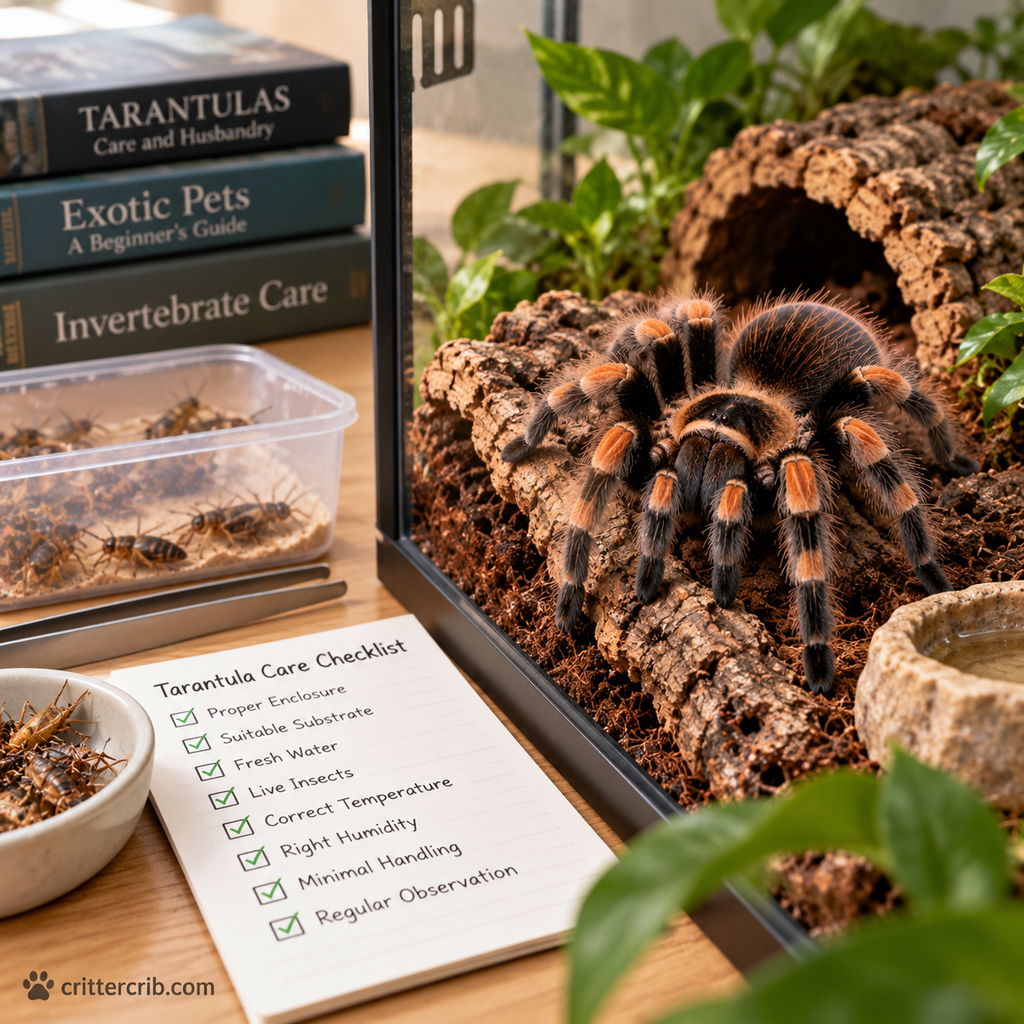
A basic setup may include:
- A secure, appropriately sized enclosure
- Suitable substrate
- A hide or retreat
- A shallow water dish
- Appropriate ventilation
- Species-appropriate climbing or burrowing features
- Feeding tongs
- A catch cup for safe transfers
- Live feeder insects
Tarantulas are excellent escape artists, so the enclosure must close securely.
Avoid lids or decorations that could trap the spider’s legs or create unnecessary hazards.
Do Tarantulas Need Heat Lamps?
In many typical indoor environments, a tarantula does not require the intense heating equipment associated with many reptiles.
The appropriate temperature range depends on the species, however, so you should research the natural requirements of the tarantula you plan to keep.
Avoid placing an enclosure directly in harsh sunlight or next to heating and cooling vents.
Overheating a small enclosure can happen quickly.
Rather than trying to make the habitat extremely warm, aim for stable conditions appropriate to the species.
Do Tarantulas Need Humidity?
Humidity requirements vary considerably between species.
This is an area where generic tarantula advice can cause problems.
A species adapted to relatively dry conditions shouldn’t be kept constantly wet, while species that require more moisture shouldn’t be allowed to become excessively dry.
Ventilation is important too. Constantly soaking the substrate without adequate airflow can create poor enclosure conditions.
Research your specific species and provide the moisture level it actually needs.
What Do Pet Tarantulas Eat?
Tarantulas are predators that primarily eat insects and other invertebrates.
Common feeder options include crickets, roaches, mealworms, and similar appropriately sized prey.
The prey should be suitable for the size of your spider.
Young spiderlings may need smaller food items than adults.
Remove uneaten prey when appropriate, particularly if the tarantula appears to be preparing to molt. A vulnerable molting tarantula should not be left with feeder insects that could disturb or injure it.
Fresh water should also remain available in an appropriate shallow dish.
How Often Do Tarantulas Eat?
There isn’t one universal feeding schedule.
Young tarantulas typically eat more frequently because they are growing, while adults may eat less often.
Tarantulas can also refuse food for extended periods, especially before a molt.
Instead of assuming something is immediately wrong when your spider skips a meal, consider its overall behavior, body condition, species, age, and whether it may be entering premolt.
Overfeeding isn’t necessary.
Tarantula Molting: What Beginners Need to Know
Molting is one of the most important behaviors for a new tarantula owner to understand.
As a tarantula grows, it periodically sheds its old exoskeleton.
Before a molt, the spider may:
- Stop eating
- Become less active
- Spend more time hiding
- Create webbing or prepare a molting area
- Show changes in the appearance of its abdomen
A tarantula may molt while lying on its back.
To someone seeing this for the first time, the spider can appear dead. In reality, lying on its back during a molt can be completely normal.
Don’t attempt to flip the spider over or interfere with the process.
After molting, the new exoskeleton and fangs need time to harden before normal feeding resumes.
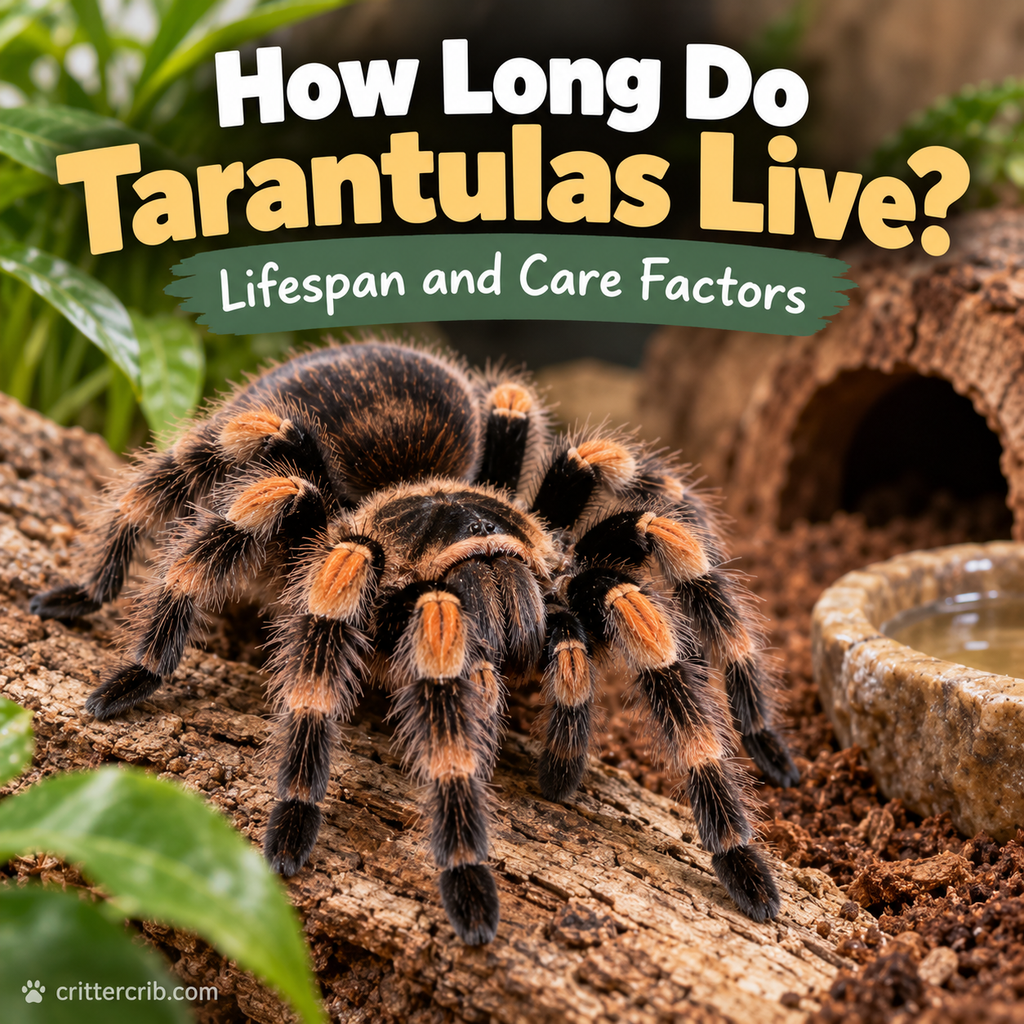
How Long Do Tarantulas Live?
This is one of the most surprising aspects of tarantula ownership.
Depending on the species, females can live for many years, with some potentially living well over a decade under appropriate care. Males typically have considerably shorter lifespans, particularly after reaching maturity.
That makes purchasing a young female tarantula a potentially long-term commitment.
Before buying one, consider whether you’re prepared to care for the same spider for years to come.
How Much Does a Pet Tarantula Cost?
The cost varies dramatically.
Common species and young spiderlings may be relatively inexpensive, while rarer species, established females, or unusual color forms can cost considerably more.
The spider itself isn’t the only expense.
You’ll also need to budget for:
- The enclosure
- Substrate
- Hides and habitat furnishings
- Water dishes
- Feeder insects
- Replacement or upgraded enclosures as the spider grows
Ongoing costs are generally modest compared with many larger pets, but the initial setup should still be planned properly.
What Are Good Tarantulas for Beginners?
Beginners should generally look for species known for manageable speed, relatively calm behavior, and straightforward husbandry.
Popular beginner choices often include species from genera such as:
- Grammostola
- Brachypelma
- Tliltocatl
- Aphonopelma
Individual temperament can vary, even within a species.
Don’t choose your first tarantula based entirely on appearance. A spectacular-looking species that is extremely fast or defensive can be much more difficult for an inexperienced keeper.
Research the exact species before buying it.
New World vs. Old World Tarantulas
You’ll often encounter the terms “New World” and “Old World” when researching tarantulas.
New World tarantulas originate from the Americas. Many commonly kept beginner species belong to this group, and many possess urticating hairs as part of their defensive strategy.
Old World tarantulas originate from regions including Africa and Asia.
Many Old World species are known for being extremely fast and more defensive, and they lack urticating hairs. Their venom can also be medically significant.
For these reasons, Old World species are generally better suited to experienced keepers rather than someone buying their first tarantula.
Should You Buy a Spiderling or an Adult Tarantula?
Tiny spiderlings can be inexpensive and rewarding to raise, but they aren’t necessarily the easiest starting point.
Their small size can make feeding and enclosure management more challenging. Some also grow very slowly, meaning it may take years for a tiny spiderling to reach an impressive adult size.
Juveniles are often a nice middle ground.
They’re easier to observe and care for than very small spiderlings while still allowing you to watch the tarantula grow.
Adults are the easiest to appreciate immediately, although established females can be more expensive.
Where Should You Get a Pet Tarantula?
Look for reputable breeders, specialty exotic pet retailers, or established sellers who can accurately identify the spider.
Correct species identification matters because husbandry requirements and temperament can vary.
Before purchasing, find out:
- The scientific name of the species
- Approximate age or size
- Sex, if known
- Current feeding habits
- Current enclosure conditions
- Whether the spider was captive-bred
Also check your local regulations and housing rules before purchasing an exotic animal.
Are Tarantulas Good Pets for Kids?
A tarantula can be an interesting animal for a family to observe, but it shouldn’t be treated like a pet that a child can freely pick up and play with.
Adult supervision is important.
Children need to understand that the enclosure should remain secure and that the spider should not be handled casually.
A tarantula may work better as an observational family pet than as a child’s personal hands-on pet.
Are Tarantulas High-Maintenance Pets?
Compared with dogs, cats, birds, and many reptiles, tarantulas can be remarkably low-maintenance.
But low-maintenance shouldn’t be confused with no-maintenance.
They still require:
- Appropriate environmental conditions
- Clean water
- Proper feeding
- A secure enclosure
- Species-specific husbandry
- Observation for potential problems
Most of the work happens in learning how to set up and maintain the habitat correctly.
Once you’ve done that, routine care is generally straightforward.
Common Beginner Mistakes to Avoid
A little research prevents many common tarantula-keeping problems.
Watch out for these mistakes:
- Choosing a species based only on appearance.
- Handling the tarantula unnecessarily.
- Providing too much climbing height for a terrestrial species.
- Keeping the enclosure excessively wet.
- Assuming every tarantula needs identical humidity and temperature.
- Leaving live prey with a molting tarantula.
- Disturbing a spider during a molt.
- Using an enclosure that isn’t escape-proof.
- Panicking when a healthy tarantula temporarily refuses food.
- Buying the spider before researching its adult size and husbandry needs.
The best beginner setup is usually a simple one designed around the natural behavior of the species.
Who Should Consider Getting a Tarantula?
A tarantula might be a good pet for you if you:
- Enjoy observing unusual animals
- Want a quiet pet
- Have limited space
- Don’t need frequent physical interaction with your pet
- Are comfortable feeding live insects
- Can respect an animal that is best left mostly undisturbed
- Are willing to research species-specific care
They’re especially appealing to people fascinated by spiders, invertebrates, and natural behavior.
Who Probably Shouldn’t Get a Tarantula?
You may want to choose another pet if you want an animal you can cuddle, frequently handle, train, or interact with socially.
A tarantula also isn’t a great choice if keeping live feeder insects makes you uncomfortable.
And if someone in your household has a serious fear of spiders, bringing home a large one without discussing it first probably won’t make for a peaceful living arrangement.
Are Tarantulas Good Pets? The Bottom Line
For the right person, tarantulas can be excellent pets.
They’re quiet, space-efficient, fascinating to observe, and relatively easy to maintain once you understand their needs. Some species are also surprisingly long-lived, making them much more of a commitment than their small size suggests.
The key is having the right expectations.
A tarantula isn’t a miniature eight-legged version of a traditional companion animal. It’s an exotic animal whose natural behaviors are best appreciated with minimal interference.
Start with a species known for manageable behavior, build the enclosure around that species’ needs, and learn what normal feeding, premolt, and molting behavior looks like.
If the idea of watching a tarantula build a burrow, hunt prey, molt, and quietly go about its life sounds more interesting than holding it, you may be exactly the kind of person who enjoys keeping one.