Guinea pigs may have thick little coats, but they’re surprisingly sensitive to changes in temperature. A room that feels only slightly warm or chilly to you can become uncomfortable for a guinea pig, especially when conditions stay that way for hours.
Heat is a particular concern. Guinea pigs don’t sweat like humans do, and they aren’t especially good at cooling themselves down. High humidity can make hot weather even harder for them to tolerate.
Cold conditions aren’t ideal either. Drafts, damp bedding, and prolonged exposure to low temperatures can leave guinea pigs uncomfortable and potentially contribute to health problems.
Fortunately, you don’t need to create a perfectly controlled environment. Keeping your guinea pigs indoors in a comfortable, relatively stable room is usually the easiest approach.
Here’s what you should know about maintaining a comfortable temperature and humidity level for guinea pigs throughout the year.
What Is the Ideal Temperature for Guinea Pigs?
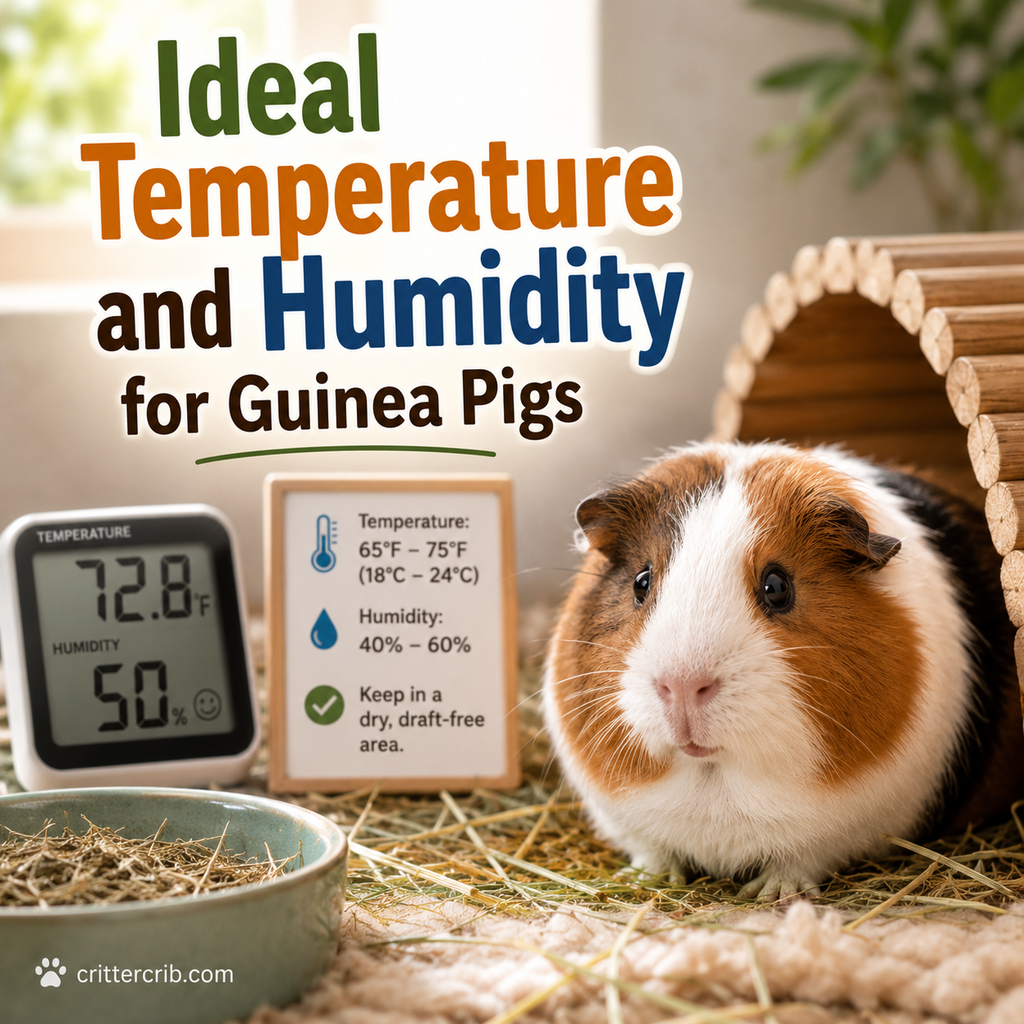
A comfortable indoor temperature for guinea pigs is generally around 65°F to 75°F (18°C to 24°C).
Within this range, healthy adult guinea pigs can usually regulate their body temperature comfortably when they’re housed in a dry, draft-free environment.
Temperatures don’t need to remain at exactly the same number throughout the day. Normal household fluctuations are expected.
What matters more is avoiding prolonged exposure to extremes.
As temperatures climb toward 80°F (27°C) and above, overheating becomes an increasingly serious concern. Guinea pigs are particularly vulnerable to heat because they have limited ways to cool themselves.
Cold temperatures can also become problematic, especially when combined with drafts or moisture.
If you’re comfortable indoors in ordinary clothing, your guinea pigs are often comfortable too—but it’s still worth keeping a thermometer near their enclosure rather than relying entirely on how the room feels to you.
What Temperature Is Too Hot for Guinea Pigs?
Guinea pigs generally tolerate cooler conditions better than excessive heat.
Once temperatures begin approaching 80°F (27°C), you should pay close attention to your guinea pigs and take steps to keep their environment cooler.
Temperatures above this level can increase the risk of heat stress and potentially life-threatening heatstroke.
Several factors can make hot conditions even more dangerous:
- High humidity
- Direct sunlight
- Poor ventilation
- Overweight guinea pigs
- Long-haired breeds
- Older guinea pigs
- Very young guinea pigs
- Existing health problems
- Limited access to cooler areas
Never place a guinea pig enclosure where direct sunlight can heat it during the day.
A room might be 75°F while part of an enclosure sitting in direct afternoon sun becomes significantly warmer.
Signs a Guinea Pig May Be Too Hot
Heat stress can progress quickly, so unusual behavior during warm weather shouldn’t be ignored.
Possible signs of overheating include:
- Rapid or labored breathing
- Unusual lethargy
- Lying stretched out and appearing weak
- Drooling
- Restlessness followed by weakness
- Reduced responsiveness
- Difficulty moving normally
- Convulsions or collapse in severe cases
A guinea pig showing serious signs of overheating needs immediate attention.
Move the animal to a cooler environment and contact a veterinarian promptly. Avoid suddenly immersing an overheated guinea pig in ice-cold water, since extreme temperature changes can create additional problems.
How Can You Keep Guinea Pigs Cool in Summer?
Summer can require a little more planning, particularly if your home doesn’t have air conditioning.
The first step is controlling the room itself.
Close blinds or curtains during the hottest part of the day, keep the enclosure away from windows receiving direct sunlight, and use air conditioning when available.
Fans can help circulate air around a room, but avoid directing a strong stream of air continuously at the guinea pigs.
You can also provide cooler places inside the enclosure.
Options may include:
- Ceramic tiles that stay relatively cool
- Chilled pet-safe cooling surfaces
- Frozen water bottles wrapped securely in a towel
- Multiple shaded hideouts
- Plenty of fresh drinking water
If you use a frozen bottle, make sure the guinea pigs can choose whether or not to lie near it.
They should always be able to move away from any cooling source.
Check water bottles more frequently during hot weather as well. A leaking, blocked, or empty bottle can become much more serious when temperatures are high.
What Temperature Is Too Cold for Guinea Pigs?
Guinea pigs shouldn’t be exposed to prolonged cold conditions.
Indoor temperatures below roughly 60°F (16°C) deserve additional attention, particularly for guinea pigs that are elderly, young, thin, ill, or otherwise vulnerable.
The actual temperature isn’t the only factor.
A cool but dry and draft-free room can be very different from an enclosure exposed to cold air and damp bedding.
Guinea pigs should be protected from:
- Cold drafts
- Damp bedding
- Sudden temperature changes
- Unheated garages or sheds during cold weather
- Open windows in winter
- Direct airflow from heating and cooling vents
If your home becomes unusually cold, gradually warming the room is preferable to placing an intense heat source directly against the enclosure.
Signs Your Guinea Pig May Be Too Cold
A cold guinea pig may:
- Huddle more than usual
- Remain inside a hideout
- Feel unusually cold to the touch
- Become less active
- Curl tightly into its bedding
- Shiver
- Appear lethargic
Some of these behaviors can also indicate illness.
If your guinea pig becomes unusually inactive, stops eating, has breathing problems, or otherwise seems unwell, don’t assume temperature is the only cause. Contact a veterinarian.
What Is the Ideal Humidity for Guinea Pigs?
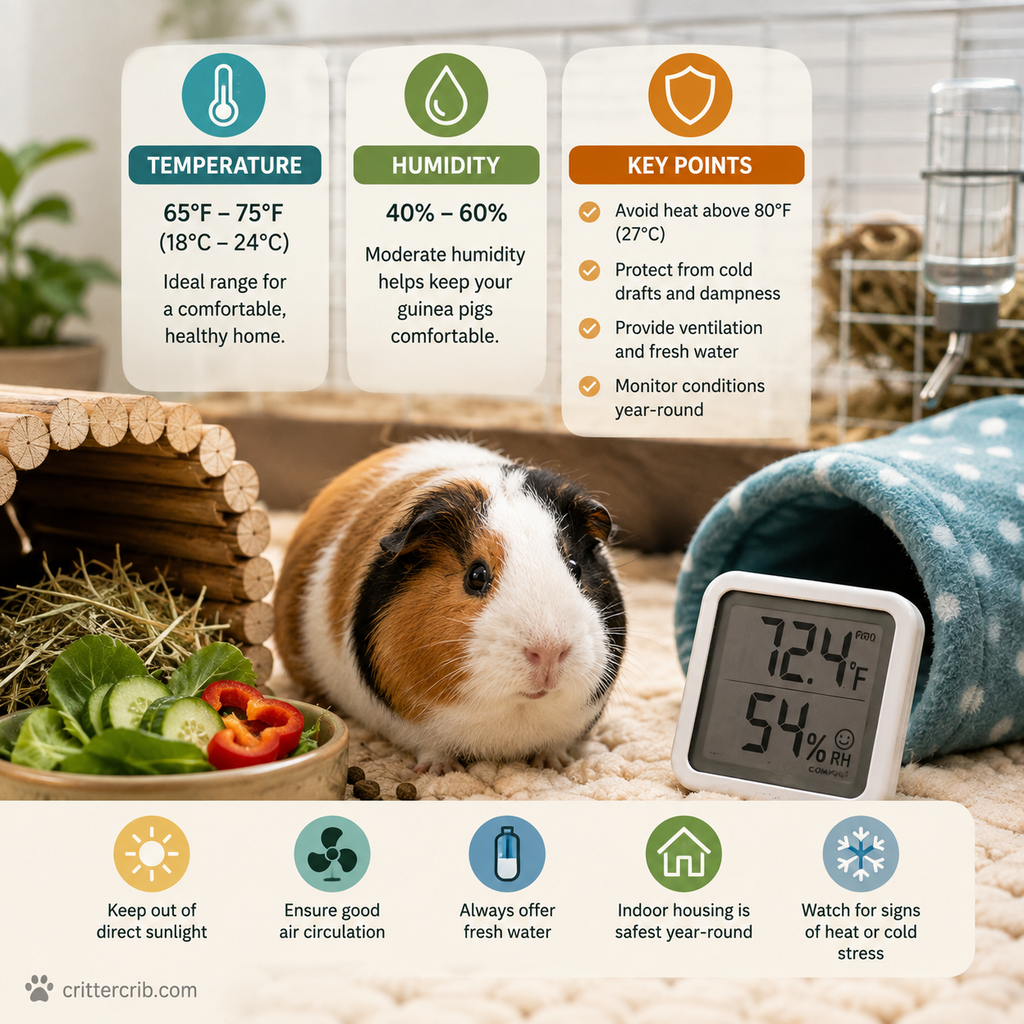
For indoor guinea pigs, a moderate relative humidity of approximately 40% to 60% is a reasonable target.
You don’t need to constantly adjust the room every time humidity moves slightly outside this range.
The bigger goal is avoiding persistently damp or excessively humid conditions, especially when the room is also warm.
High humidity makes evaporation less effective and can make hot conditions feel even more oppressive.
Humidity can also contribute to damp bedding and a less comfortable enclosure if ventilation is poor.
Extremely dry air isn’t ideal either. Very low indoor humidity can contribute to dry skin and respiratory irritation.
A simple digital thermometer and hygrometer can make monitoring both conditions much easier.
Why Temperature and Humidity Work Together
Temperature and humidity shouldn’t be considered separately.
Imagine two rooms that are both 78°F.
One has moderate humidity and good air circulation. The other is extremely humid with stagnant air.
Even though the thermometer shows the same temperature, the second environment can be considerably more stressful.
This becomes especially important during summer.
If temperatures are climbing and humidity is high, don’t wait for the room to become extremely hot before taking action.
Improving ventilation, running air conditioning, closing curtains, or moving the enclosure to a cooler room can help before conditions become dangerous.
Where Should You Put a Guinea Pig Cage?
Enclosure placement can have a surprisingly large effect on temperature.
The best location is generally inside your home in an area where temperature and humidity remain relatively stable.
Avoid placing the enclosure:
- Directly beside a sunny window
- Next to a radiator
- In front of a space heater
- Directly beneath an air-conditioning vent
- Against a frequently opened exterior door
- In a consistently damp basement
- In an uninsulated garage
- In areas with frequent drafts
Choose a room where your guinea pigs can be part of normal household activity without being exposed to constant noise or dramatic environmental changes.
Watch for Direct Sunlight
Sunlight deserves special attention.
A cage that seems perfectly positioned in the morning may receive strong direct sunlight several hours later as the sun moves.
This can create a localized hot area surprisingly quickly.
Check the enclosure at different times of day, particularly when you’ve recently moved it or during seasonal changes.
Should You Keep a Thermometer Near the Guinea Pig Cage?
Yes. A basic digital thermometer is one of the easiest ways to monitor your guinea pigs’ environment.
A combination thermometer and hygrometer is even better because it measures both temperature and relative humidity.
Position it near the enclosure at approximately the same height as your guinea pigs.
Don’t place it directly against a heating or cooling source, since that may give you a misleading reading.
Monitoring becomes especially useful during:
- Heat waves
- Cold snaps
- Seasonal transitions
- Air-conditioning failures
- Heating failures
- Travel
- Power outages
Some digital monitors can also record the highest and lowest temperatures reached over a period of time.
That’s useful if you’re wondering how warm the room becomes while you’re away from home.
Should Guinea Pigs Live Indoors or Outdoors?
Indoor housing makes temperature control much easier.
Outdoor conditions can change rapidly, exposing guinea pigs to heat, cold, rain, humidity, predators, insects, and sudden weather changes.
A pleasant afternoon can turn into a very cold night. Similarly, an outdoor enclosure that’s comfortable in the morning can become dangerously hot when exposed to afternoon sun.
If guinea pigs spend any time outdoors, they need constant access to shade, water, shelter, and protection from predators and weather.
Never leave guinea pigs outside in extreme temperatures.
For most pet owners, keeping guinea pigs indoors in a climate-controlled environment is the simplest way to maintain safe and comfortable conditions.
How to Keep Guinea Pigs Comfortable in Winter
Indoor heating usually makes winter fairly straightforward, but enclosure placement still matters.
Keep guinea pigs away from drafty windows and exterior doors.
Provide plenty of clean, dry bedding and comfortable hiding areas where they can rest.
During winter:
- Monitor the temperature near the enclosure.
- Check bedding frequently for moisture.
- Keep the cage away from cold drafts.
- Maintain a stable room temperature.
- Avoid placing heaters directly against the enclosure.
- Watch for sudden changes in behavior or appetite.
Be particularly careful with portable heaters.
Guinea pigs shouldn’t be able to reach electrical cords, and a heater placed too close to the enclosure can create an excessively hot area even when the rest of the room remains comfortable.
How to Keep Guinea Pigs Comfortable During a Heat Wave
Heat waves require more active monitoring.
If temperatures are forecast to rise significantly, prepare before the house becomes hot.
Move the enclosure to the coolest suitable room if necessary.
Use air conditioning when available and keep blinds or curtains closed against strong sunlight.
Make sure your guinea pigs have plenty of fresh water.
You can also provide cool surfaces or wrapped frozen water bottles so they have somewhere cooler to rest.
During extreme heat, check your guinea pigs frequently rather than assuming they’re fine because they were comfortable earlier in the day.
Temperatures inside a home can rise substantially over several hours.
What About Air Conditioning?
Air conditioning can be extremely useful for keeping guinea pigs comfortable during hot weather.
The goal is to cool the room rather than blast cold air directly onto the animals.
Avoid placing the enclosure directly in front of an air-conditioning vent or portable AC outlet.
Strong, continuous cold airflow can create a chilly draft even when the overall room temperature is appropriate.
Instead, use the air conditioner to maintain a stable temperature throughout the room.
Can You Use a Fan Around Guinea Pigs?
A fan can improve air circulation, but it isn’t a substitute for air conditioning in dangerously hot conditions.
Fans primarily move air rather than significantly lowering room temperature.
Position the fan so it circulates air through the room instead of blowing strongly and continuously into the enclosure.
Also secure electrical cords so your guinea pigs can’t reach and chew them.
How Does Bedding Affect Temperature and Humidity?
Bedding plays an important role in keeping the enclosure comfortable.
Good bedding should help absorb moisture while providing a comfortable surface.
Wet bedding can make an enclosure colder during cool weather and more humid and unpleasant during warm conditions.
Urine-soaked areas should be spot-cleaned regularly.
Check areas around:
- Water bottles
- Favorite sleeping spots
- Hideouts
- Hay piles
- Frequently used corners
Water bottles deserve special attention because slow leaks can create a surprisingly large damp area beneath them.
Deep, dry bedding also gives guinea pigs comfortable areas to rest away from the cage floor.
Do Long-Haired Guinea Pigs Get Hotter?
Long-haired guinea pigs may require additional attention during warm weather.
Their coats can make grooming more demanding and may contribute to discomfort when temperatures rise.
Keep long coats clean, dry, and free from mats.
Some owners carefully trim excessively long hair, particularly around areas that become dirty easily. If you’re unsure about grooming your guinea pig safely, ask an experienced veterinarian or groomer familiar with guinea pigs.
Regardless of coat length, every guinea pig should be monitored closely during hot weather.
Are Baby and Senior Guinea Pigs More Sensitive to Temperature?
Age and health can affect how well an animal handles environmental changes.
Very young, elderly, underweight, or sick guinea pigs may have more difficulty dealing with temperature extremes.
You should also take extra precautions with a guinea pig recovering from illness or surgery.
Rather than relying only on general temperature guidelines, consider your individual guinea pig’s condition.
If your veterinarian has given you specific environmental recommendations, follow those instructions.
Common Temperature-Control Mistakes
Most temperature problems are preventable.
Some common mistakes include:
- Leaving an enclosure in direct sunlight
- Assuming indoor temperatures remain constant all day
- Putting the cage directly beside a heater
- Blowing a fan or AC vent continuously into the enclosure
- Allowing bedding to remain damp
- Leaving guinea pigs outside during extreme weather
- Waiting until a room becomes extremely hot before taking action
- Relying entirely on how the room feels instead of using a thermometer
- Ignoring humidity during hot weather
A small digital temperature and humidity monitor can eliminate much of the guesswork.
Creating a Comfortable Environment Year-Round
You don’t need sophisticated climate-control equipment to keep most indoor guinea pigs comfortable.
Focus on consistency.
Aim for an indoor temperature around 65°F to 75°F, moderate humidity around 40% to 60%, good ventilation, dry bedding, and protection from direct sunlight and drafts.
Keep a thermometer and hygrometer near the enclosure and pay closer attention during unusually hot or cold weather.
Most importantly, watch your guinea pigs themselves.
Changes in activity, appetite, breathing, posture, or behavior can tell you that something isn’t right—even when the numbers on the thermometer appear acceptable.
With a stable indoor environment and a little seasonal planning, keeping guinea pigs comfortable throughout the year is usually quite manageable.