
Hamsters are small, cute, and relatively easy to fit into a home, which makes them an appealing choice for first-time pet owners. They don’t need daily walks, they take up far less space than a dog or cat, and watching them stuff their cheeks with food never really gets old.
But are hamsters actually good pets for beginners?
For many people, yes. Hamsters can make wonderful pets when their needs and natural behavior match what you’re looking for. They’re generally independent, don’t require constant attention, and can be fascinating to watch and interact with.
They’re not quite as effortless as their reputation sometimes suggests, though. Hamsters need more space than many pet-store cages provide, they’re usually most active when people are winding down for the night, and some need patience before they’re comfortable being handled.
Before bringing one home, here’s what beginners should know about living with and caring for a hamster.
Are Hamsters Good Pets for Beginners?
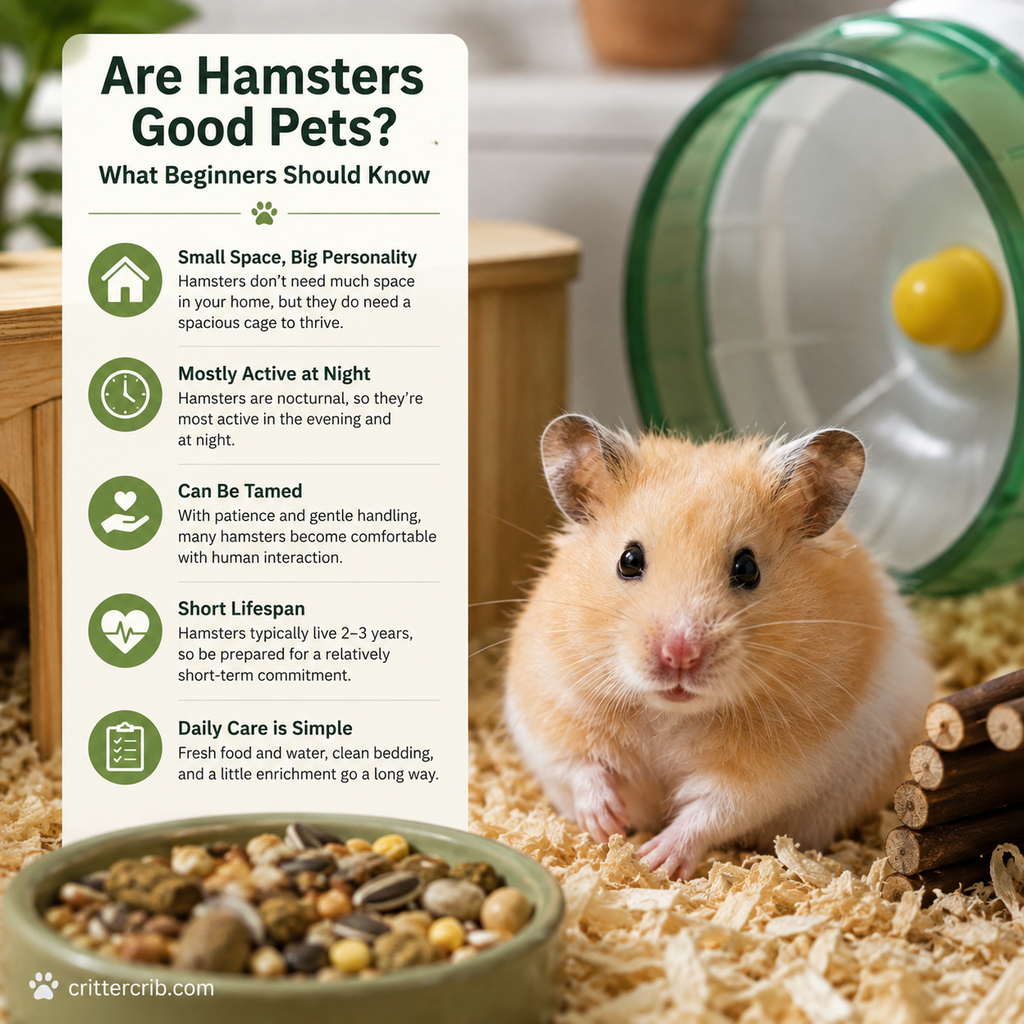
Hamsters can be excellent beginner pets, particularly for someone who wants a small animal that doesn’t require attention throughout the entire day.
A hamster’s basic routine includes fresh food and water, regular spot cleaning, opportunities to burrow and explore, and occasional deeper cleaning of its habitat. Once you’ve created a good setup, everyday care is fairly manageable.
There are also some important realities to consider.
Hamsters are typically solitary animals, their sleep schedule may be very different from yours, and their relatively short lifespan can be difficult for owners who become attached to them.
A good hamster owner should be willing to learn about hamster behavior rather than expecting the animal to behave like a tiny dog or cat.
Why Hamsters Can Make Great Pets
There are several reasons hamsters remain one of the most popular small pets.
They Don’t Need a Huge Amount of Room
Compared with larger animals, hamsters require relatively little household space.
You won’t need a backyard or an entire room dedicated to your pet. However, this doesn’t mean a hamster should live in the smallest cage you can find.
Hamsters naturally travel considerable distances while foraging, and they benefit from a spacious enclosure with room for bedding, hides, enrichment, food, water, and an appropriately sized exercise wheel.
The enclosure may take up more room than beginners initially expect, but it’s still considerably more compact than the space needed for many other pets.
Their Daily Care Is Manageable
Hamsters don’t need walks or outdoor bathroom breaks, and you don’t need to entertain them constantly.
Most days involve fairly simple tasks:
- Checking and refreshing their water
- Providing appropriate food
- Removing spoiled fresh foods
- Spot-cleaning dirty areas
- Checking that the hamster looks and behaves normally
- Making sure the enclosure remains safe and comfortable
You’ll also need to periodically clean parts of the enclosure and replace soiled bedding.
Hamsters Can Be Entertaining to Watch
A hamster that’s comfortable in its environment can be surprisingly busy.
You might see your hamster digging tunnels, collecting nesting material, running on its wheel, carrying food in its cheek pouches, grooming, or reorganizing its enclosure.
Some hamsters will move bedding and food around so enthusiastically that it seems like they’re redecorating every night.
Providing plenty of enrichment gives them more opportunities to express these natural behaviors.
They Can Become Comfortable With Handling
Not every hamster loves being picked up, but many can learn to tolerate or enjoy gentle interaction.
The key is patience.
A hamster that has just arrived in a new home may be frightened by hands reaching into its enclosure. Giving it time to settle in before gradually introducing your hand can make the taming process much easier.
Food can also help build positive associations.
Instead of immediately trying to grab your hamster, you can offer a treat from your fingers or open palm and allow the hamster to approach you.
Over time, some hamsters become comfortable climbing directly onto their owner’s hands.
What Are the Downsides of Owning a Hamster?
Hamsters have plenty of positive qualities, but they’re not the ideal pet for everyone.
Knowing the potential drawbacks before getting one can prevent disappointment later.
Hamsters Are Usually Active at Night
One of the biggest surprises for new owners is the hamster’s schedule.
Hamsters tend to become active in the evening and at night. During the day, they may spend long periods sleeping in their burrows or nests.
That can be inconvenient if you’re hoping for a pet that’s ready to play when you get home in the afternoon.
It’s also worth considering where you’ll keep the enclosure. A hamster running on a wheel, digging through bedding, or chewing during the night can make enough noise to bother light sleepers.
Trying to wake a sleeping hamster for interaction isn’t a good solution. A startled hamster may become stressed or defensive.
It’s generally better to interact when the hamster wakes naturally.
They Have Relatively Short Lifespans
Hamsters unfortunately don’t live very long compared with many other companion animals.
Their exact lifespan varies depending on species, genetics, health, diet, and care, but owners should be prepared for only a few years together in many cases.
This can be especially difficult for children who become strongly attached to their pet.
A short lifespan doesn’t mean a hamster isn’t worth having, but it’s something every prospective owner should understand before making the commitment.
Some Hamsters Can Bite
Hamsters aren’t naturally aggressive pets, but they can bite under certain circumstances.
Common reasons include:
- Fear
- Being startled awake
- Rough handling
- Feeling trapped
- Stress
- Mistaking fingers for food
- Pain or illness
A hamster that hasn’t been handled much may simply need time to become comfortable around people.
Slow, gentle interactions are usually much more effective than forcing handling.
Veterinary Care Can Be Harder to Find
Another issue beginners sometimes overlook is veterinary care.
Not every veterinary clinic treats hamsters. You may need a veterinarian who has experience with small mammals or exotic pets.
It’s a good idea to identify an appropriate veterinary clinic before there’s an emergency.
Veterinary costs can also be significant even though the animal itself is small. A hamster may be inexpensive to purchase or adopt, but that doesn’t necessarily mean medical treatment will be inexpensive.
How Much Care Does a Hamster Need?
Hamsters are relatively low-maintenance compared with many larger pets, but “low-maintenance” shouldn’t be confused with “no-maintenance.”
They need consistent care every day.
Daily Hamster Care
Your daily routine should include checking:
- Food
- Water
- Your hamster’s general condition
- Enclosure temperature and comfort
- Soiled areas
- Any fresh food that could spoil
This also gives you an opportunity to notice changes in behavior.
If a hamster suddenly stops eating, appears unusually inactive during its normal waking hours, has difficulty breathing, develops diarrhea, or shows another concerning change, veterinary attention may be necessary.
Regular Enclosure Maintenance
Rather than constantly stripping the entire enclosure, spot-cleaning helps remove dirty material while preserving some familiar scents.
Heavily soiled bedding should be replaced as needed.
Food stores also deserve attention. Hamsters naturally stash food, so check their hiding areas for fresh foods that could spoil while avoiding unnecessary disruption of their nest.
What Does a Hamster Need in Its Enclosure?
Creating a suitable habitat is one of the most important parts of hamster ownership.
A good enclosure should allow your hamster to exercise, hide, forage, burrow, and rest comfortably.
Important supplies generally include:
- A spacious, secure enclosure
- Deep, safe bedding suitable for burrowing
- An appropriately sized solid-surface exercise wheel
- Hideouts
- Food
- A water bottle or suitable water bowl
- Chew items
- Nesting material
- Enrichment and foraging opportunities
- A suitable sand bath when appropriate
Avoid assuming that everything marketed for hamsters is automatically suitable for them.
Some commercial cages, wheels, bedding products, nesting materials, and accessories may be too small or otherwise inappropriate.
Researching each item before buying it can save money and help you create a better habitat from the beginning.
Do Hamsters Smell?
A properly maintained hamster enclosure generally shouldn’t make your home smell terrible.
Hamsters themselves are fairly clean animals and spend considerable time grooming.
Odor problems are more likely to come from accumulated urine, spoiled food, or an enclosure that isn’t being maintained properly.
Regular spot cleaning usually helps control odor without constantly disturbing the hamster’s entire environment.
Enclosure size matters too. In a very small habitat, waste becomes concentrated in a smaller area.
A spacious enclosure with plenty of absorbent bedding is generally easier to keep comfortable.
Are Hamsters Good Pets for Children?
Hamsters are often marketed as children’s pets, but that description can be misleading.
A child may enjoy caring for and watching a hamster, but an adult should ultimately be prepared to take responsibility for the animal’s welfare.
Hamsters are small and relatively delicate. They can be injured if they’re squeezed, dropped, or handled roughly.
Their sleep schedule can also create problems.
A child who wants to play with the hamster during the day may become frustrated when the hamster spends much of that time sleeping. Waking the hamster repeatedly can stress the animal and increase the likelihood of defensive behavior.
For families with children, supervision is important.
Children should learn to:
- Let the hamster wake naturally.
- Handle it gently and close to a safe surface.
- Avoid chasing or grabbing it.
- Respect the hamster when it wants to hide.
- Wash their hands before and after handling the hamster or cleaning its enclosure.
A hamster can teach children about animal care, but it shouldn’t become solely a child’s responsibility.
Can Hamsters Live Together?
This is an area where beginners should be particularly cautious.
Syrian hamsters are solitary and should generally be housed alone once they reach the appropriate age.
Some dwarf hamster species may sometimes be seen housed together, especially when young, but cohabitation can still lead to territorial disputes and serious fighting.
For a beginner, separate housing is the safer approach.
A hamster doesn’t need another hamster living in its enclosure to have a fulfilling life. Instead, focus on providing enough space, enrichment, foraging opportunities, and appropriate interaction.
Don’t assume that two hamsters cuddling together in a pet store means they’ll remain peaceful as they mature.
Do Hamsters Like Being Held?
It depends on the individual hamster.
Some become quite comfortable with handling, while others prefer minimal physical interaction.
Personality, previous experiences, age, species, and how the hamster is approached can all influence its response.
If you bring home a new hamster, resist the temptation to immediately start picking it up.
Give it time to explore its new enclosure and establish a nest.
When you begin taming, move gradually.
A Simple Approach to Hamster Taming
Start by spending quiet time near the enclosure so your hamster becomes familiar with your presence.
Then progress through steps such as:
- Speaking softly near the enclosure.
- Offering treats without attempting to grab the hamster.
- Placing a treat on your open palm.
- Allowing the hamster to step onto your hand voluntarily.
- Gradually lifting your hands slightly once the hamster is comfortable.
Move at the hamster’s pace rather than following a strict timeline.
Some hamsters become comfortable quickly. Others may take considerably longer.
Are Hamsters Expensive to Keep?
The hamster itself is often one of the least expensive parts of hamster ownership.
The initial habitat can cost considerably more.
You’ll need an enclosure, wheel, bedding, hides, food, enrichment, and other basic supplies before bringing the hamster home.
After the initial setup, routine expenses may include:
- Bedding
- Food
- Treats
- Chews and enrichment
- Replacement accessories
- Veterinary care
Setting aside money for unexpected veterinary expenses is particularly important.
Small animals can still require diagnostic tests, medications, or emergency treatment.
Should You Adopt or Buy a Hamster?
Pet stores aren’t the only places to find hamsters.
Depending on where you live, animal shelters and small-animal rescues may have hamsters available for adoption. Occasionally, owners also need to rehome hamsters because they can no longer care for them.
Adoption can give an animal a second chance while allowing you to learn more about its personality from someone who has already spent time with it.
Wherever your hamster comes from, look for signs of good health and ask questions about its age, background, diet, and previous care when that information is available.
What Should You Know Before Getting a Hamster?
A little preparation can make your first weeks of hamster ownership much easier.
Before bringing one home, make sure you understand:
- Which hamster species you’re getting
- The appropriate enclosure size and setup
- What food the hamster should eat
- How much bedding it needs for burrowing
- What size exercise wheel is appropriate
- How to safely handle and tame it
- Which materials and accessories should be avoided
- Where the nearest suitable veterinarian is located
- How much routine and emergency care may cost
Ideally, set up the entire habitat before the hamster arrives.
That allows your new pet to move directly into a safe environment instead of waiting while you discover that you’re missing essential supplies.
Who Is a Hamster Best Suited For?
A hamster may be a good choice if you:
- Want a small pet that can live comfortably indoors
- Don’t mind a pet that’s active primarily in the evening or at night
- Enjoy observing natural animal behavior
- Can provide a spacious, enriching enclosure
- Are comfortable with a pet that may not constantly seek physical affection
- Can provide daily care throughout the hamster’s life
- Have access to appropriate veterinary care
A hamster may not be the best choice if you want a pet that’s awake throughout the day, enjoys frequent cuddling, or can roam freely around the house.
If you’re looking for constant companionship, another animal may fit your expectations better.
Common Beginner Hamster Mistakes
Many hamster care mistakes come from outdated information or products that make inadequate setups look normal.
Some common mistakes include:
- Buying an enclosure that’s too small
- Using an undersized exercise wheel
- Providing too little bedding for burrowing
- Waking the hamster during the day
- Handling a new hamster too quickly
- Housing incompatible hamsters together
- Using unsafe bedding or nesting materials
- Providing too little enrichment
- Feeding an unbalanced diet
- Assuming a hamster won’t need veterinary care
Researching hamster care before bringing one home is much easier than replacing an unsuitable setup afterward.
Are Hamsters Good Apartment Pets?
Hamsters can work particularly well in apartments because they don’t require outdoor space and their enclosure occupies a relatively limited area.
They also don’t bark or need to be taken outside several times a day.
There is one potential issue: nighttime noise.
A good-quality exercise wheel can help reduce rattling and squeaking, but you’ll probably still hear some digging, chewing, and general hamster activity.
If you’re a light sleeper, keeping the enclosure outside the bedroom may be a better option.
How Much Attention Do Hamsters Need?
Hamsters don’t usually demand attention in the way some social companion animals do.
That independence can be appealing to people with busy schedules, but hamsters shouldn’t simply be left in an enclosure and forgotten.
They still benefit from regular observation, enrichment, gentle interaction when comfortable, and opportunities to forage and explore.
The goal isn’t necessarily to entertain your hamster constantly.
It’s to create an environment where the hamster can entertain itself through natural behaviors.
So, Are Hamsters Good Pets?
Yes, hamsters can be very good pets for beginners, but they’re best for people whose expectations match the animal.
They’re small, entertaining, relatively independent, and manageable to care for once you have the right setup. Watching a hamster build tunnels, gather food, explore its habitat, and gradually become comfortable around you can be incredibly rewarding.
At the same time, hamsters aren’t disposable “starter pets.”
They need a properly sized habitat, appropriate food, enrichment, gentle handling, regular care, and access to veterinary treatment when they’re sick or injured.
The best reason to get a hamster isn’t simply because they’re small or inexpensive.
It’s because you genuinely enjoy the idea of caring for a small, mostly nocturnal animal and giving it an environment where it can behave naturally.
If that sounds appealing, a hamster could be a great addition to your home.