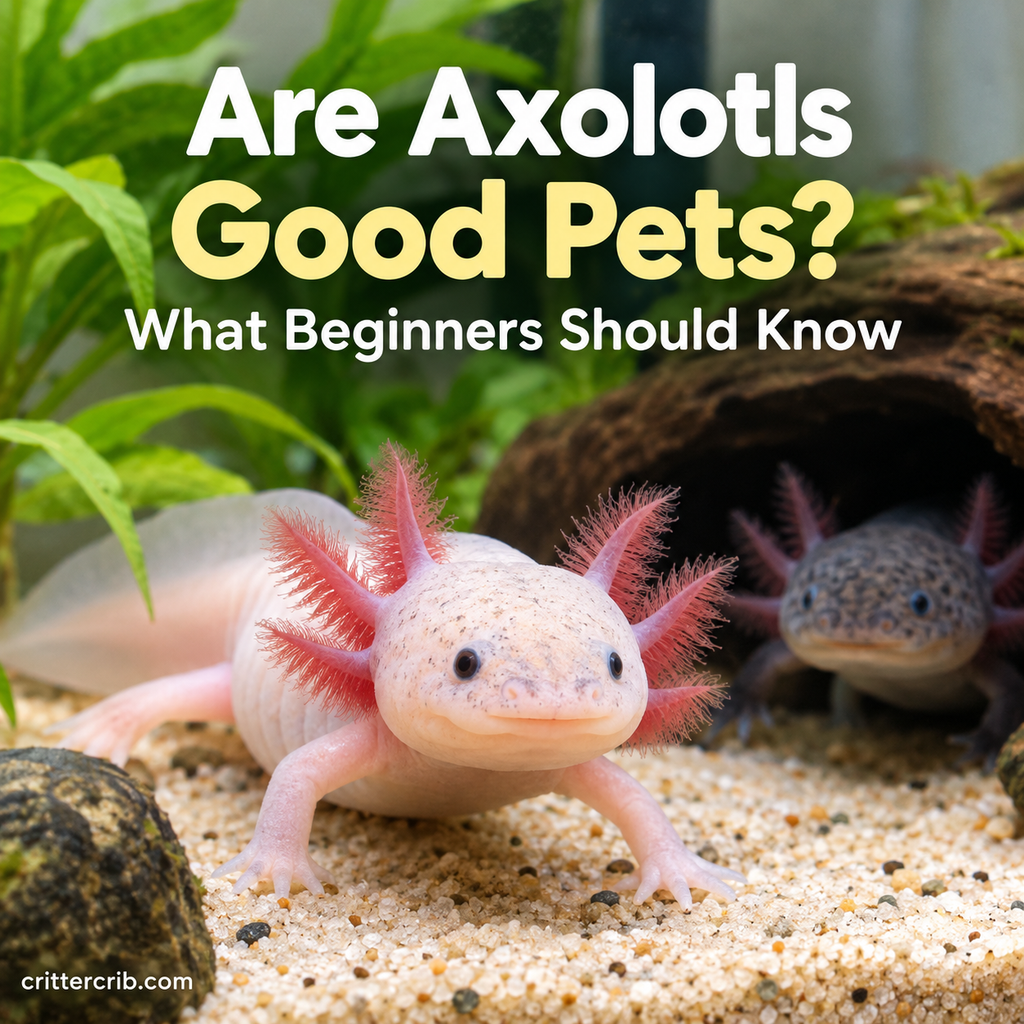
Are Axolotls Good Pets? What Beginners Should Know

Axolotl in an aquarium with the text Are Axolotls Good Pets? What Beginners Should Know
Axolotls can make fascinating pets, but beginners should understand their unique tank, temperature, feeding, and care requirements before bringing one home.

Axolotls are unusual pets even by amphibian standards. With their feathery external gills, wide mouths, and almost permanent-looking smiles, they have an appearance that makes them hard to forget.

But being cute and fascinating doesn’t automatically make an animal easy to care for.

So, are axolotls good pets?

For the right owner, absolutely. Axolotls are quiet, interesting to watch, and don’t require walks, training, or daily social interaction. However, they have some very specific care requirements, particularly when it comes to water quality and temperature. They’re also very different from pets you can regularly pick up and interact with.

If you’re considering your first axolotl, here’s what you should know before bringing one home.

Continue reading “Are Axolotls Good Pets? What Beginners Should Know”


Tiger Salamander Behavior Explained: What Common Behaviors Mean

Tiger salamanders in a naturalistic terrarium for a guide to common behaviors
Burrowing, hiding, nighttime activity, soaking, and strong feeding responses are all behaviors tiger salamander owners may observe.

Tiger salamanders aren’t the most outwardly expressive pets. They don’t wag their tails when they’re excited to see you, and they’re unlikely to spend their days actively exploring every corner of their enclosure.

Most of the time, they’re doing something much simpler.

Hiding.

For a new owner, that can make tiger salamander behavior difficult to read. A salamander that disappears underground for days may seem sick or unhappy when it’s actually behaving normally. At other times, a sudden change in activity, appetite, or posture can provide an early clue that something in the habitat needs attention.

Understanding what’s typical for these terrestrial amphibians makes it much easier to separate normal salamander behavior from potential warning signs.

Here’s what common tiger salamander behaviors usually mean and when you should take a closer look.

Continue reading “Tiger Salamander Behavior Explained: What Common Behaviors Mean”

Complete Fire-Bellied Newt Care Guide: Habitat, Diet, and Daily Care

Fire-bellied newts in a naturalistic aquarium habitat with aquatic plants, rocks, and driftwood
Fire-bellied newts thrive with cool, clean water, gentle filtration, appropriate food, and a well-designed aquatic habitat.

Fire-bellied newts are small, striking amphibians known for their dark bodies and vivid orange or red undersides. They’re fascinating to watch, relatively quiet, and don’t require the enormous enclosures associated with many exotic pets.

That doesn’t mean they’re maintenance-free.

Fire-bellied newts are semi-aquatic to highly aquatic animals that depend on clean, cool water and a carefully designed habitat. Water quality is particularly important. A beautiful aquarium won’t do your newts much good if ammonia is accumulating or the temperature regularly becomes too warm.

They’re also long-lived compared with many small pets, so bringing one home should be viewed as a long-term commitment rather than a temporary aquarium project.

This fire-bellied newt care guide covers the essentials, including habitat setup, water conditions, temperature, feeding, daily care, cleaning, behavior, and common mistakes to avoid.

Continue reading “Complete Fire-Bellied Newt Care Guide: Habitat, Diet, and Daily Care”

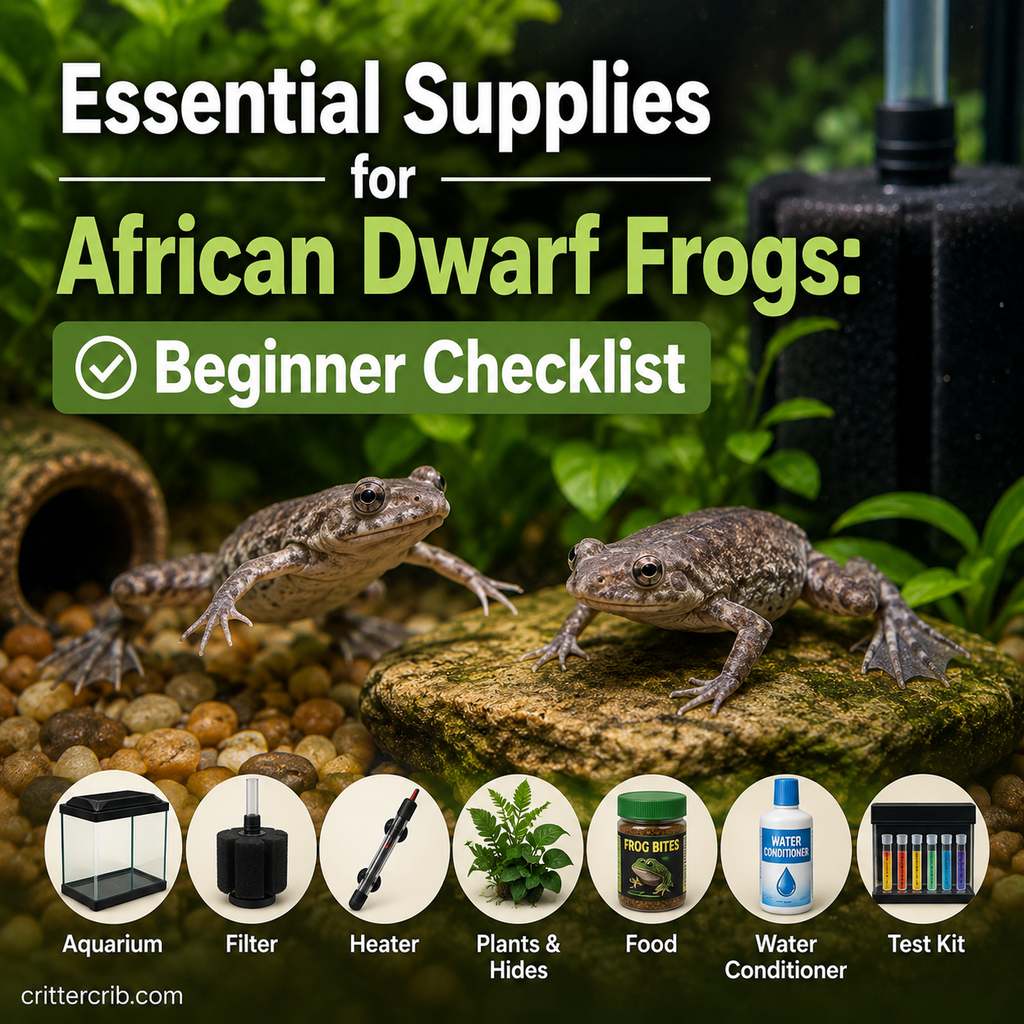
Essential Supplies for African Dwarf Frogs: Beginner Checklist

African dwarf frogs in an aquarium with essential supplies for a beginner setup
A properly prepared African dwarf frog aquarium needs gentle filtration, stable heating, safe water, hiding places, appropriate food, and regular water testing.

African dwarf frogs don’t require an enormous collection of specialized equipment, but getting the basics right before bringing them home makes a huge difference.

They’re fully aquatic frogs, which means their aquarium isn’t just somewhere they spend part of the day. It’s their entire environment. Water quality, temperature, filtration, access to the surface, and even the decorations you choose can affect how comfortably they live.

The good news is that setting up for African dwarf frogs is fairly straightforward once you know what you actually need.

If you’re preparing for your first frogs, this checklist covers the essential African dwarf frog supplies, which items are optional, and a few things that are better left on the pet store shelf.

Continue reading “Essential Supplies for African Dwarf Frogs: Beginner Checklist”

How to Clean a White’s Tree Frog Habitat: A Safe Routine

White's tree frog in a terrarium while the habitat glass is being safely cleaned
Regular spot cleaning, fresh water, and periodic deeper maintenance help keep a White’s tree frog habitat clean and comfortable.

White’s tree frogs aren’t particularly difficult pets to clean up after, but their warm, humid habitat can get dirty surprisingly quickly.

Waste may end up on leaves, branches, glass, substrate, or even the side of the enclosure. Water dishes can become contaminated overnight, and consistently damp conditions make it especially important to stay ahead of mold, leftover food, and other organic debris.

The good news is that you usually don’t need to tear apart the entire habitat every few days.

A better approach is a simple routine: remove obvious waste regularly, keep the water dish clean, monitor the substrate, and perform more thorough cleaning when necessary. This keeps the enclosure sanitary without constantly disrupting your frog.

Here’s how to safely clean a White’s tree frog habitat, from quick daily maintenance to occasional deep cleaning.

Continue reading “How to Clean a White’s Tree Frog Habitat: A Safe Routine”

How Much Space Do Pacman Frogs Need? Housing Size Guide

Pacman frog in a terrarium illustrating recommended enclosure and tank size
Pacman frogs don’t need enormous enclosures, but they do need enough floor space for burrowing, soaking, and moving between temperature zones.

Pacman frogs aren’t exactly known for roaming around their enclosure all day. In fact, a healthy Pacman frog may spend so much time sitting in the same spot that you start wondering whether it has moved at all.

That doesn’t mean enclosure size isn’t important.

A Pacman frog still needs enough room to burrow, reposition itself, thermoregulate, and move between slightly different areas of its habitat. At the same time, putting one in an enormous enclosure isn’t automatically better. A well-designed habitat with appropriate temperature, humidity, substrate, and hiding opportunities matters more than simply buying the biggest tank you can find.

So, how much space does a Pacman frog actually need?

For most adult Pacman frogs, an enclosure with roughly 10 gallons of usable space is commonly considered a practical starting point, although larger frogs—especially females—can benefit from additional floor space. Juveniles can live in smaller setups temporarily, but their enclosure should be upgraded as they grow.

Here’s how to choose the right Pacman frog enclosure size and, just as importantly, make good use of the space you provide.

Continue reading “How Much Space Do Pacman Frogs Need? Housing Size Guide”

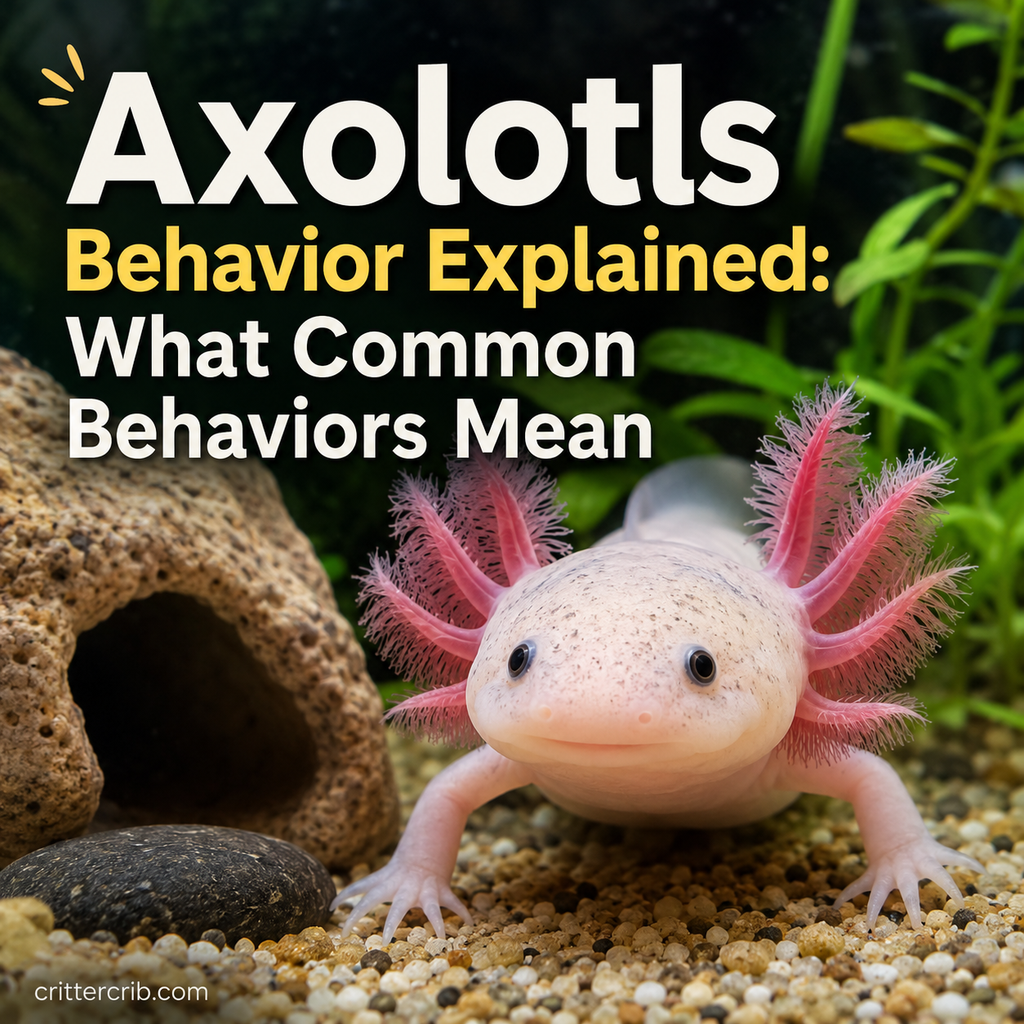
Axolotl Behavior Explained: What Common Behaviors Mean

Axolotl in an aquarium for a guide explaining common axolotl behaviors
Understanding normal axolotl behavior can make it easier to recognize potential signs of stress.

Axolotls can be surprisingly expressive for animals that spend most of their time quietly underwater. One moment, your axolotl may be sitting motionless on the bottom of the tank. A few minutes later, it might be swimming around, floating near the surface, snapping at something invisible, or staring through the glass as if it is watching you.

For a new axolotl owner, some of these behaviors can seem strange. Is your axolotl relaxing, hunting, begging for food, or trying to tell you something is wrong?

Learning what normal axolotl behavior looks like makes caring for these unusual amphibians much easier. It also helps you recognize changes that may indicate stress or a problem with the aquarium.

Below, we’ll look at common axolotl behaviors, what they usually mean, and when a behavior deserves closer attention.

Continue reading “Axolotl Behavior Explained: What Common Behaviors Mean”

What Do Tiger Salamanders Eat? A Complete Feeding Guide

Tiger salamander with earthworms, crickets, and feeder insects illustrating a complete feeding guide
Tiger salamanders are carnivores that thrive on a varied diet of nutritious prey such as earthworms, nightcrawlers, crickets, roaches, and other suitable feeder invertebrates.

Tiger salamanders aren’t fussy-looking hunters. They spend much of their time tucked beneath substrate or hiding underground, then suddenly become very interested when something edible wanders within reach.

So, what do tiger salamanders eat?

Tiger salamanders are carnivores. In the wild, they eat a variety of small animals, including worms, insects, spiders, slugs, and other invertebrates. Larger individuals may occasionally consume small vertebrates when the opportunity arises.

Pet tiger salamanders can thrive on a varied diet built around nutritious foods such as earthworms and nightcrawlers, supplemented with appropriately sized feeder insects like crickets, roaches, and other suitable invertebrates.

The key is offering the right foods in the right amounts. Tiger salamanders are enthusiastic eaters, and that appetite can make overfeeding surprisingly easy.

Here’s what to feed a tiger salamander, how often to offer food, which feeders make good staples, and which foods are better avoided.

Continue reading “What Do Tiger Salamanders Eat? A Complete Feeding Guide”

Common Fire-Bellied Newt Care Mistakes and How to Avoid Them

Fire-bellied newts in a natural aquarium illustrating common care mistakes and how to avoid them
Avoiding common mistakes with water quality, temperature, feeding, filtration, and habitat setup can help keep fire-bellied newts healthy.

Fire-bellied newts are small, colorful amphibians with dark bodies and striking orange or red bellies. They can also be surprisingly long-lived pets, which makes getting their care right especially important.

Unfortunately, some of the most common fire-bellied newt care mistakes happen because people treat them like tropical fish, fully terrestrial salamanders, or generic “easy” aquarium pets.

They aren’t any of those things.

Fire-bellied newts need cool temperatures, clean water, appropriate access to land or resting areas, a nutritious carnivorous diet, and minimal handling. Their permeable amphibian skin also makes them particularly sensitive to poor water quality and environmental contaminants.

Whether you already keep fire-bellied newts or you’re planning an enclosure, avoiding the following mistakes can help create a healthier, more stable environment.

Continue reading “Common Fire-Bellied Newt Care Mistakes and How to Avoid Them”

How Much Do African Dwarf Frogs Cost? Setup and Ongoing Expenses

African dwarf frogs in an aquarium with a calculator and money illustrating setup and ongoing costs
The frogs themselves are inexpensive, but a proper aquarium setup, food, maintenance supplies, and ongoing care make up most of the cost of keeping African dwarf frogs.

African dwarf frogs are small, fully aquatic amphibians that can make fascinating aquarium pets without the price tag of many larger exotic animals. The frog itself is usually inexpensive, but that’s only a small part of what you’ll actually spend.

So, how much do African dwarf frogs cost?

An African dwarf frog commonly costs around $5 to $15, although prices vary by store, breeder, location, and availability. Setting up an appropriate aquarium can bring your initial investment to roughly $100 to $300 or more, depending on what equipment you already own and how elaborate you want the tank to be.

After the aquarium is established, ongoing expenses are generally modest. You’ll primarily be paying for food, water treatment, replacement filter media or aquarium supplies, electricity, and occasional equipment replacement.

Veterinary care is less predictable and can become the biggest unexpected expense.

Here’s a closer look at what you should budget before bringing African dwarf frogs home.

Continue reading “How Much Do African Dwarf Frogs Cost? Setup and Ongoing Expenses”