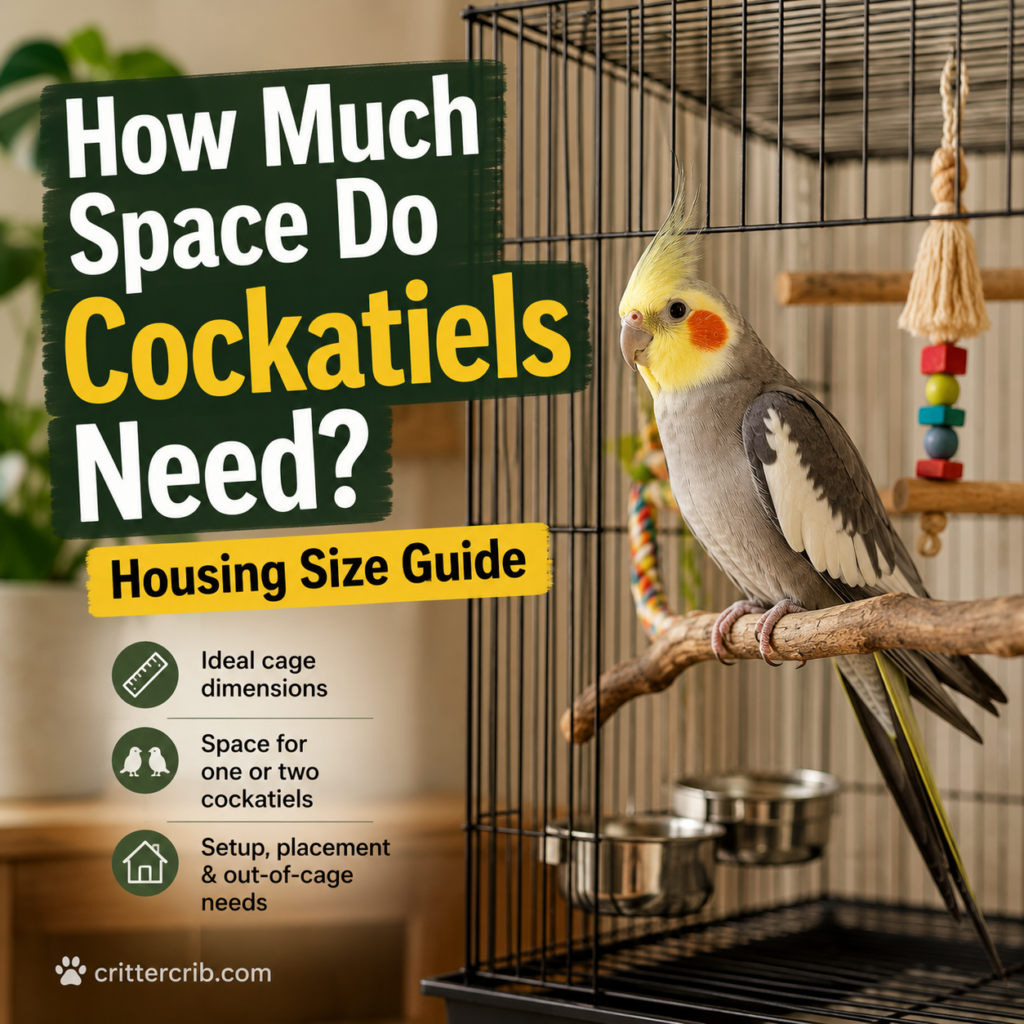
How Much Space Do Cockatiels Need? Housing Size Guide

Cockatiel perched inside a spacious cage illustrating proper cockatiel housing size
Cockatiels need enough cage space to stretch their wings, climb, play, and move comfortably between perches.

Cockatiels aren’t huge birds, but that doesn’t mean they’re happy living in a tiny cage. These active, curious parrots need enough room to stretch, climb, play, and move between perches without constantly bumping into toys, food dishes, or cage bars.

So, how much space does a cockatiel actually need?

For one cockatiel, a cage around 24 inches wide by 18 inches deep by 24 inches high is a reasonable minimum starting point, but larger is better whenever your space and budget allow. Width is especially important because cockatiels move horizontally and need room to fully extend their wings.

The cage itself is only part of the picture. Daily exercise outside the cage, appropriate bar spacing, good cage placement, and enough usable interior space all contribute to a healthy living environment.

Here’s how to choose the right amount of space for your cockatiel.

Continue reading “How Much Space Do Cockatiels Need? Housing Size Guide”
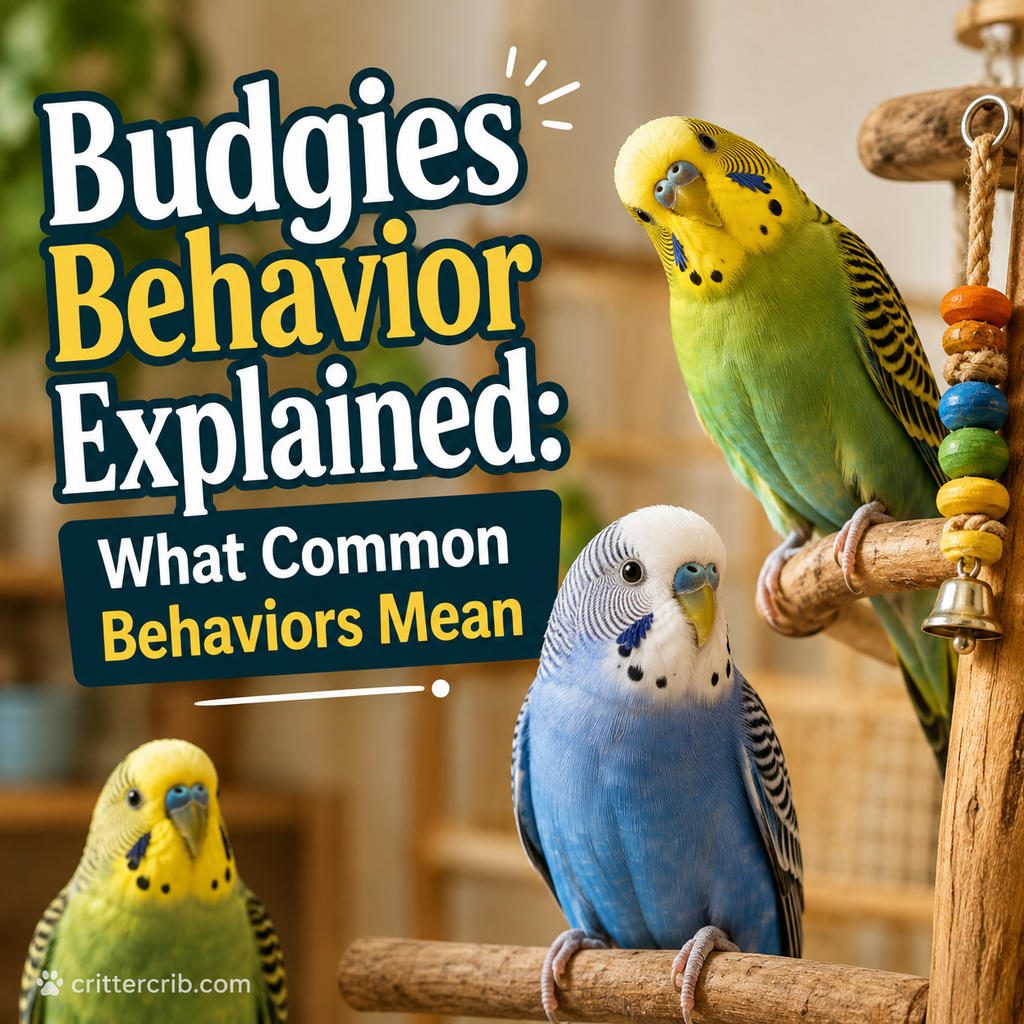
Budgie Behavior Explained: What Common Behaviors Mean

Budgies perched together displaying common budgie behaviors and body language
Budgies use body language, sounds, and everyday behaviors to communicate how they’re feeling.

Budgies may be small, but they have surprisingly expressive personalities. Spend enough time around one and you’ll notice head bobbing, beak grinding, chirping, fluffing up, stretching, preening, and plenty of other little behaviors that can leave you wondering what your bird is trying to tell you.

The good news is that many budgie behaviors become fairly easy to understand once you know what to look for.

A budgie’s behavior can provide clues about its mood, comfort level, social relationships, and sometimes even its health. However, one behavior rarely tells the whole story. Body posture, sounds, surroundings, and changes from your bird’s normal routine all matter.

This guide explains common budgie behaviors and what they usually mean, from happy chirping and affectionate preening to biting, screaming, and signs that something may be wrong.

Continue reading “Budgie Behavior Explained: What Common Behaviors Mean”

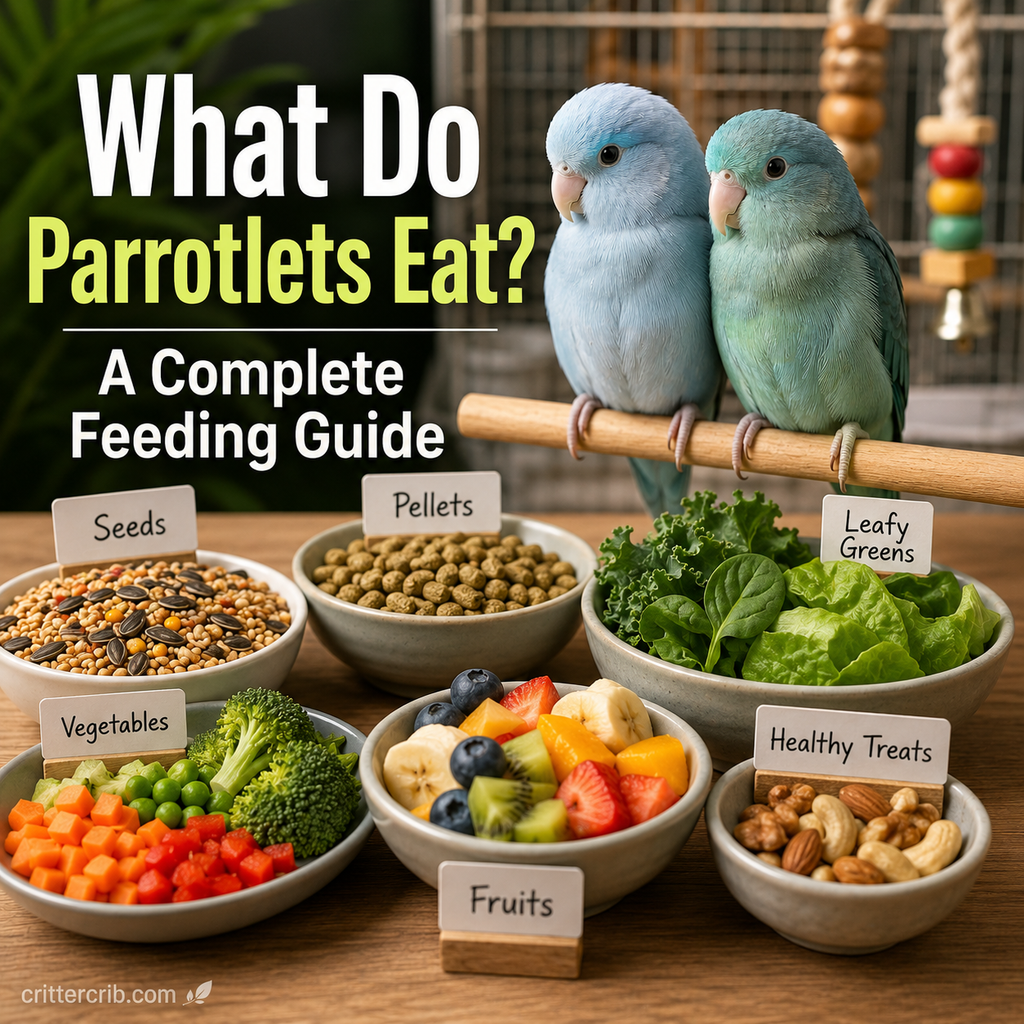
What Do Parrotlets Eat? A Complete Feeding Guide

Two parrotlets with pellets, seeds, vegetables, leafy greens, fruit, and healthy treats for a balanced diet.
A balanced parrotlet diet can include quality pellets, fresh vegetables and greens, with fruit, seeds, and other treats offered in moderation.

Parrotlets may be tiny, but feeding them properly involves more than filling a bowl with birdseed.

Like other parrots, parrotlets benefit from a varied, nutritionally balanced diet. Seeds can certainly have a place in that diet, but relying entirely on a traditional seed mix can leave nutritional gaps—especially when a bird picks out its favorite seeds and ignores everything else.

A healthy feeding routine generally centers around a quality formulated food, along with appropriate vegetables and leafy greens. Fruit, seeds, and other treats can add variety in more moderate amounts.

The exact diet can vary with your bird’s age, health, activity level, and veterinary recommendations, so an avian veterinarian is the best person to help you fine-tune your individual parrotlet’s nutrition.

For everyday planning, though, there are some useful guidelines.

Here’s what parrotlets can eat, what foods should be limited, what to avoid entirely, and how to build a practical feeding routine.

Continue reading “What Do Parrotlets Eat? A Complete Feeding Guide”

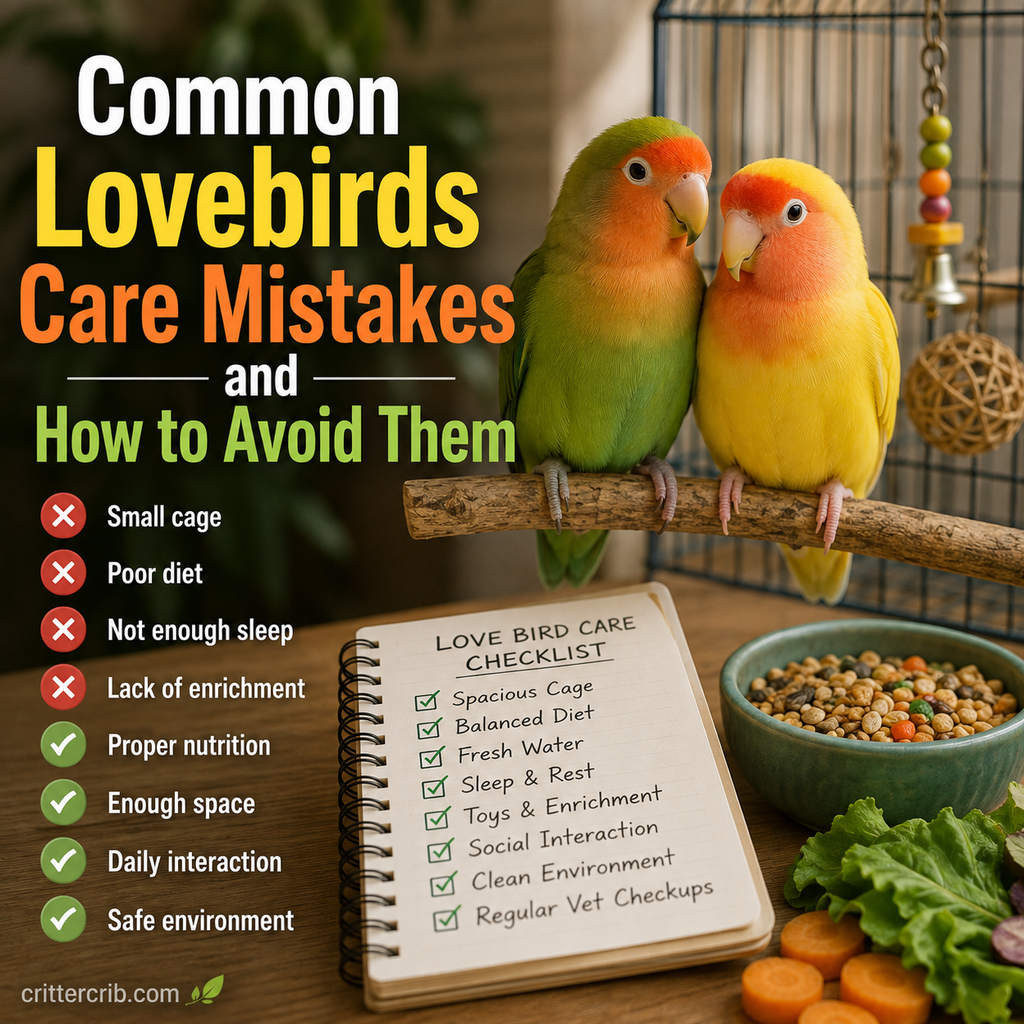
Common Lovebird Care Mistakes and How to Avoid Them

Two lovebirds on a natural perch with a cage, toys, food, and fresh vegetables illustrating common lovebird care mistakes.
Avoid common lovebird care mistakes by providing proper nutrition, enough space, enrichment, adequate sleep, a clean habitat, and regular veterinary care.

Lovebirds are small parrots with big personalities. They’re curious, social, active, and often surprisingly determined when they want something.

That combination is part of what makes them such entertaining pets. It can also make proper care more involved than new owners expect.

Many lovebird care mistakes aren’t caused by neglect. They happen because something seems reasonable at first. A small bird looks like it should be fine in a small cage. A seed mix looks like complete bird food. A cozy fabric hut looks like the perfect bed.

Unfortunately, what looks good from a human perspective isn’t always what’s best for a parrot.

The good news is that many common problems are preventable. Here are some of the biggest lovebird care mistakes owners make, along with practical ways to avoid them.

Continue reading “Common Lovebird Care Mistakes and How to Avoid Them”

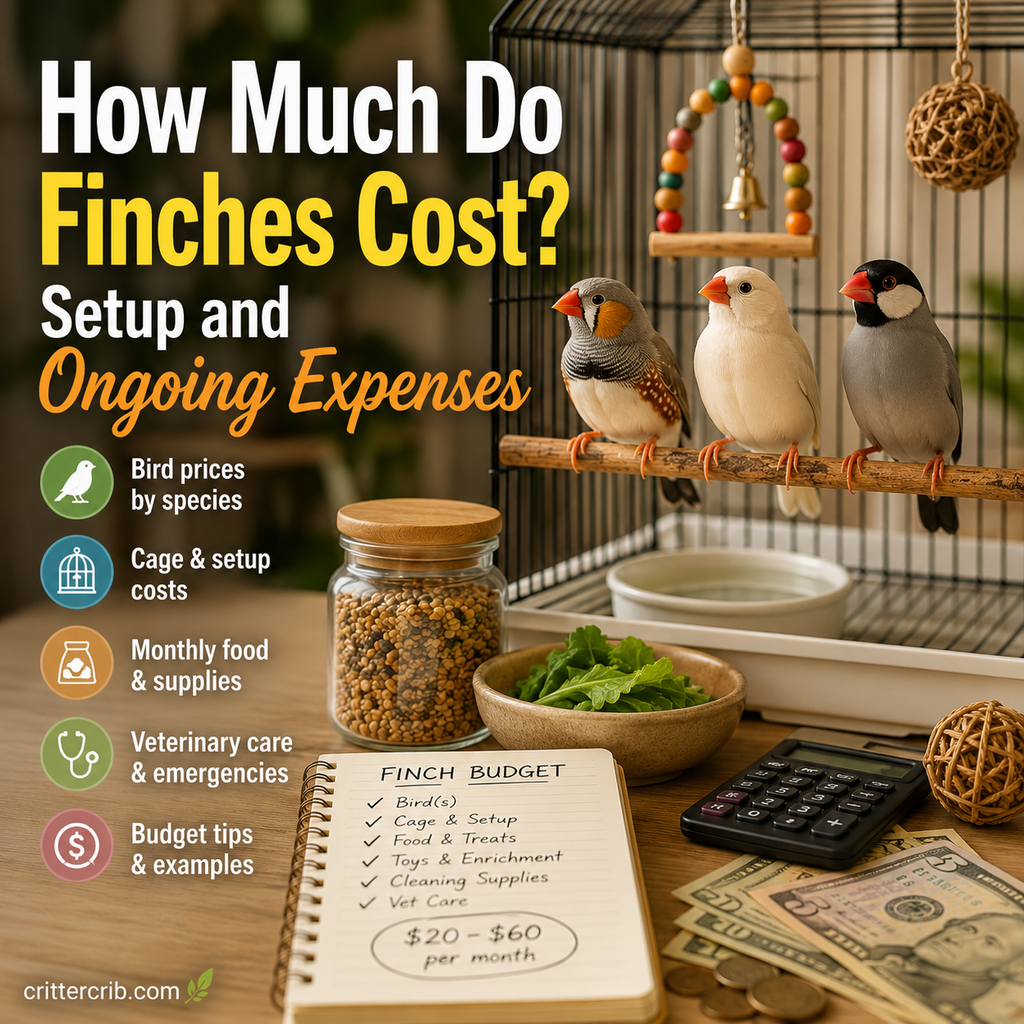
How Much Do Finches Cost? Setup and Ongoing Expenses

Pet finches with a cage, food, supplies, calculator, and budget showing the costs of keeping finches.
The cost of keeping finches includes more than the birds themselves, with expenses for a suitable cage, food, enrichment, supplies, and veterinary care.

Finches are often considered relatively affordable pet birds, especially compared with larger parrots. The bird itself may not cost very much, and you won’t need giant cages, heavy-duty toys, or huge bags of food.

But the purchase price is only the beginning.

A proper cage, perches, feeding supplies, enrichment, food, cleaning products, and veterinary care all contribute to the real cost of keeping finches. And because many commonly kept finches are social birds that are often kept in pairs or groups, you may be budgeting for more than one bird from the start.

So, how much do finches actually cost?

As a rough estimate, you might spend $150 to $500 or more on the initial setup, including the birds, with ongoing expenses of roughly $20 to $60 per month for a small number of finches. Veterinary care and emergencies can add significantly to those figures.

Prices vary considerably depending on where you live, the species you choose, cage quality, diet, and your birds’ health.

Here’s a closer look at what you should budget before bringing finches home.

Continue reading “How Much Do Finches Cost? Setup and Ongoing Expenses”

Best Enrichment Ideas for Happy, Active Canaries

Yellow canary in an enriched habitat with natural perches, climbing toys, fresh greens, millet, and a bird bath.
Varied perches, bathing, foraging, fresh foods, toys, and room to move can help keep canaries active and mentally stimulated.

Canaries are famous for their beautiful songs, but there’s much more to these little birds than sitting on a perch and singing.

They’re active, curious animals that naturally spend their days flying, searching for food, bathing, exploring, and responding to what’s happening around them. A cage that provides only food, water, and one or two perches may meet basic physical needs, but it doesn’t give a canary much to do.

That’s where enrichment comes in.

Canary enrichment doesn’t have to mean filling the cage with complicated toys. In fact, many canaries aren’t interested in parrot-style toys designed for chewing and manipulating with a powerful beak.

For canaries, some of the best enrichment comes from movement, foraging, bathing, varied perches, fresh foods, and a thoughtfully arranged environment.

Here are practical ways to keep your canary active, curious, and engaged.

Continue reading “Best Enrichment Ideas for Happy, Active Canaries”

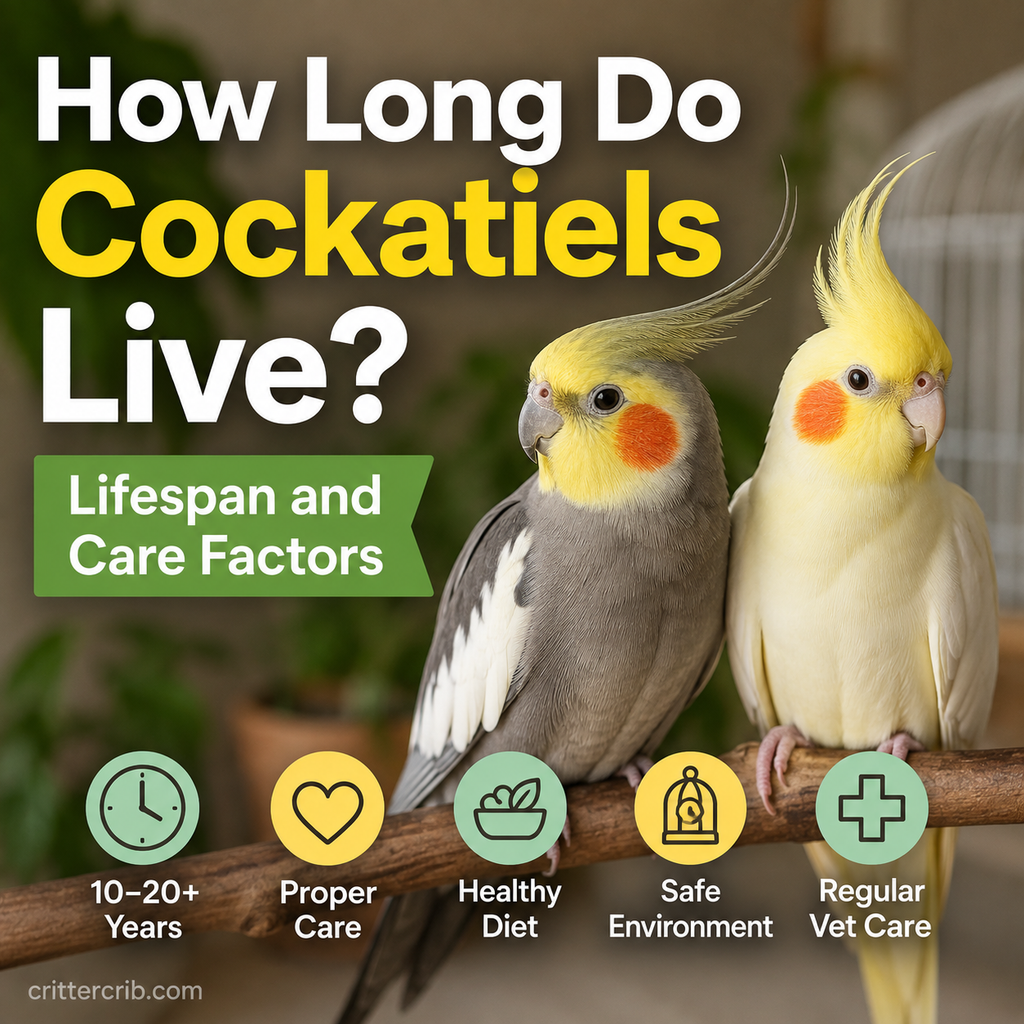
How Long Do Cockatiels Live? Lifespan and Care Factors

Two cockatiels illustrating their 10 to 20-plus year lifespan and important care factors for a healthy life.
Cockatiels commonly live around 10 to 20 years, with nutrition, exercise, a safe environment, and veterinary care influencing their health and longevity.

Cockatiels can be surprisingly long-lived companions. Although they’re much smaller than parrots such as macaws and cockatoos, a well-cared-for cockatiel can potentially share your home for well over a decade—and sometimes considerably longer.

So, how long do cockatiels live?

Pet cockatiels commonly live around 10 to 20 years, although some individuals can reach their 20s with excellent care. Genetics certainly play a role, but everyday factors such as diet, exercise, housing, veterinary care, and accident prevention can also influence longevity.

If you’re considering bringing home a cockatiel, their potential lifespan is important to understand. These aren’t short-term pets. Caring for one can be a commitment lasting many years.

Here’s what affects a cockatiel’s lifespan and what you can do to help your bird stay healthy throughout each stage of life.

Continue reading “How Long Do Cockatiels Live? Lifespan and Care Factors”

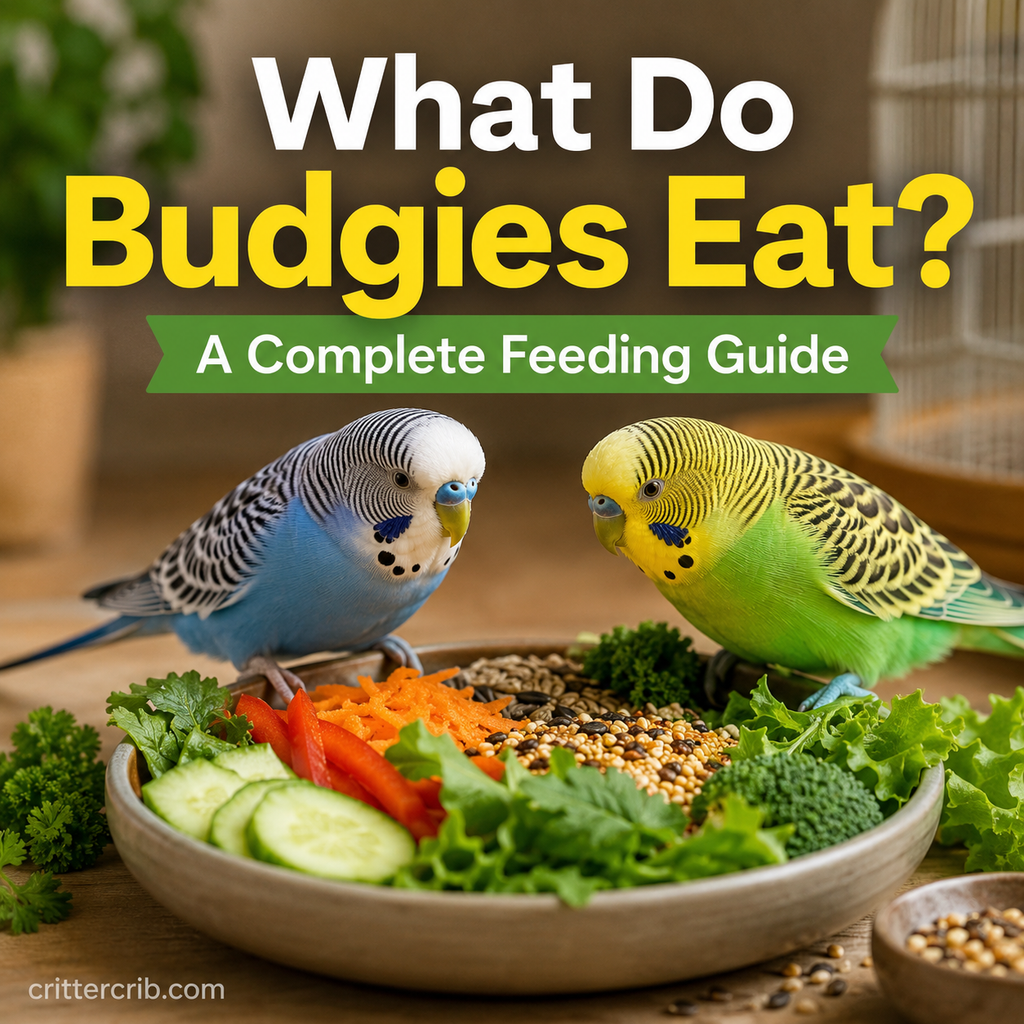
What Do Budgies Eat? A Complete Feeding Guide

Two budgies with a variety of seeds and fresh vegetables for a complete budgie feeding guide.
A healthy budgie diet can include balanced pellets, seeds, fresh vegetables, leafy greens, and occasional fruit.

Budgies may be small birds, but their diet has a big impact on their health, energy, feathers, and lifespan. It’s easy to assume that a bowl of birdseed is all a budgie needs. In reality, a healthy diet is much more varied.

Budgies, also called budgerigars or parakeets, naturally eat a mixture of seeds, grasses, plant material, and other foods. Pet budgies benefit from the same general idea: variety, moderation, and nutritionally balanced choices.

A good feeding routine usually includes a quality formulated food, fresh vegetables, limited seeds, and occasional fruit and treats.

This guide explains what budgies can eat, what they should avoid, how much to feed, and how to create a balanced everyday diet.

Continue reading “What Do Budgies Eat? A Complete Feeding Guide”

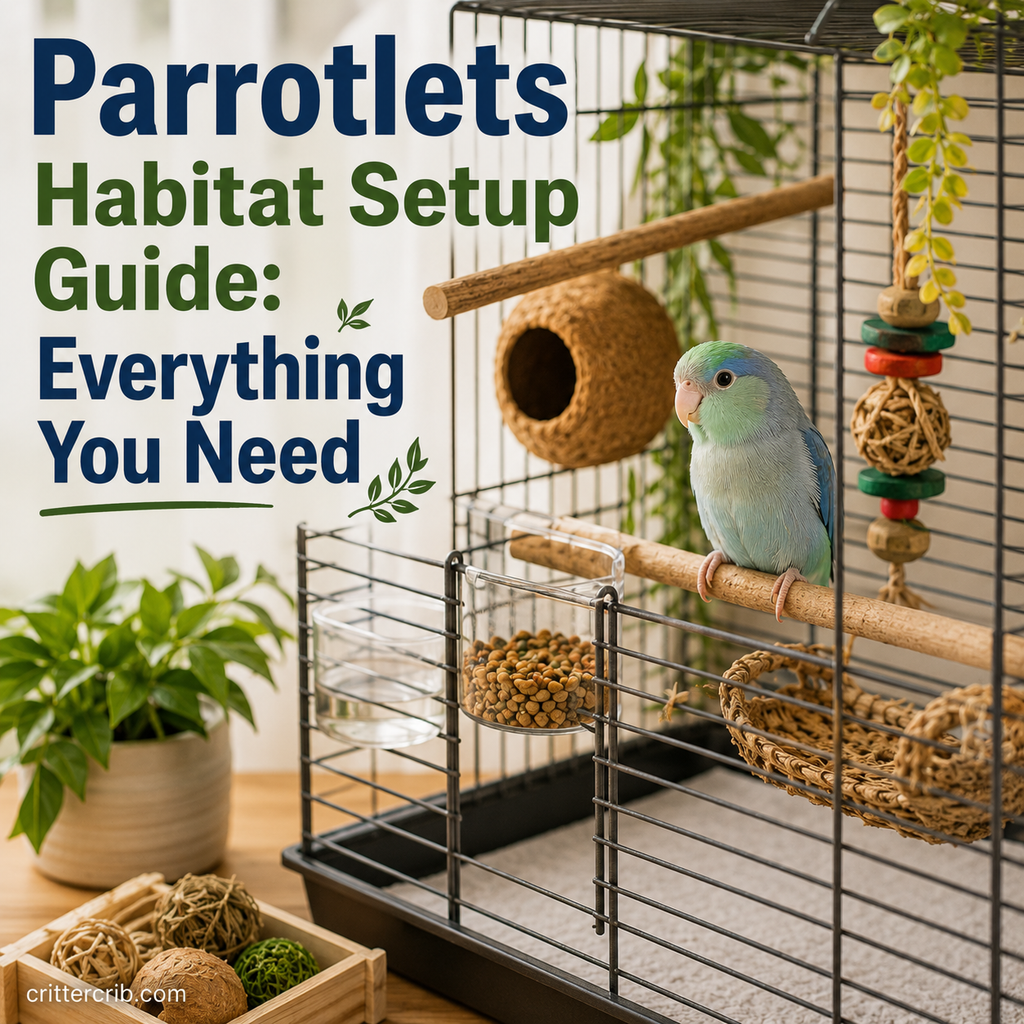
Parrotlets Habitat Setup Guide: Everything You Need

Blue parrotlet in a spacious cage with natural perches, food, water, toys, and enrichment accessories.
A well-designed parrotlet habitat provides plenty of room to move along with varied perches, toys, enrichment, and easy access to food and fresh water.

Parrotlets may be tiny, but don’t let their size fool you. These little parrots are active, curious, intelligent, and often remarkably confident. They need a habitat that gives them plenty of opportunities to climb, play, chew, forage, and move around.

A good parrotlet setup starts with a spacious cage, but the cage itself is only part of the picture.

Perches need to be comfortable and varied. Toys should encourage natural behaviors without overcrowding the cage. Food and water need to stay accessible and clean. Your bird also needs a safe location in the home, consistent sleep, and opportunities for exercise outside the cage.

Fortunately, creating a great parrotlet habitat doesn’t have to be complicated.

Here’s everything you need to set up a comfortable, enriching home for your parrotlet.

Continue reading “Parrotlets Habitat Setup Guide: Everything You Need”

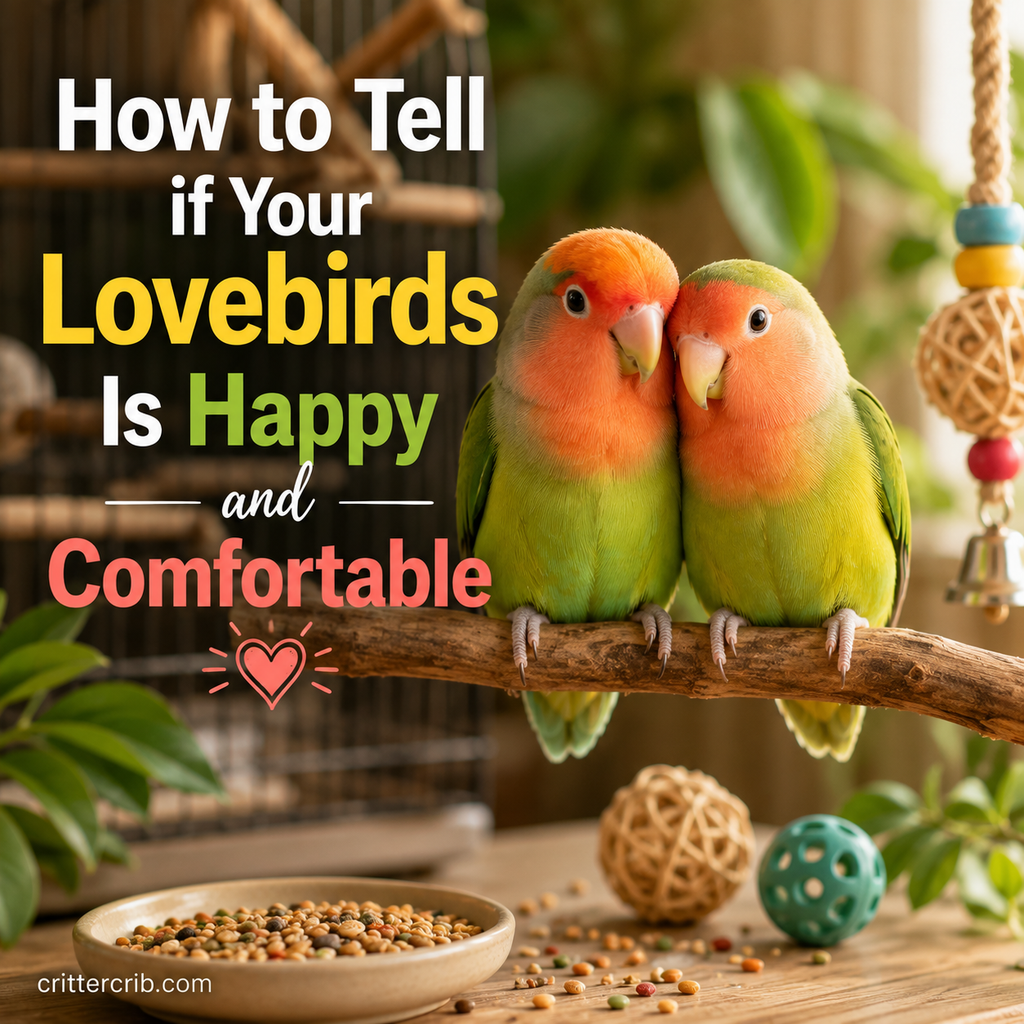
How to Tell if Your Lovebird Is Happy and Comfortable

Two relaxed lovebirds sitting closely together on a natural perch in a comfortable indoor habitat.
Happy lovebirds often show their comfort through relaxed body language, normal vocalizations, play, preening, curiosity, and positive social behavior.

Lovebirds are expressive little parrots, but they can’t simply tell you when they’re happy, nervous, bored, or uncomfortable. Instead, you have to learn to read their behavior.

Fortunately, lovebirds give us plenty of clues.

A comfortable lovebird may chatter, play with toys, preen, explore its cage, eat enthusiastically, and relax around familiar people or another lovebird. Over time, you’ll also start recognizing your own bird’s habits and personality.

That’s important because not every happy lovebird behaves exactly the same way. One may be constantly active and vocal, while another is quieter and more cautious.

Rather than looking for one specific “happy behavior,” pay attention to the overall picture.

Here are the most common signs that your lovebird feels safe, comfortable, and content—and some behaviors that may indicate something isn’t right.

Continue reading “How to Tell if Your Lovebird Is Happy and Comfortable”