
Bearded dragons are often recommended as beginner reptiles, and there are some good reasons for that. They’re generally manageable in size, many become comfortable with handling, and their behavior is much easier to observe than that of a reptile that spends most of the day hiding.
But calling a bearded dragon an “easy pet” can give new owners the wrong impression.
A bearded dragon still needs a properly sized enclosure, specialized heating and UVB lighting, a varied diet, regular cleaning, and ongoing attention to temperatures and overall health. Setting everything up correctly also costs more than many first-time owners expect.
So, are bearded dragons good pets?
For the right person, absolutely. They can be engaging, relatively calm reptiles that are fascinating to watch and interact with. They’re especially appealing if you want a reptile that’s active during the day and can usually become accustomed to regular handling.
They’re not, however, low-maintenance decorations that can live in a small tank with a heat lamp.
Here’s what beginners should know before deciding whether a bearded dragon is the right pet.
Why Are Bearded Dragons Popular Pets?
Bearded dragons have several characteristics that make them particularly appealing to first-time reptile keepers.
They’re active during the day, which means you’re more likely to see them basking, eating, climbing, and exploring while you’re awake.
Many also develop relatively calm temperaments in captivity.
A well-socialized bearded dragon may comfortably sit on your hand, arm, shoulder, or lap during supervised handling. Individual personalities vary, of course, but they generally have a reputation for being more tolerant of human interaction than many reptiles.
Their behavior is another big part of the appeal.
Bearded dragons communicate through movements and postures such as:
- Head bobbing
- Arm waving
- Beard darkening
- Body flattening
- Basking
- Gaping
- Climbing
- Digging
Once you learn what those behaviors mean, your dragon can become surprisingly expressive.
Are Bearded Dragons Good Pets for Beginners?
Bearded dragons can be good pets for responsible beginners who are willing to learn their husbandry requirements before bringing one home.
They’re relatively forgiving in terms of handling, but their environmental needs aren’t optional.
A beginner needs to understand:
- Proper enclosure size
- Basking temperatures
- Cooler-side temperatures
- UVB lighting
- Diet
- Calcium and supplementation
- Hydration
- Substrate
- Cleaning
- Signs of illness
If you’re comfortable learning those basics and checking the enclosure regularly, a bearded dragon can be an excellent introduction to reptile keeping.
If you’re looking for a pet that requires little setup or can simply be fed occasionally and otherwise ignored, a bearded dragon isn’t a good choice.
What Are Bearded Dragons Like as Pets?
One reason people enjoy bearded dragons is that they tend to be visible.
Some reptiles are fascinating but spend much of their time buried, hidden, or active primarily at night. Bearded dragons generally have a more human-friendly schedule.
During the day, you might see your dragon:
- Basking under its heat source
- Moving between warm and cool areas
- Watching activity outside the enclosure
- Eating greens
- Hunting insects
- Climbing branches or rocks
- Digging
- Resting in different positions
They often seem very aware of what’s happening around them.
Some individuals approach the enclosure door when their keeper enters the room. That doesn’t necessarily mean they’re expressing affection in the same way a dog would, but bearded dragons can learn routines and associate people with food, handling, and other experiences.
Are Bearded Dragons Friendly?
“Friendly” is a human description, but many bearded dragons are calm and tolerant of interaction.
A dragon that has become comfortable with handling may voluntarily climb onto your hand or remain relaxed while being held.
However, temperament varies.
Some bearded dragons are:
- Very calm
- Curious and active
- Initially nervous but become more tolerant
- Easily startled
- More defensive
- Less interested in handling
Age, previous experiences, environment, health, and individual personality can all influence behavior.
A newly acquired dragon may need time to adjust before regular handling begins.
Do Bearded Dragons Like Being Held?
Many bearded dragons tolerate handling well, and some appear quite comfortable during calm interactions.
That doesn’t mean every dragon wants to be picked up whenever you feel like it.
Pay attention to body language.
A relaxed bearded dragon may:
- Sit calmly on your hand
- Explore without frantic movements
- Maintain a normal body posture
- Climb onto you voluntarily
- Remain alert without appearing defensive
A stressed dragon may:
- Darken its beard
- Puff up
- Open its mouth defensively
- Attempt to escape
- Flatten its body
- Scratch frantically
- Become unusually rigid
Handling should be a gradual process rather than something you force.
Support the dragon’s body and legs securely, move slowly, and keep early sessions relatively short.
Do Bearded Dragons Bite?
Bearded dragons can bite, but biting isn’t usually a major issue with properly handled captive animals.
A dragon may bite because it:
- Feels threatened
- Is frightened
- Mistakes a finger for food
- Is being restrained
- Is in pain
- Has repeatedly had warning signals ignored
Washing your hands after handling food and using appropriate feeding tools can reduce accidental food-related bites.
Defensive behavior should be treated as communication rather than something to punish.
How Big Do Bearded Dragons Get?
Adult bearded dragons commonly reach roughly 18 to 24 inches in total length, although individual size varies.
Their manageable adult size is one reason they’re popular.
They’re large enough to handle comfortably but don’t require the enormous dedicated spaces needed by some large lizards.
However, their enclosure still needs substantial floor space.
A baby bearded dragon may look tiny in an adult-sized habitat, but it won’t stay that size.
Planning around adult requirements from the beginning can save you from purchasing several increasingly larger enclosures.
How Much Space Does a Bearded Dragon Need?
An adult bearded dragon needs a spacious terrestrial enclosure.
A common target for an adult is at least a 4 × 2 × 2-foot enclosure, or approximately 120 gallons when comparing commonly marketed enclosure sizes.
Larger can be beneficial when the habitat is properly designed.
The enclosure needs enough space to create distinct temperature zones and provide room for:
- Basking
- Walking
- Climbing
- Hiding
- Feeding
- Digging or natural substrate behaviors when appropriate
Floor space is particularly important.
A tall but narrow enclosure isn’t a substitute for a good terrestrial footprint.
Bearded Dragons Need Proper Heating
This is one of the most important things beginners need to understand.
Bearded dragons are ectothermic. They depend on environmental heat to regulate their body temperature.
That means you need to create a temperature gradient within the enclosure.
There should be a hot basking area and cooler areas the dragon can move into when it no longer wants additional heat.
Don’t rely on touching a rock or putting your hand inside the enclosure to decide whether temperatures “feel right.”
Use reliable thermometers and appropriate measuring equipment.
Basking surface temperatures are especially useful to measure accurately.
Exact temperature targets can vary somewhat with age, setup, and husbandry recommendations, but the fundamental requirement is the same: the dragon needs access to appropriate heat and the ability to move away from it.
Bearded Dragons Need UVB Lighting
UVB lighting is another essential part of bearded dragon care.
Appropriate UVB exposure supports vitamin D3 production and calcium metabolism.
Without proper UVB and nutritional support, bearded dragons can develop serious health problems, including metabolic bone disease.
A beginner should learn about:
- Appropriate UVB lamp type
- Correct fixture
- Lamp placement
- Distance from the basking area
- Whether mesh blocks part of the output
- Manufacturer replacement intervals
Simply buying a bulb with “UVB” printed on the packaging doesn’t guarantee that the enclosure is set up correctly.
Lighting and heat should be planned together so the basking area provides appropriate environmental conditions.
What Do Bearded Dragons Eat?
Bearded dragons are omnivores.
Their diet includes both animal and plant foods, with dietary proportions changing as they mature.
Young dragons generally consume more insects because they’re growing rapidly.
Adults typically eat a greater proportion of leafy greens and vegetables while still receiving appropriate insect prey.
Common feeder insects can include:
- Dubia roaches
- Crickets
- Black soldier fly larvae
- Silkworms
- Other appropriately sized feeder insects
Plant foods may include a rotating selection of suitable leafy greens and vegetables.
Variety is important.
Rather than feeding the same two foods every day, provide a nutritionally appropriate rotation.
Feeding a Bearded Dragon Is More Work Than Pouring Kibble
This is an important consideration for prospective owners.
Feeding a bearded dragon may involve buying and maintaining live insects, preparing fresh greens, dusting foods with supplements, removing leftovers, and adjusting the diet as the animal grows.
Some people enjoy this aspect of reptile keeping.
Others discover that they really don’t like keeping containers of insects in the house.
Think about that before bringing home the dragon.
If live feeder insects make you extremely uncomfortable, a bearded dragon may not be your ideal pet.
Do Bearded Dragons Need Calcium Supplements?
Calcium supplementation is commonly part of bearded dragon husbandry.
Depending on the animal’s diet, age, UVB setup, and other factors, additional vitamin supplementation may also be appropriate.
More isn’t automatically better.
Over-supplementation can cause problems just as nutritional deficiencies can.
Follow a feeding and supplementation schedule appropriate for your dragon rather than randomly coating every meal with large amounts of powder.
If you’re unsure, discuss nutrition with a veterinarian experienced in reptile medicine.
Do Bearded Dragons Drink Water?
Bearded dragons need access to hydration, although individual drinking behavior varies.
Some drink from a shallow water dish, while much of their moisture may also come from fresh foods.
Don’t assume that because bearded dragons originate from relatively dry environments they don’t need water.
Provide hydration in a way appropriate for your setup and keep water containers clean.
Monitor your dragon’s overall condition rather than relying on one hydration method.
Are Bearded Dragons Messy?
Compared with some aquatic reptiles, bearded dragons aren’t especially difficult to clean up after.
But their habitat still needs regular maintenance.
Expect to:
- Remove feces
- Remove leftover food
- Clean food and water dishes
- Spot-clean substrate
- Clean enclosure surfaces
- Maintain decorations
- Periodically perform more thorough cleaning
Bearded dragon feces can also have a surprisingly strong smell.
Removing waste promptly makes a noticeable difference.
Do Bearded Dragons Smell?
A healthy bearded dragon itself generally shouldn’t have a strong odor.
Most unpleasant smells come from the enclosure.
Common causes include:
- Feces left in the habitat
- Old food
- Dirty substrate
- Contaminated water
- Poor ventilation
- Excess moisture
With regular cleaning and appropriate husbandry, odor usually isn’t a major problem.
A persistent unusual smell from the animal itself deserves attention.
How Often Do Bearded Dragons Need Attention?
Bearded dragons don’t require constant entertainment or social interaction.
They do, however, require daily observation and routine care.
On a typical day you may need to:
- Check temperatures
- Check lighting
- Provide food
- Remove leftovers
- Replace or clean water
- Spot-clean waste
- Observe behavior
- Check the dragon’s physical condition
Handling and enrichment can be added when appropriate.
One advantage is that you don’t have to take a bearded dragon outside for walks several times a day.
But “doesn’t need walks” shouldn’t be confused with “doesn’t need daily care.”
How Long Do Bearded Dragons Live?
Bearded dragons are a long-term commitment.
With appropriate care, captive bearded dragons commonly live around 8 to 12 years, and some live longer.
That means a dragon purchased for a child could still be part of the household when that child is in high school, college, or beyond.
Before getting one, consider where the animal fits into your plans several years from now.
How Much Does a Bearded Dragon Cost?
The dragon itself may be one of the less expensive parts of getting started.
A proper enclosure and equipment can cost substantially more.
Initial expenses may include:
- Enclosure
- UVB fixture and lamp
- Basking fixture and bulb
- Thermometers
- Temperature-measuring equipment
- Substrate
- Hides
- Branches or climbing structures
- Food and water dishes
- Decorations
- Supplements
Ongoing expenses include:
- Feeder insects
- Fresh vegetables and greens
- Replacement bulbs
- Electricity
- Substrate or cleaning supplies
- Veterinary care
Depending on equipment choices, a responsible initial setup can easily cost several hundred dollars before veterinary expenses.
It’s better to budget for the complete habitat first and then purchase the animal.
Do Bearded Dragons Need a Veterinarian?
Yes.
Owning a reptile doesn’t eliminate the need for veterinary care.
Ideally, locate a veterinarian experienced with reptiles before bringing your bearded dragon home.
Not every general dog-and-cat veterinary clinic treats reptiles.
Veterinary care may be necessary for issues involving:
- Parasites
- Respiratory problems
- Injuries
- Metabolic bone disease
- Impaction
- Appetite changes
- Abnormal stools
- Reproductive problems
- Eye problems
- Unexplained weight loss
Reptiles can sometimes hide illness until a problem has progressed, making routine observation particularly important.
Are Bearded Dragons Good Pets for Kids?
Bearded dragons can be appealing pets for older children who are genuinely interested in reptiles, but an adult should remain responsible for the animal’s care.
A child shouldn’t be solely responsible for:
- Maintaining temperatures
- Managing UVB lighting
- Buying feeder insects
- Cleaning the habitat
- Monitoring health
- Arranging veterinary care
Children also need to understand safe handling and hygiene.
Reptiles can carry Salmonella even when they appear healthy, so handwashing after handling the dragon or anything in its enclosure is important.
A bearded dragon can be a great family pet when adults recognize that ultimately the animal is their responsibility.
Are Bearded Dragons Good Apartment Pets?
They can be.
Bearded dragons are quiet and don’t require a yard.
You won’t have barking complaints from the neighbors, and you don’t need outdoor exercise space.
However, the enclosure takes up more room than beginners sometimes expect.
A 4 × 2 × 2-foot enclosure plus lighting equipment requires a substantial dedicated area.
You’ll also need somewhere to store:
- Feeder insects
- Supplements
- Cleaning supplies
- Replacement equipment
- Food
Check rental rules regarding reptiles before bringing one home.
Are Bearded Dragons Noisy?
Bearded dragons are generally very quiet pets.
They don’t bark, chirp continuously, or vocalize for attention.
Most of the sounds you’ll hear will come from the enclosure equipment or the dragon moving around.
You might occasionally hear:
- Scratching
- Digging
- Movement against decorations
- Glass surfing
- Crunching food
For people who need a quiet pet, this can be a major advantage.
Can Bearded Dragons Be Left Alone?
Bearded dragons don’t require continuous companionship, but they shouldn’t simply be abandoned for several days without appropriate care.
Their equipment needs monitoring, food and water need attention, and problems can occur unexpectedly.
Automated lighting timers can make daily husbandry easier, but automation doesn’t replace checking the animal.
If you’re traveling, arrange for someone who understands basic reptile care to check on your dragon.
Do Bearded Dragons Need Another Bearded Dragon?
No.
Bearded dragons don’t need a roommate for companionship.
In most pet situations, housing bearded dragons separately is the safer approach.
Cohabitation can lead to:
- Competition for basking spots
- Food competition
- Stress
- Biting
- Injuries
- Reproductive pressure
- One dragon dominating another
Two dragons appearing to “cuddle” may actually be competing for the same desirable basking location.
A single bearded dragon can live perfectly well without another dragon sharing its enclosure.
Pros of Keeping a Bearded Dragon
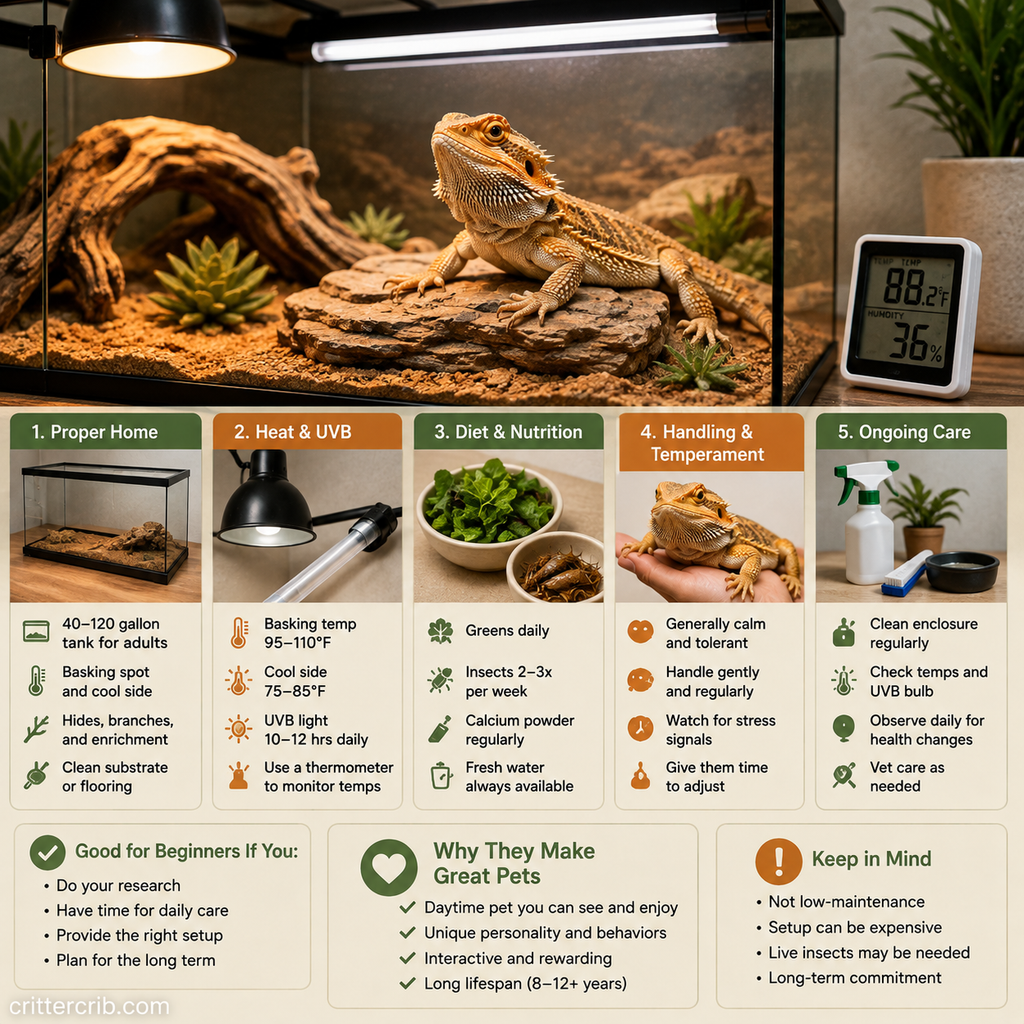
There are plenty of reasons bearded dragons have become popular pets.
Generally Manageable Temperament
Many individuals become calm and comfortable with routine handling.
Active During the Day
Their daytime schedule makes them enjoyable to observe.
Interesting Behavior
Head bobbing, arm waving, basking, digging, climbing, and other behaviors make them engaging animals.
Manageable Adult Size
They’re substantial enough to handle comfortably without becoming enormous.
Quiet
Bearded dragons are excellent pets for people who don’t want a noisy animal.
No Daily Walks
They need enrichment and appropriate exercise opportunities, but you won’t be standing outside in the rain at 6 a.m. waiting for your dragon to use the bathroom.
Fascinating to Observe
Even when you aren’t handling them, their basking, hunting, feeding, and exploratory behaviors can be interesting to watch.
Cons of Keeping a Bearded Dragon
Bearded dragons aren’t ideal for everyone.
Specialized Lighting Is Essential
Heat and UVB aren’t optional accessories.
The Setup Can Be Expensive
A proper adult habitat can cost significantly more than the dragon.
They Eat Live Insects
Not everyone wants crickets or roaches in the house.
They Require Fresh Food
Adult dragons need appropriate plant foods, which means regular food preparation.
They Need a Large Enclosure
A 4 × 2 × 2-foot habitat occupies considerable space.
Veterinary Care Can Be Specialized
You may need to travel farther or pay more for an experienced reptile veterinarian.
They Live for Many Years
This is an advantage if you want a long-term pet, but it’s a serious commitment.
Common Beginner Mistakes With Bearded Dragons
Many problems begin before the dragon even comes home.
Avoid these common mistakes.
Buying a Small Starter Tank
Purchase housing with adult size in mind.
Using Inadequate UVB
Research the fixture, bulb, placement, and replacement schedule before setting up the enclosure.
Guessing Temperatures
Measure them.
Feeding an Unbalanced Diet
Bearded dragons need more than a container of dried pellets or the occasional lettuce leaf.
Buying the Dragon Before the Habitat
Set up and test the enclosure first.
Housing Multiple Dragons Together
Separate housing is generally safer.
Assuming Every Behavior Means Something Is Wrong
Basking, digging, shedding, occasional gaping while basking, and seasonal behavior changes can all be normal in the right context.
Learning your individual dragon’s routine helps you recognize genuine changes.
What Should You Buy Before Getting a Bearded Dragon?
Prepare the habitat before bringing the animal home.
At minimum, research and obtain the appropriate:
- Adult-sized enclosure
- Basking heat source
- UVB lighting system
- Temperature-monitoring equipment
- Safe substrate
- Basking surface
- Hides
- Climbing structures
- Food and water dishes
- Appropriate food
- Calcium and other necessary supplements
- Cleaning supplies
Set everything up and test temperatures before the dragon arrives.
That way, the first day is about allowing your new pet to settle in rather than frantically trying to figure out why the basking area isn’t getting warm enough.
Who Should Get a Bearded Dragon?
A bearded dragon may be a good fit if you:
- Want a reptile that’s active during the day
- Enjoy observing animal behavior
- Want a reptile that can often tolerate handling
- Have room for a large enclosure
- Are comfortable feeding insects
- Can afford proper lighting and equipment
- Don’t mind preparing fresh food
- Are willing to learn reptile husbandry
- Have access to reptile veterinary care
- Want a pet that may live for a decade or longer
Who Shouldn’t Get a Bearded Dragon?
A bearded dragon may not be the best choice if you:
- Want an extremely low-maintenance pet
- Don’t have room for an adult enclosure
- Strongly dislike live insects
- Don’t want ongoing electricity or equipment costs
- Travel frequently without reliable pet care
- Want a highly social pet similar to a dog
- Aren’t comfortable monitoring temperatures and lighting
- Want a short-term commitment
There’s nothing wrong with deciding a bearded dragon isn’t right for your lifestyle.
It’s much better to figure that out before bringing one home.
Frequently Asked Questions About Bearded Dragons as Pets
Are bearded dragons easy pets?
They’re relatively approachable reptiles for beginners, but they aren’t maintenance-free. Proper heat, UVB lighting, diet, enclosure size, cleaning, and veterinary care are all important.
Are bearded dragons affectionate?
It’s difficult to describe reptile behavior using human emotional terms. Many bearded dragons become accustomed to familiar people and routines and may remain relaxed during handling or voluntarily approach their keepers.
Are bearded dragons good first reptiles?
Yes, they can be excellent first reptiles for someone prepared to research and provide the correct habitat, lighting, heating, diet, and long-term care.
Do bearded dragons recognize their owners?
Bearded dragons can become familiar with routines and people and learn associations involving food and handling. That doesn’t necessarily mean they recognize people in exactly the same way humans or highly social mammals do.
Are bearded dragons expensive to keep?
They can be moderately expensive. The initial enclosure, UVB lighting, heating, monitoring equipment, and furnishings can cost several hundred dollars, followed by ongoing food, electricity, replacement equipment, and veterinary expenses.
Do bearded dragons need attention every day?
They should be observed daily, and food, water, temperatures, cleanliness, and equipment require regular attention. They don’t require continuous social interaction.
Do bearded dragons make good pets if you work full-time?
Usually, yes, provided their lighting and heating are properly scheduled and you have time for feeding, cleaning, observation, and other routine care before or after work.
Are bearded dragons cuddly?
Some bearded dragons sit calmly on their owners and tolerate close contact, but they shouldn’t be expected to seek cuddling in the same way a social mammal might. Let the individual animal’s behavior guide handling.
Are bearded dragons better than other beginner reptiles?
That depends on what you want. Their calm temperament and daytime activity are major advantages, but their enclosure, lighting, diet, and space requirements can be more involved than those of some other commonly kept reptiles.
Final Thoughts: Are Bearded Dragons Good Pets?
Yes, bearded dragons can make excellent pets, including for first-time reptile owners.
Their manageable size, daytime activity, interesting behavior, and generally tolerant temperament make them particularly rewarding for people who want a reptile they can both observe and interact with.
But “beginner-friendly” shouldn’t be confused with effortless.
A bearded dragon needs a large enclosure, carefully managed heat, proper UVB lighting, a varied diet, regular cleaning, supplements, daily observation, and access to appropriate veterinary care. You’ll also be committing to an animal that may be with you for a decade or longer.
If those requirements sound interesting rather than inconvenient, a bearded dragon could be a great fit.
Get the habitat ready first, learn the basics before bringing the animal home, and choose a bearded dragon because you genuinely want to care for a reptile—not simply because someone told you they’re easy.
That’s a much better starting point for both you and your dragon.