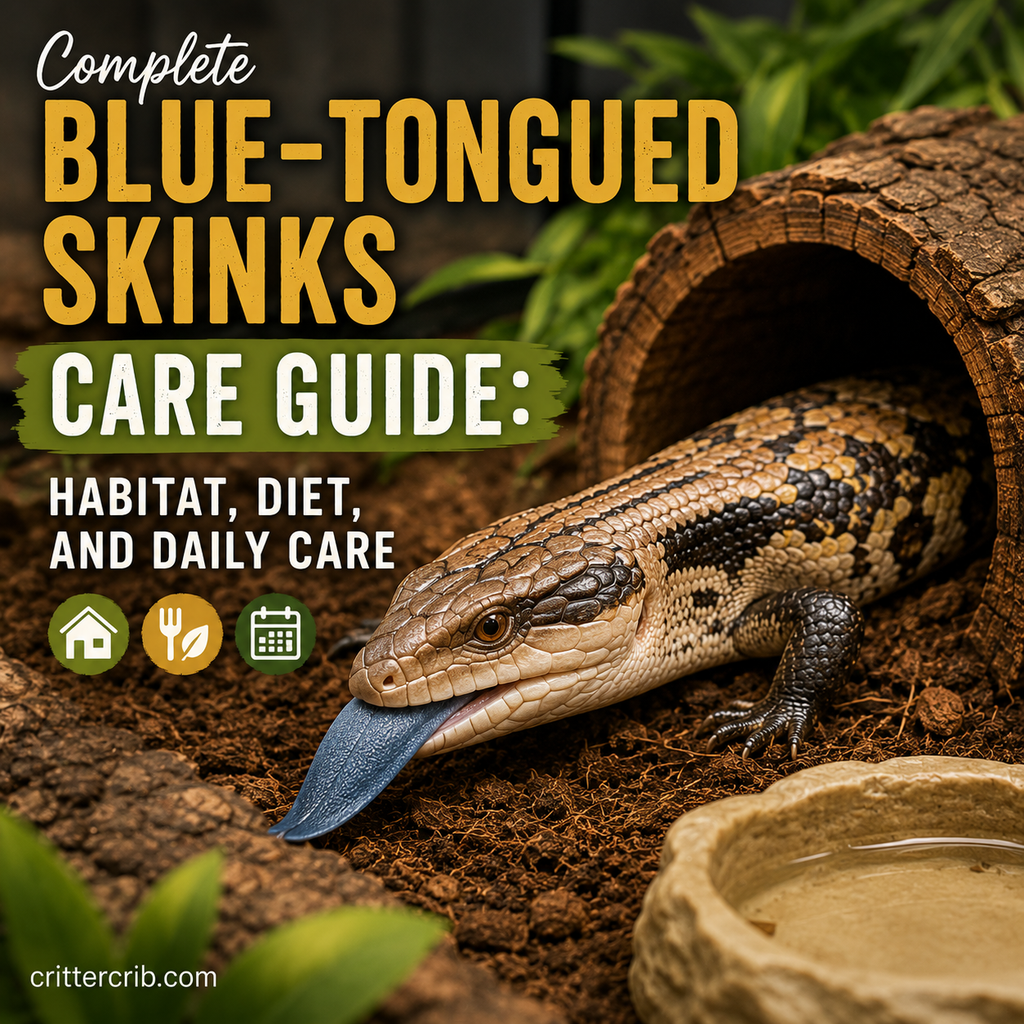
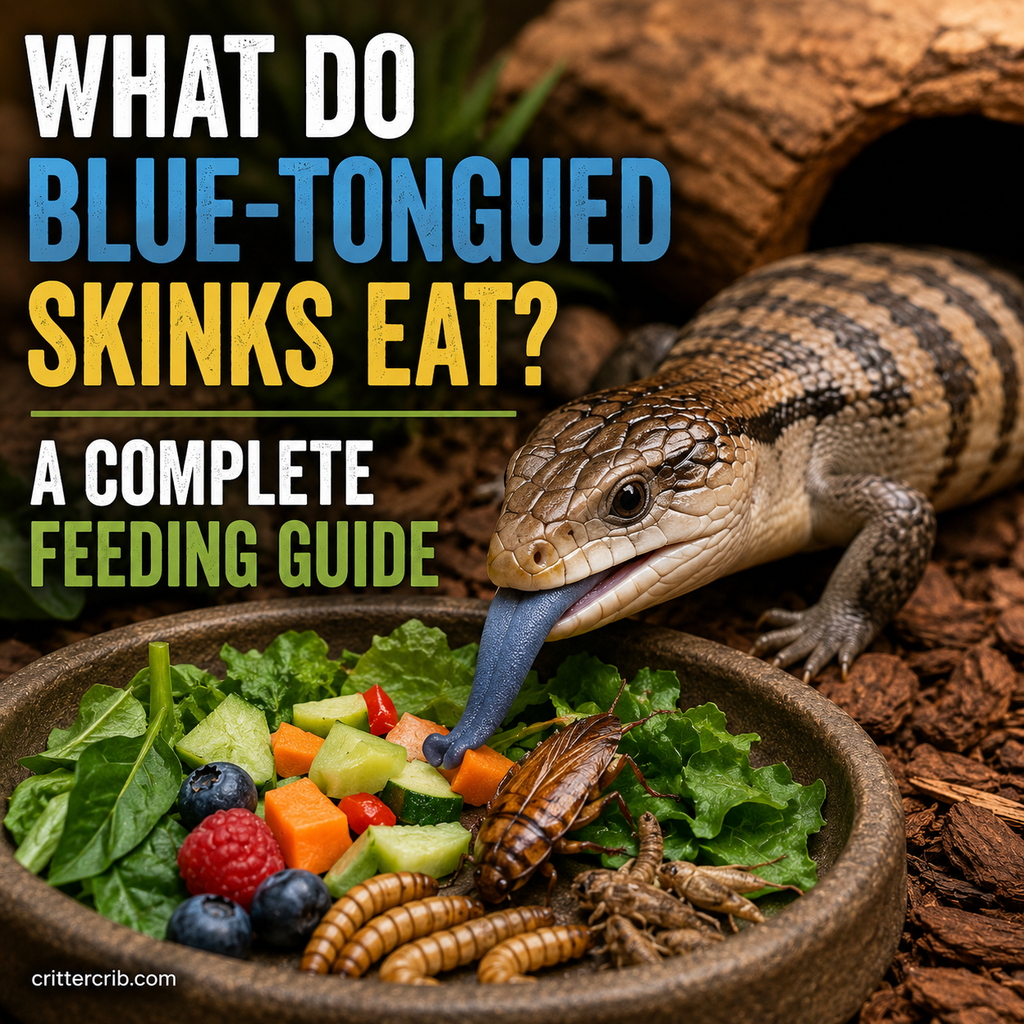
Blue-tongued skinks have an appetite that can make feeding time one of the most entertaining parts of owning one. They’re omnivores, which means their diet includes both animal-based foods and plant matter.
That flexibility is convenient, but it can also make their diet confusing.
What should go into the bowl? How much protein does a blue-tongued skink need? Can it eat fruit? And how often should an adult skink actually be fed?
A healthy diet is about more than finding foods your skink is willing to eat. Variety, portion size, calcium, age, and overall nutritional balance all matter.
This guide covers what blue-tongued skinks eat, how their diet changes as they grow, foods you can offer regularly or occasionally, and common feeding mistakes to avoid.
What Do Blue-Tongued Skinks Eat?
Blue-tongued skinks are omnivores. In the wild, they consume a varied diet that can include insects, other invertebrates, plant material, flowers, fruits, and other foods they encounter while foraging.
Pet blue-tongued skinks should receive a similarly varied diet rather than relying heavily on one ingredient.
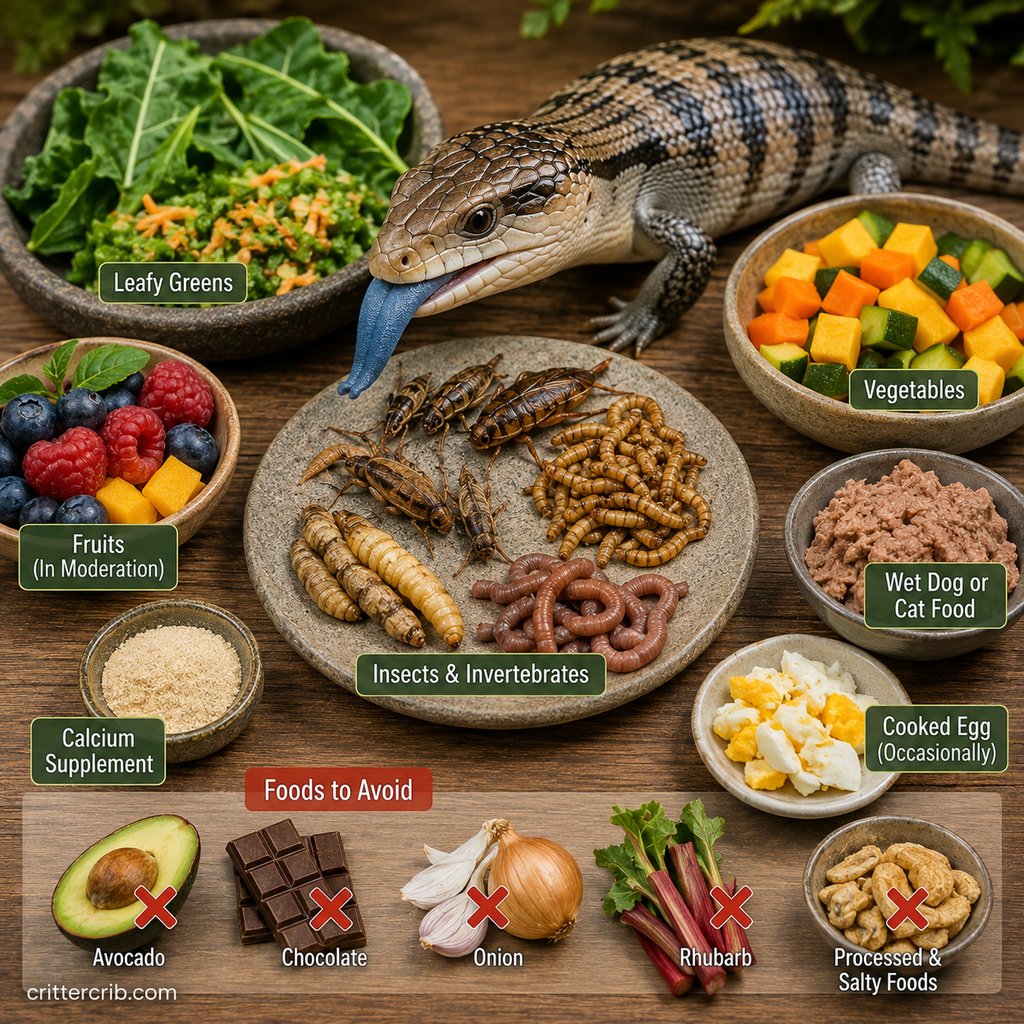
A balanced captive diet generally includes:
- Animal-based protein
- Leafy greens
- Vegetables
- Small amounts of fruit
- Appropriate calcium and vitamin supplementation
The exact balance changes with age.
Growing juveniles generally need a greater proportion of protein than mature adults, while adult skinks typically benefit from a diet containing plenty of nutritious plant matter.
What Protein Can Blue-Tongued Skinks Eat?
Protein is an important part of a blue-tongued skink’s diet, particularly while it’s growing.
There are plenty of options, so you don’t need to serve the exact same protein at every meal.
Insects and Invertebrates
Suitable feeder insects and invertebrates can include:
- Dubia roaches
- Crickets
- Black soldier fly larvae
- Silkworms
- Hornworms
- Earthworms
- Snails
Mealworms and superworms can also be offered, but they’re generally better used as part of a varied diet rather than as the primary protein source.
Feeder insects should come from a reliable source. Avoid collecting insects from your yard because they may have been exposed to pesticides, fertilizers, parasites, or other contaminants.
Should You Gut-Load Feeder Insects?
When appropriate for the feeder species, gut-loading can improve the nutritional value of insects before they’re fed to your skink.
Gut-loading simply means feeding the insects nutritious foods before offering them to your reptile.
This doesn’t replace the need for a varied overall diet, but it can make feeder insects more nutritionally useful.
Can Blue-Tongued Skinks Eat Eggs?
Cooked egg can be offered occasionally.
Egg is nutritious but shouldn’t become the main protein source. Think of it as another food that can contribute to dietary variety.
Avoid adding salt, butter, oil, seasoning, or sauces.
Can Blue-Tongued Skinks Eat Dog Food?
This one surprises many new owners.
Some blue-tongued skink keepers use high-quality wet dog food as part of the diet, particularly for adults. It can provide a convenient mixture of animal protein and other ingredients.
However, not every dog food is equally suitable.
If you use it, look for a reputable product with clearly identified ingredients and avoid formulas containing ingredients that aren’t appropriate for your skink.
Dog food should be considered one component of a varied feeding plan rather than an excuse to stop offering fresh foods.
Cat food is generally richer and higher in protein, so if used at all, it is typically more appropriate for growing skinks or occasional feeding rather than being a staple for healthy adults.
What Vegetables Can Blue-Tongued Skinks Eat?
Vegetables and leafy greens are especially important for adult blue-tongued skinks.
Offering several different plant foods provides a broader range of nutrients and keeps the diet from becoming monotonous.
Good options can include:
- Collard greens
- Mustard greens
- Turnip greens
- Dandelion greens
- Endive
- Escarole
- Squash
- Green beans
- Bell peppers
- Carrots
- Okra
- Parsnips
Rotate foods rather than serving the same mixture indefinitely.
You can chop or shred vegetables and combine them with more desirable foods if your skink tends to pick around its greens.
What About Lettuce?
Not all leafy vegetables have the same nutritional value.
Very watery lettuces, such as iceberg lettuce, offer relatively little nutrition compared with darker leafy greens.
That doesn’t mean every bite of lettuce is dangerous. It simply shouldn’t take up valuable space in the diet when more nutritious greens are available.
Can Blue-Tongued Skinks Eat Fruit?
Yes, but fruit should generally make up a relatively small portion of the overall diet.
Blue-tongued skinks often enjoy sweet foods, which can make fruit useful for adding variety or encouraging a reluctant skink to investigate its meal.
Suitable fruits can include small amounts of:
- Blueberries
- Strawberries
- Raspberries
- Blackberries
- Papaya
- Mango
- Melon
- Figs
Fruit is naturally high in sugar, so more isn’t necessarily better.
Treat it as an occasional addition rather than the foundation of the meal.
What Should a Blue-Tongued Skink’s Diet Look Like?
There isn’t a single perfect percentage that applies to every blue-tongued skink.
Age, species or subspecies, activity, body condition, reproductive status, and individual health can all affect nutritional needs.
As a general approach, adult meals can emphasize vegetables and leafy greens while including a smaller but still meaningful portion of animal-based protein. Fruit should make up only a small part of the diet.
Juveniles require relatively more protein to support growth.
The important thing is to look at the diet over time rather than obsessing over whether every individual bowl contains a mathematically perfect ratio.
Variety and consistency matter more.
Feeding Baby and Juvenile Blue-Tongued Skinks
Young blue-tongued skinks grow rapidly, so their feeding needs differ from those of adults.
They typically need:
- More frequent meals
- A greater proportion of animal protein
- Appropriately sized food
- Careful calcium and vitamin supplementation
Young skinks can still be introduced to greens and vegetables.
In fact, offering plant foods early may make it easier to maintain a varied diet as the animal matures.
Don’t wait until adulthood to introduce vegetables.
How Often Should Juvenile Blue-Tongued Skinks Eat?
Very young skinks generally eat more frequently than adults and may be offered food daily or close to daily depending on age and body condition.
As they grow, feeding frequency can gradually decrease.
Rather than using age alone, monitor:
- Growth
- Weight
- Body condition
- Activity
- Appetite
A reptile veterinarian can help you adjust the feeding plan if growth seems unusually fast or slow.
How Often Should Adult Blue-Tongued Skinks Eat?
Healthy adults generally don’t need to eat every day.
Many adult blue-tongued skinks do well with meals approximately two or three times per week, although individual needs vary.
This can initially seem surprisingly infrequent to owners accustomed to feeding dogs or cats every day.
Remember that reptiles have different metabolic requirements.
An adult skink that’s fed large meals every day can easily consume more calories than it needs.
How Much Should You Feed a Blue-Tongued Skink?
Portion control is just as important as choosing healthy foods.
Blue-tongued skinks can be enthusiastic eaters, and their appetite isn’t always a reliable indication of how many calories they need.
Meal size should take into account the skink’s:
- Age
- Overall size
- Body condition
- Activity level
- Feeding frequency
- Foods being offered
One commonly used guideline is to offer an appropriately sized portion roughly comparable to the size of the skink’s head, but this should be treated as a starting point rather than a rigid rule.
Regularly monitor your skink’s body condition and weight.
If it’s consistently gaining excessive weight, reconsider portion sizes, feeding frequency, treats, and high-calorie foods.
Do Blue-Tongued Skinks Need Calcium Supplements?
Calcium is particularly important for reptiles.
An improperly balanced diet can contribute to nutritional deficiencies and metabolic bone disease, a serious condition affecting the bones and other body systems.
Depending on the foods you’re offering and your overall husbandry, calcium supplementation may be necessary.
Reptile calcium powders are commonly used to lightly dust food.
The appropriate supplementation schedule depends on factors such as:
- Age
- Diet
- Calcium content of foods
- UVB exposure
- Reproductive status
- Overall health
More supplementation isn’t automatically better. Vitamins and minerals can also cause problems when excessively supplied.
If you’re unsure about the appropriate schedule for your individual skink, consult a reptile veterinarian.
Do Blue-Tongued Skinks Need Vitamin D3?
Vitamin D3 helps reptiles use calcium properly.
Blue-tongued skink husbandry should be considered as a complete system rather than treating food, supplements, and lighting as unrelated topics.
Many keepers provide appropriate UVB lighting as part of the enclosure setup. Supplementation choices should take that UVB exposure into account.
Avoid indiscriminately adding multiple supplements containing vitamin D3 without understanding the total amount your skink is receiving.
A veterinarian experienced with reptiles can provide guidance for your particular setup.
Foods Blue-Tongued Skinks Should Avoid
Being an omnivore doesn’t mean a blue-tongued skink can safely eat everything.
Some foods are inappropriate because of their nutritional composition, while others may contain potentially harmful compounds.
Foods and feeding practices to avoid include:
- Avocado
- Rhubarb
- Onion
- Highly processed human foods
- Foods containing lots of added salt or sugar
- Chocolate
- Candy
- Fried foods
- Seasoned meats
- Wild-caught insects that may have pesticide exposure
- Large quantities of fruit
- Spoiled or moldy food
Also avoid making a single food the overwhelming majority of the diet.
Even a nutritious ingredient can create an unbalanced diet if it’s offered at the expense of everything else.
Be Careful With Foods High in Oxalates
Some plant foods contain relatively high levels of oxalates, which can bind with calcium.
This doesn’t necessarily mean every food containing oxalates must be completely eliminated.
Instead, avoid relying heavily on high-oxalate foods when there are better staple greens available.
Spinach, for example, is better treated as an occasional ingredient rather than your skink’s primary leafy green.
Don’t Feed Wild Insects From Your Yard
Seeing a beetle or cricket outside might make you think you’ve found a free snack for your skink.
It’s safer to leave it outside.
You usually don’t know whether a wild insect has encountered:
- Pesticides
- Herbicides
- Fertilizers
- Parasites
- Environmental contaminants
Some wild insects may also be naturally toxic or irritating.
Use captive-bred feeder insects from reputable suppliers instead.
Fresh Water Is Part of a Healthy Diet
Food gets most of the attention, but your blue-tongued skink should always have access to clean drinking water.
Use a sturdy, shallow bowl that’s large enough for easy access but difficult to tip over.
Change the water regularly and immediately if your skink soils it.
Clean the bowl rather than simply pouring fresh water on top of residue.
Good hydration also depends partly on the overall enclosure environment, so make sure temperature and humidity are appropriate for the type of blue-tongued skink you keep.
How to Feed a Picky Blue-Tongued Skink
Some blue-tongued skinks quickly figure out which ingredients they like best.
You prepare a nutritious bowl of greens, vegetables, and protein—and somehow only the favorite pieces disappear.
Instead of immediately replacing rejected vegetables with treats, try making selective eating more difficult.
You can:
- Finely chop vegetables and greens.
- Mix them thoroughly with protein.
- Rotate ingredients regularly.
- Introduce new foods gradually.
- Limit sugary fruits and other favorite treats.
- Avoid offering a preferred food immediately after the skink rejects a balanced meal.
Patience matters.
A healthy adult isn’t necessarily in danger because it refuses one meal containing vegetables.
Persistent appetite loss, however, should be evaluated alongside temperature, lighting, seasonal behavior, stress, and health.
Common Blue-Tongued Skink Feeding Mistakes
Even when owners choose nutritious ingredients, the way they’re offered can create problems.
Feeding Too Much Fruit
Blue-tongued skinks often love fruit.
That’s precisely why it’s easy to overdo it.
Keep fruit as a small portion of the overall diet rather than serving fruit-heavy meals simply because your skink eagerly eats them.
Feeding Too Much Protein to Adults
Young skinks need plenty of protein while they’re growing, but continuing a heavily protein-based juvenile diet into adulthood isn’t necessarily appropriate.
As your skink matures, adjust the diet accordingly.
Feeding Adults Every Day
An adult blue-tongued skink doesn’t usually need a full meal every day.
Overfeeding can gradually lead to excessive weight gain.
Not Offering Enough Variety
Chicken every meal isn’t a varied diet. Neither is feeding one type of green indefinitely.
Rotate appropriate proteins, vegetables, greens, and occasional fruits.
Relying Too Heavily on Treats
Treats should remain treats.
If your skink learns that refusing its normal meal results in a favorite food appearing shortly afterward, you may accidentally encourage selective eating.
Ignoring Body Condition
Feeding charts provide useful starting points, but your skink’s body condition provides important feedback.
Weigh your blue-tongued skink periodically and watch for gradual changes.
A Simple Blue-Tongued Skink Feeding Routine
Feeding doesn’t need to become complicated.
For a healthy adult, a basic routine might look something like this:
- Prepare a mixture emphasizing nutritious greens and vegetables.
- Add an appropriate portion of animal-based protein.
- Include fruit occasionally and in small amounts.
- Add calcium or other supplementation according to your established schedule.
- Offer an appropriate portion.
- Remove uneaten perishable food before it spoils.
- Keep fresh water available at all times.
- Monitor weight and body condition over time.
Rotate ingredients from meal to meal.
The goal isn’t to create one “perfect” recipe and feed it forever. It’s to provide nutritional variety across a well-planned diet.
Frequently Asked Questions About Feeding Blue-Tongued Skinks
Can blue-tongued skinks eat bananas?
Blue-tongued skinks can eat small amounts of banana, but it shouldn’t be a major part of the diet.
There are better choices for regular feeding, particularly nutritious leafy greens and vegetables.
If you offer banana, use it as an occasional treat rather than a staple.
Can blue-tongued skinks eat chicken?
Plain, appropriately prepared chicken can be used as an occasional protein source.
Don’t add seasoning, sauces, butter, or excessive oil.
Chicken also shouldn’t become the only protein you offer. Dietary variety remains important.
Can blue-tongued skinks eat mice?
Blue-tongued skinks are capable of eating animal prey, and some keepers occasionally offer appropriately sized whole prey.
However, rodents aren’t necessary as a regular staple for most pet blue-tongued skinks.
A varied diet can provide animal protein through insects, invertebrates, and other appropriate foods.
Can blue-tongued skinks eat cat food?
Cat food is generally richer and higher in protein than dog food.
It may sometimes be incorporated into the diets of young, growing skinks, but it’s generally not an ideal everyday staple for healthy adults.
Choose products carefully and consider the skink’s complete diet rather than evaluating one food in isolation.
How long can a blue-tongued skink go without eating?
A healthy adult reptile may occasionally skip meals without it automatically indicating an emergency.
Appetite can be affected by shedding, environmental conditions, seasonal changes, stress, and other factors.
Don’t intentionally withhold food simply because a skink can tolerate periods without eating.
If your skink unexpectedly stops eating for an extended period, loses weight, becomes unusually lethargic, or develops other symptoms, review its husbandry and contact a reptile veterinarian.
What is the best food for a blue-tongued skink?
There isn’t one food that should make up the entire diet.
The best approach is a varied omnivorous diet appropriate for the skink’s age and condition. For adults, that generally means plenty of nutritious greens and vegetables combined with suitable animal-based proteins and relatively small amounts of fruit.
Young skinks typically require proportionally more protein as they grow.
Final Thoughts
One of the biggest advantages of keeping a blue-tongued skink is the variety of foods you can offer.
That variety is also where owners can go wrong.
Just because your skink eagerly eats fruit or protein doesn’t mean those foods should dominate every meal. A good feeding plan balances nutritious plant foods with appropriate animal protein while keeping sugary fruits and richer foods under control.
Age matters, too. A growing juvenile has different nutritional demands than a mature adult, so the diet and feeding frequency should change as your skink develops.
Keep fresh water available, use supplements appropriately, offer plenty of variety, and pay attention to your skink’s weight and body condition.
Once you establish those habits, feeding a blue-tongued skink becomes much simpler—and considerably more interesting than serving the same thing every day.