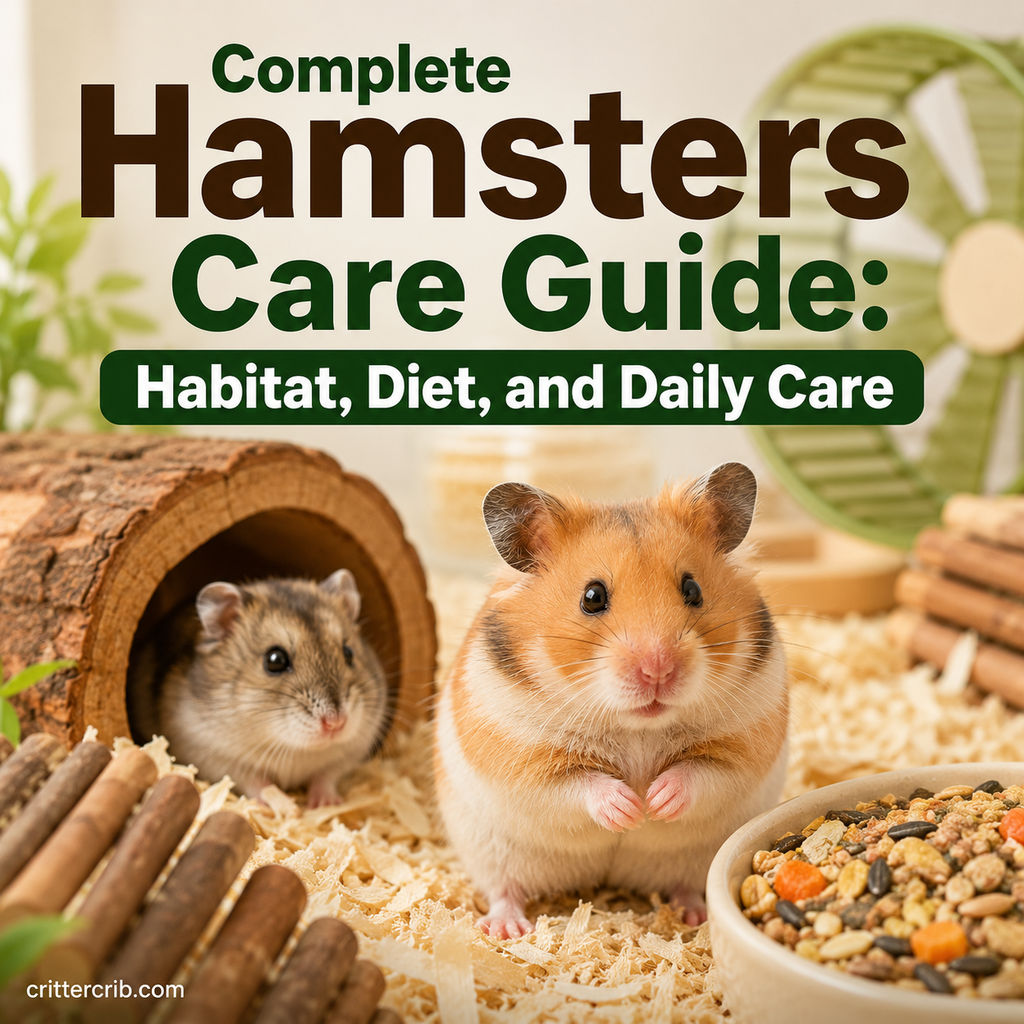
Hamsters are small pets with surprisingly big needs. They may spend much of the day tucked inside a nest, but once evening arrives, a hamster can become an energetic little explorer—digging, running, foraging, chewing, and rearranging its home.
That’s why good hamster care involves much more than a cage, food bowl, and exercise wheel.
A comfortable hamster habitat should give your pet enough room to behave naturally. Deep bedding allows for burrowing, hides provide security, a properly sized wheel offers exercise, and enrichment keeps the environment interesting. Pair that with a balanced diet, fresh water, gentle handling, and regular health checks, and you have the foundation for a happy hamster.
This complete hamster care guide covers what new and experienced owners should know about habitat setup, feeding, bedding, enrichment, cleaning, handling, and everyday care.
Getting to Know Hamsters
Several hamster species are commonly kept as pets, and each has slightly different characteristics.
Some of the most familiar include:
- Syrian hamsters
- Campbell’s dwarf hamsters
- Winter white dwarf hamsters
- Roborovski hamsters
- Chinese hamsters
Syrian hamsters are considerably larger than dwarf varieties and are usually kept alone. Roborovski hamsters are tiny, incredibly quick, and may be more enjoyable to watch than handle. Other dwarf varieties fall somewhere in between.
Regardless of species, hamsters share many of the same basic needs.
They need opportunities to burrow, forage, hide, chew, exercise, and rest without being constantly disturbed.
Hamsters Are Most Active at Night
One of the first things new owners notice is that their hamster doesn’t necessarily follow the household schedule.
Hamsters tend to become active during the evening and nighttime hours. During the day, they’re often sleeping inside a burrow or hide.
Try not to repeatedly wake a sleeping hamster just because you want to interact with it. A startled hamster is more likely to become stressed or defensive.
Instead, make interaction part of the hamster’s natural waking hours.
How Long Do Hamsters Live?
Hamsters have relatively short lifespans compared with many other pets.
Depending on species, genetics, environment, nutrition, and overall health, a pet hamster may live roughly two to three years. Some live longer, while others unfortunately have shorter lives. You can learn more about how long hamsters live and the factors that affect their lifespan.
Their short lifespan makes consistent care particularly important.
Providing the right environment from the beginning can help prevent unnecessary stress and give your hamster the opportunity to express normal behaviors throughout its life.
Choosing the Right Hamster Habitat
The enclosure is one of the most important decisions you’ll make for your hamster.
Remember that your hamster isn’t simply sleeping there. The enclosure is where it will spend most of its life.
If you’re building an enclosure from scratch, our hamster habitat setup guide walks through the space, bedding, wheel, hides, enrichment, food, water, and other essentials you’ll need.
A good hamster habitat should have room for:
- Deep bedding
- A sleeping and nesting area
- An appropriately sized exercise wheel
- Food and water
- Multiple hides
- Tunnels
- Chewable materials
- Foraging
- Enrichment
- Open areas for exploring
This is why extremely small cages can become problematic very quickly.
Prioritize Floor Space
Hamsters benefit more from usable horizontal space than from a tall cage with multiple levels.
They’re natural burrowers rather than animals that need to climb high above the ground. Large amounts of uninterrupted floor space allow you to create deeper bedding areas while still leaving room for a wheel, hides, food, water, and enrichment.
Depending on the setup, suitable hamster housing might include a large tank-style enclosure or another properly ventilated habitat specifically designed to accommodate a hamster’s needs.
Whatever style you choose, make sure it’s secure.
Hamsters are remarkably capable escape artists. They can climb accessories, squeeze through surprisingly small openings, and chew through unsuitable materials.
Check lids, doors, ventilation areas, and other potential exits regularly.
How Much Bedding Does a Hamster Need?
Bedding shouldn’t simply cover the floor.
Hamsters naturally create burrows where they sleep, store food, and retreat when they feel threatened. Providing enough bedding for your hamster to dig and construct tunnels can make the enclosure much more enriching.
Aim to provide a generous layer of bedding, with particularly deep areas where burrowing is encouraged.
The exact depth you can provide depends partly on the enclosure, but deeper is generally more useful than a thin decorative layer.
Choosing Hamster Bedding
Good bedding should be comfortable, absorbent, low in dust, and safe for burrowing.
Common options include:
- Unscented paper bedding
- Shredded plain paper
- Other hamster-safe substrates intended for burrowing
Avoid strongly scented bedding or materials that create excessive dust.
Fluffy cotton-style nesting material should also be avoided. Although it looks soft and comfortable, stringy fibers can potentially become tangled around a hamster’s legs or feet.
For nesting, simple materials such as unscented toilet tissue can work surprisingly well.
Your hamster will probably take care of the interior decorating.
Give it suitable material and don’t be surprised when it disappears into the burrow overnight.
Give Your Hamster Places to Hide
Hamsters need privacy.
A completely open enclosure can make a small prey animal feel exposed, so provide several sheltered spaces throughout the habitat.
Useful hamster hides include:
- Wooden houses
- Multi-chamber hides
- Cork tunnels
- Ceramic hides
- Cardboard boxes
- Cardboard tubes
- Underground-style chambers
Providing more than one option allows your hamster to choose where it feels comfortable.
You may notice one hide becoming a bedroom while another becomes a food pantry.
Try not to constantly disturb these areas. You should certainly remove spoiled food and heavily soiled material when necessary, but there’s usually no reason to dismantle a perfectly good nest every day.
Choosing the Right Hamster Wheel
An exercise wheel is essential for most hamster habitats.
Hamsters can cover a surprising amount of ground while they’re active, and a wheel provides a practical way to exercise inside an enclosure.
However, size matters.
How Big Should a Hamster Wheel Be?
Choose a wheel that allows your hamster to run comfortably without dramatically arching its back.
Larger hamsters, particularly Syrians, generally require larger wheels than dwarf hamsters.
Instead of relying only on the size printed on the packaging, observe your hamster using the wheel.
If its body is forced into an unnatural curve while running, consider moving to a larger size.
Choose a Solid Running Surface
The running surface should be solid rather than made from widely spaced bars or wire mesh.
A solid surface gives your hamster stable footing and reduces the risk of tiny feet becoming caught.
The wheel should also rotate smoothly and remain stable during enthusiastic nighttime running.
If you’re a light sleeper, you’ll quickly discover another desirable feature: quiet operation.
Hamster Enrichment and Entertainment
A large enclosure isn’t very interesting if there’s nothing to do inside it.
Enrichment gives your hamster opportunities to use natural behaviors and explore its surroundings.
You don’t need an enclosure overflowing with expensive toys.
Simple enrichment can include:
- Cardboard tunnels
- Cork logs
- Safe wooden chews
- Digging areas
- Hideouts
- Foraging activities
- Different substrate textures
- Cardboard boxes
- Safe branches
- Toilet paper tubes
You can occasionally rearrange some enrichment items or introduce something new.
Just don’t feel obligated to completely redesign the enclosure every week. Familiar smells, tunnels, nests, and hiding areas are also part of your hamster’s environment.
Encourage Natural Foraging
A food bowl is convenient, but it doesn’t have to be the only way your hamster receives food.
Hamsters naturally spend time searching for food.
Scatter feeding can encourage that behavior.
You can sprinkle some of the hamster’s regular food around clean areas of the enclosure or hide small amounts where your hamster has to explore to find them.
This turns part of dinner into an activity.
And if your hamster immediately stuffs everything into its cheeks and runs away, don’t worry. That’s normal.
Hamsters use their cheek pouches to transport food and often carry it back to a preferred storage location.
What Do Hamsters Eat?
Good nutrition starts with a balanced food formulated specifically for hamsters.
Your hamster’s main food should provide appropriate amounts of protein, fat, fiber, vitamins, and minerals rather than relying entirely on treats or a collection of favorite seeds. For a deeper look at staple foods, fresh vegetables, fruit, treats, and foods to avoid, see our complete hamster feeding guide.
One concern with some loose seed mixes is selective feeding. A hamster may enthusiastically pick out its favorite high-calorie ingredients while ignoring less exciting pieces.
A balanced hamster food can help provide more consistent nutrition.
What Can Hamsters Eat Besides Hamster Food?
Small amounts of appropriate fresh foods can add variety.
Depending on your hamster and its normal diet, options may include small portions of suitable:
- Leafy greens
- Broccoli
- Cucumber
- Carrot
- Bell pepper
- Herbs
- Other hamster-safe vegetables
Introduce new foods slowly.
A hamster is tiny, so a “small portion” really should be small. A piece of vegetable that looks insignificant to you may represent a substantial serving for your pet.
Can Hamsters Eat Fruit?
Some fruits can be offered occasionally in very small quantities.
Fruit shouldn’t become a large part of the diet because of its sugar content.
When introducing any unfamiliar fruit or vegetable, make sure it’s safe for hamsters first. Don’t assume that every food humans eat—or even every food another pet can eat—is appropriate.
Foods Hamsters Should Avoid
Some foods can cause digestive problems, provide excessive sugar or fat, or present other health risks.
Avoid giving your hamster:
- Chocolate
- Alcohol
- Caffeine
- Candy
- Highly processed foods
- Very salty foods
- Foods containing artificial sweeteners
- Moldy or spoiled food
- Foods you haven’t confirmed are hamster-safe
Be especially careful with foods containing multiple ingredients. A seemingly harmless snack may contain seasoning, sweeteners, or other ingredients that aren’t appropriate for a hamster.
When in doubt, leave it out.
Always Provide Fresh Water
Your hamster needs continuous access to clean drinking water.
A bottle is commonly used because it keeps water away from bedding, although properly managed bowls can also be used in some setups.
Whatever method you choose, check it every day.
A full bottle doesn’t necessarily mean your hamster can drink from it. The drinking mechanism can become blocked or begin leaking.
Your daily water check should include:
- Confirming that water is available.
- Testing that the bottle or dispenser works.
- Looking for leaks.
- Replacing dirty or stale water.
- Cleaning the container regularly.
This takes less than a minute and can prevent a serious problem.
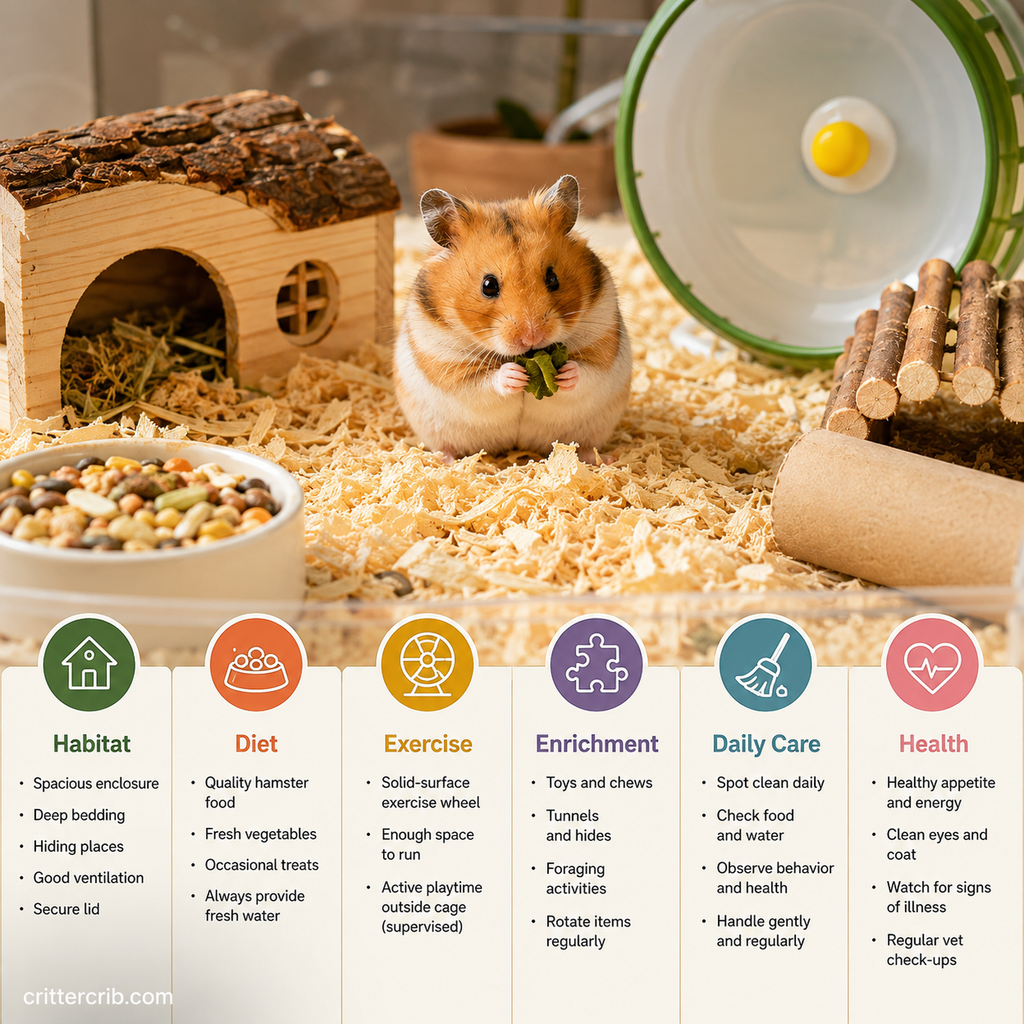
A Simple Daily Hamster Care Routine
Once the habitat is established, daily hamster care is fairly straightforward.
Consistency matters more than constantly interfering with the enclosure.
Every Day
Check your hamster’s:
- Food
- Water
- General appearance
- Activity level
- Bedding condition
- Wheel
- Enclosure security
Remove obviously spoiled fresh food and spot-clean wet or heavily soiled bedding.
When your hamster is awake, spend a moment observing it.
You’ll gradually learn what’s normal.
One hamster may immediately start running every evening, while another spends half an hour grooming and reorganizing its nest before doing anything else.
Knowing your hamster’s routine makes unusual behavior easier to recognize.
How Often Should You Clean a Hamster Cage?
There’s no need to completely dismantle a hamster’s home every day.
In fact, overly aggressive cleaning can remove familiar scents and destroy established tunnels, nests, and food-storage areas.
Spot cleaning is often the better approach for everyday maintenance.
Remove:
- Wet bedding
- Heavily soiled bedding
- Spoiled fresh food
- Dirty nesting material when necessary
- Contaminated food
More thorough cleaning can be performed periodically based on the condition of the enclosure.
Don’t Automatically Throw Everything Away
If you’re doing a larger cleaning, you may be able to retain some clean bedding so the refreshed enclosure still smells familiar.
The goal is cleanliness without unnecessarily turning your hamster’s entire world upside down.
Of course, sanitation comes first.
If bedding is wet, moldy, contaminated, or heavily soiled, remove it.
How to Handle a Hamster
Some hamsters become comfortable being handled relatively quickly. Others need considerably more time.
Don’t rush the process. Learning to recognize common hamster behaviors and what they mean can also help you tell when your hamster is curious, comfortable, stressed, frightened, or simply ready to be left alone.
A hamster entering a new home is suddenly surrounded by unfamiliar smells, sounds, movements, and people. Give it time to settle into the enclosure before expecting lots of interaction.
Building Trust
Start by spending time near the enclosure while your hamster is awake.
Speak quietly and move slowly.
As your hamster becomes more comfortable, allow it to investigate your hand without immediately trying to grab it.
You can gradually progress toward offering an appropriate treat from your hand and allowing the hamster to climb onto you voluntarily.
Picking Up Your Hamster
When your hamster is comfortable with handling:
- Approach calmly.
- Allow the hamster to see and smell your hands.
- Scoop from underneath rather than grabbing from above.
- Support the hamster with both hands.
- Keep it relatively close to a safe surface.
Hamsters can move unexpectedly quickly.
Avoid standing while holding one high above a hard floor. A fall that seems minor to a person can seriously injure such a small animal.
Don’t Wake a Sleeping Hamster to Play
It can be tempting, especially when your hamster has been asleep for most of the day.
Wait.
Suddenly reaching into a nest and picking up a sleeping hamster can frighten it. A startled hamster may bite defensively even if it’s normally friendly.
Whenever possible, interact after your hamster wakes naturally.
This makes handling more pleasant for both of you.
Can Hamsters Live Together?
For many pet hamsters, particularly Syrian hamsters, individual housing is the safest choice.
Syrian hamsters are territorial and should generally live alone once mature.
Social behavior among dwarf species can be more complicated, but that doesn’t automatically mean two dwarf hamsters should share an enclosure.
Hamsters that appear peaceful initially can begin fighting later.
Serious fights can result in significant injuries before an owner has time to intervene.
Unless you have a well-supported reason and the experience necessary to manage group housing for a particular species, separate housing is usually the simpler and safer option.
Where Should You Put a Hamster Cage?
Choose the enclosure location carefully.
A hamster needs somewhere relatively quiet and stable where it can sleep during the day without constant disruption.
Avoid placing the habitat:
- In direct sunlight
- Beside a heater
- Directly beneath an air conditioner
- In a drafty location
- Next to loud speakers
- In an extremely busy walkway
- Somewhere with large temperature fluctuations
Bedrooms are popular locations, but remember that hamsters may spend hours running, digging, chewing, and rearranging things while you’re trying to sleep.
Your hamster might love that arrangement more than you do.
What Temperature Is Comfortable for Hamsters?
Hamsters are sensitive to temperature extremes.
Keep the habitat indoors in a comfortable, stable environment away from excessive heat, cold, and drafts.
Don’t place the enclosure directly against a sunny window. Even if the room feels comfortable, direct sunlight can heat an enclosure quickly.
Likewise, avoid positioning the habitat directly beneath an air-conditioning vent.
Stable conditions are preferable to repeated temperature swings.
Do Hamsters Need Grooming?
Hamsters are naturally frequent groomers.
You’ll often see one stop whatever it’s doing and begin carefully cleaning its face and fur.
Healthy hamsters generally don’t require routine water baths.
In fact, bathing can create unnecessary stress and remove natural oils from the coat.
Some hamster species may benefit from access to an appropriate sand bath. Make sure you’re using a hamster-appropriate product rather than dusty powder.
Check Your Hamster Regularly
While your hamster handles most grooming, you should still occasionally look at its:
- Coat
- Skin
- Eyes
- Ears
- Feet
- Nails
- Teeth
These quick observations can help you notice developing problems.
Hamster Teeth and Chewing
Hamsters are rodents, which means their front teeth continue growing.
Chewing helps keep those teeth naturally worn.
Provide safe chewing materials such as suitable wooden chews and other hamster-safe items.
If your hamster’s teeth become excessively long or misaligned, chewing alone may not solve the problem.
Signs of a dental issue can include difficulty eating, dropping food, drooling, weight loss, or visible changes around the mouth.
A veterinarian should evaluate suspected dental problems.
Signs Your Hamster May Be Sick
Hamsters can’t tell us when something feels wrong, so changes in behavior are important.
Pay attention to anything significantly different from your hamster’s normal routine.
Possible warning signs include:
- Not eating
- Not drinking
- Sudden weight loss
- Unusual lethargy
- Difficulty walking
- Hunched posture
- Labored breathing
- Discharge around the eyes or nose
- Diarrhea
- A wet or dirty rear end
- Significant hair loss
- Swelling
- Persistent scratching
- Difficulty chewing
- Sudden personality changes
A hamster that suddenly becomes extremely inactive when it would normally be awake deserves attention.
Because hamsters are small, illness can sometimes progress quickly.
Contact a veterinarian experienced with hamsters or other small mammals when you notice significant or persistent symptoms.
Find a Veterinarian Before You Need One
Don’t wait until there’s an emergency to discover that the nearest veterinary clinic doesn’t treat hamsters.
Not every veterinarian routinely works with small mammals.
Before bringing your hamster home—or shortly afterward—identify a veterinary practice that sees hamsters.
Save the clinic’s:
- Phone number
- Address
- Regular hours
- Emergency instructions
Knowing exactly where to call can save valuable time if your hamster suddenly becomes ill.
Common Hamster Care Mistakes
Many hamster problems come from outdated ideas about what these animals need.
Fortunately, most are easy to avoid.
Keeping a Hamster in an Extremely Small Cage
Hamsters need space for more than sleeping.
A proper habitat needs room for deep bedding, a wheel, hides, food, water, enrichment, and exploration.
Using Too Little Bedding
A shallow layer may absorb waste, but it doesn’t provide much opportunity to burrow.
Think of bedding as part of the habitat rather than simply something covering the bottom.
Using an Undersized Wheel
Your hamster should be able to run comfortably.
If its back bends dramatically while running, the wheel may be too small.
Feeding Too Many Treats
Watching a hamster stuff treats into its cheeks is undeniably entertaining.
That doesn’t mean treats should become dinner.
Keep the nutritionally balanced portion of the diet at the center of your feeding routine.
Disturbing the Nest Constantly
You need to monitor cleanliness, but you don’t need to inspect the nest every few hours.
Give your hamster somewhere it can retreat without constant interruption.
Ignoring the Water Bottle
Checking that the bottle contains water isn’t enough.
Make sure water actually comes out.
Expecting a Hamster to Follow Your Schedule
Your hamster doesn’t know that 2 p.m. is a convenient time for you to play.
Respect its sleep schedule and plan interaction around the times it’s naturally active.
Assuming Small Means Low Maintenance
Hamsters don’t require walks or a backyard, but they still require daily care, thoughtful housing, proper nutrition, enrichment, and veterinary attention when necessary.
They’re small animals, not disposable pets.
Hamster Care Checklist
Keeping a simple routine makes hamster ownership much easier.
Daily
- Check food.
- Provide fresh water.
- Make sure the water dispenser works.
- Remove spoiled fresh foods.
- Spot-clean wet or dirty bedding.
- Observe your hamster when awake.
- Inspect the enclosure for potential escape points.
- Make sure the wheel and accessories are safe.
Weekly and As Needed
- Clean food and water containers.
- Remove heavily soiled bedding.
- Inspect stored food.
- Check enrichment items for damage.
- Look for excessive moisture or odor.
- Add fresh nesting material when necessary.
- Check the hamster’s overall body condition.
Periodically
- Perform more thorough enclosure maintenance.
- Replace damaged accessories.
- Review whether the habitat still meets your hamster’s needs.
- Inspect teeth and nails.
- Evaluate whether enrichment needs refreshing.
Frequently Asked Questions About Hamster Care
Are Hamsters Good Pets for Beginners?
A beginner who’s willing to learn about hamster behavior can provide an excellent home. If you’re still deciding whether a hamster is right for you, our guide to hamsters as pets for beginners covers what to expect before bringing one home.
Are Hamsters Good Pets for Children?
Hamsters can live in households with children, but adults should remain responsible for their care.
Their small bodies are delicate, and their nighttime activity can also conflict with a young child’s schedule.
Children should always learn how to handle hamsters gently and interact with them under appropriate supervision.
How Much Attention Does a Hamster Need?
Your hamster should be observed every day.
Social interaction depends more on the individual animal.
Some hamsters become comfortable climbing onto their owner’s hands and exploring outside their enclosure. Others remain more independent.
Don’t measure good hamster care by how often you’re able to hold your pet.
Providing a stimulating environment is equally important.
Why Is My Hamster Chewing Everything?
Chewing is normal hamster behavior.
Hamsters have continuously growing front teeth and naturally investigate their environment with their mouths.
Provide safe chewable materials and regularly inspect the enclosure for damage.
Persistent chewing around doors, corners, or bars can also be a reason to reassess the habitat and enrichment.
Why Does My Hamster Store Food?
Food hoarding is completely normal.
Hamsters use their cheek pouches to transport food and often create storage areas inside their burrows.
You don’t need to remove dry stored food constantly, but check caches for fresh foods that could spoil.
Why Does My Hamster Sleep During the Day?
That’s normal for most hamsters.
They’re typically most active around the evening and nighttime hours.
Rather than waking your hamster, wait until it begins naturally exploring the enclosure.
Does My Hamster Need a Friend?
Usually, no.
Syrian hamsters should generally live alone, and keeping other hamster species together can introduce the risk of territorial fighting.
Your hamster can have a rich life through appropriate housing, enrichment, foraging, and interaction without another hamster sharing its enclosure.
Can Hamsters Be Let Out of Their Cage?
Supervised exploration can provide additional enrichment for some hamsters.
The area needs to be completely hamster-proof.
Remove access to:
- Electrical cords
- Small holes
- Furniture gaps
- Stairs
- Toxic plants
- Other pets
- Objects the hamster could swallow
- Anything dangerous to chew
Never allow a hamster to roam freely somewhere you can’t easily retrieve it.
Creating a Happy Life for Your Hamster
A good hamster habitat should allow a hamster to be a hamster.
That sounds obvious, but it’s one of the most useful principles to remember.
Hamsters want to dig deep tunnels, build nests, collect food, run, chew, hide, investigate new smells, and emerge when the house becomes quiet.
The best hamster care doesn’t try to replace those behaviors. It creates opportunities for them.
Start with a spacious, secure habitat. Add plenty of safe bedding, comfortable hiding areas, an appropriately sized wheel, things to chew, and opportunities to forage. Provide a balanced diet and fresh water every day.
Then pay attention.
You’ll learn where your hamster likes to sleep, which foods it carries away first, when it normally wakes up, where it stores food, and what types of enrichment capture its attention.
Those little details are part of responsible pet ownership, and they’re also what makes living with a hamster so interesting.
Give your hamster the right environment, consistent daily care, gentle interaction, and veterinary attention when needed, and you’ll have done the most important thing you can do for such a small companion: create a home where it can thrive.