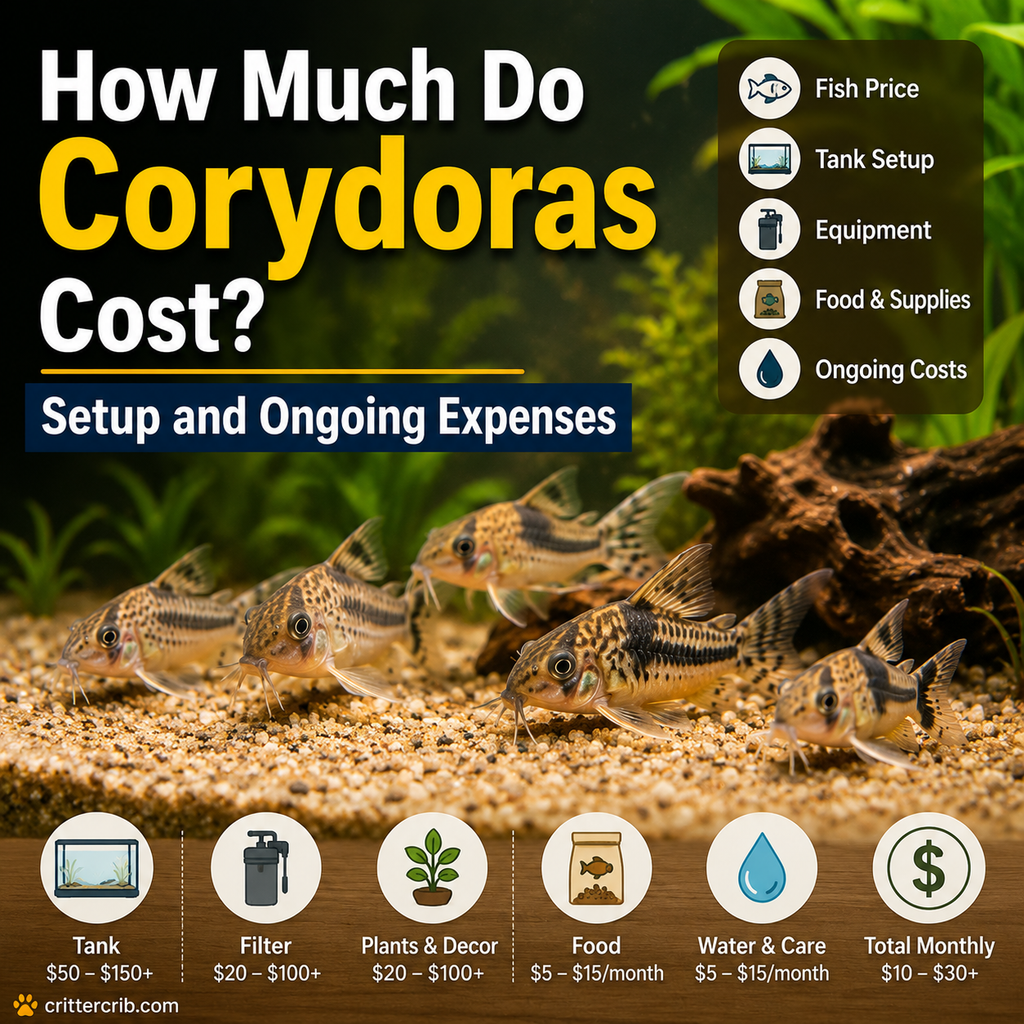
Corydoras catfish are often considered affordable aquarium fish, and individually, they usually are. Walk into a fish store and you may find common Corydoras species priced at only a few dollars each.
But the price of the fish is only a small part of what it costs to keep them properly.
Corydoras are social fish that generally do best in groups, which means you’re probably buying several rather than one. You’ll also need an appropriately sized aquarium, filtration, substrate, water conditioner, food, testing supplies, and other basic equipment.
So, how much do Corydoras actually cost?
A realistic initial setup can range from roughly $150 to $500 or more, depending on the aquarium size, equipment, plants, and species you choose. After that, ongoing expenses are usually fairly manageable.
Let’s break down the costs so you know what to expect before bringing home your first group of Corydoras.
How Much Do Corydoras Cost to Buy?
Individual Corydoras commonly cost around $5 to $15 each, although prices vary considerably by species, size, availability, and where you buy them.
Some common varieties may cost less, while unusual, selectively bred, or harder-to-find Corydoras can cost $20, $30, or considerably more per fish.
A rough price range looks like this:
| Corydoras Type | Approximate Price Per Fish |
|---|---|
| Bronze Corydoras | $5–$10 |
| Albino Corydoras | $5–$10 |
| Peppered Corydoras | $5–$12 |
| Panda Corydoras | $6–$15 |
| Julii/Trilineatus Corydoras | $7–$15 |
| Sterbai Corydoras | $8–$20+ |
| Pygmy Corydoras | $5–$12 |
| Rare or specialty Corydoras | $15–$50+ |
These are general estimates rather than fixed prices. Local aquarium stores, specialty breeders, online sellers, and geographic location can all affect what you’ll pay.
Shipping can also make online purchases significantly more expensive.
Don’t Budget for Just One Corydoras
This is one of the most important things to understand before comparing prices.
Corydoras are social fish.
Rather than buying a single Corydoras because it only costs $7 or $8, plan on keeping an appropriate group of the same species. A group of around six or more is commonly recommended for many Corydoras species.
That changes the budget considerably.
If one Cory costs $8:
- 1 Corydoras = $8
- 6 Corydoras = $48
- 8 Corydoras = $64
- 10 Corydoras = $80
A rarer species costing $20 each would put a group of six at $120 before you’ve purchased any aquarium equipment.
The group cost is therefore much more useful than the price printed on the label for one fish.
How Much Does a Corydoras Aquarium Setup Cost?
If you already own an established, compatible aquarium, adding Corydoras may be relatively inexpensive.
Starting from scratch is different.
For a completely new setup, you may need:
- Aquarium
- Aquarium stand
- Filter
- Heater, if appropriate
- Thermometer
- Substrate
- Lighting
- Water conditioner
- Water test kit
- Plants and decorations
- Fish food
- Gravel vacuum or siphon
- Bucket and maintenance supplies
- The Corydoras themselves
A reasonable budget for a new setup might fall somewhere around $150 to $500+.
You can spend less by purchasing aquarium kits, shopping sales, or using equipment you already own. A larger planted display aquarium with premium equipment can easily exceed that range.
Aquarium Cost
The aquarium itself will probably be one of your biggest purchases.
Prices vary tremendously depending on size, brand, material, and whether you’re buying:
- A bare glass tank
- A complete aquarium kit
- A rimless aquarium
- A tank-and-stand combination
- A premium aquascaping setup
Basic glass aquariums can sometimes be purchased inexpensively during sales, while complete setups can cost hundreds of dollars.
What Size Tank Do Corydoras Need?
There isn’t one tank size that’s appropriate for every Corydoras species.
Pygmy Corydoras, for example, remain much smaller than many standard species. Larger Corydoras require more floor space.
Floor area is particularly important because Corydoras spend much of their time exploring the bottom of the aquarium.
For many commonly kept Corydoras, a 20-gallon-long aquarium or larger can be a useful starting point for a group, depending on the species and other inhabitants.
Don’t choose the aquarium based only on gallon capacity. A longer tank can provide substantially more usable bottom area than a tall aquarium with similar volume.
Research the adult size and requirements of the particular Corydoras species you plan to keep before buying the tank.
Aquarium Stand: $0–$200+
A filled aquarium is extremely heavy.
Water alone weighs a little over eight pounds per gallon, and that’s before adding the aquarium, substrate, rocks, wood, and equipment.
If you don’t already have furniture designed to safely support the tank, budget for an appropriate aquarium stand.
A small or basic stand might cost under $100, while larger cabinets and premium stands can cost several hundred dollars.
Don’t use furniture simply because the aquarium physically fits on top of it. The stand needs to safely support the full weight of the setup.
Filter: About $20–$100+
A good filter is essential for maintaining a healthy aquarium.
Corydoras aren’t a substitute for filtration. Despite sometimes being marketed as “cleaner fish,” they produce waste just like every other fish.
Common filter options include:
- Sponge filters
- Hang-on-back filters
- Internal filters
- Canister filters
A simple sponge filter may cost relatively little, while larger hang-on-back or canister systems can cost significantly more.
For many modest Corydoras aquariums, you don’t need the most expensive filter available. You do need adequate biological and mechanical filtration for the aquarium’s total stocking level.
Heater and Thermometer: About $15–$50
Whether you’ll need a heater depends on your room temperature and the Corydoras species you’re keeping.
Different Corydoras come from different environments and don’t all have identical temperature requirements.
If a heater is appropriate, expect to spend roughly:
- $15–$40 for a heater
- $3–$15 for a thermometer
Avoid choosing temperature based solely on the Corydoras if they’ll live in a community aquarium. Every species in the tank needs compatible temperature requirements.
Substrate: About $15–$50+
Corydoras spend a great deal of time searching along the bottom of the aquarium.
Their sensitive barbels help them investigate the substrate for food.
Fine, smooth sand is a popular choice because it allows Corydoras to forage naturally without having to push through large, rough pieces of gravel.
Smooth fine gravel may also work in appropriate setups.
Avoid sharp or abrasive substrates that could potentially damage fish as they forage.
The total cost depends on the aquarium’s footprint, substrate depth, and whether you choose inexpensive aquarium sand or a premium aquascaping substrate.
Water Test Kit: About $20–$50
A reliable water test kit is one of the most useful purchases you can make.
At minimum, you’ll want to monitor important parameters such as:
- Ammonia
- Nitrite
- Nitrate
- pH
Testing is particularly important while establishing a new aquarium.
A properly cycled aquarium should maintain ammonia and nitrite at zero. Nitrate is controlled through appropriate maintenance, water changes, stocking, feeding, and plant growth.
Don’t assume clear water means safe water.
Toxic ammonia can be present in water that looks perfectly clean.
Water Conditioner: About $5–$15
If your tap water contains chlorine or chloramine, you’ll need an aquarium water conditioner that makes it safe for fish.
Fortunately, conditioner tends to last for many water changes when properly dosed.
A bottle might cost around $5 to $15 or more depending on size and concentration.
Over time, the cost per water change is generally quite small.
Plants and Decorations: $20–$100+
This category is where budgets can expand quickly.
You could create a perfectly suitable Corydoras aquarium with a few hardy plants, some aquarium-safe wood, and simple hiding areas.
Or you could spend hundreds building an elaborate aquascape.
Corydoras can benefit from an environment that includes:
- Live plants
- Driftwood
- Smooth rocks
- Shaded areas
- Hiding places
- Open substrate for foraging
Don’t cover the entire bottom with decorations. Corydoras need usable floor space where they can move around and search for food.
If you’re trying to keep costs down, start simple. You can always add more plants later.
Lighting: $20–$100+
If you’re keeping live plants, you’ll probably want an aquarium light appropriate for their needs.
Some aquarium kits include lighting.
If you’re buying a separate fixture, basic LED aquarium lights may cost around $20 to $50, while larger or more sophisticated planted-tank lights can cost $100 or more.
Corydoras themselves don’t require extremely powerful lighting.
In fact, shaded areas created by plants or driftwood can help make the aquarium feel more secure.
Corydoras Food: About $5–$15 to Start
Corydoras need their own appropriate food.
Don’t rely entirely on whatever flakes happen to fall past the other fish.
They’re often described as bottom feeders, but that doesn’t mean they can live on leftovers.
Good food options may include:
- Quality sinking pellets
- Bottom-feeder wafers
- Frozen foods
- Live foods from safe sources
- Other foods appropriate for omnivorous Corydoras
A container of quality sinking food might cost around $5 to $15 and can last quite a while for a small group.
Maintenance Equipment: About $20–$60
You’ll need some basic equipment for regular aquarium maintenance.
A starter maintenance kit might include:
- Gravel vacuum or siphon
- Dedicated aquarium bucket
- Algae scraper
- Fish net
- Towels
- Small cleaning tools
You don’t need expensive equipment.
A simple siphon and bucket can handle water changes perfectly well on many smaller aquariums.
Keep aquarium equipment separate from household cleaning supplies and never use soap or household cleaners inside the tank.
Example Corydoras Setup Budget
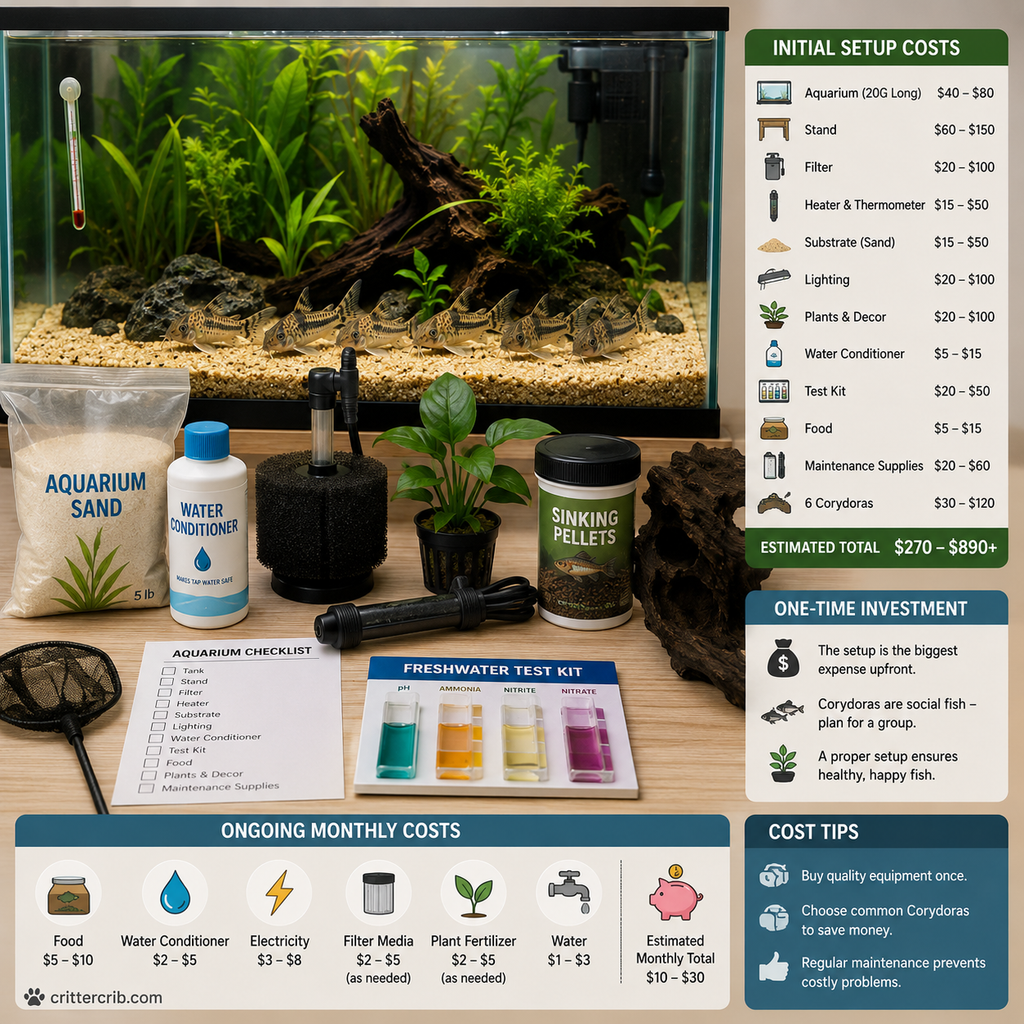
Let’s put everything together.
Imagine you’re starting a 20-gallon-long aquarium for a group of six commonly available Corydoras.
A sample budget might look something like this:
| Item | Estimated Cost |
|---|---|
| 20-gallon-long aquarium | $40–$80 |
| Stand | $60–$150 |
| Filter | $25–$50 |
| Heater and thermometer | $20–$40 |
| Sand substrate | $20–$35 |
| Light | $25–$50 |
| Water test kit | $25–$40 |
| Water conditioner | $8–$15 |
| Plants/decorations | $30–$75 |
| Food | $5–$15 |
| Maintenance supplies | $20–$40 |
| 6 Corydoras | $30–$90 |
| Estimated Total | $308–$680 |
That total can look intimidating, but there’s an important caveat: you don’t necessarily need to buy everything separately.
Aquarium kits can bundle the tank, lid, lighting, filter, and sometimes a heater. Used aquarium equipment can also reduce the cost significantly, provided it’s in safe condition.
If you already have a suitable stand, maintenance equipment, test kit, or established aquarium, your actual cost may be far lower.
Budget Corydoras Setup
It’s possible to create a good Corydoras aquarium without spending hundreds on decorative equipment.
A budget-friendly approach could include:
- Aquarium purchased during a sale
- Simple sponge filter
- Basic heater if needed
- Inexpensive aquarium-safe sand
- Easy live plants
- Basic LED lighting
- Simple driftwood or hiding structures
- Reliable water test kit
- Group of common Corydoras
Spend your money on the things that actually affect fish health first.
Water quality, adequate space, filtration, suitable substrate, and a proper group matter more than premium decorations.
How Much Do Corydoras Cost Per Month?
Once the aquarium is established, monthly costs are generally much lower than the initial setup.
For a modest Corydoras aquarium, ongoing expenses may average roughly $10 to $30 per month, although this varies.
Monthly costs may include:
- Food
- Water conditioner
- Electricity
- Replacement filter media when actually needed
- Plant fertilizer, if used
- Water
- Occasional replacement equipment
Some months will cost almost nothing beyond utilities and food. Others may be more expensive if you need a new heater, filter part, medication, or other supplies.
How Much Does Corydoras Food Cost Per Month?
Food is usually one of the smallest expenses.
A container of sinking pellets or wafers can last a small Corydoras group for quite a while when stored correctly.
Your monthly food cost might only be a few dollars.
Adding frozen foods can increase the cost slightly, but feeding a group of Corydoras is generally inexpensive compared with feeding a dog, cat, or larger exotic pet.
The bigger concern is providing the right amount.
Overfeeding wastes money and can harm water quality.
How Much Electricity Does a Corydoras Tank Use?
Aquarium electricity costs come primarily from:
- Filter
- Heater
- Lighting
- Air pump, if used
The heater is often the biggest variable because how frequently it runs depends on tank size, heater wattage, target water temperature, and room temperature.
A tank in a warm room may require relatively little heating. A tank in a cold room may use considerably more electricity.
Modern LED aquarium lighting and small filters generally use modest amounts of power.
For most small or medium aquariums, electricity shouldn’t be a huge monthly expense, but local utility rates matter.
Water and Water-Change Costs
For a typical home aquarium, the direct cost of tap water used for water changes is generally small.
If you perform a partial water change on a 20- or 30-gallon aquarium each week, you’re still using relatively little water compared with many normal household activities.
Costs can increase if your setup requires specialized water treatment.
Most Corydoras keepers using suitable conditioned tap water won’t need to purchase bottled water for every water change.
Filter Media Replacement Costs
Be careful with instructions telling you to replace all your filter media on a rigid monthly schedule.
Biological filter media houses beneficial bacteria that help process fish waste.
Throwing everything away unnecessarily can remove a large portion of that bacterial colony.
Some mechanical or chemical media may need periodic replacement depending on the filter and how it’s used, but permanent biological media can often be maintained rather than routinely discarded.
Follow appropriate procedures for your specific filtration system.
Veterinary and Emergency Costs
Fish veterinary care isn’t available everywhere, but aquatic veterinarians do exist.
Professional treatment can cost significantly more than the fish itself.
Even without a veterinarian, unexpected expenses may include:
- Medication
- Quarantine tank
- Replacement heater
- Replacement filter
- Air pump
- Additional testing supplies
- Specialized food
It’s worth keeping a small aquarium emergency fund.
A $7 fish still deserves proper care if it becomes sick. The purchase price of an animal doesn’t determine the value of its welfare.
Are Rare Corydoras More Expensive to Keep?
The biggest difference is usually the purchase price.
Rare Corydoras can cost significantly more per fish than common bronze, albino, panda, or peppered varieties.
A specialty species costing $30 each could put the cost of a six-fish group at $180.
You may also encounter species with more particular requirements for temperature, water chemistry, tank setup, or diet.
Research the exact species before buying it.
Don’t assume every fish labeled “Cory” requires identical care.
Is It Cheaper to Buy Corydoras Online?
Sometimes—but not always.
Online sellers may offer:
- More species
- Rare Corydoras
- Better group pricing
- Captive-bred fish
- Fish unavailable locally
However, shipping live fish can be expensive.
You may encounter:
- Overnight shipping charges
- Insulated packaging fees
- Heat or cold packs
- Minimum order requirements
A fish that’s $3 cheaper online may ultimately cost more once shipping is included.
For common species, a reputable local aquarium store can be both convenient and economical.
Should You Buy Used Aquarium Equipment?
Used equipment can dramatically reduce setup costs.
Aquariums, stands, filters, lights, and decorations are frequently sold secondhand.
However, inspect everything carefully.
For a used aquarium:
- Check the glass for cracks and chips
- Examine silicone seams
- Ask how old the tank is
- Check for signs of previous damage
- Leak-test it somewhere safe before bringing it into your living space
Be cautious with old heaters because failure can endanger the entire aquarium.
Used porous decorations or equipment from an unknown tank may also require appropriate cleaning and disinfection before use.
Hidden Costs of Keeping Corydoras
The biggest unexpected expense often isn’t food.
It’s expansion.
You may start with six Corydoras and eventually decide you want:
- A larger aquarium
- More Corydoras
- A planted aquascape
- Better lighting
- A canister filter
- More fish
- A quarantine tank
- Another aquarium entirely
Aquarium keeping has a funny way of turning one tank into two.
Fortunately, none of those upgrades are necessary simply because they’re available.
A simple, properly maintained aquarium can provide an excellent home.
Are Corydoras Expensive Pets?
Compared with many common pets, Corydoras are relatively inexpensive to maintain.
The biggest expense is getting started.
Once you’ve purchased the aquarium and equipment, routine costs for food, conditioner, electricity, and maintenance are generally modest.
A reasonable way to think about the costs is:
- Fish: Low to moderate
- Initial aquarium setup: Moderate
- Monthly food: Low
- Utilities: Low
- Routine maintenance: Low
- Unexpected equipment or health problems: Variable
Don’t choose Corydoras solely because the fish themselves are inexpensive.
The real commitment is providing a suitable aquarium for the group throughout their lives.
How to Save Money Without Cutting Corners
You can reduce costs without compromising your fish’s welfare.
Consider these strategies:
- Buy the aquarium during a major sale.
- Look for a complete aquarium kit when it offers good value.
- Choose common Corydoras rather than rare varieties.
- Start with easy, inexpensive live plants.
- Use a simple sponge or hang-on-back filter when appropriate.
- Buy used tanks and stands carefully.
- Avoid unnecessary decorative gadgets.
- Maintain equipment rather than replacing it prematurely.
- Don’t overfeed.
- Plan the aquarium correctly the first time.
The cheapest setup isn’t necessarily the one with the lowest initial price.
Buying an undersized tank and replacing it six months later can ultimately cost more than starting with an appropriate aquarium.
Frequently Asked Questions About Corydoras Costs
How much does one Corydoras cost?
Common Corydoras often cost around $5 to $15 each, while rare or specialty species may cost $20 to $50 or more per fish.
How much does a group of Corydoras cost?
A group of six common Corydoras might cost roughly $30 to $90. Groups of rare species can easily cost $100 to $300 or more.
How many Corydoras should I buy?
Corydoras are social fish and are generally kept in groups. Around six or more of the same species is a common recommendation, although you should research the needs of your particular species and make sure your aquarium has enough space.
Can I keep just one Corydoras?
Keeping a lone Corydoras isn’t generally recommended. These fish naturally benefit from being around others of their own kind.
Are Corydoras cheap to maintain?
Yes, once the aquarium is properly established. Food and routine maintenance costs are relatively low. The aquarium, equipment, and initial group of fish account for most of the upfront expense.
What is the most expensive part of owning Corydoras?
For most people starting from scratch, the aquarium, stand, filtration, lighting, and other setup equipment will cost substantially more than the fish.
Do Corydoras need expensive food?
No. A quality sinking food suitable for Corydoras is generally inexpensive. You can supplement their diet with appropriate frozen or live foods without dramatically increasing the monthly budget.
Do Corydoras clean the tank?
Corydoras may eat food they find along the bottom, but they aren’t aquarium cleaning equipment. They produce waste and still require proper filtration, water changes, substrate maintenance, and appropriate feeding.
Final Thoughts
So, how much do Corydoras cost?
The fish themselves are usually affordable, with many common species costing around $5 to $15 each. Because Corydoras should generally be kept in groups, expect to spend roughly $30 to $90 or more on the fish themselves.
Starting an aquarium from scratch is the bigger expense.
Depending on the tank, equipment, plants, and supplies you choose, a complete setup could cost anywhere from roughly $150 to $500 or considerably more. A setup that includes a dedicated stand and individually purchased equipment may land closer to $300–$700.
After that, Corydoras are relatively inexpensive pets to maintain. Food, conditioner, water, and electricity may add around $10 to $30 per month for a modest aquarium, with occasional additional expenses for equipment or health problems.
The best way to control the cost is to plan ahead. Choose the right tank, buy an appropriate group, establish proper filtration, and spend money on the essentials before worrying about fancy decorations.
Corydoras may be inexpensive fish, but providing them with a healthy home is the investment that really matters.