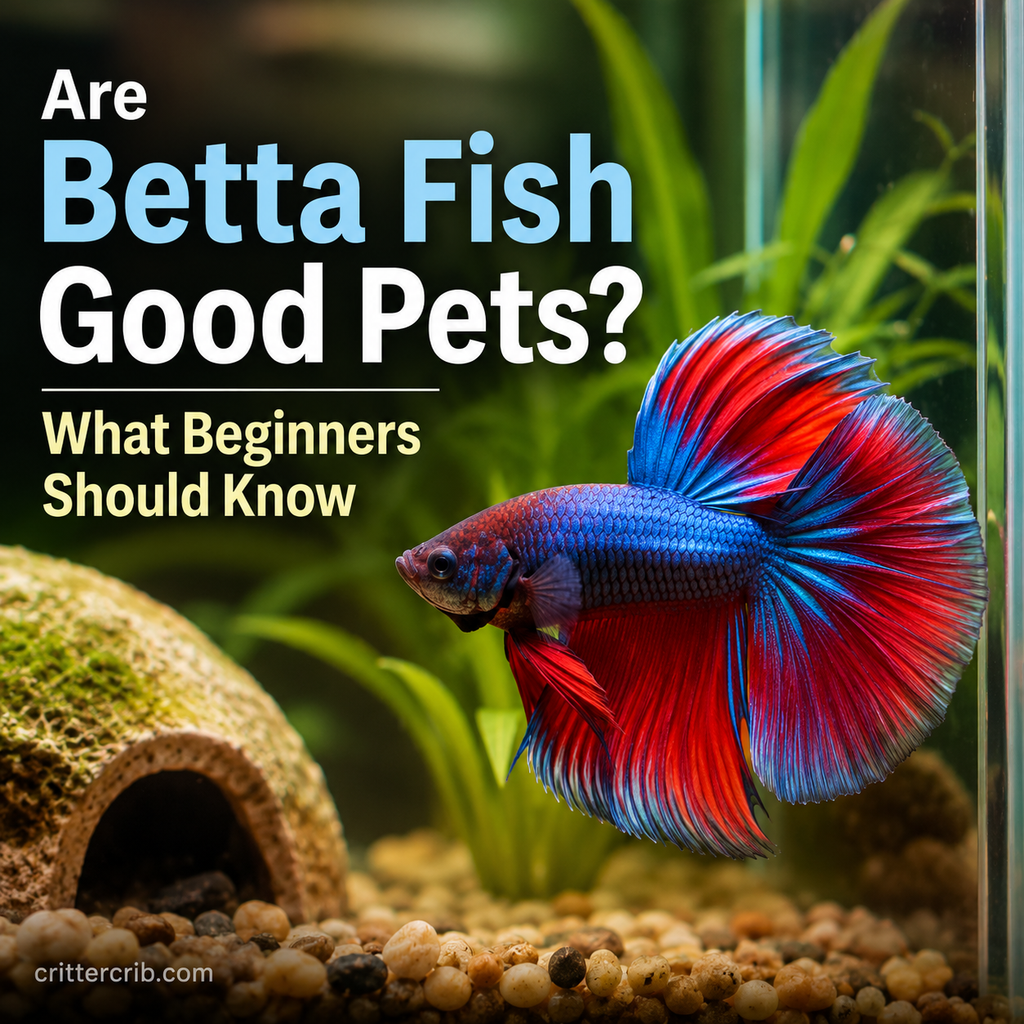
Betta fish are colorful, widely available, and often described as easy pets. Walk through almost any pet store and you’ll probably see them displayed in small individual containers, which can make it seem like they need little more than a bowl of water and some food.
The reality is a little different.
Betta fish can be excellent pets for beginners, but they still need a properly set up aquarium, stable water conditions, appropriate food, and regular care. They’re relatively manageable compared with many larger aquarium fish, but they aren’t a maintenance-free pet.
If you’re thinking about bringing home your first betta, here’s what you should know before deciding whether one is right for you.
Are Betta Fish Good Pets for Beginners?
Yes, betta fish can be good pets for beginners.
They don’t require an enormous aquarium, they’re generally kept individually, and their daily care routine is fairly straightforward once their tank is established.
Bettas are also surprisingly interesting to watch. They explore their surroundings, investigate changes in their tank, rest in favorite locations, and often become noticeably active when someone approaches.
However, being beginner-friendly doesn’t mean they can thrive in any setup.
A healthy betta still needs:
- An appropriately sized aquarium
- Clean, conditioned water
- Stable water parameters
- Warm water
- Gentle filtration
- A balanced diet
- Places to hide and rest
- Regular aquarium maintenance
Getting those basics right makes betta care much easier in the long run.
What Are Betta Fish?
Betta fish, commonly called Siamese fighting fish, are freshwater fish belonging to the species Betta splendens.
They originate from Southeast Asia, where their ancestors lived in warm, shallow freshwater environments such as marshes, floodplains, rice paddies, and slow-moving waters.
The domestic bettas commonly sold today have been selectively bred into an enormous variety of colors, patterns, and fin shapes.
You may see bettas with brilliant shades of blue, red, orange, white, green, purple, or combinations of several colors.
Popular varieties include:
- Veiltail bettas
- Crowntail bettas
- Halfmoon bettas
- Plakat bettas
- Double-tail bettas
- Dumbo or elephant-ear bettas
Although their appearance varies dramatically, their basic care needs are similar.
Why Betta Fish Can Make Great Pets
There’s a reason bettas have remained popular aquarium pets for so long. When properly cared for, they offer several advantages for someone interested in keeping a small freshwater aquarium.
They Don’t Need a Huge Aquarium
A betta aquarium can fit into spaces where a large community tank would be impractical.
That doesn’t mean a tiny bowl is appropriate. A reasonably sized aquarium gives a betta room to swim while also making it easier to maintain stable water conditions.
For many beginners, a tank around 5 gallons or larger is a much better starting point than the tiny containers sometimes marketed specifically for bettas.
Larger tanks also tend to be more forgiving because temperature and water chemistry can change rapidly in very small amounts of water.
Bettas Are Beautiful
Few commonly available freshwater fish offer as much visual variety as bettas.
Some have enormous flowing fins, while others have shorter, more streamlined fins. Their colors can range from solid shades to metallic, marbled, spotted, or multicolored patterns.
Even two bettas of the same variety can look completely different.
They Have Interesting Personalities
Spend enough time around a betta and you may quickly notice individual habits.
Some bettas rush toward the front of the aquarium whenever someone enters the room. Others patrol their territory, inspect decorations, or spend time resting on broad plant leaves.
They can also learn to associate your presence with feeding time.
Of course, we shouldn’t interpret every fish behavior as a human emotion. But bettas are active animals with enough behavioral variety to make them engaging pets to observe.
Their Daily Care Is Manageable
Once the aquarium is properly established, everyday betta care usually doesn’t take much time.
Most days involve checking the fish, feeding an appropriate amount, and making sure the heater, filter, and other equipment are working normally.
Tank maintenance takes additional time, but it’s generally manageable for someone willing to follow a regular routine.
The Biggest Misconception: Bettas Can Live in Tiny Bowls
One of the most persistent myths about betta fish is that they can comfortably live in extremely small bowls or decorative containers.
Bettas do have a special organ called the labyrinth organ, which allows them to breathe atmospheric oxygen at the water’s surface.
That ability helps them survive in environments with relatively low dissolved oxygen.
It does not mean they don’t need clean water, adequate swimming space, warmth, or good aquarium conditions.
Tiny containers create several problems.
Waste becomes concentrated quickly, temperature fluctuates more easily, and there’s very little room for enrichment or natural movement.
A proper aquarium is a much better environment.
What Size Tank Does a Betta Need?
For a beginner, a 5-gallon aquarium or larger is a practical choice for a single betta.
You may see smaller tanks advertised for bettas, but choosing a slightly larger aquarium has several advantages.
It provides:
- More swimming space
- Greater room for plants and hiding places
- More stable water temperature
- More stable water chemistry
- More dilution of fish waste
- Easier long-term maintenance
A 10-gallon tank can be an excellent option if you have the room.
It may sound strange, but slightly larger aquariums can actually be easier for beginners to manage than extremely small ones because water conditions tend to change less rapidly.
Do Betta Fish Need a Heater?
In most homes, yes.
Betta fish are tropical freshwater fish and generally do best with consistently warm water. A commonly recommended range is approximately 76–82°F (24–28°C), with many keepers aiming near the middle of that range.
Room temperature alone may not keep the aquarium warm enough, particularly overnight or during colder months.
A properly sized aquarium heater helps maintain a stable temperature.
It’s also worth having a separate aquarium thermometer so you can verify the actual water temperature rather than assuming the heater is maintaining the correct level.
Avoid sudden temperature changes whenever possible.
Do Betta Fish Need a Filter?
A filter is highly recommended.
Filtration helps remove debris and, more importantly, provides a home for beneficial bacteria involved in the aquarium nitrogen cycle.
These bacteria help process harmful waste products produced by your fish.
Bettas generally prefer calmer water than fish adapted to strong currents, so powerful filtration isn’t necessary.
Look for a filter with gentle flow. Sponge filters are popular for bettas, and some other aquarium filters can work well if their flow can be reduced or diffused.
Watch your fish after setting up the filter. If your betta is constantly being pushed around the aquarium or struggles to swim comfortably, the current may be too strong.
Understanding the Aquarium Cycle
One of the most important things a first-time fish owner can learn about is the nitrogen cycle.
Fish produce waste. Uneaten food and other organic material also break down inside the aquarium.
This process can produce ammonia, which is toxic to fish.
In an established aquarium, beneficial bacteria help convert ammonia into nitrite and then into nitrate. Ammonia and nitrite should generally remain at 0 ppm in a properly cycled aquarium.
Nitrate is typically managed through partial water changes and, to some extent, live plants.
This is why simply filling a new aquarium with tap water and immediately adding a fish isn’t the ideal approach.
Before buying your betta, learn how to cycle an aquarium and use a reliable aquarium water test kit.
Understanding water quality is one of the biggest steps you can take toward becoming a successful fish keeper.
What Should You Put in a Betta Tank?
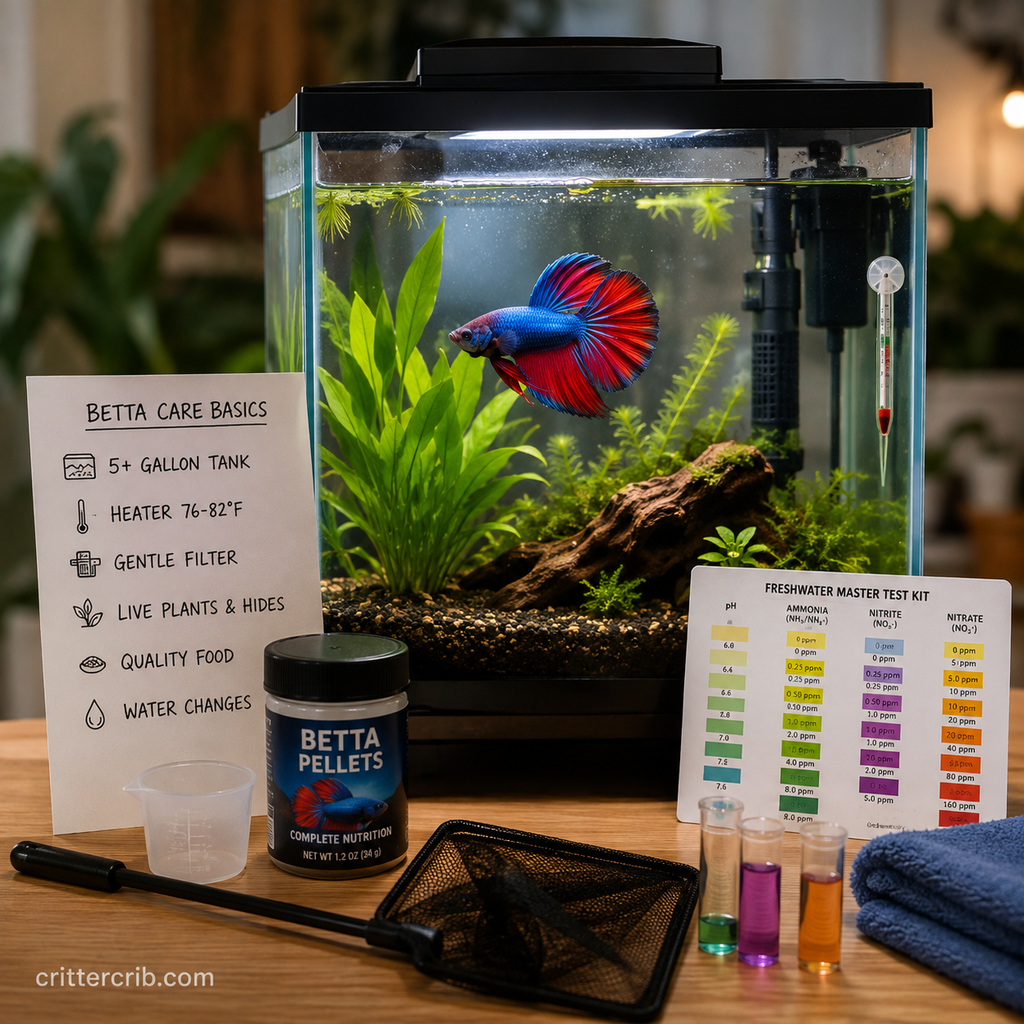
A betta aquarium doesn’t have to be complicated.
A good beginner setup typically includes:
- Aquarium of an appropriate size
- Lid or secure cover
- Heater
- Thermometer
- Gentle filter
- Aquarium light
- Substrate
- Plants
- Hiding places
- Water conditioner
- Water testing supplies
Bettas can jump, so a lid is particularly useful.
Just make sure they can still access the water’s surface because they regularly breathe atmospheric air using their labyrinth organ.
Live or Artificial Plants?
Either can work, but live plants have several advantages.
Beginner-friendly aquarium plants such as Anubias, Java fern, and Java moss can provide natural cover without requiring an advanced planted-tank setup.
Artificial plants are another option, but choose soft aquarium-safe varieties.
Avoid sharp plastic plants or rough decorations that could potentially snag a betta’s delicate fins.
Broad leaves can also provide comfortable resting spots near the surface.
What Do Betta Fish Eat?
Bettas are primarily carnivorous and need food designed to meet their nutritional requirements.
A high-quality betta pellet can serve as the foundation of the diet.
You can also occasionally offer appropriate foods such as:
- Frozen or live brine shrimp
- Daphnia
- Bloodworms
- Other suitable foods formulated for carnivorous aquarium fish
Treat foods should supplement a balanced diet rather than completely replace it.
One common beginner mistake is overfeeding.
It’s easy to assume that a fish begging at the front of the aquarium must be hungry. Bettas can be enthusiastic eaters, however, and excess food can contribute to digestive problems and poor water quality.
Feed appropriate portions and remove uneaten food when necessary.
How Much Maintenance Does a Betta Tank Need?
A betta aquarium requires regular maintenance, but you shouldn’t need to completely dismantle and scrub the tank every week.
Routine care generally includes partial water changes, checking water parameters, removing debris, and maintaining equipment.
The exact schedule depends on factors such as:
- Aquarium size
- Filtration
- Feeding habits
- Plant growth
- Water parameters
- Overall biological load
Testing the water helps you understand what your particular aquarium needs rather than relying solely on a rigid schedule.
During water changes, use a water conditioner appropriate for your tap water and try to keep the replacement water reasonably close to the aquarium’s existing temperature.
Avoid routinely replacing all the aquarium water at once unless there is a specific reason to do so.
Can Betta Fish Live With Other Fish?
Sometimes, but this is an area where beginners should be cautious.
Male bettas are territorial and should generally not be housed with other male bettas.
Some individual bettas can live in carefully planned community aquariums, while others are too aggressive or easily stressed.
Tank mates must be selected carefully based on temperament, aquarium size, water requirements, swimming behavior, and other factors.
Even seemingly peaceful tank mates can cause problems if they nip a betta’s fins or constantly invade its space.
If this is your first aquarium, keeping a single betta can simplify things considerably.
You can learn the fundamentals of aquarium care without also having to manage compatibility between multiple fish species.
Can Bettas Live With Snails or Shrimp?
Some bettas can coexist with certain aquatic snails or shrimp, but there are no guarantees.
A betta may completely ignore a snail while another repeatedly investigates or harasses it.
Shrimp can be even less predictable because some bettas view small shrimp as food.
If you plan to try tank mates, research the specific animal first and make sure the aquarium is large enough to accommodate everyone.
Provide plenty of plants and hiding places, and have a backup plan in case the combination doesn’t work.
Do Betta Fish Get Lonely?
Bettas do not need another betta companion in the way a schooling fish needs members of its own species.
In fact, placing two male bettas together is dangerous because their territorial behavior can lead to serious fighting and injury.
Rather than worrying about finding your betta a fish friend, focus on providing an interesting environment.
Plants, hiding spots, open swimming areas, and occasional safe changes to the aquarium environment can give the fish opportunities to explore.
How Long Do Betta Fish Live?
With appropriate care, betta fish commonly live for several years, although lifespan varies.
Genetics, age at purchase, previous living conditions, diet, water quality, disease, and ongoing care can all influence longevity.
This is worth considering before buying one.
A betta isn’t a temporary decoration. Bringing one home means accepting responsibility for an animal that may be with you for years.
Signs of a Healthy Betta
When choosing a betta, take some time to observe the fish rather than selecting one based entirely on color.
A healthy betta will often show:
- Alert behavior
- Normal swimming
- Interest in its surroundings
- Clear eyes
- Healthy-looking scales
- Fins that aren’t severely deteriorated
- Regular breathing
- A reasonable appetite once settled
A newly purchased betta may be stressed from transportation and unfamiliar surroundings, so behavior can change after the fish has had time to adjust.
Learning your betta’s normal routine will also make it easier to notice when something seems wrong later.
Common Signs Something May Be Wrong
Changes in behavior or appearance can sometimes indicate stress, poor water quality, or illness.
Watch for things such as:
- Unusual lethargy
- Refusing food for an extended period
- Rapid or labored breathing
- Persistent clamped fins
- White spots or unusual growths
- Significant fin deterioration
- Swelling
- Difficulty swimming
- Constantly remaining at the surface or bottom
- Sudden changes from normal behavior
If something seems wrong, check the aquarium conditions first.
Testing ammonia, nitrite, nitrate, and temperature can reveal environmental problems that may be contributing to the fish’s behavior.
Avoid automatically adding medication without first trying to understand the likely cause.
How Much Does It Cost to Keep a Betta Fish?
The fish itself may be inexpensive, but the complete setup usually costs significantly more.
Your initial expenses may include:
- Aquarium
- Filter
- Heater
- Thermometer
- Lighting
- Substrate
- Plants and decorations
- Water conditioner
- Water testing supplies
- Food
- Aquarium maintenance equipment
There may also be occasional expenses for replacement equipment, additional testing supplies, or veterinary care when available and appropriate.
If you’re budgeting for your first betta, budget for the aquarium rather than just the fish.
Buying the proper equipment upfront is usually easier than trying to correct an inadequate setup later.
Pros and Cons of Keeping a Betta Fish
If you’re still deciding whether a betta is right for you, it helps to look at both sides.
Advantages of Betta Fish
- Beautiful colors and fin varieties
- Interesting individual behavior
- Suitable for relatively small aquariums
- Can usually be kept alone
- Daily care is manageable
- Good introduction to freshwater aquariums
- Quiet and suitable for many living situations
Potential Drawbacks
- Still require regular aquarium maintenance
- Need heated, clean water
- Water chemistry must be monitored
- Tiny bowls are not appropriate long-term homes
- Tank mates can be complicated
- Some bettas are aggressive
- Aquarium setup may cost considerably more than the fish
For someone willing to learn basic aquarium care, most of these challenges are very manageable.
What Beginners Should Do Before Buying a Betta
Preparing first can prevent many of the problems new fish owners encounter.
Before bringing your betta home:
- Choose an appropriately sized aquarium.
- Install the filter and heater.
- Add suitable substrate, plants, and hiding places.
- Treat tap water with an appropriate water conditioner.
- Learn about the aquarium nitrogen cycle.
- Obtain a reliable water testing kit.
- Establish safe water conditions.
- Buy appropriate betta food.
- Research common betta behaviors and warning signs.
- Choose your fish only after its home is ready.
Buying the fish first and figuring everything else out afterward makes the process unnecessarily difficult.
Setting up the aquarium ahead of time gives both you and your betta a much better start.
Are Betta Fish Low-Maintenance Pets?
Bettas are better described as manageable-maintenance pets rather than truly low-maintenance pets.
You don’t have to walk them, clean a litter box, or provide a large amount of daily interaction.
But the aquarium itself is a miniature ecosystem that needs ongoing attention.
You’ll need to feed your fish appropriately, monitor its behavior, maintain water quality, perform partial water changes, and make sure equipment continues working properly.
Once you establish a routine, these tasks usually become straightforward.
Are Betta Fish Good Apartment Pets?
Bettas can be particularly well suited to apartments and smaller homes.
A properly sized betta aquarium requires much less space than many larger pet enclosures, and bettas don’t create the noise associated with some other pets.
Just remember that aquariums are heavy once filled with water.
Place the tank on a stable surface capable of supporting its weight, keep it away from areas with major temperature fluctuations, and make sure you have convenient access for water changes and maintenance.
Is a Betta Fish Right for You?
A betta could be a good choice if you want a small aquatic pet that is beautiful, interesting to observe, and relatively straightforward to care for once its aquarium is established.
You should be comfortable with:
- Maintaining an aquarium
- Performing regular partial water changes
- Testing water quality
- Providing appropriate food
- Keeping the water warm and filtered
- Watching for changes in your fish’s health and behavior
- Caring for the fish for several years
If your goal is a pet that can simply live in a small bowl without equipment or regular maintenance, a betta is not a good match.
Final Thoughts
So, are betta fish good pets?
For many people, absolutely.
They’re colorful, fascinating fish that can fit comfortably into homes where a much larger aquarium isn’t practical. A single betta can also be a great introduction to fishkeeping because you can focus on learning the fundamentals without managing a large community of different species.
The key is starting with realistic expectations.
Bettas may be hardy enough to survive less-than-ideal conditions for a period of time, but surviving isn’t the same thing as thriving. Give your fish adequate space, warm and clean water, gentle filtration, nutritious food, and an interesting environment.
Set up the aquarium properly before bringing your betta home, and you’ll have a much better foundation for keeping a healthy, active fish for years to come.