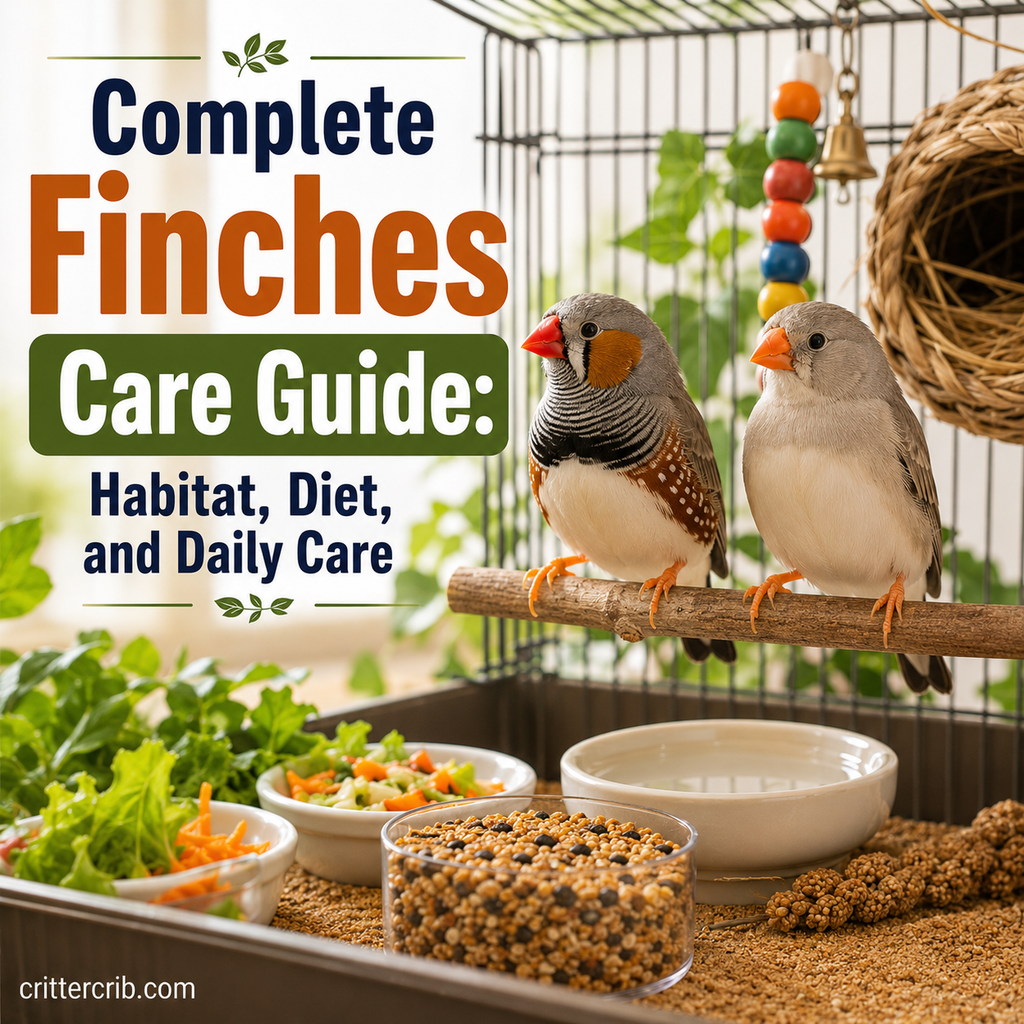
Finches are small, lively birds that can bring a surprising amount of activity to a home. They flutter between perches, chatter with one another, investigate their surroundings, and, depending on the species, may fill the room with gentle calls or songs.
They’re sometimes described as easy or low-maintenance pets. That’s only partly true.
Finches generally don’t demand the same hands-on interaction as many parrots, but they still need appropriate housing, good nutrition, companionship, enrichment, regular cleaning, and careful observation. Their small size also means subtle health changes can become serious quickly.
For many people, the appeal of finches is that they’re birds you can enjoy largely by watching rather than constantly handling. Give them a spacious, well-designed environment and you’ll see much more of their natural behavior.
This complete finch care guide covers the basics every beginner should understand, from choosing a habitat and feeding a balanced diet to bathing, cleaning, enrichment, sleep, and everyday health monitoring.
Understanding Pet Finches
“Finch” covers many different small bird species, and their exact needs aren’t identical.
Two of the most familiar pet species are zebra finches and society finches, but other finches are also kept in captivity.
Before bringing one home, learn about the specific species you’re considering. Diet, social behavior, breeding tendencies, temperament, and housing requirements can vary.
In general, commonly kept finches are:
- Small and highly active
- Social
- Better suited to observation than frequent handling
- Relatively quiet compared with larger parrots
- Fast-moving
- Interested in flying and hopping between perches
- Sensitive to environmental changes
- Best housed in an enclosure that emphasizes horizontal space
Their care should reflect these characteristics.
Are Finches Good Pets for Beginners?
Finches can be good beginner birds for someone who understands what keeping them actually involves.
They may be a particularly good match if you want birds you can watch, listen to, and care for without expecting them to sit on your shoulder every evening.
Finches may be a good fit if you:
- Enjoy observing natural bird behavior
- Can provide a spacious cage
- Are comfortable keeping more than one compatible bird
- Don’t need a highly interactive pet
- Can maintain a consistent cleaning routine
- Have access to an avian veterinarian
They may be less suitable if you’re looking for a bird that enjoys frequent handling and direct physical interaction.
Most finches aren’t companion birds in the same sense as cockatiels or budgies.
That’s not a disadvantage. It’s simply a different style of bird keeping.
That doesn’t mean they can’t become comfortable around people. Our guide to handling finches safely and building trust explains how to help finches become more relaxed around you without forcing physical interaction.
Do Finches Need Companions?
Many commonly kept finches are social birds and generally benefit from appropriate companionship.
For species such as zebra and society finches, keeping a compatible pair or small group can allow behaviors that a human can’t realistically replace.
You’ll see birds:
- Perching together
- Calling to each other
- Moving around the cage together
- Preening themselves and sometimes each other
- Resting near one another
- Responding to each other’s activity
However, adding more birds isn’t as simple as putting several finches into one cage.
Compatibility, sex, species, cage size, resource availability, and breeding behavior all matter.
Overcrowding can create stress and competition.
If you plan to keep multiple finches, research the social behavior of the particular species and provide enough room for individuals to move away from one another.
Choosing the Right Finch Cage
The cage is one of the most important purchases you’ll make.
Finches are built to fly. A tiny decorative cage may physically contain them, but it doesn’t provide much opportunity for natural movement.
Prioritize Horizontal Space
For finches, width is particularly valuable.
They tend to fly horizontally between perches, so a wide rectangular cage is generally more useful than a tall, narrow cage.
For a pair of small finches, consider a cage at least around 30 inches wide, with greater horizontal space preferred whenever possible.
A flight cage can be an excellent investment.
Rather than focusing only on minimum measurements, choose the largest practical enclosure that is safe, appropriately constructed, and easy to maintain.
Check the Bar Spacing
Small finches require narrow bar spacing.
For many common pet finches, spacing of approximately 1/2 inch or less is appropriate.
Always check recommendations for your particular species before buying an enclosure.
A large cage designed for parrots may have dangerously wide gaps even though its overall dimensions look ideal.
Choose a Practical Cage Shape
Rectangular cages are usually easiest to furnish while preserving horizontal flight space.
Look for:
- Secure doors
- Safe bar spacing
- Sturdy construction
- Easy access for cleaning
- Removable bottom tray
- Space for multiple feeding stations
- Enough width for short flights
The cage should be functional first and decorative second.
Where Should You Put a Finch Cage?
Finches generally do well where they can experience normal household activity without being surrounded by constant noise and disruption.
Choose a stable location away from:
- Kitchens
- Smoke
- Strong fragrances
- Heating and cooling vents
- Direct drafts
- Extreme temperature changes
- Constant intense sunlight
- Areas where other pets can harass them
Kitchen fumes are particularly concerning for birds. Smoke and overheated nonstick cookware or appliances can release fumes that are dangerous to avian respiratory systems.
A location with some protection, such as a cage positioned with one side near a wall, may also help birds feel less exposed.
Setting Up Perches for Finches
A good cage needs several perches, but don’t turn it into an obstacle course.
The goal is to encourage movement.
Place major perches toward opposite ends of the enclosure so the birds have a reason to fly or hop between them.
Choose Varied Perches
Instead of using only identical smooth dowels, offer appropriate perches with different diameters and textures.
Bird-safe natural branches can work particularly well.
Varied surfaces allow the feet to grip in different positions rather than remaining in exactly the same posture all day.
Avoid placing every perch at the same height.
You can create several levels while still preserving open horizontal flight paths.
Avoid Poor Perch Placement
Don’t place a favorite perch directly above:
- Food dishes
- Water containers
- Other frequently used perches
Otherwise, droppings will repeatedly contaminate the surfaces below.
Also avoid filling the middle of the cage with so many perches that the birds can’t fly from one side to the other.
What Should Finches Eat?
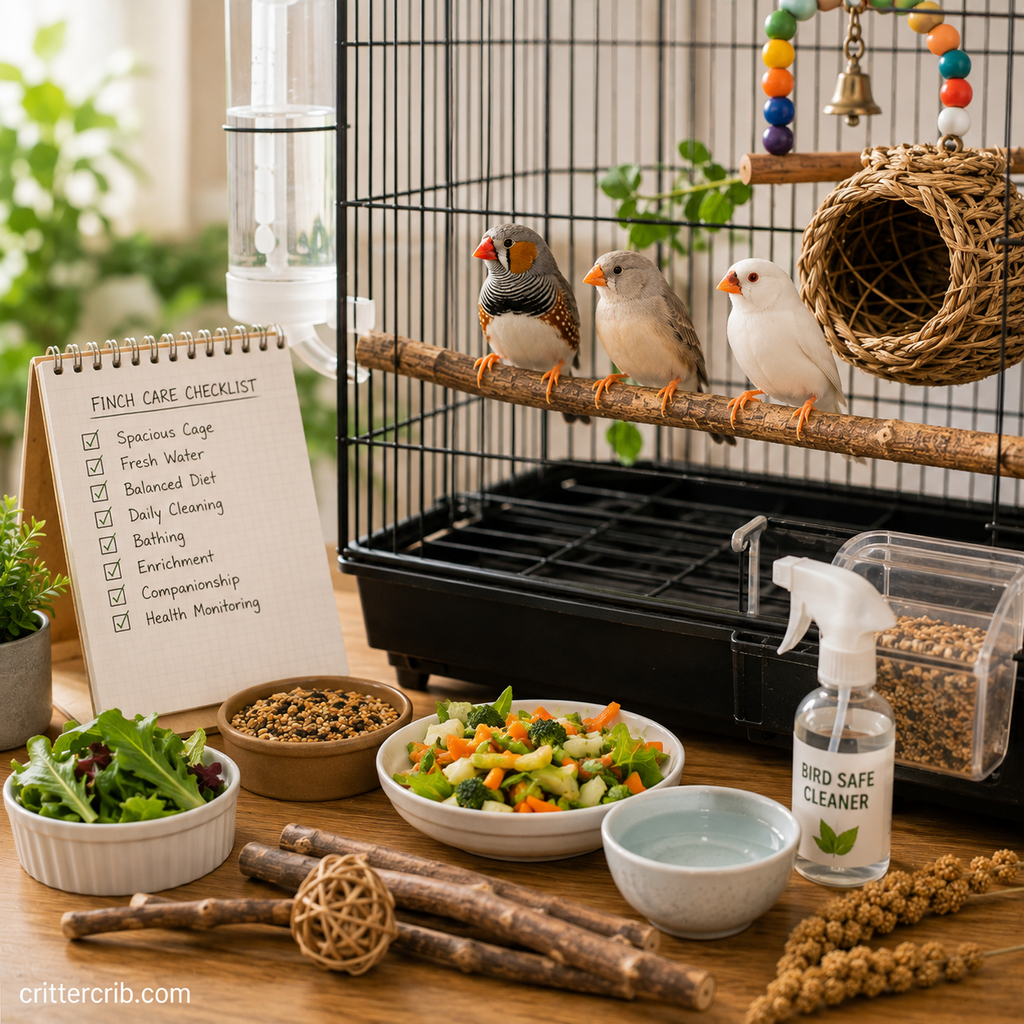
A balanced finch diet involves more than keeping a seed cup full.
Seeds are readily eaten by many finches, but an exclusively seed-based diet may not provide balanced nutrition.
The exact diet depends on the species, age, health, and reproductive status of your birds.
A feeding plan may include an appropriately formulated finch food along with suitable fresh foods and controlled amounts of seed.
Discuss the ideal diet for your particular birds with an avian veterinarian.
Pellets and Formulated Finch Foods
Formulated diets are designed to provide more consistent nutrition than allowing a bird to selectively eat only its favorite seeds.
However, converting a seed-eating finch to a formulated food isn’t always simple.
Don’t abruptly remove familiar food and assume the bird will eat something new.
Small birds can deteriorate quickly if they stop eating.
Diet transitions should be gradual and monitored carefully. An avian veterinarian can help you develop a safe transition plan.
Can Finches Eat Vegetables?
Appropriate fresh vegetables can add variety to a finch’s diet.
Depending on the species and veterinary recommendations, options may include small amounts of foods such as:
- Dark leafy greens
- Broccoli
- Carrot
- Bell pepper
- Peas
- Other bird-safe vegetables
Wash produce thoroughly and serve it in manageable pieces.
Some finches may investigate fresh food immediately. Others need repeated exposure before deciding that it’s edible.
Remove uneaten fresh food before it spoils.
Can Finches Eat Fruit?
Some finches can eat appropriate fruit in moderation.
Possible options may include small portions of:
- Apple without seeds
- Berries
- Melon
- Pear without seeds
Fruit is generally better treated as a smaller part of the diet rather than the main fresh-food offering.
Never assume that a food that’s healthy for humans is automatically safe for birds.
If you’re unsure about a particular food, check with an avian veterinarian before offering it.
Foods Finches Should Not Eat
Certain human foods can be dangerous or inappropriate for birds.
Avoid giving finches:
- Avocado
- Chocolate
- Alcohol
- Caffeine
- Foods containing xylitol
- Very salty foods
- Highly processed snack foods
- Foods containing ingredients you haven’t confirmed are bird-safe
Keep human beverages away from the cage as well.
Because finches are so small, even a relatively small amount of an inappropriate substance can matter.
Fresh Water Is Essential
Finches need access to fresh, clean drinking water every day.
Wash and refill water containers daily, and replace the water sooner if it becomes contaminated.
Small birds have a remarkable ability to get food, feathers, and debris into their water.
Position water containers away from overhead perches whenever possible.
If you use a bottle-style system, confirm every day that it’s functioning correctly and that all birds know how to use it.
Do Finches Need a Bird Bath?
Many finches love bathing.
A shallow bird bath can become one of the most popular parts of the cage.
Offer clean, shallow water in an appropriately sized bath and let the birds decide when they want to use it.
Bathing can lead to enthusiastic splashing, so don’t be surprised if the surrounding area gets wet.
Keep the bath clean and replace dirty water promptly.
You can remove the bath after use rather than leaving contaminated bathing water available all day.
Toys and Enrichment for Finches
Finches don’t necessarily interact with toys the way parrots do, but they still benefit from environmental enrichment.
Their enclosure should encourage:
- Flight
- Exploration
- Foraging
- Different perching positions
- Social interaction
- Bathing
Simple enrichment can include:
- Swings
- Bird-safe natural branches
- Appropriate small-bird toys
- Foraging opportunities
- Occasional changes in perch arrangement
Don’t fill every available inch with toys.
For a finch, open flight space is itself an important form of enrichment.
Do Finches Need Out-of-Cage Time?
Finch exercise is often handled differently from exercise for tame parrots.
Because finches are small, fast, and generally not trained for handling, allowing them to fly freely around a typical household can make recapture difficult and create safety risks.
A spacious flight cage or indoor aviary can provide substantial exercise without requiring daily free-flight sessions around the house.
If you do allow out-of-cage flight, the room needs to be thoroughly bird-proofed and the process carefully planned.
Potential hazards include:
- Open doors
- Open windows
- Ceiling fans
- Mirrors and windows
- Other pets
- Hot surfaces
- Deep water
- Toxic plants
- Accessible electrical cords
- Small gaps where a bird could become trapped
Never assume you’ll simply be able to catch a frightened finch by hand when it’s time to return to the cage.
How Much Sleep Do Finches Need?
Finches need a predictable day-and-night routine with sufficient uninterrupted darkness and quiet.
Many pet birds do well with roughly 10 to 12 hours of quiet nighttime rest, although needs can vary by species, season, and individual bird.
The important thing is consistency.
If the cage is in a room where lights and television remain on late into the night, consider whether the birds have a suitable alternative sleeping environment.
A breathable cage cover may help in some households, but it isn’t a substitute for a genuinely quiet and appropriate sleep environment.
How Often Should You Clean a Finch Cage?
Small birds create plenty of mess.
Regular maintenance is much easier than waiting until the enclosure becomes visibly dirty.
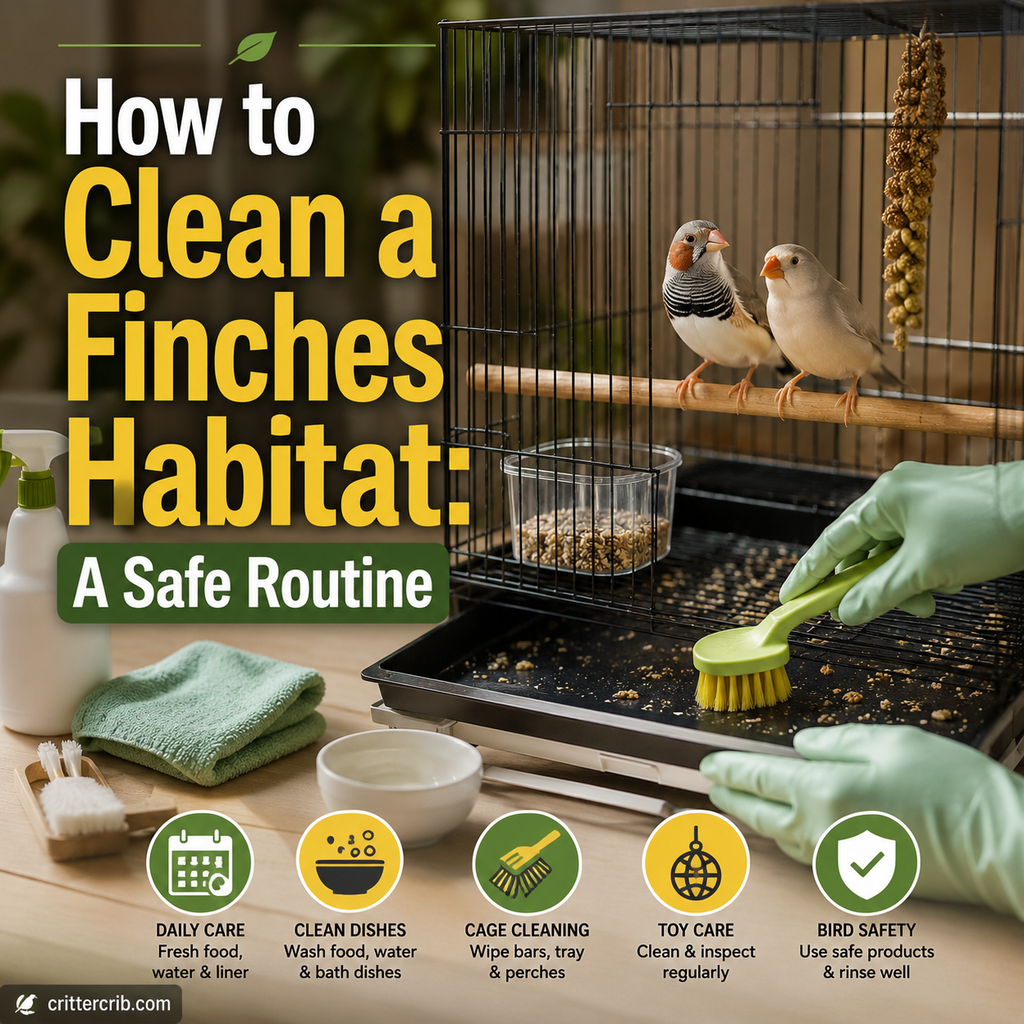
Daily Cleaning
Every day, generally:
- Replace or check the cage liner
- Wash food dishes
- Wash and refill water containers
- Remove old fresh food
- Spot-clean heavily soiled areas
- Check the bird bath
- Sweep or vacuum debris around the cage
Daily liner changes also make it easier to observe droppings.
Weekly Cleaning
Once a week, give the habitat more thorough attention.
This may include:
- Cleaning cage bars
- Washing the bottom tray
- Cleaning removable grates
- Scrubbing dirty perches as appropriate
- Cleaning toys when necessary
- Cleaning the cage stand
- Vacuuming or washing underneath the cage
Allow cleaned items to dry thoroughly before returning them to the enclosure.
Safe Cleaning Around Finches
Birds have sensitive respiratory systems.
Avoid casually spraying strongly scented household cleaners, aerosols, air fresheners, or fragrances around the cage.
For everyday cleaning, simple methods are often enough.
If you need a disinfectant or specialized cleaner, choose a product appropriate for use around birds and follow its instructions carefully.
For more intensive cleaning, move the finches to a secure enclosure away from the cleaning area.
Never mix household cleaning chemicals.
How to Manage Seed Hulls, Feathers, and Cage Mess
One thing new finch owners often underestimate is how far lightweight debris can travel.
Seed hulls and tiny feathers rarely stay neatly inside the cage.
A few simple tools make a big difference:
- Washable mat beneath the cage
- Handheld vacuum
- Small broom and dustpan
- Easy-to-change paper liners
- Wipeable cage stand
A few minutes of cleanup every day is generally easier than a large cleaning session once a week.
How to Tell If a Finch Is Healthy
Finches are prey animals and may hide signs of illness.
That’s why knowing what your birds normally look and act like is so important.
A healthy finch is generally alert, responsive, and active during normal daytime hours.
Get used to observing:
- Appetite
- Drinking
- Droppings
- Activity
- Breathing
- Feather condition
- Posture
- Social behavior
- Vocalizations
You’re looking for changes from the bird’s normal pattern.
Signs a Finch May Be Sick
Potential warning signs can include:
- Unusual lethargy
- Sitting fluffed up for prolonged periods
- Spending unusual amounts of time on the cage floor
- Reduced appetite
- Difficulty breathing
- Tail bobbing while breathing
- Unusual discharge
- Persistent changes in droppings
- Weakness
- Loss of balance
- Significant behavioral changes
- Unexplained weight loss
These signs don’t identify a specific illness on their own.
If a finch appears sick, contact an avian veterinarian promptly rather than trying to diagnose the problem from symptoms alone.
Small birds can decline quickly.
Why a Gram Scale Can Be Useful
An accurate digital gram scale can help you monitor a finch’s weight.
Because birds are covered in feathers, weight loss may not be visually obvious at first.
Tracking weight under consistent conditions can help identify changes.
Ask your avian veterinarian how frequently your particular birds should be weighed and what amount of change should concern you.
Finding an Avian Veterinarian
Find an avian veterinarian before you have an emergency.
Not every general veterinary clinic treats birds, and the availability of avian specialists varies by location.
Before bringing finches home:
- Identify a veterinary practice experienced with birds.
- Save its phone number.
- Learn its normal business hours.
- Ask how after-hours emergencies are handled.
- Keep a secure travel carrier ready.
You don’t want to start researching veterinary clinics while a sick finch is sitting at the bottom of its cage.
Handling Finches
Most pet finches aren’t birds you regularly pick up for entertainment.
Excessive chasing and handling can be stressful.
If you’d like your birds to become more comfortable around you, focus on building trust with your finches through slow movements, predictable routines, and positive interactions rather than trying to handle them frequently.
Handling may occasionally be necessary for:
- Veterinary care
- Health checks
- Moving between secure enclosures
- Emergencies
When handling is necessary, keep it calm and brief.
If you’re unsure how to safely restrain a small bird, ask your avian veterinarian to demonstrate proper technique.
Finch Breeding and Nesting
Finches can breed readily under the right conditions, sometimes more readily than an inexperienced owner expects.
Adding nests and nesting material can encourage breeding behavior.
If you aren’t intentionally breeding your birds, don’t automatically add a nest because it seems like a comfortable place for them to sleep.
Finches can sleep on perches.
Breeding introduces additional concerns involving:
- Nutrition
- Egg laying
- Egg binding
- Chick care
- Genetics
- Pair compatibility
- Finding appropriate homes for offspring
Research the specific species carefully and consult an experienced avian veterinarian before intentionally breeding finches.
Introducing New Finches
Don’t immediately place a newly acquired bird into an established flock.
New birds can carry health problems that aren’t immediately obvious, and the birds may not be socially compatible.
Speak with an avian veterinarian about an appropriate quarantine procedure before introducing new finches.
Quarantine generally involves keeping the new bird separately, with separate supplies and appropriate hygiene practices, for a veterinarian-recommended period.
After health concerns have been addressed, introductions should still be monitored carefully.
Can Different Finch Species Live Together?
Sometimes, but mixed-species housing requires planning.
Different species may have different:
- Temperaments
- Diets
- Space requirements
- Breeding behavior
- Social structures
A peaceful-looking pet-store aviary doesn’t guarantee that the same combination will work in a smaller home cage.
Research each species and make sure the enclosure provides enough room for birds to avoid one another.
For beginners, keeping compatible birds of the same species is often simpler.
Common Finch Care Mistakes
Avoiding a few common problems can significantly improve your birds’ environment.
Keeping Finches in a Tiny Cage
Finches need room to fly.
Prioritize width and open horizontal space rather than choosing a cage based solely on how little room it takes up in your home.
Feeding Only Seed
Seed can be part of the diet, but relying entirely on seed can create nutritional problems.
Work with an avian veterinarian to establish a balanced feeding plan.
Keeping a Social Finch Alone
Many commonly kept finches benefit from compatible bird companionship.
Research the social needs of your particular species.
Overcrowding the Cage
More birds require more space.
Crowding can increase competition and make it difficult for birds to escape conflict.
Adding Too Many Accessories
An enormous collection of toys doesn’t make a cage better if the birds can no longer fly through it.
Ignoring Small Behavioral Changes
A quiet, fluffed-up bird may not simply be tired.
Learn what’s normal for each bird and take persistent changes seriously.
Waiting Until an Emergency to Find a Vet
Have an avian veterinarian and travel carrier ready from the beginning.
A Simple Daily Finch Care Routine
Once your habitat is properly set up, everyday finch care can be relatively straightforward.
Morning
- Check that all birds appear alert.
- Provide fresh food.
- Replace drinking water.
- Remove heavily soiled liner if necessary.
- Offer fresh foods as appropriate.
- Check the cage for overnight problems.
During the Day
Observe your birds whenever you’re nearby.
Notice whether they’re:
- Eating
- Drinking
- Flying normally
- Interacting normally
- Vocalizing
- Using their usual perches
You don’t need to stare at them constantly. Regular casual observation is enough to help you recognize their normal behavior.
Evening
Before bedtime:
- Remove leftover perishable food
- Check water
- Make sure all birds are accounted for
- Confirm cage doors are secure
- Provide a quiet environment for sleep
This routine quickly becomes second nature.
Essential Finch Supplies Checklist
Before bringing finches home, make sure you have:
- Spacious horizontal cage or flight cage
- Appropriate bar spacing
- Multiple suitable perches
- Food containers
- Water containers
- Appropriate finch food
- Fresh-food dishes
- Bird bath
- A few suitable enrichment items
- Cage liners
- Cleaning supplies
- Small vacuum or broom
- Accurate gram scale
- Secure travel carrier
- Contact information for an avian veterinarian
You can add other accessories later as you learn what your birds actually use.
Frequently Asked Questions
Are Finches Easy to Take Care Of?
Finches can be relatively straightforward to care for once their habitat is properly established, but they aren’t maintenance-free.
They require daily food and water, regular cleaning, social consideration, appropriate nutrition, observation, and veterinary care.
Do Finches Like to Be Held?
Most finches don’t seek human handling in the way some parrots do.
They’re generally better suited to people who enjoy watching birds rather than physically interacting with them.
How Big Should a Finch Cage Be?
For a pair of small finches, consider a cage around 30 inches wide or larger, with more horizontal space preferred whenever possible.
Exact requirements depend on species and number of birds.
Should Finches Be Kept in Pairs?
Many commonly kept finch species are social and benefit from compatible companions.
However, the ideal grouping depends on species, sex, temperament, available space, and whether breeding is intended.
How Long Do Finches Live?
Lifespan varies considerably by species, genetics, diet, veterinary care, and living conditions.
Many commonly kept pet finches can live for several years, and some may live considerably longer with excellent care.
Research the expected lifespan of the particular species you’re considering rather than assuming all finches are the same.
Do Finches Need Sunlight?
Finches benefit from an appropriate light-and-dark cycle, but placing a cage in intense direct sunlight can cause overheating.
The cage should provide comfortable lighting without forcing birds to remain in direct sun.
If you’re concerned about indoor lighting or vitamin D, discuss appropriate bird lighting and nutrition with an avian veterinarian.
Do Finches Need a Nest to Sleep In?
No. Finches can sleep while perched and don’t automatically need nests as beds.
Providing nests can encourage breeding behavior, so they shouldn’t be considered standard cage furniture for birds you don’t intend to breed.
Can Finches Live With Budgies?
Housing finches and budgies together in a typical cage is generally not a good beginner setup.
Budgies are larger, have powerful beaks compared with finches, and may injure smaller birds during conflicts.
Keeping species in separate appropriate enclosures is usually the safer approach.
Final Thoughts
Finches may be tiny, but good finch care revolves around giving them opportunities to behave like active little birds.
Start with space.
A wide cage or flight cage gives finches room to fly between perches, interact with companions, bathe, explore, and choose where they want to spend their time. Don’t sacrifice that valuable movement space by filling every inch with accessories.
Nutrition is just as important. Avoid assuming that a bowl of seed provides everything your birds need. Work toward a balanced diet appropriate for the particular finch species you keep, with guidance from an avian veterinarian.
Then focus on consistency.
Fresh food and water, a clean habitat, regular bathing opportunities, sufficient sleep, compatible companionship, and a little observation each day go a long way.
Finches may never sit on your shoulder or ask for head scratches. That’s part of their appeal. Give them an environment where they feel secure and have room to be active, and you can enjoy watching an energetic miniature flock behave much as birds are supposed to.