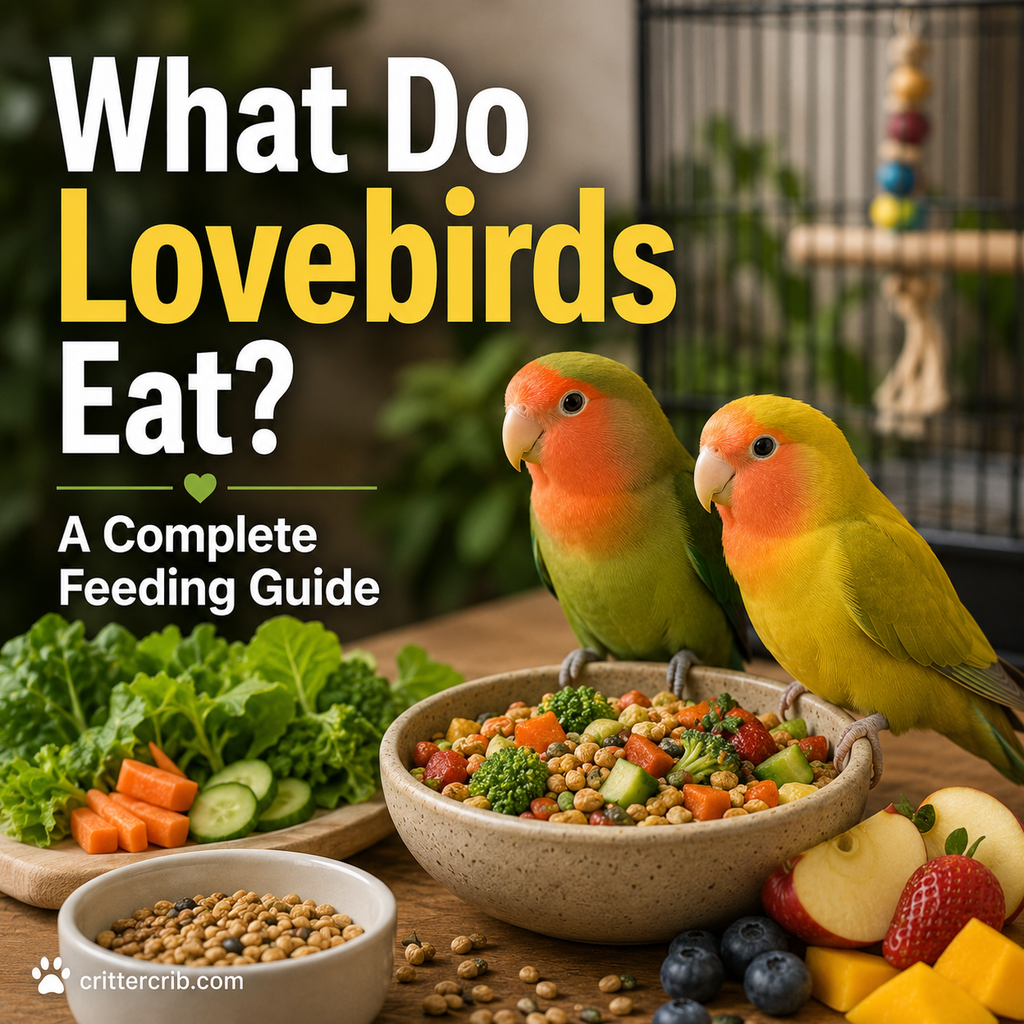
Lovebirds may be small parrots, but their nutritional needs go well beyond filling a bowl with birdseed.
A healthy lovebird diet should provide variety and balanced nutrition. For many pet lovebirds, that means using a quality formulated pellet as the foundation of the diet, supplemented with fresh vegetables, leafy greens, smaller amounts of fruit, and appropriate seeds or nuts.
The exact diet can vary depending on your bird’s age, health, activity level, reproductive status, and what it’s accustomed to eating. That’s why an avian veterinarian is the best person to help you fine-tune a feeding plan for an individual bird.
Still, there are some useful guidelines every lovebird owner should know.
Here’s what lovebirds can eat, what they should only have occasionally, which foods to avoid, and how to build a healthier daily feeding routine.
What Do Lovebirds Eat?
Pet lovebirds generally do best with a varied diet rather than eating only one type of food.
A balanced feeding plan may include:
- Formulated pellets
- Fresh vegetables
- Leafy greens
- Limited fruit
- Appropriate seeds
- Small amounts of suitable nuts
- Occasional healthy treats
- Fresh, clean water
The proportions matter.
Seeds, for example, can certainly be part of a lovebird’s diet, but feeding an unlimited seed mixture as the primary food isn’t generally considered ideal.
Lovebirds are very good at selecting their favorite foods. Given the opportunity, many will happily pick through a bowl for the highest-fat seeds while leaving healthier items behind.
Should Lovebirds Eat Pellets?
A quality pellet formulated for small parrots can provide a nutritionally balanced foundation for a pet lovebird’s diet.
Unlike a loose mixture where the bird can selectively eat only its favorite ingredients, pellets are designed to provide consistent nutrition in each bite.
Many avian veterinarians recommend that formulated food make up a substantial portion of the diet.
However, pellets shouldn’t necessarily be the only thing your bird ever encounters.
Fresh foods provide different:
- Textures
- Flavors
- Colors
- Nutrients
- Foraging opportunities
Diet can be both nutrition and enrichment.
Choose an Appropriate Pellet Size
Lovebirds have relatively small beaks.
Look for a pellet size intended for small parrots rather than a large chunk designed for macaws or other big birds.
If you’re unsure which formula is appropriate, ask your avian veterinarian.
Can Lovebirds Eat Seeds?
Yes, lovebirds can eat seeds.
Seeds aren’t inherently bad.
The problem is relying on them as the entire diet.
Many commercial seed mixtures contain ingredients lovebirds find extremely appealing, and birds may selectively consume their favorites while ignoring everything else.
A seed-heavy diet can also be relatively high in fat and may not provide all the nutrients a pet bird needs.
Seeds are often better used as:
- A smaller part of a balanced diet
- Training rewards
- Foraging treats
- Occasional high-value foods
The amount that’s appropriate depends on your individual bird’s health, weight, activity, and overall diet.
Can Lovebirds Eat Vegetables?
Yes. Fresh vegetables can be an excellent part of a lovebird’s diet.
Offering different colors and textures provides both nutrition and enrichment.
Bird-safe options can include:
- Bell peppers
- Broccoli
- Carrots
- Peas
- Green beans
- Zucchini
- Squash
- Sweet potato
- Cauliflower
Your lovebird may not immediately eat every vegetable you offer.
That’s normal.
Parrots can be suspicious of unfamiliar foods, particularly if they’ve eaten the same diet for years.
Keep offering appropriate options without forcing them.
Best Leafy Greens for Lovebirds
Leafy greens are another useful addition to the diet.
Suitable choices may include:
- Kale
- Romaine lettuce
- Bok choy
- Collard greens
- Mustard greens
- Dandelion greens from a safe source
- Cilantro
- Other bird-safe leafy vegetables
Wash greens thoroughly before serving them.
Avoid picking plants from roadsides, treated lawns, or other areas where they may have been exposed to pesticides, fertilizers, animal waste, or vehicle pollution.
What About Iceberg Lettuce?
Iceberg lettuce isn’t generally toxic, but it’s mostly water and offers less nutritional value than darker leafy greens.
If your lovebird likes lettuce, choosing more nutrient-dense greens such as romaine is usually more useful.
Can Lovebirds Eat Fruit?
Lovebirds can eat many types of fruit, but fruit is generally best offered in smaller quantities than vegetables.
Fruit naturally contains sugar, and a lovebird doesn’t need an enormous fruit salad every day.
Bird-safe fruits can include:
- Apples with seeds removed
- Bananas
- Blueberries
- Strawberries
- Raspberries
- Blackberries
- Mango
- Papaya
- Melon
- Pears with seeds removed
- Pomegranate
- Kiwi
Offer small portions and remove leftovers before they spoil.
Always Remove Apple Seeds
Apple flesh can be offered, but the seeds should be removed.
The same caution applies to pits and seeds from certain other fruits.
When serving fruit, prepare it properly rather than simply giving your bird an entire piece without checking which parts are safe.
Can Lovebirds Eat Berries?
Yes, many lovebirds can eat bird-safe berries such as:
- Blueberries
- Strawberries
- Raspberries
- Blackberries
Berries can be messy.
Don’t be surprised if your lovebird eats half and decorates the cage with the rest.
Wash berries thoroughly and offer reasonable portions.
Can Lovebirds Eat Bananas?
Yes.
Banana can be offered as an occasional part of a varied diet.
Remove the peel and give your bird a small piece rather than an entire banana.
Because fruit contains natural sugar, moderation is sensible.
Can Lovebirds Eat Apples?
Yes, lovebirds can eat apple flesh.
Remove the seeds and core before serving.
Wash the apple thoroughly, especially if you’re leaving the skin on.
A small slice or chopped piece is plenty for such a small bird.
Can Lovebirds Eat Carrots?
Yes.
Carrots can be served raw or appropriately cooked without salt, butter, seasoning, or other additives.
Try different preparations if your bird initially ignores them.
Some lovebirds prefer:
- Thin slices
- Grated carrot
- Small chunks
- Larger pieces they can shred
Presentation can make a surprising difference.
Can Lovebirds Eat Broccoli?
Yes.
Broccoli is a useful vegetable for many parrots and can also be fun to pick apart.
Offer clean pieces in an appropriate size.
Both the florets and suitable portions of the stalk can provide different textures for your bird to investigate.
Can Lovebirds Eat Cooked Foods?
Some plain cooked foods can be offered appropriately.
Examples may include:
- Cooked sweet potato
- Cooked squash
- Cooked brown rice
- Cooked quinoa
- Plain cooked legumes prepared safely
Keep cooked foods plain.
Don’t add:
- Salt
- Butter
- Sauces
- Garlic
- Onion
- Heavy seasoning
Also remember that moist cooked foods spoil faster than dry food.
Remove leftovers promptly.
Can Lovebirds Eat Grains?
Appropriate cooked whole grains can add variety to the diet.
Options may include:
- Brown rice
- Quinoa
- Oats
- Barley
These shouldn’t replace a balanced formulated diet, but small portions can be included as part of fresh-food meals.
Avoid heavily processed grain products containing lots of salt, sugar, or fat.
Can Lovebirds Eat Nuts?
Lovebirds can eat certain unsalted nuts in small amounts.
Examples include:
- Almonds
- Walnuts
- Pecans
Nuts are calorie-dense and relatively high in fat.
For a tiny bird, a small piece is enough.
They can be especially useful as high-value training rewards when broken into tiny portions.
Avoid salted, flavored, candied, chocolate-covered, or heavily processed nuts.
How Much Should a Lovebird Eat Each Day?
There’s no perfect portion that applies to every lovebird.
Needs vary based on:
- Body size
- Age
- Activity
- Health
- Metabolism
- Reproductive status
- Type of food
Follow the feeding recommendations for your formulated diet and discuss portions with an avian veterinarian.
Don’t assume a full bowl means your bird is overeating—or that an apparently empty bowl means it has eaten everything.
Seed hulls can make a dish look full even when much of the edible food is gone.
Monitor what your bird actually consumes.
A Simple Daily Lovebird Feeding Routine
Consistency makes feeding easier to manage.
A typical routine might look something like this:
Morning
Provide:
- Fresh water
- An appropriate portion of formulated food
- Fresh vegetables and leafy greens
Morning can be a good time to offer vegetables because a hungry bird may be more willing to investigate them.
During the Day
Check food and water.
Remove anything that’s dirty or spoiled.
You can also use small amounts of suitable food for:
- Training
- Foraging
- Enrichment
Evening
Remove remaining perishable foods and wash dirty dishes.
Make sure appropriate food and clean water are available according to your bird’s normal routine and veterinary recommendations.
How Often Should You Give a Lovebird Fresh Food?
Fresh vegetables and greens can be offered regularly as part of a balanced diet.
Fruit should generally make up a smaller portion.
Fresh food shouldn’t sit in the cage indefinitely.
How quickly it spoils depends on the food and room conditions, but moist foods can become unsafe much faster than dry pellets.
When in doubt, remove old fresh food and provide a clean dish.
Fresh Water Is Essential
Lovebirds should always have access to clean drinking water.
Replace the water at least daily and sooner if it becomes contaminated.
Lovebirds can quickly turn a clean bowl into a mixture of:
- Pellet crumbs
- Food pieces
- Feathers
- Droppings
- Bath water
Wash water dishes thoroughly instead of simply topping them off.
If your bird frequently bathes in its drinking water, consider providing a separate bathing opportunity.
Foods Lovebirds Should Never Eat
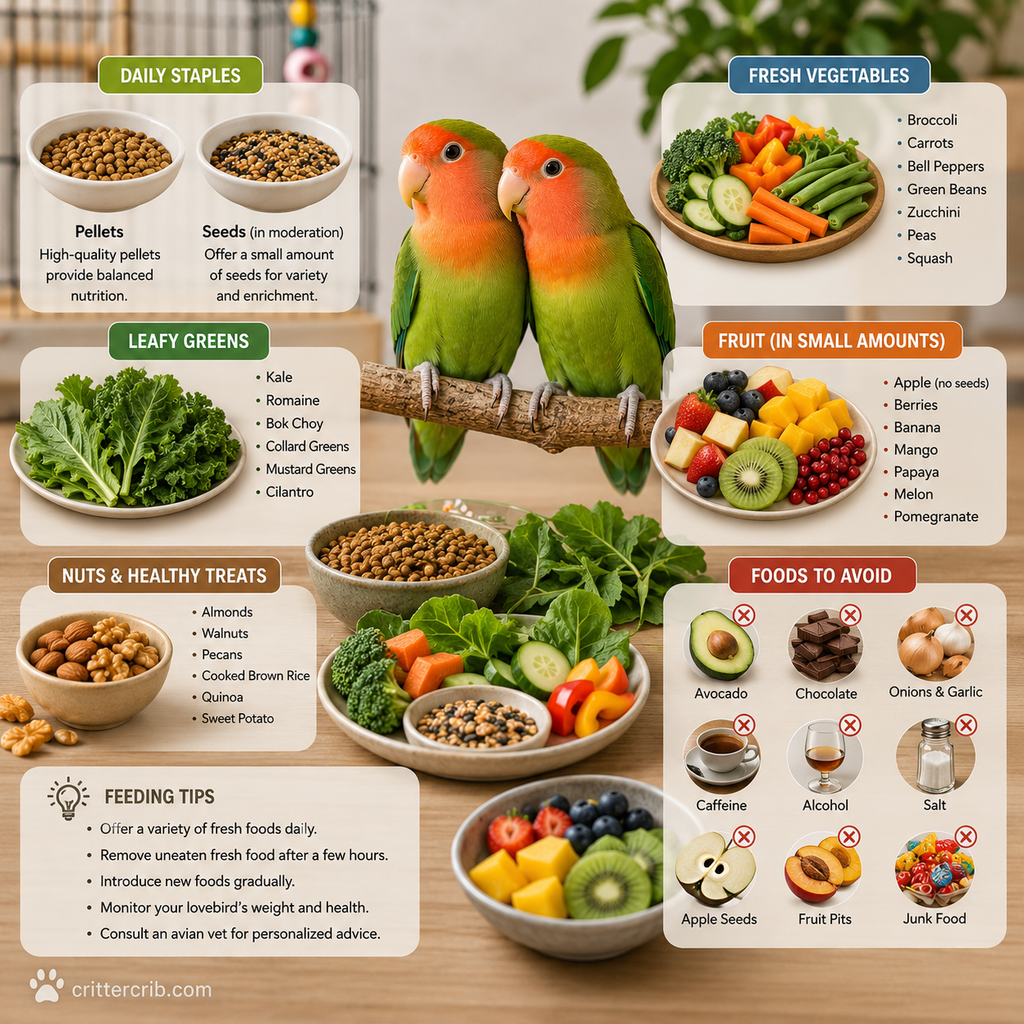
Some common human foods can be dangerous to birds.
Avoid feeding your lovebird:
- Avocado
- Chocolate
- Caffeine
- Alcohol
- Onion
- Garlic in concentrated or excessive forms
- Fruit pits
- Apple seeds
- Foods containing xylitol
- Very salty foods
- Highly processed junk food
Don’t assume a food is safe just because another pet or a person can eat it.
Bird metabolism is different.
When you’re uncertain about a particular food, check with an avian veterinarian before offering it.
Why Is Avocado Dangerous for Lovebirds?
Avocado is generally considered unsafe for pet birds and should be avoided.
Different parts and varieties can contain varying amounts of persin, a compound that can be toxic to birds.
There’s no nutritional reason to experiment with it.
Keep avocado and foods containing avocado away from your lovebird.
Can Lovebirds Eat Chocolate?
No.
Chocolate contains compounds including theobromine and caffeine that can be toxic to birds.
Keep all forms of chocolate away from your lovebird, including:
- Dark chocolate
- Milk chocolate
- Cocoa powder
- Chocolate desserts
- Chocolate drinks
If your bird eats chocolate, contact an avian veterinarian or appropriate animal poison resource promptly.
Can Lovebirds Drink Coffee or Tea?
Caffeinated drinks aren’t appropriate for lovebirds.
Don’t allow your bird to drink:
- Coffee
- Energy drinks
- Caffeinated tea
- Soda containing caffeine
Water should be the primary drink.
A curious lovebird may try to investigate whatever is in your cup, so don’t leave unsafe drinks within reach during out-of-cage time.
Can Lovebirds Eat Human Snacks?
A lovebird begging for your potato chip doesn’t mean the chip belongs in its diet.
Many human snack foods contain excessive:
- Salt
- Sugar
- Fat
- Flavorings
- Preservatives
Avoid regularly sharing chips, cookies, candy, fried foods, and similar snacks.
Instead, keep tiny pieces of healthy bird-safe food available when you want to include your bird in mealtime.
Should Lovebirds Eat Grit?
Parrots such as lovebirds generally don’t need grit to digest their food.
Unlike some birds that swallow seeds whole, parrots remove the hull before eating many seeds.
Providing unnecessary grit can potentially create health problems if excessive amounts are consumed.
Don’t add grit to your lovebird’s cage unless an avian veterinarian specifically recommends something for a medical reason.
Do Lovebirds Need Supplements?
A lovebird eating a properly balanced diet may not need routine vitamin supplements.
Adding vitamins without understanding the bird’s existing nutrient intake can create imbalances.
Supplements should generally be used based on veterinary guidance rather than automatically added “just in case.”
Avoid adding vitamins directly to drinking water unless specifically instructed.
They can affect the taste of the water and may encourage microbial growth.
How to Switch a Lovebird From Seeds to Pellets
Diet conversion requires patience.
If your lovebird has eaten seeds for years, pellets may not look like food.
Never simply remove the seed bowl and assume hunger will eventually solve the problem.
A small parrot that stops eating can become seriously ill.
Instead:
- Schedule an avian veterinary examination if possible.
- Establish your bird’s normal weight.
- Introduce pellets while familiar food remains available.
- Experiment with different pellet sizes or presentations.
- Gradually adjust proportions.
- Monitor actual food intake.
- Weigh your bird regularly during the transition.
- Contact your veterinarian if weight drops or eating decreases.
Some birds convert quickly.
Others take weeks or longer.
The goal is a safe transition, not a fast one.
How to Encourage a Picky Lovebird to Eat Vegetables
Lovebirds can be stubborn about new foods.
Fortunately, there are several things you can try.
Change the Presentation
Offer vegetables:
- Chopped
- Grated
- Sliced
- Whole enough to shred
- Clipped to the cage
- Mixed with familiar foods
A bird that ignores a carrot cube may happily destroy grated carrot.
Offer New Foods Repeatedly
Don’t give up after one attempt.
It can take repeated exposure before a cautious bird decides an unfamiliar food is worth tasting.
Eat Healthy Foods Near Your Bird
Lovebirds are social animals.
Seeing you eat something may increase their curiosity.
Only share foods that are safe for birds and haven’t been seasoned or contaminated by your mouth.
Use Foraging
Place small pieces of vegetables in easy foraging locations.
Investigating food can become part of play.
Use Food for Enrichment
Feeding doesn’t have to happen entirely from a bowl.
Lovebirds are intelligent parrots that benefit from working for some of their food.
Try:
- Hiding a small treat inside bird-safe paper
- Placing vegetables in different cage locations
- Using simple foraging toys
- Clipping leafy greens to cage bars
- Putting small amounts of food inside shreddable items
Start with easy challenges.
Let your bird see where the food is hidden until it understands the activity.
Always make sure the bird still has reliable access to its normal diet.
Monitor Your Lovebird’s Weight
A small digital gram scale can be useful for monitoring your bird’s health.
Feathers make visual weight changes difficult to recognize.
Weighing regularly can help you identify a downward trend before the bird looks obviously thin.
Ask your avian veterinarian:
- How often to weigh your bird
- What body condition is appropriate
- What amount of weight change is concerning
Consistency matters.
Try weighing at roughly the same time of day under similar conditions.
Watch for Changes in Appetite
Birds often hide illness.
A change in eating behavior can sometimes be one of the first signs that something is wrong.
Pay attention if your lovebird:
- Suddenly stops eating
- Eats much less than normal
- Drops food repeatedly
- Has difficulty cracking food
- Stops eating a longtime favorite
- Loses weight
- Becomes unusually quiet
- Develops abnormal droppings
Don’t automatically assume a picky bird is simply being difficult.
Sudden appetite changes deserve attention.
Common Lovebird Feeding Mistakes
Even caring owners can fall into habits that aren’t ideal.
Common mistakes include:
- Feeding only seeds
- Offering unlimited high-fat treats
- Giving too much fruit
- Leaving fresh food out too long
- Making diet changes too quickly
- Not monitoring weight
- Assuming the bird is eating because the bowl looks disturbed
- Feeding salty human snacks
- Adding unnecessary supplements
- Not cleaning food and water dishes properly
You don’t need to create a perfect menu every day.
Focus on consistency and balance over time.
Frequently Asked Questions About Feeding Lovebirds
What Is the Best Food for Lovebirds?
A quality formulated food appropriate for small parrots can serve as the nutritional foundation for many pet lovebirds, supplemented with vegetables, leafy greens, limited fruit, and other appropriate foods.
Ask an avian veterinarian about the best proportions for your bird.
Can Lovebirds Eat Seeds Every Day?
Seeds can be included in an appropriate diet, but an unlimited seed-only diet isn’t ideal for most pet lovebirds.
Portions depend on the bird’s overall diet, health, weight, and activity.
What Vegetables Can Lovebirds Eat?
Bird-safe choices can include bell peppers, broccoli, carrots, peas, green beans, squash, zucchini, cauliflower, and a variety of leafy greens.
Offer variety rather than relying on one vegetable.
What Fruit Can Lovebirds Eat?
Lovebirds can eat small amounts of bird-safe fruits such as berries, banana, mango, papaya, melon, pomegranate, and properly prepared apple or pear.
Remove unsafe seeds and pits.
Can Lovebirds Eat Eggs?
Small amounts of properly cooked plain egg may sometimes be offered, but it isn’t something every lovebird necessarily needs regularly.
Discuss the overall diet with an avian veterinarian, particularly if you’re considering high-protein foods for breeding birds.
Can Lovebirds Eat Rice?
Plain, properly cooked rice can be offered in small amounts.
Brown rice may provide more nutritional value than heavily refined varieties.
Don’t add salt, butter, sauces, or seasoning.
Can Lovebirds Eat Bread?
A tiny amount of plain bread isn’t necessarily toxic, but bread offers limited nutritional value compared with healthier foods.
It shouldn’t be a regular part of the diet.
How Often Should Lovebirds Eat?
Lovebirds eat small amounts throughout the day and should have reliable access to appropriate food and clean water.
Fresh foods can be offered on a routine schedule and removed before they spoil.
Why Does My Lovebird Throw Food Everywhere?
Food tossing is common parrot behavior.
Your bird may be selecting favorite ingredients, exploring textures, or simply dropping pieces while eating.
Using appropriately sized portions and dishes can reduce waste, but some mess is normal.
Final Thoughts
So, what do lovebirds eat?
A healthy pet lovebird diet is about balance rather than one magic food.
For many lovebirds, a quality formulated pellet can provide the nutritional foundation, while fresh vegetables and leafy greens add variety, nutrients, textures, and enrichment. Fruit, seeds, nuts, grains, and treats can be offered in appropriate amounts depending on the individual bird’s needs.
Just as important is what you don’t feed.
Avoid avocado, chocolate, caffeine, alcohol, unsafe fruit seeds and pits, and heavily processed foods. Don’t automatically add supplements or grit unless an avian veterinarian recommends them.
If your lovebird currently eats a seed-heavy diet, make changes gradually.
Never try to force a diet conversion by simply removing familiar food.
And pay attention to what actually gets eaten.
A lovebird can make a food bowl look thoroughly explored while carefully avoiding every healthy item you hoped it would eat.
Offer variety, experiment with presentation, use food as enrichment, monitor your bird’s weight, and keep fresh water available at all times.
Over time, those simple habits can help turn feeding from “fill the bowl and hope for the best” into a balanced routine that supports your lovebird’s health throughout its life.