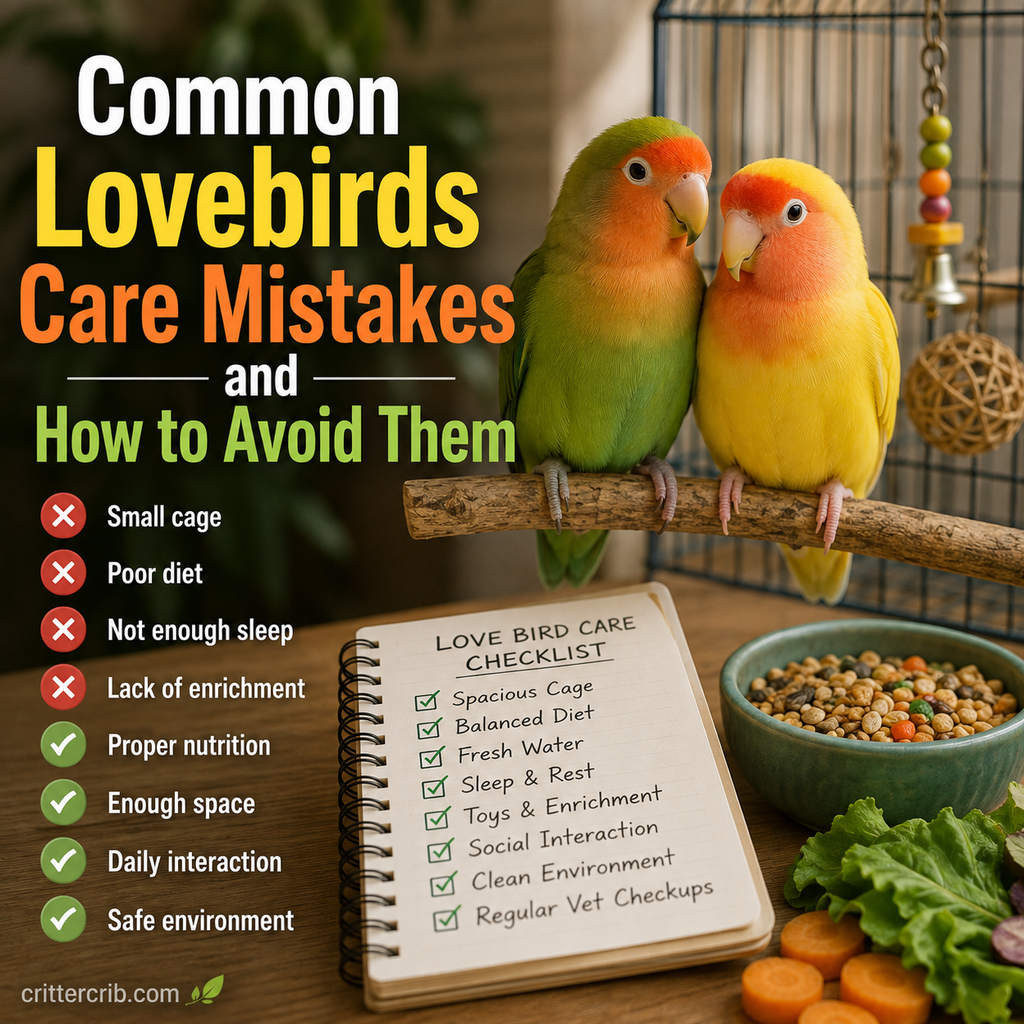
Lovebirds are small parrots with big personalities. They’re curious, social, active, and often surprisingly determined when they want something.
That combination is part of what makes them such entertaining pets. It can also make proper care more involved than new owners expect.
Many lovebird care mistakes aren’t caused by neglect. They happen because something seems reasonable at first. A small bird looks like it should be fine in a small cage. A seed mix looks like complete bird food. A cozy fabric hut looks like the perfect bed.
Unfortunately, what looks good from a human perspective isn’t always what’s best for a parrot.
The good news is that many common problems are preventable. Here are some of the biggest lovebird care mistakes owners make, along with practical ways to avoid them.
1. Choosing a Cage That’s Too Small
One of the most common lovebird care mistakes happens before the bird even comes home.
Lovebirds are small, but they’re extremely active.
They climb, flap, hop, play, chew, and move between different parts of their habitat throughout the day. A tiny cage doesn’t provide enough room for those behaviors.
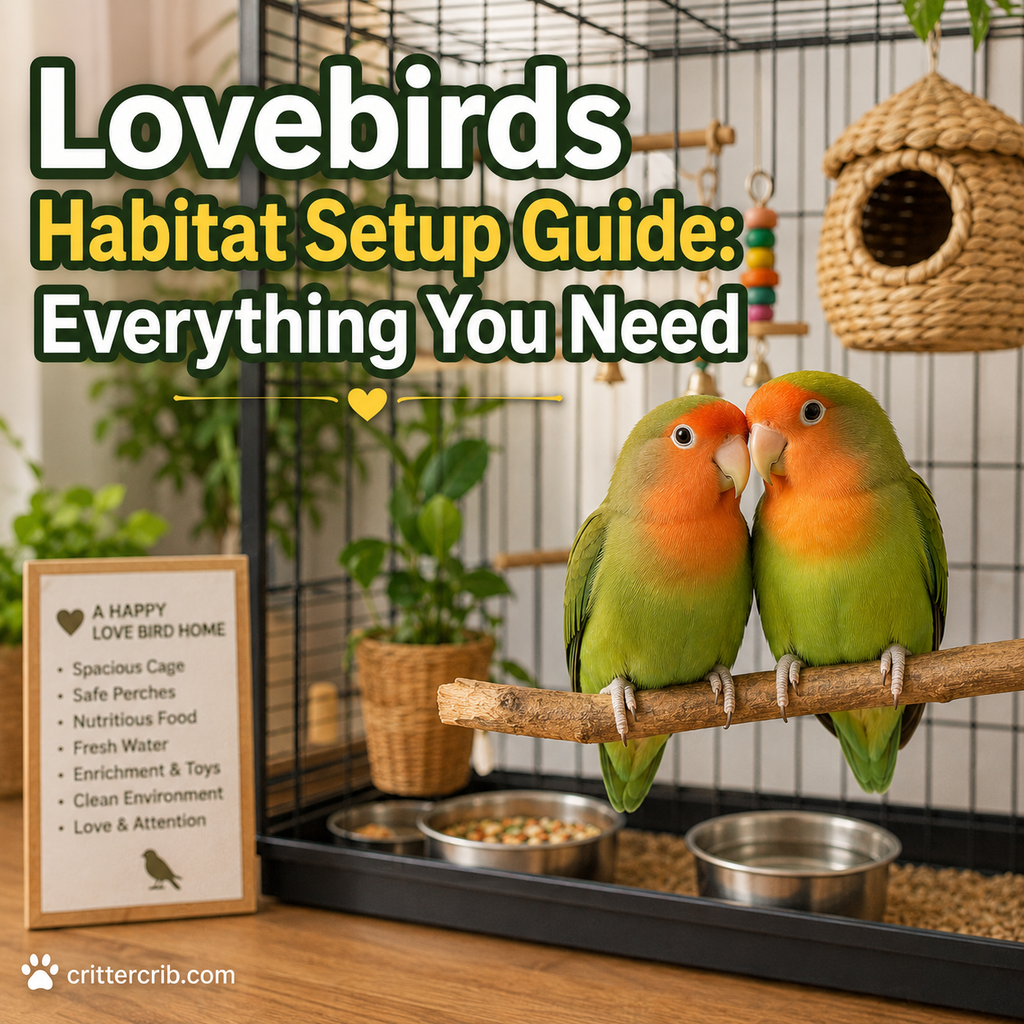
A good cage should allow your lovebird to:
- Fully stretch its wings
- Move easily between perches
- Play without being surrounded by clutter
- Climb
- Exercise
- Access food and water comfortably
When choosing between two appropriately designed cages, the larger option is usually worth considering.
Width is especially valuable because it provides usable horizontal movement.
How to Avoid This Mistake
Buy the largest practical cage you can safely accommodate, making sure the bar spacing is appropriate for lovebirds.
Don’t rely solely on packaging that says “small bird cage” or displays a lovebird on the label.
Check the actual dimensions and bar spacing.
2. Using Unsafe Bar Spacing
A large cage isn’t automatically a safe cage.
Some owners purchase cages designed for bigger parrots because they offer more room. The problem is that the spaces between the bars may also be larger.
A lovebird may be able to push its head through an unsafe gap and become trapped.
How to Avoid This Mistake
Choose a cage specifically designed with appropriate spacing for small parrots.
Inspect gaps around:
- Cage bars
- Doors
- Feeding openings
- Removable trays
- Decorative sections
Don’t assume every opening is the same size.
3. Overcrowding the Cage
It’s easy to get carried away with bird accessories.
You buy several perches, a swing, a ladder, six toys, feeding stations, ropes, and a collection of colorful hanging objects.
Individually, these may all be useful.
Together, they can turn the cage into an obstacle course.
Your lovebird needs enrichment, but it also needs open space.
How to Avoid This Mistake
Start with a smaller number of useful accessories.
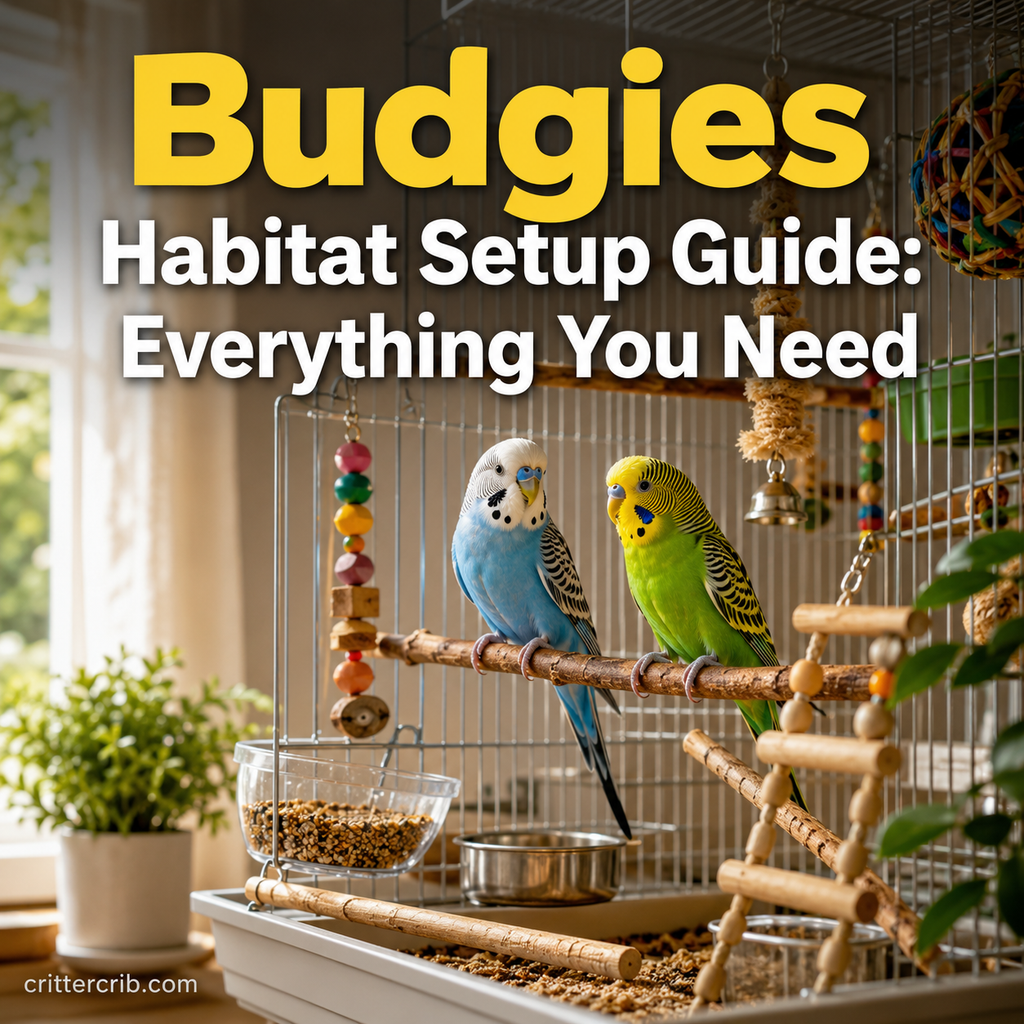
Provide:
- Several varied perches
- A few toys
- Food and water stations
- Chewing opportunities
- Foraging activities
- Open movement space
Rotate toys instead of keeping everything in the cage simultaneously.
4. Using Only Smooth Dowel Perches
Many cages come with straight wooden dowels.
There’s nothing inherently wrong with having one smooth perch, but using identical dowels throughout the cage keeps your bird’s feet in very similar positions all day.
Natural branches provide more variation.
How to Avoid This Mistake
Offer several bird-safe perches with different:
- Diameters
- Shapes
- Textures
- Positions
Natural wood perches are particularly useful because they’re irregular.
Avoid covering every perch with abrasive material in an attempt to keep nails short. Rough surfaces can be uncomfortable for feet when used as primary resting perches.
5. Feeding an All-Seed Diet
Lovebirds often enjoy seeds.
That doesn’t mean seeds alone provide everything they need.
Traditional seed-heavy diets can be nutritionally unbalanced when used as the bird’s entire diet. Birds may also selectively eat their favorite high-fat seeds while leaving less desirable items behind.
How to Avoid This Mistake
Discuss an appropriate diet with an avian veterinarian.
Depending on your bird’s individual needs, a balanced diet may include:
- A quality formulated food
- Appropriate vegetables
- Leafy greens
- Limited appropriate fruits
- Seeds in suitable amounts
- Occasional healthy treats
Diet changes should usually be gradual.
Never assume your bird is eating a new food simply because it’s available in the bowl. Monitor actual consumption.
6. Changing the Diet Too Quickly
Discovering that your lovebird’s diet needs improvement can make you want to replace everything immediately.
That’s understandable, but sudden changes can create another problem.
A bird unfamiliar with pellets or vegetables may not recognize them as food.
How to Avoid This Mistake
Make dietary transitions gradually and monitor your lovebird carefully.
Continue confirming that the bird is actually eating.
Regular weight monitoring with an appropriate gram scale can also help you notice significant changes.
If you’re uncertain how to transition your bird safely, consult an avian veterinarian.
7. Offering Unsafe Human Foods
Lovebirds are curious about whatever you’re eating.
That doesn’t mean sharing is always safe.
Some human foods and ingredients can be harmful to birds.
Foods commonly considered unsafe include:
- Avocado
- Chocolate
- Alcohol
- Caffeine
- Foods containing excessive salt
- Foods containing large amounts of added sugar or fat
There are other foods that require caution as well.
How to Avoid This Mistake
Check whether a food is bird-safe before offering it.
When you’re uncertain, skip it until you can verify.
Your lovebird doesn’t need to sample everything on your plate.
8. Leaving Fresh Food in the Cage Too Long
Fresh vegetables and other appropriate foods can be an excellent addition to a lovebird’s diet.
They can also spoil.
Warm room temperatures accelerate that process.
How to Avoid This Mistake
Offer manageable portions and remove leftovers before they deteriorate.
Wash food dishes regularly rather than continuously adding fresh food on top of old residue.
Pay particular attention to moist foods.
9. Not Changing the Water Often Enough
Lovebirds can make a clean water bowl dirty remarkably quickly.
Food, feathers, toy pieces, and droppings may end up inside it.
A bowl that was fresh in the morning may not remain that way all day.
How to Avoid This Mistake
Provide fresh drinking water every day and replace it again whenever it becomes contaminated.
Wash the bowl thoroughly rather than simply topping it off.
Position water away from overhead perches when possible.
10. Putting the Cage in the Kitchen
The kitchen may seem like a social location where your bird can be near the family.
It’s also one of the most hazardous rooms for birds.
Potential dangers include:
- Cooking fumes
- Smoke
- Hot cookware
- Boiling liquids
- Open flames
- Hot appliances
- Cleaning chemicals
Overheated PTFE/nonstick products can release fumes that are particularly dangerous to birds.
How to Avoid This Mistake
Keep your lovebird’s main habitat away from the kitchen and cooking fumes.
Remember that airborne fumes can travel beyond the immediate cooking area.
Birds have sensitive respiratory systems, so clean household air should be a priority.
11. Exposing Your Lovebird to Smoke and Strong Fragrances
Cooking isn’t the only air-quality concern.
Birds can be sensitive to many airborne substances.
Avoid exposing your lovebird to:
- Cigarette smoke
- Vape aerosols
- Incense
- Scented smoke
- Aerosol sprays
- Paint fumes
- Strong cleaning products
- Heavy fragrances
- Essential oil diffusers
How to Avoid This Mistake
Keep the air around your bird as clean as possible.
Don’t use strong scented products near the cage simply because they’re marketed as natural.
“Natural” doesn’t automatically mean safe for birds.
12. Keeping the Cage in a Drafty Location
Lovebirds generally do well in comfortable household conditions, but rapid temperature changes and direct drafts aren’t ideal.
A cage directly beside an air-conditioning vent may experience conditions very different from the room thermostat.
How to Avoid This Mistake
Keep the cage away from:
- Heating vents
- Air-conditioning vents
- Drafty exterior doors
- Frequently opened windows
- Space heaters
Aim for a relatively stable indoor environment.
13. Leaving the Cage in Intense Direct Sunlight
Sunlight can brighten your bird’s environment, but a cage sitting in strong direct sun can heat quickly.
This is especially important near windows.
How to Avoid This Mistake
Make sure your lovebird always has somewhere to move away from direct sunlight.
Never leave the entire cage exposed to intense sun without shade.
Monitor actual conditions around the cage rather than assuming they’re the same as the rest of the room.
14. Not Providing Enough Sleep
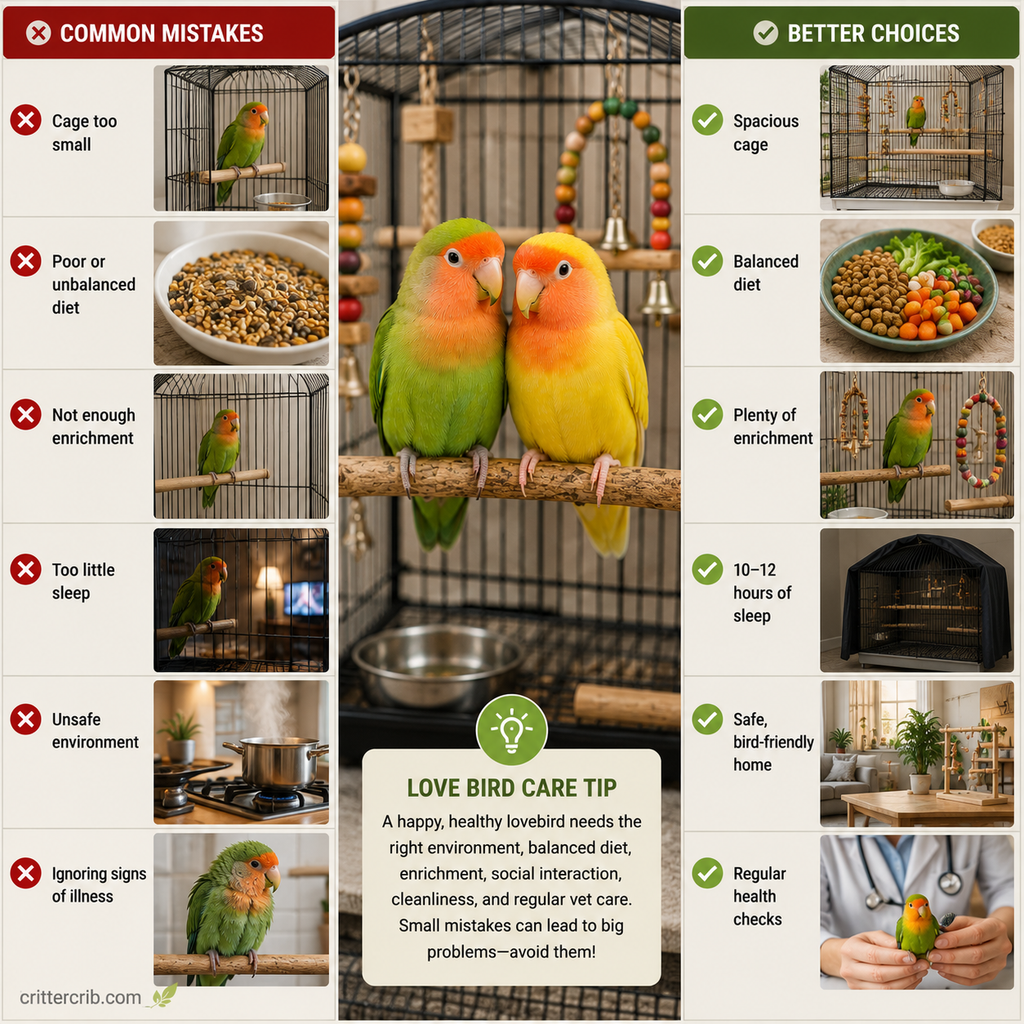
Lovebirds need substantial uninterrupted rest.
A bird living in the family room may stay awake long after sunset because the television, lights, and conversation continue late into the evening.
Over time, an inconsistent sleep schedule can contribute to behavioral and hormonal problems.
How to Avoid This Mistake
Aim to provide roughly 10 to 12 hours of quiet, darkness, and uninterrupted sleep each night.
Maintain a predictable routine.
If your household stays active late, consider whether your bird needs a separate quiet sleeping location.
15. Assuming a Cage Cover Solves Every Sleep Problem
Covering a cage can help reduce light and visual stimulation.
It doesn’t eliminate loud television, music, conversations, or other disturbances.
How to Avoid This Mistake
Think about the entire sleeping environment.
A cover can be useful, but your lovebird still needs quiet and adequate ventilation.
16. Giving Your Lovebird a Fabric Hut or “Bed”
Soft bird tents and huts look cozy.
Lovebirds don’t need a miniature bedroom to sleep comfortably.
Enclosed spaces can encourage nesting behavior in some parrots, while fabric products may become hazardous if chewing exposes loose fibers.
How to Avoid This Mistake
A comfortable high perch in a safe, quiet environment is generally sufficient for sleeping.
Remove accessories that become frayed or create entanglement hazards.
17. Providing Too Little Enrichment
A lovebird with food, water, and nothing else to do can become bored.
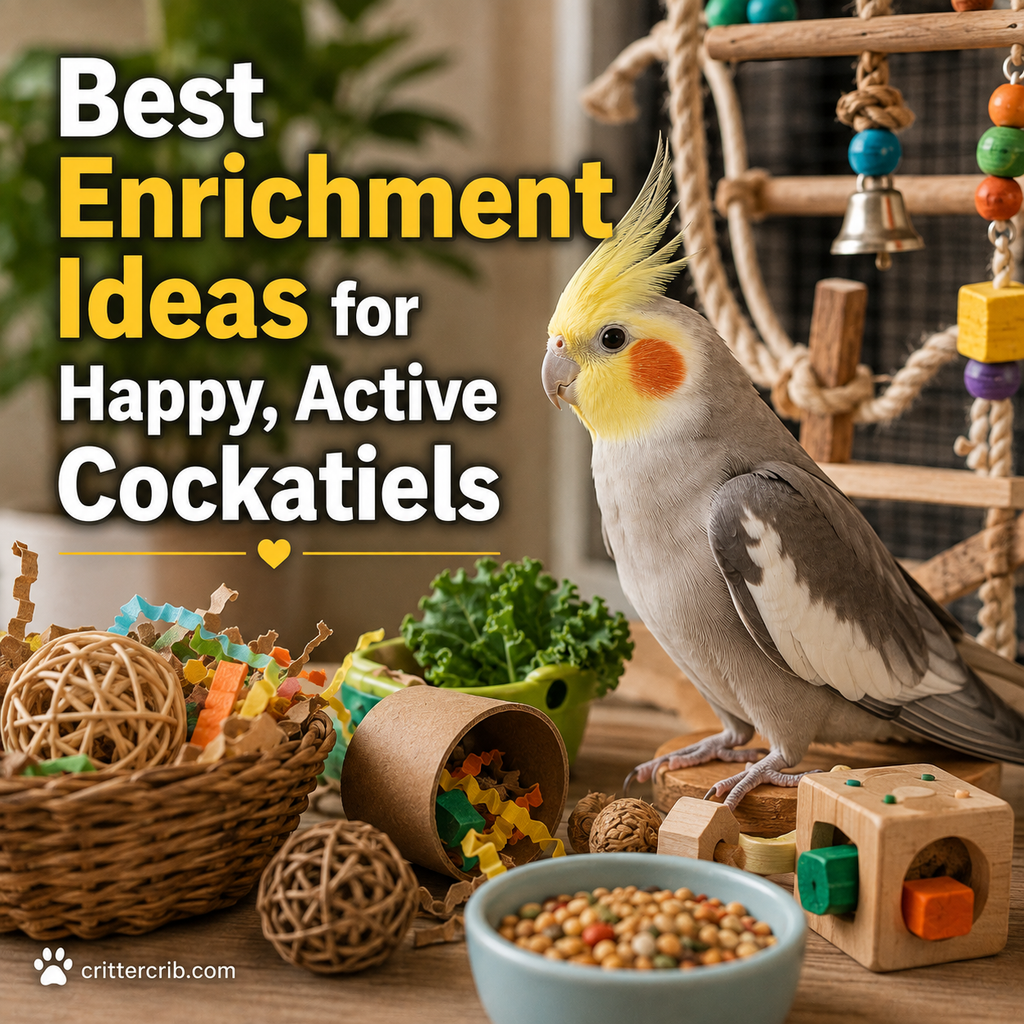
These are intelligent parrots with strong natural drives to explore, manipulate objects, chew, shred, and forage.
How to Avoid This Mistake
Provide opportunities for:
- Chewing
- Shredding
- Climbing
- Foraging
- Swinging
- Exploring
- Playing
- Learning simple behaviors
Rotate enrichment periodically.
You don’t need to buy new toys constantly. Sometimes changing how familiar items are presented is enough to create renewed interest.
18. Never Inspecting Toys
A toy that’s safe today may not remain safe forever.
Lovebirds chew aggressively for their size.
Over time, toys can develop loose fibers, exposed wires, broken pieces, or dangerous gaps.
How to Avoid This Mistake
Inspect toys regularly for:
- Frayed rope
- Loose threads
- Sharp edges
- Broken plastic
- Exposed wire
- Loose bells
- Large openings
- Small detachable parts
- Heavy contamination
Discard damaged items.
Don’t keep an unsafe toy just because it was expensive.
19. Not Allowing Enough Exercise
Even a good cage has limits.
Lovebirds benefit from opportunities to move, climb, and fly.
A bird that spends almost every moment inside a small enclosure has limited opportunities for exercise.
How to Avoid This Mistake
Provide a spacious cage and regular supervised out-of-cage time when you have a properly bird-proofed area.
Before letting your bird out:
- Close exterior doors.
- Secure windows.
- Turn off ceiling fans.
- Remove other pets.
- Block dangerous gaps.
- Remove access to open water.
- Keep the bird away from hot surfaces.
- Remove toxic plants.
- Make sure everyone knows the bird is loose.
Don’t open the cage first and bird-proof afterward.
20. Assuming Clipped Wings Make a Room Safe
A wing-clipped bird may still be capable of significant flight, particularly with a favorable air current or as feathers regrow.
Clipping doesn’t replace bird-proofing.
It can also change how a bird lands and moves.
How to Avoid This Mistake
Treat every lovebird as potentially capable of flight.
Secure doors and windows and turn off ceiling fans regardless of whether the bird’s wings have been clipped.
Discuss wing care with an avian veterinarian if you have questions.
21. Forcing Your Lovebird to Be Handled
You want your new lovebird to trust you.
So you reach into the cage and try to pick it up.
From the bird’s perspective, a giant hand is chasing it around its only safe space.
That’s not a great introduction.
How to Avoid This Mistake
Build trust gradually.
Start by:
- Spending time near the cage
- Speaking calmly
- Offering treats
- Moving slowly
- Allowing the bird to approach
- Introducing hands gradually
- Rewarding voluntary interaction
Let trust develop at the bird’s pace.
22. Ignoring Lovebird Body Language
Lovebirds may communicate discomfort before biting.
Owners sometimes miss those signals and conclude that the bird attacked “for no reason.”
Learn your individual bird’s behavior.
A lovebird that moves away, becomes tense, repeatedly warns you, or clearly tries to avoid contact is communicating something.
How to Avoid This Mistake
Respect early signs of discomfort.
Don’t repeatedly push interaction until the bird feels biting is its only remaining option.
The more you observe your lovebird, the easier its signals become to recognize.
23. Petting Your Lovebird Everywhere
A lovebird may enjoy physical affection, but where you pet a parrot matters.
Repeated stroking over the back, under the wings, or around the lower body can be interpreted as sexual behavior.
That may contribute to hormonal behavior.
How to Avoid This Mistake
Keep most petting around the head and neck.
If your lovebird doesn’t want to be touched, respect that preference.
A bird can have a strong relationship with you without being constantly handled.
24. Encouraging Nesting Behavior Accidentally
Hormonal behavior can sometimes be encouraged by the environment.
Potential triggers can include access to dark enclosed spaces and nesting materials.
A lovebird may become protective or territorial around a perceived nest.
How to Avoid This Mistake
Avoid intentionally providing nest-like spaces unless you’re working with appropriate breeding guidance.
Be cautious about allowing your bird to repeatedly explore:
- Boxes
- Drawers
- Cabinets
- Dark furniture gaps
- Blankets
- Enclosed huts
If hormonal behavior becomes difficult to manage, discuss environmental and health factors with an avian veterinarian.
25. Assuming Every Lovebird Needs a Mate
The name “lovebird” creates the impression that keeping one bird alone is automatically cruel.
The reality is more nuanced.
A single lovebird can have a fulfilling life when provided with adequate social interaction, enrichment, exercise, and attention.
Keeping two compatible lovebirds can also work very well.
How to Avoid This Mistake
Choose a social arrangement you can realistically support.
If keeping one bird, provide regular meaningful interaction.
If adding another lovebird, don’t simply place the newcomer into the existing bird’s cage.
Introduce birds carefully and be prepared for the possibility that they won’t immediately get along.
26. Putting Two Unfamiliar Lovebirds Together Immediately
Lovebirds can be territorial.
Two birds of the same species aren’t guaranteed to become best friends.
Immediately placing a newcomer into another bird’s established cage can cause aggression.
How to Avoid This Mistake
New birds should initially be kept separately, and appropriate quarantine and veterinary guidance should be considered before close contact.
Introduce birds gradually.
Monitor interactions and make sure each bird can access:
- Food
- Water
- Perches
- Resting areas
Never ignore persistent chasing, biting, or resource guarding.
27. Neglecting Cage Cleaning
Lovebirds create plenty of mess.
Food debris, feathers, droppings, shredded toys, and spilled water accumulate quickly.
Allowing waste to build up isn’t just unpleasant—it makes maintaining a healthy environment more difficult.
How to Avoid This Mistake
Create a simple routine.
Daily Tasks
- Replace drinking water
- Wash dirty bowls
- Remove spoiled fresh food
- Replace heavily soiled cage liners
- Clean obvious messes
Regular Deeper Cleaning
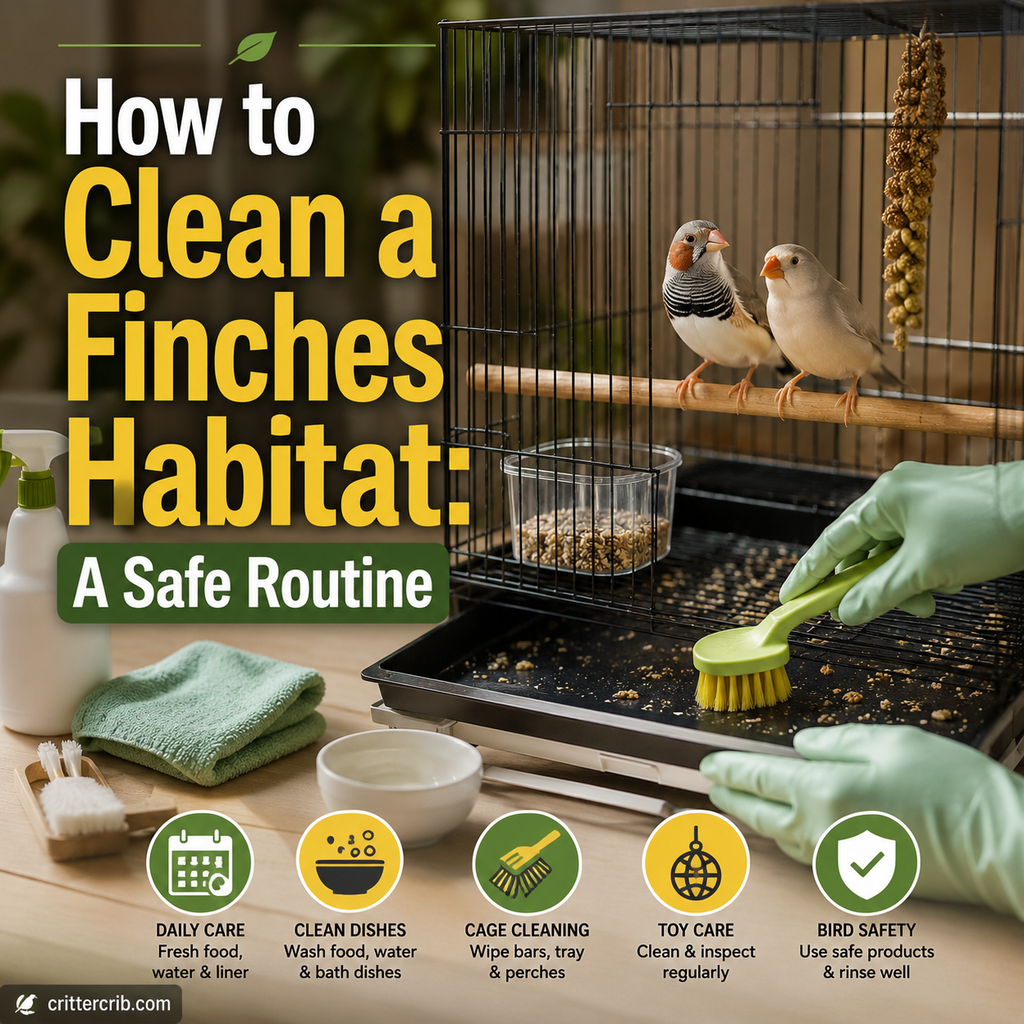
Clean:
- Cage bars
- Trays
- Grates
- Perches
- Toys
- Feeding dishes
- The floor and walls around the cage
Frequent light cleaning is much easier than tackling a heavily soiled cage.
28. Using Strong Cleaners Around the Bird
A sparkling cage isn’t helpful if cleaning creates dangerous fumes or residues.
How to Avoid This Mistake
Use bird-appropriate cleaning methods and rinse surfaces thoroughly.
Move the bird away from fumes while cleaning.
Never mix household chemicals, and don’t assume a product is safe around birds because it smells pleasant.
29. Waiting for Obvious Illness Before Calling a Veterinarian
Birds can hide signs of illness.
By the time a lovebird looks dramatically sick, the problem may already be serious.
Warning signs can include:
- Sudden loss of appetite
- Persistent fluffing
- Unusual sleepiness
- Sitting on the cage floor
- Weakness
- Breathing difficulty
- Pronounced tail bobbing while breathing
- Major changes in droppings
- Vomiting
- Balance problems
- Sudden changes in behavior
- Significant weight loss
How to Avoid This Mistake
Establish a relationship with an avian veterinarian before an emergency happens.
Learn your bird’s normal behavior and seek professional advice when something changes significantly.
30. Not Monitoring Your Lovebird’s Weight
Birds are covered in feathers, making changes in body condition difficult to see.
Regular weighing can reveal a trend that isn’t visually obvious.
How to Avoid This Mistake
Use an accurate gram scale suitable for birds.
Record your lovebird’s weight periodically under similar conditions.
Don’t obsess over tiny day-to-day fluctuations.
You’re looking for meaningful trends.
Contact your avian veterinarian if you notice concerning weight changes.
31. Assuming Every Behavior Problem Is “Just Behavioral”
A lovebird that suddenly becomes aggressive, withdrawn, quiet, or inactive may be experiencing more than a training problem.
Pain, illness, sleep disruption, hormones, fear, and environmental stress can all influence behavior.
How to Avoid This Mistake
When behavior changes suddenly, look at the whole picture.
Ask:
- Is the bird eating normally?
- Has its weight changed?
- Are the droppings normal?
- Is it sleeping enough?
- Has something changed in the environment?
- Could hormonal behavior be involved?
- Are there other signs of illness?
When health could be involved, consult an avian veterinarian.
32. Not Having an Emergency Plan
Bird emergencies rarely happen at convenient times.
You don’t want to discover at 11 p.m. that the nearest emergency clinic doesn’t treat birds.
How to Avoid This Mistake
Before you need help:
- Find an avian veterinarian
- Identify emergency clinics that accept birds
- Save their phone numbers
- Have a secure carrier
- Keep transportation available
- Maintain an emergency veterinary fund
Preparation can save valuable time.
A Better Daily Lovebird Care Routine
Good care doesn’t have to feel complicated.
A simple daily routine might look like this:
Morning
- Uncover or wake your bird at a consistent time
- Provide fresh water
- Check food
- Offer appropriate fresh foods
- Observe behavior and droppings
- Remove obvious cage mess
During the Day
- Provide enrichment
- Offer social interaction
- Allow supervised exercise when possible
- Check water for contamination
- Observe appetite and activity
Evening
- Remove spoiled fresh food
- Check the cage and toys
- Settle the environment down
- Provide a consistent bedtime
- Allow roughly 10 to 12 hours of quiet darkness
Consistency makes it easier to notice when something isn’t normal.
Lovebird Care Mistakes Checklist
Some of the most important mistakes to avoid include:
- Keeping a lovebird in a cage that’s too small
- Using unsafe bar spacing
- Overcrowding the cage
- Using only identical perches
- Feeding only seeds
- Changing diets too quickly
- Offering unsafe foods
- Leaving spoiled food in the cage
- Neglecting drinking water
- Keeping the cage near cooking fumes
- Exposing the bird to smoke and fragrances
- Providing inadequate sleep
- Using unsafe fabric huts
- Providing too little enrichment
- Ignoring damaged toys
- Providing too little exercise
- Failing to bird-proof the room
- Forcing handling
- Ignoring body language
- Encouraging hormonal behavior
- Introducing birds too quickly
- Neglecting cage hygiene
- Waiting too long to seek veterinary care
- Having no emergency plan
You don’t have to be a perfect bird owner.
You do need to keep learning and adjust when something isn’t working.
Frequently Asked Questions About Lovebird Care
Are Lovebirds Hard to Take Care Of?
Lovebirds aren’t necessarily difficult pets, but they require more than a cage, seed, and water.
They need proper nutrition, enrichment, social interaction, exercise, regular cleaning, adequate sleep, and access to avian veterinary care.
Can Lovebirds Live Alone?
Yes, a single lovebird can live successfully when it receives sufficient attention, enrichment, and social interaction.
Owners who can’t provide much daily interaction may want to research whether compatible companionship is appropriate for their situation.
Should Lovebirds Be Covered at Night?
A cage cover is optional.
It may help create darkness and reduce visual activity, but your bird still needs good ventilation and a quiet sleeping environment.
How Much Sleep Do Lovebirds Need?
Around 10 to 12 hours of quiet, uninterrupted darkness is a useful target for many lovebirds.
Individual circumstances can vary, so discuss concerns about sleep or hormonal behavior with an avian veterinarian.
Do Lovebirds Need a Nest to Sleep In?
No.
A pet lovebird can sleep comfortably on an appropriate perch.
Nest boxes and enclosed spaces can encourage nesting behavior and generally aren’t needed simply for sleeping.
Why Is My Lovebird Suddenly Biting Me?
Biting can have many causes, including fear, territorial behavior, hormones, overstimulation, ignored body language, or discomfort.
Sudden personality changes can sometimes have a medical component, so pay attention to other changes in behavior or health.
Is Seed Enough for Lovebirds?
An all-seed diet is generally not considered nutritionally complete for pet lovebirds.
Talk with an avian veterinarian about a balanced diet appropriate for your individual bird.
How Often Should I Clean a Lovebird Cage?
Basic cleaning should happen daily, including fresh water, dirty dishes, spoiled food, and heavily soiled liners.
More thorough cleaning of the cage, perches, trays, and accessories should be performed regularly based on how quickly they become dirty.
How Do I Know if I’m Taking Good Care of My Lovebird?
Look at the whole bird.
A healthy, comfortable lovebird will generally eat normally, maintain its feathers, remain active, explore, play, vocalize, rest comfortably, and interact with its surroundings.
Just as importantly, learn what’s normal for your individual bird so you can recognize meaningful changes.
Final Thoughts
Most lovebird care mistakes come from misunderstanding what a small parrot actually needs.
Their tiny size can be deceptive.
Lovebirds need space to move, opportunities to chew and forage, balanced nutrition, plenty of sleep, clean air, exercise, social interaction, and a safe environment. They also need owners who respect their body language instead of forcing interaction.
You don’t need the fanciest cage or a room full of expensive bird products.
Focus on the fundamentals.
Provide a spacious habitat with safe perches and enrichment. Feed an appropriate diet. Keep food and water clean. Protect your bird from fumes and household hazards. Allow plenty of sleep and exercise. Learn your lovebird’s normal behavior and establish care with an avian veterinarian before you have an emergency.
Most importantly, keep observing.
Your lovebird’s behavior will tell you a lot about whether your setup and routine are working.
Good bird care isn’t about never making a mistake. It’s about recognizing problems, making adjustments, and continuing to create a safer, healthier, and more interesting life for your bird.