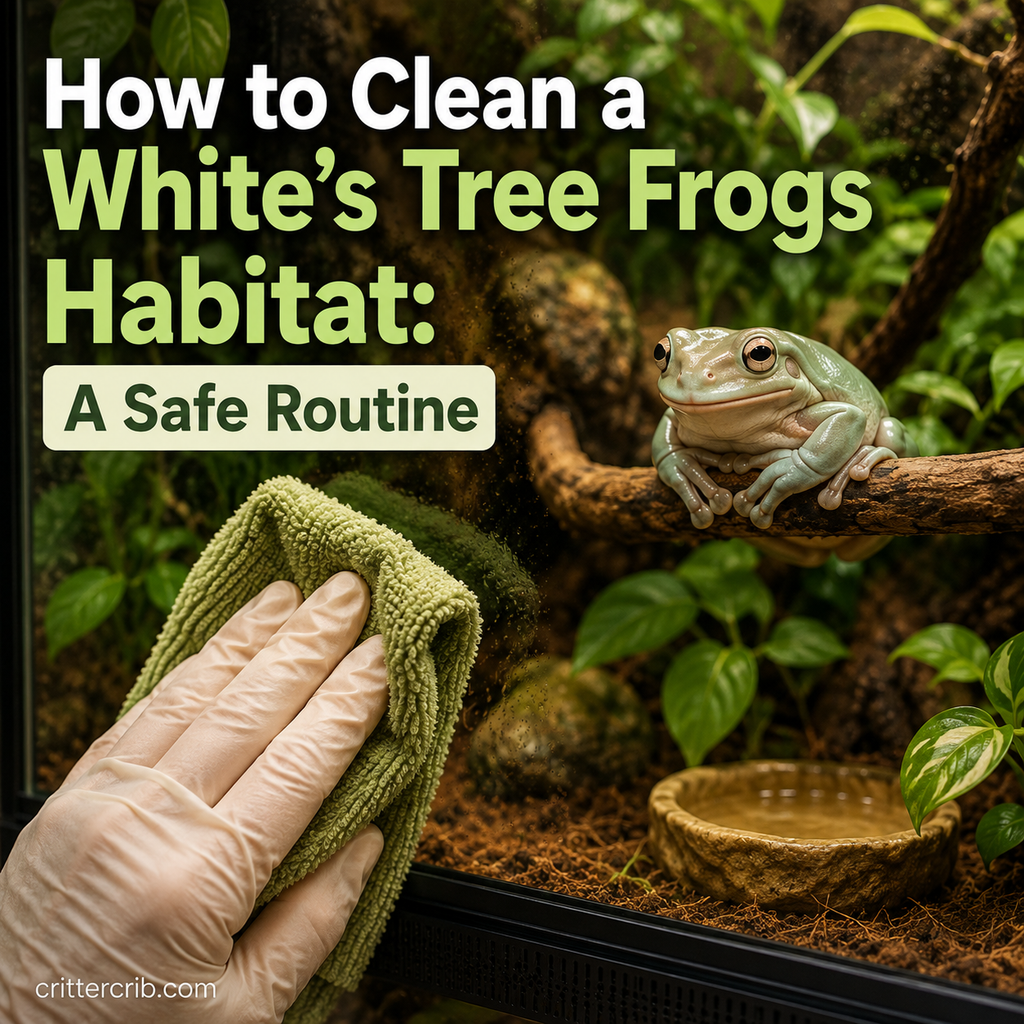
White’s tree frogs aren’t particularly difficult pets to clean up after, but their warm, humid habitat can get dirty surprisingly quickly.
Waste may end up on leaves, branches, glass, substrate, or even the side of the enclosure. Water dishes can become contaminated overnight, and consistently damp conditions make it especially important to stay ahead of mold, leftover food, and other organic debris.
The good news is that you usually don’t need to tear apart the entire habitat every few days.
A better approach is a simple routine: remove obvious waste regularly, keep the water dish clean, monitor the substrate, and perform more thorough cleaning when necessary. This keeps the enclosure sanitary without constantly disrupting your frog.
Here’s how to safely clean a White’s tree frog habitat, from quick daily maintenance to occasional deep cleaning.
How Often Should You Clean a White’s Tree Frog Habitat?
There isn’t one cleaning schedule that works for every enclosure.
How frequently you’ll need to clean depends on several factors, including:
- Number of frogs
- Enclosure size
- Type of substrate
- Humidity and ventilation
- Feeding routine
- Whether the habitat is bioactive
- How quickly the water dish becomes dirty
A traditional non-bioactive enclosure generally requires more hands-on cleaning than a well-established bioactive habitat.
For a typical enclosure, think of cleaning in three levels.
Daily or Near-Daily Maintenance
Check the habitat for:
- Frog waste
- Dead insects
- Uneaten food
- Dirty water
- Obvious mold
- Contaminated leaves or decorations
This inspection only takes a minute or two and prevents small messes from becoming bigger problems.
Weekly Maintenance
Once a week, give the enclosure a more careful inspection.
Depending on its condition, this may include:
- Cleaning the water dish thoroughly
- Wiping dirty glass
- Cleaning soiled decorations
- Removing contaminated substrate
- Checking underneath hides and décor
- Inspecting plants and branches for mold
You don’t necessarily need to replace everything every week.
Periodic Deep Cleaning
A traditional setup will occasionally need a more thorough cleaning in which substrate is replaced and enclosure surfaces and furnishings are cleaned.
How often depends on how quickly the habitat becomes soiled.
Rather than following an arbitrary calendar date, pay attention to the enclosure itself. Persistent odors, heavily contaminated substrate, recurring mold, and accumulated waste are signs that more substantial cleaning is needed.
What Supplies Do You Need to Clean the Habitat?
Keeping a small set of amphibian-care cleaning supplies separate from household cleaning products makes the job easier.
Useful supplies include:
- Paper towels
- Disposable gloves
- Small waste scoop or spoon
- Dedicated cleaning brush or sponge
- Bucket used only for animal-care equipment
- Clean replacement substrate
- Dechlorinated water
- Amphibian-safe disinfectant when appropriate
- Temporary ventilated container for the frog
Don’t use the same sponge that cleans your kitchen sink.
Dedicated equipment reduces the chance of introducing soap, household cleaners, oils, or other contaminants into the enclosure.
Why Cleaning Products Matter With Amphibians
Amphibians require extra caution around chemicals.
A White’s tree frog’s skin plays an important role in its interaction with the environment. Residues that might seem insignificant in another pet’s enclosure can potentially expose a frog directly to irritating or harmful substances.
That means ordinary household cleaners aren’t automatically appropriate for a frog habitat.
Avoid casually using products such as:
- Glass cleaner
- Scented disinfectant sprays
- Bathroom cleaners
- Kitchen degreasers
- Air fresheners
- Essential oils
- Strongly fragranced soaps
Never spray household cleaning products into an occupied enclosure.
When a disinfectant is necessary, use a product known to be appropriate for reptile or amphibian equipment and follow its directions carefully, including required dilution, contact time, rinsing, and drying.
For routine cleaning, hot water and physical removal of debris may be all that’s needed for many surfaces.
Wash Your Hands Before Working in the Enclosure
Cleaning starts before you touch anything inside the habitat.
Wash your hands thoroughly and rinse away all soap residue before working around your frog or its enclosure.
Alternatively, use appropriate disposable gloves.
This helps prevent lotions, fragrances, oils, cleaning chemicals, and other substances on your hands from being transferred into the habitat.
Wash your hands again after you’re finished.
Amphibians and their environments can carry microorganisms such as Salmonella, so good hygiene protects you as well as your frog.
Don’t clean frog equipment in areas where food is prepared if you can avoid it.
Daily White’s Tree Frog Habitat Cleaning
Most of your enclosure maintenance should be quick spot cleaning rather than complete tear-downs.
Here’s a simple routine.
1. Check for Frog Waste
White’s tree frogs don’t always choose convenient places to go to the bathroom.
You might find waste:
- On the substrate
- Stuck to the glass
- On branches
- Inside the water dish
- On plant leaves
- On hides or ledges
Remove solid waste as soon as you notice it.
If surrounding substrate is contaminated, scoop out that portion as well rather than removing only the visible waste.
2. Remove Dead or Uneaten Insects
Don’t allow uneaten feeder insects to remain in the habitat indefinitely.
Remove dead prey and leftovers promptly.
Some live feeder insects can also bother a resting frog if left inside the enclosure.
Keeping track of what goes in during feeding makes it much easier to notice what hasn’t been eaten.
3. Inspect the Water Dish
White’s tree frogs may soak in their water dish, and they sometimes defecate in it.
That means clean-looking water isn’t guaranteed to remain clean for long.
If the water contains substrate, waste, insects, or other debris, replace it immediately.
4. Look for Mold
Small amounts of organic material can begin breaking down quickly in a warm, humid terrarium.
Check:
- Substrate
- Wood
- Leaf litter
- Plant material
- Food debris
- Areas with poor airflow
Remove moldy material and investigate why it developed.
Repeated mold growth may indicate excessive moisture, inadequate ventilation, decaying organic matter, or another husbandry issue.
How to Clean a White’s Tree Frog Water Dish
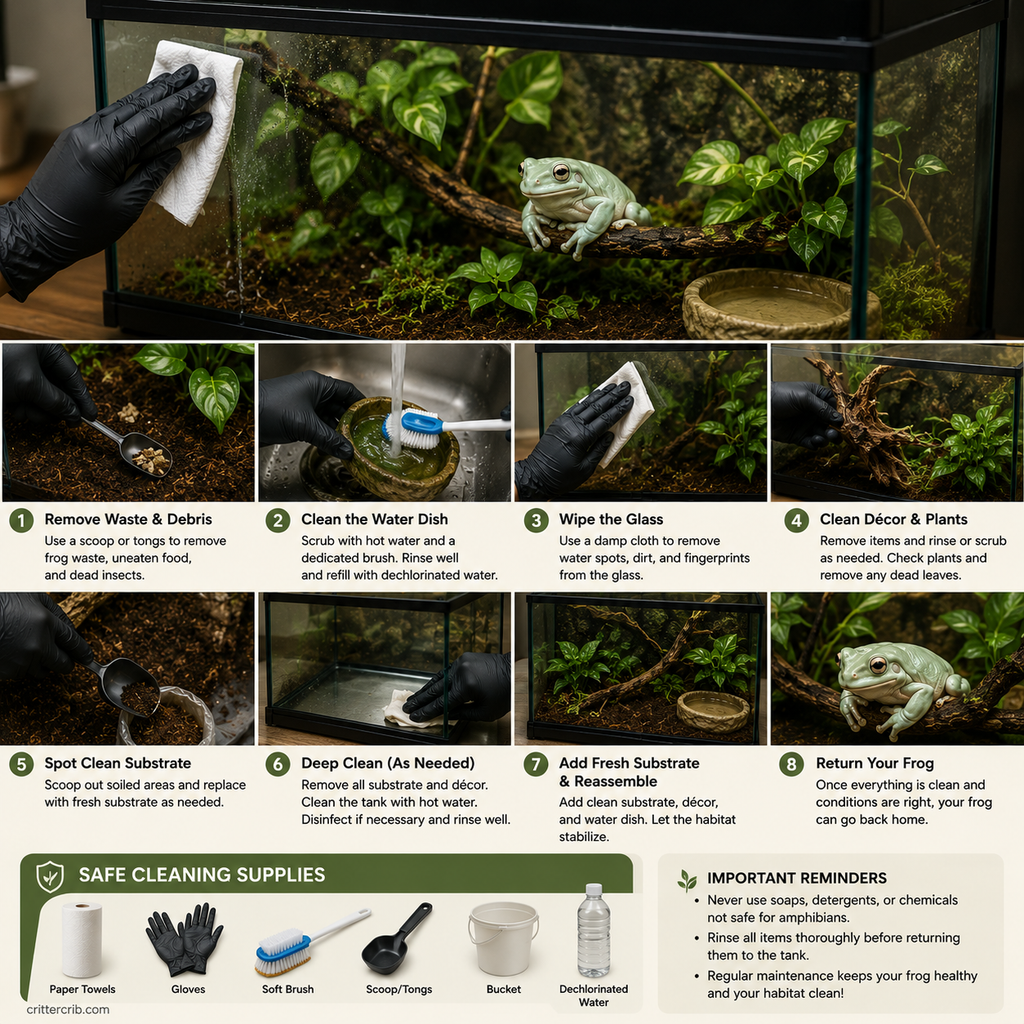
The water dish deserves special attention because your frog’s body comes directly into contact with it.
Ideally, inspect it every day.
To clean it:
- Remove the dish from the enclosure.
- Empty the old water.
- Remove visible waste or substrate.
- Scrub the dish with a dedicated brush or sponge.
- Rinse it thoroughly.
- Refill it with fresh, appropriately treated water.
- Return it to the enclosure.
If you’re using a disinfectant periodically, make sure it is appropriate for animal-care equipment and follow the manufacturer’s instructions.
Never leave cleaning residue in the dish.
White’s tree frogs should have access to clean water suitable for amphibians, which generally means treating tap water appropriately when necessary rather than assuming untreated tap water is safe.
How to Spot-Clean the Substrate
Substrate doesn’t necessarily need to be completely replaced every time your frog makes a mess.
For routine maintenance, spot cleaning is much less disruptive.
When you find waste:
- Remove the waste.
- Scoop out the substrate directly underneath and around it.
- Check whether contamination extends deeper.
- Add clean substrate if necessary.
- Monitor the area for odor or mold.
Don’t simply stir contaminated substrate back into the enclosure.
Over time, organic waste accumulates even when you’re diligent about spot cleaning. That’s why non-bioactive setups still require periodic substrate replacement.
How to Clean Branches, Hides, and Decorations
White’s tree frogs use vertical space extensively, so waste doesn’t stay on the ground.
Branches, vines, hides, ledges, and artificial plants can all become dirty.
If a removable decoration is heavily soiled, take it out and clean it separately.
Use a dedicated brush and water to remove physical debris.
When additional disinfection is necessary, use an appropriate method for the material and make sure the item is thoroughly rinsed and safe before returning it to the enclosure.
Porous materials require more consideration than smooth plastic or glass because liquids can penetrate them.
Natural wood can also develop mold if it remains constantly saturated.
Inspect decorations regularly for:
- Mold
- Sharp edges
- Loose pieces
- Deterioration
- Trapped waste
- Areas where insects can hide
Cleaning time is a good opportunity to check whether enclosure furnishings are still safe.
How to Clean the Glass
White’s tree frogs are talented at making clean glass look dirty.
Water spots, soil, frog waste, and footprints can quickly accumulate.
For minor marks, a damp cloth or paper towel may be enough.
Avoid spraying ordinary household glass cleaner onto the terrarium.
If you’re cleaning the inside glass, use methods that won’t leave potentially harmful residues.
The outside of the glass is less sensitive, but be careful with sprays. Apply cleaner to the cloth away from the enclosure rather than spraying toward ventilation openings where droplets could enter the habitat.
You don’t need perfectly polished glass for your frog’s benefit. Cleaning the inside should be about sanitation first and appearance second.
When Does a White’s Tree Frog Enclosure Need a Deep Clean?
A deep clean is more involved than spot cleaning.
You may need one when:
- Substrate has become heavily contaminated
- The enclosure develops persistent unpleasant odors
- Mold repeatedly appears
- Waste has accumulated in inaccessible areas
- Décor has become heavily soiled
- You’re resetting a non-bioactive habitat
- A veterinary professional recommends disinfection because of a health concern
A healthy enclosure shouldn’t require constant complete sterilization.
Overcleaning can create unnecessary work and repeatedly disturb your frog.
Instead, combine frequent spot cleaning with deeper cleaning when conditions actually call for it.
How to Deep Clean a White’s Tree Frog Habitat
When it’s time for a complete reset, work methodically.
1. Prepare a Temporary Container
Before dismantling the enclosure, prepare somewhere safe for your frog.
Use a secure, ventilated container that prevents escape and keeps the frog protected while you work.
Make sure environmental conditions remain appropriate, particularly if cleaning will take a while.
2. Move the Frog Safely
Minimize unnecessary handling.
If handling is required, make sure your hands are appropriately clean and thoroughly rinsed or use suitable clean gloves.
Move the frog directly into its temporary container and secure the lid.
3. Remove Furnishings
Take out:
- Water dish
- Hides
- Branches
- Vines
- Artificial plants
- Other removable decorations
Keep track of anything that needs separate cleaning.
4. Remove Old Substrate
Dispose of contaminated substrate from a traditional setup.
Check corners and underneath decorations where waste may have accumulated.
5. Remove Physical Debris
Before disinfecting anything, remove dirt, waste, and other organic material.
This is an important distinction.
Cleaning removes physical debris.
Disinfection reduces microorganisms on an already cleaned surface.
Trying to disinfect a surface that’s still covered in dirt or waste is much less effective.
6. Clean the Enclosure
Wipe and scrub the interior surfaces using an appropriate cleaning method.
Pay attention to:
- Corners
- Door tracks
- Ventilation areas
- Beneath the water dish
- Areas behind backgrounds or removable furnishings
These are common places for debris to accumulate.
7. Disinfect When Necessary
If you’re using a disinfectant, choose one appropriate for the enclosure and amphibian-care equipment.
Follow the product instructions exactly.
More concentrated does not mean safer or more effective.
Pay attention to the specified:
- Dilution
- Contact time
- Rinsing requirements
- Drying requirements
Never return your frog to an enclosure containing chemical residue or fumes.
8. Clean the Decorations
Wash and, when appropriate, disinfect reusable enclosure furnishings separately.
Discard anything that cannot be cleaned safely or has begun deteriorating.
9. Add Fresh Substrate
Once the enclosure is clean, rinsed as necessary, and ready for use, add fresh appropriate substrate.
Restore the habitat’s normal moisture level rather than saturating everything.
10. Reassemble the Habitat
Return the clean water dish, branches, plants, hides, and other furnishings.
Make sure climbing structures are stable.
White’s tree frogs are relatively chunky frogs, so branches and perches should be capable of supporting their weight.
11. Check the Environment
Before returning your frog, verify that the enclosure is back within its appropriate temperature and humidity range.
Don’t assume conditions are correct immediately after a full reset.
12. Return Your Frog
Once the habitat is safe and environmental conditions are appropriate, return the frog and allow it to settle.
A little disruption after a major cleaning is understandable.
Give the frog time rather than repeatedly handling it or rearranging the enclosure again.
Should You Completely Sterilize the Habitat Every Time?
Usually, no.
Routine cleaning and sterilization aren’t the same thing.
For normal maintenance, the goal is to keep the enclosure sanitary by removing waste, dirty substrate, spoiled food, and other contaminants.
Constantly attempting to sterilize every surface isn’t necessary for a healthy frog under ordinary circumstances.
Aggressive cleaning can also introduce its own problems if disinfectants aren’t used correctly.
There are situations where more thorough disinfection may be appropriate, particularly when dealing with certain illnesses or preparing an enclosure after a sick animal.
In those cases, follow guidance from a veterinarian experienced with amphibians when possible.
How Do You Clean a Bioactive White’s Tree Frog Enclosure?
Bioactive habitats require a different approach.
A functioning bioactive enclosure contains living organisms—including microorganisms and small invertebrates—that help break down organic waste.
If you completely remove and disinfect everything, you’ve essentially destroyed the biological system you were trying to establish.
Instead, bioactive maintenance generally focuses on:
- Removing large amounts of frog waste
- Removing uneaten food
- Cleaning the water dish
- Trimming unhealthy plants
- Removing obvious mold outbreaks when necessary
- Cleaning dirty glass
- Monitoring the clean-up crew
- Replacing leaf litter as needed
- Maintaining appropriate moisture
Springtails and isopods can help process organic material, but they aren’t magical janitors.
You still need to maintain the enclosure.
A bioactive habitat can reduce certain cleaning tasks, but it doesn’t eliminate them.
Common Habitat Cleaning Mistakes
A few cleaning habits can cause more problems than they solve.
Using Household Cleaning Sprays
A product being safe for your kitchen counter doesn’t mean it belongs inside an amphibian enclosure.
Be especially cautious with fragranced products and cleaners that leave residues.
Cleaning Only When the Tank Smells
A strong odor shouldn’t be your reminder that it’s cleaning day.
Regular spot cleaning prevents waste from reaching that point.
Ignoring the Water Dish
The water dish can become contaminated faster than the rest of the habitat.
Inspect it daily.
Leaving Feeder Insects Behind
Keeping track of uneaten prey helps maintain cleanliness and prevents insects from bothering the frog.
Keeping the Substrate Constantly Soaked
White’s tree frogs need appropriate humidity, but that doesn’t mean the substrate should be permanently waterlogged.
Excessive moisture can contribute to stagnant conditions and mold.
Deep Cleaning Too Frequently
Repeatedly dismantling a clean enclosure creates unnecessary stress and work.
Spot cleaning should handle much of your regular maintenance.
Returning the Frog Too Soon
After using a disinfectant, make sure all surfaces and equipment have been properly rinsed or otherwise prepared according to the product instructions.
The enclosure should be safe before the frog goes back inside.
A Simple White’s Tree Frog Cleaning Schedule
You don’t need an elaborate spreadsheet to keep the habitat clean.
A basic routine can look something like this:
Daily
- Check for feces
- Remove dead or uneaten insects
- Inspect and refresh the water
- Look for obvious mold
- Check general enclosure conditions
Weekly
- Clean the water dish thoroughly
- Wipe visibly dirty glass
- Inspect branches, hides, and plants
- Spot-clean contaminated substrate
- Check difficult-to-see areas for waste
Periodically
- Replace heavily soiled substrate in non-bioactive setups
- Deep-clean furnishings as needed
- Clean difficult-to-access enclosure areas
- Perform a larger habitat reset when conditions warrant it
Your actual schedule may be slightly different.
A large enclosure housing one frog may stay cleaner than a smaller habitat containing several frogs. The best routine is the one that responds to the actual condition of the enclosure.
How Can You Keep the Habitat Cleaner Between Cleanings?
A few simple habits make enclosure maintenance much easier.
First, remove waste when you see it rather than waiting for a designated cleaning day.
Second, avoid adding more food than your frog is likely to eat.
Third, maintain appropriate ventilation and moisture instead of keeping every surface constantly wet.
It also helps to design the enclosure with maintenance in mind.
Ask yourself:
Can I remove the water dish easily?
Can I reach behind the branches?
Can I see the substrate?
Can decorations be removed for cleaning?
An enclosure can look beautiful while still being practical.
You’ll appreciate that practicality the first time your frog decides to leave a present behind the largest branch in the tank.
Frequently Asked Questions About Cleaning a White’s Tree Frog Habitat
How often should I clean my White’s tree frog tank?
Inspect the enclosure daily and remove waste, uneaten food, and contaminated water as necessary. More thorough cleaning can be performed periodically based on how quickly the habitat becomes dirty. Bioactive and traditional enclosures have different maintenance requirements.
Should I change my White’s tree frog’s water every day?
The water dish should be inspected daily and kept clean. Replace contaminated water immediately, particularly if the frog has defecated in it or substrate and insects have fallen into it.
Can I use dish soap to clean a frog tank?
It’s best to avoid casually using household soaps inside an amphibian habitat because residues can be difficult to remove completely. Use cleaning methods and products appropriate for amphibian-care equipment.
Can I use vinegar to clean a White’s tree frog enclosure?
Vinegar is sometimes used for removing mineral deposits from glass and equipment, but anything used inside the habitat should be thoroughly rinsed so no residue or strong odor remains before the frog is returned. For actual disinfection, use an appropriate disinfecting method rather than assuming vinegar will address every sanitation concern.
Can I use glass cleaner on a frog terrarium?
Avoid spraying household glass cleaner inside the enclosure. When cleaning exterior glass, apply the product to a cloth away from the habitat rather than spraying toward ventilation openings.
Do bioactive White’s tree frog tanks need cleaning?
Yes. Bioactive doesn’t mean maintenance-free. You’ll still need to clean the water dish, remove uneaten food and excessive waste, maintain plants and leaf litter, wipe glass, and monitor the overall health of the ecosystem.
Do I need to remove my frog when spot cleaning?
Not necessarily. Small maintenance tasks can often be completed without removing the frog as long as you aren’t disturbing it or using cleaning chemicals nearby. A full deep clean is different and usually requires temporarily moving the frog to a secure container.
Why does my White’s tree frog enclosure smell?
Persistent odor can indicate accumulated waste, contaminated substrate, stagnant water, excessive moisture, decaying food or plant material, or inadequate ventilation. Identify the source rather than trying to cover the smell with fragrances or air fresheners.
How do I clean frog poop off decorations?
Remove the decoration when practical and use water with a dedicated brush to physically remove the waste. If further disinfection is necessary, use an appropriate method for the material and make sure the item is completely safe before returning it to the enclosure.
A Clean Habitat Doesn’t Have to Mean Constant Deep Cleaning
Keeping a White’s tree frog habitat clean is mostly about consistency.
Remove waste when you see it. Keep the water dish clean. Don’t allow dead insects to accumulate. Watch the substrate for contamination and mold, and clean branches and other surfaces when they become dirty.
Those small habits prevent most major messes.
Occasional deeper cleaning is still part of maintaining a traditional enclosure, but you shouldn’t need to completely dismantle the habitat every few days.
And if you have a bioactive setup, remember that the goal is to maintain the living system—not sterilize it.
Once you settle into a routine, habitat maintenance becomes fairly straightforward. A couple of minutes spent checking the enclosure regularly is much easier than waiting until you’re faced with a smelly terrarium that needs to be completely torn apart.
Your frog probably won’t appreciate your housekeeping skills.
But you’ll definitely appreciate the cleaner tank.