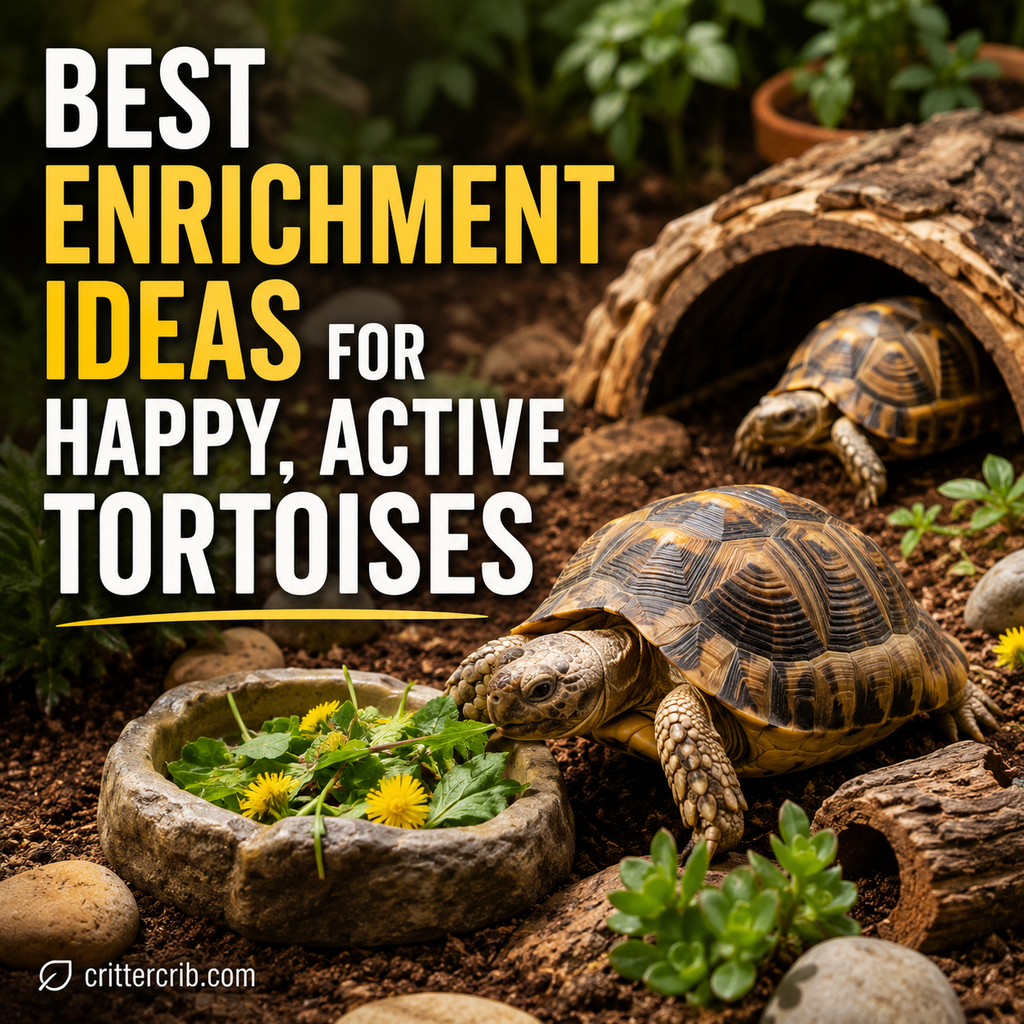
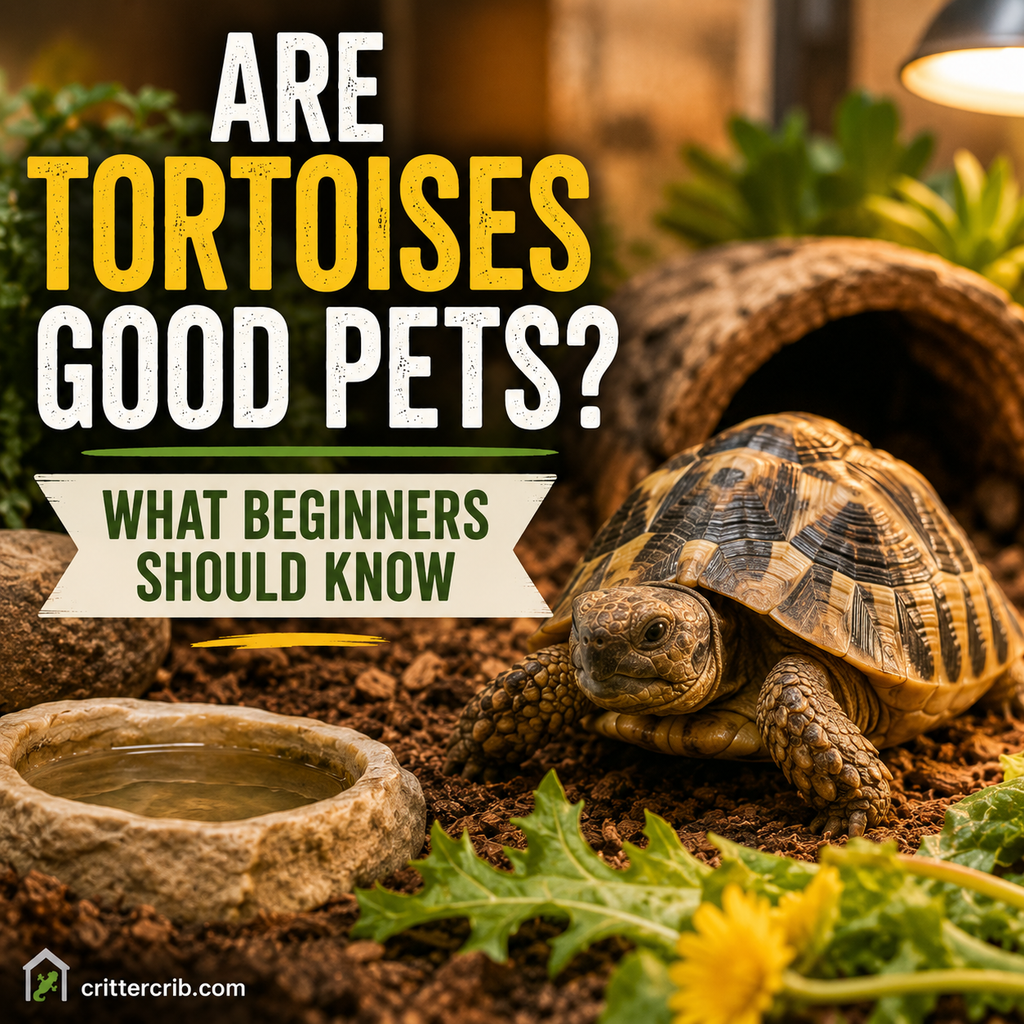
Tortoises can make fascinating pets. They’re quiet, don’t need daily walks, and can become surprisingly confident and curious around the people who care for them.
They’re also a much bigger commitment than their slow-moving appearance might suggest.
Depending on the species, a tortoise may live for several decades, require a large enclosure, need specialized heating and UVB lighting, and eventually become much larger than the tiny animal you first brought home.
So, are tortoises good pets?
For the right person, absolutely. But they’re not necessarily easy or low-maintenance pets, and they’re definitely not a good choice for someone looking for a short-term commitment.
Before getting one, here’s what beginners should know.
What Are Tortoises Like as Pets?
Tortoises are terrestrial reptiles with sturdy bodies, protective shells, and behaviors adapted primarily for life on land.
As pets, they’re generally quiet and independent.
A tortoise won’t greet you in quite the same way a dog does, but many become familiar with routines and quickly learn when food is coming. Some confidently approach their keepers and investigate what’s happening around them.
They’re also interesting to observe.
Depending on the species and individual, you may see your tortoise:
- Foraging
- Digging
- Basking
- Exploring
- Moving objects
- Investigating new foods
- Resting in hides
- Patrolling its enclosure
Their personalities can be more noticeable than first-time reptile owners expect.
At the same time, tortoises aren’t domesticated companion animals in the same sense as dogs and cats. Their care should focus on allowing natural behaviors rather than expecting constant interaction.
Are Tortoises Good Pets for Beginners?
Some tortoise species can be suitable for committed beginners.
The important word is committed.
Tortoises aren’t difficult because they need constant attention. The challenge is creating and maintaining the correct environment over many years.
A beginner needs to understand:
- Enclosure size
- Adult size
- Heating
- UVB lighting
- Temperature gradients
- Diet
- Calcium requirements
- Humidity
- Substrate
- Hydration
- Veterinary care
- Species-specific needs
Once a proper habitat is established, daily care can be relatively straightforward.
Setting up that habitat correctly is where beginners need to do their homework.
Tortoises Can Live for a Very Long Time
This should be one of your first considerations.
Many commonly kept tortoises can live for several decades with appropriate care. Some species may live 50 years or longer.
That makes getting a tortoise very different from getting a pet with a 5- or 10-year expected lifespan.
Think about what your life could look like in:
- 10 years
- 20 years
- 30 years
- 40 years
You may move, change jobs, have children, retire, or live somewhere completely different.
Your tortoise may still be with you.
For younger owners, there’s even a possibility that someone else will eventually need to inherit the animal.
A tortoise’s longevity can be one of the most rewarding things about keeping one, but only if you’re prepared for the responsibility.
Tortoises Need More Space Than You Might Expect
Tiny juvenile tortoises are misleading.
That little tortoise sitting comfortably in your hand isn’t going to stay that size.
Even relatively small species require meaningful floor space as adults. Larger species can require outdoor habitats or dedicated areas of a home or yard.
Tortoises are active walkers when given enough room.
They need space to:
- Explore
- Forage
- Thermoregulate
- Exercise
- Dig
- Choose between hides
- Move between warmer and cooler areas
A small aquarium isn’t an appropriate lifelong home for most tortoises.
Floor Space Matters More Than Height
Tortoises are terrestrial.
Unlike arboreal reptiles, they don’t need tall enclosures for climbing.
Prioritize length and width.
The enclosure should be large enough to create distinct warm, cool, basking, feeding, and hiding areas.
For some species, a large tortoise table or custom-built enclosure may work better than a conventional glass tank.
Indoor vs. Outdoor Tortoise Housing
Whether your tortoise can live outdoors depends on:
- Species
- Climate
- Season
- Temperature
- Humidity
- Predator risk
- Available space
Outdoor housing can be excellent for suitable species in appropriate climates.
Natural sunlight provides UVB, and a well-designed outdoor enclosure can offer much more space for walking, grazing, digging, and exploring.
But you can’t simply put a tortoise in the backyard.
An outdoor enclosure needs:
- Secure perimeter walls
- Protection against digging out
- Predator protection
- Shade
- Sunny areas
- Shelter
- Fresh water
- Appropriate plants
- Safe temperatures
Some tortoises are remarkably good diggers and surprisingly persistent escape artists.
The enclosure needs to be designed around that behavior.
Tortoises Need Heat and UVB Lighting
If your tortoise lives indoors, proper lighting is essential.
Tortoises are ectothermic, which means they rely on their environment to regulate body temperature.
The enclosure needs a temperature gradient with access to:
- A warm basking area
- Moderate ambient temperatures
- A cooler retreat
Exact temperatures depend on the species.
Don’t use one generic temperature chart for every tortoise.
Why UVB Matters
Tortoises also require appropriate UVB exposure.
UVB allows reptiles to produce vitamin D3, which plays an important role in calcium metabolism.
Without proper UVB, diet, and calcium, tortoises can develop serious skeletal and shell problems, including metabolic bone disease.
Indoor tortoises generally need a quality reptile UVB system positioned correctly according to the lamp manufacturer’s recommendations.
UVB bulbs also need periodic replacement because UV output decreases over time, even when the bulb still produces visible light.
What Do Pet Tortoises Eat?
Diet varies significantly by species.
Many commonly kept tortoises are primarily herbivorous and eat a plant-based diet.
Depending on the species, foods may include:
- Grasses
- Weeds
- Leafy greens
- Flowers
- Other appropriate plant material
Some tortoises require diets particularly high in grasses and fibrous vegetation.
Fruit isn’t appropriate as a major dietary component for many species.
This is another reason species identification matters.
A diet that’s appropriate for one tortoise isn’t automatically ideal for another.
Calcium Is Important
Growing and maintaining a large shell and skeleton requires appropriate calcium nutrition.
Tortoises need a suitable balance of calcium, diet, vitamin D3, and UVB exposure.
Don’t rely solely on supplements to correct an otherwise poor diet or inadequate lighting.
Good nutrition and good husbandry work together.
Do Tortoises Need Water?
Yes.
There’s a persistent misconception that desert or dry-climate tortoises don’t need much access to water.
Even species adapted to relatively dry environments still need proper hydration.
Provide access to fresh water in an appropriate shallow dish that’s easy for the tortoise to enter and exit.
Depending on the species, age, and husbandry routine, soaking may also be used to support hydration.
Young tortoises can be particularly vulnerable to dehydration.
The enclosure’s humidity and substrate also play roles in maintaining healthy hydration.
Are Tortoises Low-Maintenance Pets?
They’re lower maintenance in some ways and higher maintenance in others.
You won’t need to:
- Walk them
- Groom fur
- Provide constant social interaction
- Entertain them throughout the day
But you will need to:
- Prepare appropriate food
- Provide fresh water
- Clean waste
- Maintain substrate
- Monitor temperatures
- Maintain humidity
- Check heating equipment
- Maintain UVB lighting
- Monitor shell and body condition
- Provide veterinary care when needed
The habitat does much of the work only when it’s properly designed and maintained.
Calling tortoises “easy pets” can give beginners the wrong impression.
A better description is that they’re relatively independent pets with specialized environmental needs.
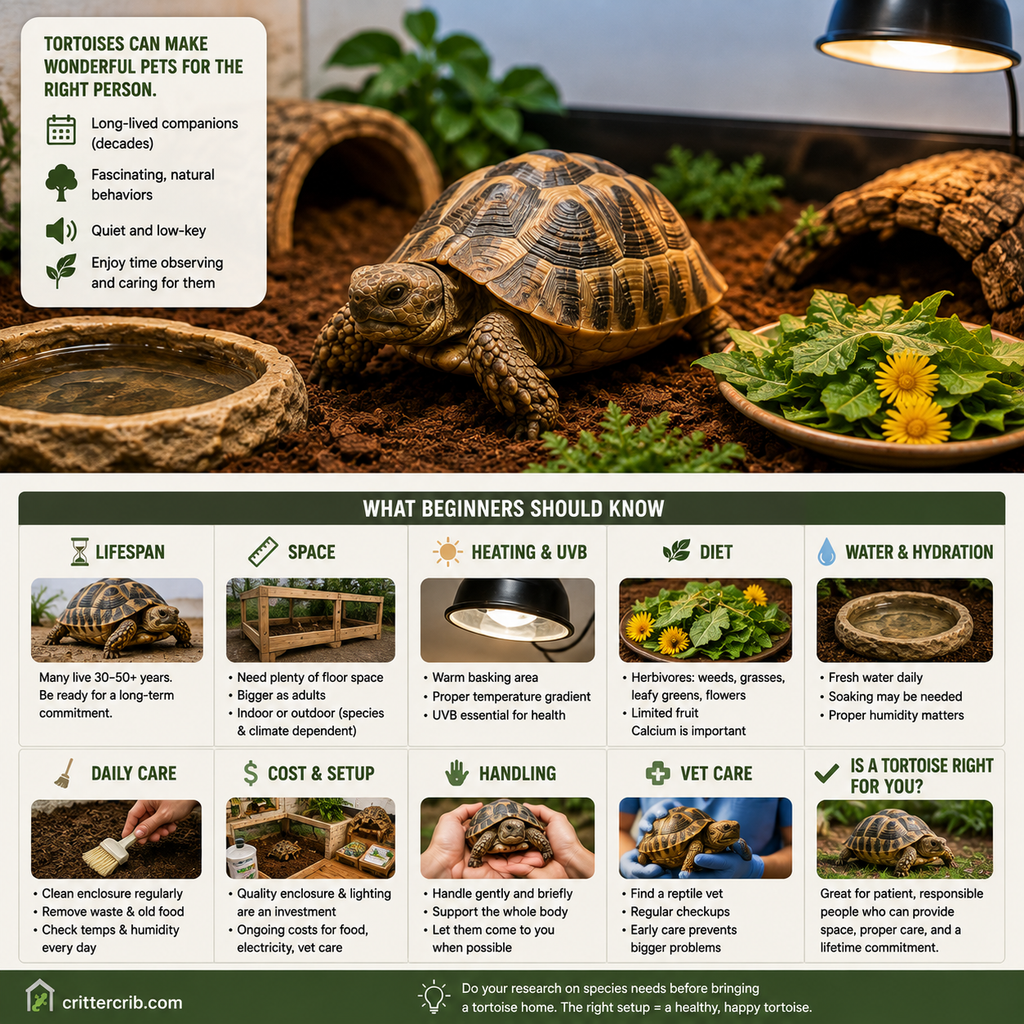
How Much Does a Tortoise Cost?
The tortoise itself is only part of the expense.
Initial setup costs may include:
- Enclosure
- UVB fixture
- UVB lamp
- Basking lamp
- Heating equipment
- Thermostat or appropriate controls
- Digital thermometers
- Hygrometer
- Substrate
- Hides
- Water dish
- Feeding equipment
- Decorations and enrichment
Then there are ongoing expenses:
- Food
- Replacement UVB bulbs
- Electricity
- Substrate
- Supplements
- Veterinary care
- Replacement equipment
Larger species may eventually require substantial outdoor construction.
Before buying a tortoise, price the adult habitat rather than just the baby setup.
That gives you a much more realistic picture of ownership costs.
Do Tortoises Like Being Handled?
Tortoises generally aren’t pets that need frequent handling.
Some become very comfortable around their keepers and may approach willingly, particularly when they associate people with food.
That doesn’t mean they want to be picked up repeatedly.
Being lifted off the ground can be stressful for a terrestrial animal.
When handling is necessary:
- Approach calmly.
- Use both hands.
- Support the entire body.
- Keep the tortoise upright.
- Hold it close to the ground when possible.
- Never drop or flip it.
For everyday interaction, allowing the tortoise to approach and investigate you is often more appropriate than repeatedly picking it up.
Can Tortoises Recognize Their Owners?
Tortoises can learn routines and become familiar with people, particularly those associated with feeding and care.
You may notice your tortoise walking toward you, following movement, or becoming active when you approach.
It’s tempting to interpret this exactly like affection from a dog.
It’s better to avoid assuming the emotional motivation behind the behavior.
What you can say is that tortoises are capable of learning familiar routines and responding to their environment in ways that make them engaging pets.
Are Tortoises Good Pets for Children?
A tortoise can be an interesting family pet, but an adult should be responsible for its care.
Children shouldn’t be expected to independently manage:
- UVB lighting
- Heating
- Temperature monitoring
- Nutrition
- Enclosure maintenance
- Veterinary care
There’s also a hygiene consideration.
Like other reptiles, tortoises can carry Salmonella even when they appear healthy.
Children should be taught to wash their hands thoroughly with soap and water after touching the tortoise, enclosure, substrate, water dish, or equipment.
Reptiles shouldn’t be allowed on kitchen counters, dining tables, or other food-preparation surfaces.
Very young children need particularly careful supervision around reptiles.
Are Tortoises Friendly?
Many pet tortoises become confident around their keepers.
Some will readily approach when they see you.
Individual personalities vary considerably.
One tortoise may confidently investigate everything in sight, while another may be much more cautious.
Their behavior can also change as they mature.
“Friendly” is therefore somewhat subjective.
If you’re looking for a pet that enjoys cuddling and physical affection, a tortoise probably isn’t the best match.
If you enjoy observing an animal, providing enrichment, and gradually learning its individual behavior, a tortoise can be extremely rewarding.
Do Tortoises Smell?
A properly maintained tortoise enclosure shouldn’t produce a powerful odor.
Waste and old food should be removed regularly.
Bad smells can indicate:
- Accumulated waste
- Spoiled food
- Dirty substrate
- Standing water
- Mold
- Poor ventilation
Cleaning needs vary depending on enclosure style and substrate.
Routine spot cleaning usually makes a big difference.
Tortoises Need Reptile Veterinary Care
Before getting a tortoise, find a veterinarian who treats reptiles.
Not every general veterinary practice does.
It’s better to locate one before you have an emergency.
Veterinary attention may be needed for problems such as:
- Respiratory symptoms
- Eye problems
- Shell abnormalities
- Injuries
- Parasites
- Appetite changes
- Significant weight loss
- Abnormal stools
- Swelling
- Mobility problems
Reptiles can hide illness surprisingly well.
Regular observation and good husbandry make it easier to notice when something changes.
Choosing the Right Tortoise Species
Don’t choose a species based only on appearance.
Adult size should be one of your biggest considerations.
Some tortoises become enormous.
Species commonly encountered in the pet trade include:
- Russian tortoises
- Hermann’s tortoises
- Greek tortoises
- Sulcata tortoises
- Red-footed tortoises
- Leopard tortoises
Their adult sizes, diets, humidity requirements, environmental needs, and space requirements can differ substantially.
Think Carefully Before Getting a Sulcata
Sulcata tortoises are frequently sold when they’re tiny.
They don’t stay tiny.
Adults can become extremely large and powerful, requiring substantial space and specialized long-term housing.
They’re impressive animals, but their eventual size makes them a poor choice for many households.
Never buy a baby tortoise without researching its adult size first.
Captive-Bred vs. Wild-Caught Tortoises
When possible, look for a healthy, legally obtained captive-bred animal from a reputable breeder or rescue.
Wild-caught reptiles may arrive with:
- Parasites
- Dehydration
- Stress
- Difficulty adjusting to captivity
There are also conservation and ethical concerns surrounding wildlife collection.
Laws governing tortoise ownership and trade can vary by species and location, so check applicable regulations before acquiring one.
Never remove a wild native tortoise from its habitat to keep as a pet.
Advantages of Keeping a Tortoise
Tortoises have plenty of qualities that make people love keeping them.
Potential advantages include:
- Quiet
- No fur or shedding hair
- No daily walks
- Interesting natural behaviors
- Long lifespan
- Relatively independent
- Often active during the day
- Fascinating to observe
- Can develop recognizable routines
- Outdoor housing may be possible in suitable climates
For someone who enjoys reptiles and appreciates observational pets, these can be major advantages.
Disadvantages of Keeping a Tortoise
There are also significant drawbacks to consider.
Potential disadvantages include:
- Extremely long commitment
- Large space requirements
- Specialized UVB and heating needs
- Species-specific diets
- Exotic veterinary costs
- Limited interest in handling
- Large species can become difficult to house
- Outdoor habitats require substantial planning
- Reptile-associated Salmonella precautions
- Moving with a large tortoise can be complicated
None of these automatically makes tortoises bad pets.
They simply make them inappropriate for some households.
Who Should Get a Tortoise?
A tortoise may be a good pet for someone who:
- Wants a long-term reptile companion
- Has enough space
- Enjoys observing natural behavior
- Doesn’t need a cuddly pet
- Is willing to learn reptile husbandry
- Can afford proper equipment
- Has access to reptile veterinary care
- Is prepared for decades of responsibility
Who Should Probably Choose Another Pet?
A tortoise may not be the best choice if you:
- Want a short-term commitment
- Have very limited space
- Move frequently
- Want a highly social pet
- Want an animal you can frequently cuddle
- Don’t want to maintain specialized lighting
- Aren’t prepared for exotic veterinary expenses
- Can’t accommodate the animal at its adult size
Be realistic before bringing the animal home.
It’s much easier to decide a tortoise isn’t right for you now than to rehome one years later.
Questions to Ask Before Getting a Tortoise
Before making a decision, ask yourself:
- What species am I considering?
- How large will it become?
- How long can it live?
- How much floor space will it need as an adult?
- Can I provide outdoor housing if necessary?
- What temperature and humidity does this species require?
- What does it eat?
- Can I provide appropriate UVB?
- Is there a reptile veterinarian near me?
- Can I afford the setup and long-term care?
- What happens to the tortoise if my living situation changes?
- Am I prepared to care for this animal for decades?
If you can’t confidently answer those questions yet, keep researching before buying.
Frequently Asked Questions
Are Tortoises Easy Pets?
Tortoises can have relatively straightforward daily routines once their enclosure is properly established, but they have specialized husbandry requirements.
They shouldn’t be considered maintenance-free pets.
Are Tortoises Good First Reptiles?
Some smaller tortoise species can be suitable for well-prepared beginners.
The owner needs to understand UVB, heating, nutrition, hydration, humidity, enclosure design, and long-term space requirements.
Do Tortoises Like Being Petted?
Some tortoises tolerate or appear comfortable with gentle interaction, while others prefer to be left alone.
Avoid assuming that a tortoise wants physical affection simply because it doesn’t move away.
Watch the individual animal’s behavior.
Can You Keep a Tortoise Indoors?
Yes, depending on the species and enclosure.
Indoor tortoises need sufficient floor space along with proper heating, UVB lighting, substrate, hides, humidity, water, and enrichment.
Outdoor access can also be beneficial when climate and species requirements allow it.
Can Tortoises Roam Around the House?
Allowing a tortoise to freely roam a home shouldn’t replace a properly designed enclosure.
Household floors may be too cold, and free-roaming tortoises can encounter hazards such as stairs, electrical cords, pets, furniture, foreign objects, and accidental injuries.
A secure habitat gives you much greater control over temperature, lighting, and safety.
Do Tortoises Need Companions?
Tortoises don’t need another tortoise simply to prevent loneliness.
Depending on species and sex, housing multiple tortoises together can result in competition, bullying, mating pressure, or injury.
Individual housing is often the safer option.
How Long Do Pet Tortoises Live?
Lifespan varies by species, but many tortoises can live for several decades.
Some may live 50 years or considerably longer with appropriate care.
Their potential lifespan should be considered before you decide to get one.
Final Thoughts: Are Tortoises Good Pets?
Yes, tortoises can be excellent pets—for the right owner.
They’re quiet, fascinating, long-lived animals with distinct routines and interesting natural behaviors. They don’t require constant attention, but they do require specialized care.
The biggest mistake a beginner can make is assuming that a small, slow-moving tortoise will also be a small commitment.
It won’t.
You’ll need appropriate space, heating, UVB, nutrition, hydration, veterinary care, and an enclosure suited to the particular species you’re keeping. You’ll also need to think decades ahead.
If that sounds appealing rather than overwhelming, a tortoise may be a great fit.
Research the exact species before bringing one home, plan for its adult size instead of its current size, and build the habitat around what the animal actually needs.
Do that, and a tortoise can become one of the longest-lasting animal companions you’ll ever care for.