
Gerbils can’t tell you they’re happy, but they communicate quite a bit through their behavior.
A comfortable gerbil will usually explore, dig, chew, groom, eat normally, interact with compatible companions, and show curiosity about what’s happening around its habitat. Once you become familiar with your gerbils’ normal routine, you’ll probably notice that they have individual personalities too.
One may immediately investigate anything new. Another might watch cautiously from a tunnel before deciding it’s safe.
The key isn’t looking for one specific “happy gerbil” behavior. It’s looking at the overall pattern.
Are your gerbils active during their normal waking periods? Are they eating? Digging? Grooming? Interacting normally? Do they seem comfortable enough to sleep, explore, and behave naturally?
Here’s how to recognize the signs that your gerbils are happy and comfortable—and some behaviors that may indicate stress, boredom, conflict, or illness.
What Does a Happy Gerbil Look Like?
A happy gerbil generally behaves like a gerbil.
That sounds obvious, but it’s an important point.
Gerbils have strong natural instincts to burrow, investigate, forage, chew, and interact socially. A good habitat allows them to express those behaviors.
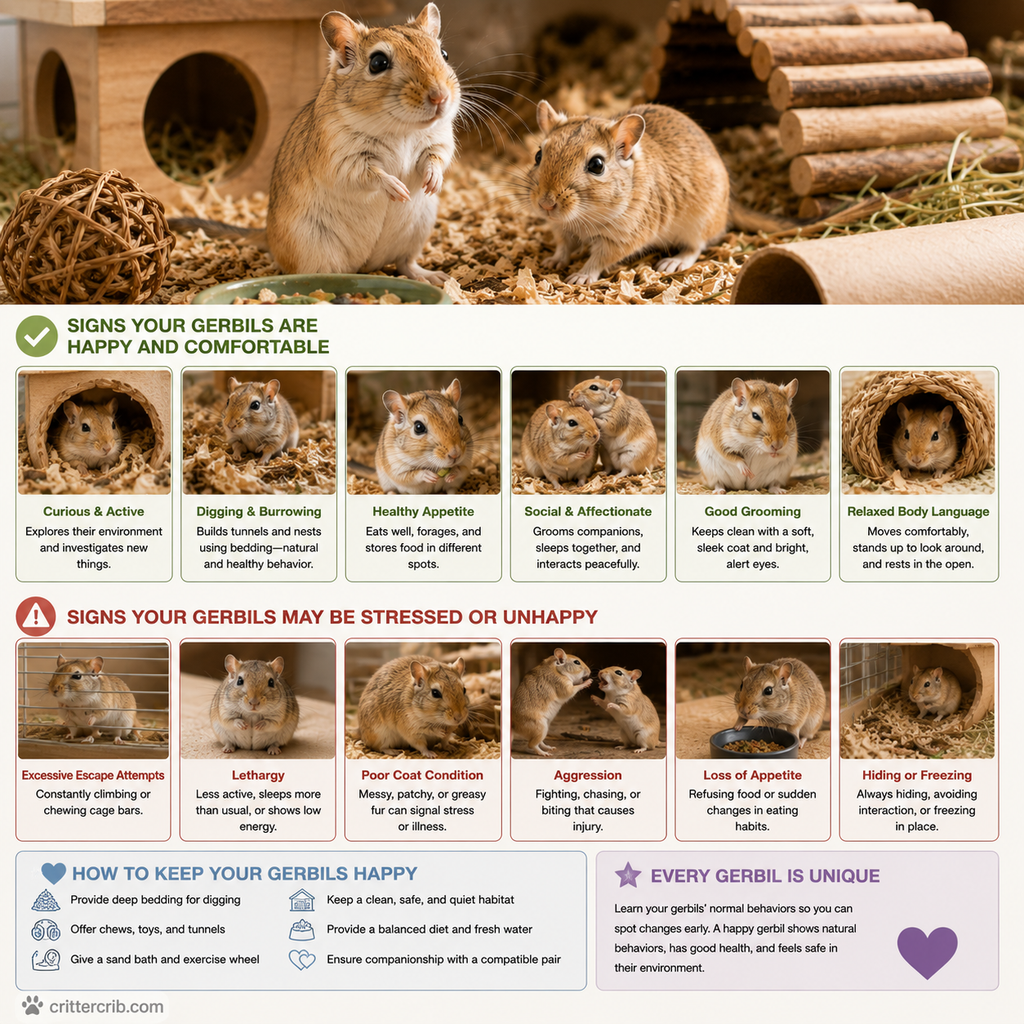
Signs of a comfortable gerbil can include:
- Regular digging and burrowing
- Curious exploration
- Normal eating and drinking
- Chewing appropriate materials
- Regular grooming
- Comfortable sleeping
- Healthy social interaction
- Alertness without constant fear
- Interest in enrichment
- A healthy coat and body condition
You don’t need to see every behavior constantly.
Gerbils sleep, hide, and have quieter periods just like other animals. What matters is what’s normal for your individual pets.
Happy Gerbils Are Curious
Curiosity is one of the easiest behaviors to notice.
Put a cardboard tube or another safe object into a gerbil enclosure and there’s a good chance somebody will investigate it.
A comfortable gerbil may:
- Sniff new objects
- Explore different areas of the habitat
- Approach familiar people
- Investigate sounds
- Stand on its hind legs to look around
- Enter tunnels and hides
- Interact with enrichment
Not every gerbil is equally adventurous.
Some are bold. Others take their time.
A cautious gerbil can still be perfectly comfortable. What you’re looking for is a willingness to engage with its surroundings rather than spending nearly all of its waking time frozen or hiding in fear.
Digging and Burrowing Are Healthy Gerbil Behaviors
Gerbils are enthusiastic diggers.
In nature, they create extensive burrow systems containing sleeping areas, food storage spaces, and tunnels.
Providing deep bedding gives pet gerbils an opportunity to express this behavior.
You may see them:
- Digging along the enclosure walls
- Carrying bedding
- Creating tunnels
- Rearranging nesting areas
- Covering entrances
- Excavating previously finished tunnels
- Moving bedding from one side of the enclosure to another
The last one can be particularly entertaining.
You can spend considerable time arranging the habitat exactly how you think it should look, only for your gerbils to redesign the entire thing overnight.
That’s normal.
Giving them enough bedding to make those decisions is part of providing an enriching habitat.
Chewing Is Normal and Important
If your gerbils destroy a cardboard tube you just gave them, congratulations.
They’re using it.
Gerbils are rodents, and their teeth continue growing. Chewing appropriate materials helps provide natural wear while also giving them something to do.
Safe chewing opportunities may include appropriate:
- Cardboard tubes
- Plain cardboard
- Gerbil-safe wooden chews
- Suitable untreated branches
- Other small-pet chew materials
A gerbil that enthusiastically shreds cardboard isn’t misbehaving.
It’s doing exactly what a gerbil does.
Comfortable Gerbils Groom Themselves
Regular grooming is another normal behavior.
Gerbils spend time keeping their coats clean and may also groom compatible companions.
A healthy coat should generally look clean and well maintained.
Changes in grooming deserve attention.
A gerbil that suddenly stops grooming, develops an unkempt coat, or appears unusually greasy may not be feeling well.
Excessive grooming can also become a concern if it leads to irritated skin or hair loss.
As with most gerbil behavior, look for changes from the animal’s normal pattern.
Gerbils May Groom Each Other
Social grooming can be a positive interaction between compatible gerbils.
You may see one gerbil carefully grooming around another’s face, ears, or body.
This can be part of normal social bonding.
Don’t assume every physical interaction is fighting.
Gerbils communicate through scent, grooming, posture, chasing, and other behaviors. Learning what normal interaction looks like for your particular pair helps you recognize when something genuinely changes.
Sleeping Together Can Be a Good Sign
Compatible gerbils often sleep close together.
You may find them curled into the same nest or sleeping against one another.
This is generally a reassuring sign of social comfort.
However, you may not always see them sleeping because gerbils often build nests beneath the bedding.
Sometimes all you’ll see is a tunnel entrance.
That’s fine.
A properly designed habitat should allow gerbils to disappear when they want privacy.
Gerbils Need Social Companionship
Gerbils are social animals and are generally kept with compatible gerbil companions.
A bonded pair can interact throughout the day in ways a human simply can’t replicate.
They may:
- Sleep together
- Groom each other
- Explore together
- Forage near each other
- Communicate through scent and body language
- Share burrow systems
Human interaction and enrichment are still valuable, but they don’t replace appropriate gerbil companionship.
Are Pairs Better Than Large Groups?
For many pet owners, a compatible same-sex pair is often simpler to manage than a larger group.
Larger groups can sometimes have more complicated social dynamics and may carry an increased risk of conflict.
If you’re getting gerbils for the first time, adopting an already compatible pair can make things easier.
Always confirm the sex of the gerbils to prevent unintended breeding.
A Good Appetite Is Usually Reassuring
Healthy gerbils should show regular interest in food.
You may see them:
- Approach when food is provided
- Forage around the enclosure
- Carry food away
- Sit and eat
- Store food in different areas
Gerbils may cache food, so don’t assume everything has been eaten simply because the food bowl is empty.
Scatter feeding part of their diet can encourage natural foraging behavior and make mealtime more interesting.
A sudden loss of appetite, however, deserves attention.
Small animals can deteriorate quickly when they’re ill, so significant changes in eating shouldn’t be ignored.
Happy Gerbils Use Their Environment
A well-designed habitat gives gerbils choices.
They should have opportunities to dig, hide, chew, forage, exercise, and explore.
Watch how your gerbils use different areas.
A comfortable pair may move freely between:
- Deep bedding
- Burrows
- Hides
- Sand areas
- Food and water
- Chew items
- Tunnels
- Exercise areas
You may discover that the expensive accessory you thought they’d love is ignored while a plain cardboard tube becomes the most exciting object in the enclosure.
Pets have a way of keeping budgets humble.
Gerbils May Stand on Their Hind Legs
Gerbils frequently stand upright to investigate their surroundings.
This is sometimes called “periscoping.”
They may do it when they hear a sound, smell something interesting, or simply want a better view.
An alert gerbil standing upright with a curious posture is often investigating rather than showing fear.
Context matters.
If the animal freezes rigidly after a sudden loud noise, that’s different from casually standing up to see what you’re doing.
What Does a Relaxed Gerbil Look Like?
Relaxation doesn’t always look dramatic.
A relaxed gerbil might simply:
- Sit comfortably while eating
- Groom itself
- Rest near a companion
- Explore without frantic movement
- Sleep deeply in its nest
- Approach familiar people without immediately fleeing
- Investigate your hand
- Continue normal activities while you’re nearby
A gerbil doesn’t have to seek human attention constantly to be comfortable.
Some animals are naturally more independent.
How Do Gerbils Show Trust Toward People?
Trust usually develops gradually.
A gerbil that feels safe around you may begin approaching your hand rather than immediately running into a tunnel.
Over time, it might:
- Sniff your fingers
- Take food from your hand
- Place its paws on your hand
- Walk onto your palm
- Remain nearby while you’re cleaning or feeding
- Explore around you during supervised interaction
Don’t rush this process.
Letting the gerbil choose to approach usually creates a more positive association than chasing it around the enclosure.
Give New Gerbils Time to Settle In
New gerbils may not immediately display their normal personalities.
Moving is stressful.
They’re suddenly surrounded by unfamiliar sounds, smells, people, and surroundings.
During the first few days, your gerbils may spend more time hiding or exploring cautiously.
Give them time to establish their burrows and learn their new environment.
Keep interactions calm and predictable.
As they become comfortable, you may notice more exploration, digging, and curiosity.
What Does a Stressed Gerbil Look Like?
Stress can appear in different ways depending on the animal and situation.
Possible signs include:
- Persistent hiding
- Repeated frantic escape attempts
- Excessive startle responses
- Freezing frequently
- Constant agitation
- Reduced appetite
- Changes in grooming
- Repetitive behaviors
- Unusual aggression
- Significant changes in activity
One isolated behavior doesn’t necessarily mean your gerbil is chronically stressed.
A loud noise can temporarily frighten an otherwise comfortable animal.
Look at frequency, duration, context, and whether the behavior represents a change.
Why Do Gerbils Thump Their Feet?
Gerbils can rapidly thump their hind feet against the ground.
This drumming behavior can communicate excitement, alarm, or warning depending on the situation.
If one gerbil detects something it considers threatening, foot thumping may alert its companion.
You might hear thumping after:
- A sudden noise
- Unfamiliar movement
- A perceived threat
- A major disturbance around the enclosure
Occasional thumping isn’t automatically a sign that something is wrong.
Look at what happened immediately beforehand.
Repetitive Behavior Can Signal a Problem
Repeated behaviors sometimes develop when an environment doesn’t provide enough opportunity for natural activity.
For example, persistent digging at the same enclosure corner without being able to create a meaningful burrow may indicate that the gerbil needs a better digging environment.
Repetitive chewing on cage bars can also deserve attention.
Consider whether your gerbils have:
- Sufficient space
- Deep bedding
- Chewing materials
- Places to hide
- Foraging opportunities
- Appropriate companionship
- Exercise options
- A quiet place to sleep
Improving the environment may reduce boredom or frustration-related behaviors.
How Much Bedding Do Gerbils Need?
Gerbils should have enough bedding to create meaningful tunnels and burrows.
A shallow sprinkling across the bottom doesn’t offer much opportunity to dig.
Whenever the enclosure allows it, provide a generously deep bedding area.
A mixture of suitable bedding materials can help tunnels hold their shape.
The exact setup depends on your enclosure, but the goal is simple: your gerbils should be able to disappear beneath the surface and construct an actual burrow system.
Give Gerbils a Sand Bath
Gerbils benefit from access to suitable bathing sand.
Rather than bathing in water, they roll in sand to help maintain their coats.
You may see a comfortable gerbil enthusiastically roll, twist, dig, and groom in the sand.
Use an appropriate, low-dust bathing material intended for small pets.
Avoid excessively dusty products that can irritate the respiratory system.
The container should be stable and large enough for the gerbil to roll comfortably.
Gerbils Need a Suitable Exercise Wheel
A properly sized exercise wheel provides another outlet for physical activity.
Choose a wheel with a solid running surface and enough diameter for the gerbil to run without sharply curving its back.
Not every gerbil uses a wheel equally.
One may become a dedicated runner while its companion treats the wheel like an oddly shaped piece of furniture.
That’s okay.
The important thing is providing appropriate opportunities for activity.
Enrichment Helps Keep Gerbils Busy
Gerbil enrichment doesn’t need to be expensive.
Some of the best enrichment materials are remarkably simple.
Try providing:
- Cardboard tubes
- Plain cardboard boxes
- Safe chew materials
- Deep bedding
- Tunnels
- Suitable sand
- Foraging opportunities
- Appropriate wooden accessories
- A properly sized wheel
You can occasionally introduce new safe items without completely rearranging the enclosure.
Gerbils rely heavily on scent and familiarity, so there’s no need to redesign their entire world every few days.
Avoid Overcleaning the Habitat
Cleaning is important, but completely stripping an enclosure too frequently can remove familiar scents and destroy established burrows.
That can be stressful.
Instead, spot clean dirty areas regularly and perform more extensive cleaning when necessary.
When appropriate, retaining some clean, familiar bedding can help preserve the group’s scent.
How often a larger cleaning is needed depends on the enclosure size, number of gerbils, bedding depth, and where they tend to urinate.
The enclosure should remain clean and dry without constantly erasing everything your gerbils have built.
Watch for Changes in Social Behavior
Compatible gerbils usually establish familiar patterns of interaction.
If that pattern suddenly changes, pay attention.
Warning signs can include:
- Persistent aggressive chasing
- Biting
- Fighting that causes injury
- One gerbil constantly preventing another from accessing resources
- One animal being repeatedly driven away
- Sleeping separately after normally sleeping together
- Significant tension between previously compatible gerbils
Serious fighting is different from normal play, grooming, or brief disagreements.
What Is Declanning in Gerbils?
“Declanning” is a term commonly used when previously bonded gerbils experience a breakdown in their social relationship.
Conflict can escalate into serious fighting and injury.
If your gerbils are fighting aggressively, don’t assume they’ll simply work it out.
Separate them safely when necessary and seek guidance from an experienced veterinarian or knowledgeable gerbil professional about what to do next.
Don’t put your bare hands between actively fighting gerbils.
Changes in Behavior Can Also Mean Illness
Not every behavioral change is emotional.
A gerbil that suddenly becomes quiet or withdrawn may be sick rather than unhappy.
Watch for changes such as:
- Reduced appetite
- Weight loss
- Unusual lethargy
- Difficulty breathing
- Changes in droppings
- Discharge around the eyes or nose
- Poor coat condition
- Difficulty walking
- Swelling or lumps
- Persistent scratching
- Sudden isolation from a companion
Because gerbils are prey animals, they may hide signs of illness.
A significant or unexplained behavioral change deserves attention, particularly when accompanied by physical symptoms.
Contact a veterinarian experienced with small mammals if you’re concerned.
Regular Weight Checks Can Be Helpful
A gerbil’s small size can make gradual weight loss difficult to notice visually.
Regular weighing with an appropriate digital scale can help you establish a baseline.
Record each gerbil separately.
If you notice a consistent or significant change, especially alongside changes in appetite or behavior, contact your veterinarian.
Weight monitoring shouldn’t replace veterinary care, but it can provide another useful piece of information.
Signs Your Gerbils May Be Bored
Boredom can be difficult to identify from one behavior alone.
Instead, look at whether the environment gives your gerbils enough opportunities to do normal gerbil things.
Potential signs of an understimulating setup can include persistent repetitive behavior, excessive attempts to escape, or constantly interacting with enclosure bars rather than using the habitat.
Before assuming your gerbil is bored, review the basics.
Does the habitat provide:
- Deep bedding?
- Tunnels?
- Chewable materials?
- A suitable wheel?
- A sand bath?
- Foraging opportunities?
- Compatible companionship?
- Enough usable space?
Often, improving these basics is more valuable than buying elaborate toys.
How to Make Your Gerbils Happier
If you want to improve your gerbils’ environment, focus on natural behavior.
1. Provide Plenty of Digging Space
Deep bedding is one of the most valuable forms of enrichment you can provide.
Let them build.
2. Give Them Things to Destroy
Cardboard tubes and other safe chew materials provide both enrichment and an outlet for natural chewing.
Don’t expect them to remain attractive.
Destruction is the activity.
3. Encourage Foraging
Scatter some appropriate food throughout the habitat rather than serving everything in one location.
This encourages exploration and searching.
4. Provide Hiding Places
Gerbils should always have somewhere to retreat.
A secure animal is often more confident about exploring because it knows shelter is nearby.
5. Offer a Sand Bath
Suitable bathing sand gives gerbils another natural grooming activity.
6. Maintain Compatible Companionship
Social interaction is an important part of gerbil life.
Monitor the relationship and watch for significant changes.
7. Keep the Environment Predictable
Avoid unnecessary disturbances, excessive cleaning, loud noises, and constant rearrangement.
A little novelty is enriching.
Having the entire world demolished and rebuilt constantly isn’t.
Common Mistakes That Can Affect Gerbil Comfort
Even enthusiastic owners can accidentally create a stressful environment.
Common mistakes include:
- Keeping a gerbil alone without considering its social needs
- Using an enclosure with insufficient usable space
- Providing very shallow bedding
- Cleaning away all familiar scent too frequently
- Providing too few chew materials
- Using an undersized wheel
- Using a wire or mesh running surface
- Chasing gerbils when trying to handle them
- Frequently waking them to interact
- Keeping the enclosure somewhere excessively noisy
- Providing little opportunity to forage
- Ignoring changes in social behavior
- Assuming lethargy is simply a sign of relaxation
Most of these issues can be corrected by paying attention to the animals’ behavior and adjusting the environment accordingly.
Frequently Asked Questions About Happy Gerbils
How Do I Know If My Gerbil Is Happy?
A comfortable gerbil will generally eat normally, explore, dig, chew, groom, rest, and interact appropriately with its environment and compatible companion.
Look at the overall pattern rather than relying on one behavior.
Do Gerbils Recognize Their Owners?
Gerbils can become familiar with the people who regularly care for them.
They may learn your scent, voice, routine, and the sounds associated with feeding or interaction.
A trusting gerbil may begin approaching your hand voluntarily.
Why Does My Gerbil Stare at Me?
Your gerbil may simply be investigating you.
Standing upright and watching the environment is normal gerbil behavior.
If you’ve become associated with food, it may also be waiting to see whether you’ve brought something interesting.
Why Is My Gerbil Always Digging?
Digging is a natural gerbil behavior.
If your gerbil has deep bedding and is constructing tunnels, frequent digging is generally expected.
Persistent digging against a hard surface without the ability to create a burrow may be a reason to evaluate the habitat.
Why Do My Gerbils Sleep Together?
Compatible gerbils commonly share sleeping areas.
Curling up together can be part of normal social behavior and is generally a reassuring sign in an established pair.
Why Does My Gerbil Run Away From My Hand?
Your gerbil may still be learning to trust you, or it may simply not want interaction at that moment.
Avoid chasing it.
Allow the gerbil to approach voluntarily and build positive associations gradually.
Do Gerbils Like Being Held?
Some gerbils become comfortable climbing onto their owners and tolerating gentle handling. Others prefer brief interactions.
They’re quick animals, so handling should always be done carefully and close to a safe surface.
How Can I Tell If My Gerbils Are Fighting or Playing?
Normal social interactions can involve chasing, grooming, and brief physical contact.
Serious conflict tends to be more intense and persistent and may involve aggressive chasing, biting, injury, or one gerbil being consistently excluded.
If you’re uncertain about aggressive behavior, separate safely when necessary and seek experienced advice.
Happiness Is About More Than One Behavior
There isn’t a single test that proves your gerbils are happy.
Instead, look at their daily lives as a whole.
Comfortable gerbils should have opportunities to dig, build burrows, chew, forage, groom, exercise, rest, and interact with compatible companions. They should show normal interest in food and their environment while also feeling secure enough to sleep and hide when they choose.
Most importantly, learn what’s normal for your individual gerbils.
When you know that one is always the first to investigate a cardboard tube while the other prefers to watch from a tunnel, changes become easier to recognize.
A happy gerbil doesn’t need to constantly perform for you.
Give your gerbils a safe, enriching environment that allows natural behavior, provide appropriate companionship, and pay attention to changes in their normal routine.
Their behavior will tell you a surprising amount about how they’re doing.