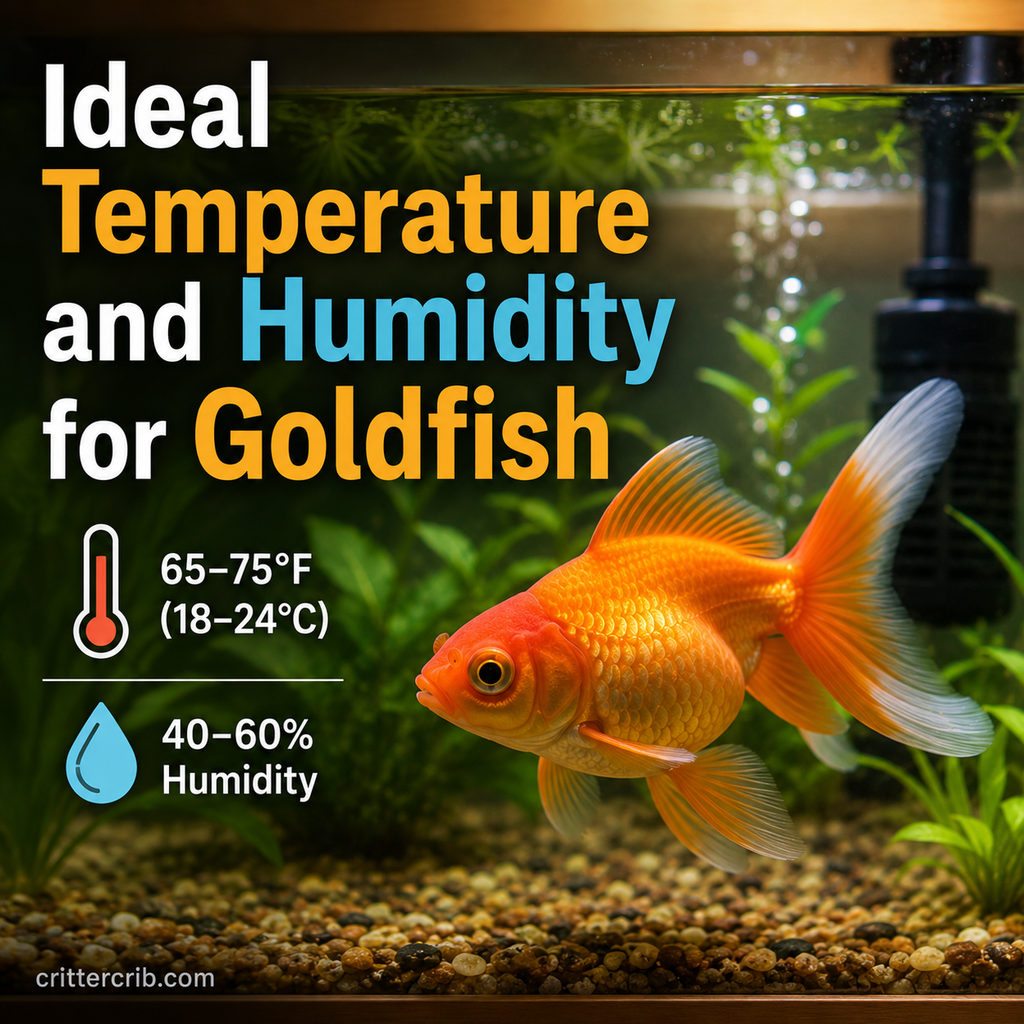
Goldfish have a reputation for being hardy, adaptable fish. While that’s true to a point, they still do best when their environment stays within a comfortable and reasonably stable temperature range.
One thing that sometimes causes confusion is humidity. You may see temperature and humidity discussed together for reptiles, amphibians, and other pets, but goldfish are fully aquatic. The humidity of the room around their aquarium generally isn’t something you need to manage for the fish themselves.
Water temperature, on the other hand, matters quite a bit.
Whether you have a common goldfish, comet, fantail, or another variety, understanding temperature can help you provide a more stable environment and recognize potential problems before they become serious.
Here’s what goldfish keepers should know about temperature, seasonal changes, heaters, humidity, and keeping aquarium conditions consistent.
What Is the Ideal Temperature for Goldfish?
For most pet goldfish, a water temperature of roughly 65–75°F (18–24°C) is a practical general range.
Goldfish are considered cool-water fish, so they typically don’t require the consistently warm temperatures associated with tropical species such as bettas.
However, the ideal temperature can vary somewhat depending on the type of goldfish you keep.
As a general guide:
- Common and comet goldfish generally tolerate cooler temperatures well.
- Fancy goldfish often benefit from somewhat warmer, more stable conditions.
- Sudden temperature fluctuations should be avoided regardless of variety.
- Extremely warm water can create additional challenges, particularly with oxygen levels.
Rather than obsessing over maintaining one exact number, aim for a suitable range and, importantly, keep the temperature relatively stable.
Ideal Temperature for Common and Comet Goldfish
Common goldfish and comet goldfish tend to be hardy and adaptable.
A range around 65–72°F (18–22°C) works well for many indoor setups.
These fish can tolerate temperatures outside this range under appropriate circumstances, particularly when kept in outdoor ponds where seasonal temperature changes occur gradually.
That doesn’t mean you should deliberately expose an aquarium goldfish to extreme temperatures.
The important difference is gradual adaptation.
A pond cooling slowly as autumn arrives is very different from an aquarium suddenly dropping several degrees because cold replacement water was added during a water change.
Ideal Temperature for Fancy Goldfish
Fancy goldfish include varieties such as:
- Fantails
- Orandas
- Ranchus
- Ryukins
- Black moors
- Telescope-eye goldfish
These fish have been selectively bred for body shapes and features that differ considerably from the more streamlined shape of common goldfish.
Many fancy goldfish do well around 68–75°F (20–24°C).
Keeping them toward the warmer portion of the typical goldfish range may be beneficial, particularly when compared with the colder temperatures that hardy pond varieties can tolerate.
Again, consistency matters.
A stable aquarium at 70°F is generally preferable to one repeatedly shifting between much cooler and warmer temperatures.
Is 70°F Good for Goldfish?
Yes. A water temperature around 70°F (21°C) is suitable for many goldfish.
It falls comfortably within the general range used for both common and many fancy varieties.
If your aquarium naturally stays close to 70°F throughout the year without dramatic fluctuations, you may not need to make many adjustments.
Just continue monitoring it with an aquarium thermometer.
Is 75°F Too Warm for Goldfish?
A temperature of 75°F (24°C) isn’t automatically dangerous for a goldfish, particularly for many fancy varieties.
However, as water gets warmer, several things change inside the aquarium.
Warm water holds less dissolved oxygen than cooler water. At the same time, a fish’s metabolism generally increases as temperatures rise.
That combination can become important during unusually warm weather.
If your aquarium is approaching the upper end of the goldfish comfort range, make sure:
- Filtration is functioning properly.
- The surface of the water has adequate movement.
- The aquarium isn’t overcrowded.
- Water quality remains good.
- The temperature isn’t continuing to climb.
A short period at 75°F is very different from an aquarium sitting at unusually high temperatures for an extended period.
What Temperature Is Too Hot for Goldfish?
Once aquarium temperatures begin climbing toward 80°F (27°C) and above, conditions become increasingly concerning for goldfish, especially if the temperature remains elevated.
The exact point at which a fish experiences serious problems depends on several factors, including acclimation, oxygen availability, water quality, health, and the individual fish.
Rather than waiting for a specific “danger number,” treat unusually warm water as something that deserves attention.
Possible signs of heat-related stress can include:
- Rapid breathing
- Increased gill movement
- Spending unusual amounts of time near the surface
- Lethargy
- Reduced appetite
- Changes in normal swimming behavior
These symptoms aren’t specific to temperature problems, however. Poor water quality and illness can cause similar behavior.
If your goldfish suddenly begins acting differently, check both the temperature and water parameters.
What Temperature Is Too Cold for Goldfish?
Goldfish tolerate cool water much better than many tropical aquarium fish.
Common and comet goldfish kept in suitable outdoor ponds may experience very cold seasonal conditions as long as changes occur gradually and the pond remains appropriate for overwintering.
An indoor aquarium is different.
If temperatures fall substantially below the normal range, the fish’s metabolism slows. Goldfish may become less active and eat less.
Fancy varieties can be particularly sensitive to very cold conditions.
For indoor pet goldfish, there’s usually little reason to deliberately keep the aquarium extremely cold. Maintaining a moderate, stable temperature is easier on both the fish and the keeper.
Why Stable Water Temperature Matters
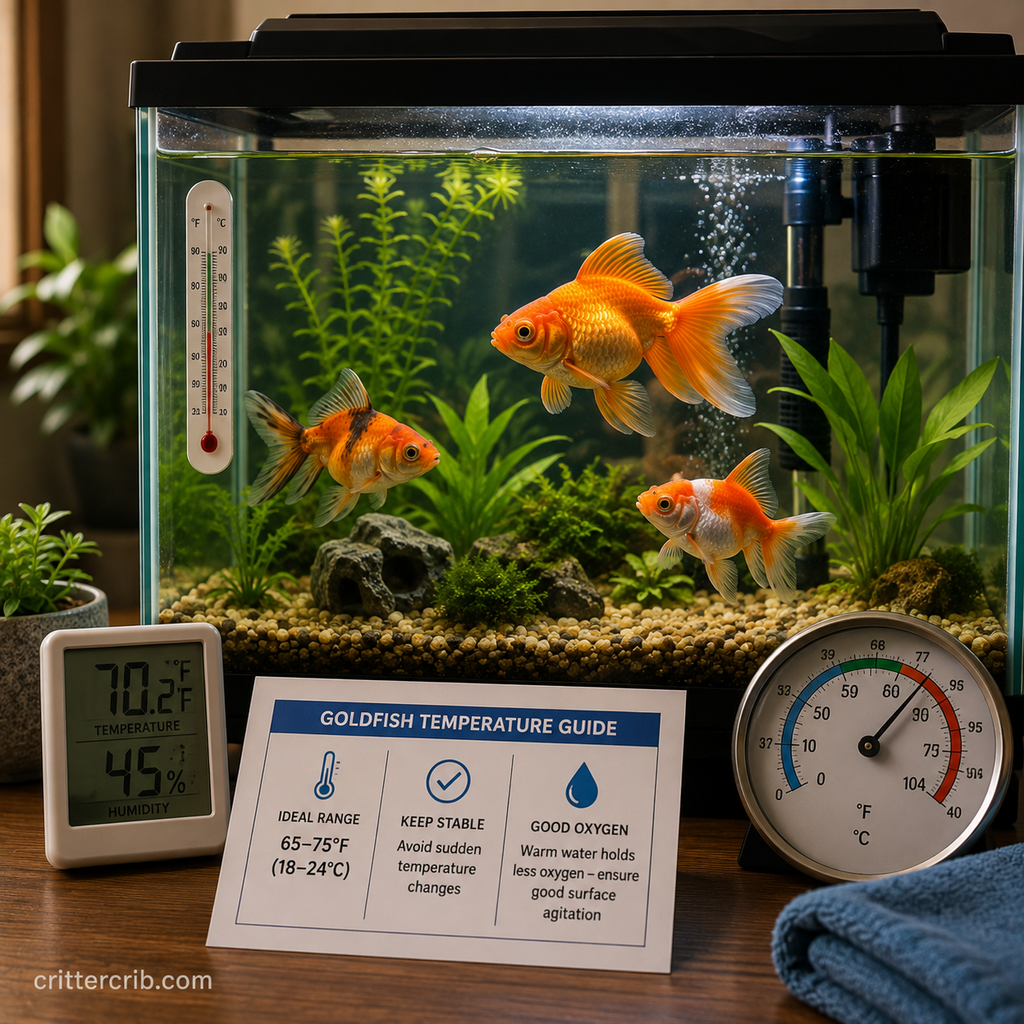
Goldfish can adapt to a fairly broad range of temperatures, but rapid changes can be stressful.
Fish are ectothermic animals, which means their body temperature is influenced by their surrounding environment.
When the aquarium water changes temperature, the fish changes along with it.
Temperature affects several biological processes, including:
- Metabolism
- Activity level
- Digestion
- Appetite
- Oxygen demand
- Immune function
This is why stability matters just as much as the temperature displayed on your thermometer.
Avoid Sudden Temperature Changes During Water Changes
Water changes are one of the easiest times to accidentally cause a rapid temperature shift.
Imagine your aquarium is at 70°F, but you replace a substantial amount of water with much colder tap water.
The overall tank temperature could fall quickly.
Instead, try to get the replacement water reasonably close to the aquarium’s existing temperature before adding it.
It doesn’t have to match down to a fraction of a degree.
The goal is simply to avoid unnecessarily large and sudden changes.
Always treat tap water with an appropriate water conditioner before it enters the aquarium if your water supply contains chlorine, chloramine, or other substances the conditioner is designed to address.
Do Goldfish Need a Heater?
Not necessarily.
Unlike tropical aquarium fish, goldfish often live comfortably in an indoor aquarium without a heater if the room maintains an appropriate and stable temperature.
A heater may still be useful in certain situations.
You might consider one if:
- Your home becomes unusually cold during winter.
- The aquarium experiences large day-to-night temperature swings.
- You keep fancy goldfish and want greater temperature stability.
- The tank is located in a cool room, basement, or similar area.
- Your indoor temperature changes significantly throughout the year.
In these situations, the heater’s job doesn’t necessarily have to be making the water “warm.” It can simply prevent the aquarium from becoming too cold or fluctuating too dramatically.
Choosing a Heater for a Goldfish Aquarium
If you decide a heater is appropriate, choose one designed for aquarium use and properly sized for your tank.
An adjustable heater gives you greater control than a basic preset model.
You should also use a separate thermometer.
Never assume the temperature printed on a heater dial perfectly reflects the actual water temperature. A thermometer allows you to verify what’s happening inside the aquarium.
Place the heater according to the manufacturer’s instructions and periodically check that it’s functioning normally.
Do Goldfish Need a Thermometer?
Yes, an aquarium thermometer is a simple and inexpensive piece of equipment worth having.
Without one, you’re guessing.
Water can feel cool to your hand while still being perfectly appropriate for goldfish. Your perception of temperature also changes depending on how warm or cold your hands are.
A thermometer gives you an objective measurement.
Check it regularly, especially:
- During hot weather
- During cold weather
- After large water changes
- After installing or adjusting a heater
- If your goldfish begins behaving unusually
Digital and traditional aquarium thermometers can both work. The important thing is having a reliable way to monitor temperature.
What About Humidity for Goldfish?
Goldfish do not require a specific room humidity level in the way reptiles, amphibians, and some terrestrial pets do.
They live underwater.
Their immediate environment is the aquarium water, so water quality and temperature are much more important than the relative humidity of the surrounding room.
You do not need to buy a humidifier or hygrometer specifically for your goldfish.
Instead, focus on:
- Water temperature
- Ammonia
- Nitrite
- Nitrate
- pH
- Oxygenation
- Filtration
- Regular water changes
Those factors have a much more direct effect on your goldfish.
Can Room Humidity Affect a Goldfish Aquarium?
Although room humidity generally doesn’t directly affect the goldfish, it can influence the aquarium itself.
The biggest difference is evaporation.
In a warm, dry room, aquarium water may evaporate more quickly. Higher room humidity can slow evaporation.
As water evaporates, the water level drops but many dissolved substances remain behind.
This means topping off evaporated water is not the same thing as performing a water change.
You should still carry out appropriate partial water changes even if you regularly replace water lost to evaporation.
Should You Use an Aquarium Lid?
A lid can help reduce evaporation.
It may also prevent debris from falling into the aquarium and provide additional protection around the tank.
Make sure your setup still allows appropriate gas exchange and works safely with your filtration, lighting, and other equipment.
How Hot Weather Affects Goldfish Aquariums
Summer can be more challenging than winter for an indoor goldfish aquarium, particularly in homes without air conditioning.
Aquarium water gradually follows the temperature of the surrounding room.
If the room becomes very warm, so can the tank.
Warm water also contains less dissolved oxygen, which makes adequate aeration and surface movement especially important.
During hot weather:
- Check the aquarium temperature more frequently.
- Keep the tank away from direct sunlight.
- Make sure the filter is operating correctly.
- Maintain good surface agitation.
- Keep aquarium water clean.
- Avoid overcrowding.
- Watch your goldfish for unusual behavior.
If you need to lower the aquarium temperature, do it gradually.
Avoid suddenly dumping ice or extremely cold water into the tank. Rapid cooling can create another source of stress.
Keep the Aquarium Away From Direct Sunlight
A sunny window may seem like an attractive location for an aquarium, but direct sunlight can cause problems.
Sunlight can heat the water, sometimes unevenly, and may contribute to excessive algae growth.
Instead, place your goldfish aquarium somewhere with a relatively stable ambient temperature.
Avoid locations directly beside:
- Sunny windows
- Heating vents
- Radiators
- Fireplaces
- Air-conditioning vents
- Exterior doors with major drafts
A stable room generally means a more stable aquarium.
Temperature and Oxygen Levels
Temperature and dissolved oxygen are closely connected.
Cooler water can hold more dissolved oxygen than warmer water.
Goldfish are active fish with relatively high oxygen demands, so good oxygenation is important regardless of temperature.
A properly functioning filter that creates surface movement can help promote gas exchange.
Additional aeration, such as an air stone powered by an aquarium air pump, can also be useful depending on the setup.
If the water becomes unusually warm, pay extra attention to oxygenation.
Temperature and Goldfish Metabolism
You may notice your goldfish behaving differently as water temperature changes.
In warmer water, metabolism tends to increase. The fish may become more active and interested in food.
In colder water, metabolism slows.
This is especially noticeable in outdoor pond goldfish as seasons change.
For indoor goldfish kept at relatively consistent temperatures, the changes are usually much less dramatic.
Avoid using increased activity alone as evidence that warmer water is always better. Higher metabolism also means greater oxygen requirements and potentially increased waste production.
The goal is a suitable, balanced environment rather than maximum activity.
Does Temperature Affect Goldfish Feeding?
Yes.
Because temperature influences metabolism and digestion, a goldfish’s feeding behavior may change as the water gets warmer or colder.
Indoor goldfish maintained within a stable, moderate temperature range can generally follow a consistent feeding routine.
Outdoor pond goldfish are different because seasonal temperature changes can be substantial.
As pond temperatures become very cold, feeding practices may need to change because goldfish metabolism and digestion slow considerably.
If you keep outdoor goldfish, follow guidance specifically designed for seasonal pond care rather than treating the pond exactly like an indoor aquarium.
Aquarium Temperature vs. Pond Temperature
Goldfish can live in both aquariums and properly designed outdoor ponds, but temperature management is different in each environment.
An indoor aquarium gives you much more control.
A pond experiences natural seasonal changes.
Healthy pond goldfish can adapt to those changes when temperatures shift gradually, but successful overwintering depends on factors beyond temperature alone, including:
- Pond depth
- Climate
- Oxygenation
- Ice coverage
- Water quality
- Fish health
- Goldfish variety
Fancy goldfish may not be as well suited to harsh outdoor conditions as hardy common or comet goldfish.
If you plan to keep goldfish outdoors year-round, research recommendations specific to your climate and the varieties you keep.
Signs Your Goldfish May Be Uncomfortable
Temperature problems don’t always produce one obvious symptom.
Instead, you may notice a change from your fish’s normal behavior.
Possible warning signs include:
- Rapid breathing
- Gasping near the surface
- Unusual lethargy
- Reduced appetite
- Erratic swimming
- Spending excessive time near water returns or areas of higher flow
- Sitting unusually still near the bottom
- Sudden behavioral changes
Don’t assume temperature is automatically the cause.
Check:
- Water temperature
- Ammonia
- Nitrite
- Nitrate
- Filtration
- Oxygenation
- Recent changes to the aquarium
Poor water quality is a common source of problems in goldfish tanks and can produce symptoms that look similar to temperature stress.
How to Maintain a Stable Goldfish Temperature
You don’t need complicated equipment to keep most indoor goldfish tanks stable.
A few good habits make a big difference.
Use a Thermometer
Check the temperature regularly so you notice changes early.
Choose the Right Tank Location
Keep the aquarium away from direct sunlight, drafts, heaters, and air-conditioning vents.
Match Water During Water Changes
Try to keep replacement water reasonably close to the aquarium’s existing temperature.
Consider a Heater When Necessary
If your home becomes too cold or temperatures fluctuate substantially, an aquarium heater can provide stability.
Watch Seasonal Changes
Pay closer attention during summer heat waves and cold winter weather.
Maintain Good Oxygenation
Make sure filtration provides adequate water movement and surface agitation, particularly when the aquarium becomes warmer.
Common Goldfish Temperature Mistakes
Goldfish are adaptable, but beginners can still run into trouble.
Some common mistakes include:
- Assuming goldfish prefer extremely cold water
- Keeping fancy goldfish too cold
- Allowing temperatures to change rapidly
- Adding very cold replacement water during water changes
- Putting the aquarium in direct sunlight
- Ignoring high summer temperatures
- Assuming a heater is always necessary
- Assuming a heater is never necessary
- Not using a thermometer
- Focusing on room humidity instead of water quality
The best approach is to monitor the actual conditions in your aquarium rather than relying on assumptions about what “cold-water fish” means.
Quick Goldfish Temperature and Humidity Guide
For easy reference:
- General goldfish temperature: About 65–75°F (18–24°C)
- Common/comet goldfish: Often around 65–72°F (18–22°C)
- Fancy goldfish: Often around 68–75°F (20–24°C)
- Humidity: No specific humidity requirement for the fish
- Heater: Optional depending on room temperature and stability
- Thermometer: Recommended
- Temperature stability: Very important
- Direct sunlight: Avoid
- Warm-water concern: Reduced dissolved oxygen
These ranges are guidelines rather than rigid boundaries. Your goldfish variety, aquarium setup, health, and seasonal conditions can all influence what works best.
Frequently Asked Questions About Goldfish Temperature
Can Goldfish Live in Room-Temperature Water?
Yes, provided the room keeps the aquarium within an appropriate and reasonably stable temperature range.
Many indoor goldfish aquariums do not require supplemental heating.
Do Goldfish Like Cold Water?
Goldfish are cool-water fish, but that doesn’t mean colder is always better.
They tolerate lower temperatures than tropical fish, while fancy varieties often benefit from somewhat warmer and more stable conditions.
Can Goldfish Live at 70°F?
Yes. Around 70°F (21°C) is a comfortable temperature for many common and fancy goldfish kept indoors.
Do Goldfish Need a Heater in Winter?
It depends on your home.
If the aquarium remains within a suitable range without major fluctuations, a heater may not be necessary. If the room becomes very cold, a heater can help stabilize the water temperature.
Do Goldfish Need Humidity?
No specific room humidity level is required for goldfish because they are fully aquatic.
Humidity may affect how quickly aquarium water evaporates, but it isn’t something you generally need to control specifically for your fish.
Is Warm Water Bad for Goldfish?
Moderately warm water within an appropriate range isn’t necessarily harmful.
Problems become more likely as temperatures rise excessively because warmer water holds less dissolved oxygen while the fish’s metabolism and oxygen requirements increase.
Final Thoughts
The ideal temperature for most pet goldfish falls somewhere around 65–75°F (18–24°C), with common and comet goldfish generally comfortable toward the cooler portion of that range and many fancy goldfish doing well somewhat warmer.
But the number on the thermometer is only part of the story.
Goldfish benefit from stability. Rapid temperature swings can be more stressful than small differences within an otherwise appropriate range, so pay attention during water changes, seasonal weather shifts, and unusually hot or cold days.
As for humidity, you generally don’t need to worry about it. Goldfish live underwater and don’t require a particular room humidity level. Humidity can affect aquarium evaporation, but water temperature, water quality, filtration, and oxygenation are far more important to your fish.
Keep a reliable thermometer in the aquarium, maintain good water quality, and watch how your goldfish normally behave. Those simple habits will tell you much more about their environment than trying to hit one perfect temperature number.