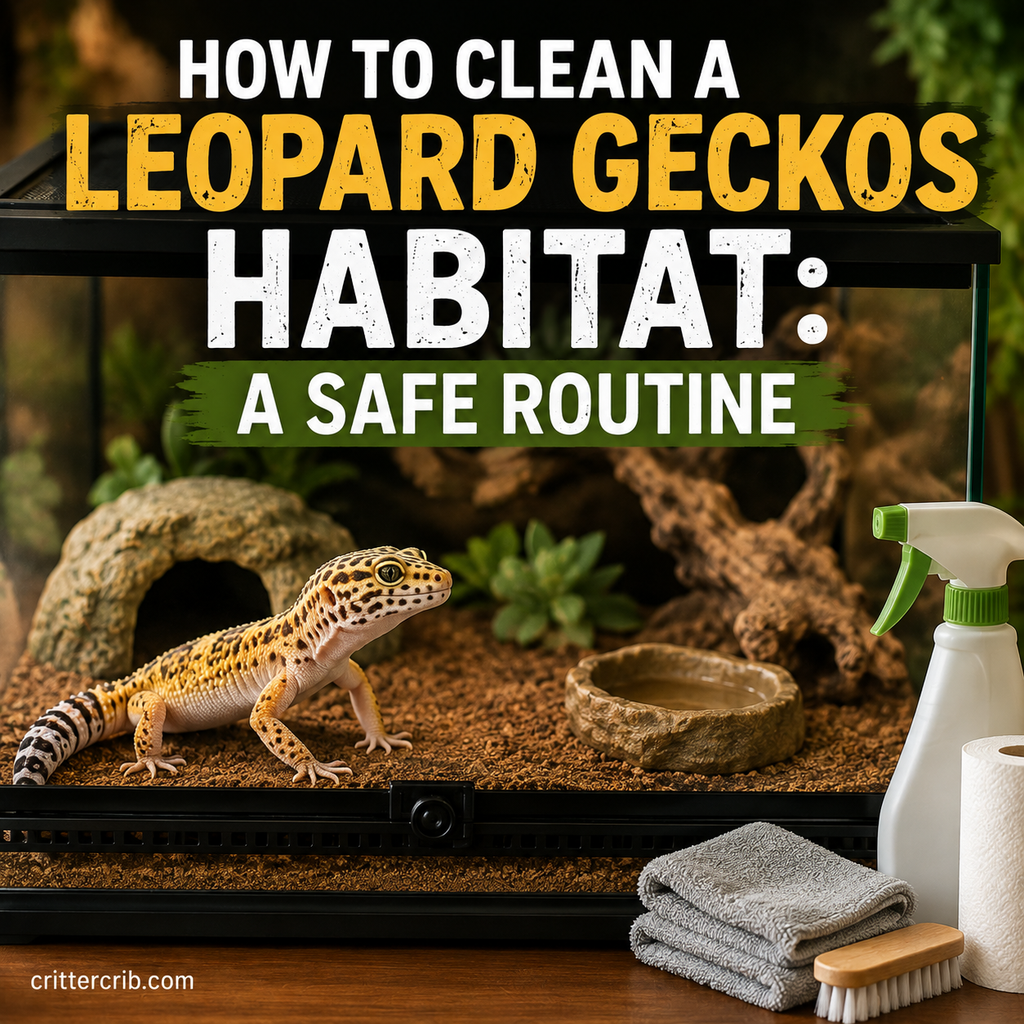
Keeping a leopard gecko’s habitat clean isn’t just about making the enclosure look nice. Regular cleaning helps remove waste, leftover food, shed skin, and other debris that can accumulate where your gecko eats, sleeps, and explores.
Fortunately, leopard gecko enclosure maintenance doesn’t have to be complicated.
Most of the work comes down to quick spot cleaning throughout the week, with more thorough cleaning performed periodically when the enclosure needs it. Once you establish a routine, maintaining the habitat usually becomes a fairly simple part of leopard gecko care.
The important part is knowing what to clean, what products are safe to use, and how to avoid exposing your gecko to cleaning chemicals or unnecessary stress.
Here’s how to clean a leopard gecko’s habitat safely and efficiently.
How Often Should You Clean a Leopard Gecko’s Habitat?
A leopard gecko enclosure shouldn’t need to be completely dismantled every day or even every week if you’re keeping up with routine maintenance.
Instead, cleaning can be divided into three basic levels:
- Daily inspection and spot cleaning
- Regular cleaning of dishes and dirty areas
- Periodic deeper cleaning of the enclosure and accessories
How frequently a full cleaning is necessary depends on the enclosure, substrate, feeding habits, and how quickly waste accumulates.
Rather than relying entirely on the calendar, pay attention to the condition of the habitat.
If you’re seeing waste, old food, unpleasant odors, dirty surfaces, or buildup around hides and decorations, it’s time to clean those areas.
Daily Leopard Gecko Habitat Cleaning
The easiest way to keep an enclosure clean is to remove small messes before they become larger ones.
A quick daily inspection usually takes only a few minutes.
Look for:
- Feces
- Urates
- Uneaten insects
- Shed skin
- Spilled food
- Dirty water
- Damp or soiled substrate
- Mold or unusual growth
- Dead feeder insects hiding beneath decorations
Leopard geckos often choose a particular area of the enclosure as their bathroom. Once you figure out where yours prefers to go, spot cleaning becomes much easier.
Remove Waste Promptly
Remove feces and urates whenever you notice them.
With paper towels or another disposable substrate, you can simply replace the soiled section.
With loose substrate, remove the waste along with some of the surrounding material rather than picking up only the visible portion.
This helps prevent contaminated substrate from remaining in the enclosure.
Remove Uneaten Insects
Don’t leave feeder insects wandering around indefinitely.
Some insects can hide beneath decorations or substrate, while others may bother your gecko.
Check the habitat after feeding and remove insects that aren’t supposed to remain in the enclosure.
Check the Water Dish
Replace your leopard gecko’s drinking water regularly and inspect the bowl for substrate, feces, insects, or other debris.
If the dish is dirty, wash it rather than simply topping it off with fresh water.
What Do You Need to Clean a Leopard Gecko Enclosure?
You don’t need an enormous collection of cleaning supplies.
A basic reptile-cleaning kit can include:
- Disposable gloves
- Paper towels
- Small trash bags
- A reptile-safe disinfectant
- Clean sponges or cloths
- A small brush or toothbrush
- Dedicated bucket or container
- Clean water
- Replacement substrate when needed
It’s a good idea to keep reptile-cleaning supplies separate from the products you use elsewhere in your home.
For example, don’t scrub your gecko’s water dish with the same sponge you use for dirty dinner plates.
Dedicated equipment reduces the chance of transferring contaminants in either direction.
What Cleaning Products Are Safe for Leopard Geckos?
This is one of the most important parts of cleaning a leopard gecko enclosure.
Don’t assume that a household cleaner is safe simply because it works well on countertops or bathroom surfaces.
Reptiles live in close contact with enclosure surfaces, and residues or fumes from inappropriate cleaning products can be a concern.
A reptile-safe disinfectant used according to its label instructions is usually the simplest choice.
When using any disinfectant:
- Remove the leopard gecko from the enclosure.
- Remove organic debris before disinfecting.
- Follow the product’s dilution instructions, if applicable.
- Leave the product on the surface for the specified contact time.
- Rinse when required by the manufacturer’s directions.
- Allow the enclosure and accessories to dry before returning your gecko.
Never mix different cleaning chemicals together.
Combining household cleaners can produce dangerous fumes, and stronger doesn’t necessarily mean safer or more effective.
If you’re unsure whether a particular product is appropriate for reptiles, check its manufacturer instructions before using it in the enclosure.
Cleaning vs. Disinfecting: What’s the Difference?
Cleaning and disinfecting aren’t exactly the same thing.
Cleaning physically removes material such as:
- Feces
- Food
- Substrate
- Dust
- Shed skin
- Other visible debris
Disinfecting is intended to reduce microorganisms remaining on a surface.
This distinction matters because disinfectant isn’t a substitute for cleaning.
If a hide has feces stuck to it, spraying disinfectant directly over the mess isn’t the best approach. Remove the visible material and wash the surface first.
Think of the process as:
Remove debris → Clean → Disinfect when appropriate → Rinse if required → Dry
Following that order makes the cleaning process more effective.
How to Deep Clean a Leopard Gecko Habitat
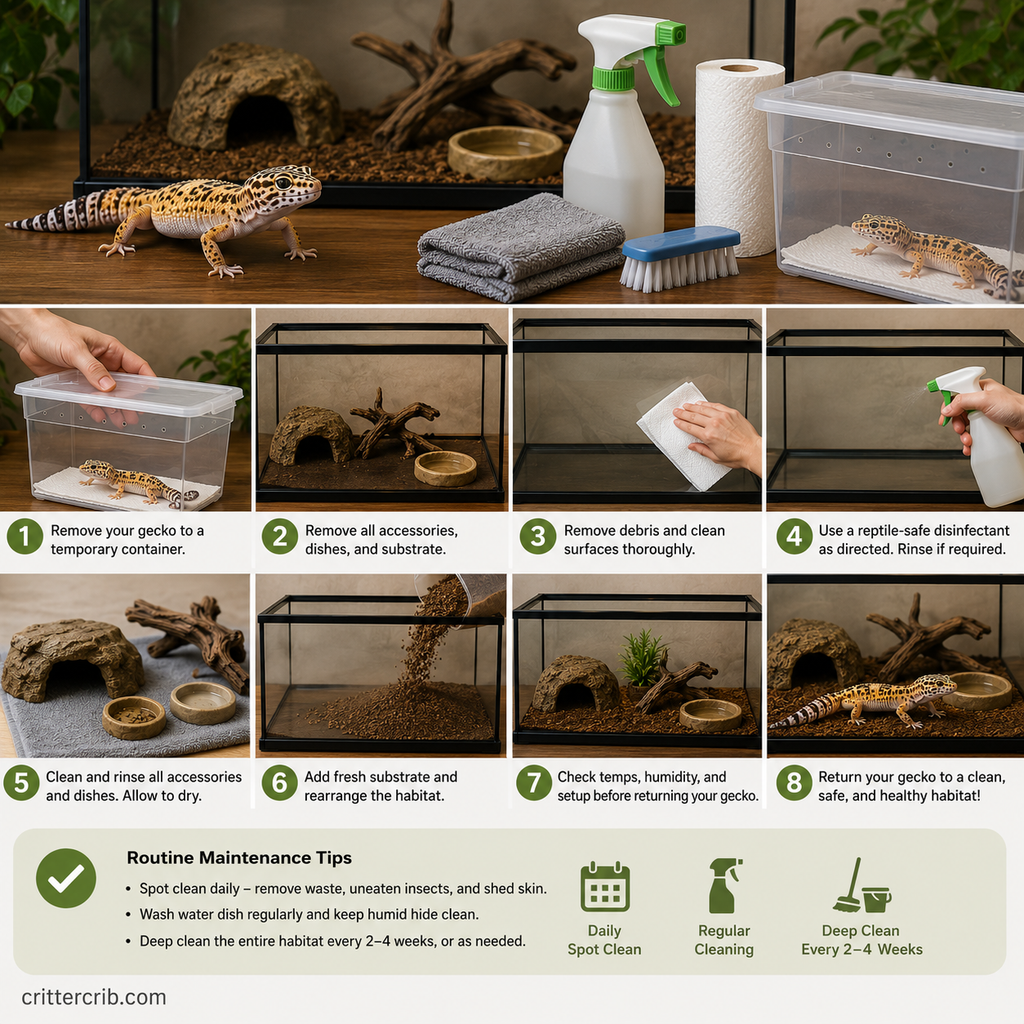
A deeper cleaning gives you an opportunity to clean areas that aren’t addressed during everyday spot cleaning.
Before you start, gather your supplies and prepare a secure temporary location for your leopard gecko.
Step 1: Move Your Leopard Gecko to a Temporary Container
Never leave your leopard gecko inside while you’re spraying or applying cleaning products.
Place the gecko in a secure temporary container with adequate ventilation.
Keep the container somewhere quiet and at an appropriate temperature while you work.
Make sure the lid is secure. Leopard geckos may not look like escape artists, but you don’t want to discover otherwise halfway through cleaning the enclosure.
Step 2: Remove the Accessories
Take removable items out of the habitat.
Depending on your setup, this may include:
- Hides
- Water dish
- Food or supplement dishes
- Rocks
- Artificial plants
- Climbing structures
- Other decorations
This exposes the enclosure floor and corners where debris can accumulate.
Step 3: Remove Waste and Old Substrate
Pick up feces, urates, shed skin, dead insects, food debris, and other visible material.
If you’re replacing the substrate, remove the old material completely.
Disposable substrate can usually be discarded.
Loose substrate should be removed carefully so dust and debris aren’t scattered around the room.
Step 4: Wash the Enclosure
Start by cleaning visible dirt from the enclosure.
Pay particular attention to:
- Corners
- Along enclosure edges
- Under hides
- Around the bathroom area
- Beneath dishes
- Textured surfaces
- Areas where food has been offered
Dried waste may require additional soaking or gentle scrubbing.
Step 5: Disinfect Appropriate Surfaces
Once visible debris has been removed, apply your reptile-safe disinfectant according to its instructions.
Contact time matters.
If the manufacturer says the surface needs to remain wet for a certain amount of time, wiping the product off immediately may prevent it from working as intended.
Follow the label rather than guessing.
Step 6: Rinse If Necessary
Some products require rinsing after use, while others have different instructions.
Follow the directions for the specific disinfectant you’re using.
When rinsing is required, be thorough.
You don’t want cleaning-product residue left on surfaces your leopard gecko will walk across or lick.
Step 7: Let Everything Dry
Allow the enclosure to dry thoroughly.
Drying is especially important before adding fresh substrate and rebuilding the habitat.
Putting substrate onto wet surfaces can trap unwanted moisture underneath it.
Step 8: Replace the Substrate
Add clean substrate once the enclosure is dry.
How this works depends on the substrate you’re using.
Paper-based substrates are simple: discard the old material and replace it with fresh sheets.
Loose or naturalistic substrates require more consideration because some setups are designed for partial replacement and maintenance rather than frequent total removal.
Step 9: Return Clean Accessories
Once hides, dishes, rocks, and other furnishings are clean and dry, put the habitat back together.
Try to keep important resources in familiar locations unless you’re intentionally changing the setup.
Step 10: Check the Habitat Before Returning Your Gecko
Before putting your leopard gecko back, make sure:
- Surfaces are dry.
- No cleaning residue remains.
- The substrate is properly installed.
- Hides are stable.
- Water is fresh.
- Heating equipment is functioning.
- Temperatures are returning to the appropriate range.
- Nothing was accidentally left inside the enclosure.
Once conditions are ready, return your gecko to its habitat.
How to Clean Leopard Gecko Hides
Hides deserve regular attention because leopard geckos spend a significant amount of time inside them.
Remove loose debris first, then wash the hide according to the material it’s made from.
Smooth plastic or resin hides are generally easier to clean than highly porous natural materials.
Use a small dedicated brush to reach grooves and textured surfaces.
After cleaning and disinfecting when appropriate, rinse as directed and let the hide dry before returning it to the enclosure.
Don’t Forget the Humid Hide
The humid hide requires particularly close monitoring because its moist environment is different from the rest of the habitat.
Check it regularly for:
- Feces
- Food
- Mold
- Unpleasant odors
- Dirty or deteriorating moisture-retaining material
Replace the material inside as necessary and keep the hide clean.
A humid hide should be moist enough to serve its purpose without becoming a neglected, constantly dirty area.
How to Clean Food and Water Dishes
Food and water dishes should be among the cleanest objects in the enclosure.
Remove leftover food, insects, substrate, and other debris.
Wash the dishes thoroughly and rinse them well before refilling them.
Water bowls may develop a slippery film or mineral deposits over time, so inspect the surfaces rather than assuming they’re clean because the water looks clear.
Keep dedicated cleaning brushes or sponges for reptile dishes instead of using your regular kitchen equipment.
How Often Should You Change Leopard Gecko Substrate?
There’s no single replacement schedule that applies to every substrate.
The correct routine depends heavily on what you’re using.
Paper Towels
Paper towels are easy to monitor and replace.
Remove soiled sections immediately. During a larger enclosure cleaning, replacing all of the paper is simple and inexpensive.
Paper towels are especially convenient when monitoring a new animal or when easy observation of waste is important.
Tile or Other Solid Surfaces
Solid surfaces can be spot cleaned without being replaced.
Pay attention to seams, edges, and textured areas where waste can collect.
Loose Substrate
Loose substrate requires regular spot cleaning.
When removing feces or contaminated material, scoop out some of the surrounding substrate as well.
Replace substrate as needed based on its condition and the type of setup you’re maintaining.
Don’t simply stir contaminated material back into the enclosure.
Naturalistic and Bioactive Enclosures
Bioactive habitats require a different maintenance strategy.
The goal isn’t to repeatedly strip the enclosure and replace everything. Instead, the substrate, microorganisms, plants, and cleanup crew are managed as a small ecosystem.
That doesn’t mean a bioactive enclosure is maintenance-free.
You’ll still need to:
- Remove inappropriate waste when necessary
- Clean dishes
- Maintain plants
- Monitor moisture
- Check for mold or pest problems
- Maintain the cleanup crew
- Watch overall enclosure conditions
A properly functioning bioactive habitat can reduce some forms of routine maintenance, but it still requires regular observation.
Should You Clean Leopard Gecko Glass?
Yes, especially if you notice water spots, fingerprints, substrate dust, or other buildup.
Clean enclosure glass when your gecko is safely removed if you’re using any cleaning product.
Avoid spraying products directly into an occupied enclosure.
For interior glass, use reptile-appropriate products and make sure the surface is safe and dry before your gecko returns.
Exterior glass can usually be cleaned more easily because your leopard gecko doesn’t come into direct contact with it, but avoid allowing spray to drift through ventilation openings.
How to Clean Rocks, Branches, and Decorations
Different materials require different cleaning methods.
Plastic, resin, and other nonporous decorations are usually easier to wash and disinfect thoroughly.
Natural wood and porous rock can be more complicated because liquids may penetrate the material.
Follow appropriate cleaning methods for the specific material rather than assuming every decoration can be treated identically.
If an item has become heavily contaminated and can’t be cleaned adequately, replacing it may be the safest option.
Never use outdoor rocks, branches, or other objects without considering whether they’re safe for reptile use.
Wash Your Hands Before and After Cleaning
Good hygiene protects both you and your pet.
Wash your hands thoroughly with soap and water after:
- Handling your leopard gecko
- Touching substrate
- Removing feces
- Cleaning dishes
- Handling enclosure decorations
- Performing enclosure maintenance
Reptiles can carry germs such as Salmonella even when they appear perfectly healthy.
Avoid cleaning reptile equipment in areas where food is prepared whenever possible, and keep reptile supplies separate from kitchen equipment.
Children should be supervised around reptiles and during enclosure maintenance.
Common Leopard Gecko Habitat Cleaning Mistakes
A few simple mistakes can turn routine cleaning into an unnecessary risk.
Using Strong Household Cleaners Without Checking Safety
A product being suitable for your kitchen doesn’t automatically make it suitable for the inside of a reptile enclosure.
Use products appropriately and follow their instructions.
Spraying Cleaner While the Gecko Is Inside
Remove your leopard gecko before using cleaning or disinfecting products.
This prevents direct exposure to sprays and fumes.
Mixing Cleaning Products
Never combine disinfectants, bleach, ammonia-based cleaners, or other cleaning chemicals.
Dangerous chemical reactions can occur.
Ignoring Contact Time
Disinfectants often need to remain on a surface for a specific amount of time.
Spraying and immediately wiping may not properly disinfect the surface.
Putting the Gecko Back Too Soon
Make sure the habitat is dry, properly ventilated, and back within suitable environmental conditions before returning your gecko.
Forgetting Hidden Areas
Waste and dead insects can accumulate underneath:
- Hides
- Rocks
- Branches
- Food dishes
- Water bowls
- Decorations
Move these objects periodically so you can inspect what’s underneath.
Deep Cleaning Too Aggressively
Cleanliness is important, but completely dismantling a habitat constantly can be unnecessary and disruptive.
Consistent spot cleaning often prevents the need for excessively frequent full cleanouts.
A Simple Leopard Gecko Cleaning Schedule
You don’t need to follow an overly complicated calendar. A basic routine might look something like this:
Daily
- Check for feces and urates.
- Remove uneaten insects.
- Check drinking water.
- Remove obvious debris.
- Inspect the humid hide.
- Look for unusual odors, mold, or excessive moisture.
Regularly
- Wash dirty food and water dishes.
- Clean the gecko’s preferred bathroom area.
- Replace soiled substrate.
- Inspect beneath hides and decorations.
- Clean dirty enclosure surfaces.
Periodically
- Remove furnishings for a more thorough inspection.
- Clean hard-to-reach areas.
- Disinfect appropriate surfaces.
- Clean hides and decorations.
- Replace substrate when necessary.
- Inspect enclosure equipment.
Use the enclosure’s actual condition to determine when additional cleaning is needed rather than treating these intervals as rigid rules.
When Does an Enclosure Need Extra Cleaning?
Some situations call for more than ordinary maintenance.
For example, you may need a more thorough cleaning if:
- Food has spoiled inside the habitat.
- The enclosure develops a persistent unpleasant smell.
- Mold appears.
- Waste has been spread around the enclosure.
- Feeder insects have died in inaccessible areas.
- A water dish spills and saturates inappropriate areas.
- A new animal is being moved into a previously used habitat.
If your leopard gecko is sick, has parasites, or is receiving veterinary treatment, your cleaning routine may also need to change.
In that situation, follow the cleaning and disinfection instructions provided by your reptile veterinarian. Some organisms require specific disinfectants or cleaning procedures, so an ordinary routine may not be sufficient.
Frequently Asked Questions
How often should I completely clean my leopard gecko’s tank?
There isn’t one universal schedule. Spot clean waste as soon as you notice it and perform more thorough cleaning as the enclosure becomes dirty. Substrate type, enclosure design, and your gecko’s habits all affect how often a full clean is necessary.
Can I clean a leopard gecko tank with soap and water?
Soap and water can remove dirt from appropriate surfaces, but soap isn’t automatically a substitute for a suitable disinfectant when disinfection is necessary. Any cleaning product used inside the enclosure should be appropriate for the material and thoroughly rinsed when required.
Can I use household disinfectant in a leopard gecko enclosure?
Don’t use a household disinfectant simply because you already have it available. Check whether the product is appropriate for use around reptiles and follow its directions carefully. A reptile-safe disinfectant is generally the simpler option.
Should I remove my leopard gecko while cleaning?
For a full cleaning or whenever cleaning products are being used, yes. Place your leopard gecko in a secure, ventilated temporary container until the enclosure is clean, dry, and ready for the animal to return.
How do I clean leopard gecko poop?
Remove feces and urates as soon as you find them. If you’re using disposable substrate, replace the dirty portion. With loose substrate, remove the waste along with some of the surrounding substrate.
Why does my leopard gecko poop in the same corner?
Many leopard geckos develop a preferred bathroom area. This can actually make enclosure maintenance easier because most waste ends up in a predictable location.
Do bioactive leopard gecko enclosures need cleaning?
Yes. Bioactive doesn’t mean maintenance-free. You’ll still need to clean dishes, monitor waste and moisture, maintain plants and the cleanup crew, and watch for mold or other problems.
Final Thoughts
Learning how to clean a leopard gecko’s habitat is mostly about developing a consistent routine rather than constantly deep cleaning the entire enclosure.
Check the habitat daily and remove feces, urates, uneaten insects, and other obvious debris when you find them. Keep food and water dishes clean, pay extra attention to the humid hide, and periodically inspect underneath decorations where waste can easily go unnoticed.
When a deeper cleaning is necessary, move your gecko to a secure temporary container, remove debris first, and use reptile-appropriate cleaning and disinfecting products according to their instructions.
Just as importantly, don’t rush to put everything back together. Allow cleaned surfaces and accessories to dry and make sure temperatures and other habitat conditions are appropriate before returning your leopard gecko.
A few minutes of regular maintenance can prevent the enclosure from becoming a much bigger cleaning project later—and gives your leopard gecko a cleaner environment to eat, hide, explore, and rest in.