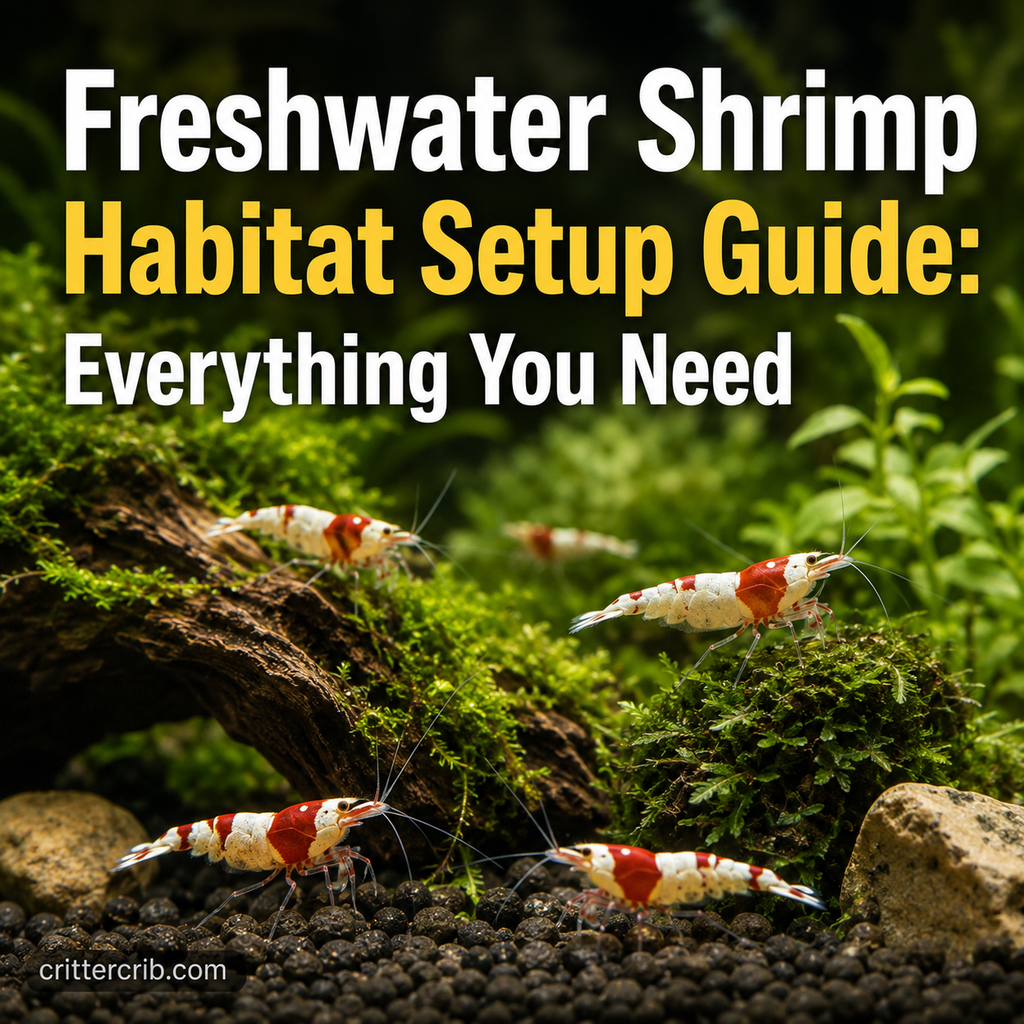
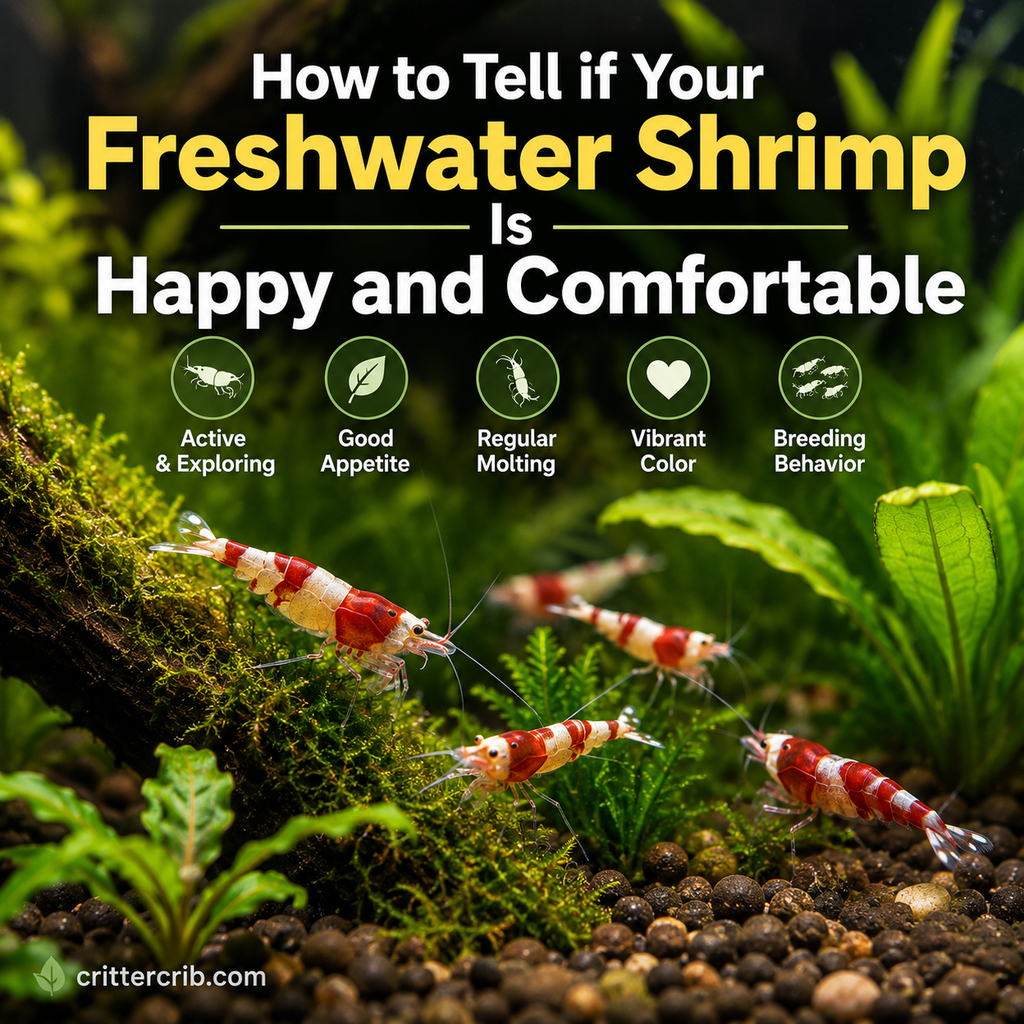
Freshwater shrimp can be surprisingly entertaining aquarium residents. They spend their days picking through plants, grazing on surfaces, climbing over decorations, and investigating seemingly invisible bits of food.
But shrimp don’t exactly make it obvious when they’re happy.
There’s no wagging tail or excited greeting when you walk through the door. Instead, you have to look at their behavior, appetite, appearance, molting, and how confidently they move around the aquarium.
A comfortable freshwater shrimp generally behaves naturally, eats regularly, molts successfully, and spends time exploring rather than constantly hiding or trying to escape.
The key is learning what’s normal for your particular shrimp.
Whether you’re keeping cherry shrimp, Amano shrimp, ghost shrimp, or another freshwater species, here are the signs that can help you tell whether your shrimp are comfortable—and the warning signs that something may be wrong.
What Does a Happy Freshwater Shrimp Look Like?
It’s better to think of shrimp as being healthy, comfortable, and low-stress rather than trying to determine whether they experience happiness exactly as people do.
A comfortable shrimp typically:
- Grazes regularly
- Explores the aquarium
- Uses its front legs to pick at surfaces
- Shows interest in food
- Molts successfully
- Behaves normally around other shrimp
- Has normal coloration for its species
- Doesn’t constantly attempt to escape
- Returns to normal activity after temporary disturbances
If you’re keeping a breeding species such as Neocaridina shrimp, successful reproduction can also be a good sign that conditions are suitable.
However, no single behavior proves everything is perfect.
Look at the overall pattern.
Constant Grazing Is Usually a Great Sign
One of the most reassuring things you can see is shrimp doing what shrimp do best: picking at things.
Healthy freshwater shrimp spend a huge amount of time grazing.
You’ll see their tiny front appendages moving rapidly as they search:
- Plant leaves
- Driftwood
- Rocks
- Substrate
- Aquarium glass
- Filter surfaces
- Decorations
They’re usually looking for biofilm, algae, microorganisms, and tiny pieces of edible organic material.
A shrimp that seems busy all day isn’t necessarily starving.
Grazing is simply natural behavior.
In a mature aquarium, there can be an enormous amount of microscopic food available even when you can’t see it.
Healthy Shrimp Should Show Interest in Food
When you add shrimp food, healthy shrimp will often investigate.
Depending on the size of the colony, you may see several shrimp gather around the same pellet or wafer.
Some will grab pieces and carry them away.
Appetite is useful because sudden changes can indicate trouble.
If shrimp that normally rush toward food suddenly ignore it, check the aquarium.
Possible causes include:
- Poor water quality
- Sudden temperature changes
- Stress
- Recent molting
- Illness
- Too much food already available
- A major change in the aquarium
One shrimp skipping a meal isn’t necessarily an emergency.
If the entire colony suddenly loses interest in food, however, pay attention.
Active Shrimp Are Usually Comfortable Shrimp
Freshwater shrimp should spend at least part of the day moving around the aquarium.
Normal activity might include:
- Walking across the substrate
- Climbing plants
- Exploring driftwood
- Picking at rocks
- Moving between hiding places
- Swimming short distances
- Gathering around food
Activity levels vary by species and individual.
Amano shrimp, for example, may behave differently from tiny Neocaridina shrimp.
Time of day matters too.
Instead of comparing your shrimp with a video online, learn the normal routine of your own colony.
Changes from that routine are often more useful than any universal definition of “normal.”
Is It Normal for Shrimp to Hide?
Absolutely.
Hiding isn’t automatically a sign of an unhappy shrimp.
Freshwater shrimp are small prey animals. Seeking cover is a natural survival behavior.
They may hide:
- After being introduced to a new aquarium
- After a water change
- Around the time of molting
- When fish are nearby
- After sudden movement outside the tank
- When aquarium lighting changes
- During periods of stress
The important question is whether they hide constantly.
If shrimp that were previously active suddenly disappear for long periods, investigate what changed.
Shrimp Often Hide When Molting
Molting deserves special attention because it’s one of the most important parts of shrimp health.
Shrimp have a hard exoskeleton that doesn’t grow with them.
As they grow, they periodically shed the old exoskeleton and form a new one.
Immediately after molting, the new shell is soft.
The shrimp is vulnerable during this period, so hiding makes perfect sense.
You may not see a freshly molted shrimp for a while.
That’s usually normal.
Finding an Empty Shrimp Shell Is Usually Good News
New shrimp keepers sometimes panic when they see what looks like a dead shrimp lying on the substrate.
Look carefully before assuming the worst.
It may be an empty molt.
A shed exoskeleton can look remarkably similar to a transparent shrimp.
If it’s hollow and split around the back, you’ve probably found a molt rather than a dead animal.
In most cases, you can leave the molt in the aquarium.
Shrimp may eat it, recycling some of the minerals and nutrients it contains.
Successful Molting Is an Important Health Sign
Healthy shrimp should be able to molt successfully.
Molting depends on several factors, including:
- Appropriate water parameters
- Stable conditions
- Proper mineral availability
- Good nutrition
- Suitable hardness
- Low stress
Problems can occur when water parameters change too quickly or mineral balance is inappropriate for the species.
Don’t add calcium or mineral products simply because you keep shrimp.
First determine the needs of your particular shrimp and test your water.
Neocaridina, Caridina, Amano shrimp, and other species don’t necessarily have identical requirements.
Good Color Can Be a Positive Sign
Many aquarium shrimp become beautifully colored when they’re healthy and settled.
Cherry shrimp may develop rich red coloration, while other Neocaridina varieties can be blue, yellow, orange, green, or patterned.
Color can be influenced by:
- Genetics
- Age
- Sex
- Diet
- Substrate color
- Lighting
- Stress
- Water conditions
Because genetics plays such a large role, pale coloration doesn’t automatically mean a shrimp is unhealthy.
A naturally lightly colored shrimp may be perfectly fine.
What’s more useful is a sudden change.
If a shrimp that normally has strong coloration becomes unusually pale at the same time it starts behaving strangely, investigate further.
Comfortable Shrimp Usually Don’t Try to Escape
Shrimp occasionally explore high areas of the aquarium.
That’s normal.
But repeatedly climbing above the waterline or attempting to leave the tank can indicate that something isn’t right.
Check:
- Ammonia
- Nitrite
- Nitrate
- Temperature
- pH
- GH
- KH
- Oxygenation
Also consider whether chemicals or contaminants could have entered the water.
Shrimp are particularly sensitive to certain substances, including copper at sufficient concentrations.
A colony suddenly trying to escape deserves immediate attention.
Swimming Isn’t Always a Sign of Stress
Freshwater shrimp don’t spend all their time walking.
They can swim surprisingly well.
An occasional shrimp darting across the aquarium is normal.
Male shrimp may become particularly active when a female has recently molted and is ready to mate. You may suddenly see males swimming energetically around the aquarium searching for her.
That’s very different from the entire colony frantically swimming or trying to escape.
Context matters.
Breeding Can Be a Sign Conditions Are Suitable
If you keep a freshwater species that readily reproduces in aquariums, breeding is often a positive indication that the environment is suitable.
Neocaridina shrimp are a good example.
A mature female may develop eggs beneath her abdomen.
Aquarium keepers commonly call this being “berried.”
You’ll see the female carrying and fanning the eggs beneath her body.
Eventually, tiny shrimplets may begin appearing throughout the aquarium.
A growing colony generally suggests that the adults are surviving, molting, reproducing, and that at least some young are finding enough food and shelter.
However, breeding alone doesn’t prove every water parameter is ideal.
Continue testing and maintaining the aquarium normally.
Baby Shrimp Are a Great Sign
If shrimplets survive long enough to become visible around the aquarium, you’re doing something right.
Baby shrimp depend heavily on microscopic food and biofilm.
A mature planted aquarium with plenty of surfaces can provide excellent grazing opportunities.
Useful areas include:
- Moss
- Fine-leaved plants
- Sponge filters
- Driftwood
- Leaf litter appropriate for aquariums
- Porous rocks
If you keep shrimp with fish, baby survival may be much lower because many fish will eat shrimplets.
That doesn’t necessarily mean the shrimp habitat itself is poor.
Predation is simply part of keeping shrimp in a community aquarium.
Comfortable Shrimp Behave Normally Around Each Other
Shrimp colonies can look surprisingly busy.
Individuals may climb over one another, gather around food, or briefly push each other aside.
That’s usually nothing to worry about.
Freshwater dwarf shrimp generally don’t need large personal territories.
At feeding time, several may pile around the same piece of food.
Occasional competition is normal.
Persistent attacks, injuries, or shrimp being killed aren’t.
If you’re keeping multiple shrimp species or unusual larger freshwater shrimp, research their specific social behavior because not all species interact the same way.
Healthy Shrimp Need Stable Water
Shrimp have a reputation for being sensitive to sudden environmental changes.
That’s especially true when compared with some hardy aquarium fish.
For most shrimp tanks, stability is more important than constantly adjusting the water in pursuit of a perfect number.
Important parameters include:
- Temperature
- pH
- GH (general hardness)
- KH (carbonate hardness)
- Ammonia
- Nitrite
- Nitrate
Different shrimp species have different preferred ranges.
For example, Neocaridina shrimp generally tolerate a broader range of conditions than some specialized Caridina varieties.
Research the exact species you’re keeping rather than relying on one universal shrimp parameter chart.
Ammonia and Nitrite Should Be Zero
Regardless of species, an established shrimp aquarium should have:
- Ammonia: 0 ppm
- Nitrite: 0 ppm
Both can be dangerous to shrimp.
Nitrate should also be kept under control through appropriate stocking, feeding, plant growth, and regular water changes.
If your shrimp suddenly behave strangely, water testing should be one of your first steps.
Don’t assume the water is safe simply because it’s clear.
Invisible water-quality problems can exist in a perfectly clean-looking aquarium.
Shrimp Appreciate a Mature Aquarium
A brand-new aquarium may look spotless and attractive.
From a shrimp’s perspective, that can actually be a disadvantage.
Shrimp benefit from mature surfaces covered in biofilm and microorganisms.
A mature aquarium provides natural grazing opportunities on:
- Plants
- Wood
- Rocks
- Filter media
- Glass
- Substrate
This doesn’t mean you need a dirty tank.
It means an aquarium shouldn’t be completely sterile.
Letting some harmless biofilm and algae develop can create valuable feeding areas.
Live Plants Can Help Shrimp Feel Secure
Plants are excellent additions to freshwater shrimp aquariums.
They provide:
- Cover
- Grazing surfaces
- Hiding areas
- Places for baby shrimp
- Visual barriers
- Additional biological stability
Mosses are especially popular in shrimp tanks because their dense structure creates enormous amounts of surface area.
Shrimp may spend hours picking through them.
Other aquarium plants can work just as well.
A mixture of open areas and dense vegetation gives shrimp the freedom to forage while still having somewhere to retreat.
Sponge Filters Are Excellent for Shrimp Tanks
Filtration is essential, but tiny shrimp create some special considerations.
Powerful filter intakes can potentially pull in baby shrimp.
Sponge filters are popular because they provide gentle filtration while creating another surface covered in edible biofilm.
Shrimp frequently gather on the sponge and graze.
If you use a hang-on-back, canister, or internal filter, adding a pre-filter sponge over the intake can help protect shrimplets.
Signs Your Freshwater Shrimp May Be Stressed
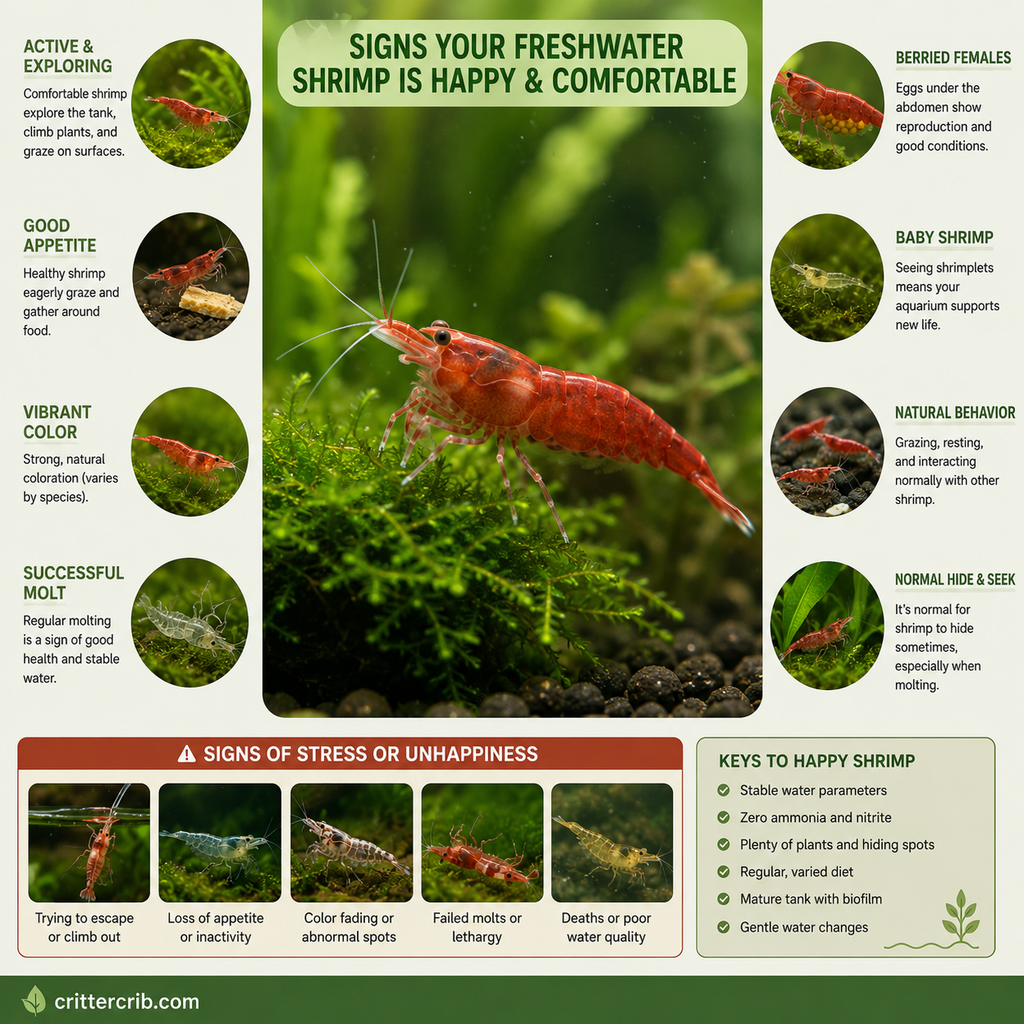
No single behavior automatically means a shrimp is in trouble.
Look for combinations of symptoms or sudden changes affecting multiple shrimp.
Potential warning signs include:
- Constant frantic swimming
- Repeated attempts to leave the water
- Sudden widespread hiding
- Loss of appetite
- Unusual lethargy
- Failed molts
- Multiple unexplained deaths
- Sudden loss of coloration
- Abnormal body appearance
- Rapid changes after a water change
When several shrimp begin behaving strangely at once, suspect an environmental issue first.
Why Are All My Shrimp Suddenly Swimming Around?
This can be completely normal—or a warning sign.
If primarily males are swimming actively while females behave normally, mating activity may be the explanation.
If every shrimp suddenly begins racing around after a water change or aquarium treatment, investigate.
Test the water and consider recent changes.
Ask yourself:
- Did the temperature change?
- Did pH shift?
- Was untreated tap water added?
- Did you add medication?
- Did you use fertilizer?
- Did household cleaner get near the tank?
- Was new equipment installed?
- Did something die in the aquarium?
Sudden colony-wide behavior changes deserve attention.
Why Are My Shrimp Not Moving?
Shrimp do rest.
A shrimp sitting still for a while isn’t necessarily sick.
However, prolonged inactivity combined with poor appetite, abnormal posture, loss of color, or unusual behavior can indicate trouble.
Check water parameters first.
Also consider temperature.
Very cool conditions can reduce activity, while excessive heat can increase stress and reduce available dissolved oxygen.
Observe the entire colony rather than focusing only on one shrimp.
If everyone else is behaving normally, one resting shrimp may simply be doing exactly that.
Why Did My Shrimp Suddenly Die?
Shrimp deaths can be frustrating because the cause isn’t always obvious.
Possible causes include:
- Ammonia or nitrite
- Sudden water-parameter changes
- Improper acclimation
- Failed molting
- Contamination
- Temperature extremes
- Inappropriate mineral balance
- Copper exposure
- Disease
- Age
- Predation
A single death doesn’t necessarily mean the entire aquarium is in danger.
Multiple deaths within a short period are much more concerning.
Test the water immediately and review anything that recently changed.
Water Changes Should Be Gentle
Regular water changes help maintain good water quality, but shrimp generally appreciate consistency.
Avoid dramatically changing temperature, hardness, or other parameters during a large water change.
When adding replacement water:
- Treat tap water appropriately.
- Match temperature reasonably closely.
- Avoid sudden changes in water chemistry.
- Add the water without violently disturbing the aquarium.
- Observe your shrimp afterward.
The exact water-change schedule depends on aquarium size, stocking, feeding, plants, and nitrate levels.
A lightly stocked planted shrimp aquarium may require a different routine from a heavily populated breeding colony.
Use testing to guide your maintenance.
Don’t Overfeed Your Shrimp
Watching a pile of shrimp swarm a food pellet is entertaining.
That doesn’t mean you should keep adding more.
Shrimp often obtain a substantial amount of nutrition by grazing throughout the aquarium.
Excess food can:
- Rot
- Increase waste
- Raise nutrient levels
- Encourage unwanted organisms
- Reduce water quality
Feed enough that the shrimp get appropriate nutrition without leaving large amounts of uneaten food sitting in the aquarium for long periods.
If food remains untouched, remove it.
A “Clean” Tank Can Be Too Clean
There’s a difference between maintaining good water quality and sterilizing every surface.
Shrimp benefit from biofilm.
If you constantly scrub every rock, piece of wood, decoration, and patch of glass spotless, you’re removing natural grazing surfaces.
You don’t need to let the aquarium become covered in algae.
Simply allow some natural biological growth to exist.
That slightly seasoned look can be extremely valuable to shrimp.
Give Shrimp Places to Hide
A comfortable shrimp shouldn’t necessarily spend all day hiding, but it should have the option.
Provide shelter using:
- Moss
- Dense plants
- Driftwood
- Shrimp-safe caves
- Leaf litter
- Rocks
- Cholla wood or other aquarium-safe natural materials
Hiding places become particularly important during molting.
They’re also essential when fish share the aquarium.
If shrimp constantly have to avoid curious or predatory tank mates, they may spend much more time hidden.
Tank Mates Can Affect Shrimp Behavior
You can create perfect water conditions and still have nervous shrimp if they’re surrounded by fish that want to eat them.
Many fish view shrimp—especially baby shrimp—as food.
Even fish that don’t successfully catch adult shrimp may chase or investigate them.
This can cause shrimp to hide more frequently.
If your goal is to observe lots of natural shrimp behavior and build a large colony, a shrimp-only aquarium is often the easiest option.
Community tanks can work, but choose tank mates carefully.
How to Make Freshwater Shrimp Feel More Comfortable
You don’t need elaborate equipment to create a shrimp-friendly aquarium.
Focus on the fundamentals.
Provide Stable Water
Avoid constantly adjusting pH or hardness unless there’s a genuine reason.
Choose shrimp suited to your available water whenever possible.
Maintain Good Water Quality
Keep ammonia and nitrite at zero and prevent excessive nitrate accumulation.
Give Them Plenty of Grazing Surfaces
Plants, wood, rocks, sponge filters, and mature aquarium surfaces provide natural feeding opportunities.
Provide Hiding Places
Dense plants and other cover give shrimp somewhere to retreat during molting or when startled.
Feed a Balanced Diet
Don’t rely entirely on algae.
Provide appropriate shrimp food and supplemental foods based on the species you’re keeping.
Avoid Sudden Changes
Make adjustments gradually whenever possible.
Shrimp generally respond better to stable conditions than frequent attempts to perfect every parameter.
Keep Potential Predators in Mind
If shrimp constantly hide, take a closer look at their tank mates.
The problem may not be the water at all.
A Simple Happy Shrimp Checklist
If you’re wondering whether your shrimp are comfortable, ask yourself:
- Are they regularly grazing?
- Do they explore the aquarium?
- Do they respond to food?
- Are molts occurring successfully?
- Are ammonia and nitrite at 0 ppm?
- Are water parameters stable?
- Do they have plants and hiding places?
- Are they free from constant harassment?
- Are unexplained deaths rare?
- Are breeding species reproducing?
- Are baby shrimp surviving when predators aren’t present?
If most of those answers are yes, your shrimp are probably doing quite well.
Frequently Asked Questions About Freshwater Shrimp Behavior
How Do You Know if Shrimp Are Happy?
Comfortable freshwater shrimp typically graze, explore, eat normally, molt successfully, and behave naturally around other shrimp.
Breeding and successful baby shrimp survival can provide additional positive signs for species that readily reproduce in aquariums.
Is It Normal for Shrimp to Hide All Day?
Some hiding is completely normal, particularly after molting or when shrimp are new to the aquarium.
Constant hiding may indicate stress, insufficient cover, aggressive tank mates, or unsuitable water conditions.
Why Are My Shrimp Always Picking at Things?
That’s normal feeding behavior.
Shrimp spend much of their time grazing on biofilm, algae, microorganisms, and tiny particles growing on aquarium surfaces.
Why Are My Shrimp Swimming Around Like Crazy?
Male shrimp may swim energetically when searching for a recently molted female.
If the entire colony suddenly begins swimming frantically, particularly after maintenance or a water change, check water quality and recent changes to the aquarium.
Is Molting a Sign of a Healthy Shrimp?
Regular successful molting is an important part of normal shrimp growth.
Repeated failed molts, however, can indicate problems with water stability, mineral balance, nutrition, or other environmental conditions.
Should I Remove Shrimp Molts?
Usually, no.
Shrimp often eat their shed exoskeletons, recycling some of the nutrients and minerals.
You can generally leave normal molts in the aquarium.
Why Did My Shrimp Lose Its Color?
Color can change because of genetics, age, stress, lighting, substrate, diet, or environmental conditions.
A sudden color change combined with unusual behavior deserves closer attention.
Do Shrimp Recognize Their Owners?
Shrimp may become accustomed to predictable feeding routines and activity around the aquarium, but you shouldn’t expect the same type of recognition or interaction associated with mammals.
A shrimp continuing to forage calmly while you’re nearby is a better indicator that it feels secure.
Final Thoughts
You don’t need your freshwater shrimp to perform a special behavior to prove they’re happy.
The best signs are usually the ordinary ones.
Healthy, comfortable shrimp spend their time grazing, exploring, eating, molting, and interacting naturally with their environment. They may hide occasionally, particularly after molting, but they should generally return to normal activity once they feel secure.
Pay attention to changes.
If an active colony suddenly stops eating, begins hiding, swims frantically, tries to leave the water, or experiences multiple deaths, test the aquarium and investigate anything that recently changed.
Most importantly, don’t chase perfect numbers at the expense of stability.
Choose shrimp suited to your water, maintain a mature and properly cycled aquarium, provide plants and hiding places, feed appropriately, and make changes gradually.
When you look into the tank and see your shrimp calmly picking through moss, grazing across driftwood, and going about their tiny shrimp business without seeming particularly concerned about anything around them, that’s about as good a sign of comfort as you could ask for.