Ideal Temperature and Humidity for Crested Geckos

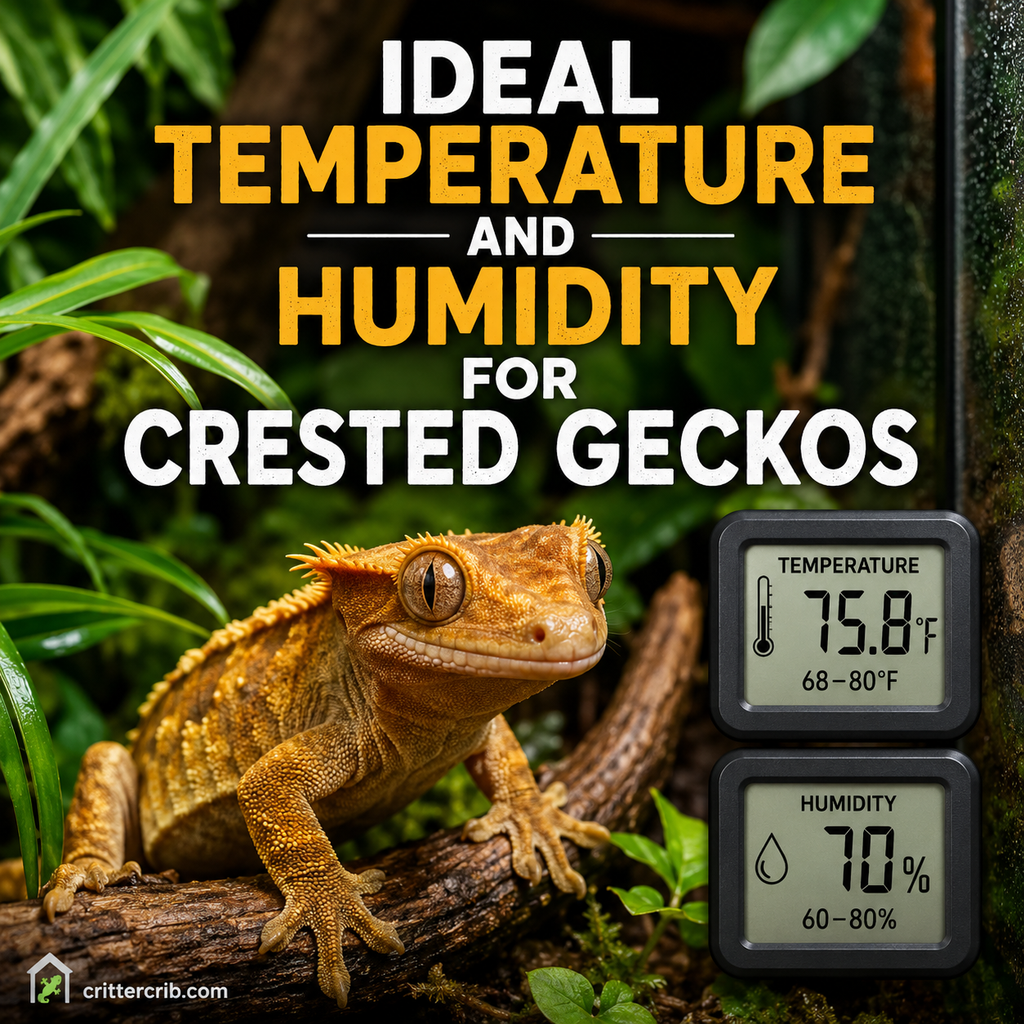
Crested gecko in a terrarium showing ideal temperature and humidity levels
Ideal temperature and humidity conditions help keep crested geckos comfortable, hydrated, and healthy.

Getting the temperature and humidity right is one of the most important parts of keeping a crested gecko healthy. Fortunately, crested geckos don’t require the intense heat that many other reptiles do. Their needs are relatively moderate, which is one reason they’re often considered beginner-friendly reptiles.

That doesn’t mean you can simply put a crested gecko in a room-temperature enclosure and forget about the environment, though.

Crested geckos are ectothermic, meaning they depend on their surroundings to regulate their body temperature. They also come from the humid forests of New Caledonia, so moisture plays an important role in hydration, shedding, and overall health.

The goal isn’t to keep the enclosure at one exact temperature and humidity level around the clock. Instead, you want to create natural fluctuations, including a temperature gradient and a humidity cycle that rises after misting and falls as the enclosure dries.

Here’s how to get those conditions right.

Continue reading “Ideal Temperature and Humidity for Crested Geckos”

Are Leopard Geckos Good Pets? What Beginners Should Know

Leopard gecko in a natural terrarium habitat for beginner reptile owners
Leopard geckos are popular beginner reptiles thanks to their manageable size, generally calm temperament, and relatively straightforward care needs.

Leopard geckos are often recommended as beginner reptiles, and there’s a good reason for that. They’re relatively small, generally calm, don’t need a huge enclosure, and their care is manageable once you understand the basics.

But “beginner-friendly” doesn’t mean maintenance-free.

A leopard gecko still needs proper heating, a suitable enclosure, nutritious live insects, supplements, hiding places, and regular care. They can also live for well over a decade, so bringing one home is a much longer commitment than many first-time reptile owners expect.

So, are leopard geckos good pets?

For many people, absolutely. They’re especially appealing if you want a quiet reptile that’s interesting to observe, can become comfortable with gentle handling, and doesn’t require the space of a larger lizard.

Before deciding, though, it’s worth understanding what living with one is actually like.

Continue reading “Are Leopard Geckos Good Pets? What Beginners Should Know”

Bearded Dragon Habitat Setup Guide: Everything You Need

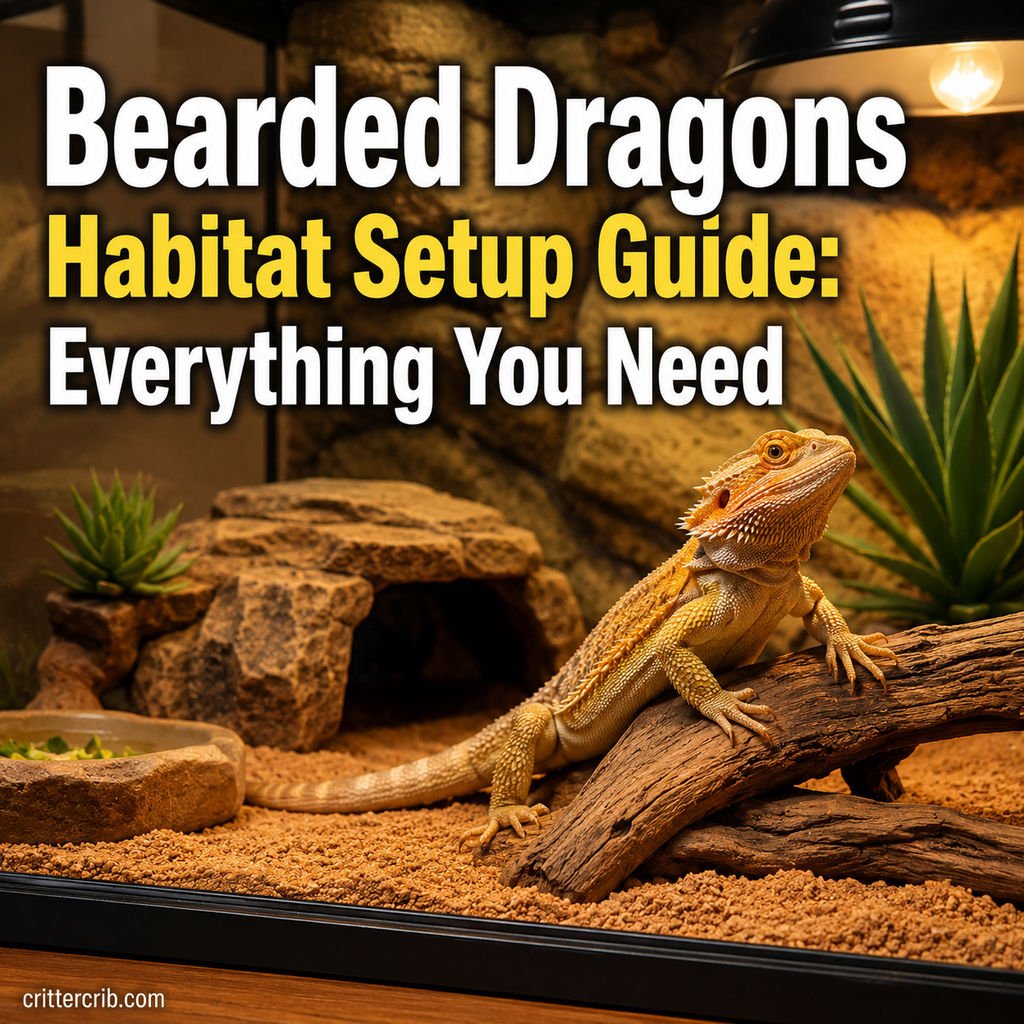
Bearded dragon in a warm terrarium with basking area, hide, branches, and habitat essentials
A well-designed bearded dragon habitat provides proper heat, UVB lighting, hiding areas, climbing opportunities, and plenty of room to explore.

Setting up a bearded dragon habitat isn’t difficult once you understand what these reptiles actually need. The challenge is getting the important details right from the beginning.

Bearded dragons come from hot, relatively dry regions of Australia, so their enclosure needs to provide strong lighting, access to UVB, a warm basking area, cooler places to retreat, and enough room to move around. Simply putting a heat lamp over a small glass tank isn’t enough.

A good habitat allows your bearded dragon to choose where it wants to be throughout the day. It can warm up under the basking light, move to a cooler area when necessary, climb onto a branch, hide when it wants privacy, and comfortably explore its surroundings.

Whether you’re preparing for your first bearded dragon or upgrading an existing enclosure, this guide covers the essentials you’ll need to build a safe, practical habitat.

Continue reading “Bearded Dragon Habitat Setup Guide: Everything You Need”

How Much Space Do Turtles Need? Housing Size Guide

Aquatic turtles in a spacious tank with swimming and basking areas
A properly sized turtle habitat provides plenty of room for swimming, basking, resting, and exploring.

Turtles may look small when you first bring them home, but their housing needs can be surprisingly large. A young turtle that fits comfortably in your hand can grow into an adult that needs a sizable aquarium, stock tank, pond, or other purpose-built enclosure.

Giving a turtle enough space isn’t just about making its habitat look nice. The size of the enclosure affects swimming, exercise, water quality, temperature control, basking opportunities, and how easily you can maintain a healthy environment.

So, how much space does a turtle actually need?

The answer depends on the species, adult size, and whether you’re caring for an aquatic, semi-aquatic, or terrestrial turtle. For many commonly kept aquatic turtles, a useful starting guideline is around 10 gallons of water capacity per inch of shell length, although individual species may need more space.

This guide explains how to estimate the right enclosure size and how to create a habitat that will continue working as your turtle grows.

Continue reading “How Much Space Do Turtles Need? Housing Size Guide”

Tortoise Behavior Explained: What Common Behaviors Mean

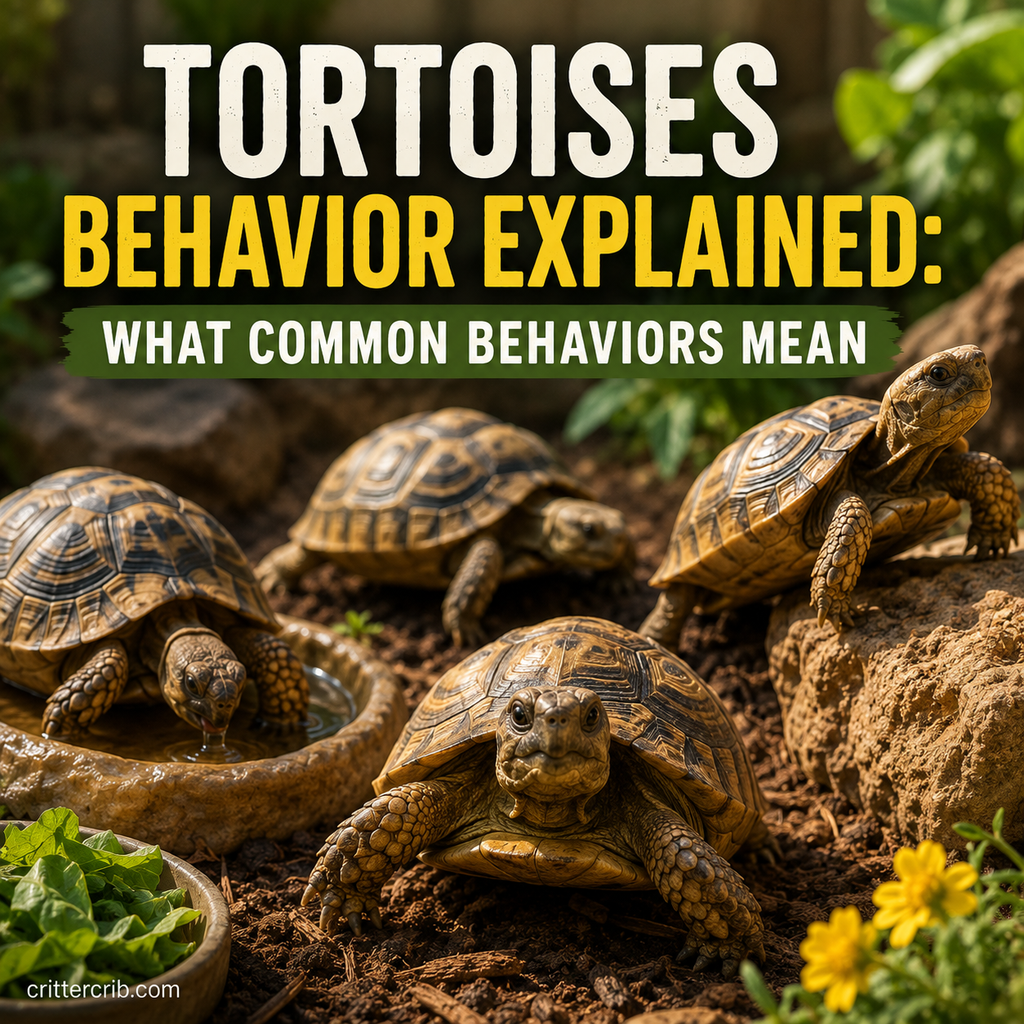
Tortoises displaying common behaviors including exploring, climbing, soaking, and feeding
Digging, pacing, basking, hiding, climbing, soaking, and ramming can all provide clues about a tortoise’s environment, instincts, and well-being.

Tortoises may have a reputation for being slow and quiet, but spend enough time around one and you’ll notice there’s quite a lot going on.

They dig. They climb things they have no business climbing. They pace along boundaries, bulldoze decorations, stretch their necks toward you, and sometimes seem determined to rearrange an enclosure you spent hours setting up.

Some behaviors are simply part of being a tortoise. Others can tell you something about temperature, lighting, diet, stress, seasonal changes, or health.

The challenge is knowing the difference.

There are many tortoise species kept as pets, and they don’t all behave exactly the same way. A Russian tortoise, sulcata, Hermann’s tortoise, and red-footed tortoise come from different environments and have different husbandry needs.

Still, many common behaviors appear across species.

Here’s what some of the things your tortoise does may actually mean.

Continue reading “Tortoise Behavior Explained: What Common Behaviors Mean”

Complete Blue-Tongued Skink Care Guide: Habitat, Diet, and Daily Care

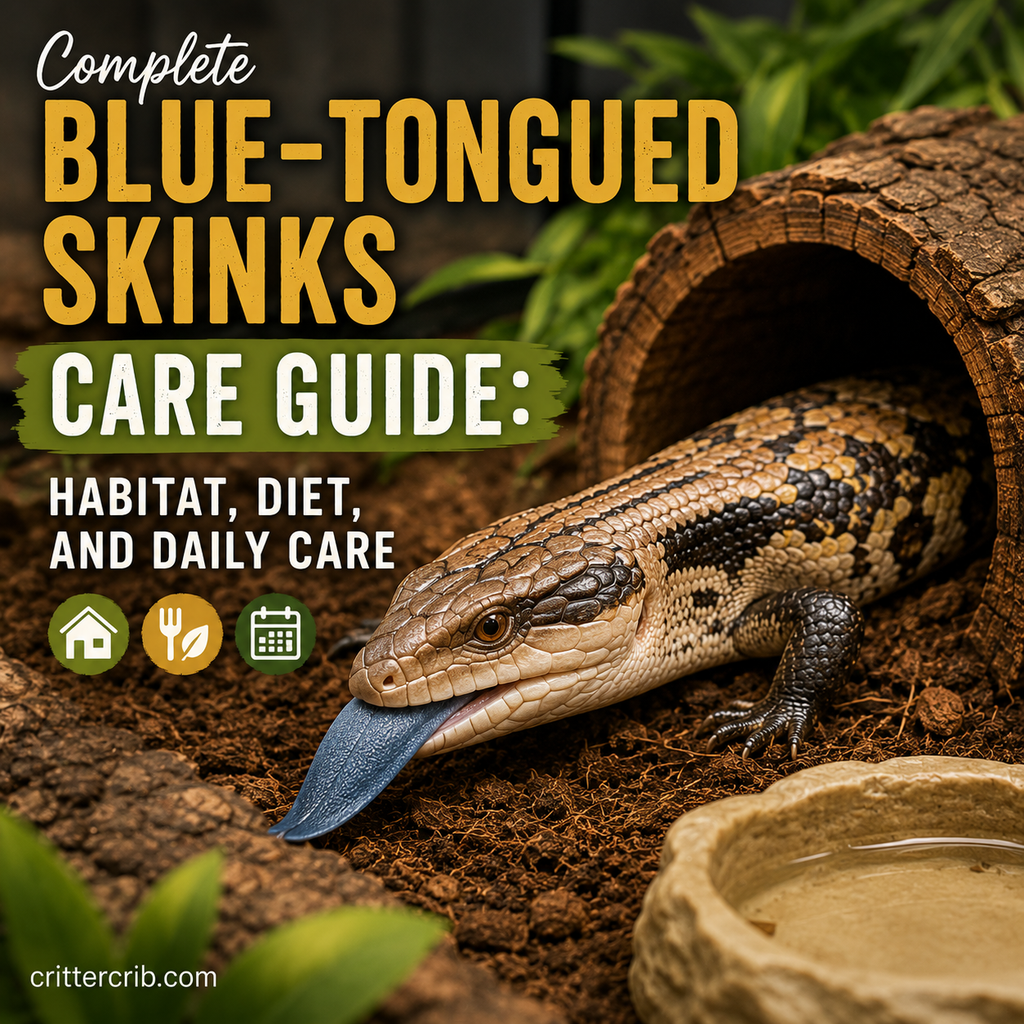
Blue-tongued skink in a natural enclosure for a complete habitat, diet, and daily care guide
Proper blue-tongued skink care includes a spacious habitat, controlled heating, UVB lighting, species-appropriate humidity, a varied diet, and consistent daily care.

Blue-tongued skinks are hard to mistake for anything else. They have long, sturdy bodies, short legs, broad heads, and, of course, that striking blue tongue.

They’re also surprisingly personable reptiles.

Many captive blue-tongued skinks become comfortable with routine handling and learn to recognize the patterns around feeding and enclosure maintenance. Their relatively calm temperament and manageable daily care can make them appealing pets, even for someone who hasn’t kept a large lizard before.

But there’s an important catch: not every blue-tongued skink has exactly the same care requirements.

Several species and subspecies are kept as pets, and their humidity needs in particular can differ considerably. Before setting up an enclosure, it’s important to know which type of blue-tongued skink you have.

This guide covers the fundamentals of blue-tongued skink care, including habitat size, heating, lighting, humidity, substrate, diet, handling, cleaning, and everyday care.

Continue reading “Complete Blue-Tongued Skink Care Guide: Habitat, Diet, and Daily Care”

Essential Supplies for Corn Snakes: Beginner Checklist

Corn snake with essential enclosure supplies including hides, substrate, heating, water bowl, and monitoring equipment
A proper corn snake setup includes a secure enclosure, controlled heating, hides, substrate, fresh water, environmental monitoring, and feeding equipment.

Bringing home a corn snake is exciting, but the easiest way to make the transition go smoothly is to have the enclosure completely set up before the snake arrives.

Corn snakes are often recommended to beginner reptile keepers because they’re generally manageable, hardy, and relatively straightforward to care for. Still, they need more than a tank, some bedding, and a water bowl.

The right enclosure size, secure lid, controlled heat, hides, substrate, temperature monitoring, and feeding equipment all matter.

If you’re preparing for your first corn snake, this checklist covers the essential supplies you’ll need, what each item is for, and a few things you can probably leave off your shopping list.

Continue reading “Essential Supplies for Corn Snakes: Beginner Checklist”

How to Clean a Ball Python’s Habitat: A Safe Routine

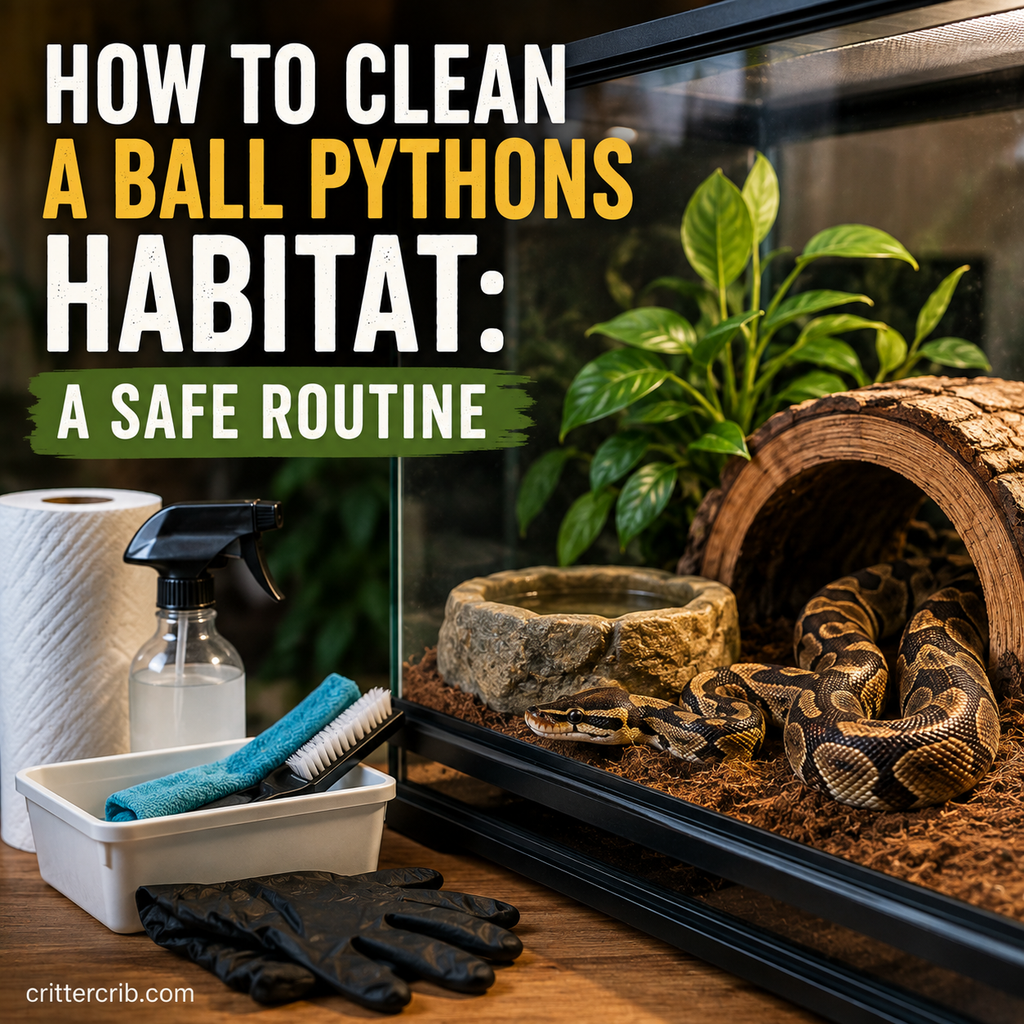
Ball python habitat with cleaning supplies for a safe enclosure cleaning routine
Regular spot cleaning, fresh water, substrate maintenance, and periodic deep cleaning help keep a ball python’s habitat sanitary and comfortable.

Cleaning a ball python’s enclosure isn’t the most exciting part of snake ownership, but it’s one of the easiest ways to prevent small husbandry problems from turning into bigger ones.

The good news is that you shouldn’t need to completely tear apart the habitat every few days.

A well-maintained ball python enclosure is usually managed through regular spot cleaning, fresh water, occasional substrate replacement, and deeper cleaning when necessary. The goal isn’t to create a sterile environment. It’s to prevent waste, spoiled substrate, mold, and excessive bacterial buildup while keeping the enclosure stable and comfortable for your snake.

Here’s a practical cleaning routine that keeps things manageable without unnecessarily disrupting your ball python.

Continue reading “How to Clean a Ball Python’s Habitat: A Safe Routine”

How Much Space Do Crested Geckos Need? Housing Size Guide

Crested gecko beside a tall 18 x 18 x 36 inch enclosure showing recommended housing size
Adult crested geckos benefit from a tall enclosure with plenty of usable climbing space, branches, foliage, hides, and elevated resting areas.

Crested geckos don’t take up much room compared with many pets, but that doesn’t mean they should live in a tiny enclosure.

These geckos are active climbers. They spend much of their time above the ground, moving between branches, plants, vines, and elevated resting spots. Because of that, the shape of a crested gecko enclosure matters almost as much as its overall size.

An adult needs enough vertical and horizontal room to climb, jump, hide, eat, and choose between different areas of the habitat.

So, how much space does a crested gecko actually need?

For an adult crested gecko, a tall enclosure around 18 x 18 x 36 inches is a good minimum target. Larger enclosures can be even better when they’re furnished properly. Younger geckos can start in smaller setups, but they should be moved into appropriate adult housing as they grow.

Here’s how to choose the right enclosure size and, just as importantly, make good use of the space inside it.

Continue reading “How Much Space Do Crested Geckos Need? Housing Size Guide”

Leopard Gecko Behavior Explained: What Common Behaviors Mean

Leopard gecko behavior explained and what common behaviors mean
Understanding leopard gecko behavior can help you recognize normal activity, body language, stress signals, and potential health concerns.

Leopard geckos may be quiet pets, but they communicate more than you might think.

A slow tail wave, sudden burst of digging, refusal to leave a hide, or even a tiny squeak can tell you something about how a leopard gecko is feeling. Some behaviors are completely normal. Others may point to stress, an enclosure problem, or a health issue that deserves attention.

The tricky part for new owners is figuring out which is which.

Once you become familiar with your leopard gecko’s normal routine and body language, its behavior becomes much easier to read. This guide covers common leopard gecko behaviors, what they usually mean, and when a change in behavior may be worth investigating.

Continue reading “Leopard Gecko Behavior Explained: What Common Behaviors Mean”